• KGS/USD = 0.01144 0%
  • KZT/USD = 0.00216 0%
  • TJS/USD = 0.10659 0%
  • UZS/USD = 0.00008 0%
  • TMT/USD = 0.28530 0%
  • KGS/USD = 0.01144 0%
  • KZT/USD = 0.00216 0%
  • TJS/USD = 0.10659 0%
  • UZS/USD = 0.00008 0%
  • TMT/USD = 0.28530 0%
  • KGS/USD = 0.01144 0%
  • KZT/USD = 0.00216 0%
  • TJS/USD = 0.10659 0%
  • UZS/USD = 0.00008 0%
  • TMT/USD = 0.28530 0%
  • KGS/USD = 0.01144 0%
  • KZT/USD = 0.00216 0%
  • TJS/USD = 0.10659 0%
  • UZS/USD = 0.00008 0%
  • TMT/USD = 0.28530 0%
  • KGS/USD = 0.01144 0%
  • KZT/USD = 0.00216 0%
  • TJS/USD = 0.10659 0%
  • UZS/USD = 0.00008 0%
  • TMT/USD = 0.28530 0%
  • KGS/USD = 0.01144 0%
  • KZT/USD = 0.00216 0%
  • TJS/USD = 0.10659 0%
  • UZS/USD = 0.00008 0%
  • TMT/USD = 0.28530 0%
  • KGS/USD = 0.01144 0%
  • KZT/USD = 0.00216 0%
  • TJS/USD = 0.10659 0%
  • UZS/USD = 0.00008 0%
  • TMT/USD = 0.28530 0%
  • KGS/USD = 0.01144 0%
  • KZT/USD = 0.00216 0%
  • TJS/USD = 0.10659 0%
  • UZS/USD = 0.00008 0%
  • TMT/USD = 0.28530 0%

Viewing results 13 - 18 of 118

New Partnerships Aim to Turn Kyrgyz Students into Entrepreneurs

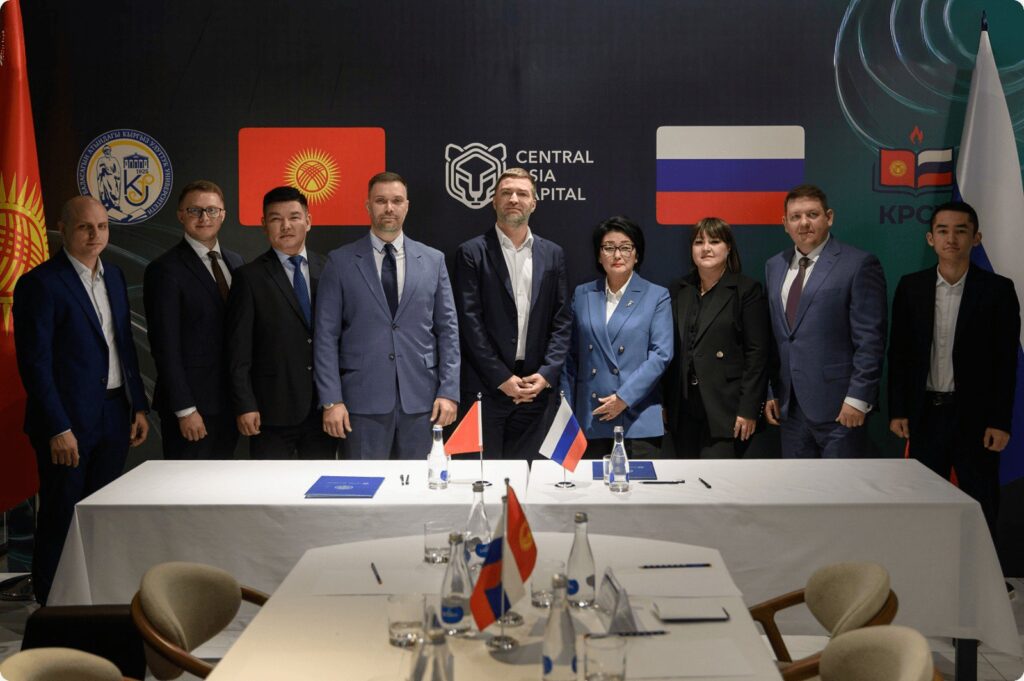
On October 20, the investment fund Central Asia Capital signed strategic cooperation agreements with Jusup Balasagyn Kyrgyz National University (KNU) and the Kyrgyz-Russian Slavic University (KRSU) to promote practice-oriented education, support student startups, and create new employment opportunities. The partnerships aim to bridge the gap between academia and industry by providing students with hands-on business experience, mentorship, and pathways to entrepreneurship. “Our agreements with KNU and KRSU are a major step toward creating conditions where students not only gain knowledge but also apply it in real business settings. This is a strategic investment in the future of Kyrgyzstan’s economy,” said Anton Sobin, Chairman of the Board of Directors at Central Asia Capital. A flagship initiative under the agreements will be the launch of an Acceleration School, where students can develop business projects, receive expert mentorship, and compete for investment grants. “We want young people to see that they can build successful businesses in Kyrgyzstan without going abroad,” Sobin emphasized. Under the agreement with KNU, the fund will support curriculum modernization, scholarship programs, and internship placements within its subsidiaries and partner firms. The KRSU partnership emphasizes innovation and startup support, along with infrastructure development. Planned upgrades include a new innovation lab, enhanced sports facilities, and improvements to the university campus. Central Asia Capital will also assist in the renovation of KRSU’s educational and recreational complex at Lake Issyk-Kul.

Touching Fairy Tales: In Ust-Kamenogorsk, Books Are Knitted, Sewn, and Brought to Life

At the A.S. Pushkin Library in Ust-Kamenogorsk, East Kazakhstan region, reading has become a tactile adventure. Here, books aren’t just read, they’re knitted, sewn, and handcrafted. Librarians have discovered a magical way to ignite children’s interest in reading: through tactile books that can be touched, flipped through, and even assembled. “The main thing is to find an approach to each child. Even if they haven’t been encouraged to read at home, we can change that in the library,” says Dinara Mergenbayeva, head of the Center for Knowledge. The idea was born from a desire to make books more relatable. “Who says children don’t read? They do, and with great curiosity! They just need something new, lively, and emotional,” she explains. Knitted Books and Soft Stories The library’s first knitted book was a Kazakh-language version of the alphabet primer Әліппе, inspired by Kulmay Sembayeva’s Aripler aleminde (“In the World of Letters”). Each letter is paired with a poem and a small, crocheted animal or object, which children can pull from pockets and explore. “For example, the letter A, next to it are an akhu (swan) and an ayu (bear). We knitted and cut out all the figures ourselves. The materials came from our homes. Even the cover was made from my old suede boots, they’ve found a second life now,” one librarian shares. Another handcrafted creation is Pushkin’s The Tale of the Fisherman and the Fish. In this interactive version, characters can be moved around, allowing children to change the course of the story. Kids act out scenes, invent new endings, and immerse themselves more deeply in the narrative. [caption id="attachment_37026" align="aligncenter" width="355"] @Yulia Chernyavskaya[/caption] There’s even a trilingual crocheted edition of Abai’s The Seasons, in Kazakh, Russian, and English. Its pages include trees, snowflakes, flowers, and ladybugs, all detachable and fastened with buttons. Children can “switch” winter to spring, collect leaves, or “scatter” snow, transforming play into reading. “This helps develop fine motor skills, imagination, and a love of books. The key is to keep it interesting,” notes Mergenbayeva. Books You Won’t Find Anywhere Else Each tactile book is handmade, with production times ranging from three weeks to six months. The entire library staff is involved, from brainstorming to material selection and testing books with children. Special editions are created for older students, including a large-format album commemorating Abai’s 175th anniversary, with sections titled “Abai the Writer,” “Abai the Philosopher,” and “Abai the Musician.” “If a child remembers even one illustration, that’s a success. A book should leave an impression, visual, emotional, any kind,” says a librarian. Each edition includes a QR code linking to a digital version in the library’s electronic collection. When Children Bring Their Parents At Pushkin Library, reading is a family affair. Every Saturday features shared reading sessions, reinforcing the tradition of reading together. “The youngest children come with their parents, and later they’re the ones dragging them back. Kids literally pull their moms and dads to the library,” Mergenbayeva smiles. For teenagers, there’s the Literary...

Uzbek Authorities Investigate Mass Food Poisoning at Some Kindergartens

Uzbekistan’s Ministry of Health says almost all children who were hospitalized after suffering food poisoning at several state kindergartens in the Tashkent region have recovered and are back with their families.  Hundreds of children had been affected by the preschool health crisis, which prompted an emergency response from medical institutions when the first cases of fever, nausea and diarrhea were reported a week ago. Lab workers conducted tests on outsourced food being served at the kindergartens. Prosecutors opened a criminal case and an investigation is underway.  Media outlet UzDaily.com reported that authorities had arrested seven people, including executives of food companies that supplied the kindergartens. It said children got sick with gastroentiritis at schools in seven districts across the Tashkent region. Estimates of the number of affected children varied, with some reports saying more than 1,000 received medical treatment. Nurmat Atabekov, first deputy chairman of the ministry’s sanitary-epidemiological welfare and public health committee, said on Tuesday that three children remain under medical supervision because of other diseases but are in stable condition and expected to return home in the coming days.  Authorities will tighten control of food catering for all educational institutions in Uzbekistan, according to Atabekov.  “In cooperation with law enforcement agencies and the Ministry of Health, all details of the incident are being thoroughly investigated,” the Ministry of Preschool and School Education said. “If deficiencies are found, the relevant contracts will be reviewed or canceled.”  The kindergartens where children fell ill plan to reopen on Thursday.

Heads Roll After Surprise School Visit by Tajikistan’s Education Minister

Several education officials in Tajikistan have been dismissed following an unannounced inspection by Minister of Education and Science Rahim Saidzoda, according to the ministry’s press service. On September 19, the minister conducted surprise visits to schools in the Yavan and Rudaki districts, inspecting teaching quality, student and staff discipline, classroom attendance, foreign language proficiency, and readiness for the autumn-winter season. At School No. 16 in Yavan, only half the students were present, and eighth and ninth-grade classes had been improperly combined. Of 21 available computers, only three were operational. Students were unable to answer basic questions in Russian and English and struggled to define “information technology.” The minister also reported poor discipline, unsanitary conditions, and inadequate winter preparedness. School director Munira Mirzozoda, who had served for over 11 years, was dismissed for what the ministry described as “irresponsible fulfillment of official duties.” At School No. 14 in Rudaki, the director was absent at the time of the visit. Classrooms were in disrepair, the transition to a 10-point grading system was delayed, and foreign language instruction was found lacking. At the kindergarten attached to the same school, the head was also absent, and the teaching staff received criticism for performance issues. On September 22, the ministry announced the dismissal of School No. 14 director Amriddin Rahmonov and kindergarten head Zarragul Faizova. Following the Yavan inspection, the ministry reported that all school computers were repaired, IT usage was improved, attendance increased, and class schedules were brought into compliance with national standards. The unauthorized practice of combining different grade levels was halted. The ministry emphasized that quality education depends on “strict compliance with standards and high responsibility from all employees of the system from management to support staff.” This was not Saidzoda’s first surprise visit. He previously inspected schools in the town of Hisor and kindergartens in Dushanbe, where similar issues were observed, including poor discipline, unsanitary conditions, and low student engagement. Experts continue to highlight long-standing problems in Tajikistan’s education sector, including shortages of qualified teachers, inadequate school infrastructure, and limited access to learning materials. Parents frequently voice concerns over the quality of instruction and are often asked to contribute funds for school maintenance and repairs.

Kazakhstan Recognizes Course Certificates as Equivalent to University Diplomas

Kazakhstan’s National Council for Professional Qualifications, in collaboration with industry experts, has approved a new National Qualifications Framework (NQF) that officially recognizes certificates from professional and advanced training courses as valid proof of education for employment purposes. Previously, only diplomas from universities, colleges, and technical schools were accepted. According to the Ministry of Labor and Social Protection of the Population, the revised system now also includes non-formal and informal learning, skills and knowledge acquired outside traditional educational institutions over a person’s lifetime. The reform is based on the European Qualifications Framework and tailored to meet the evolving demands of Kazakhstan’s labor market. “The updated NQF was developed in line with Kazakhstan’s labor and education legislation and incorporates international practices. It is based on transparency and comparability, which ensures recognition of competencies acquired in different sectors and facilitates labor mobility. The framework supports lifelong learning and is tailored to the real needs of the economy,” said First Vice Minister of Labor and Social Protection Askarbek Yertayev. The framework consists of eight levels, ranked by increasing complexity of tasks, responsibility, and knowledge intensity. Under the new system, not only are diplomas and work experience recognized, but certificates from short-term courses and qualifications verified via the Career Enbek portal are now considered official evidence of skills. The Ministry also clarified labor code provisions regarding multiple employment. Citizens are permitted to work for more than one employer, provided the total working time does not exceed 12 hours per day, up to eight hours at the primary job and four hours in secondary employment. However, minors under 18 and employees in hazardous occupations, excluding healthcare workers, are prohibited from holding multiple jobs. Civil servants may not take on secondary employment, except in teaching, research, or creative roles. As previously reported by The Times of Central Asia, authorities have recently increased pressure on employers who pay “gray wages”, salaries paid off the books without tax or social contributions.

Turkmenistan Expands Educational Partnership with UK’s AQA

The Ministry of Education of Turkmenistan has held an official meeting with representatives of AQA Global Assessment Services, a leading UK-based organization specializing in educational assessment. The AQA delegation included Sean Crowley, Director of International Business Development; Anna Green, Director of Assessment Systems; and regional consultant Vali Huseyn. Deputy Minister of Education Azat Ataev emphasized Turkmenistan’s interest in deepening strategic cooperation with AQA, particularly in introducing modern methods of academic evaluation. “Our key task is to improve the quality of education and ensure it fully meets the needs of the labor market,” Ataev said. Regional Experience AQA has led numerous educational reform initiatives globally, including across Central Asia. In Uzbekistan, the organization contributed to the development of a new model for senior school graduation exams, aligning national assessments with international standards. In Kazakhstan, AQA supported the transition to a criteria-based assessment system, which formed the basis for updated qualification requirements. Experts note that such reforms increase trust in national diplomas, improve transparency, and make education systems more competitive and aligned with labor market demands. Prospects for Cooperation During the meeting in Ashgabat, both sides discussed several areas for collaboration, including: the introduction of modern examination platforms digital analytics of learning outcomes development of qualification standards training of teachers and administrators in examination processes Particular emphasis was placed on methodological support and establishing a systematic approach to educational planning. According to participants, the adoption of international best practices will help Turkmenistan build a sustainable, data-driven model of educational development.