• KGS/USD = 0.01144 0%
  • KZT/USD = 0.00208 0%
  • TJS/USD = 0.10440 -0.19%
  • UZS/USD = 0.00008 0%
  • TMT/USD = 0.28571 0.28%
  • KGS/USD = 0.01144 0%
  • KZT/USD = 0.00208 0%
  • TJS/USD = 0.10440 -0.19%
  • UZS/USD = 0.00008 0%
  • TMT/USD = 0.28571 0.28%
  • KGS/USD = 0.01144 0%
  • KZT/USD = 0.00208 0%
  • TJS/USD = 0.10440 -0.19%
  • UZS/USD = 0.00008 0%
  • TMT/USD = 0.28571 0.28%
  • KGS/USD = 0.01144 0%
  • KZT/USD = 0.00208 0%
  • TJS/USD = 0.10440 -0.19%
  • UZS/USD = 0.00008 0%
  • TMT/USD = 0.28571 0.28%
  • KGS/USD = 0.01144 0%
  • KZT/USD = 0.00208 0%
  • TJS/USD = 0.10440 -0.19%
  • UZS/USD = 0.00008 0%
  • TMT/USD = 0.28571 0.28%
  • KGS/USD = 0.01144 0%
  • KZT/USD = 0.00208 0%
  • TJS/USD = 0.10440 -0.19%
  • UZS/USD = 0.00008 0%
  • TMT/USD = 0.28571 0.28%
  • KGS/USD = 0.01144 0%
  • KZT/USD = 0.00208 0%
  • TJS/USD = 0.10440 -0.19%
  • UZS/USD = 0.00008 0%
  • TMT/USD = 0.28571 0.28%
  • KGS/USD = 0.01144 0%
  • KZT/USD = 0.00208 0%
  • TJS/USD = 0.10440 -0.19%
  • UZS/USD = 0.00008 0%
  • TMT/USD = 0.28571 0.28%

Viewing results 7 - 12 of 840

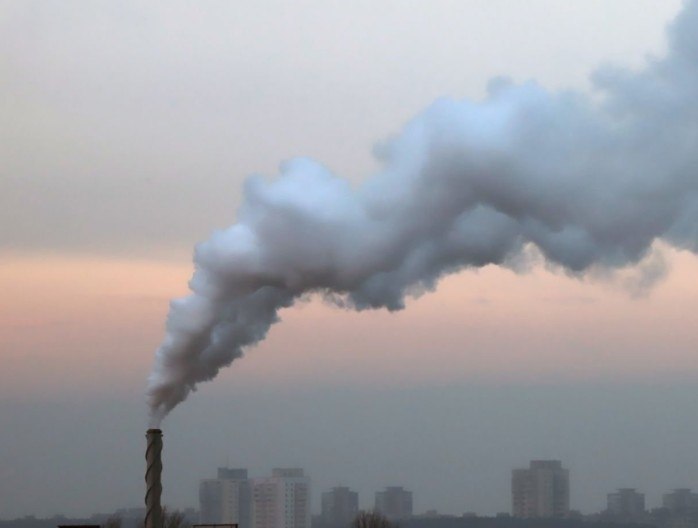
Uzbekistan Introduces Incentives for Major Industrial Polluters to Reduce Environmental Impact

Uzbekistan’s government has approved new measures aimed at encouraging large industrial enterprises to reduce their environmental footprint. Resolution No. 85 establishes regulations to incentivize environmental impact reduction efforts by industrial enterprises classified as Category I and Category II facilities based on their level of environmental impact. These categories include enterprises considered to have significant or moderate effects on the natural environment. Under the new framework, incentives will be introduced in two stages. At the first stage, an enterprise that installs a background air pollution monitoring station will be eligible for relief from previously assessed outstanding compensation payments for environmental damage. In addition, 50% of compensation payments allocated to the state budget for environmental harm will be refunded over a two-year period. At the second stage, if the enterprise installs dust and gas cleaning equipment as well as local wastewater treatment facilities within one year after commissioning the monitoring station, 70% of the compensation payments directed to the state budget will be refunded over two years. Enterprises seeking to benefit from these incentives must notify the Ecology Committee through Public Service Centers or via the government’s online portal. The committee will review submitted documentation within 15 working days and issue a formal conclusion on whether the enterprise qualifies for state support. The Times of Central Asia previously reported, that more than a dozen valuable trees were cut down at the construction site of the Ritz-Carlton Tashkent project in central Tashkent. Environmental damage in that case was officially assessed at 351,230,000 Uzbek sum (approximately $29,000), according to documentation cited by officials.
What Is Happening to Tajikistan’s Main Nature Reserve?

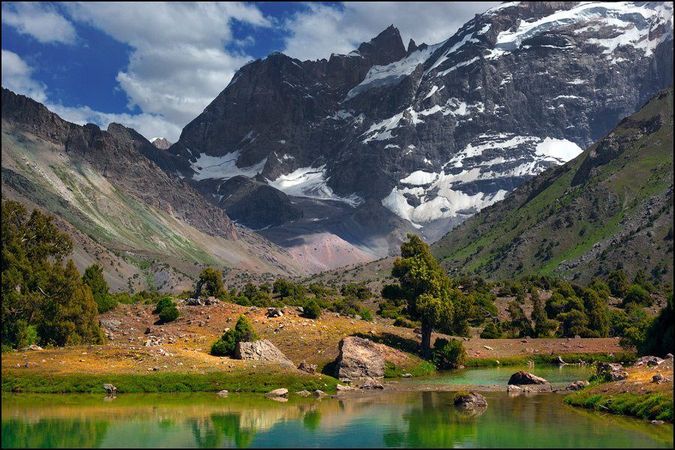
International experts have warned of a potential water crisis in the Tigrovaya Balka nature reserve, while Tajik authorities maintain that the situation remains stable and that systematic measures are underway to preserve the ecosystem. At the center of the debate are the water regime of the Vakhsh River, the condition of the tugai forests, and growing anthropogenic pressure. In November 2025, the International Union for Conservation of Nature (IUCN) published an assessment describing the state of the reserve, a UNESCO World Heritage Site, as “alarming.” Experts link the primary risks to changes in the river’s hydrological regime. Regulation of the Vakhsh River through reservoirs and the redistribution of water for agricultural use have significantly reduced natural seasonal flooding, which historically sustained the tugai forests. According to the IUCN, the ecosystem has become increasingly dependent on surface and drainage groundwater, volumes of which may be insufficient to maintain ecological balance.  The report also notes that approximately one-third of the Vakhsh River’s flow is diverted for irrigation, while part of the remaining water contains wastewater with elevated concentrations of chemical substances. Authorities Assert the Situation Is Stable Tajikistan’s Environmental Protection Committee disputes the severity of the assessment. According to data from the country’s Hydrometeorological Agency, the average annual flow of the Vakhsh River in 2025 reached 468 cubic meters per second, equivalent to 89% of the long-term average. Officials state that such fluctuations fall within acceptable limits. Water quality monitoring, conducted across 47 chemical indicators, reportedly showed only slight exceedances in sulphates and nitrites. Authorities report no recorded cases of water shortages, mass fish die-offs, or the complete drying of lakes within the reserve. Committee representatives argue that the international evaluation relies heavily on data from 2017-2019 and does not sufficiently account for more recent developments. Infrastructure and Anthropogenic Pressure Scientists also point to historical infrastructure problems as a contributing factor. Particular concern surrounds a 13-kilometer bypass canal along the northern border of the reserve, which was reportedly not cleaned for nearly three decades following the dissolution of the Soviet Union. As a result, silt accumulation led to rising water levels in certain lakes, flooding tugai forests and rendering parts of the territory unsuitable for species such as the Bukhara deer and pheasants. Some areas reportedly became marshy and overgrown with reeds. Additional pressure stems from the expansion of settlements along the reserve’s northern boundary. Monitoring data indicate household waste contamination along 13.2 kilometers of shoreline. Ecological Significance The Tigrovaya Balka Reserve was established on November 4, 1938, becoming Tajikistan’s first state nature reserve. It covers 49,700 hectares, including 21,400 hectares of wetlands and more than 24,000 hectares of tugai forest. The reserve is home to more than 30 rare animal species, including the Bukhara deer, gazelle, striped hyena, Central Asian monitor lizard, and Amu Darya shovelnose sturgeon. Over 50 bird species winter in the reserve annually. In 2023, the site was inscribed on the UNESCO World Heritage List as part of the “Tugai Forests of Tigrovaya Balka” property.

Environmental Damage Assessed at Ritz-Carlton Tashkent Construction Site

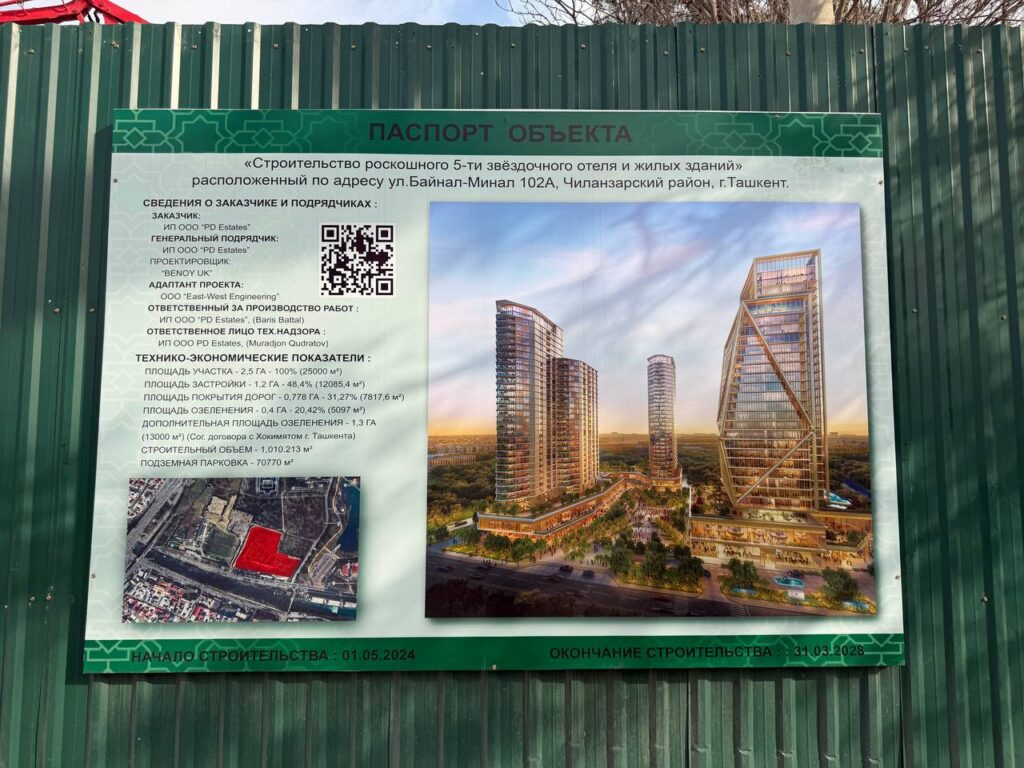
More than a dozen valuable trees have been cut down at the construction site of the Ritz-Carlton Tashkent in central Tashkent, according to Rasul Kusherbayev, adviser to the chairman of Uzbekistan’s Ecology and Climate Change Committee. Kusherbayev stated that the trees were removed from an area adjacent to the National Park in Tashkent. According to preliminary information, the felling was carried out in violation of the existing moratorium on cutting valuable tree species. He added that authorities are still determining whether additional trees were cut at the site. The land plot was reportedly allocated to Azerbaijani investors for the project. Kusherbayev also said that representatives of the construction company opposed attempts to film the tree cutting at the location. The project is being implemented by PD Estates, a joint venture linked to Azerbaijan’s Pasha Holding. The company is constructing a five-star, 150-room hotel under the The Ritz-Carlton Hotel Company brand, with an estimated investment of $200 million. In connection with the case, official documentation has been completed, and environmental damage has been assessed at 351,230,000 Uzbek sum (approximately $29,000). According to Uzbekistan’s Unified State Register of Enterprises and Organizations, PD Estates was registered in November 2023. The company has an authorized capital of 251.3 billion Uzbek sum (approximately $20.6 million) and specializes in construction project development. Its founders are Pasha Development, which holds a 99% stake, and Pasha Holding, which owns the remaining 1%. The company is headed by Baris Battal. The Ritz-Carlton is a luxury hospitality brand and a subsidiary of Marriott International, headquartered in Maryland, United States. It operates more than 90 hotels worldwide. According to the publication Uzdiplomat, in August 2024 Uzbekistan and Azerbaijan agreed to implement seven joint projects worth a total of $520 million. Under that framework, Pasha Development planned to build a $200 million Ritz-Carlton hotel and premium residential complex in Tashkent’s Chilanzar district. On February 29, 2024, President Shavkat Mirziyoyev signed a law strengthening penalties for illegal tree cutting. The amendments significantly increased fines for unlawful felling, introduced a mandatory requirement to plant new saplings in areas where trees have been removed, and extended financial liability to legal entities. Previously, only individuals and officials were subject to penalties. Under the new provisions, companies found guilty of illegally cutting valuable tree and shrub species face fines ranging from 100 to 300 times the base calculation amount, equivalent to approximately 34 million to 102 million Uzbek sum (about $2,800 to $8,400).

Central Asia and the Global Water Crisis: A Test of Governance and Cooperation

Water scarcity is rapidly transforming from a regional environmental concern into one of the defining global security challenges of the 21st century. UN-linked assessments estimate that around four billion people experience severe water scarcity for at least one month each year, and nearly three-quarters of the global population lives in countries facing water insecurity. Against this backdrop, Central Asia is not an exception but rather a concentrated example of global dynamics: climate pressure, population growth, and inefficient resource management. Regional initiatives, including proposals put forward by Kazakhstan, therefore have the potential to contribute not only to stability in Central Asia but to the development of a more coherent global water governance architecture. The Water Crisis as a Global Reality Water is increasingly regarded as a strategic resource on par with energy and food. Climate change is intensifying droughts, floods, and the degradation of aquatic ecosystems across all regions, from Africa and the Middle East to South Asia, Europe, and North America. Recent mapping and analysis by investigative groups and international media indicate that half of the world’s 100 largest cities experience high levels of water stress, with dozens classified as facing extremely high levels. Major urban centers, including Beijing, New York, Los Angeles, Rio de Janeiro, and Delhi, are among those under acute pressure, while cities such as London, Bangkok, and Jakarta are also categorized as highly stressed. In this context, Central Asia is not an outlier. It is confronting today what may soon become the global norm. Central Asia: Where Global Trends Converge A defining feature of the current environmental situation is that factors beyond natural ones drive the water crisis. Experts increasingly stress that shortages are often less about absolute physical scarcity and more about outdated management systems, infrastructure losses, and inefficient consumption patterns. In this respect, Central Asia can be seen as a testing ground for global water challenges, where multiple stress factors converge. The region, with mountain peaks exceeding 7,000 meters, contains some of the largest ice reserves outside the polar regions. The Pamir and Hindu Kush ranges, together with the Tibetan Plateau, the Himalayas, and the Tien Shan, form part of what is sometimes referred to as the “Third Pole,” the largest concentration of ice after the Arctic and Antarctic. [caption id="attachment_13410" align="aligncenter" width="2560"] The White Horse Pass, Tajikistan; image: TCA, Stephen M. Bland[/caption] However, the pace of change is alarming. By 2030-2040, water scarcity in Central Asia risks becoming chronic. Glaciers in the Western Tien Shan, for example, have reportedly shrunk by roughly 27% over the past two decades and continue to retreat, posing a direct threat to the flow of the Amu Darya and Syr Darya rivers. These rivers increasingly fail to reach the Aral Sea in sufficient volume, while the exposed seabed has become a major source of salt and dust storms. [caption id="attachment_21928" align="aligncenter" width="2560"] Moynaq, Karakalpakstan; image: TCA, Stephen M. Bland[/caption] Infrastructure inefficiencies compound the problem. Estimates suggest that in some systems, 40-50% of water can be lost in deteriorating...

Uzbekistan Strengthens Protection of Argali Sheep and Other Rare Species

Uzbekistan is intensifying conservation efforts in its protected areas, with new data indicating a stable population of its endangered wild sheep, the Kyzylkum argali, in the Nurata State Nature Reserve. According to the National Committee for Ecology and Climate Change, the reserve is currently home to approximately 1,700-1,800 argali, also known as Severtsov’s wild sheep. Monitoring data collected in recent years show that the population has remained stable, highlighting the effectiveness of ongoing conservation and protection measures. The Kyzylkum argali is classified as an endangered species. It is listed in the national Red Book, included in the International Union for Conservation of Nature Red List of Threatened Species, and protected under Appendix II of the Convention on International Trade in Endangered Species of Wild Fauna and Flora, which regulates international trade in vulnerable species. As a result, systematic monitoring of the population remains a priority for environmental authorities. Established in 1973, the Nurata State Nature Reserve is located in the Farish district of the Jizzakh region and plays a key role in preserving biodiversity in the Nurata mountain range. A total of 247 animal species have been recorded in the reserve, 31 of which are included in Uzbekistan’s Red Book. Specialists note that the stable argali population is closely linked to broader ecosystem protection measures, strengthened anti-poaching enforcement, and continuous scientific monitoring. Further progress is expected under the national development strategy “Uzbekistan - 2030,” which prioritizes environmental security, expansion of specially protected natural areas, and long-term conservation of rare plant and animal species. Officials state that protection measures for Red Book species will continue to be reinforced, with the aim of sustaining positive trends observed in Uzbekistan’s reserves, including the Nurata reserve, over the long term. The stable argali population in Nurata is increasingly cited by environmental authorities as an example of how consistent policy implementation and institutional oversight can contribute to preserving the country’s natural heritage.

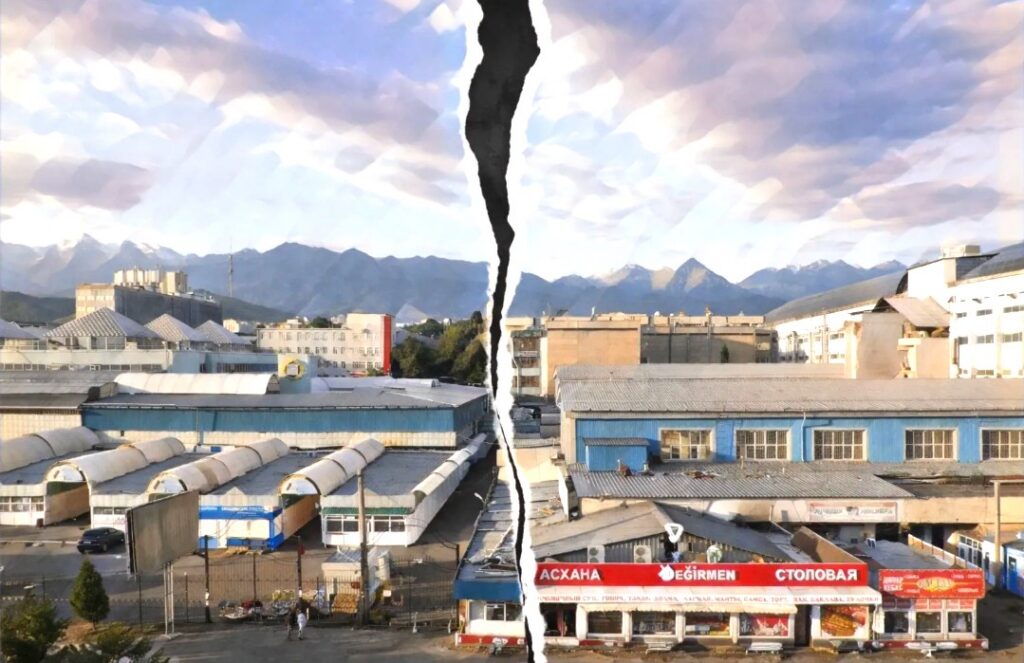
New Earthquake Jolts Almaty, Highlighting Central Asia’s Seismic Threat

Many residents of Almaty, Kazakhstan’s largest city, have known since childhood what to do in the event of an earthquake. Children are taught to stand near load-bearing walls or structural beams in their homes, as these areas are considered more resistant during tremors. Many households keep an emergency kit with water, food and blankets in an accessible place. Such precautions are not excessive: Almaty experiences regular seismic activity. The latest significant tremor occurred on February 17, with an epicenter located 74 kilometers northeast of the city. The earthquake registered a magnitude of 5.0. City residents left their homes and offices and gathered outside, a familiar reaction in a city long accustomed to seismic risk. National alert system In May 2024, Almaty introduced the Mass Alert system to notify residents of emergencies, including earthquakes, floods, and man-made disasters. The system uses Cell Broadcast technology to send text notifications to all mobile subscribers within a specific geographic area, regardless of their mobile operator. Because messages are transmitted through cell towers rather than individual calls or messages, the system is designed to avoid overloading mobile networks during emergencies. It is integrated with 28 seismic stations. Many experts say the system’s launch followed the January 2024 earthquake, which was felt across southern Kazakhstan. Almaty experienced several tremors measuring up to magnitude 5.0, triggering widespread panic. Traffic jams stretching for kilometers formed on roads leading out of the city. Forty-four people sought medical attention, most of them injured while attempting to exit buildings quickly. Scientists warn that a powerful and destructive earthquake in the region is inevitable, although the timing cannot be predicted. Almaty is located in a zone rated at up to 10 points on the MSK-64 seismic intensity scale. Each year, up to 200 minor tremors are recorded within an 80-kilometer radius of the city. Earthquakes with magnitudes between 2.0 and 4.0 are considered typical. Approximately 30 tectonic faults run through the city and its surroundings, more than 60% of them in mountainous areas. Experts estimate that, given current dense and high-rise construction, as many as 30% of buildings could be destroyed in the event of an earthquake measuring 9-10 points in intensity. During the Soviet period, buildings taller than nine stories were generally prohibited in the city. The notable exception was the 25-story Kazakhstan Hotel, which was constructed with seismic reinforcement measures. Today, high-rise construction has expanded significantly, including in some of the city’s more seismically vulnerable foothill areas. The emergency warning system does not predict earthquakes in advance; it issues alerts only once tremors have already been detected. The system has been activated during several real seismic events. Seismological predictions In Kazakhstan, official forecasts are issued by the Institute of Seismology. At the same time, attempts at earthquake prediction have occasionally emerged outside the scientific mainstream. One of the most prominent figures associated with such efforts is biophysicist Viktor Inyushin. In the 1990s, he appeared in the media describing experiments aimed at predicting earthquakes by observing crushed peas, acorns, barley seeds,...