• KGS/USD = 0.01144 0%
  • KZT/USD = 0.00216 0%
  • TJS/USD = 0.10562 0%
  • UZS/USD = 0.00008 0%
  • TMT/USD = 0.28530 0%
  • KGS/USD = 0.01144 0%
  • KZT/USD = 0.00216 0%
  • TJS/USD = 0.10562 0%
  • UZS/USD = 0.00008 0%
  • TMT/USD = 0.28530 0%
  • KGS/USD = 0.01144 0%
  • KZT/USD = 0.00216 0%
  • TJS/USD = 0.10562 0%
  • UZS/USD = 0.00008 0%
  • TMT/USD = 0.28530 0%
  • KGS/USD = 0.01144 0%
  • KZT/USD = 0.00216 0%
  • TJS/USD = 0.10562 0%
  • UZS/USD = 0.00008 0%
  • TMT/USD = 0.28530 0%
  • KGS/USD = 0.01144 0%
  • KZT/USD = 0.00216 0%
  • TJS/USD = 0.10562 0%
  • UZS/USD = 0.00008 0%
  • TMT/USD = 0.28530 0%
  • KGS/USD = 0.01144 0%
  • KZT/USD = 0.00216 0%
  • TJS/USD = 0.10562 0%
  • UZS/USD = 0.00008 0%
  • TMT/USD = 0.28530 0%
  • KGS/USD = 0.01144 0%
  • KZT/USD = 0.00216 0%
  • TJS/USD = 0.10562 0%
  • UZS/USD = 0.00008 0%
  • TMT/USD = 0.28530 0%
  • KGS/USD = 0.01144 0%
  • KZT/USD = 0.00216 0%
  • TJS/USD = 0.10562 0%
  • UZS/USD = 0.00008 0%
  • TMT/USD = 0.28530 0%

Viewing results 169 - 174 of 893

Kyrgyzstan Moves to Address Falling Water Levels in Lake Issyk-Kul

Kyrgyzstan is stepping up efforts to combat the declining water level of Lake Issyk-Kul, a critical ecological and economic resource, as the effects of climate change intensify. Deputy Prime Minister and Minister of Water Resources Bakyt Torobaev raised the issue at a government meeting this week, highlighting a combination of shrinking glaciers, reduced precipitation, and inefficient water use, particularly in agriculture, as key contributing factors. Lake Issyk-Kul, located in northeastern Kyrgyzstan, is the country’s largest lake and a vital component of the regional climate system. It also supports biodiversity and tourism. Torobaev warned that the continued decline in water levels could have far-reaching environmental, economic, and social consequences. Strategic Measures to Stabilize the Lake To address the crisis, Torobaev proposed a set of comprehensive interventions requiring cooperation between government agencies, scientists, local communities, and civil society. Key initiatives include: Modernizing irrigation systems and introducing water-saving technologies; Expanding green areas across the Issyk-Kul region; Enhancing research on glaciers and water resources; Developing long-term climate adaptation strategies. As previously reported by The Times of Central Asia, water diversion for agricultural irrigation, particularly outside the lake basin, was identified by experts at the 2024 National Water Forum as one of the primary threats to Issyk-Kul’s sustainability. Government Investment and Monitoring In response, the Kyrgyz government has pledged $392 million toward efforts to stabilize the lake’s water level. This includes $200 million dedicated to installing modern irrigation systems across 100,000 hectares of farmland. An additional investment will fund the deployment of 2,200 automated sensors to monitor water consumption in real time. Authorities expect these measures to return up to 200 million cubic meters of water to the lake, helping to mitigate the decline and protect Issyk-Kul's long-term ecological balance.
Bishkek Opens Poplar Nursery to Increase City Tree Cover

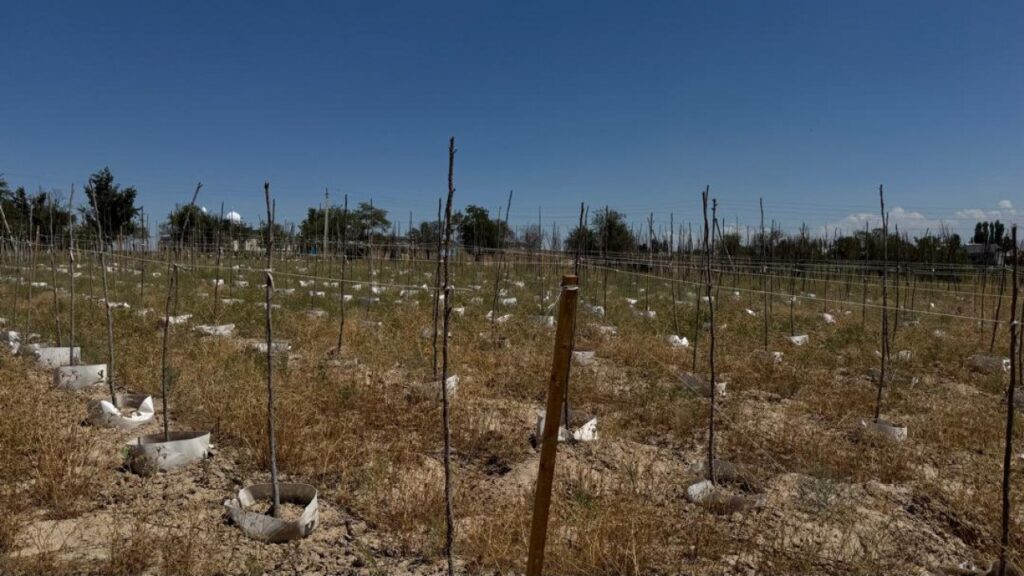
Bishkek has launched an experimental nursery dedicated to cultivating hybrid poplars as part of a broader initiative to restore the city’s declining green spaces. The project, spearheaded by Kyrgyzstan’s Ministry of Natural Resources, Ecology and Technical Supervision, aims to support long-term urban reforestation. Located on 24 hectares of land, the nursery is expected to produce up to 200,000 saplings each year. In 2025 alone, 12,000 hybrid poplars have already been planted. The selected variety is suited for urban environments; it does not produce fluff, grows up to two meters annually, and develops straight trunks with high crowns. Tree cuttings are used for continued propagation. Minister Meder Mashiev, who visited the site, stressed the strategic importance of the initiative. “If this business develops, all the problems of city greening can be solved,” he stated. The nursery is expected to reduce dependence on imported saplings and play a key role in reversing urban deforestation while improving air quality in the capital. As previously reported by The Times of Central Asia, Bishkek’s municipality is also collaborating with partners from Qingdao, China, to establish a large-scale tree and shrub nursery. This bilateral project forms part of a broader environmental restoration strategy aimed at strengthening the city’s ecological resilience. Once regarded as one of the greenest cities in the former Soviet Union, Bishkek has experienced a steady decline in tree cover over the past three decades due to rapid urban development. Environmental experts have urged authorities to prioritize planting tall, broadleaf deciduous trees, valued for their shade and noise absorption, rather than the coniferous species currently favored in urban landscaping.

The Caspian Sea Hits Historic Low

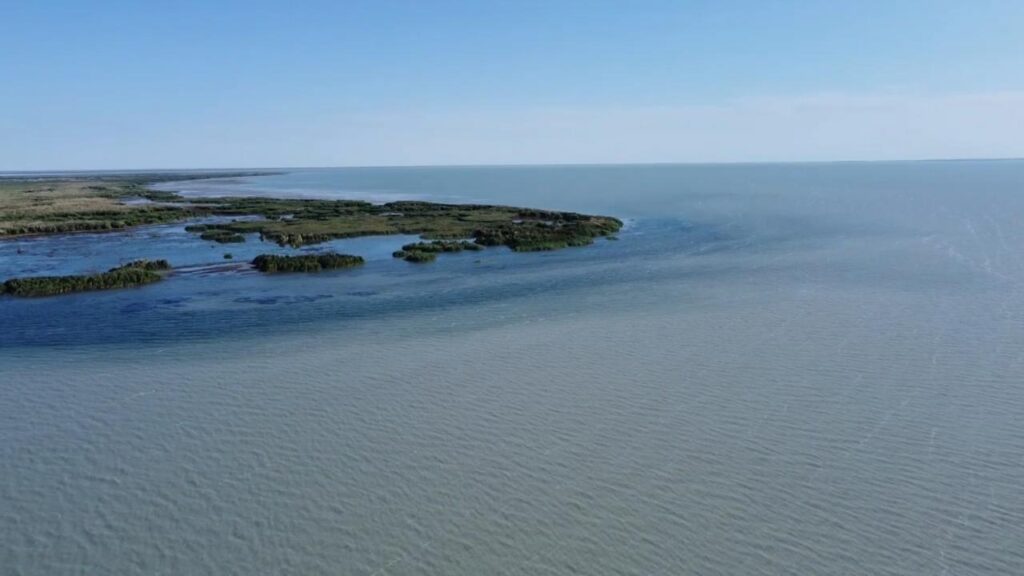
The Caspian Sea has dropped to its lowest recorded level, now sitting at less than 29 meters below sea level. The northern basin, bordering Russia and Kazakhstan, is shrinking particularly rapidly. As the water recedes, the exposed seabed is threatening key marine ecosystems. Experts warn the decline is already causing serious disruption to biodiversity in the region. Declining Volga Flow and Climate Change The downward trend in sea levels began in the 1990s and has accelerated since 2020, with a nearly 80-centimeter drop in the past four years. The primary factor is a decrease in the annual flow of the Volga River, which supplies approximately 80% of the Caspian's inflow and contributes 64% to the lake's total water balance. In recent years, the Volga’s annual discharge has ranged between 210 and 232 cubic kilometers, well below the historical average of around 250 cubic kilometers. At the same time, rising air temperatures are increasing evaporation rates, further depleting water levels. Scientists link these changes to global climate change and the ongoing rise in greenhouse gas emissions. Ecological and Economic Impact Human activity is compounding the problem. Significant water extraction from rivers for agriculture, industry, and municipal use is reducing the volume of water reaching the sea. Russia’s Ministry of Natural Resources is currently developing a comprehensive program to adapt to these shifting environmental conditions. The initiative aims to enhance forecasting, mitigate the consequences of shallowing, and adjust economic activities to reflect the new hydrological realities. Experts suggest that only a sustained annual inflow of around 270 cubic kilometers, comparable to levels recorded in the 1970s and 1990s, can halt the lake's ongoing decline. Changing Coastlines and Public Concern A recent video by Kazakh filmmaker Adai Myrzatay has stirred widespread attention on social media. The footage juxtaposes images of the Caspian coastline in 2013 and 2025. Twelve years ago, the pier was surrounded by open water and untouched shoreline. Today, the water has receded dramatically. Bushes now encircle the pier, and high-rise buildings stand where the shoreline once lay. The video has been viewed over 1.5 million times. The falling water level is leading to the loss of biological diversity and shrinking spawning grounds for species such as the Caspian seal and sturgeon. The shallowing is also disrupting shipping and fishing operations and raising the risk of international disputes over increasingly scarce water resources. A Shared Challenge for Five Nations The Caspian Sea, the world’s largest enclosed inland body of water, receives inflow from more than 130 rivers, including the Volga, Ural, Terek, Sulak, and Samur. Its coastline is shared by five countries: Russia, Kazakhstan, Turkmenistan, Azerbaijan, and Iran. While the Volga's inflow increased slightly to 232 cubic kilometers in 2024, it remains insufficient to reverse or even stabilize the sea’s decline. Experts agree that regional cooperation and a coordinated, long-term strategy for water resource management are essential to confronting this environmental crisis.

World Bank Report: Central Asia Faces Rising Risks from Extreme Heat

Cities across Central Asia are becoming increasingly vulnerable to extreme heat, posing significant risks to public health, economic productivity, and infrastructure, according to a new report by the World Bank. The study, which covers 70 urban areas in Europe and Central Asia, including Astana, Bishkek, Ashgabat, Tashkent, and several smaller cities in Tajikistan and Turkmenistan, highlights the urgent need for heat adaptation strategies. Rising Mortality and Economic Losses The report finds that heat-related mortality is already a serious concern. In Ashgabat, an estimated 25-28 people per 100,000 die annually due to extreme heat. In Astana, Bishkek, and Tashkent, the toll is slightly lower, at approximately 19-21 deaths per 100,000. Without intervention, annual heat-related deaths in cities like Astana and Tashkent could rise dramatically, reaching between 10,000 and 23,000 by 2090. Economic impacts are also mounting. In 2023, higher temperatures resulted in the loss of over 87,000 full-time jobs across the region. Uzbekistan alone saw more than 22,000 job losses, while nearly 18,000 were reported in Azerbaijan. By 2050, heat-related economic losses could exceed 2% of GDP in some urban centers, such as Ashgabat. Infrastructure Under Strain Rising temperatures are damaging infrastructure across Central Asia. In Kyrgyzstan, extreme heat causes deterioration to nearly 200 kilometers of road annually, driving up repair costs and disrupting transportation. Kazakhstan is facing similar challenges: recent heatwaves have warped asphalt and concrete surfaces in the southern and northeastern regions of the country. Adaptation Measures and Challenges Despite these threats, the report outlines viable solutions. Urban greening, such as planting trees and creating shaded areas, can help cool city streets. Retrofitting buildings to improve thermal insulation without increasing energy use, establishing early warning systems, and creating cooling centers are also recommended. Urban planning strategies should incorporate climate resilience by using heat-tolerant materials and factoring climate risks into infrastructure design. Investment in parks and green spaces, alongside the use of heat vulnerability maps, can guide targeted interventions. However, the report warns that a lack of funding may hinder progress. Without innovative financing mechanisms, many adaptation plans could be stalled despite their potential to mitigate long-term risks. The World Bank concludes that while the impacts of rising temperatures are already being felt across Central Asia, timely action can prevent far more serious consequences. Policymakers are urged to prioritize heat adaptation to safeguard lives, livelihoods, and infrastructure in an increasingly warming world.

Water Level in Lake Balkhash Continues to Rise

The water level in Kazakhstan’s Lake Balkhash has increased by 32 centimeters during the first half of 2025, rising from 341.55 to 341.87 meters above sea level, based on the Baltic height system, according to data released by Kazakhstan’s Ministry of Water Resources and Irrigation. Located approximately 280 kilometers northwest of Almaty, Lake Balkhash is one of Asia’s largest inland bodies of water and ranks as the fifteenth-largest lake in the world by surface area. Since the beginning of 2025, 8.52 billion cubic meters of water have been discharged from the Kapchagay Reservoir in the Almaty region into Lake Balkhash. This marks an increase from 8 billion cubic meters over the same period in 2024. Officials expect total inflow from the reservoir to reach approximately 12 billion cubic meters by year-end. The lake’s hydrological health is closely tied to the transboundary Ili River, which originates in China and supplies nearly 70% of Lake Balkhash’s total inflow. The Ili’s flow is regulated by the Kapchagay Reservoir, which in 2025 is at full capacity for the second consecutive year, a milestone not seen in over a decade. The reservoir had previously reached full capacity in 2024 for the first time in ten years. In December 2024, Kazakhstan signed a cooperation agreement with the French Development Agency (AFD) and the French Geological Survey (BRGM) to support a long-term conservation effort for Lake Balkhash. The agreement outlines a comprehensive study of the lake basin and the development of a sustainability strategy through 2040, aiming to safeguard one of Central Asia’s most ecologically and economically significant water bodies.

Uzbekistan Faces Criticism Over Charvak Tourism Project

As previously reported by The Times of Central Asia, a major tourism development project on the shores of Uzbekistan’s Charvak Reservoir has sparked public criticism and environmental concern. The proposed resort complex, Sea Breeze Uzbekistan, has come under fire for proceeding without open public consultation, prompting a wave of backlash on social media. The hashtag #SaveChorvoq has emerged as a rallying cry for those demanding transparency and environmental accountability. Local Discontent and Environmental Concerns According to climatologist Erkin Abdulakhatov, preliminary construction activity has already begun along the reservoir’s shoreline. He warned that large-scale development near the water could negatively impact the local ecosystem and alter weather patterns. “If these promises are not fulfilled, the public has the right to organize a petition against mega construction based on the Aarhus Convention,” Abdulakhatov stated. His comments were later shared by Rasul Kusherbayev, an adviser to the Minister of Ecology, on his Telegram channel. However, Kusherbayev added that no official confirmation of construction has been released. Investor Response and Environmental Commitments Investor Emin Agalarov, the driving force behind the Sea Breeze brand, attempted to reassure the public during a press event in Baku. He emphasized that no construction would begin until full public consultations, environmental impact assessments, and technical planning are completed. “We will carry out construction only after these steps,” Agalarov said. During a joint press tour to Azerbaijan on July 8-9, Uzbek officials and journalists visited the Sea Breeze complex near Baku to observe the project's environmental safeguards. Hosted by Uzbekistan’s Ministry of Ecology and the State Center for Environmental Expertise, the visit aimed to assess compliance with international standards for water, soil, and engineering practices. “I want Sea Breeze to become the most environmentally friendly project in any country, whether Azerbaijan, Uzbekistan, Montenegro, or Kazakhstan,” Agalarov told the delegation, noting the project’s planned infrastructure, clean beaches, and green public spaces. Project Specifications and Safeguards Sea Breeze Baku was connected to a centralized sewage system in 2024, replacing more than 100 small treatment plants with a modern collection network that serves a 50-kilometer coastal area. A similar system is now proposed for Charvak. To protect the reservoir’s shoreline, project planners intend to shift the development zone 400 to 500 meters away from the water, significantly exceeding the legal minimum buffer of 50 meters. The area in between would feature parks, walking paths, public beaches, and recreational infrastructure. Agalarov also proposed a ring collector system for wastewater treatment along the entire Charvak coastline, a move he said would benefit both the resort and the wider ecosystem. Government Oversight and Expert Involvement Uzbekistan’s Minister of Ecology, Aziz Abdukhakimov, has expressed cautious support, stating: “Partners must follow Green-Based Solutions. We will fully support projects that meet ecological standards. Special attention must go to protecting water resources. All risks must be assessed by qualified experts.” To ensure accountability, the ministry has announced the formation of an International Environmental Council for Charvak, which will include independent specialists tasked with overseeing public dialogue, environmental assessments, and project...