• KGS/USD = 0.01144 0%
  • KZT/USD = 0.00218 0%
  • TJS/USD = 0.10663 0%
  • UZS/USD = 0.00008 0%
  • TMT/USD = 0.28530 0%
  • KGS/USD = 0.01144 0%
  • KZT/USD = 0.00218 0%
  • TJS/USD = 0.10663 0%
  • UZS/USD = 0.00008 0%
  • TMT/USD = 0.28530 0%
  • KGS/USD = 0.01144 0%
  • KZT/USD = 0.00218 0%
  • TJS/USD = 0.10663 0%
  • UZS/USD = 0.00008 0%
  • TMT/USD = 0.28530 0%
  • KGS/USD = 0.01144 0%
  • KZT/USD = 0.00218 0%
  • TJS/USD = 0.10663 0%
  • UZS/USD = 0.00008 0%
  • TMT/USD = 0.28530 0%
  • KGS/USD = 0.01144 0%
  • KZT/USD = 0.00218 0%
  • TJS/USD = 0.10663 0%
  • UZS/USD = 0.00008 0%
  • TMT/USD = 0.28530 0%
  • KGS/USD = 0.01144 0%
  • KZT/USD = 0.00218 0%
  • TJS/USD = 0.10663 0%
  • UZS/USD = 0.00008 0%
  • TMT/USD = 0.28530 0%
  • KGS/USD = 0.01144 0%
  • KZT/USD = 0.00218 0%
  • TJS/USD = 0.10663 0%
  • UZS/USD = 0.00008 0%
  • TMT/USD = 0.28530 0%
  • KGS/USD = 0.01144 0%
  • KZT/USD = 0.00218 0%
  • TJS/USD = 0.10663 0%
  • UZS/USD = 0.00008 0%
  • TMT/USD = 0.28530 0%

Viewing results 187 - 192 of 940

World Bank Report: Central Asia Faces Rising Risks from Extreme Heat

Cities across Central Asia are becoming increasingly vulnerable to extreme heat, posing significant risks to public health, economic productivity, and infrastructure, according to a new report by the World Bank. The study, which covers 70 urban areas in Europe and Central Asia, including Astana, Bishkek, Ashgabat, Tashkent, and several smaller cities in Tajikistan and Turkmenistan, highlights the urgent need for heat adaptation strategies. Rising Mortality and Economic Losses The report finds that heat-related mortality is already a serious concern. In Ashgabat, an estimated 25-28 people per 100,000 die annually due to extreme heat. In Astana, Bishkek, and Tashkent, the toll is slightly lower, at approximately 19-21 deaths per 100,000. Without intervention, annual heat-related deaths in cities like Astana and Tashkent could rise dramatically, reaching between 10,000 and 23,000 by 2090. Economic impacts are also mounting. In 2023, higher temperatures resulted in the loss of over 87,000 full-time jobs across the region. Uzbekistan alone saw more than 22,000 job losses, while nearly 18,000 were reported in Azerbaijan. By 2050, heat-related economic losses could exceed 2% of GDP in some urban centers, such as Ashgabat. Infrastructure Under Strain Rising temperatures are damaging infrastructure across Central Asia. In Kyrgyzstan, extreme heat causes deterioration to nearly 200 kilometers of road annually, driving up repair costs and disrupting transportation. Kazakhstan is facing similar challenges: recent heatwaves have warped asphalt and concrete surfaces in the southern and northeastern regions of the country. Adaptation Measures and Challenges Despite these threats, the report outlines viable solutions. Urban greening, such as planting trees and creating shaded areas, can help cool city streets. Retrofitting buildings to improve thermal insulation without increasing energy use, establishing early warning systems, and creating cooling centers are also recommended. Urban planning strategies should incorporate climate resilience by using heat-tolerant materials and factoring climate risks into infrastructure design. Investment in parks and green spaces, alongside the use of heat vulnerability maps, can guide targeted interventions. However, the report warns that a lack of funding may hinder progress. Without innovative financing mechanisms, many adaptation plans could be stalled despite their potential to mitigate long-term risks. The World Bank concludes that while the impacts of rising temperatures are already being felt across Central Asia, timely action can prevent far more serious consequences. Policymakers are urged to prioritize heat adaptation to safeguard lives, livelihoods, and infrastructure in an increasingly warming world.
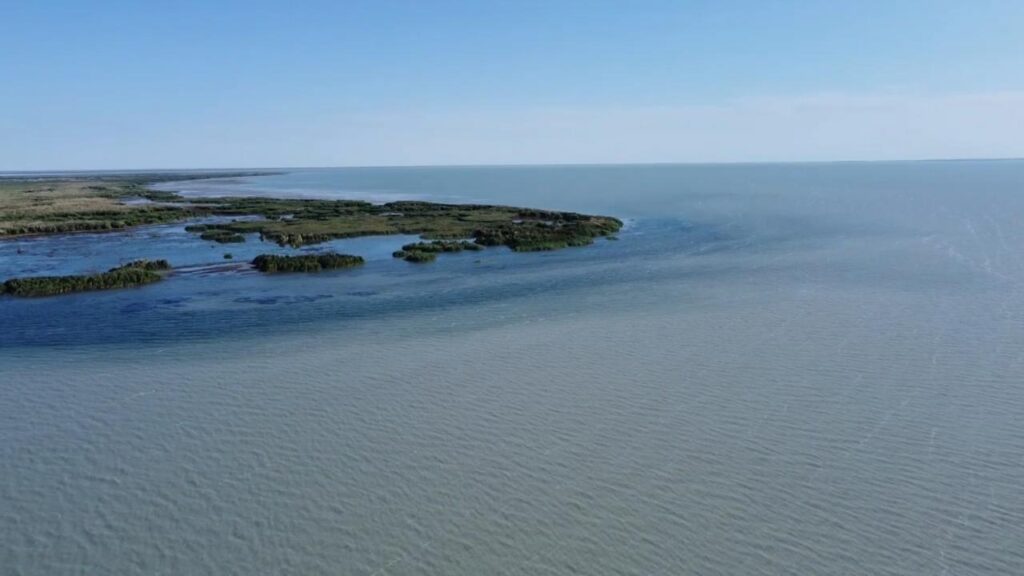
Water Level in Lake Balkhash Continues to Rise

The water level in Kazakhstan’s Lake Balkhash has increased by 32 centimeters during the first half of 2025, rising from 341.55 to 341.87 meters above sea level, based on the Baltic height system, according to data released by Kazakhstan’s Ministry of Water Resources and Irrigation. Located approximately 280 kilometers northwest of Almaty, Lake Balkhash is one of Asia’s largest inland bodies of water and ranks as the fifteenth-largest lake in the world by surface area. Since the beginning of 2025, 8.52 billion cubic meters of water have been discharged from the Kapchagay Reservoir in the Almaty region into Lake Balkhash. This marks an increase from 8 billion cubic meters over the same period in 2024. Officials expect total inflow from the reservoir to reach approximately 12 billion cubic meters by year-end. The lake’s hydrological health is closely tied to the transboundary Ili River, which originates in China and supplies nearly 70% of Lake Balkhash’s total inflow. The Ili’s flow is regulated by the Kapchagay Reservoir, which in 2025 is at full capacity for the second consecutive year, a milestone not seen in over a decade. The reservoir had previously reached full capacity in 2024 for the first time in ten years. In December 2024, Kazakhstan signed a cooperation agreement with the French Development Agency (AFD) and the French Geological Survey (BRGM) to support a long-term conservation effort for Lake Balkhash. The agreement outlines a comprehensive study of the lake basin and the development of a sustainability strategy through 2040, aiming to safeguard one of Central Asia’s most ecologically and economically significant water bodies.

Uzbekistan Faces Criticism Over Charvak Tourism Project

As previously reported by The Times of Central Asia, a major tourism development project on the shores of Uzbekistan’s Charvak Reservoir has sparked public criticism and environmental concern. The proposed resort complex, Sea Breeze Uzbekistan, has come under fire for proceeding without open public consultation, prompting a wave of backlash on social media. The hashtag #SaveChorvoq has emerged as a rallying cry for those demanding transparency and environmental accountability. Local Discontent and Environmental Concerns According to climatologist Erkin Abdulakhatov, preliminary construction activity has already begun along the reservoir’s shoreline. He warned that large-scale development near the water could negatively impact the local ecosystem and alter weather patterns. “If these promises are not fulfilled, the public has the right to organize a petition against mega construction based on the Aarhus Convention,” Abdulakhatov stated. His comments were later shared by Rasul Kusherbayev, an adviser to the Minister of Ecology, on his Telegram channel. However, Kusherbayev added that no official confirmation of construction has been released. Investor Response and Environmental Commitments Investor Emin Agalarov, the driving force behind the Sea Breeze brand, attempted to reassure the public during a press event in Baku. He emphasized that no construction would begin until full public consultations, environmental impact assessments, and technical planning are completed. “We will carry out construction only after these steps,” Agalarov said. During a joint press tour to Azerbaijan on July 8-9, Uzbek officials and journalists visited the Sea Breeze complex near Baku to observe the project's environmental safeguards. Hosted by Uzbekistan’s Ministry of Ecology and the State Center for Environmental Expertise, the visit aimed to assess compliance with international standards for water, soil, and engineering practices. “I want Sea Breeze to become the most environmentally friendly project in any country, whether Azerbaijan, Uzbekistan, Montenegro, or Kazakhstan,” Agalarov told the delegation, noting the project’s planned infrastructure, clean beaches, and green public spaces. Project Specifications and Safeguards Sea Breeze Baku was connected to a centralized sewage system in 2024, replacing more than 100 small treatment plants with a modern collection network that serves a 50-kilometer coastal area. A similar system is now proposed for Charvak. To protect the reservoir’s shoreline, project planners intend to shift the development zone 400 to 500 meters away from the water, significantly exceeding the legal minimum buffer of 50 meters. The area in between would feature parks, walking paths, public beaches, and recreational infrastructure. Agalarov also proposed a ring collector system for wastewater treatment along the entire Charvak coastline, a move he said would benefit both the resort and the wider ecosystem. Government Oversight and Expert Involvement Uzbekistan’s Minister of Ecology, Aziz Abdukhakimov, has expressed cautious support, stating: “Partners must follow Green-Based Solutions. We will fully support projects that meet ecological standards. Special attention must go to protecting water resources. All risks must be assessed by qualified experts.” To ensure accountability, the ministry has announced the formation of an International Environmental Council for Charvak, which will include independent specialists tasked with overseeing public dialogue, environmental assessments, and project...

Melting Mountains, Drying Futures: Central Asia Confronts Water Emergency

Central Asian countries are mobilizing against an emerging water crisis as a United Nations report highlights the vulnerability of mountain water systems to climate change. Identifying ranges like the Tien Shan and the Pamirs, the UN World Water Development Report 2025 – Mountains and Glaciers: Water Towers – warns that rapid glacier melt and erratic snowfall are threatening vital freshwater supplies worldwide. According to the report, mountains provide up to 60% of the world’s annual freshwater flows, with over two billion people depending directly on water from mountain sources. This risk is particularly acute in Central Asia: a UN drought outlook noted that rising temperatures and shrinking snowpack in the high mountains of Tajikistan and Kyrgyzstan are accelerating glacier retreat, posing a “long-term threat to the region’s water security.” Half of rural mountain communities in developing countries already face food insecurity, and receding glaciers could impact two-thirds of all irrigated agriculture globally – a dire scenario for Central Asia’s irrigation-dependent economies. Rivers like the Amu Darya and Syr Darya are fed by glacier runoff and support downstream agriculture, hydropower, and municipal needs in Uzbekistan, Kazakhstan, and Turkmenistan. But climate-driven glacial retreat, inefficient irrigation, and aging infrastructure have already pushed the region toward a breaking point. [caption id="attachment_33952" align="aligncenter" width="2560"] Lake Karakul in Tajikistan is expanding due to melting glaciers; image: TCA, Stephen M. Bland[/caption] Kazakhstan Steps Up Leading the regional response, Kazakhstan has launched sweeping reforms to modernize its water infrastructure and governance. The country has committed to building 42 new reservoirs, refurbishing 14,000 kilometers of irrigation canals, and investing heavily in digital water monitoring and conservation. Established in September 2023, the Ministry of Water Resources and Irrigation is coordinating the overhaul under an updated national Water Code. The government has also launched an integrated water portal, hydro.gov.kz, and pledged to digitize more than 3,500 kilometers of canals for precise flow tracking. In an address at the Astana International Forum, Deputy Prime Minister Kanat Bozumbayev framed water as a “powerful driver of cooperation, sustainable development and regional stability,” urging closer regional coordination. Kazakhstan is also leading environmental restoration efforts. As the current chair of the International Fund for Saving the Aral Sea (IFAS), it is overseeing projects to rehabilitate the North Aral Sea, including raising the Kokaral Dam to restore water levels and fisheries. In 2024 alone, local irrigation reforms in Kyzylorda saved 200 million cubic meters of water, which was redirected toward the shrinking sea. [caption id="attachment_12017" align="aligncenter" width="2560"] The Kokaral Dam in Kazakhstan; image: TCA, Stephen M. Bland[/caption] International Support and Financing Kazakhstan’s strategy has been backed by a plethora of international partners. The European Bank for Reconstruction and Development (EBRD) has financed over €255 million in water and wastewater projects in Kazakhstan, including a €96.4 million sovereign loan for a new treatment plant in Aktobe. Meanwhile, the Eurasian Development Bank (EDB) and UNDP have launched a regional partnership to expand access to modern irrigation, digitize water flows, and establish training centers. “We must act very quickly and...

Kyrgyzstan Eases Plastic Ban to Comply with EAEU Standards

Kyrgyz President Sadyr Japarov has signed amendments to the law “On Limiting the Circulation of Polymer Film Bags and Plastic Items in the Territory of the Kyrgyz Republic,” easing some of the country’s planned restrictions on single-use plastics. The law was originally passed by parliament on June 17, 2025. Initially set to take full effect on January 1, 2027, the legislation included a sweeping ban on the production, import, and sale of several plastic products, including: Polymer film bags All types of disposable plastic tableware Disposable plastic food packaging PET (polyethylene terephthalate) bottles Disposable plastic egg cartons Plastic coffee capsules Grocery bags Under the newly adopted amendments, PET bottles and disposable plastic food packaging have been removed from the list of banned items. Additionally, the original ban on disposable plastic tableware has been narrowed to apply only to non-recyclable products. Aligning with Regional Trade Rules The changes were introduced to align Kyrgyzstan’s environmental legislation with the regulations of the Eurasian Economic Union (EAEU), which comprises Armenia, Belarus, Kazakhstan, Kyrgyzstan, and Russia. Several of the proposed restrictions, particularly the ban on PET bottles and plastic food containers, had sparked concern among domestic and regional businesses, who warned of potential disruptions to manufacturing and cross-border trade. Industry groups argued that the original provisions would have conflicted with common EAEU standards, complicating compliance and affecting supply chains. Environmental Efforts Continue in Issyk-Kul Despite the softening of national restrictions, local efforts to combat plastic pollution remain in place. As The Times of Central Asia previously reported, Kyrgyzstan banned the use and sale of plastic bags in Issyk-Kul’s resort and recreational areas as of March 2025. The move is part of a broader initiative to protect the lake’s fragile ecosystem and preserve environmental cleanliness.

Environmentalists Urge Relocation of Hyrasia One Green Hydrogen Project

Kazakhstan’s Ministry of Ecology and Natural Resources is facing growing pressure from environmental experts to alter the course of the country's flagship green hydrogen initiative. The Public Council under the Ministry has recommended relocating key infrastructure of the €50 billion ($55 billion) Hyrasia One project, citing threats to biodiversity in the Mangistau region. Developed by the Swedish-German company Svevind Energy Group, Hyrasia One is poised to become Kazakhstan’s largest green hydrogen production facility, with plans to generate up to two million tonnes annually by 2030 using solar and wind power. But environmental groups argue that parts of the planned development risk causing irreversible ecological damage. In an official statement, the Public Council advised that the proposed “Rahim” and “Kanagat” renewable energy clusters be relocated to previously industrialized zones, such as former oil and gas fields, rather than pristine ecosystems home to endangered species. “It would be more practical for the company as well, as such territories already have existing infrastructure, including roads, power lines, and cellular coverage,” the council noted in its published protocol. Ecologists warn that the current project layout intersects with the habitat and migratory routes of the goitered gazelle, a species listed in Kazakhstan’s Red Book of endangered fauna. The installation of wind turbines, solar panels, roads, and transmission lines in these areas could fragment ecosystems and disrupt transboundary conservation initiatives involving Kazakhstan, Uzbekistan, and Turkmenistan. The development risks affecting several protected areas, including the Ustyurt Nature Reserve (and its proposed “Southern Ustyurt” extension), Kyzylsai Nature Park in Kazakhstan, Uzbekistan’s “South Ustyurt” National Park, and Turkmenistan’s Gaplangyr Reserve, home to the Sarykamysh and Shasenem wildlife sanctuaries. Council members also raised legal and procedural issues, alleging that land allocations for the project were made without proper legal oversight and that public consultations during the environmental impact assessment (EIA) process were inadequate. They further claim that Hyrasia One representatives have declined to attend two separate council sessions dedicated to the project. The council has formally submitted its findings and relocation proposal to the Presidential Administration, the Government of Kazakhstan, and regional authorities in Mangystau. As previously reported by The Times of Central Asia, Hyrasia One is central to Kazakhstan’s ambitions to become a key exporter of green energy to the European Union. The project may also benefit from emerging energy cooperation with China, further raising the stakes for its execution and environmental impact.