• KGS/USD = 0.01144 0%
  • KZT/USD = 0.00212 0%
  • TJS/USD = 0.10456 0.19%
  • UZS/USD = 0.00008 0%
  • TMT/USD = 0.28490 0%
  • KGS/USD = 0.01144 0%
  • KZT/USD = 0.00212 0%
  • TJS/USD = 0.10456 0.19%
  • UZS/USD = 0.00008 0%
  • TMT/USD = 0.28490 0%
  • KGS/USD = 0.01144 0%
  • KZT/USD = 0.00212 0%
  • TJS/USD = 0.10456 0.19%
  • UZS/USD = 0.00008 0%
  • TMT/USD = 0.28490 0%
  • KGS/USD = 0.01144 0%
  • KZT/USD = 0.00212 0%
  • TJS/USD = 0.10456 0.19%
  • UZS/USD = 0.00008 0%
  • TMT/USD = 0.28490 0%
  • KGS/USD = 0.01144 0%
  • KZT/USD = 0.00212 0%
  • TJS/USD = 0.10456 0.19%
  • UZS/USD = 0.00008 0%
  • TMT/USD = 0.28490 0%
  • KGS/USD = 0.01144 0%
  • KZT/USD = 0.00212 0%
  • TJS/USD = 0.10456 0.19%
  • UZS/USD = 0.00008 0%
  • TMT/USD = 0.28490 0%
  • KGS/USD = 0.01144 0%
  • KZT/USD = 0.00212 0%
  • TJS/USD = 0.10456 0.19%
  • UZS/USD = 0.00008 0%
  • TMT/USD = 0.28490 0%
  • KGS/USD = 0.01144 0%
  • KZT/USD = 0.00212 0%
  • TJS/USD = 0.10456 0.19%
  • UZS/USD = 0.00008 0%
  • TMT/USD = 0.28490 0%

Viewing results 943 - 948 of 3334

Astana International Forum: Not Just Another Davos

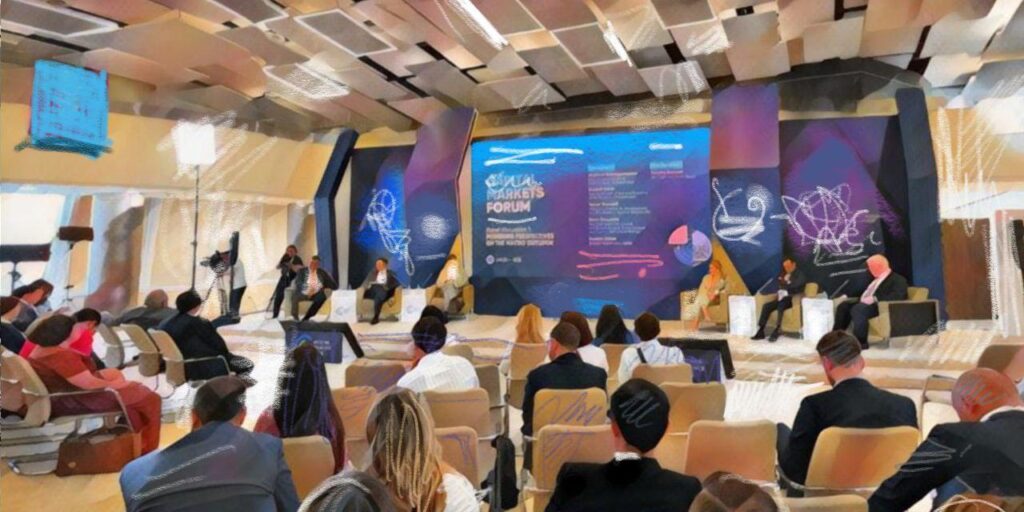
Kazakhstan’s Astana International Forum (AIF) has quietly entered a new phase in its development. Set to convene again this month, it began in 2008 as a targeted economic forum. Over time it has gradually evolved into a broader diplomatic platform aspiring to serve the so-called “Global South” as a whole. The AIF seeks to offer a deliberately open space for structured yet flexible dialogue across economic, political, and security domains, in a world full of international gatherings either overdetermined by legacy institutions or narrowly focused on crisis response. The AIF does not model itself on any existing institution. It is meant neither to replicate global summits nor to impose consensus, nor to replace regional blocs or legacy mechanisms. Rather, it reflects Kazakhstan’s own diplomatic philosophy — what President Kassym-Jomart Tokayev calls “multi-vector foreign policy” — seeking to extend this philosophy outward through a forum that prioritizes engagement over alignment and dialogue over doctrine. The AIF’s early period, from 2008 through roughly 2015, was defined by foundational work. Then called the Astana Economic Forum, it brought together central bankers, financial policymakers, and development agencies. The scope was technocratic, focusing on macroeconomic modernization and public-sector reform. Even in this limited format, however, the initiative revealed Kazakhstan's national aspiration to connect with wider global trends in institutional development and governance. Those formative years correspond to what, in terms of complex-systems theory, might be called the Forum’s phase of “emergence”: a period of assembling functions, testing formats, and learning the rhythms of international convening. These years were not marked by geopolitical ambition, but they did set in motion a process of institutional self-recognition. Kazakhstan was not just hosting events; it was experimenting with a type of global presence that would grow more distinct in later years. From 2015 to 2022, the Forum entered a more self-defining stage. It retained its core economic focus, but it increasingly attracted participants from beyond financial and development sectors. This broadened its scope to include questions of connectivity, regional stability, and sustainable development. The shift was not an accident. It accompanied Kazakhstan’s growing involvement in regional diplomacy and its active participation in a range of other multilateral structures. During this second period, the Forum took on the character of an institution with internal momentum. (This is what complex-systems theorists might term “autopoiesis,” i.e., the ability of a system to reproduce and maintain itself.) By adapting to a wider field of participants and issues, the AIF began to articulate a mission no longer limited to showcasing Kazakhstan’s domestic reforms but extending toward the creation of new transnational linkages. The rebranding of the old Astana Economic Forum as the Astana International Forum affirmed this shift in mandate, scope, and ambition. That rebranding marked the beginning of what now appears to be a critical inflection point. The cancellation of the 2024 edition due to catastrophic flooding created a rupture; but the organizers, rather than rush a replacement, deferred the Forum and used the intervening time to clarify its structure and message. The...
Afghanistan’s Qosh-Tepa Canal Could Impact Kazakhstan’s Water Security

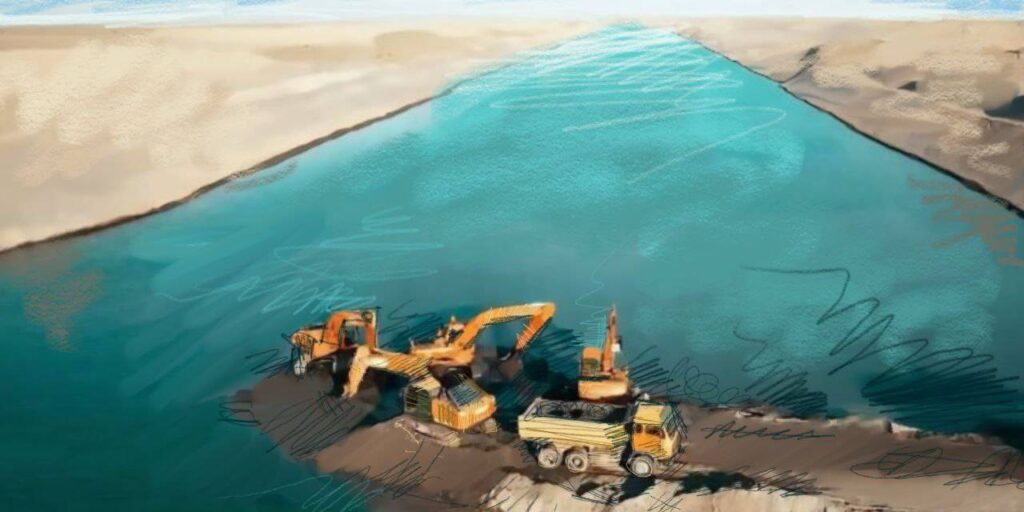
The construction of the Qosh-Tepa Canal in Afghanistan and its potential implications for Central Asia’s water security were central topics at the recent international conference, Water Security and Transboundary Water Use: Challenges and Solutions, held in Astana. Delegates from Turkey, Israel, Tajikistan, Kyrgyzstan, Afghanistan, and Turkmenistan convened to address the canal’s possible repercussions and broader issues of regional water distribution. Potential Threats to the Syr Darya Kazakhstan’s Deputy Minister of Water Resources and Irrigation, Aslan Abdraimov, warned that the Qosh-Tepa Canal could significantly reduce the flow of the Syr Darya River, with direct consequences for the already depleted Aral Sea. While Kazakhstan does not share a border with Afghanistan, the canal's impact is expected to ripple across the region. “No sharp fluctuations in water resources are expected in the near term, but in the long term, a reduction in the Syr Darya’s flow is inevitable,” Abdraimov stated. He emphasized that this would further strain the fragile water balance in the Aral Sea basin. The Aral Sea’s degradation has been ongoing for decades, largely due to the diversion of the Amu Darya and Syr Darya rivers for agricultural use, primarily for irrigating cotton and wheat fields. These diversions have contributed heavily to the sea’s dramatic shrinkage. Azamatkhan Amirtayev, chairman of Kazakhstan’s Baytak Party, expressed concern that the Qosh-Tepa Canal could divert 25-30% of the Amu Darya’s flow. “This means that Uzbekistan and Turkmenistan will receive less water. Consequently, Uzbekistan may draw more from the Syr Darya, leading to reduced water availability for Kazakhstan, potentially by 30-40%,” Amirtayev said. He urged for regional cooperation and scientifically informed policymaking to mitigate water losses. The Qosh-Tepa Canal and Its Regional Consequences The Qosh-Tepa Canal, under construction in northern Afghanistan, is designed to stretch 285 kilometers and span approximately 100 meters in width. Once operational, it is expected to irrigate over 500,000 hectares of farmland by diverting up to 10 cubic kilometers of water annually from the Amu Darya, roughly a quarter of the river’s average flow. Such a significant withdrawal could disrupt the hydrological balance across Central Asia. Reduced flows in the Syr Darya may accelerate the desiccation of the Aral Sea and exacerbate ecological degradation in Kazakhstan’s downstream regions. Experts at the conference underscored the urgency of strengthening regional water diplomacy and establishing new cooperative frameworks to ensure sustainable water usage and prevent environmental disasters. Hope for Dialogue Afghan representatives have previously signaled a willingness to engage in dialogue on water resource management. Observers suggest that joint initiatives in water management could play a key role in easing regional tensions and improving environmental outcomes. As the region faces mounting water stress due to climate change, population growth, and infrastructure development, coordinated action among Central Asian states and Afghanistan is increasingly seen as essential for long-term water security.

The Abu Dhabi-Kazakhstan Connection

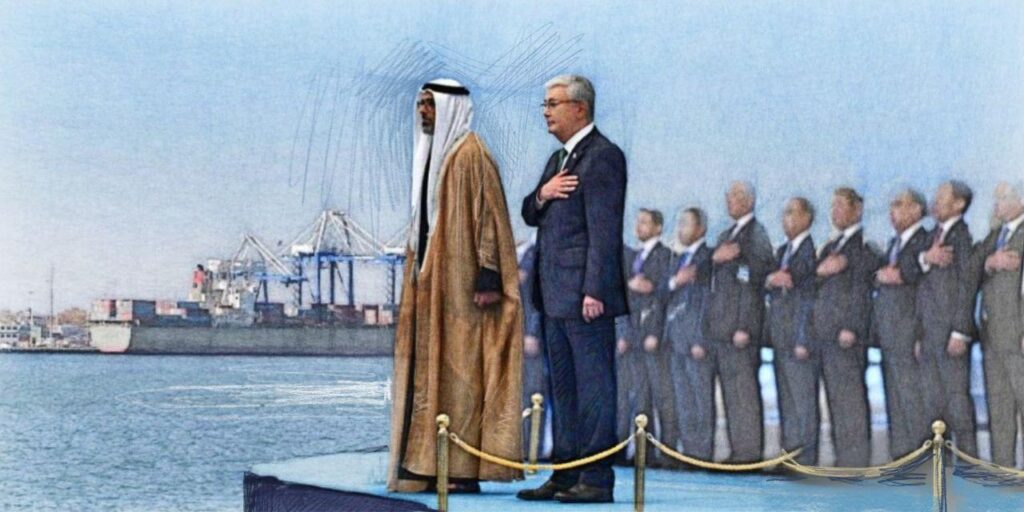
Crown Prince of Abu Dhabi Khaled bin Mohamed bin Zayed Al Nahyan led a delegation of officials and businessmen from the United Arab Emirates on a visit to Kazakhstan to attend the Kazakhstan-UAE Business Forum on May 12. During the visit, Kazakhstan and the UAE signed deals worth some $5 billion and not surprisingly, three of the nine agreements were with Abu Dhabi Ports Group. Building a new trade route to the south Abu Dhabi Ports Group (AD Ports Group) has been leading the way in connecting Kazakhstan to the Middle East, and in turn, the UAE company is looking to take advantage of Kazakhstan’s key position along the Middle Corridor trade route. In early August 2023, Davud Tafti, the head of AD Ports Group subsidiary Simatech Shipping & Forwarding, met with Kazakhstan’s Minister of Trade Serik Zhumangarin to discuss the shortest direct route for shipping “Kazakh export cargo the markets of the Persian Gulf, the Middle East, Pakistan, India and the coast of East Africa.” The route goes from Kazakhstan’s Caspian port of Kuryk to the Iranian Caspian port at Amirabad. From there goods are shipped to the Iranian Persian Gulf port at Bandar Abbas and loaded onto ships heading to UAE ports at Khalifa and Fujairah. The total time from Kuryk to Bandar Abbas is three days. By the time Tafti and Zhumangarin met, AD Ports Group had already purchased four ships with a capacity of 7.500 tons each for transportation of bulk, container, and general cargo along Caspian Sea routes. Tafti said there were plans to buy ten more similar vessels with Amirabad being used as their home port. Simatech Shipping & Forwarding also bought two barges, each capable of transporting 350 trucks, with plans to purchase 1,000 trucks for shipping goods between Amirabad and Bandar Abbas. AD Ports Group signed a strategic partnership agreement with state oil and gas company KazMunaiGas (KMG) in January 2023 aimed at developing Kazakhstan’s tanker fleet in the Caspian and Black seas. The parties formed a joint venture called Caspian Integrated Maritime Solutions (CIMS). CIMS announced in December 2023 that working with KMG subsidiary KazMorTransFlot, Kazakhstan’s national shipping company, it had acquired two oil tankers for use in the Caspian Sea. AD Ports Group reached an agreement in January 2024 to construct a facility on Kazakhstan’s Caspian coast for building and repairing ships. Work started in early 2025 on two container vessels, each with the capacity to carry more than 500 twenty-foot equivalent units (TEU) and built especially for use on the Caspian Sea. AD Ports Group also formed a joint venture with state railway company Kazakhstan Temir Zholy in December 2023 with the aim of improving logistics operations for transferring goods using rail and maritime routes. At the moment, the CIMS route is by far the fastest way for Kazakhstan to trade with the Middle East. In May 2025, Kazakhstan Temir Zholy sent the first shipment of wheat via Turkmenistan and Iran to Bandar Abbas, and from there by sea...

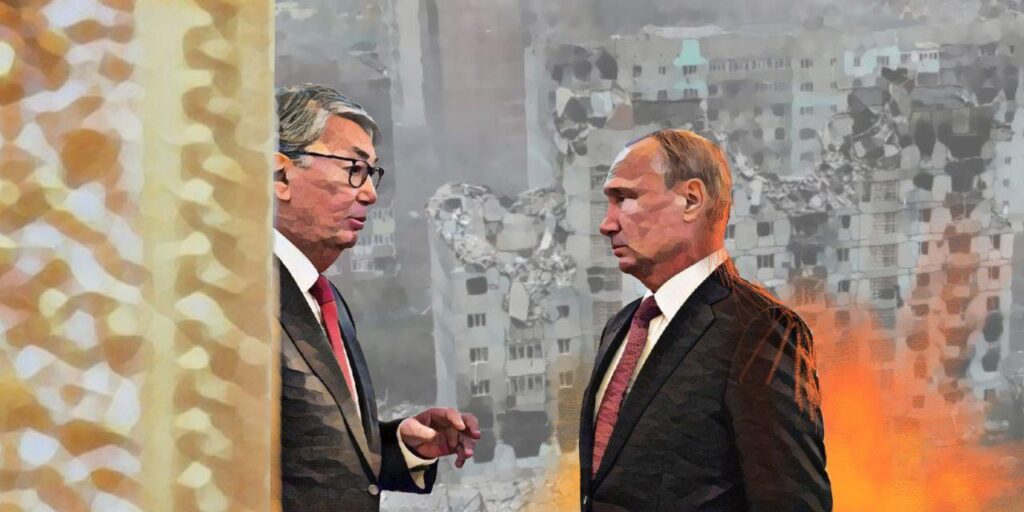
Opinion: The Ukraine-Russia Peace Talks Need Multiple Platforms for Negotiations

The proposed Istanbul meeting between Zelensky and Putin on May 15 did not take place, with no Russian ministers attending the talks Putin himself had called for, leading Zelensky to describe the Russian delegation as "phony". Hopes for peace remain, however, as other stakeholders have expressed their eagerness to support a resolution. With its unique geopolitical position as a bridge between Europe and Asia, Turkey was an obvious choice to host the negotiations. While Turkey has sought to maintain balanced relations throughout the conflict, its provision of military support to Ukraine, including drones, has complicated its image as a neutral party. Despite this, as a NATO member with significant energy partnerships with Russia, Turkey serves as a crucial intermediary. Furthermore, its active role in initiatives like the Black Sea Grain Agreement has reinforced its credibility in international diplomacy. Turkey’s continued involvement, therefore, benefits not only the peace process but also its own economic and strategic interests. Turkey is not the only stakeholder on the periphery of Russia, however; Kazakhstan is also well-positioned to contribute to the peace negotiations. Kazakhstan’s shared history with Russia and Ukraine as former Soviet republics has shaped mutual economic and security frameworks, rooted in decades of centralized governance and cooperation. The continued use of the Russian language as one medium of communication across these nations underscores intertwined cultural and historical links. Kazakhstan’s relationship with Russia spans centuries, marked by alliances, trade, and cultural exchange, further deepening ties beyond the Soviet era. In recent years, Kazakhstan has diversified its alliances through its multi-vector foreign policy. It has forged strong relationships with China, the U.S., the EU, and organizations like the SCO and EAEU while cultivating robust economic ties. Its energy sector has attracted major foreign investors such as Chevron, ExxonMobil, and Shell. By hosting peace talks and global summits, Kazakhstan has established itself as a neutral mediator, balancing traditional ties with Russia while expanding its global influence. Kazakhstan also has an impressive record in terms of peace negotiations. President Kassym-Jomart Tokayev hosted pivotal talks in Almaty in 2024 between Armenia and Azerbaijan, addressing over three decades of conflict in Nagorno-Karabakh. Kazakhstan also played a key role in facilitating the 2018 agreement on the Caspian Sea’s legal status, which resolved disputes over resources and territorial boundaries. The country hosted multiple rounds of Syrian peace talks starting in Astana in 2017, bringing together the Syrian government, opposition groups, and international stakeholders, including Russia and Turkey. Similarly, it provided a platform for the Iran nuclear talks in 2013 and supported the 2015 Iran nuclear deal. Kazakhstan’s neutrality and commitment to diplomacy have earned it credibility as a Middle Power in fostering agreements on contentious issues. Additionally, Kazakhstan hosted the 2010 OSCE Summit that led to the adoption of the Astana Declaration. This reaffirmed the Helsinki Principles on peace, security, and cooperation from Vancouver to Vladivostok. It represented a critical collective commitment to territorial integrity, sovereignty, and human rights since the dissolution of the USSR. The summit underscored Kazakhstan’s role in...

UN Official Urges Tajikistan to Release, Retry Woman Convicted of Treason

A United Nations human rights expert has joined in calls for the release and retrial of a 31-year-old mother in Tajikistan who was convicted of treason and sentenced to eight years in prison after her research on Chinese aid to the Central Asian country allegedly aroused the suspicion of authorities. A U.N. statement described Rukhshona Khakimova as a “journalist and woman human rights defender” and said it appeared that she had not received a fair trial and may have been targeted for “legitimate human rights journalism” rather than any wrongdoing. “The case was part of a broader criminal investigation involving former senior officials and politicians allegedly accused of extremism, espionage, and an attempted coup,” said the U.N. announcement, which was released on Wednesday. “Her charges allegedly stemmed from interviews she conducted for a research project on international aid from China to Tajikistan, where she reportedly spoke with two defendants, asking general questions not related to classified information.” In recent years, China has developed an increasingly robust role as an investor and security partner for Tajikistan, which has a long border with Afghanistan and concerns about militant infiltration. Mary Lawlor, the U.N.’s special rapporteur on the situation of human rights defenders, said it was “heartbreaking” that Khakimova had been separated from her two young children because the court sent her to jail. Lawlor said Khakimova had a right to a fair and transparent trial and that she was in contact with the Tajik government about the matter. Tajikistan’s Supreme Court convicted and sentenced Khakimova on Feb. 5. The verdict was upheld on April 2. International human rights and media groups have also called for Khakimova’s release. So far, Tajik authorities have not responded publicly to the appeals, which reflect concern about a deteriorating human rights situation in Tajikistan. However, President Emomali Rahmon removed one restriction on Wednesday, signing a law that “abolishes criminal liability for posting likes or other marks on social networks,” according to the president’s office. The restriction had previously been used to prosecute people accused of endorsing extremist posts on social media, though critics alleged the ban was a way to muzzle opposition to the government.

Uzbekistan and EU Discuss €12 Billion in New Projects

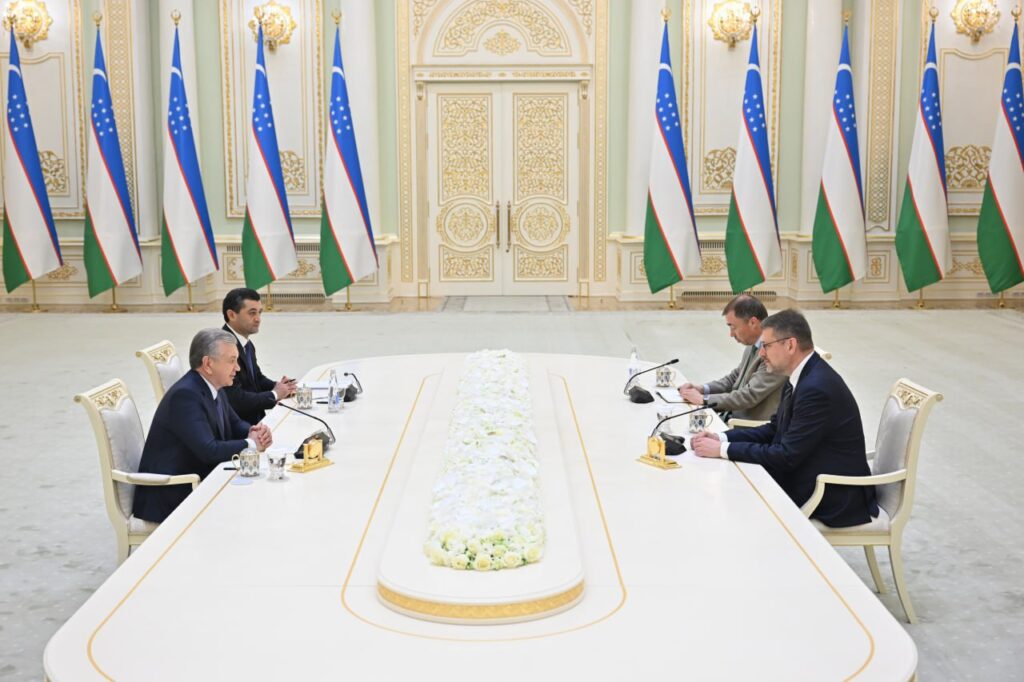
On May 13 in Tashkent, President Shavkat Mirziyoyev met with Eduards Stiprais, the European Union’s Special Representative for Central Asia, according to the presidential press service, with the two sides reviewing the outcomes of the first Central Asia-European Union Summit, held in Samarkand in April, and discussing ways to implement its decisions. Expanding Strategic Cooperation The talks focused on strengthening both bilateral and regional partnerships, with particular attention to advancing investment and technical cooperation initiatives valued at €12 billion. The parties also exchanged views on key regional developments and discussed plans for upcoming joint events. Economic ties between Uzbekistan and the EU have accelerated in recent years. Since 2020, trade between the two has doubled to more than €6 billion, while Uzbek exports to the EU have quadrupled. Over a thousand joint ventures have been launched, and the value of European investment projects in Uzbekistan now exceeds €30 billion. To attract more European investors, Uzbekistan has undertaken reforms to improve its business environment. In 2024 alone, trade with EU countries reached $6.4 billion, and more than a thousand European firms are currently operating in the country. Geopolitical Undercurrents During a separate visit to Uzbekistan in April, Russian Foreign Minister Sergey Lavrov criticized the EU’s growing presence in the region. He accused the EU of using development projects to expand geopolitical influence, particularly in sensitive areas such as customs and border management. “We are categorically against politicizing cooperation processes and introducing ideological elements associated with Western attempts to dominate,” Lavrov stated, whilst emphasizing that Russia respects the sovereignty of its neighbors and will refrain from interfering in their internal affairs. A Strategic Pivot Uzbekistan’s growing ties with the EU reflect a strategic pivot to diversify its economic partnerships and reduce dependence on traditional allies like Russia and China. This move aligns with the region’s broader efforts to balance relations with global powers while fostering local development. The EU’s €12 billion investment and technical cooperation initiatives signal a deeper commitment to Central Asia, enabling countries like Uzbekistan to modernize industries, improve infrastructure, and enhance trade networks. This shift not only boosts Uzbekistan’s economic growth but also creates new opportunities for regional integration by connecting Central Asia with European markets through preferential trade agreements and enhanced supply chains. However, the deepening EU-Uzbekistan partnership does not come without challenges in the region’s geopolitical landscape. Russia, historically a dominant influence in Central Asia, views the EU’s expanded presence as a potential threat to its sphere of influence. Likewise, China, which has established extensive connectivity projects under the Belt and Road Initiative, may perceive Uzbekistan's alignment with the EU as a cautious step towards reducing reliance on Beijing-led projects. This strategic recalibration creates a more competitive environment, with Uzbekistan leveraging its geographical position to attract diverse investments while carefully navigating tensions between rival powers. By maintaining a delicate balance, Uzbekistan could emerge as an economic and diplomatic bridge linking Europe, Central Asia, and East Asia.