• KGS/USD = 0.01144 0%
  • KZT/USD = 0.00215 0%
  • TJS/USD = 0.10456 0%
  • UZS/USD = 0.00008 0%
  • TMT/USD = 0.28490 0%
  • KGS/USD = 0.01144 0%
  • KZT/USD = 0.00215 0%
  • TJS/USD = 0.10456 0%
  • UZS/USD = 0.00008 0%
  • TMT/USD = 0.28490 0%
  • KGS/USD = 0.01144 0%
  • KZT/USD = 0.00215 0%
  • TJS/USD = 0.10456 0%
  • UZS/USD = 0.00008 0%
  • TMT/USD = 0.28490 0%
  • KGS/USD = 0.01144 0%
  • KZT/USD = 0.00215 0%
  • TJS/USD = 0.10456 0%
  • UZS/USD = 0.00008 0%
  • TMT/USD = 0.28490 0%
  • KGS/USD = 0.01144 0%
  • KZT/USD = 0.00215 0%
  • TJS/USD = 0.10456 0%
  • UZS/USD = 0.00008 0%
  • TMT/USD = 0.28490 0%
  • KGS/USD = 0.01144 0%
  • KZT/USD = 0.00215 0%
  • TJS/USD = 0.10456 0%
  • UZS/USD = 0.00008 0%
  • TMT/USD = 0.28490 0%
  • KGS/USD = 0.01144 0%
  • KZT/USD = 0.00215 0%
  • TJS/USD = 0.10456 0%
  • UZS/USD = 0.00008 0%
  • TMT/USD = 0.28490 0%
  • KGS/USD = 0.01144 0%
  • KZT/USD = 0.00215 0%
  • TJS/USD = 0.10456 0%
  • UZS/USD = 0.00008 0%
  • TMT/USD = 0.28490 0%

Viewing results 499 - 504 of 3334

Tajikistan’s Ombudsman Criticizes Violations of Refugee Rights

Tajikistan’s Human Rights Commissioner has released a 2024 report highlighting ongoing violations of the rights of refugees and asylum seekers, including challenges in securing legal status and accessing essential services. According to the report, refugees and migrants face systemic barriers to obtaining official status and temporary registration, as well as difficulties integrating into society, finding employment, and accessing education. As of the end of 2024, 10,753 refugees and asylum seekers were registered in Tajikistan, comprising 2,670 families. Among them, 9,424 individuals (2,140 families) held refugee status, while 1,329 (530 families) were awaiting decisions on their asylum applications. The majority, 6,774 people, or 63%, were Afghan nationals. In 2024, 2,280 individuals were issued refugee certificates, and another 2,591 received temporary registration. Four applicants were denied refugee status on grounds of submitting "unfounded or false information." The report did not disclose the nationalities of those denied. The Office of the UN High Commissioner for Refugees (UNHCR) reported similar figures for 2024, citing 10,381 registered refugees and asylum seekers in Tajikistan. This marks a decline from 2022, when the UN estimated the number of Afghan asylum seekers in the country at around 14,000. The Ombudsman’s report also noted that several Afghan asylum seekers were expelled from Tajikistan in 2024 for violating residency rules. Cited reasons included wearing a beard “against the rules,” inappropriate clothing, alcohol consumption, and political discussions on social media. Interior Minister Ramazon Rakhimzoda defended the deportations, stating in the summer of 2024 that all actions were taken in accordance with national law. “Although they had legal residence, if they violate the law, they are expelled,” he said, adding that all decisions were made within the existing legal framework. Tajikistan accepted its first wave of Afghan refugees in 2021, following the Taliban’s return to power. At the time, authorities acknowledged that the lack of dedicated shelters posed a major challenge. In August 2025, the head of the Emergency Situations Committee said there was no significant threat of a new mass influx of refugees and that previously accommodated families had been resettled across the country. Most Afghan refugees are currently living in the city of Vahdat and the Jabbor Rasulov district.

U.S. Senate Confirms Julie Stufft as Ambassador to Kazakhstan

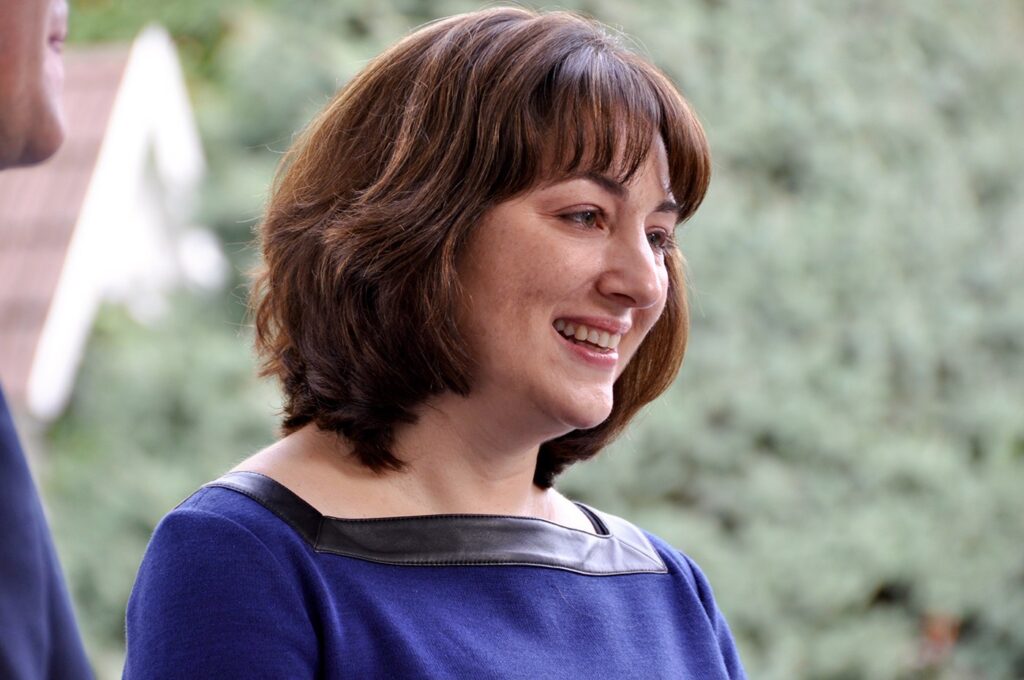
On October 7, the United States Senate confirmed Julie Stufft as the new U.S. Ambassador to Kazakhstan, approving her nomination by a vote of 51 to 47, and marking the first new U.S. envoy to Astana under President Donald Trump. A career diplomat and Senior Foreign Service Minister-Counselor, Stufft previously served as Deputy Assistant Secretary for Visa Services. During her July 2025 confirmation hearing, Stufft outlined her priorities, citing the security of U.S. citizens, energy cooperation, and critical minerals partnerships as top priorities. “If confirmed, my primary task will be to ensure the safety of all Americans in Kazakhstan, including my embassy and consulate staff,” she said. Stufft emphasized Kazakhstan’s strategic importance as a key U.S. partner in Central Asia, highlighting opportunities for expanded economic cooperation, particularly in energy and critical minerals. “Today, we stand on the threshold of a new era of trade and energy cooperation with Kazakhstan, a world leader in uranium production, a major oil exporter, and a holder of vast reserves of critical minerals,” she said. Stufft added that she intends to collaborate with the Bureau of Economic, Energy, and Business Affairs, the U.S. International Development Finance Corporation, the Export-Import Bank, and the private sector to deepen bilateral economic ties and promote U.S. prosperity. Stufft’s confirmation received some bipartisan support, with Senators Jeanne Shaheen (D-NH) and Steve Daines (R-MT) praising her professional experience and diplomatic capabilities. She succeeds Daniel Rosenblum, who retired in December 2024 after 28 years of service in the State Department. Her nomination was formally submitted by the White House and approved by President Donald Trump in the summer of 2025. Stufft is a career diplomat and a member of the Senior Foreign Service. Before her appointment, she served at the Bureau of Consular Affairs. Her previous overseas postings include assignments in Russia, Poland, Ethiopia, Moldova, and Djibouti. She also served on the National Security Council, coordinating efforts to protect Americans during the COVID-19 pandemic. Stufft holds degrees from Case Western Reserve University and Duke University. She speaks Russian, Romanian, French, and Polish. In 2023, she received the Presidential Award for Distinguished Service and has earned seven State Department awards over her career. “We must actively oppose violence against women and girls,” she said, underscoring her commitment to gender equality as part of U.S. foreign policy. Stufft is a fellow of the International Women's Forum (2021-2022) and participated in the MIT Center for International Studies’ Seminar XXI program (2014-2015).

Kazakhstan Investigates Telegram Founder Pavel Durov for Swimming in Protected Kolsai Lake

Pavel Durov, founder of the Russian messaging app Telegram, may face an administrative fine in Kazakhstan after posting a video of himself swimming in Kolsai Lake, a protected natural area where swimming and fishing are prohibited. Durov arrived in Kazakhstan in early October to participate in the Digital Bridge 2025 forum in Astana, later visiting Almaty. During the trip, he shared a video on his own Telegram channel that showed him emerging from the waters of Kolsai Lake in the Almaty region. The post sparked widespread reaction on social media, given the lake’s status as part of a national park with strict visitation rules. Under Kazakh law, violations of protected area regulations are punishable by a fine of up to $72. The Kolsai Lakes National Park administration confirmed that an official investigation is underway. Deputy Chairman of the Administrative Police Committee, Alexei Milyuk, said the case has been referred to the Ministry of Ecology and Natural Resources. “We have collected materials based on media reports and social media posts, registered them, and forwarded them to the appropriate authorities,” Milyuk told reporters. “The question of bringing Pavel Durov to justice is now being considered by the environmental authorities.” He added that penalties may be limited to a warning, with $72 being the maximum fine. Durov later posted a follow-up video showing himself holding a metal rod, stating that he had entered the water to retrieve an object he noticed protruding from the lakebed in an effort to clean the area. During his visit, Durov also announced the launch of Telegram’s AI Lab at the Alem.ai International Artificial Intelligence Center in Astana.

Kazakhstan Maintains Diplomatic Balance Following Gaza Ceasefire

On Monday, the Palestinian group Hamas handed over the final 20 surviving hostages to Israel in a two-stage exchange, reportedly mediated with the involvement of Qatari representatives. By midweek, the outcome of the latest ceasefire attempt between Israel and Hamas may become clearer. On October 13, U.S. President Donald Trump addressed the Knesset in Israel, before traveling to Egypt for a summit. The hostages had been held for more than two years, mirroring the duration of Israel’s military campaign that has reverberated across the region. The two-stage exchange formed part of a broader ceasefire framework backed by the United States, Egypt, and Qatar. Washington has framed the deal as a cornerstone of its renewed Middle East peace initiative, which aims to establish a long-term truce and pave the way for gradual reconstruction in Gaza. Trump described the agreement as the "beginning of a new security architecture for the region,” though analysts caution that deep mistrust between the parties could still derail implementation. The ongoing war in the Middle East is impacting Kazakhstan, as it is across Central Asia. Anti-Israeli sentiment has grown in this majority-Muslim country, though the government continues to advocate for a balanced and diplomatic approach. For Astana, maintaining neutrality amid the polarized reactions to the war is not just a matter of diplomacy, but also a matter of regional stability. Kazakhstan’s leadership views itself as a potential bridge between Muslim-majority nations and Western partners, drawing on its history of multivector foreign policy. Officials stress that Astana’s engagement is guided by the principles of dialogue and international law rather than religious or ideological alignment. A Delicate Diplomatic Position Kazakhstan has consistently supported international peacekeeping efforts. On September 30, President Kassym-Jomart Tokayev backed Trump's Gaza peace plan, and on October 9, Tokayev welcomed the ceasefire agreement in the Gaza Strip and the release of hostages, as announced by his press secretary, Ruslan Zheldibay. Tokayev commended the mediation efforts of Egypt, Qatar, and Turkey, and acknowledged the contributions of the United States and President Trump in advancing peace negotiations in the region. Kazakhstan recognized the State of Palestine in 1992 and established diplomatic ties. While economic relations remain minimal, the recognition holds symbolic political significance. At the same time, Kazakhstan maintains relatively strong relations with Israel, with a notable volume of bilateral trade. The country's longstanding diplomatic stance emphasizes the principle of “two states for two peoples.” Bilateral trade between Kazakhstan and Israel exceeded $450 million in 2023, driven primarily by exports of Kazakh metals and imports of Israeli technology and agricultural products. Cooperation in water management, healthcare, and defense technologies has continued despite regional instability. Kazakh officials have also emphasized the importance of Israeli investment in innovation and renewable energy sectors. Kazakhstan's diplomatic position has been reiterated consistently. In November 2023, the Ministry of Foreign Affairs reaffirmed that the only sustainable solution to the conflict lies in the creation of two sovereign states. Amid intensified hostilities in October 2023, Israel imposed a blockade on Gaza. At that time, 76...

Japan to Build Central Asia’s Largest Airport in Uzbekistan by 2028

Japan’s Sojitz Corporation is set to launch one of Central Asia’s most ambitious infrastructure projects: the construction of a new international airport in Tashkent. According to Express Asia, construction will begin in 2025 and is expected to be completed by 2028, with a total project cost estimated at $1 billion. The airport will be developed through a public-private partnership (PPP) with Saudi Arabia’s Vision Invest. Japan’s investment is projected to reach several hundred million dollars. Once completed, the airport will have a capacity of up to 20 million passengers annually and support more than 40 take-offs and landings per hour, making it the largest aviation hub in Central Asia. Sojitz brings experience in airport development from projects in Japan’s Kumamoto and Okinawa prefectures, as well as on the Pacific island of Palau. In Uzbekistan, its activities extend beyond aviation: in partnership with Turkey’s Rönesans International, the company is planning an 800-bed hospital in Samarkand, a 1 GW wind power plant, and a 1.6 GW thermal power plant. Driven by consistent GDP growth of around 6% per year, Uzbekistan continues to attract Japanese investment, bolstered by favorable tax policies and a 15% corporate tax rate. The number of Japanese companies operating in the country has doubled over the past five years to 54. Among them, Toyota Tsusho, through Eurus Energy Holdings, is developing a 500 MW wind power project, while Marubeni is collaborating with UAE firms on a wastewater treatment facility. In 2024, President Shavkat Mirziyoyev met with a Japanese delegation led by Tadashi Maeda, Chairman of the Japan Bank for International Cooperation (JBIC), and representatives of Sojitz. The parties agreed on a three-year cooperation program with JBIC and a strategic roadmap with Sojitz for future projects in high-tech sectors. JBIC currently supports over $3.7 billion in joint ventures across Uzbekistan’s petrochemical, textile, energy, and infrastructure sectors. Sojitz also reaffirmed its commitment to expanding its footprint in the country, including its role in the Syrdarya II IPP project, one of Uzbekistan’s largest planned power generation facilities.

Where Wings Grow: New Show at Aspan Gallery, Almaty

Let’s move Aspan Gallery from name to place, from reputation to reality. As one of the Kazakh galleries most visible on the fair circuit, known for its impeccable presentations and strong roster of Central Asian artists, visiting its headquarters in Almaty felt almost inevitable. It didn’t disappoint. Tucked into the underground floor of a shopping complex in a leafy area of Almaty, where you might catch a glimpse of a stylish passerby balancing a matcha cup before descending the stairs, the gallery unfolds as a quiet enclave. There, Where Wings Grow opens as a multifaceted meditation on the cycles of nature, and particularly on the steppe, explored by several Central Asian artists through ecological, historical, and mythic lenses. What emerges is not a nostalgic portrait of a nomadic past but a layered reflection on resilience and renewal. At the center of the curatorial vision is Alan Medoev, the archaeologist whose 1960s expeditions uncovered hundreds of sites across the Kazakh steppe. His discoveries challenged Soviet portrayals of the region as an empty expanse and instead presented it as a cradle of memory. The exhibition extends that lineage, tracing how the steppe continues to act as an archive where cultural, personal, and ecological time intersect. The installation is clean and deliberate: suspended collages, unframed paintings, and subtle shifts in light. Walking through, one feels the exhibition itself has been conceived as a kind of landscape. [caption id="attachment_37355" align="aligncenter" width="1920"] Where Wings Grow, installation view; image: Theo Frost[/caption] The Interplay Between Distance and Proximity This quality resonated strongly when encountering the works. At a distance, some pieces seemed almost naïve or casual in their painterly surfaces, but up close, their textures, materials, and embedded details revealed far more intricate worlds. This is true of Saule Suleimenova’s Plasticographies (two works titled Zhana Omir – New Life and Steppe Romanticism). From afar, they appear to be simple, even sentimental landscapes. Up close, however, they are revealed as collages of discarded plastic: fragments of packaging, commercial logos, counterfeit brands, and old ID cards. Suleimenova, who grew up in Almaty and trained as an architect before turning to socially engaged art, calls plastic “a treasure” and uses it to question both waste and memory. Within these luminous surfaces are startling details such as embryonic forms and small figures hidden in the texture. These unsettling images evoke new generations coming into a world shaped by waste, suggesting both renewal and ecological crisis. Steppe Romanticism distills the landscape into minimal horizons and contemplative silence. Yet knowing it is made of plastic prevents forgetting the contradiction, serenity marked by civilization’s residue. It recalls how landscapes themselves operate, inviting from afar but, up close, layered with scars, residues, and histories. [caption id="attachment_37353" align="aligncenter" width="2560"] Moldakul Narymbetov, "Untitled"; image: Aspan Gallery.[/caption] In a similar spirit, Moldakul Narymbetov’s paintings establish the exhibition’s tone. A founding member of the radical Kyzyl Tractor collective and one of the central figures in Kazakh contemporary art, Narymbetov (1948–2012) was known for fusing folklore, shamanic motifs, and gestural abstraction....