• KGS/USD = 0.01143 0%
  • KZT/USD = 0.00205 0%
  • TJS/USD = 0.10433 0%
  • UZS/USD = 0.00008 0%
  • TMT/USD = 0.28577 0%
  • KGS/USD = 0.01143 0%
  • KZT/USD = 0.00205 0%
  • TJS/USD = 0.10433 0%
  • UZS/USD = 0.00008 0%
  • TMT/USD = 0.28577 0%
  • KGS/USD = 0.01143 0%
  • KZT/USD = 0.00205 0%
  • TJS/USD = 0.10433 0%
  • UZS/USD = 0.00008 0%
  • TMT/USD = 0.28577 0%
  • KGS/USD = 0.01143 0%
  • KZT/USD = 0.00205 0%
  • TJS/USD = 0.10433 0%
  • UZS/USD = 0.00008 0%
  • TMT/USD = 0.28577 0%
  • KGS/USD = 0.01143 0%
  • KZT/USD = 0.00205 0%
  • TJS/USD = 0.10433 0%
  • UZS/USD = 0.00008 0%
  • TMT/USD = 0.28577 0%
  • KGS/USD = 0.01143 0%
  • KZT/USD = 0.00205 0%
  • TJS/USD = 0.10433 0%
  • UZS/USD = 0.00008 0%
  • TMT/USD = 0.28577 0%
  • KGS/USD = 0.01143 0%
  • KZT/USD = 0.00205 0%
  • TJS/USD = 0.10433 0%
  • UZS/USD = 0.00008 0%
  • TMT/USD = 0.28577 0%
  • KGS/USD = 0.01143 0%
  • KZT/USD = 0.00205 0%
  • TJS/USD = 0.10433 0%
  • UZS/USD = 0.00008 0%
  • TMT/USD = 0.28577 0%

Viewing results 343 - 348 of 3014

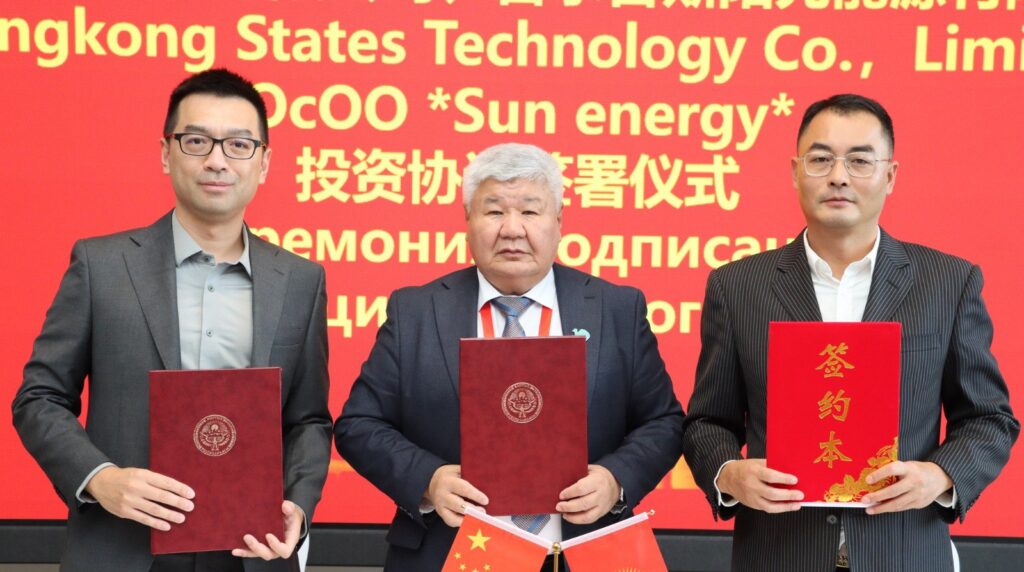
Chinese Firms to Build 250 MW Solar Power Plant in Southern Kyrgyzstan

Kyrgyzstan’s Ministry of Energy has signed an investment agreement with China’s State's Technology Co., Limited and San Energy Co. for the construction of a 250-megawatt solar power plant in the country’s south. According to the ministry, the facility will be built on 669 hectares in the village of Ak-Turpak in the Batken region. Construction is set to begin this year, with commissioning planned for 2027. Once operational, the plant will supply electricity to the National Electric Grids of Kyrgyzstan. The Ministry of Energy also signed a memorandum of cooperation with the Power Construction Corporation of China (POWERCHINA). The agreement aims to attract international investors and financial institutions to support joint energy projects in Kyrgyzstan. The memorandum outlines provisions for conducting long-term energy system development planning, providing training for Kyrgyz energy managers and engineers, and exploring the feasibility of constructing floating solar power plants on the Toktogul Reservoir, the country’s largest. These initiatives are part of a broader strategy to expand Kyrgyzstan’s power generation capacity and address persistent electricity shortages nationwide.

Karakalpakstan to Become Data Center Hub Under Uzbekistan’s Digital Strategy

Uzbek President Shavkat Mirziyoyev has launched the second phase of the IT Park Uzbekistan innovation complex in Tashkent’s Mirzo-Ulugbek district, signaling a major advance in the country’s digital transformation agenda. Speaking to Uzbekistan 24, Minister of Digital Technologies Sherzod Xotamovich said the next stage of digital development will prioritize AI integration. Mirziyoyev has directed that AI technologies be embedded in the expansion of IT Park to foster a comprehensive national innovation ecosystem. The new phase of IT Park will accommodate AI-focused startups and modern data centers equipped with high-performance graphic processors capable of handling large-scale data processing. A flagship project is a 12-megawatt data center under construction by Saudi firm DataVolt, which is set to become the largest facility of its kind in Central Asia, purpose-built for AI applications. DataVolt intends to expand its investments in Uzbekistan, with the total capacity of future data centers expected to reach 500 megawatts. This would position Uzbekistan as a leading regional hub for data storage and processing. Mirziyoyev also identified Karakalpakstan as a strategic location for energy-intensive digital projects. He proposed transforming the region into a large-scale data center hub, offering major incentives to investors contributing more than $100 million. These include tax breaks and infrastructure support, as well as a preferential electricity tariff of five cents per kWh, significantly lower than the current average rate of about eight cents. Authorities are targeting global tech firms such as Google, Microsoft, Meta, and Amazon to establish data operations in Uzbekistan. The initiative is designed to strengthen the country’s position as a regional digital hub and accelerate the integration of AI across key sectors of the economy.

Kazakhstan’s Strong Bond Sale Anchors Regional Capital Markets

The Republic of Kazakhstan once again captured global investor attention with its highly successful sovereign bond issuance in October 2025, underscoring its status as Central Asia’s benchmark borrower. The Ministry of Finance sold a $1.5 billion five-year Eurobond at a record-low 4.412% yield, about 85 basis points above U.S. Treasuries, after attracting nearly $4.4 billion in orders from a geographically diverse investor base spanning Europe, the U.S., and Asia - almost three times oversubscribed. Strong Market Reception and Competitive Pricing This five-year issue achieved the lowest yield in Kazakhstan’s independent history and was one of the tightest-priced five-year sovereign bonds among investment-grade peers, pricing inside higher-rated Poland, and modestly above Qatar’s comparable five-year yield. The Finance Ministry credited the result to investors’ confidence in Kazakhstan’s macroeconomic management and fiscal credibility, strengthened by the country’s ongoing budget and tax reforms enacted in 2025. These measures have reinforced perceptions of policy discipline and institutional reliability, enabling Kazakhstan to secure funding at exceptionally low costs. June 2025: Dual-Tranche Success In June 2025, Kazakhstan executed a $2.5 billion dual-tranche Eurobond comprising a 7-year $1.35 billion note at 5.0% and a 12-year $1.15 billion note at 5.5%. Investor demand was exceptional, with orders roughly twice the issue size from global funds across Europe, the U.S., and Asia. The transaction priced tightly against comparable BBB sovereigns, reflecting market confidence in Kazakhstan’s low debt levels, ample reserves, and consistent reform momentum. Together, the June and October offerings have demonstrated Kazakhstan’s ability to tap international markets repeatedly in 2025 on favorable terms, even amid global volatility. Fiscal Strength and Ratings Support Kazakhstan’s strong market performance rests on a robust fiscal foundation and solid credit ratings. Fitch Ratings has affirmed Kazakhstan’s long-term foreign-currency issuer default rating at ‘BBB’ with a Stable Outlook, noting the country’s low government debt - around 25% of GDP - and substantial sovereign net foreign assets supported by the National Fund and foreign-exchange reserves. Combined reserves and National Fund assets total roughly $93 billion, equal to about 31% of GDP. S&P Global Ratings, which upgraded Kazakhstan’s outlook to Positive in August 2025, forecasts 5.5–5.6% GDP growth and has commended progress in deficit reduction and institutional reform. The agency noted that Kazakhstan’s new Budget and Tax Codes, along with tighter fiscal rules and improved oversight of quasi-fiscal activities, are expected to strengthen fiscal consolidation and institutional transparency. These reforms, together with the country’s moderate debt burden and substantial sovereign assets, have helped sustain investor confidence. Kazakhstan’s ability to issue Eurobonds at yields tighter than some A-rated peers demonstrates that credibility in practice, and market participants now view the country as the regional benchmark sovereign in Central Asia. Uzbekistan: Reform Progress, Higher Yields In February 2025, Uzbekistan raised roughly $1.5 billion equivalent through a multi-currency sovereign issue — a $500 million 7-year U.S. dollar tranche at 6.95%, a €500 million 4-year euro tranche at 5.1%, and a UZS 6 trillion 3-year local-currency note at 15.5%. Total demand reached about $4.2 billion, nearly 2.8 times oversubscribed, underscoring strong...

Kazakhstan to Launch Unified Digital Platform for Energy Sector Management

Kazakhstan is moving forward with plans to establish EnergyTech, a unified national digital platform for managing its fuel and energy complex. Energy Minister Yerlan Akkenzhenov announced the initiative during a recent government meeting. EnergyTech will consolidate all elements of the sector, including power generation, subsoil use, refining, and coal, on a single platform aligned with QazTech standards. The full development and industrial launch are scheduled for 2026-2027. According to Akkenzhenov, two modules of the platform are already in pilot operation. The first, a monitoring service for heating season readiness, provides real-time data on assets, equipment condition, and repair planning. It has generated digital registries of generation facilities and is expected to reduce inspection times and lower the risk of seasonal accidents by 25%. The second module streamlines the process of submitting and reviewing tariff approval requests. By eliminating paper workflows and enhancing transparency, the system has reduced approval times, cut operating costs, and lowered the administrative burden on market participants by 56%. The pilot covers 83 combined heat and power (CHP) plants. Akkenzhenov also highlighted the low penetration of automated electricity metering systems among consumers. To address this, the government plans to install 4 million smart meters across 27 electricity suppliers within three years. This is projected to yield an annual economic benefit of $105 million by reducing regulatory losses. Parallel efforts are underway to implement automated heat metering. More than 30,000 smart devices are needed for 52 heat supply organizations. The minister noted that, based on international benchmarks, comprehensive metering can cut heat consumption by up to 15%. In addition, the ministry is planning to establish a sector-specific information security center and a national operator for energy-related information and communication infrastructure. Artificial intelligence is also central to the government’s digital transformation strategy. An AI acceleration group has been formed within the energy ministry, along with an AI alliance that includes global technology companies. The estimated economic impact of these AI projects ranges from $4.6 million to $78 million. Both are currently undergoing regulatory approval and are being prepared for broader implementation. As previously reported by The Times of Central Asia, Kazakhstan is also exploring the use of AI tools in the legislative process.

Kazakhstan Authorities Deliberate Future of Lukoil Assets

Russian oil giant Lukoil has announced plans to divest its international assets, including subsidiaries, amid ongoing Western sanctions. The company stated the sale is being conducted under a license issued by the U.S. Treasury Department’s Office of Foreign Assets Control (OFAC), which allows Lukoil to wind down its foreign operations in an orderly manner by November 21, 2025. An extension of this deadline may be requested. “Review of applications from potential buyers has begun,” the company said in an official statement. According to industry data, Lukoil currently holds stakes in several key Kazakh projects: 5% in Tengizchevroil (TCO), 13.5% in Karachaganak Petroleum Operating B.V., 50% in the Kalamkas-Khazar project (Kalamkas-Khazar Operating joint venture), 49.99% in Al-Farabi Operating (offshore exploration and production), and 12.5% in the Caspian Pipeline Consortium (CPC). While analysts suggest CPC operations are unlikely to be affected by U.S. restrictions, Kazakhstan may witness a significant redistribution of oil sector investments. Despite this, Kazakh authorities remain cautious in making definitive assessments. Nurlan Zhakupov, head of the Samruk-Kazyna sovereign wealth fund, stated that discussions are ongoing with both domestic and international advisors regarding Lukoil’s shares in Kazakh ventures. “A great deal of complex work is being carried out with relevant consultants, including international ones, on how KazMunayGas can navigate the current situation. Lukoil has major projects in Kazakhstan, so this is a complex and multifaceted issue,” Zhakupov said. Deputy Minister of Energy Sanzhar Zharkeshov emphasized that any decisions regarding the acquisition of Lukoil’s shares fall under the purview of the national oil company KazMunayGas. “Lukoil is KazMunayGas’s partner. They are jointly involved in Kalamkas, Khazar, and other projects. At this stage, the Ministry of Energy is not addressing the buyout or shareholder restructuring, this is a matter for KazMunayGas as an economic entity,” Zharkeshov said at a press conference. Energy Minister Yerlan Akkenzhenov added that decisions on potential buyouts have not yet been made. “This discussion has not yet taken place. The sanctions are still being analyzed, and their full impact on companies and the economy remains to be assessed. I believe a decision will be made soon, within the next few days, before the end of this week,” Akkenzhenov stated. The Times of Central Asia has previously reported on the broader effects of U.S. and EU sanctions on economies across Central Asia.

Central Asia Loses 14 Million Tons of Crops Annually Due to Poor Storage Infrastructure

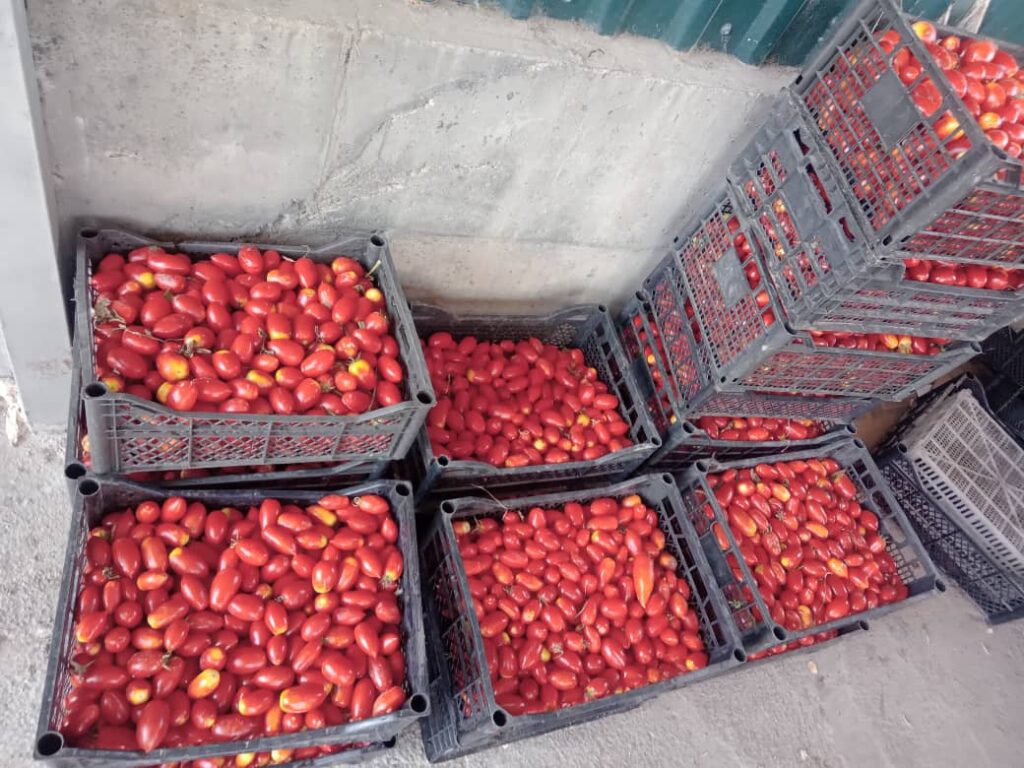
Each year, approximately 14 million tons of agricultural products are lost across Central Asia due to inadequate storage infrastructure, according to a recent analytical report from the Eurasian Development Bank (EDB). In Kyrgyzstan, Tajikistan, and Uzbekistan, so-called “dry warehouses” remain the norm. A significant share of produce is stored in facilities lacking the conditions necessary for long-term preservation. As a result, large volumes of crops spoil annually, especially during seasonal peaks. The EDB notes that Eurasian countries are entering a new logistics phase. The rapid growth of e-commerce and retail expansion is generating unprecedented demand for modern warehouse infrastructure. According to the bank’s projections, total demand for warehouse space in the region will double by 2040, surpassing 120 million square meters. Between 2020 and 2024, the region’s total warehouse space increased from 48 to 58 million square meters. Russia remains the dominant player, with around 53 million square meters of commercial and logistics space. Central Asian countries, however, continue to lag far behind. Crop losses peak during the autumn harvest and spring sales of residual stock. During these times, buffer storage and efficient transport logistics are critical. Without these, “farmers are forced to sell surpluses at the lowest price or throw them away,” EDB analysts warn. Experts identify the warehouse sector as a key driver of trade growth in Eurasia. Realizing this potential, however, will require coordinated action among governments, businesses, and international institutions. The report emphasizes the need for a unified institutional environment to enhance investment appeal and market transparency. “The region, which has long remained on the periphery of global logistics flows, is now shaping a new map of Eurasian logistics. In the coming years, the market will remain highly dynamic: more than 20 million square meters of new warehouse space is planned for commissioning, including 1.6 million square meters in Central Asian countries,” the report states. Kyrgyzstan serves as a case in point. In 2020, amid the COVID-19 pandemic, agriculture was the country’s only growing sector. Yet farmers struggled with oversupply, cabbage, in particular, had to be fed to livestock or discarded due to a lack of buyers and storage facilities. A similar situation unfolded with potatoes.