• KGS/USD = 0.01144 0%
  • KZT/USD = 0.00208 0%
  • TJS/USD = 0.10440 -0.19%
  • UZS/USD = 0.00008 0%
  • TMT/USD = 0.28571 0.28%
  • KGS/USD = 0.01144 0%
  • KZT/USD = 0.00208 0%
  • TJS/USD = 0.10440 -0.19%
  • UZS/USD = 0.00008 0%
  • TMT/USD = 0.28571 0.28%
  • KGS/USD = 0.01144 0%
  • KZT/USD = 0.00208 0%
  • TJS/USD = 0.10440 -0.19%
  • UZS/USD = 0.00008 0%
  • TMT/USD = 0.28571 0.28%
  • KGS/USD = 0.01144 0%
  • KZT/USD = 0.00208 0%
  • TJS/USD = 0.10440 -0.19%
  • UZS/USD = 0.00008 0%
  • TMT/USD = 0.28571 0.28%
  • KGS/USD = 0.01144 0%
  • KZT/USD = 0.00208 0%
  • TJS/USD = 0.10440 -0.19%
  • UZS/USD = 0.00008 0%
  • TMT/USD = 0.28571 0.28%
  • KGS/USD = 0.01144 0%
  • KZT/USD = 0.00208 0%
  • TJS/USD = 0.10440 -0.19%
  • UZS/USD = 0.00008 0%
  • TMT/USD = 0.28571 0.28%
  • KGS/USD = 0.01144 0%
  • KZT/USD = 0.00208 0%
  • TJS/USD = 0.10440 -0.19%
  • UZS/USD = 0.00008 0%
  • TMT/USD = 0.28571 0.28%
  • KGS/USD = 0.01144 0%
  • KZT/USD = 0.00208 0%
  • TJS/USD = 0.10440 -0.19%
  • UZS/USD = 0.00008 0%
  • TMT/USD = 0.28571 0.28%

Viewing results 379 - 384 of 3047

Kazakhstan Presents Economic Growth Strategy in Washington

On October 15, Kazakhstan's Deputy Prime Minister Serik Zhumangarin presented the country’s new proactive economic growth strategy to leading American businesses during a roundtable hosted by the U.S.-Kazakhstan Business Council (USKZBC) at the U.S. Chamber of Commerce in Washington, D.C. The meeting served as a key platform for dialogue ahead of the annual meetings of the World Bank and the International Monetary Fund. The U.S. delegation included Khush Choksy, Senior Vice President for the Middle East, Turkey, and Central Asia at the U.S. Chamber of Commerce, along with executives from major corporations such as Chevron, ExxonMobil, Citi, Mastercard, Boeing, Bechtel, and LanzaJet. Zhumangarin highlighted the longstanding commercial ties between the two countries, noting that over 600 American companies currently operate in Kazakhstan, including General Electric, Pfizer, Honeywell, Coca-Cola, and John Deere. “Kazakhstan is an attractive country for American business. Our GDP this year will exceed $330 billion, approximately 60% of Central Asia’s total economy,” Zhumangarin stated, adding that GDP per capita at the end of 2024 surpassed $14,000, and $44,000 in terms of purchasing power parity. The government is aiming to raise total GDP to $450 billion by 2029. Zhumangarin emphasized that Kazakhstan’s financial indicators remain strong, with national debt at about 22.2% of GDP - around $61 billion - a level comparatively lower than in most global economies. Over the past two decades, the country has attracted more than $400 billion in foreign direct investment. According to Zhumangarin, less than one-third of that has gone into the raw materials sector, with the remainder directed to manufacturing, construction, transport, finance, and insurance. Kazakhstan has recorded steady economic growth exceeding 5% for three consecutive years - 5.1% in 2023, 5% in 2024, and 6.3% in the first nine months of 2025. International credit rating agencies S&P, Fitch, and Moody’s have maintained Kazakhstan’s investment-grade ratings, with S&P upgrading its outlook to “Positive” and Moody’s assigning a “Baa1” rating. Zhumangarin outlined a new economic strategy aimed at maintaining annual growth between 5% and 6%. Central to the plan is strengthening development finance institutions and launching large-scale projects in value-added sectors such as raw material processing, agriculture, and mechanical engineering. “The total investment potential of these sectors is estimated at over $100 billion,” he said. Priority industries include railway and automotive manufacturing, fertilizer production, waste processing, and the development of rare earth elements. Energy and municipal infrastructure are also major areas of focus, with projects worth $100 billion planned over the next five years. “We invite leading international companies with deep industry expertise. Their participation will boost production efficiency, generate employment, and reinforce Kazakhstan’s image as a reliable investment destination,” Zhumangarin added. The U.S. Chamber of Commerce, the world’s largest business association, represents over 3 million companies and 830 industry associations. The USKZBC comprises dozens of corporations active in Kazakhstan, including names such as Chevron, ExxonMobil, Fluor, Apple, GE, Bechtel, Boeing, and Mastercard. In 2024, trade between the U.S. and Kazakhstan reached $4.2 billion. More than 720 enterprises with American participation are registered in...
World Bank Approves $800 Million Loan for Uzbekistan’s Economic Reforms

The World Bank has approved an $800 million concessional loan package to support Uzbekistan’s ongoing structural reforms, aimed at reducing poverty, creating jobs, and expanding private sector-led growth. The financing is designed to help the government enhance competition, strengthen social protections, and foster a more dynamic economic environment. The financial support will fund a broad set of policy initiatives, including mitigating the impact of energy tariff increases on low-income households, advancing gender equality in the workplace, and expanding access to social services for vulnerable populations. The package also targets reforms in key sectors such as telecommunications, agriculture, and energy, while supporting greater integration of Uzbekistan into global trade networks. With favorable long-term repayment terms, the loan will reduce the country’s debt servicing costs and free up government resources for economic and social development. One of the central measures backed by the package is a significant boost in financial assistance for low-income families. Annual cash transfers per household will increase from UZS 270,000 to UZS 1 million to offset the rising costs of electricity, heating, and gas. The World Bank package will also support legislation to protect women from sexual harassment and workplace discrimination, including safeguards against employment bias related to pregnancy or childcare responsibilities. Reforms will open the provision of social services to private and non-governmental organizations, enabling greater coverage and efficiency. Among other key initiatives is the establishment of a National Investment Fund to manage and privatize state-owned enterprises. The creation of an independent telecommunications regulator is expected to promote competition, while new agricultural risk insurance schemes and liberalized cotton pricing aim to strengthen resilience and market access for farmers. Textile companies will be permitted to buy cotton directly from producers at flexible prices. The reform agenda also focuses on trade liberalization, including the removal of exclusive rights in strategic sectors such as energy, oil and gas, and agriculture. Export procedures will be simplified, and new regulations will promote private participation in electricity distribution and allow renewable energy producers to sell directly to consumers. Energy efficiency and climate policy are integral to the package. Uzbekistan plans to establish a National Energy Efficiency Agency and introduce incentives for solar power, heat pumps, and energy-efficient building retrofits. Public procurement processes will incorporate environmental criteria to support sustainable products and services. According to a World Bank report released in July, Uzbekistan’s economy grew steadily between 2010 and 2022, with per capita GDP rising by an average of 4.2% a year, outpacing the regional average. However, the report noted that growth has relied heavily on capital investment rather than productivity gains, and that deeper reforms are needed to build a more competitive private sector.

Moody’s Assigns Kyrgyzstan First-Ever Positive Outlook

For the first time, international credit rating agency Moody’s has assigned Kyrgyzstan a positive outlook, while reaffirming the country’s sovereign credit rating at B3. According to the Ministry of Finance, the shift reflects Kyrgyzstan’s stable economic growth. Finance Minister Almaz Baketaev met with Moody’s Managing Director David Aldrich on the eve of the announcement. Discussions covered areas of future cooperation, Kyrgyzstan’s investment profile, strategies for attracting external financing, and the country's credit trajectory. “Moody’s has revised its outlook on the Kyrgyz Republic’s sovereign credit rating from stable to positive, confirming the long-term rating at B3. The economy is demonstrating steady growth: real GDP for January to July 2025 rose by 11.5%,” the Ministry of Finance stated. “In May 2025, Kyrgyzstan successfully issued its first Eurobonds, raising $700 million. Investor demand exceeded supply threefold, with a five-year maturity and a 7.75% coupon rate.” The ministry noted that all proceeds from the Eurobond issuance have been placed in a dedicated account to manage public debt responsibly. Kyrgyzstan’s B3 rating has remained unchanged in recent years. While Moody’s upgraded the country’s outlook from negative to stable in 2024, this year marks the first time the outlook has been revised to positive. The Ministry of Economy described the revised outlook as recognition of the government’s efforts to stabilize and grow the economy. “The updated forecast reflects improvements in Kyrgyzstan’s macroeconomic and fiscal indicators, as well as stronger long-term development potential,” the ministry noted. “These results stem from key reforms, economic diversification, and sustained infrastructure investment.” According to official figures, all sectors of the economy posted growth in the first half of 2025. Construction recorded the highest increase at 45% since the start of the year, while agriculture saw the most modest growth at 3.8%. Total GDP for the first six months of the year amounted to 711 billion soms.

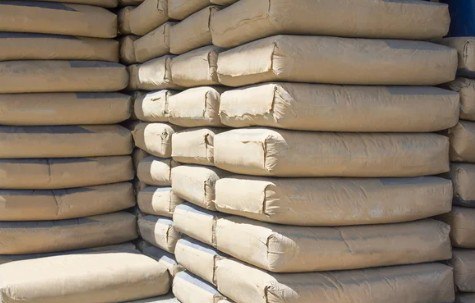
Kazakhstan’s Cement Exports to Uzbekistan Plunge Amid Customs Dispute

Cement exports from Kazakhstan to Uzbekistan have fallen sharply in recent months, with industry officials blaming a sudden change in Uzbek customs policy. According to Yerbol Akimbayev, head of the Cement and Concrete Producers Association of Kazakhstan (QazCem), new customs rules imposed by Tashkent are significantly disrupting cross-border trade. Speaking to Forbes Kazakhstan, Akimbayev said Uzbek authorities now require Kazakh cement imports to be declared at $300 per ton, ten times the actual sale price of roughly $30 per ton. “Taxes should reflect the real import price. Setting the customs declaration at $300 has made exports economically unfeasible,” he stated. The new pricing rule comes at a difficult time for Kazakhstan’s cement industry, which is already grappling with overcapacity and shrinking export opportunities. The country currently operates 16 cement plants with a combined annual capacity of 18 million tons, while domestic demand has stagnated between 11.5 and 12 million tons over the past five years. Even with demand growing by 15-20% this year, roughly 2 million tons, production still far exceeds consumption. “Operating plants can already produce 17 million tons, and our technical capacity is around 18.5 million tons,” Akimbayev explained. “With new facilities under construction, we could soon reach 22 million tons. That leaves us with about 6 million tons in excess capacity, exports are essential for industry viability.” While Russia remains Kazakhstan’s top cement supplier, followed by Iran, Uzbekistan has become an increasingly important export market in recent years. However, Akimbayev argues that the recent policy shift undermines fair competition and could destabilize the regional cement market. “This isn’t about competition, it’s about clear and objective rules,” he said. “Our producers meet strict quality and safety standards. It’s only fair that importers face similar conditions. When we addressed this imbalance in 2019, the number of import certificates issued dropped by 95%, exposing the scale of shadow trade.” The impact is already being felt across Kazakhstan’s cement sector. A plant in the Kostanay region declared bankruptcy earlier this year, and another in the Akmola region is facing financial strain. At the same time, three new factories are under construction, adding further pressure to an oversupplied market. “Foreign investment is welcome, but it should target sectors that align with the country’s actual needs, like data centers or airports, not industries already in crisis,” Akimbayev warned. Industry leaders in Kazakhstan are urging both governments to resolve the dispute and reestablish stable trade conditions for cement exports.

Uzbekistan Begins Construction of New International Airport Near Tashkent

Uzbekistan has launched one of its largest infrastructure initiatives to date, the construction of a new international airport in the Tashkent region. President Shavkat Mirziyoyev inaugurated the project, which is being implemented by an international consortium of investors. A National-Scale Project The new airport is intended to strengthen Uzbekistan’s aviation sector and establish the country as a key transit hub between East and West. “Ultimately, our goal is to turn Uzbekistan into a major aviation hub connecting East and West, North and South,” Mirziyoyev stated. He underscored that developing transport infrastructure and modernizing air traffic management remain strategic priorities. The project is being led by a consortium comprising Vision Invest (Saudi Arabia, 45%), Sojitz (Japan, 30%), Incheon International Airport Corporation (South Korea, 15%), and Uzbekistan Airports (10%). Construction will unfold in four phases. The first stage, with an estimated cost of $2.5 billion, includes building the terminal complex and airfield. Once completed, the airport will have the capacity to handle up to 20 million passengers annually, process 129,000 tons of cargo, and support up to 30 take-offs and landings per hour. It will feature 14 telescopic ramps and parking for 62 aircraft across a 1,300-hectare site in the Urtachirchik and Kuyichirchik districts of the Tashkent region. Technology, Sustainability, and Connectivity Designed to fully comply with International Civil Aviation Organization (ICAO) standards, the airport will incorporate state-of-the-art air navigation and meteorological systems to ensure operational reliability in all weather conditions. Environmental sustainability is a key focus. It will be the first airport in Central Asia constructed in line with “green” building principles. The passenger terminal will house a 46,000 square meter duty-free zone. The facility will serve as part of a broader multimodal transport hub. It will connect directly to major regional highways, Tashkent-Samarkand, Tashkent-Andijan, and Tashkent-Bostanlyk and will feature a dedicated high-speed rail station and a shuttle service linking Tashkent and the planned city of New Tashkent. Officials project that the new airport could generate more than $27 billion in revenue and create thousands of jobs across sectors including construction, tourism, and logistics. Strengthening Uzbekistan’s Regional Aviation Role Passenger traffic in Tashkent has tripled over the past eight years, reaching 9 million annually. By 2040, it is expected to rise to 24 million. The current airport, limited to 11 million passengers and constrained by its urban location, cannot be expanded, prompting the decision to pursue the new megaproject. Nationwide, Uzbekistan is upgrading seven international airports and has built new terminals in Muynak, Kokand, Zaamin, Shakhrisabz, Saryasyk, and Sohe. The aviation sector has also seen increased competition: the number of airlines has grown to 15, and the aircraft fleet has expanded from 26 to 105 units. Within five years, officials aim to boost the fleet to 180 aircraft, expand routes to 230 destinations, and increase annual flights to 200,000.

Central Asia’s Rail Corridors: U.S. and Chinese Partnerships in Perspective

Kazakhstan’s railways are modernizing with a U.S. supplier, while Kyrgyzstan and Uzbekistan are advancing a new trans‑mountain link with China. On September 22, 2025, Wabtec and KTZ announced a multi‑year locomotive and services package worth about $4.2 billion, described by the company as its “largest” agreement. In parallel, China, Kyrgyzstan, and Uzbekistan formalized a joint company to build the long-planned CKU railway, with China holding a 51% stake. Central Asia’s rail networks are thus being reshaped by two major partnerships - one with the United States and one with China. Rather than a zero-sum rivalry, these projects show how regional governments are pursuing different infrastructure strategies to expand connectivity. Kazakhstan and Wabtec: Modernizing an Existing Network In September 2025, Kazakhstan’s railway operator KTZ signed a $4.2 billion agreement with U.S.-based Wabtec for 300 Evolution Series ES44ACi locomotives. The diesel-electric engines are tailored for Kazakhstan’s 1,520 mm gauge network and harsh climate, replacing aging Soviet-era stock. Wabtec finalized full ownership of the Astana locomotive plant in late 2023; production and services for 1,520-mm stock are now fully under Wabtec’s Kazakhstan subsidiary. Local manufacturing and long-term service contracts are expected to expand domestic engineering capacity. The locomotives’ digital diagnostic systems should improve fuel efficiency and maintenance intervals. According to the official Wabtec press release, the agreement “strengthens KTZ’s role as a critical and reliable hub for the Middle Corridor,” while KTZ CEO Talgat Aldybergenov said it “confirms our commitment to advanced technologies in the transport sector”. Rail accounts for about 64% of Kazakhstan’s freight turnover (2024), so locomotive performance directly affects Middle Corridor throughput. Financing details have not been disclosed, but the purchase appears to be domestically funded through KTZ and state support. For Astana, the order fits its multi-vector foreign-policy approach: Kazakhstan continues its partnerships with France’s Alstom, China’s CRRC, and Russia, maintaining balance across suppliers. While the locomotives are diesel, Kazakhstan is also electrifying key lines with European partners. Diesels provide an immediate boost without new catenary investment, and Wabtec claims lower emissions than previous models. Over time, expanded electrification could complement this upgrade. Overall, the Wabtec partnership represents incremental modernization. This is an interoperability-based approach that strengthens existing routes rather than building new corridors from scratch. [caption id="attachment_37655" align="aligncenter" width="950"] Image: trains.com - One of Kazakhstan’s modern Evolution Series diesel locomotives (model TE33A) produced through a partnership with U.S. firm Wabtec. Kazakhstan’s railways carry about 64% of the country’s freight, making such upgrades crucial for trade connectivity.[/caption] The China–Kyrgyzstan–Uzbekistan (CKU) Railway: Building a New Corridor After nearly three decades of discussion, China, Kyrgyzstan, and Uzbekistan launched construction of the CKU railway in late 2024. The 523 km line will run from Kashgar (Xinjiang) through the Kyrgyz mountain ranges to Andijan, Uzbekistan. It will provide a second direct China–Central Asia connection, bypassing reliance on Kazakhstan’s network. The CKU is designed with dual gauges: standard (1,435 mm) in China and broad (1,520 mm) in Kyrgyzstan and Uzbekistan, with a dry-port transshipment hub in Makmal, Kyrgyzstan. This compromise allows integration with existing Central...