• KGS/USD = 0.01144 0%
  • KZT/USD = 0.00193 -0%
  • TJS/USD = 0.10858 0.09%
  • UZS/USD = 0.00008 0%
  • TMT/USD = 0.28571 0%
  • KGS/USD = 0.01144 0%
  • KZT/USD = 0.00193 -0%
  • TJS/USD = 0.10858 0.09%
  • UZS/USD = 0.00008 0%
  • TMT/USD = 0.28571 0%
  • KGS/USD = 0.01144 0%
  • KZT/USD = 0.00193 -0%
  • TJS/USD = 0.10858 0.09%
  • UZS/USD = 0.00008 0%
  • TMT/USD = 0.28571 0%
  • KGS/USD = 0.01144 0%
  • KZT/USD = 0.00193 -0%
  • TJS/USD = 0.10858 0.09%
  • UZS/USD = 0.00008 0%
  • TMT/USD = 0.28571 0%
  • KGS/USD = 0.01144 0%
  • KZT/USD = 0.00193 -0%
  • TJS/USD = 0.10858 0.09%
  • UZS/USD = 0.00008 0%
  • TMT/USD = 0.28571 0%
  • KGS/USD = 0.01144 0%
  • KZT/USD = 0.00193 -0%
  • TJS/USD = 0.10858 0.09%
  • UZS/USD = 0.00008 0%
  • TMT/USD = 0.28571 0%
  • KGS/USD = 0.01144 0%
  • KZT/USD = 0.00193 -0%
  • TJS/USD = 0.10858 0.09%
  • UZS/USD = 0.00008 0%
  • TMT/USD = 0.28571 0%
  • KGS/USD = 0.01144 0%
  • KZT/USD = 0.00193 -0%
  • TJS/USD = 0.10858 0.09%
  • UZS/USD = 0.00008 0%
  • TMT/USD = 0.28571 0%
22 December 2025

Viewing results 391 - 396 of 2401

EU Grants Kazakhstan Exemption to Transit Coal Through Sanctioned Russian Ports

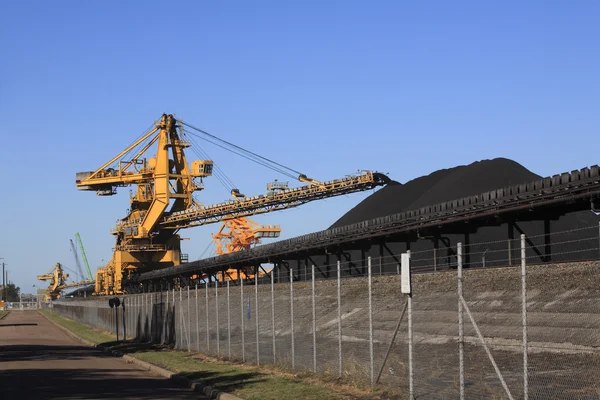
The European Union has granted Kazakhstan an exemption permitting the transit of Kazakh coal through select Russian ports previously restricted under EU sanctions. The decision, included in the EU’s 18th package of sanctions, aims to secure Kazakhstan’s coal exports to Europe. The exemption follows months of negotiations led by the Ministry of Trade and Integration, the Ministry of Foreign Affairs, and Kazakhstan’s Permanent Mission to the EU. The talks were prompted by sanctions introduced in February 2024 under the 16th EU sanctions package, which included a ban on transactions with Ust-Luga port, one of the main routes for Kazakh coal shipments to the EU. “To resolve the situation, work was carried out at various levels and an official request was sent to the European Commission asking for changes to the sanctions regime,” the ministry stated. “As a result, the 18th package of EU sanctions contains amendments allowing transactions with a number of Russian ports for the transit of coal of Kazakh origin.” Conditions of the Exemption The exemption is conditional and tightly regulated: Only coal of Kazakh origin may be transited; Ownership of the cargo must not involve entities from countries under EU sanctions, including Russia and Belarus; The designated Russian ports may be used solely for transit purposes, specifically loading and dispatch, without any procurement or production activities on site. Trade Impact Kazakhstan remains a key coal supplier to the European market. In 2022, it exported 4.4 million tons of coal to the EU, generating $419.2 million, representing 45% of total coal exports. Although volume increased to 6.1 million tons in 2023 (54.3%), falling global prices reduced revenue to $382 million. In 2024, exports declined to 5.2 million tons worth $312.5 million (51.8%). During the first five months of 2025, Kazakhstan exported 1.6 million tons to the EU, generating $82.9 million and accounting for 38.5% of total coal exports over that period. “Despite the temporary decline in indicators, the measures taken are creating conditions for the restoration of export flows and increased stability of logistics routes,” the ministry said. “Kazakhstan will continue to work to protect trade interests, support national exports, and strengthen economic ties with key partners.” As previously reported by The Times of Central Asia, domestic coal consumption in Kazakhstan is expected to decrease due to government plans to phase out pilot coal-fired power plants in favor of renewable energy and low-carbon technologies, including gas. 

ADB Raises Kazakhstan’s Economic Growth Forecast, Warns of Higher Inflation

The Asian Development Bank (ADB) has revised upward its economic growth forecast for Kazakhstan for both 2025 and 2026, while also raising its inflation projections. The updated outlook was published in the July edition of the Asian Development Outlook. Growth Outlook Strengthened According to the ADB’s latest report, Kazakhstan’s GDP is now expected to grow by 5.1% in 2025, up from the 4.9% forecast issued in April. The projection for 2026 has also been increased from 4.1% to 4.3%. Key growth sectors include: Transport: +21% Construction: +16.9% Manufacturing: +8.7% Mining: +6.1% Particular emphasis is placed on the early expansion of oil production at the Tengiz field, which launched ahead of schedule. This, combined with Kazakhstan’s increasing oil exports within the framework of OPEC+ quotas, has bolstered the growth outlook. As previously reported by The Times of Central Asia, in June, Kazakhstan raised production for the third consecutive month, contributing positively to GDP growth. "Growth in tax revenues has allowed for increased government investment in capital projects and the social sector," the ADB commented. "The early launch of the Tengiz expansion has strengthened prospects for the extractive industry. OPEC+'s May 31 decision to continue raising production supports this trend, as Kazakhstan is utilizing its full capacity." Inflation Pressures Intensify Despite the improved growth outlook, the ADB now expects inflation to reach 10.2% by the end of 2025, up from the 8.2% forecast in April. For 2026, inflation is projected at 8.4% (previously 6.5%). Data from Kazakhstan’s National Statistics Bureau indicates that annual inflation reached 11.3% in May and 11.8% in June. Paid services remain the primary inflation driver, though monthly price increases slowed modestly from 0.9% in May to 0.8% in June. The ADB notes rising inflationary pressure across the broader Caucasus and Central Asia subregion. The regional average is now expected to hit 7.8% in 2025 and 6.7% in 2026 both higher than the previous forecasts of 6.9% and 5.9%, respectively. Supporting Forecasts The Eurasian Development Bank (EDB) also anticipates robust economic expansion in Kazakhstan, projecting GDP growth of 5.5% in 2025, up from 4.8% in 2024, with sustained momentum through 2026-2027. However, the EDB likewise foresees persistent inflation, expecting it to reach 11.9% by year-end. Earlier, Deputy Prime Minister Serik Zhumangarin reported that the Kazakh economy grew by 6.2% in the first half of 2025, the country’s fastest growth rate since 2011.

Vietnamese Company to Build Solar Power Plant in Kyrgyzstan

Kyrgyzstan’s Cabinet of Ministers has signed an investment agreement with Vietnam’s RECA LLC, Rox Energy Global for the construction and operation of a solar power plant in the village of Kyzyl-Oruk, located in the Issyk-Kul region. The agreement was signed by Kyrgyz Energy Minister Taalaibek Ibrayev and senior representatives of the Vietnamese firms, which are part of ROX Group, one of Vietnam’s leading conglomerates. Discussions covered key implementation stages, including land allocation by the Kyrgyz government, grid integration, and state-supported incentives for the project . The solar plant is designed to have a capacity of 1,900 MW and is scheduled for completion in 2027. The project will be financed through foreign direct investment. Founded in 1996, ROX Group operates across several sectors including real estate, technology, hospitality, and financial services, and is actively expanding into international markets, particularly in Europe. In Kyrgyzstan, the company is also behind the construction of the Royal Central Park residential complex in Bishkek. The solar power initiative is fully aligned with Kyrgyzstan’s national strategy to diversify its energy portfolio, increase electricity generation from renewable sources, and address persistent energy shortages across the country.

KTZ Secures $540 Million Loan to Upgrade Trans-Kazakhstan Railway Corridor

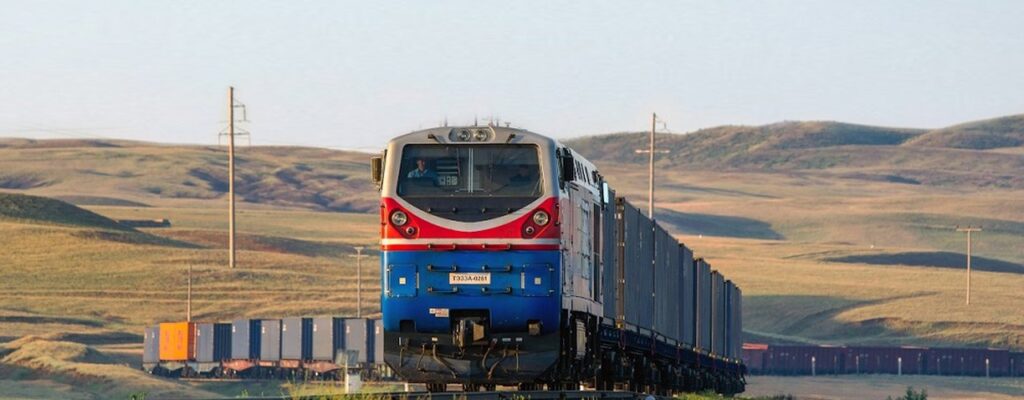
Kazakhstan Temir Zholy (KTZ), the national railway operator, has secured a syndicated loan of up to 480 million Swiss francs (approximately $540 million) for a three-year term. Arranged through Abu Dhabi Commercial Bank and Deutsche Bank, the financing will support key infrastructure projects along the Trans-Kazakhstan Railway Corridor. According to KTZ, the loan will fund construction of the Moiynty-Kyzylzhar section, upgrades to congested segments of the national rail network, and the refinancing of existing debt. The Trans-Kazakhstan Railway Corridor is central to Kazakhstan’s strategy to solidify its role as a major overland transit hub connecting China and Europe. Infrastructure improvements are expected to reduce delivery times, lower logistics costs, create jobs, and diversify international trade routes, enhancing both the resilience of Kazakhstan’s economy and the competitiveness of its transport sector. Currently, more than 80% of overland freight from China to Europe passes through Kazakhstan via the Trans-Caspian International Transport Route (TITR), also known as the Middle Corridor. This route circumvents Russia and connects China to Europe through Central Asia and the Caspian Sea. In 2024, freight volumes along the TITR surged by 60%, reaching 4.5 million tons. Kazakhstan aims to more than double that volume to 10 million tons by 2030, as part of its broader ambition to expand its footprint in global supply chains.

Kazakhstan–U.S. Tariff Question Indexes a Broader Geopolitical Pattern

When the United States announced a 25% tariff on selected imports from Kazakhstan, effective August 1, it offered little explanation beyond a vague appeal to restoring the trade balance. At first glance, this seemed routine, indeed almost perfunctory. However, the timing, context, and symbolic weight of the move suggest otherwise. Kazakhstan’s exports to the U.S. are modest, and key commodities are unaffected, yet the signal was received clearly in Astana.   What the Tariff Means in the Broader Picture In the current phase of the international system's evolution, tariffs no longer function solely as instruments of commercial redress. They have become vectors of strategic pressure, deployed to influence positions in a broader geopolitical context. From this perspective, Kazakhstan appears less as a trade partner than as a node within a larger and shifting strategic-connectivity network. To interpret the tariff imposed by the United States on Kazakhstan as a bilateral irritant would be to miss its deeper significance. The target may be marginal in economic scale, but the symbolism is central. What is at stake is not merely the movement of goods, but the movement of expectations. What is at issue is how middle powers such as Kazakhstan read global cues and signal their response. The tariff is a point of entry into an evolving geoeconomic pattern. Kazakhstan's answer to the American move thus becomes an exercise in managing uncertainty under shifting rules. Astana has moved quickly by dispatching a delegation, issuing public reassurances, and subtly shifting its narrative. This is not a crisis for Kazakhstan, but it is not something that can be ignored either. What seems to have triggered the tariff is not the trade volume, but the context. Kazakhstan’s longstanding ties with both Russia and China have complicated its attempts to preserve its autonomous balance in a tightening global field. The U.S. move may be part of a wider American effort to pressure states seen as too hesitant or too exposed. Kazakhstan's early response is thus less a tactical correction than a move to preempt misunderstanding. Background: A Cascade of Tariff Announcements The tariff targeting Kazakhstan came at the end of a months-long sequence of trade announcements that began to accelerate in early 2025; it was not an isolated action. On April 2, under the now-familiar slogan of restoring reciprocity, the Trump administration unveiled a broad tariff package affecting more than 180 countries at a base level of 10%. Russia and Belarus were notably untouched, but Kazakhstan was singled out for a rate of 27%. No one could quite justify why, and Washington did not seem interested in explaining the move. On July 7, Astana received a second notice: a revised tariff, now fixed at 25%, would take effect on August 1. This replaced the earlier measure and applied to a more specific set of goods. Without mentioning Kazakhstan by name, President Trump followed with a comment on social media about restoring “balanced flows” and correcting “distortions.” More than twenty other countries — an eclectic list including Brazil,...

Tajikistan Uncovers Major Rare Earth Deposits in Rasht Valley

Newly discovered deposits of the rare earth metals tantalum and niobium in Tajikistan could reshape the country's mining sector and economic future, according to the Tajik Geological Survey. Strategic Discoveries in the Rasht Valley Ilkhom Oymukhammadzoda, head of the Geological Administration, announced the discovery of substantial niobium and tantalum concentrations in the Rasht Valley, based on the analysis of 125 samples collected from the Nazaraylok and Yosuman areas. Tantalum is critical to electronics manufacturing, while niobium is used in high-strength alloys for the aerospace and construction industries both metals are of growing strategic importance. Oymukhammadzoda also confirmed the identification of 15 additional sites rich in rare metals such as lithium, niobium, and tantalum across remote eastern regions including Karasu, Agbasoy, Pyron, and Rohshif. Gold prospects have also emerged. At the Novy Sarimardi site, a gold-bearing ore body with a concentration of 0.96 grams per tonne has been located, potentially attracting investor interest. Geophysical surveys have identified three anomalies in the Laylakul and Sangibek areas, suggesting further opportunities for mineral exploration and development. Key Geological Zones Tajikistan’s rare earth resources are primarily concentrated in two strategic zones: the Central Region and the Gorno-Badakhshan Autonomous Region (GBAO). In the Central Region, exploration is focused on the Zeravshan and Karategin ridges. Pegmatite fields in Karasu, Akbasai, and Payron are currently under assessment for reserves of niobium, tantalum, lithium, and tin. In GBAO, exploration is underway in the Shughnan, Rushan, Ishkoshim, and Vakhsh ridges. Sites such as Kolkhozabad, Taglikhas, and Vez-Dara have shown traces of rubidium and other rare elements essential to high-tech industries. Economic Potential and National Strategy Geological survey work is state-funded and focused on assessing reserves of strategic resources. One of the most promising sites is Nazaraylok, where preliminary projections suggest reserves of niobium and tantalum may reach several hundred thousand tons. Beyond these metals, Tajikistan’s subsoil contains beryllium, cesium, lithium, tin, and light lanthanides, all in increasing demand on global markets. Rare earth resources are emerging as a cornerstone of future economic development. With its expanding inventory of strategic metals, Tajikistan could become a key player in the global rare earth supply chain.