• KGS/USD = 0.01144 0%
  • KZT/USD = 0.00208 0%
  • TJS/USD = 0.10445 -0.57%
  • UZS/USD = 0.00008 0%
  • TMT/USD = 0.28571 0%
  • KGS/USD = 0.01144 0%
  • KZT/USD = 0.00208 0%
  • TJS/USD = 0.10445 -0.57%
  • UZS/USD = 0.00008 0%
  • TMT/USD = 0.28571 0%
  • KGS/USD = 0.01144 0%
  • KZT/USD = 0.00208 0%
  • TJS/USD = 0.10445 -0.57%
  • UZS/USD = 0.00008 0%
  • TMT/USD = 0.28571 0%
  • KGS/USD = 0.01144 0%
  • KZT/USD = 0.00208 0%
  • TJS/USD = 0.10445 -0.57%
  • UZS/USD = 0.00008 0%
  • TMT/USD = 0.28571 0%
  • KGS/USD = 0.01144 0%
  • KZT/USD = 0.00208 0%
  • TJS/USD = 0.10445 -0.57%
  • UZS/USD = 0.00008 0%
  • TMT/USD = 0.28571 0%
  • KGS/USD = 0.01144 0%
  • KZT/USD = 0.00208 0%
  • TJS/USD = 0.10445 -0.57%
  • UZS/USD = 0.00008 0%
  • TMT/USD = 0.28571 0%
  • KGS/USD = 0.01144 0%
  • KZT/USD = 0.00208 0%
  • TJS/USD = 0.10445 -0.57%
  • UZS/USD = 0.00008 0%
  • TMT/USD = 0.28571 0%
  • KGS/USD = 0.01144 0%
  • KZT/USD = 0.00208 0%
  • TJS/USD = 0.10445 -0.57%
  • UZS/USD = 0.00008 0%
  • TMT/USD = 0.28571 0%

Viewing results 91 - 96 of 855

Kazakhstan to Use Innovative Drone Technology for Aral Seabed Reforestation

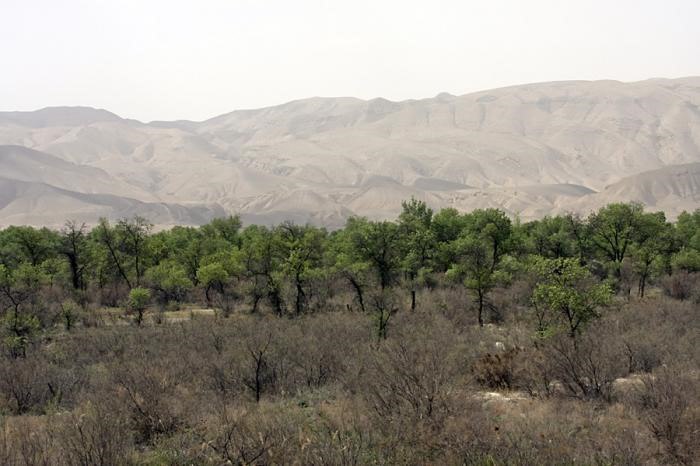
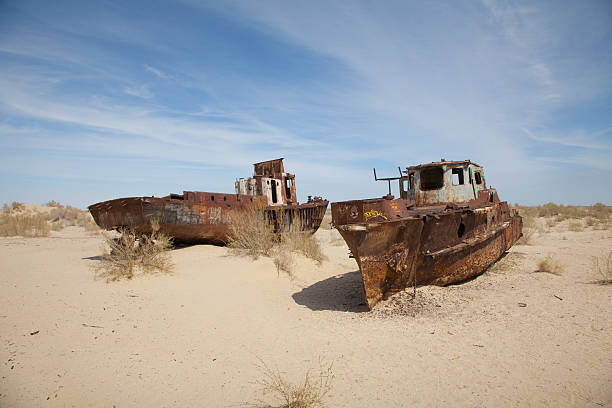
On October 29, a new initiative titled “Improving the Ecosystem of the Aral Seabed” was launched by Korkyt Ata Kyzylorda University, the University of California, Berkeley, the Kazakh Directorate of the International Fund for Saving the Aral Sea (IFAS), and the Bulat Utemuratov Foundation.  The project seeks to rehabilitate the dried Aral Sea bed using innovative E-seed technology developed by scientists at UC Berkeley. The method involves aerial seeding with drones that distribute self-burying seeds encased in biodegradable material, an approach designed to accelerate greening, increase plant survival rates, and reduce labor costs. Once the world’s fourth-largest inland sea, the Aral Sea covered 68,000 square kilometers across Kazakhstan and Uzbekistan. Beginning in the 1960s, large-scale irrigation projects diverted water from the Amu Darya and Syr Darya rivers to support cotton farming. By 2007, the sea had shrunk to just 10% of its original size. Today, the Aral Sea is a symbol of one of the world's most severe environmental disasters. Salt-laden dust from the exposed seabed, estimated in the tens of billions of tons, is carried by wind as far as the Arctic and the Himalayas. This toxic dust, infused with pesticides and heavy metals, contaminates soil, water, and air, threatening regional public health and food security. “The Aral Sea is a wound on the planet that cannot be ignored. We are launching a project that will create a barrier against salt and toxic dust, improve human health, and contribute to the future of the entire Earth,” said Ainur Karbozova, Director of the Bulat Utemuratov Foundation. “The uniqueness of this technology is that it can be applied worldwide from restoring burned-out forests to transforming deserts into green oases.” A test planting on a one-hectare site is planned for March-April 2026. In 2027, the second phase will expand the pilot to 50 hectares. “The use of the innovative E-seed technology will strengthen the soil structure, reduce dust and salt emissions, and ultimately increase the region's biodiversity,” said Rakhat Kurmanbayev, Associate Professor at Korkyt Ata Kyzylorda University. “By 2040, we plan to stabilize the ecosystem over at least 50 square kilometers. The project will reduce air temperatures by 1-2°C and improve the microclimate.” The initiative aligns with broader environmental goals outlined under Kazakhstan’s 2024-2026 chairmanship of IFAS, during which large-scale afforestation efforts aim to green more than 1 million hectares of the Aral seabed. The Times of Central Asia previously reported the construction of a saxaul nursery in the Kyzylorda region. Located directly on the former seabed, the facility is expected to produce 1.5 million drought-resistant saxaul saplings per year. According to the Ministry of Ecology and Natural Resources, Kazakhstan plans to afforest 1.1 million hectares of the dried seabed with saxaul. Between 2021 and 2024, 475,000 hectares were afforested, including 127,000 in 2024 alone. An additional 428,000 hectares are scheduled for planting in 2025. By the end of 2025, Kazakhstan expects saxaul to cover approximately 40% of its portion of the dried Aral seabed. 
Glacier-Dependent Central Asian States to Benefit from ADB Climate Program

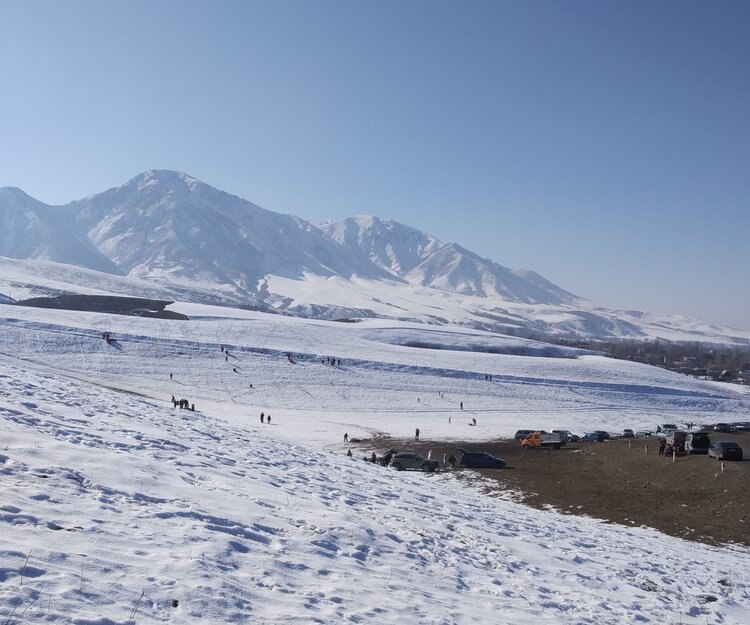
On October 29, the Green Climate Fund approved $250 million for Glaciers to Farms, a major adaptation initiative led by the Asian Development Bank (ADB) to build climate-resilient water and agricultural systems in glacier-dependent regions of Central Asia, the South Caucasus, and Pakistan. The funding, provided mostly as grants, will complement a broader $3.25 billion investment by ADB over the next decade. The program spans nine countries: Armenia, Azerbaijan, Georgia, Kazakhstan, Kyrgyzstan, Pakistan, Tajikistan, Turkmenistan, and Uzbekistan. These states rely heavily on glacier- and snow-fed rivers for agriculture, drinking water, and electricity. Accelerated glacial melt poses a direct threat to ecosystems and rural livelihoods, particularly in areas where one in four jobs depends on agriculture. By improving irrigation efficiency, expanding water storage, and investing in watershed management, the program seeks to reduce the growing frequency of droughts and floods linked to glacial melt. Glaciers to Farms will focus on four major glacier-fed river basins: the Naryn and Pyanj in Central Asia, the Kura in the South Caucasus, and the Swat in Pakistan. These basins cover about 27 million hectares and are home to an estimated 13 million people. The program will support glacier and climate assessments, upgrade monitoring networks, and introduce early warning systems to help communities prepare for glacial lake outburst floods and prolonged droughts. Beyond infrastructure, Glaciers to Farms will strengthen the capacity of local banks to finance agricultural enterprises, particularly those led by women, as part of its inclusive development approach. Climate-induced glacial retreat is a pressing concern for Central Asia, where glaciers supply up to 70 percent of river flows. The region contains more than 4,500 glacial lakes, many formed as a result of retreating ice. These lakes increase the risk of natural disasters such as lake outburst floods, avalanches, and landslides, threatening vulnerable mountain communities. Recognizing the urgency, the United Nations General Assembly has declared 2025 the International Year of Glacier Preservation. Tajikistan hosted the International Conference on Glaciers’ Preservation in Dushanbe in May, highlighting the region’s central role in global climate adaptation efforts.

Uzbekistan Suspends New Gas Connections for Homes to Conserve Energy

Uzbekistan has halted the issuance of technical permits for new natural gas connections in residential and commercial buildings that use gas exclusively for heating or cooking. Minister of Energy Jurabek Mirzamahmudov announced the decision on October 28, according to Gazeta.uz. The measure applies to newly built properties that consume gas purely for combustion rather than industrial production. “This does not concern only apartment buildings,” Mirzamahmudov said. “According to a Cabinet of Ministers resolution, starting this year, technical permits for gas connection are no longer issued to consumers who use gas solely for burning. However, if gas is used to create added value in industry, that is allowed, because resources are limited.” Existing buildings already connected to the gas network will not be affected. In new developments, gas stoves will be replaced with electric ones, and heating will be provided through centralized or local boiler systems. The minister said that the rational use of resources has become a national priority, particularly given the country’s reliance on certain external energy supplies. “Since there are alternative sources, such as electric stoves for cooking and electricity for heating, they serve the same purpose,” he added. Mirzamahmudov said that the country’s centralized heating network is being expanded during the current heating season, with several projects under development through public-private partnerships. “Urban networks are being modernized, and cogeneration facilities are under construction. For example, on November 18 in Samarkand, during an international forum, we plan to sign a heating supply agreement based on a public-private partnership with a Saudi company,” he noted, likely referring to a project in Nukus involving the Emirati firm Tadweer. The policy shift comes amid a continued decline in domestic gas output. Uzbekistan’s natural gas production fell by 4.2% in the first two months of 2025 compared to the same period last year. Production has steadily dropped from 61.59 billion cubic meters in 2018 to 44.59 billion in 2024. The new restrictions reflect the government’s growing efforts to conserve resources and improve nationwide energy efficiency.

Massive Glacier Collapse Reported on Mount Ismoil Somoni in Tajikistan

A large section of glacier broke away from Mount Ismoil Somoni in Tajikistan’s Tajikabad district on October 25, according to Asia-Plus, citing the Committee for Emergency Situations (CoES). The incident occurred around 11:00 a.m. near the village of Safedobi. The CoES reported that the detached ice mass measured approximately two kilometers in length, 25 meters in height, and 150-200 meters in width. It slid down a nearby gorge, prompting swift intervention. By 2:00 p.m., the situation was under control, with no casualties or significant damage reported. However, officials warned that ongoing rainfall and the risk of further glacier collapse could endanger agriculture in the nearby Gulrez area. Emergency services remain on high alert and are monitoring the site closely. The Ismoil Somoni glacier, one of the largest high-altitude ice masses in Tajikistan, is critical to regional water systems. Experts say the latest collapse is yet another indicator of the accelerating impact of climate change in the Pamir Mountains. Continued glacier retreat could have serious long-term environmental and economic consequences, particularly for water availability used in irrigation and hydropower generation. A recent study by the Institute of Science and Technology Austria (ISTA) found that the once-stable Pamir-Karakoram glaciers have been losing mass rapidly since 2018. Researchers, led by Francesca Pelliccotti, observed a 40-centimeter reduction in snow depth and a one-third decline in annual precipitation, conditions they described as marking a “point of no return.” The Pamir and Karakoram glaciers feed the Amu Darya and Syr Darya rivers, which support agriculture and energy production for millions across Central Asia. As glacial melt accelerates, inflow into these rivers has dropped sharply, threatening food and water security across the region. The Times of Central Asia previously reported that farmers in Tajikistan’s Vahdat district are already grappling with melting glaciers and growing irrigation demands. The recent incident on Mount Ismoil Somoni reinforces the urgency of addressing climate-related risks, which are now directly impacting both ecosystems and livelihoods across the region.

Tajikistan’s Tigrovaya Balka Nature Reserve Under Threat

The International Union for Conservation of Nature (IUCN) has raised serious concerns about the condition of Tajikistan’s Tigrovaya Balka Nature Reserve, a UNESCO World Heritage site. The IUCN has classified the state of this rare ecosystem as “alarming,” citing deteriorating hydrological conditions and mounting risks to regional biodiversity. Located at the confluence of the Vakhsh and Panj rivers in southern Tajikistan, Tigrovaya Balka is home to Central Asia’s only remaining natural Tugai forest, a unique riparian ecosystem that depends on periodic flooding for its survival. The IUCN’s World Heritage Outlook uses four categories to assess sites: “good,” “good with some concerns,” “alarming,” and “critical.” In its latest report, the organization identifies water regulation on the Vakhsh River as the primary threat to the reserve. The construction of reservoirs and increased water extraction for agriculture have disrupted the seasonal floods that historically sustained the forest. Prior to the 1960s, before large-scale hydropower development began, spring floods replenished groundwater, restored ecosystems, and prevented soil erosion. Today, experts say, the Tugai forest relies almost entirely on surface runoff and drainage water, insufficient to maintain its ecological balance. The IUCN report notes that approximately one-third of the Vakhsh River’s flow is diverted for irrigation, while about 20% of the remaining water consists of chemically polluted wastewater. This contamination is degrading water quality across the reserve and contributing to the decline of rare aquatic species. “Pollution damages the aquatic ecosystem, and many species cannot withstand environmental changes,” the report states. The IUCN emphasizes that much of the available data is observational and requires further scientific validation. It recommends a comprehensive hydrological study that considers the effects of climate change to more accurately assess the threats facing the reserve and to develop effective conservation measures. Established on November 4, 1938, the Tigrovaya Balka Nature Reserve spans 49,700 hectares across the Dusti, Jaihun, and Kubodyon districts in the Khatlon region. Renowned for its natural beauty, it remains one of the Vakhsh Valley’s key ecological and tourist sites. The name “Tigrovaya Balka” (Russian for “Tiger Valley” or Beshaï Palangon in Tajik) commemorates the now-extinct Turanian tiger, which once roamed these lands. The last confirmed sighting of the species in the area dates back to the 1950s.

Kazakhstan Eyes Revival of Ili River Corridor as Logistics Artery

River transport has long offered a cost-effective and environmentally friendly alternative for moving cargo. Inland waterways present an alternative route that could unlock new logistics pathways for Kazakhstan and the broader Central Asian region. Yet the development of river navigation remains hindered by several challenges. Kazakhstan’s inland waterway system faces numerous obstacles: insufficient investment, underdeveloped port infrastructure, an aging fleet, and bureaucratic red tape. Despite these issues, reviving river navigation could significantly boost mutual trade, increase cargo volumes, and ease pressure on overburdened road and rail networks. The government has initiated several projects aimed at doing just that. One notable initiative is the proposed route along the transboundary Ili River in the Almaty Region, connecting the city of Konaev with Yining in China’s Xinjiang Uyghur Autonomous Region. Originating in the Tien Shan mountains, where the Kunges and Tekes rivers merge, the Ili River stretches 1,439 km, with 620 km or 43% within Kazakhstan’s borders. [caption id="attachment_38136" align="aligncenter" width="2560"] Image: Ili River Port LLP[/caption] The project is a joint venture between Kazakhstan’s Ili River Port LLP and China International Water & Electric Corp. In an interview with The Times of Central Asia, Marat Julaev, CEO of Ili River Port LLP, stated that the navigable section of the route spans 450 km. Historically, the Ili served as a key transport artery, facilitating trade and connectivity with remote regions. “This route was navigable and operational until 1980. It was used to transport dry goods, ores, petroleum products, and consumer goods from China,” Julaev explained. Following the collapse of the Soviet Union, navigation along the Ili declined sharply. Extensive water usage in China caused water levels to fall, compounding the route’s inability to compete with road and rail alternatives. However, with mounting congestion and capacity constraints in land-based infrastructure, the river’s strategic role is being reconsidered. “In the Almaty Region, we’ve been allocated a 100-hectare plot on the coast of the Kapshagai Reservoir, providing a strategic advantage in reducing delivery time and costs,” Julaev told TCA. “Our Chinese partners, operating in Kazakhstan since 2006, are developing the route between Yining and Konaev.” [caption id="attachment_38137" align="aligncenter" width="2560"] Image: Ili River Port LLP[/caption] A central component of the project is the creation of a transport and logistics hub to consolidate and distribute cargo across Central Asia. The river port will offer terminal services, storage, sorting, equipment maintenance, and passenger transport. Plans also include developing production facilities and cargo terminals on-site. Commissioning is expected in 2027, with an initial cargo turnover capacity of one million tons annually, potentially rising to three million. According to Julaev, this development will enhance Kazakhstan’s foreign trade with China. Julaev emphasized one of the route’s key advantages: the ability to transport oversized cargo, including materials for Kazakhstan’s first nuclear power plant under construction in the village of Ulken on Lake Balkhash, which is fed primarily by the Ili. An equally critical issue is water availability. According to the UN Development Programme in Kazakhstan, over 44% of the country’s river flow originates in...