• KGS/USD = 0.01144 0%
  • KZT/USD = 0.00202 0%
  • TJS/USD = 0.10399 -0.29%
  • UZS/USD = 0.00008 0%
  • TMT/USD = 0.28490 0%
  • KGS/USD = 0.01144 0%
  • KZT/USD = 0.00202 0%
  • TJS/USD = 0.10399 -0.29%
  • UZS/USD = 0.00008 0%
  • TMT/USD = 0.28490 0%
  • KGS/USD = 0.01144 0%
  • KZT/USD = 0.00202 0%
  • TJS/USD = 0.10399 -0.29%
  • UZS/USD = 0.00008 0%
  • TMT/USD = 0.28490 0%
  • KGS/USD = 0.01144 0%
  • KZT/USD = 0.00202 0%
  • TJS/USD = 0.10399 -0.29%
  • UZS/USD = 0.00008 0%
  • TMT/USD = 0.28490 0%
  • KGS/USD = 0.01144 0%
  • KZT/USD = 0.00202 0%
  • TJS/USD = 0.10399 -0.29%
  • UZS/USD = 0.00008 0%
  • TMT/USD = 0.28490 0%
  • KGS/USD = 0.01144 0%
  • KZT/USD = 0.00202 0%
  • TJS/USD = 0.10399 -0.29%
  • UZS/USD = 0.00008 0%
  • TMT/USD = 0.28490 0%
  • KGS/USD = 0.01144 0%
  • KZT/USD = 0.00202 0%
  • TJS/USD = 0.10399 -0.29%
  • UZS/USD = 0.00008 0%
  • TMT/USD = 0.28490 0%
  • KGS/USD = 0.01144 0%
  • KZT/USD = 0.00202 0%
  • TJS/USD = 0.10399 -0.29%
  • UZS/USD = 0.00008 0%
  • TMT/USD = 0.28490 0%

Viewing results 223 - 228 of 825

Kazakhstan and France Join Forces to Save Lake Balkhash

Work has begun in Almaty on the development of a master plan to preserve Lake Balkhash, one of Central Asia’s largest bodies of water. Experts from Kazakhstan and France will collaborate on the project, according to the Ministry of Water Resources and Irrigation of the Republic of Kazakhstan.  Master Plan for the Balkhash Ecosystem A two-day seminar has been launched in Almaty, during which a roadmap for the action plan was presented. The document includes an analysis of the water resources in the Ile-Balkhash basin, a study of groundwater reserves, the creation of a digital platform to monitor water levels, and the automation of hydraulic engineering facilities. Additional measures aim to ensure the more efficient use of the basin’s water resources and involve joint projects with China to protect the Ili River. The French Development Agency (AFD) and the French Geological and Mining Research Bureau (BRGM) are key partners in the project. French experts are currently collecting the necessary data and planning site visits to inspect wells, hydrological stations, and irrigated lands. The project is overseen by the Ministry of Water Resources and Irrigation of Kazakhstan, with support from Kazakhmys Corporation LLP. The seminar is attended by representatives from Kazakhstani ministries, international organizations, academia, and the Consulate General of France in Almaty. “For a long time, issues related to Lake Balkhash were addressed on a case-by-case basis, without a unified strategy. To move towards a systematic approach, we are starting to develop a master plan,” said Bolat Bekniyaz, First Deputy Minister of Water Resources and Irrigation. He emphasized that the plan would consider all aspects of the basin’s sustainability, from ecology and water management to energy, agriculture, and socio-economic development. Kazakhstan-France Cooperation The Balkhash preservation initiative builds on earlier agreements between Kazakhstan and France. Last October, it was announced that a memorandum of cooperation and a trilateral agreement, covering groundwater exploration in the Ili-Balkhash basin, were in preparation.  The French Development Agency (AFD), the French Geological and Mining Research Bureau (BRGM), and the International Water Agency (OiEau) are leading partners in this endeavor. During a meeting with Kazakhstan’s Minister of Water Resources, Nurzhan Nurzhigitov, French Ambassador Sylvain Guillemot highlighted the growing interest of French companies in constructing and modernizing water facilities, as well as in projects related to leak detection and resource management optimization. Water Resource Challenges in Balkhash Separately, on the shores of Lake Balkhash, in the village of Ulken, Kazakhstan plans to build its first nuclear power plant.  According to unofficial data, since early 2025, approximately 3.8 billion cubic meters of water have been diverted from the Kapshagay Reservoir to Lake Balkhash, a move that has positively impacted the region’s ecological conditions and the Ili River delta.  Experts have long warned that without a coordinated approach to water resource management, Lake Balkhash risks following the catastrophic path of the Aral Sea. Declining water levels are already impacting biodiversity, climate conditions, and the socio-economic well-being of local communities. The development of a master plan is viewed as a crucial...

Water Level in Lake Balkhash Steadily Rising

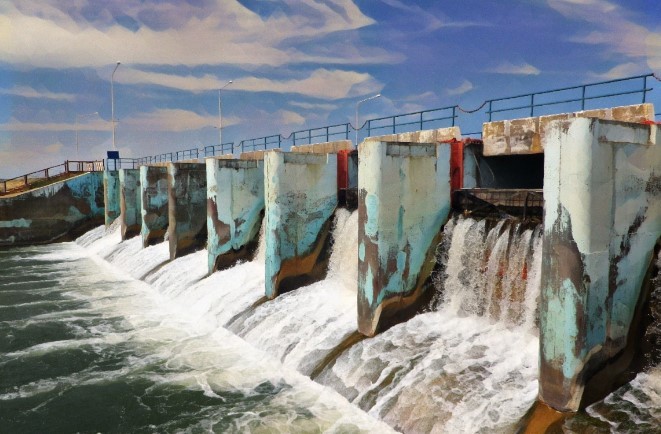
Over the past year, the water level in Lake Balkhash has risen by 0.12 meters, and the volume of water has increased by 2 billion cubic meters, according to Kazakhstan’s Ministry of Water Resources and Irrigation.  Located 175 miles northwest of Almaty, Kazakhstan’s largest city, Lake Balkhash is the world’s fifteenth-largest lake. In May 2024, reports indicated that Balkhash’s water level had risen by 0.23 meters since the start of the year, largely due to increased rainfall and snowmelt floods during spring. Since the beginning of 2025, 3.8 billion cubic meters of water have been released from the Kapchagay reservoir in Almaty region into Lake Balkhash. The lake’s water volume largely depends on the transboundary Ili River, which originates in China and supplies about 70% of Balkhash’s inflow. The river’s flow is regulated by the Kapchagay reservoir. This year, Lake Balkhash is expected to receive a total of 12 billion cubic meters of water from the reservoir. According to Minister of Water Resources and Irrigation Nurzhan Nurzhigitov, the ministry will meet with French experts next week to begin preparations for a master plan to conserve Lake Balkhash through 2040. The Times of Central Asia previously reported that in December 2024, Kazakhstan’s Ministry of Water Resources and Irrigation signed a cooperation agreement with the French Development Agency (AFD) and the French Geological Survey (BRGM, Bureau de Recherches Géologiques et Minières) to preserve Lake Balkhash.  Under the agreement, the French side will allocate a grant of 1.35 million euros to Kazakhstan’s Ministry of Water Resources and Irrigation to support the development of sustainable water management practices for the lake. The project includes a comprehensive study of the Lake Balkhash basin and the creation of a long-term preservation plan extending through 2040.

Ecologists Warn Central Asian Dams May Threaten UNESCO Heritage Site

A coalition of international environmentalists is sounding the alarm over the impact of large-scale dam construction in Central Asia, warning that it could cause irreversible harm to the Western Tien Shan, a UNESCO World Heritage Site jointly shared by Kazakhstan, Kyrgyzstan, and Uzbekistan. Dam Projects Multiply Across Region According to a recent report by the coalition Rivers Without Boundaries, dozens of new hydropower projects are either in development or under construction across the region. The group says this wave of dam-building poses a significant threat to the unique ecosystems and biodiversity of the Western Tien Shan, which was inscribed on the UNESCO World Heritage List in 2016 due to its exceptional natural value. The report identifies more than five dams already constructed in recent years, with an additional 15 to 40 projects currently in the pipeline. These developments are affecting key river systems, including the Chatkal, Ugam, Pskem, and Aksu, which play a vital role in sustaining the region’s delicate ecological balance. Protected Areas Under Pressure Some of the most contentious projects are unfolding inside or near designated conservation zones. In Kyrgyzstan, a dam is planned within the Besh-Aral Nature Reserve, while gold mining activities have already degraded parts of the Chatkal River valley. In Kazakhstan, officials are considering a series of dams in Sayram-Ugam National Park. Uzbekistan is also pressing ahead with new hydropower schemes, including one on the Pskem River, drawing criticism from environmental advocates. “Short-term economic goals are being prioritized over the long-term need to protect this globally important natural area,” said Eugene Simonov, international coordinator of Rivers Without Boundaries. He urged UNESCO and the broader international community to intervene before further damage is done. Threats to Rare Species and Ecosystems Environmentalists argue that dam construction is fragmenting river systems and isolating animal habitats, particularly those of rare and endemic species. The snow leopard and several native fish species are among the wildlife at risk. Floodplain forests and wild fruit tree habitats, critical components of the area’s biodiversity, are also under threat. Alexander Kolotov, regional director of Rivers Without Boundaries, highlighted the dangers of building dams within protected national parks. “We are not properly measuring the impact on fish and river ecosystems,” he said. “If this continues, we could lose many species forever.” Legal and Diplomatic Concerns The group further contends that several dam projects may be violating international agreements, including the World Heritage Convention and the Espoo and Aarhus Conventions. These treaties require environmental impact assessments, public consultation, and cross-border cooperation, all of which may be lacking or inadequately implemented. Rivers Without Boundaries has formally petitioned UNESCO to add the Western Tien Shan to its List of World Heritage in Danger. The proposal is expected to be reviewed at the UNESCO World Heritage Committee session scheduled for July 2025. Previously, Evgeny Vinokurov, Vice-Chairman and Chief Economist of the Eurasian Development Bank, issued a stark warning about Central Asia’s looming water and energy crisis, noting that regional development must be carefully balanced with environmental protection.

EDB Chief Economist Outlines Central Asia’s Water Challenges and Proposes Solutions

Evgeny Vinokurov, Vice-Chairman and Chief Economist of the Eurasian Development Bank (EDB), presented a sobering assessment of Central Asia’s water and energy challenges at the Annual Meetings of the Association of Development Financing Institutions in Asia and the Pacific (ADFIAP) on April 23. The event, held in Muscat, Oman, featured a plenary session dedicated to sustainable water management and practical strategies for addressing mounting environmental pressures in the region. Shrinking Glaciers and Growing Demand Vinokurov unveiled findings from the EDB’s think tank research, which paint a stark picture: Central Asia’s glaciers have shrunk by 30% over the past 50 years, while water demand continues to rise. Despite this, much of the region's water infrastructure remains outdated and inefficient, resulting in a loss of 40-55% of available water. Additionally, 10 million people in Central Asia still lack access to safe drinking water. Without targeted intervention, annual water scarcity could reach 5-12 cubic kilometers by 2028. National Commitments and Regional Coordination The EDB report emphasized water conservation as a critical pillar in the region’s response to these challenges. Several countries are already pursuing large-scale water-saving initiatives: Kazakhstan plans to expand water-saving irrigation technologies to 150,000 hectares per year by 2030. Uzbekistan has committed to saving 15 billion cubic meters of water. Kyrgyzstan aims to construct 106 new reservoirs to secure water supply. “Central Asia’s water crisis cannot be solved in isolation,” said Vinokurov. “Our research provides a roadmap for efficiency, investment, and, most importantly, regional cooperation. This is why the water-energy nexus remains a strategic priority for our Bank, both in terms of investments and research.” Localizing Water Solutions The EDB, in partnership with the United Nations Industrial Development Organization (UNIDO), recently published a report titled Irrigation Equipment Production in Central Asia: Industrialising the Water Sector, calling for localized production of irrigation equipment to enhance water efficiency and reduce dependency on imports. Another key publication from the EDB, The Irtysh River Basin: Transboundary Challenges and Practical Solutions, focuses on the Irtysh River basin shared by China, Kazakhstan, and Russia. The report outlines increasing water demand across the basin and proposes measures for managing cross-border water resources through collaborative frameworks. Uzbekistan Joins the EDB On April 9, Uzbekistan became the seventh member of the Eurasian Development Bank, joining Armenia, Belarus, Kazakhstan, Kyrgyzstan, Russia, and Tajikistan. The move is expected to provide new avenues for Uzbekistan to modernize its infrastructure, particularly in the transport, energy, and water sectors, and support its broader industrial and agricultural development goals.

Kyrgyzstan’s UN Mission Opens Environmental Art Exhibition in New York

In honor of International Mother Earth Day, the Permanent Mission of the Kyrgyz Republic to the United Nations has opened an art exhibition in New York, highlighting the planet’s environmental challenges. The exhibition features works by young Kyrgyz artists that explore the intricate relationship between climate change, human development, and the natural world. Through a mix of paintings and installations, the artists aim to emphasize the environmental threats affecting global stability. [caption id="attachment_31162" align="aligncenter" width="900"] @mfa.gov.kg[/caption] Speaking at the opening, Aida Kasymalieva, Kyrgyzstan’s Permanent Representative to the UN, underscored the urgent need for intergenerational dialogue and collective responsibility in tackling environmental degradation. “Humanity must realize its shared duty to nature and future generations,” she said, calling for stronger efforts to reduce pollution, curb biodiversity loss, and increase funding for green initiatives. “This exhibition supports the Kyrgyz Republic’s broader commitment to environmental sustainability both nationally and internationally,” the Kyrgyz Foreign Ministry stated in a press release. “Kyrgyzstan is actively implementing programs to preserve mountain ecosystems, protect biodiversity, and transition to a green economy.” [caption id="attachment_31163" align="aligncenter" width="900"] @mfa.gov.kg[/caption] Kyrgyzstan has long sought to draw international attention to the unique vulnerabilities of mountain regions. Since the early 2000s, the country has positioned itself as a global advocate for highland communities, particularly in the context of climate resilience and sustainable development.

World Bank to Investigate Regional Risks of Rogun Dam Project

The World Bank’s Inspection Panel has agreed to review a formal complaint filed by residents of Uzbekistan and Turkmenistan concerning the environmental and social risks associated with the Rogun Hydropower Project (HPP) in Tajikistan. The complaint, submitted by the regional environmental coalition Rivers Without Boundaries, targets a $350 million World Bank loan and related technical assistance used to revise the project’s 2014 environmental and social impact assessments. The complainants argue that the current studies are outdated and inadequate, relying on assumptions that are more than a decade old. They contend the assessments fail to account for the downstream effects of storing and diverting water from the Vakhsh River, one of the primary tributaries of the Amu Darya basin, on communities and ecosystems in Uzbekistan and Turkmenistan. Preliminary estimates from the World Bank suggest that filling the Rogun reservoir could decrease the flow into the Aral Sea by 0.8 to 1.2 cubic kilometers annually, potentially cutting today’s levels by as much as 25%. Such a reduction, critics warn, could exacerbate ongoing issues in the region, including desertification, soil salinity, and land degradation. These challenges have plagued villages in the lower Amu Darya since Soviet-era irrigation schemes dramatically reduced the sea’s volume, leading to persistent dust storms and declining water quality. Local farmers are particularly concerned about the dam’s effect on the timing of water availability. If the dam shifts the river’s flow from spring and summer into winter storage, it could disrupt traditional irrigation cycles, forcing expensive infrastructure adjustments. Some communities fear economic collapse and forced migration if water needs go unmet during critical planting seasons. Environmental experts also highlight the cumulative threat posed by the Rogun HPP in conjunction with Afghanistan’s planned Qosh Tepa canal. No comprehensive analysis has been conducted to evaluate the combined impact of these two major water diversion projects on regional hydrology and biodiversity. The World Bank itself estimates that climate change could reduce water availability in the region by 15-30% by 2050, potentially costing Uzbekistan up to 250,000 agricultural jobs and requiring billions in climate adaptation investments. In response, Rivers Without Boundaries has called on the World Bank and its co-financiers, who have collectively pledged over $1 billion, to suspend further funding until a transparent, independent risk assessment is completed. The coalition advocates for a thorough study of alternative project designs, such as a lower dam height, to mitigate environmental and social damage. They also demand genuine public consultation with all Amu Darya basin countries, equitable compensation mechanisms, and legally binding water management agreements. Failure to address these concerns, the group warns, risks triggering an irreversible ecological and humanitarian crisis across Central Asia.