• KGS/USD = 0.01144 0%
  • KZT/USD = 0.00212 0%
  • TJS/USD = 0.10456 0.19%
  • UZS/USD = 0.00008 0%
  • TMT/USD = 0.28490 0%
  • KGS/USD = 0.01144 0%
  • KZT/USD = 0.00212 0%
  • TJS/USD = 0.10456 0.19%
  • UZS/USD = 0.00008 0%
  • TMT/USD = 0.28490 0%
  • KGS/USD = 0.01144 0%
  • KZT/USD = 0.00212 0%
  • TJS/USD = 0.10456 0.19%
  • UZS/USD = 0.00008 0%
  • TMT/USD = 0.28490 0%
  • KGS/USD = 0.01144 0%
  • KZT/USD = 0.00212 0%
  • TJS/USD = 0.10456 0.19%
  • UZS/USD = 0.00008 0%
  • TMT/USD = 0.28490 0%
  • KGS/USD = 0.01144 0%
  • KZT/USD = 0.00212 0%
  • TJS/USD = 0.10456 0.19%
  • UZS/USD = 0.00008 0%
  • TMT/USD = 0.28490 0%
  • KGS/USD = 0.01144 0%
  • KZT/USD = 0.00212 0%
  • TJS/USD = 0.10456 0.19%
  • UZS/USD = 0.00008 0%
  • TMT/USD = 0.28490 0%
  • KGS/USD = 0.01144 0%
  • KZT/USD = 0.00212 0%
  • TJS/USD = 0.10456 0.19%
  • UZS/USD = 0.00008 0%
  • TMT/USD = 0.28490 0%
  • KGS/USD = 0.01144 0%
  • KZT/USD = 0.00212 0%
  • TJS/USD = 0.10456 0.19%
  • UZS/USD = 0.00008 0%
  • TMT/USD = 0.28490 0%

Viewing results 745 - 750 of 3334

Fatherless Tajik Children: The Social Consequences of Labor Migration

Labor migration has become a daily reality in Tajikistan, and a vital means of survival for many families. It is estimated that between 800,000 and 1 million citizens (up to 20% of the labor force) work abroad. Remittances make up a significant share of GDP, estimated between 27 % and nearly 50 %, with one measure at 45 % in 2024, helping families cover essential expenses such as food, education, and healthcare. However, this economic stability comes at a high social cost, which is often paid by the children left behind, many of whom grow up without adequate parental care. Shifting Roles: Mothers and Children Left Behind The prolonged absence of a father figure significantly alters family dynamics. Women, mothers, grandmothers, and often older children assume all household and caregiving responsibilities. Tasks traditionally viewed as “men’s work,” such as repairing windows, chopping wood, and cultivating land, are now undertaken by those remaining at home. Children are frequently forced to grow up early. Older siblings help raise younger ones, cook meals, and manage household chores while their mothers work. In some cases, these duties interfere with education. In rural areas, it is not uncommon for girls to leave school after the ninth grade to help sustain the household. Experts note that parental absence accelerates emotional and social maturity by placing an undue burden on children. Studies confirm this trend: around 15% of children aged 10 to 14 in migrant households are engaged in informal labor, working in markets or fields instead of attending school. As a result, many children are deprived of a full childhood and are compelled to act as “little adults,” shouldering family responsibilities. The issue is widespread. In Tajikistan, where labor migration is especially intense, up to 30% of school-age children are raised by grandparents or extended family members. Thousands grow up under the care of older siblings while both parents or, more commonly, fathers, are abroad. The Emotional Toll: Loneliness and Psychological Strain The long-term absence of fathers also takes a psychological toll. While phone and video calls offer some form of connection, they are no substitute for physical presence. Communication is often irregular: surveys show that 70% of children speak with their migrant parent less than once a week, and 15% only once a month. Feelings of abandonment and emotional detachment are widespread. One in three children of labor migrants reportedly exhibits signs of depression, including apathy, sadness, and a declining interest in school. Approximately 40% feel lonely and emotionally neglected. Teachers note lower academic performance and reduced motivation among these children. Moreover, the absence of paternal supervision can contribute to behavioral issues: up to 10% of adolescents from migrant families in Tajikistan display signs of deviant behavior, such as aggression and minor offenses, significantly higher than among their peers in two-parent households. Family relationships often suffer as well. Women left behind effectively become single parents, managing both emotional and material responsibilities. Years of separation, financial strain, and infrequent visits can lead to emotional distance between spouses. Observers note...

Halyk Bank Buys 49% Stake in Uzbekistan’s Click in Landmark Fintech Deal

Almaty - Kazakhstan’s Halyk Bank has announced it will acquire a 49% stake in Uzbek digital payments company Click for $176.4 million, marking one of the largest cross-border banking investments in Central Asia to date. The deal values Click at approximately $360 million, highlighting the growing importance of digital finance in the region’s rapidly evolving financial landscape. With over 20 million customers, Click is one of Uzbekistan’s most widely used payment providers. As part of the agreement, Click will also take a 49% stake in Tenge Bank, Halyk’s Uzbek subsidiary, for $60.76 million. The reciprocal structure of the deal is designed to foster tighter operational integration and shared technological infrastructure between the two institutions – a significant step toward regional financial harmonization. “This is a historic moment for Click. Partnering with Halyk Bank and expanding our capabilities through Tenge Bank represents a major step forward in delivering world-class digital financial services to millions of users,” said Ulugbek Rustamov, CEO of Click. “At the same time, the structure of the deal ensures Click retains its independence, continues to shape its strategic vision, and remains a proud national brand.” Strategic Push Toward Integration The announcement comes as both Kazakhstan and Uzbekistan continue efforts to modernize their financial systems and ease cross-border payments. Regional trade between the two nations has grown steadily in recent years, with bilateral trade turnover reaching $4.22 billion in 2024, up from $2.9 billion in 2020. Halyk Bank, already Kazakhstan’s dominant financial institution with a 29% market share and more than 10.9 million active retail clients, views the investment as a strategic step towards capturing Uzbekistan’s booming digital economy. Click, meanwhile, gains regulatory grounding via Tenge Bank and access to Halyk’s technology and ability to raise capital from its public listing on the London Stock Exchange. Uzbekistan, whose GDP grew by 7.2% in the first half of 2025, continues to open its financial sector to foreign capital – a key pillar of President Shavkat Mirziyoyev’s economic reform program. Competing Power Structures? This fintech alliance also throws an intriguing light on Central Asia’s most influential business families. Halyk Bank is majority-owned by Timur Kulibayev and his wife Dinara, the daughter of former Kazakh president Nursultan Nazarbayev, widely viewed as Kazakhstan’s most powerful couple. Their expanding presence in Uzbekistan via Click and Tenge Bank may once have had the potential to ruffle feathers amongst Uzbekistan’s elite. The fact that the deal has been allowed to proceed this far is in itself an acknowledgement of the shared interests of regional powerbrokers. A Shift in Regional Strategy The deal represents a strategic reversal for Halyk Bank. In recent years, the bank has divested from its Kyrgyz and Tajik operations, selling 100% of its Kyrgyz subsidiary to oligarch Aidan Karibzhanov in 2024 and liquidating its Tajik entity in 2022. The Click acquisition signals a renewed focus on Uzbekistan, with the potential to make the country Halyk’s primary external growth market. This renewed push comes as Halyk cements its dominance in Kazakhstan, where it controls...

Timur’s Birthplace Languishes on UNESCO List of Endangered Sites

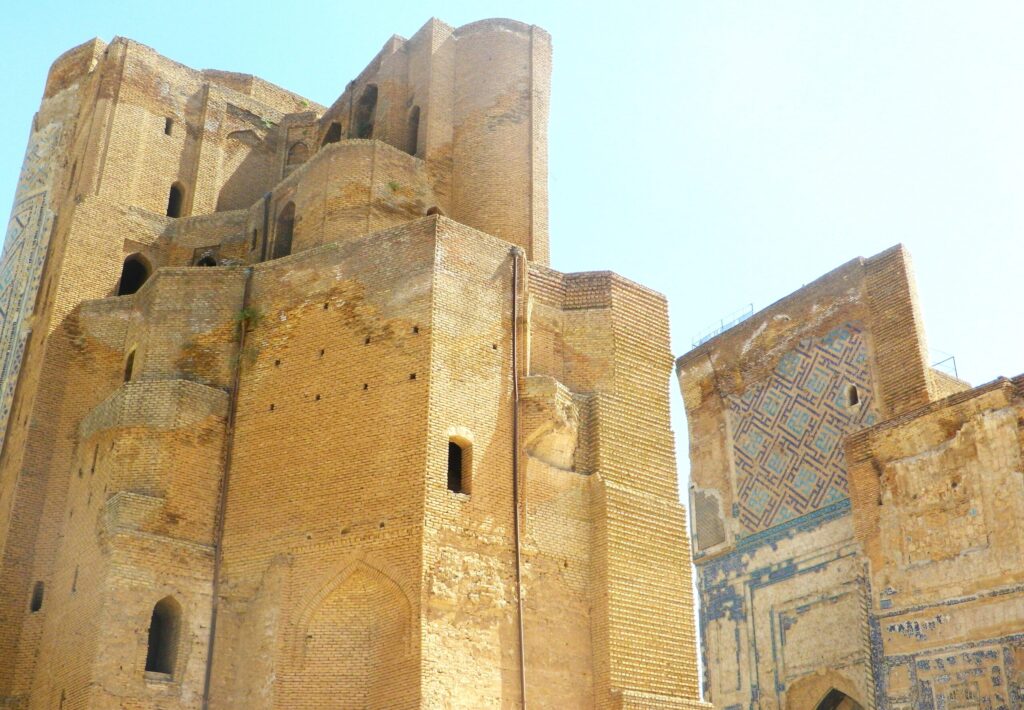
Bukhara, Samarkand, Khiva. Uzbekistan’s cultural heritage draws visitors from around the world, but the troubled modern history of another ancient site, Shakhrisabz, is a reminder that development and mass tourism sometimes overshadow preservation. Shakhrisabz, or Green City, is less known than some other tourist destinations in Uzbekistan that were part of the Silk Road network linking cultures across Asia, Europe, and Africa many centuries ago. Yet the old urban core is more than 2,000 years old and contains spectacular monuments and other structures, some dating from the heyday of the city during the rule of the Turco-Mongol conqueror Timur, also known as Tamerlane, and the Timurids in medieval times. [caption id="attachment_34196" align="aligncenter" width="2560"] Timur Statue; image: TCA, Stephen M. Bland[/caption] UNESCO declared it a world heritage site in 2000. But the historical center of Shakhrisabz, previously called Kesh, was placed on the U.N. cultural agency´s list of world heritage sites in danger in 2016 after large sections were razed to make way for a park and tourist facilities. It has stayed on the danger list ever since as officials in Uzbekistan, assisted by international advisers, try to figure out a way to prevent it from losing its United Nations status altogether. A total of 53 locations around the world are on UNESCO’s danger list. [caption id="attachment_34197" align="aligncenter" width="2560"] The Fayzullah Ravnakhi Museum B&B, one of many buildings demolished to make way for tourist facilities; image: TCA, Stephen M. Bland[/caption] A solution in Uzbekistan’s case appears to be in the works. At a meeting in Paris this month, the UNESCO World Heritage Committee tentatively approved an Uzbek proposal that would restore Shakhrisabz in southern Uzbekistan to the regular heritage list but in reduced form – only four key Timurid monuments would be included, while the rest of the historical center would be labeled as a buffer zone. “The main focus is expected to shift from the concept of a ´complete historic city´ to the conservation of the ensemble of monuments, including the Ak-Saray Palace, while preserving their urban context,” reported Gazeta.uz, a media organization in Uzbekistan. [caption id="attachment_34198" align="aligncenter" width="2560"] Ak-Saray Palace; image: TCA, Stephen M. Bland[/caption] Uzbekistan must conduct archaeological studies, prepare a restoration plan, and take other measures in order for the proposal to succeed, according to Gazeta.uz. Uzbekistan must update UNESCO on its progress in February 2026, and the process could still take several years. Construction of the Ak-Saray Palace began in 1380 after a military victory by Timur, who was born in the city, according to UNESCO. The agency said that not one of the many Timurid monuments in Samarkand, north of Shakhrisabz, can rival the Ak-Saray Palace. “The foundations of its immense gate have been preserved: this architectural masterpiece is outstanding in its dimensions and bold design,” UNESCO said. While Shakhrisabz has less tourist infrastructure than nearby Samarkand, there are efforts to raise its profile. Last year, the Economic Cooperation Organization, whose ten members include Central Asian countries, declared it the tourism capital for 2024. Uzbekistan’s other cultural sites have also faced...

Embezzlement Scandal at Kazakh Charity Fund Implicates Influential Officials

A high-profile scandal is unfolding in Kazakhstan involving the alleged embezzlement of billions of tenge from the Biz Birgemiz Qazaqstan (“We Are Together”) charity fund. Testimony from the fund’s embattled director, Perizat Kairat, alongside ongoing press investigations, has implicated several prominent officials. The Rise and Fall of Perizat Kairat Charitable giving in Kazakhstan remains underdeveloped, with many humanitarian organizations struggling to secure adequate funding. The Biz Birgemiz Qazaqstan fund, however, stood out. Backed by donations from large banks, business leaders, and individuals, it quickly amassed substantial sums. Established in June 2021, the fund came under scrutiny after Kairat’s arrest in November 2024. She was initially charged with embezzling more than KZT 1.5 billion ($2.8 million) raised during the spring 2024 floods, the worst to hit Kazakhstan in 80 years, affecting twelve regions and leaving thousands homeless. Subsequent investigations raised the alleged embezzled amount to KZT 2.9 billion ($5.4 million). The authorities claim Kairat and her mother, Gaini Alashbaeva, used the funds to purchase luxury real estate, vehicles, designer goods, and pay for lavish travel. Funds collected for humanitarian aid to Gaza residents were also reportedly misappropriated. Additional allegations include collecting over KZT 105 million ($200,000) for festivals such as Central Asia Fest and Almaty Uni, which were never held, and for a rehabilitation center, which was never built. Support for the fund was boosted by advertising through Kazakhstan’s largest financial platform, Kaspi.kz, which promoted it within its mobile app. During court proceedings, Kaspi.kz confirmed transferring KZT 620 million ($1.2 million) to the fund. Another major contributor, Jusan Bank (now Alatau City Bank), reportedly also donated KZT 300 million ($560,000). Misplaced Trust Public trust in the fund was bolstered by the widespread belief that it was affiliated with the state. For instance, an elderly woman from Pavlodar testified that she donated KZT 1 million, believing it was a government initiative. Parents from Nazarbayev Intellectual Schools (NIS) who transferred KZT 901,000 are now demanding its return to assist a seriously ill teacher. Witnesses claim Kairat collected cash through intermediaries using large market-style bags. Political Connections and Allegations Perizat Kairat’s defense has drawn high-level political figures into the spotlight. On July 14, she requested the court summon Bauyrzhan Baybek, former mayor of Almaty and ex-first deputy chairman of the ruling Amanat Party (formerly Nur Otan), for questioning. Kairat alleges that the fund was “created under the leadership of Baybek,” claiming all its founders, except herself, were current or former party employees. Amanat, Kazakhstan’s dominant political party, has publicly denied any connection to Kairat or the foundation. Though President Kassym-Jomart Tokayev resigned from the party leadership in April 2022, Amanat remains politically influential and retains close ties to many government officials. Kazakh outlet Orda.kz examined Kairat’s social media to explore potential links between the fund and state institutions. It found the foundation's founders had associations with the BizBirgemiz volunteer movement, launched during the COVID-19 pandemic under a state initiative of the same name. Just a month after its registration, the foundation hosted a charity...

Kazakhstan’s Surge in Metallurgical Output Raises Alarm in Russia

Kazakhstan is poised to double its copper ore production to 300 million tons by 2030, with the Aidarly, Koksay, and Benkala deposits leading the expansion. This ambitious plan was announced by Deputy Minister of Industry and Construction Olzhas Saparbekov during a recent government meeting. A Strategic Shift Toward Processing Alongside copper, Kazakhstan plans to expand iron ore production by 40%, aiming for 52 million tons. This increase will be driven by enterprise modernization and new projects producing hot-briquetted iron. In 2024, metallurgical ore production grew by 7.8%, while total metal output rose by 6.9%. Authorities are shifting focus from raw extraction to deep processing and the development of medium- and high-tech industries. By 2025, copper processing is expected to double, aluminum processing will increase by 50%, lead processing will more than double, and zinc output will rise by 11%. According to Saparbekov, these efforts will allow Kazakhstan to “utilize domestic production capacities and expand the output of finished products,” including wire rod, cable and wire products, batteries, window profiles, fittings, and bimetallic radiators. New projects also aim to produce brass components and industrial batteries. Economic Impact and Investment Plans The mining and metallurgical sector currently contributes 8% to Kazakhstan’s GDP, generating over $26.4 billion annually. The industry employs approximately 224,000 people. In 2024 alone, more than $3.2 billion was invested in metallurgy, while labor productivity increased by 9.4%, reaching $102,000 per worker. In 2025, Kazakhstan plans to implement 190 industrial projects worth a combined $3 billion. Of these, 28 projects in the mining and metallurgical sector, valued at $837 million, are expected to create 6,500 new jobs. Priority initiatives include the production of seamless pipes and aluminum radiators in Karaganda, aluminum profiles in the Turkestan Region, ferroalloys in Pavlodar, and cathode copper in the Zhambyl Region. Rising Tensions with Russia However, Kazakhstan’s rapid metallurgical growth is stirring concern in neighboring Russia. In the first half of 2025, domestic steel demand in Russia fell by 14-15%, with the machine-building and energy sectors seeing a sharper decline of 25%. Severstal CEO Alexander Shevelev told Kommersant that increasing supplies from Kazakhstan, alongside imports from China, are straining Russia’s market and may force plant closures. He identified particularly intense competition in Siberia and the Russian Far East. Severstal has warned that, without protective measures under the Eurasian Economic Union (EAEU), pressure from Kazakh imports could spread to other Russian regions. In response, Russia is considering launching an anti-dumping investigation into Kazakh steel imports. Such a move could significantly impact Kazakh exporters, who are looking to increase shipments amid weak domestic demand in neighboring markets. According to the World Steel Association, Russia’s steel production declined by 5.2% between January and May 2025. The drop is attributed to low global prices, high interest rates, rising production costs, and sluggish industrial activity.

Steppe Diplomacy: Mongolia Deepens Central Asia Ties

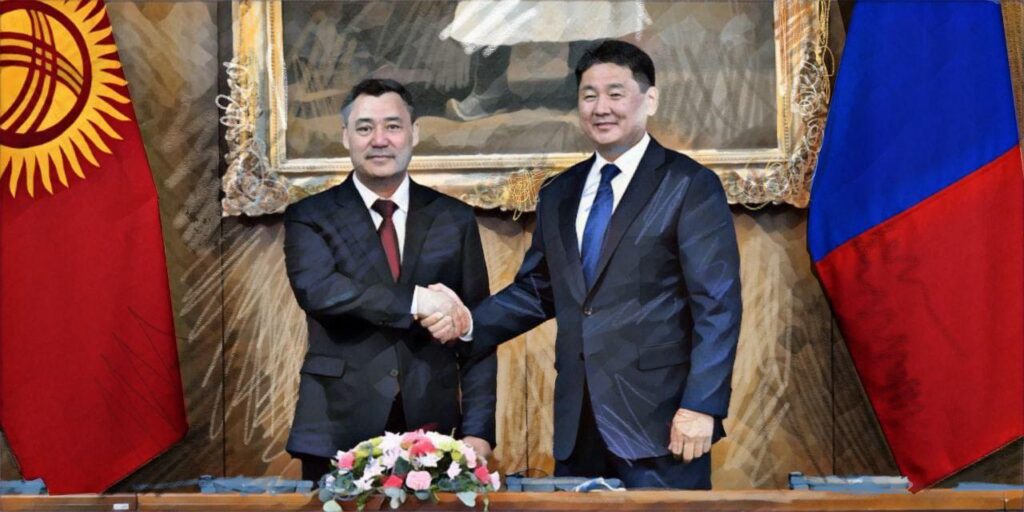
Late on July 20th, the President of Mongolia, Ukhnaagiin Khürelsükh, touched down in Bishkek as part of a two-day state visit to Kyrgyzstan. It forms part of Khürelsükh’s wider Central Asian tour, with the President set to fly to Dushanbe following his sojourn in the Kyrgyz capital. The trip builds on Kyrgyz President Sadyr Japarov’s 2023 visit to Ulaanbaatar, where he oversaw the opening of Kyrgyzstan’s first embassy in Mongolia and toured the Genghis Khan Museum in the capital. A warm greeting Khürelsükh was welcomed by Japarov on the red carpet at Manas International Airport, where traditional dances, music, and even a ceremonial eagle were laid on. The pair greeted each other like old friends before the motorcade swept along the empty roads towards the city. Like Japarov, Khürelsükh has been president since 2021, although, unlike his Kyrgyz counterpart, his role is largely ceremonial. Indeed, current Mongolian politics offers a hint of nostalgia to those in Kyrgyzstan with fond memories of the pre-Japarov era. In June, the Mongolian Prime Minister was forced to resign after losing a vote of confidence in the country’s parliament. This followed months of protests after press reports covering his son’s extravagant spending. The second day of the visit afforded Japarov the chance to play to statesman-like host and welcome a new visitor to the Presidential Palace – the Yntymak Ordo – which is still less than a year old. With temperatures hitting 37°C (98° Fahrenheit) in the Kyrgyz capital, the Mongolian leader arrived at the palace in a blacked-out Mercedes, flanked by a horse-mounted honor guard. The besuited leaders then stood in the baking sunshine to receive a military salute from Kyrgyzstan’s army. A burgeoning friendship Perhaps the scale of the pomp masks the limits of what can be achieved bilaterally. Iskander Sharsheyev, an independent Kyrgyz economist, was keen to stress to The Times of Central Asia that the leaders did achieve some breakthroughs in terms of agriculture: “Veterinary certificates were signed... This provides a new market for Kyrgyz producers. Kyrgyzstan and Mongolia signed a memorandum of cooperation in the field of wool processing, including cashmere. Mongolia is one of the world leaders in cashmere production, and the transfer of technology and training of specialists can dramatically improve the Kyrgyz textile sector.” However, real announcements were thin on the ground and the language of diplomacy was heavy with blandishments: “We strive to develop mutually beneficial cooperation in all areas, especially in the trade and economic sphere,” said Khürelsükh, while Japarov noted that “comprehensive cooperation with Mongolia is one of the priority areas of the development of Kyrgyzstan's foreign policy.” The question is whether there is any substance behind this. Economically, the numbers are hardly going to move the dial. In the first five months of this year, Kyrgyzstan exported $3.1 million worth of goods to Mongolia, much of it confectioneries. Mongolian exports in the other direction are even lower. While officials are trumpeting the rate of growth, which tripled in 2024, it’s worth having a...