• KGS/USD = 0.01144 0%
  • KZT/USD = 0.00212 0%
  • TJS/USD = 0.10456 0.19%
  • UZS/USD = 0.00008 0%
  • TMT/USD = 0.28490 0%
  • KGS/USD = 0.01144 0%
  • KZT/USD = 0.00212 0%
  • TJS/USD = 0.10456 0.19%
  • UZS/USD = 0.00008 0%
  • TMT/USD = 0.28490 0%
  • KGS/USD = 0.01144 0%
  • KZT/USD = 0.00212 0%
  • TJS/USD = 0.10456 0.19%
  • UZS/USD = 0.00008 0%
  • TMT/USD = 0.28490 0%
  • KGS/USD = 0.01144 0%
  • KZT/USD = 0.00212 0%
  • TJS/USD = 0.10456 0.19%
  • UZS/USD = 0.00008 0%
  • TMT/USD = 0.28490 0%
  • KGS/USD = 0.01144 0%
  • KZT/USD = 0.00212 0%
  • TJS/USD = 0.10456 0.19%
  • UZS/USD = 0.00008 0%
  • TMT/USD = 0.28490 0%
  • KGS/USD = 0.01144 0%
  • KZT/USD = 0.00212 0%
  • TJS/USD = 0.10456 0.19%
  • UZS/USD = 0.00008 0%
  • TMT/USD = 0.28490 0%
  • KGS/USD = 0.01144 0%
  • KZT/USD = 0.00212 0%
  • TJS/USD = 0.10456 0.19%
  • UZS/USD = 0.00008 0%
  • TMT/USD = 0.28490 0%
  • KGS/USD = 0.01144 0%
  • KZT/USD = 0.00212 0%
  • TJS/USD = 0.10456 0.19%
  • UZS/USD = 0.00008 0%
  • TMT/USD = 0.28490 0%

Viewing results 937 - 942 of 3334

Italy Raises the Bar in Central Asia: What to Expect from Giorgia Meloni’s Visit

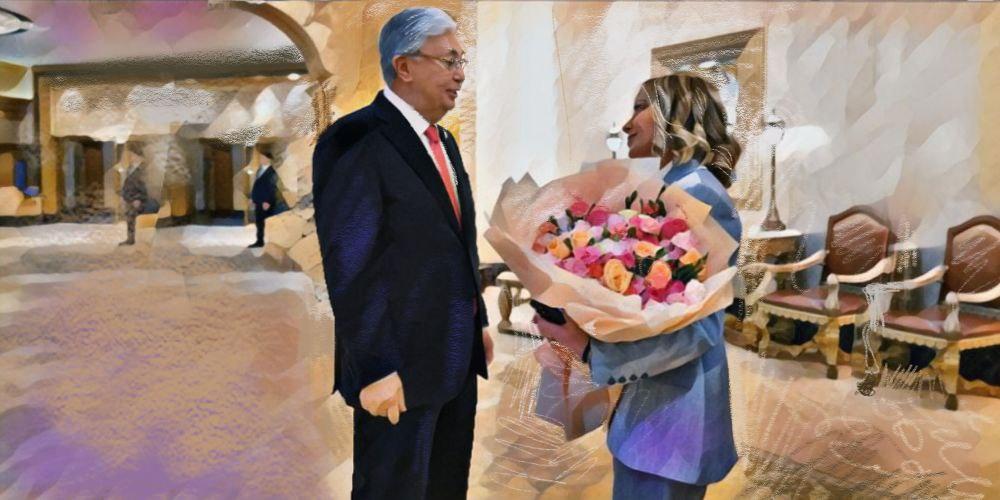
In recent years, Italy has emerged as one of the European countries most keen to maintain close relations with the countries of Central Asia. In mid-April, confirmation arrived that Prime Minister Giorgia Meloni would be travelling to the region this spring. The purpose of the trip is to visit Uzbekistan and Kazakhstan and attend a summit in Astana with the presidents of the five countries.  Meloni's visit is scheduled for the end of May, although the exact dates are not yet known. Italy was the first European country to involve the Central Asia region in a "1+5" summit. The first meeting was held in Rome in December 2019, and involved the then Italian Foreign Minister, Luigi Di Maio, and all Central Asian Foreign Ministers. This meeting took place a few months after Italy, the first and only EU country to take this step, signed a memorandum of understanding with China on the Belt & Road Initiative (in 2023, Rome decided to withdraw from the project). Central Asia is one of the regions at the heart of the original BRI project: the launch was announced in Kazakhstan in 2013. The most recent meeting at foreign minister level took place in May 2024, again in Rome, and was attended by the current Italian Foreign Minister, Antonio Tajani. But now Italy has decided to raise the bar and directly involve Meloni and her Central Asian counterparts. The multilateral forum is complemented by frequent visits to Italy by leaders from the region: Uzbekistan's Mirziyoyev in June 2023, Kazakhstan's Kassym-Jomart Tokayev in January 2024 and Tajikistan's Emomali Rahmon at the end of April 2024. For Italy, President Sergio Mattarella visited Uzbekistan in November 2023 and Kazakhstan in March 2025. Italy is one of the main economic partners in the region, and especially in Kazakhstan; the country ranks third (behind only China and Russia) in terms of trade with Astana. Trade turnover between Kazakhstan and Italy rose 25% in 2024 and reached almost $20 billion. The relationship is particularly strong in the energy sector, with over $18 billion accounted for exports of Kazakh oil and petroleum products in 2024. The Italian national oil and natural gas company Eni has been present in Kazakhstan since 1992, where it is a co-operator of the Karachaganak oil field and participates in the North Caspian Sea PSA consortium responsible for operations at the Kashagan oil field. Other significant sectors of trade between Italy and Kazakhstan are those of agricultural machinery and agricultural production. One area that could be subject to greater cooperation is defense, as demonstrated by the visit to Italy by Kazakhstan's Minister of Defense, Ruslan Zhakssylykov, in March this year. The potential is truly remarkable: during Mattarella's aforementioned flash visit to the country this March, with a meeting with Tokayev held directly at Astana airport, the Italian president emphasized the potential for further deepening the strategic partnership between Rome and Astana, which has been in place since 2011. Speaking of official documents, in June 2023, Italy and Uzbekistan...
Recognition of the Islamic Emirate of Afghanistan: Between Law, Diplomacy, and Pragmatism

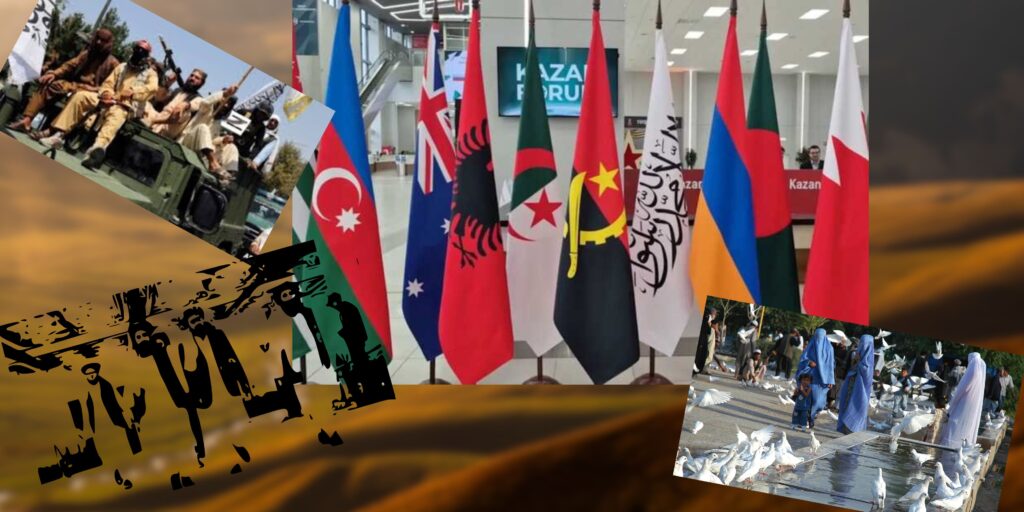
After the Taliban returned to power in August 2021, the question of recognizing the new Afghan regime became one of the key issues in regional and global politics. Although no country has granted de jure recognition to the Islamic Emirate of Afghanistan (IEA), international engagement with the de facto authorities is becoming increasingly institutionalized. This article attempts to systematize and provisionally classify countries based on their stance toward the IEA. This is not a formal legal typology but rather an analytical tool meant to identify "stable patterns of behavior" in the context of interactions with the de facto authorities in Kabul. This approach does not aim for exhaustive academic precision but provides a basis for further discussion and analysis. To begin, we must clarify some basic principles, first and foremost, the institution of recognition. In international legal doctrine, the recognition of a new state or government is a unilateral act by a state and does not require the approval of international organizations. The UN, including the Security Council, does not formally conduct acts of recognition, but its approval is required for admitting authorities to the UN General Assembly, which constitutes formal recognition of international legitimacy and a willingness by the global community to work with them. The key mechanism here is the UN Credentials Committee. This is a special committee of the UN General Assembly consisting of nine member states, which change on a rotating basis. It annually reviews the lists of delegations accredited to participate in UN General Assembly sessions. Between 2021 and 2024, the committee decided to reject the recognition of seats for the Taliban government. In effect, this constitutes a denial of international recognition at the UN level. While the decision of the Credentials Committee has no formal legal significance as an act of recognition or non-recognition, politically it sends a strong signal to other states: the UN still does not regard the IEA as the legitimate government of Afghanistan. In other words, the Credentials Committee acts as a kind of beacon: until it is "lit," a wave of de jure recognition from other states is highly unlikely. Many countries, especially those following a policy of collective decision-making, will take their cue from the UN. For now, the signal remains unchanged: the international community maintains a cautious distance from legitimizing the Taliban regime. As is well known, there are two types of recognition: de jure recognition, which is complete and official and involves the establishment of diplomatic relations, and de facto recognition, which is limited and does not imply full legitimization of the regime. Removing the Taliban from national terrorist lists (as Kazakhstan and Russia have done) does not constitute legal recognition, even though some may portray it as such. The UN itself uses the term "de facto authorities" to describe the Taliban. At the same time, the UN Security Council sanctions regime on Afghanistan (under Resolution 2255) provides for the application of sanctions on an individual basis, without qualifying the regime as a terrorist regime. The...

Uzbek Scientists Trial Salt-Tolerant Plants to Revive Aral Sea Seabed

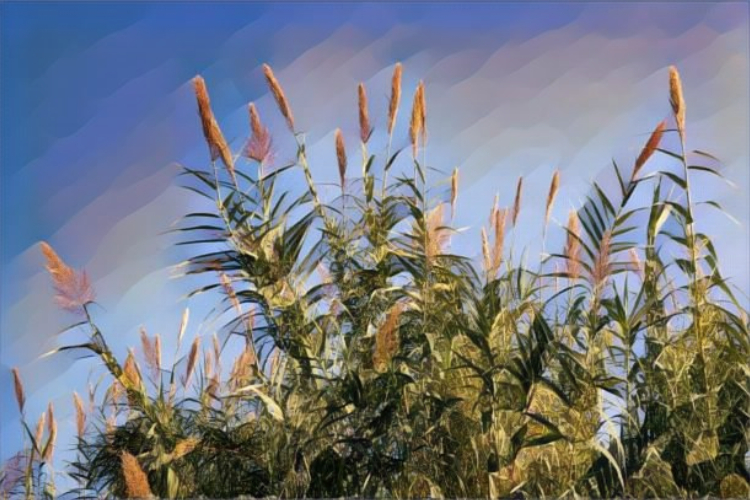
Field trials are underway on the desiccated seabed of the Aral Sea as part of a restoration initiative spearheaded by Uzbekistan’s Ministry of Ecology, Environmental Protection, and Climate Change. The goal is to identify plant species capable of surviving in saline soils and contributing to the rehabilitation of this ecologically devastated landscape. The study is led by scientists from the Research Institute of Forestry and supervised by Dr. Zinoviy Novitsky. One of the most promising candidates is Arundo donax, a species of reed grass typically found in wetter environments. Despite its usual habitat, the plant has demonstrated a remarkable tolerance for saline and arid conditions. Researchers discovered that groundwater in the test areas lies approximately two meters below the surface. Within its first year of growth, Arundo donax develops roots long enough to access this water, enabling it to survive and strengthen in the challenging environment. Dr. Novitsky noted that his team devised a specialized planting technique to improve the plant’s resilience. Root shoots were harvested from mature plants in regions with comparable soil conditions, such as Urgench and Karakalpakstan. When transplanted to the Aral Sea area, these shoots achieved a survival rate exceeding 90%. In addition to their depth, the roots of Arundo donax can spread laterally up to two meters, anchoring the soil and mitigating further land degradation. These trials, if scaled successfully, could play a pivotal role in combating dust storms and rejuvenating the Aral Sea region. Since 2021, Uzbekistan has planted more than 45 million trees across 1.9 million hectares of the dried seabed in Karakalpakstan. The country has also created six artificial lakes, replenished with water from the Amu Darya River, to foster biodiversity and support aquaculture. Moreover, dust filtration systems at major industrial sites and wastewater treatment facilities at eight plants have been modernized. Seven protected natural areas now span 3.7 million hectares in Karakalpakstan, several of which have been designated under UNESCO and the Ramsar Convention frameworks. Scientific efforts continue through the Aral Sea International Innovation Center, which is currently managing projects valued at over $630,000. By 2030, Uzbekistan aims to expand forest coverage in the region to 2.3 million hectares and restore vegetation on 80% of the dried seabed.

World Bank Approves $100 Million to Modernize Uzbekistan’s Power Grid

The World Bank has approved a $100 million credit to support the modernization of Uzbekistan’s electricity distribution system and facilitate the integration of renewable energy sources. Uzbekistan’s Regional Electric Power Networks (REPN) will contribute an additional $50 million to the initiative, marking the country’s first use of the World Bank’s Program-for-Results (PforR) financing model. Uzbekistan’s aging power distribution infrastructure poses serious challenges. Over 50% of the network is more than 30 years old and suffers from significant inefficiencies. As of 2024, technical issues contribute to the loss of approximately 13% of electricity, resulting in frequent outages across the country. The government has set a target of installing 25 gigawatts of renewable energy capacity by 2030. However, experts warn that without immediate upgrades to the national grid, Uzbekistan’s infrastructure will be unable to accommodate this expansion. In addition to technical improvements, the government is working to reduce commercial losses and enhance the financial viability of the electricity sector to attract private investment. Tatiana Proskuryakova, World Bank Country Director for Central Asia, highlighted the scale of the challenge. “The total investment needed is about $3 billion. We hope other development partners and private investors will join us in supporting REPN in this crucial effort,” she said. The combined $150 million from the World Bank and REPN will be deployed over the next five years to upgrade and expand infrastructure, particularly in regions such as Karakalpakstan and Surkhandarya. Planned improvements include: Construction or modernization of 6,000 kilometers of power lines Installation of 1,200 transformers Connection of 150,000 smart meters Deployment of 4,000 data concentrators to improve automation The program also aims to enhance REPN’s operational and financial management. It includes the development of advanced planning methodologies, strengthened financial oversight, and support for corporate governance reforms. By 2029, the initiative is expected to increase customer satisfaction, reduce annual CO₂ emissions by up to 450,000 tons, and raise the proportion of women in technical and leadership roles from 9% to 14%. Earlier this year, the World Bank also approved $153 million in support of a project aimed at reforestation and combating land degradation in Uzbekistan, as part of a broader regional climate resilience program.

Kazakhstan’s Crypto Aspirations Face a Power Problem

Kazakhstan’s First Deputy Minister of Digital Development, Innovation, and Aerospace Industry, Kanysh Tuleushin, believes that state-regulated cryptocurrency mining could generate substantial revenue and help modernize the country's energy infrastructure. Tuleushin argues that Kazakhstan has the potential to become Central Asia’s leading blockchain hub. However, this vision clashes with the country’s ongoing energy crisis, which continues to impact households and businesses. Optimistic Vision In an article published in the state newspaper Kazakhstanskaya Pravda, Tuleushin outlined how mining operations could contribute to the development of Kazakhstan’s power generation capabilities. He emphasized the use of associated petroleum gas (APG) to produce electricity for mining, which he claims would reduce carbon emissions and boost oil sector profits. “Miners can help modernize the power grid. In the U.S., they participate in grid balancing by consuming excess energy during low-demand periods. Kazakhstan already has a ‘70⁄30’ initiative, where foreign investors upgrade thermal power plants, allocating 70% of new capacity to the general grid and 30% to miners,” Tuleushin wrote. Tuleushin reported that cryptocurrency mining has brought 17.7 billion tenge to the national budget over the past three years. Meanwhile, trading volume on the Astana International Financial Center (AIFC) exchanges increased from $324.2 million in 2023 to $1.4 billion in 2024. From January 1, 2025, miners will be required to sell 75% of their assets through the AIFC. Despite a generally cautious regulatory stance, Kazakhstan permits digital asset trading within the AIFC. Digital assets are categorized as secured (linked to physical assets) or unsecured (such as Bitcoin and Ethereum). In 2023, digital asset transactions in Kazakhstan reached $4.1 billion, but 91.5% occurred in the “gray zone,” beyond state oversight. In 2024 alone, the Financial Monitoring Agency shut down 36 illegal crypto exchanges, froze $4.8 million in assets, and blocked over 3,500 illicit platforms. Tuleushin argues that fully legalizing and regulating these operations could add more than 190 billion tenge annually to the budget, enough to fund major public infrastructure such as schools and hospitals. He proposes extending crypto trading beyond the AIFC, authorizing crypto ATMs, and opening the market to major players, an approach akin to that of the UAE. Tuleushin also claimed that regions like Pavlodar and Karaganda have electricity surpluses and that Kazakhstan's cold climate further lowers operational costs for miners. Unchecked Consumption and Mounting Strain Despite the deputy minister's optimism, Kazakhstan’s Supreme Audit Chamber (SAC) has raised alarms over uncontrolled energy consumption by miners. According to a 2024 audit, miners consumed 901 million kWh worth 13 billion tenge, despite a national energy shortage, by bypassing RFZ LLP, the country’s sole energy purchaser. Former Prime Minister and current head of the Supreme Audit Chamber, Alikhan Smailov, warned, “Miners are consuming up to a billion kilowatt-hours. This is damaging our economy. How can we allow unchecked consumption amid such a crisis?” The audit revealed systemic issues, including deteriorating Soviet-era power plants (55% average wear), a 4,500-worker shortfall in the energy sector, and a lack of financial oversight by the Ministry of Energy. Looming Crisis In January...

Tajikistan Decriminalizes Likes and Other Reactions to Provocative Social Media Posts

Tajik citizens need no longer fear that they will be imprisoned for clicking “like” on social media posts that the Tajik authorities do not like. Among several laws that Tajik President Emomali Rahmon signed on May 14 was one that decriminalized liking posts on social networks that originate from individuals or organizations the Tajik government considers extremist. Crackdown on Social Media In 2018, President Rahmon signed amendments to Article 179 of the Criminal Code, making it a crime to repost, comment favorably on, or like posts that, in the opinion of Tajik authorities, are public calls to commit or justify acts of violence and terrorism. According to that law, those found guilty of liking such posts face up to 15 years in prison. Since the law came into effect, 1,507 Tajik citizens have been imprisoned. The Tajik authorities often have a broad interpretation of what constitutes public calls to commit or justify serious crimes or acts of terrorism, but it usually boils down to comments that are critical of the Tajik government. Weeks after the law was passed, Alijon Sharipov, a resident of the Vakhsh district in Tajikistan’s southern Khatlon Region, was sentenced to 9.5 years in prison for reposting a video of an interview with the leader of the banned Islamic Renaissance Party of Tajikistan, Muhiddin Kabiri. In July 2019, Ibrohim Kosimov from the western Tajik city of Panjakent received the same prison sentence for “pushing ‘likes’ and ‘shares’ on the posts belong[ing] to opposition figures.” An activist of the Democratic Party of Tajikistan, Rustam Mamajonov, was sentenced to seven years in prison in June 2021 for reposting a video of Sharofiddin Gadoyev, a leader of the banned organization, Group 24. Mamajonov, who was 59 years old at the time, said he did not know how the video appeared on his Facebook page and the repost was a mistake caused by his poor knowledge of how to use the platform. Tajik political activist Abdullo Shamsiddin was deported from Germany back to Tajikistan in January 2023 and was convicted weeks later in March of sedition and sentenced to seven years in prison. Shamsiddin’s trial was held behind closed doors and it was difficult to obtain details about the case, but apparently, he was convicted for clicking “like” on a social network post, though there is no information about what was in the post. Shamsiddinov’s case shows the social network use of Tajik citizens who are outside Tajikistan is also being monitored by Tajik authorities. A Strange Change of Heart The reasons for the decision to decriminalize “posting a like or other sign on social networks,” as it officially reads in the law Rahmon signed, is unclear. Certainly, rights groups have called on the Tajik authorities to overturn the decision to criminalize likes, comments, or reposts of what to the Tajik government are undesirable posts on social networks. However, for years Tajikistan’s government has ignored appeals from rights organizations, the United Nations, and individual governments over the Tajik authorities’ rights abuses....