• KGS/USD = 0.01144 0%
  • KZT/USD = 0.00215 0%
  • TJS/USD = 0.10456 0%
  • UZS/USD = 0.00008 0%
  • TMT/USD = 0.28490 0%
  • KGS/USD = 0.01144 0%
  • KZT/USD = 0.00215 0%
  • TJS/USD = 0.10456 0%
  • UZS/USD = 0.00008 0%
  • TMT/USD = 0.28490 0%
  • KGS/USD = 0.01144 0%
  • KZT/USD = 0.00215 0%
  • TJS/USD = 0.10456 0%
  • UZS/USD = 0.00008 0%
  • TMT/USD = 0.28490 0%
  • KGS/USD = 0.01144 0%
  • KZT/USD = 0.00215 0%
  • TJS/USD = 0.10456 0%
  • UZS/USD = 0.00008 0%
  • TMT/USD = 0.28490 0%
  • KGS/USD = 0.01144 0%
  • KZT/USD = 0.00215 0%
  • TJS/USD = 0.10456 0%
  • UZS/USD = 0.00008 0%
  • TMT/USD = 0.28490 0%
  • KGS/USD = 0.01144 0%
  • KZT/USD = 0.00215 0%
  • TJS/USD = 0.10456 0%
  • UZS/USD = 0.00008 0%
  • TMT/USD = 0.28490 0%
  • KGS/USD = 0.01144 0%
  • KZT/USD = 0.00215 0%
  • TJS/USD = 0.10456 0%
  • UZS/USD = 0.00008 0%
  • TMT/USD = 0.28490 0%
  • KGS/USD = 0.01144 0%
  • KZT/USD = 0.00215 0%
  • TJS/USD = 0.10456 0%
  • UZS/USD = 0.00008 0%
  • TMT/USD = 0.28490 0%

Viewing results 1117 - 1122 of 3334

Videos Show Man Tackling Hostage-Taker at Almaty Airport

A Kazakh man who disarmed a hostage-taker by grabbing the knife from his hand at Almaty International Airport is being celebrated internationally for his courage.  Several videos and accounts of the dramatic scene in the airport on Friday are circulating widely on the internet. The videos show the assailant holding a woman by her hair and making threats as security officials converge. He then lets go of the woman after a man offers himself as a hostage - and disarms the hostage-taker shortly afterward. A scuffle ensues as the man and officials subdue the attacker.   Multiple reports identified the man who disarmed the attacker as former boxer Musa Abdraim, who is in his early 50s. The World Boxing Council identified him as Mussa Abraimov. WBC President Mauricio Sulaiman said on Instagram that he had a “great” video call with the former boxer and that he would receive the council’s “bravest man on earth” award.  Kazakh President Kassym-Jomart Tokayev was informed about the hostage situation at the airport, according to presidential press secretary Ruslan Zheldibay. “The President highlighted the bravery and skill of the man who disarmed the criminal and ordered that he be nominated for a state award,” Zheldibay said on social media platforms.  The woman who was taken hostage and released was in uniform, suggesting that she was an airport employee. The attack occurred in the security check area of the airport. A criminal case has been opened against the hostage-taker. Authorities have not commented on his motivations.  Abdraim spoke to journalists after the incident.  "I watched him carefully, and as soon as his grip weakened slightly, I had to seize the knife from his hands,” Tengri News, a media outlet based in Kazakhstan, quoted him as saying. “As a man, as a citizen of the Republic of Kazakhstan, I simply could not have acted differently."

Opinion: Balancing Rights and Realities – Engaging Afghanistan for Change

The attention of the international community has once again turned to human rights in Afghanistan following the latest report by Richard Bennett, the United Nations Human Rights Council’s Special Rapporteur on Afghanistan. In his report, Bennett recommended that member states consider the concept of gender apartheid and support its codification, noting that Afghan women regard this term as the most accurate description of their situation. This initiative emerged in response to the tightening restrictions on women and girls imposed by the Taliban. The renewed focus on gender issues is not exactly what Central Asian countries expect in the context of Afghan settlement. For them, it is far more important to address pressing issues of security, economic cooperation, and control of migration flows, which directly affect regional stability. Therefore, Central Asian states prefer to concentrate on practical steps and avoid over-politicizing issues that could complicate dialogue with the Taliban and exacerbate the situation in neighboring Afghanistan. Today, women’s rights have become a cornerstone in the international community’s attempts to establish dialogue with the Taliban. The rights of women in Afghanistan have been a journey, with different periods bringing different challenges. Back in the 1920s, Amanullah Khan was a real game-changer, giving Afghan women the official equal status they deserved. But then things changed a bit during King Zahir Shah's reign (1933–1973) when education became a priority, and girls started going to school. By 1973, a heartening number of 150,000 girls were proudly enrolled in schools across the country. And let's not forget the momentous step of Kabul University opening its doors to women in 1947. Since the Taliban’s return to power in August 2021, women’s rights in Afghanistan have been significantly curtailed. Women are banned from attending educational institutions, working in most sectors, traveling without a male escort, and participating in public life. These measures have already received widespread international condemnation — rightfully so — but the official recognition of "gender apartheid" as a crime against humanity could give this issue a new legal status and increase pressure on the Islamic Emirate. The question is: How productive is this approach? The politicization of Afghan settlement, especially through the lens of women’s rights, may only worsen the situation. Making gender issues a precondition for dialogue severely limits the space for negotiations with the Taliban regime. In the United Nations itself, the Taliban are considered the "de facto authorities" of Afghanistan, and dialogue with them takes place at various bilateral and multilateral levels. In this context, strict demands on women’s rights could delay or even halt the process of engagement. This is because the Taliban perceives such conditions as interference in their internal affairs and cultural norms. Dialogue at an Impasse: Is an Inclusive Government Being Set Aside? The international community — primarily its Western segment — and the Islamic Emirate have taken extremely rigid positions. For international actors, women’s and girls’ rights have become the top priority, while the issue of forming an inclusive government in Afghanistan has receded into the background....

One Military Alliance (CSTO) Monitors Woes of Another (NATO)

A “zombie” alliance, one Western analysis said. A “paper tiger,” said another. The Collective Security Treaty Organization, a regional group of post-Soviet states that includes Russia and several countries in Central Asia, has come in for some harsh criticism over the years because of perceptions that it is ineffective. Now, the CSTO, described in some circles as a smaller, Russia-dominated counterweight to the North Atlantic Treaty Organization, is closely monitoring a widening split in the NATO security alliance between the United States and Europe. It’s a stunning turnaround that raises questions on both sides about whether and to what extent countries would honor alliance obligations as U.S. President Donald Trump shakes up the global order. While he pushes Ukraine to make a peace deal with Russia, Europe is pledging more support for Ukraine, and deadly fighting continues after three years of war. Overnight, Russia attacked Ukrainian energy infrastructure with drones and missiles, officials in Ukraine said Friday. The Collective Security Treaty Organization has appeared to struggle for cohesion and purpose at times. Its members are Russia, Armenia, Belarus, Kazakhstan, Kyrgyzstan, and Tajikistan. While Belarus is loyal to Russia, Armenia has frozen its participation in the group because it felt abandoned by Russia during recent military losses to Azerbaijan. None of Russia’s partners in the CSTO have deployed troops to support its war in Ukraine. But a rise in Russia’s military and diplomatic stature, buoyed by perceptions that Trump favors rapprochement with President Vladimir Putin, could inject some momentum into the regional alliance. At the same time, the Central Asian states, at least, are likely to keep a pragmatic course, balancing international relationships and trying to avoid the perception of taking sides. In an interview with the Russian newspaper Izvestia published on Thursday, CSTO Secretary General Imangali Tasmagambetov was asked about reports that some European countries could send troops to Ukraine as part of a peacekeeping force. Tasmagambetov, a former Kazakh prime minister, downplayed the possibility, saying it would create “a dangerous situation on a regional scale” and that the CSTO was following the situation. “In addition, it is unlikely that the population of European countries, tired of the growing negative phenomena in the economy and social sphere, will approve of such a decision by their governments. After all, this will be an additional burden on the shoulders of society, even if these contingents are not involved in offensive operations, but will, for example, perform police or surveillance functions,” he said. “If such risks arise, the CSTO will be ready to offer various options for assistance within the framework provided for in the organization’s statutory documents and, of course, approved by all member states,” Tasmagambetov said. Russia has been blunt on the issue, saying it opposes any arrangement in which European peacekeepers are deployed in Ukraine.

Mercenary Spies Unmasked: Guilty Verdict Exposes Global Disinformation and Sabotage Network

A spy cell in the UK, including five Bulgarian nationals, targeted multiple individuals and locations over nearly three years, according to court documents at The Old Bailey, officially known as the Central Criminal Court of England and Wales. The court case, which has played out over fourteen weeks, tells the story of a rogue group of six individuals aiming to leverage statecraft, intelligence, and a willingness to be ruthless for monetary gain. The trial has revealed that the defendants worked under the direction of Jan Marsalek, an Austrian national described by prosecutors as a Russian agent involved in espionage activities. Two men have already pleaded guilty to their role in the spy ring, Orlin Roussev, 46, and Bizer Dzhambazov, 43, whilst the whereabouts of Marsalek remain unknown. According to the prosecution, the defendants stood accused of "monetizing a gap in the market," engaging in what was described as "high-level espionage with very high stakes." A money flowchart presented as evidence revealed that approximately €380,000 had been transferred between three of the suspects, further supporting the allegations. The case has offered a window into the dark world of commercialized clandestine services where criminal organizations offer espionage, psyops, misinformation, assassinations, and other illegal activities for a fee. As for the outcome of the trial against the remaining three defendants, Katrin Ivanova, 33, Vanya Gaberova, 30, and Tihomir Ivanchev 39, following 32 hours of deliberation, the jury returned a guilty verdict on all three of being involved in a conspiracy, contrary to section 1 of the Criminal Law Act 1977, to commit an offence under section 1 of the Official Secrets Act 1911. Only Ivanchev was present in court, whilst Ivanova and Gaberova joined by video-link from HMP Bronzefield. Their crimes carry a maximum sentence of 14 years imprisonment. Court testimony, evidence documents as well as volumes of Telegram and WeChat messages, reviewed by The Times of Central Asia reveal a chilling account of the sinister services these dark mercenaries plotted, offered, and in some cases, partially executed. The Times of Central Asia is finalizing its review of court documents and conducting follow-ups with sources to provide a comprehensive analysis and perspective on this case. Please check back for further insights.

Interview With Sara Raza – Director of the Tashkent Centre for Contemporary Art

Sara Raza is a litmus test for the spirit of the times in the shape of an art curator.  In simple terms, art crowds can count on her direction for the Tashkent Centre for Contemporary Art (CCA) to bring the most pressing issues in contemporary art to the foreground. Indeed, the author of the book Punk Orientalism - and the namesake curatorial studio - has been just appointed as Artistic Director and Chief Curatorial Director of the CCA Tashkent, set to open in September 2025. It’s a strategic move for the Centre, which has aspirations of becoming a global arts and culture hub and is aiming at international artistic and creative exchanges, which include residencies, exhibitions, workshops, and educational programmes, and contributing to Uzbekistan’s cultural ecosystem. Transversal in her curatorial approach, London-born, New-York-based Raza is coming from a mixed Central Asian/Middle Eastern background, but she is also steeped in the heart of the Western art system, in institutions such as the Guggenheim – having taken care of a project called UBS MAP Global Art Initiative, curating the Middle East and North Africa section. Over the years, the curator has worked with artists from Asia, the Caucasus, the Middle East, Europe, and North America, and has curated shows at the Mathaf: Arab Museum of Modern Art in Doha and the Rubin Museum of Art in New York, but it is truly her book, Punk Orientalism: The Art of Rebellion, which brought a fresh approach to the sometimes highly academic field of art criticism. For Raza, artists from the former-Soviet countries and beyond hold a strong punk DIY ethos, by which they counter the Orientalist gaze they have always been subjected to by both the West and Russia. Their art is often a form of bricolage, an unexpected connection of disparate ideas used to create something entirely new. Will she bring this original approach to the direction of the museum, too? TCA spoke with Raza to find out about how she’s planning to foster cultural and educational partnerships and to support local, regional, and international artists while engaging with Uzbekistan’s rich cultural heritage. [caption id="attachment_29451" align="aligncenter" width="2560"] Centre for Contemporary Art Tashkent Artist Residencies; image: Namuna[/caption] TCA: The Centre for Contemporary Art in Tashkent is poised to become a major hub for artistic discourse in Central Asia. As its first Artistic Director and Chief Curator, how do you envision defining the institution’s identity from the ground up? My vision for CCA is less of a ground up approach, but rather one that builds on an historical and visual cultural foundation established in the 20th century that included a robust relationship with artists, intellectuals and others from the Global Majority World [a collective term for people of African, Asian, indigenous, Latin American, or mixed-heritage backgrounds, who constitute approximately 85% of the global population]. This included relationships between Harlem Renaissance figures [The Harlem Renaissance was an African American cultural movement that flourished in the 1920s and had Harlem in New York City as its symbolic...

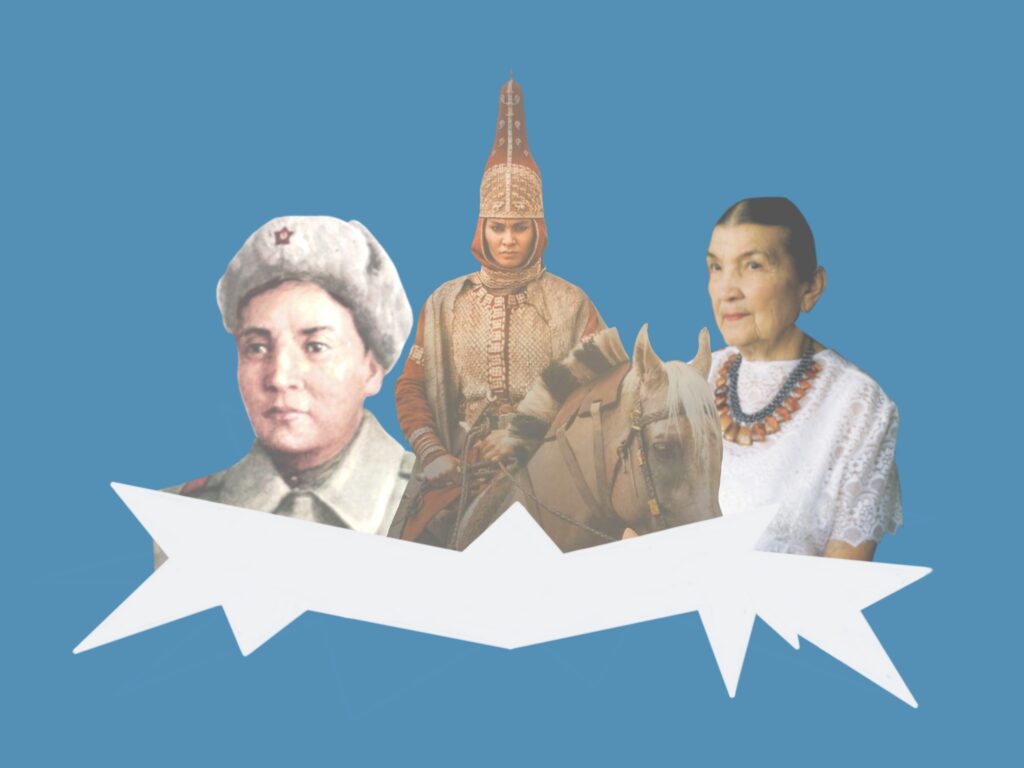
How Women in Central Asia Celebrate International Women’s Day

March 8, International Women’s Day, holds a special place in Central Asia. Over the years, the holiday has evolved from its Soviet-era roots into a modern celebration that blends tradition with contemporary interpretations. The Soviet Past: March 8 as a Day for Working Women During the Soviet Union, March 8 was more than a celebration of spring and femininity, it symbolized the struggle for women’s rights and equality. The day honored working women, with official ceremonies highlighting their achievements. State-run enterprises and organizations staged formal events and presented flowers and gifts to female employees, and media outlets published articles about the country’s outstanding women. The Transition Period: The 1990s Following the collapse of the Soviet Union, Central Asian countries began redefining their identities, which was reflected in how they marked March 8. The holiday took on a more personal and familial character, with less ideological emphasis. While state celebrations continued, they became more subdued. Men still gifted flowers and presents to women, but the political significance of the day gradually faded into the background. Modern Celebrations: Balancing Tradition and New Trends Today, March 8 in Central Asia is primarily a day to recognize women’s contributions and express gratitude. The holiday remains widely celebrated across Kazakhstan, Kyrgyzstan, Uzbekistan, Tajikistan, and Turkmenistan, though each country has developed its distinct traditions. Kazakhstan: Major cities host flash mobs, charity events, and cultural programs. In recent years, feminist activism has gained momentum, with some using the holiday to highlight gender inequality. “For me, March 8 is not just about receiving flowers, it’s a reminder that equality is not a privilege but a necessity,” Ainur, 24, from Almaty told TCA. Uzbekistan: The holiday remains warm and family-oriented. Women receive flowers, sweets, and gifts from colleagues and relatives, while government agencies organize concerts and celebrations. “My friends and I always celebrate March 8. It’s wonderful to receive gifts from my brothers, friends, and husband, but I wish there was more year-round appreciation for women,” Madina, 27, from Tashkent told TCA. Kyrgyzstan: Alongside traditional celebrations, women's organizations and activists hold marches and discussions on gender rights, reflecting a shift toward reinterpreting the holiday. “I participate in the women’s rights march every year because this day is not just about flowers; it’s about our opportunities and freedoms,” Gulzat, 23, from Bishkek told TCA. Tajikistan and Turkmenistan: March 8 remains an official holiday, but without any strong political agenda. “For me, this day is a time to gather with family, but I see that younger women are giving it a new meaning,” Zarina, 40, from Dushanbe told TCA. Changing Values and Perspectives Each year, debates over the significance of March 8 grow stronger. Some argue that it should remain a celebration of spring and femininity, while others emphasize its role in promoting gender equality. Regardless of interpretation, International Women’s Day remains an important occasion that unites different generations of women and reinforces the need for respect and support. Over time, the holiday in Central Asia has evolved from a Soviet...