• KGS/USD = 0.01144 0%
  • KZT/USD = 0.00213 0%
  • TJS/USD = 0.10699 0%
  • UZS/USD = 0.00008 0%
  • TMT/USD = 0.28571 0%
  • KGS/USD = 0.01144 0%
  • KZT/USD = 0.00213 0%
  • TJS/USD = 0.10699 0%
  • UZS/USD = 0.00008 0%
  • TMT/USD = 0.28571 0%
  • KGS/USD = 0.01144 0%
  • KZT/USD = 0.00213 0%
  • TJS/USD = 0.10699 0%
  • UZS/USD = 0.00008 0%
  • TMT/USD = 0.28571 0%
  • KGS/USD = 0.01144 0%
  • KZT/USD = 0.00213 0%
  • TJS/USD = 0.10699 0%
  • UZS/USD = 0.00008 0%
  • TMT/USD = 0.28571 0%
  • KGS/USD = 0.01144 0%
  • KZT/USD = 0.00213 0%
  • TJS/USD = 0.10699 0%
  • UZS/USD = 0.00008 0%
  • TMT/USD = 0.28571 0%
  • KGS/USD = 0.01144 0%
  • KZT/USD = 0.00213 0%
  • TJS/USD = 0.10699 0%
  • UZS/USD = 0.00008 0%
  • TMT/USD = 0.28571 0%
  • KGS/USD = 0.01144 0%
  • KZT/USD = 0.00213 0%
  • TJS/USD = 0.10699 0%
  • UZS/USD = 0.00008 0%
  • TMT/USD = 0.28571 0%
  • KGS/USD = 0.01144 0%
  • KZT/USD = 0.00213 0%
  • TJS/USD = 0.10699 0%
  • UZS/USD = 0.00008 0%
  • TMT/USD = 0.28571 0%

Viewing results 175 - 180 of 3704

Munara Abdukakharova: Stories of Art, Identity, and Political Memory from Kyrgyzstan

A yellow hammer-and-sickle symbol is sewn onto black, yellow, blue and red mattresses in Up on Manas, down on Sovetskaya, a powerful artwork by artist Munara Abdukakharova presented last year at Fondazione Elpis in Milan. Inspired by the traditional kurak korpe (the hand-stitched patchwork cushions and mattresses that roll up like futons), the piece reimagines a familiar domestic object as a carrier of collective memory for Central Asian migrants, often the most tangible material link to home. Born in 1990 in Bishkek, just one year before Kyrgyzstan declared independence from the Soviet Union, Abdukakharova belongs to a generation that grew up during a profound political and cultural transition. The lingering Soviet legacy, the rise of nationalism, increasing religious influence, and the pressures of global capitalism all intersect in her work, which frequently draws on textiles, felt, and everyday objects rooted in local culture. “The art I make is mostly narrative, based on my everyday life, and depicts broader social issues in Kyrgyzstan,” says Abdukakharova from her home in Bishkek, from where she realizes most of her work. A finalist of the B. Bubikanova Art Prize, Abdukakharova works across embroidery, printmaking, photography, and installation. Speaking to The Times of Central Asia, she reflects on her path from architecture to contemporary art, the political realities shaping life in Bishkek, and the role artists play in questioning the direction of a young nation. TCA: You often describe your artistic practice as emerging from observation and your everyday experience. Did you grow up in a family that was into art? Abdukakharova: Not at all. All the members of my family are pharmacists, and while my parents wanted me to go to medical school, I couldn’t; I’m really scared of blood! (laughs) I went to an architectural school instead. I didn’t draw as a child, but I remember really liking to dismantle objects, whether it was toys or even a chair, furniture, and trying to put it back again… something I still love to do. The passion for drawing came only later on, in high school. TCA: Your decision to study architecture in Bishkek came at a time when many young people in Kyrgyzstan still looked toward Russia for their education. Could you describe the circumstances that led you to that choice and the cultural expectations surrounding it? Abdukakharova: When I finished high school in 2008, studying in Moscow was still seen as the best option. Unlike how it is today, growing up in Bishkek, there was a strong belief that anything coming from the former Soviet Union was inherently good. The teacher who helped me prepare university applications only suggested schools in Moscow or St. Petersburg; other countries were never really discussed, even though I already spoke English quite fluently. Looking back, I realize how dominant that perspective was at the time. I took a gap year, thinking that I could go to an art school later, maybe the Moscow Surikov State Academic Institute of Fine Arts. In the end, my parents didn’t let...
Iran War Quietly Raises the Strategic Value of Central Asian Airspace

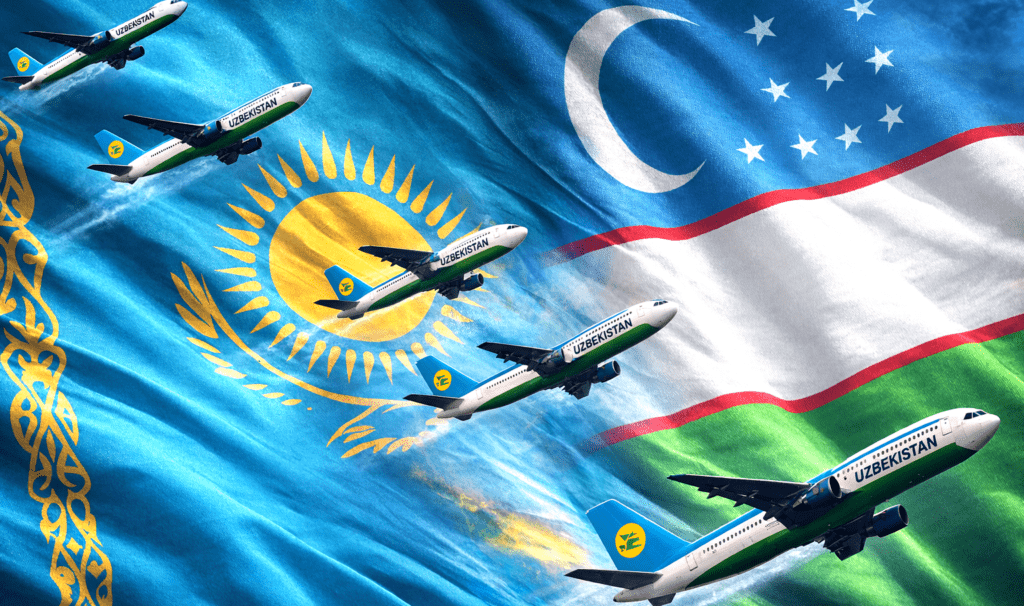
The war in Iran has disrupted one of the main aviation corridors linking Europe and Asia. The European Union Aviation Safety Agency (EASA) has issued safety bulletins warning of high risk to civilian aircraft in Iranian airspace and surrounding regions affected by military activity, missile launches, interceptions, and air defense operations. A separate EASA bulletin covering Iran, valid through March 31, describes a high risk to civil flights at all altitudes within the Tehran flight information region. The consequences reach far beyond the Middle East. Since Russia’s full-scale invasion of Ukraine in 2022, most Western airlines have been unable to use Russian airspace. With Iranian airspace now considered unsafe for normal commercial transit, the map for long-haul traffic between Europe and Asia has become extremely tight. Reuters mapping of global flight paths shows airlines diverting north via the Caucasus or taking longer southern routes through the eastern Mediterranean and the Arabian Peninsula. Many passengers traveling between Europe and Asia still transit through Gulf hubs. However, airports across the region, including Dubai, Abu Dhabi, Doha, Kuwait, and Bahrain, have faced disruption and unstable schedules during the conflict. Central Asia sits just beyond that northern bypass. It is not replacing the Gulf as a passenger hub, and is not suddenly becoming the main bridge between Europe and Asia, but the region’s airspace is increasingly strategically valuable as the number of efficient alternatives shrinks. The war has made Central Asia more important as part of a wider arc stretching from Turkey and the Caucasus across the Caspian basin and onward toward South and East Asia. [caption id="attachment_45218" align="aligncenter" width="1290"] Live flight-tracking map (image taken at 840am EST) showing aircraft routes avoiding Iranian airspace during the crisis. Many flights between Europe, the Middle East, and South Asia are being diverted north over the Caspian Sea and across Central Asia instead of flying over Iran; source: Planes Live[/caption] Kazakhstan is the clearest example. Local airlines had already begun to adjust before the current escalation reached its present level. In January, The Times of Central Asia reported that Air Astana had rerouted flights to Sharm el-Sheikh, Dubai, Doha, and Medina to avoid Iranian airspace. After the conflict widened, Air Astana canceled flights to several Middle Eastern destinations following the closure of Iranian airspace and rising regional tensions. Kazakhstan also imposed a temporary ban on flights over or near the airspace of Iran, Israel, Syria, Iraq, Jordan, and Lebanon. Uzbekistan also moved quickly. As early as October 2024, Kun.uz reported that Uzbekistan Airways was avoiding Iraqi airspace and western Iranian airspace on safety grounds. After the latest escalation, on March 4, Uzbekistan suspended flights to six Middle Eastern countries. The pattern is clear: Central Asian carriers are not immune to the crisis; they are already adjusting networks, schedules, and commercial risk, with the broader economic consequences of the conflict emerging across regional supply chains. However, the region’s aviation systems clearly now carry far greater strategic and economic importance than they did only a few years ago. On its...

Freight Volumes on Middle Corridor Through Kazakhstan Rise Fivefold in Seven Years

Freight volumes transported along the Trans-Caspian International Transport Route (TITR) through Kazakhstan have increased more than fivefold over the past seven years, highlighting the growing importance of the corridor as companies seek alternatives to routes passing through Russia. According to Kazakhstan’s Ministry of Transport, volumes have risen from 0.8 million tons to 4.5 million tons annually. Also known as the Middle Corridor, the TITR is a multimodal transport route linking China and Europe via Central Asia and the South Caucasus. The rapid growth of the route reflects wider shifts in Eurasian logistics since Russia’s full-scale invasion of Ukraine in 2022. With many Western companies seeking alternatives to traditional northern routes through Russia, governments and logistics operators across Central Asia and the South Caucasus have accelerated investment in the Trans-Caspian corridor, hoping to position it as a key artery linking Asian manufacturing hubs with European markets. Container transportation has been one of the fastest-growing segments of the corridor. In 2025, approximately 77,000 TEUs were transported along the TITR. Authorities aim to increase this figure to 300,000 TEUs by 2029. Despite rapid growth, the corridor still carries far less cargo than traditional northern routes through Russia, underscoring both its potential and the scale of investment still required. The expansion reflects ongoing infrastructure development and growing cooperation among participating countries and logistics operators. Key contributing factors include improved conditions for international freight transport, such as simplified customs procedures, as well as significantly shorter delivery times, reduced from roughly 28-32 days to 13-17 days. Demand has also risen for integrated “single-window” logistics services designed to enhance transparency and reliability. Kazakhstan, Azerbaijan, and Georgia continue to coordinate efforts under joint roadmaps to eliminate remaining bottlenecks along the corridor. To ensure year-round navigation and strengthen competitiveness, Kazakhstan is investing in infrastructure on the Caspian Sea coast. Dredging has already been completed at Kuryk Port, while similar work is planned at Aktau Port this year to increase depth and improve vessel access. Construction is also underway at Kuryk on the Sarzha multifunctional terminal, a project being implemented in cooperation with Abu Dhabi Ports Group from the United Arab Emirates. The terminal is expected to have an annual capacity of five million tons. Meanwhile, a container hub has been launched at Aktau Port, further enhancing maritime logistics capacity along the corridor. Kazakhstan has also expanded its transport infrastructure abroad. A Kazakh-operated terminal with a capacity of 120,000 TEUs has been launched at the Georgian port of Poti, improving cargo handling efficiency along the TITR. The European Union is also supporting the corridor’s development. A grant has been allocated for the reconstruction of Berths No. 3 and No. 12 at Aktau Port. The funding will be used to purchase wind-resistant ship-to-shore cranes to ensure stable operations during adverse weather conditions. On the railway side, Kazakhstan is upgrading more than 2,000 kilometres of rail infrastructure connected to the corridor. In 2025, construction and modernisation work were completed on 911 kilometres of railway lines. Key projects include the construction of second...

Informal OTS Foreign Ministers’ Meeting Tests Limits of Turkic Coordination

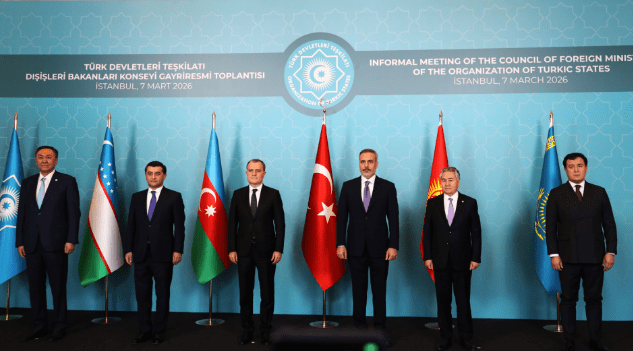
Escalating tensions linked to the widening conflict in the Middle East have tested the political cohesion of the Organization of Turkic States (OTS), according to Kazakh political commentator Dzhanibek Suleyev. Recent incidents affecting both Azerbaijan and Turkey — including drone strikes in Azerbaijan’s Nakhchivan Autonomous Republic and a missile intercepted by Turkish air defenses — have raised security concerns across the wider region. Suleyev argues that developments of this scale might normally prompt an urgent summit of heads of state. Instead, Turkey convened an informal meeting of foreign ministers and senior diplomatic representatives from OTS member states. The gathering took place on March 7, when officials convened at the invitation of Turkish Foreign Minister Hakan Fidan. According to Turkish media, ministers later met with President Recep Tayyip Erdoğan during their visit. Speaking to The Times of Central Asia, Suleyev drew attention to how the meeting was covered in the media of Central Asian member states. “In the Uzbek press, coverage was limited, and even on the website of their Ministry of Foreign Affairs, there is not a single word about the informal summit of OTS foreign ministers. Kazakhstan, moreover, was represented not by Foreign Minister Yermek Kosherbayev but by his deputy Alibek Bakayev. Kyrgyzstan’s Foreign Ministry issued four notes about the trip of its minister Jeenbek Kulubaev to Istanbul, three of which were devoted to the summit, but without any particular details,” Suleyev said. Kazakhstan’s Foreign Ministry published a short summary of the meeting, noting in broad terms that representatives discussed cooperation among Turkic states and regional developments. According to Suleyev, the joint statement adopted after the meeting was difficult to find outside of Azerbaijani media. One of the few outlets to publish the text in full was Azerbaijan’s APA news agency. Much of the statement focused on the incidents affecting Azerbaijan and Turkey, stressing that “any threat to the security of OTS member states causes concern for the entire Organization… The ministers strongly condemned the attacks carried out from the territory of the Islamic Republic of Iran against the Nakhchivan Autonomous Republic of the Republic of Azerbaijan, including strikes against civilian facilities and the territory of the Republic of Turkey,” the statement continued. “The rest of the statement boils down to destabilization in the Middle East could lead to a global economic crisis, the Palestinian conflict must be resolved taking into account UN resolutions, and so on,” Suleyev told TCA. One notable event during the meeting was the foreign ministers’ reception by President Erdoğan. Official summaries released by participating governments described the discussion in diplomatic terms. “Kazakh sources wrote that ‘prospects for the development of cooperation within the framework of Turkic cooperation were discussed,’” Suleyev said. Kyrgyz statements used similar language, stating that the “President of Turkey… noted the importance of regular dialogue on current regional and international issues and expressed interest in further developing multilateral cooperation within the framework of the Organization.” “In short, these are streamlined diplomatic formulations without specific details,” Suleyev said. According to a press...

Uzbekistan Repatriates Over 21,700 Citizens from Middle East

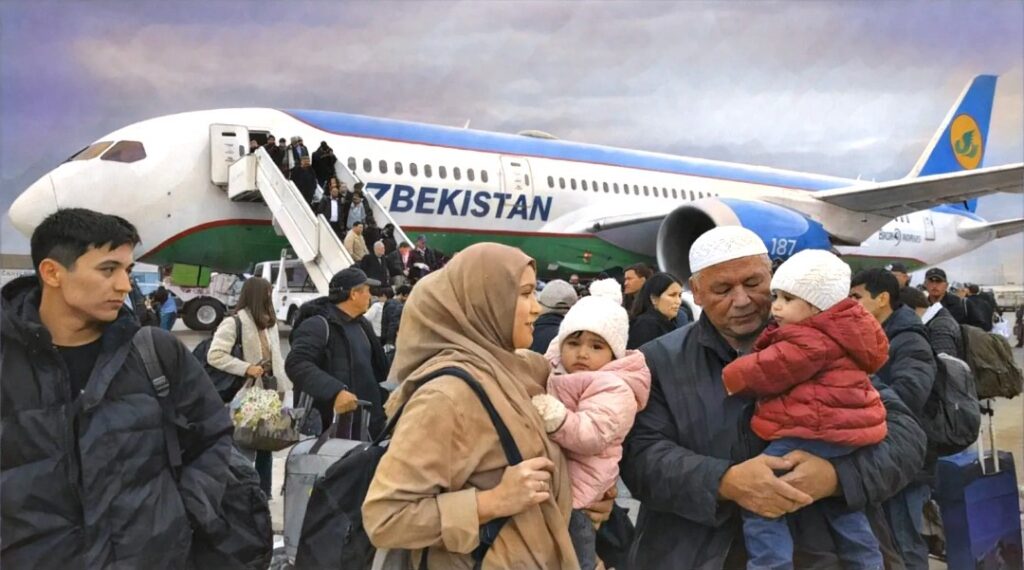
Uzbekistan has repatriated 21,712 citizens from several Middle Eastern countries as of 07:00 on March 9, the country’s Ministry of Foreign Affairs has said, as evacuation efforts continue amid regional instability. Most of those returned came from Saudi Arabia, where 17,963 citizens were brought back to Uzbekistan. Additional repatriations included 3,290 people from the United Arab Emirates, 378 from Qatar, 47 from Iran, 27 from Bahrain, and seven from Oman. The ministry said the return of Uzbek citizens is being carried out “systematically and in stages,” with authorities continuing to coordinate transport and logistics for those seeking to return. Officials noted that many repatriation flights are currently being organized through countries whose airspace remains open to civilian aviation. Uzbekistan’s evacuation reflects the scale of its citizens’ presence across the Gulf. In recent years, the country has expanded labor migration agreements with Saudi Arabia, the United Arab Emirates, and Qatar, sending thousands of workers into construction, hospitality, and service sectors. Saudi Arabia has also become a major destination for religious travel from Uzbekistan, with large annual flows of pilgrims traveling for the Hajj and Umrah. Kazakhstan has also evacuated citizens during the crisis, bringing 8,585 people home from Middle Eastern countries since the operation began. Central Asian citizens travel widely to Gulf states for work, tourism, and pilgrimage, leaving thousands affected when conflicts disrupt flights and close regional airspace. The number of returned citizens has risen steadily over the past several days. According to the foreign ministry, 19,347 Uzbek citizens had returned home as of 07:00 on March 8. Uzbek diplomatic missions in the region have also issued safety guidance to citizens who remain abroad. In a statement published by the Embassy of Uzbekistan in Israel, citizens were urged to follow official security instructions issued by local authorities. The embassy said red alerts issued by Israel’s civil defense authorities indicate a dangerous situation and require people to stay near protected shelters and immediately enter them if warning sirens sound. Blue alerts indicate that the threat has passed, and people may leave shelters. Other Central Asian countries have also organized evacuations of their citizens. According to Tajik media outlet Asia-Plus, more than 300 citizens of Tajikistan returned home on March 8 on two flights from Dubai. One charter flight brought 130 Tajik citizens to Dushanbe in the morning, while a later flight operated by Somon Air transported another 180 passengers. The charter operation was organized with support from the Tajik embassy in the United Arab Emirates, local authorities, and the airline Flydubai. About 550 Tajik citizens have returned home from Abu Dhabi and Dubai on charter flights in recent days amid the ongoing regional conflict.

Central Asia Faces an Arc of Instability to the South

Until a few weeks ago, looking south from Central Asia, observers of the region saw nothing but opportunities for connectivity. Admittedly, Iran on one side and the area between Afghanistan and Pakistan on the other have never been known for their stability. However, the current situation sees two serious conflicts on the southern border of Central Asia, which risk representing an arc of instability that will be difficult to overcome. While the global energy implications of the ongoing war in the Middle East, which began following the joint attack by the United States and Israel on Iran, are likely to be felt for months to come, the greatest risk for the Central Asian region is related to connectivity. This could also compromise significant efforts made in this regard by regional governments. Consider, for example, the recent trip to Pakistan by Kazakh President Kassym-Jomart Tokayev, which focused on the possibility of building a railway from Pakistani ports to Kazakh territory via Afghanistan and Turkmenistan. For much of the past decade, Central Asian governments have invested heavily in opening southern trade routes to global markets. Railways through Afghanistan, port access through Iran, and new logistics corridors to Pakistan were meant to reduce dependence on northern routes and expand the region’s economic options. The sudden emergence of conflicts along the southern frontier now raises questions about how secure those connections will be. The Times of Central Asia spoke with Peter Frankopan, author and Professor of Global History at Oxford University, about the potential implications of the two wars on Central Asia’s southern border. According to him, the main risk is not related to connectivity, but to contagion: “The key issue is about the safety of civilians and the protection of infrastructure in Central Asia,” he told TCA. “In times like these, nothing can be ruled out. With Iran lashing out at neighbors and realizing that attacks on oil, gas and more give it leverage, it is not hard to see what might come next. Second, of course, are threats to national economies. Wars create winners and losers. One can see a boom for some people in Central Asian states, but plenty of pressures, especially on inflation.” Indeed, the economic repercussions of the Middle East conflict are already being felt in the region, particularly in Turkmenistan, which maintains some of the closest trade ties with Iran and shares a long border with the country. Frankopan does not see any particular differences in terms of the danger to Central Asia posed by what is happening in Iran and between Pakistan and Afghanistan: “Clearly, instability in Afghanistan is an immediate concern, but it is not related to Iran and will have its own velocity and rhythms. But the risks of expanding violence and terrorism, of refugees, of narcotics and other illicit trafficking are real - and may well get worse.” Regarding connectivity, one of the topics that Central Asian governments pay the most attention to, according to Frankopan, the current situation should not be considered an...