• KGS/USD = 0.01143 -0%
  • KZT/USD = 0.00192 -0%
  • TJS/USD = 0.10820 0.19%
  • UZS/USD = 0.00008 0%
  • TMT/USD = 0.28575 0%
  • KGS/USD = 0.01143 -0%
  • KZT/USD = 0.00192 -0%
  • TJS/USD = 0.10820 0.19%
  • UZS/USD = 0.00008 0%
  • TMT/USD = 0.28575 0%
  • KGS/USD = 0.01143 -0%
  • KZT/USD = 0.00192 -0%
  • TJS/USD = 0.10820 0.19%
  • UZS/USD = 0.00008 0%
  • TMT/USD = 0.28575 0%
  • KGS/USD = 0.01143 -0%
  • KZT/USD = 0.00192 -0%
  • TJS/USD = 0.10820 0.19%
  • UZS/USD = 0.00008 0%
  • TMT/USD = 0.28575 0%
  • KGS/USD = 0.01143 -0%
  • KZT/USD = 0.00192 -0%
  • TJS/USD = 0.10820 0.19%
  • UZS/USD = 0.00008 0%
  • TMT/USD = 0.28575 0%
  • KGS/USD = 0.01143 -0%
  • KZT/USD = 0.00192 -0%
  • TJS/USD = 0.10820 0.19%
  • UZS/USD = 0.00008 0%
  • TMT/USD = 0.28575 0%
  • KGS/USD = 0.01143 -0%
  • KZT/USD = 0.00192 -0%
  • TJS/USD = 0.10820 0.19%
  • UZS/USD = 0.00008 0%
  • TMT/USD = 0.28575 0%
  • KGS/USD = 0.01143 -0%
  • KZT/USD = 0.00192 -0%
  • TJS/USD = 0.10820 0.19%
  • UZS/USD = 0.00008 0%
  • TMT/USD = 0.28575 0%
13 December 2025

Viewing results 343 - 348 of 2337

Backup Goalkeeper Anarbekov Secures Champions League Berth for Kairat Almaty

Temirlan Anarbekov, the reserve goalkeeper for Kazakhstani football club Kairat Almaty, played a starring role as his team reached the UEFA Champions League group stage for the first time. On August 26 Kairat secured its place in Europe’s premier club competition this season by beating Scottish champions Celtic in the final qualifying round. Kairat entered the Champions League qualifiers after claiming their fourth domestic title last year. This summer, the Kazakh champions successfully navigated three qualifying rounds, defeating Slovenia’s Olimpija, Finland’s KuPS, and Slovakia’s Slovan Bratislava, to reach a decisive playoff against Celtic. The Scottish club, a regular participant in recent Champions League group stages, posed a formidable challenge. Kairat, by contrast, had previously reached the autumn phase of European competition just once, in the lesser UEFA Conference League three years ago. In the first leg in Glasgow last week, Kairat held Celtic to a 0-0 draw. However, the result came at a cost: first-choice goalkeeper and national team regular Alexander Zarutsky sustained a leg muscle injury and had to be substituted. Temirlan Anarbekov, the team’s backup, stepped in. With Zarutsky still sidelined, Anarbekov started the return leg in Almaty. He delivered a flawless performance, keeping a clean sheet through regular time and two 15-minute periods of extra time. The match was ultimately decided by a penalty shootout. Anarbekov stole the spotlight by saving three out of five attempts. Kairat won the shootout 3-2. The team became only the second from Kazakhstan to reach the Champions League group stage, following Astana’s breakthrough in 2015. Kairat will discover its group-stage opponents during the Champions League draw on August 28. They are Kazakhstan’s sole representative in European competition this season, after Aktobe failed to qualify for both the Europa League and Conference League, and Shymkent’s Ordabasy and Astana exited in earlier rounds. Meanwhile, in neighboring Uzbekistan, the national football federation continues its search for a new head coach. As previously reported by The Times of Central Asia, former South Korea and Portugal manager Paulo Bento is the frontrunner for the role.

Almaty to Open Central Asia’s First Private Museum of Contemporary Art

Almaty is preparing for a cultural milestone of international significance. In September 2025, the Almaty Museum of Arts will open its doors as the first private museum of contemporary art in Central Asia. The project is poised to reshape Kazakhstan’s cultural landscape and position Almaty as a new regional hub for artists, curators, and global audiences. Architecture and Concept The 10,000-square-meter building was designed by British firm Chapman Taylor, in collaboration with Buro Happold and Lord Cultural Resources. The architectural concept draws on Almaty’s unique identity: stone elements evoke the surrounding mountains, while metal structures reflect the city's dynamism. Together, they create a space where art exists in a dialogue with both nature and urban life. The museum will include permanent and temporary exhibition halls, artist studios, educational auditoriums, a performance venue, a restoration laboratory, a café, and a museum shop. [caption id="attachment_35388" align="aligncenter" width="657"] Image: Almaty Museum of Arts[/caption] Investment and Collection The project is valued at approximately $100 million, with $30 million allocated for construction and $70 million for building the collection and outfitting the museum. The collection already comprises more than 700 works, spanning Kazakh and Central Asian artists as well as internationally renowned figures such as Yayoi Kusama, Alicja Kwade, Richard Serra, Yinka Shonibare, and Bill Viola. One permanent installation has already captured the public's attention: Nades, a 12-meter sculpture by Spanish artist Jaume Plensa, stands at the museum's main entrance. Depicting a young girl with her eyes closed, the artwork has sparked mixed reactions. Museum founder Nurlan Smagulov described it as a symbol of the "strength, dignity, and beauty of women.” While some praised its serenity and conceptual elegance, others questioned its cost and originality. Regardless, Nades has succeeded in igniting a public discourse, something all meaningful art aspires to, making the museum a topic of national conversation before its official opening. [caption id="attachment_35389" align="aligncenter" width="527"] Image: Almaty Museum of Arts[/caption] Curators and Opening Program Meruert Kalieva, founder of Almaty’s Aspan Gallery, has been appointed artistic director. The museum’s chief curator will be Inga Lāce, formerly of the Latvian Centre for Contemporary Art and a contributor to the Venice Biennale. The inaugural program includes: “I Understand Everything” - a solo exhibition by Kazakh artist Almagul Menlibayeva, tracing her work since the 1980s, and “Qonaqtar” - a group exhibition exploring themes of hospitality and migration, curated from the museum’s growing collection. [caption id="attachment_35399" align="aligncenter" width="884"] Aisha Galimbaeva, "Shepherd's Wedding", 1965; image: Almaty Museum of Arts[/caption] Role for the City and the Region The Almaty Museum of Arts aims to serve as a bridge between Central Asia and the global contemporary art world. Beyond exhibitions, it will function as an educational platform, hosting lectures, masterclasses, and programming for children and students. The institution is expected to boost the local art scene while drawing international visitors, contributing to the creation of a new cultural district in Almaty. More broadly, it signals Central Asia’s readiness to participate fully in global artistic discourse. Almaty stands to emerge as the cultural...

Melon Pyramids and Empty Pantries: Tajik and Turkmen Feasts Amid Everyday Shortages

Pyramids of various kinds of melons, fruits laid across the ground to form intricate, traditional patterns, as well as an abundance of fruit, dried fruit, nuts, and bread overflowing from tables, and even fountains, surrounding the edible ground arrangement, and grapes hanging from poles. As an advertisement for national products, a background for international events, or a gift for an ally, Tajikistan is gaining fame for elaborate displays of fruit. It is an amazing sight, with fruits and nuts arranged in patterns that cover large areas of the pavilions and gardens where foreign guests are being entertained. However, as good as these lavish presentations look and taste, these cornucopias are being exhibited in some of Central Asia’s poorest countries, and, unsurprisingly, there has been some discontent and some scandals. For Sale On August 16-17, there was an exhibition of Tajikistan’s products and crafts in the Kazakh capital, Astana, with melon pyramids taking center stage in an exhibition that also featured “over a thousand tons of products: fresh fruits and vegetables, nuts, [and] dried fruits.“It was a return performance for the Tajik “masters” who arrange the exhibitions. Astana hosted a fair of Tajik products in August 2023 that drew a big crowd, some of whom were overly anxious to get their hands on the goods. Dozens of people started taking melons and grapes from the pyramids, breaking shelves and decorations in the process. [caption id="attachment_35359" align="aligncenter" width="1597"] Tajik fair in Astana, 2023; image: public domain[/caption] Impress the Guests One of the most memorable grand displays of fruit occurred when Tajikistan hosted the summit of leaders from the Commonwealth of Independent States (CIS) on September 27, 2018. On the eve of the summit, Tajik President Emomali Rahmon walked his guests through a garden flanked by enough food to feed a small town for a month. It was the first time such a spread had been laid out for guests at an international gathering, with Rahmon seeming to appreciate having an agricultural background when hosting a diplomatic event. In July 2019, Rahmon met with then-Kyrgyz President Sooronbai Jeenbekov in the northern Tajik town of Isfara. Conflicts along the Kyrgyz-Tajik border were becoming increasingly deadly, and the two presidents met to discuss ways to ease tensions and resolve the festering problems along the frontier. While the two presidents talked, Rahmon guided Jeenbekov through “6 pyramids… of watermelons and melons, as well as almost 20 types of national breads.“ [caption id="attachment_35360" align="aligncenter" width="960"] Sooronbay Jeenbekov and Emomali Rahmon in Isfara; image: press service of the President of the Republic of Tajikistan[/caption] When Dushanbe hosted the Shanghai Cooperation Organization (SCO) summit in September 2021, the feast on the eve of the summit was every bit the equal of the CIS summit in 2018 and featured “huge pyramids of fragrant melons and watermelons, carpets of fresh fruit, grapes cascading like a waterfall, and even fountains of melons.” Rahmon brought his fruit feast to St. Petersburg in October 2022 when CIS leaders gathered for an informal CIS summit...

ArtSkin: Prosthetics with a Sense of Touch from Kyrgyzstan

The Kyrgyz startup ecosystem is still in its nascent stages and can’t boast an endless number of founders pursuing their dreams. But those focused on building hardware startups, which is generally significantly more challenging, are even a rarer breed. Despite all of that, there is an ambitious attempt to build artificial skin for prosthetics. Meet ArtSkin. Not like a human hand “Since childhood, I was mad about science and tech, and the first big thing that I made was a prototype of the first airplane by the Wright brothers. I dropped it from the second floor, and it was crushed after flying four meters. Later, when I was twelve, I saw a TV program about robot battles, and it was crazy! Since then, I have wanted to be able to make any kind of robots, and my dream has come true,” says Iliias Dzheentaev’s biography on LinkedIn. Dzheentaev is the CEO and Founder of ArtSkin.  ArtSkin is a hardware startup from Kyrgyzstan that develops artificial skin for prosthetic limbs. It was launched by Dzheentaev in 2024. Before that, he spent three years studying how human skin, the nervous system, and receptors work to understand how to design a device allowing proper touch sensations. The process was time-consuming and challenging due to the lack of relevant information. “My initial prototype was a robotic arm manipulator. I encountered a challenge with grasping flexible objects – figuring out how to make the robot recognize when its claw had squeezed tightly enough to hold the object securely. To solve this, I developed a mechanism that overcomes the resistance of different materials, enabling the robot to firmly grasp objects of various shapes, textures, and densities. Although the mechanism was simple, it made me realize how important this problem is for robotics. This insight then led me to thinking about people who use prosthetics and whether they actually feel anything when wearing them”, Dzheentaev tells The Times of Central Asia. He was not happy with the contemporary prosthetic solutions – basic body-powered mechanical prosthetics rely on physical motions, and more advanced bionic prosthetics translate electrical signals generated by muscle activity into movements, both of which lack feedback. And without the latter, control is incomplete, while with a human hand, one can easily understand its position as well as feel touch and pressure. With this in mind, Dzheentaev built his prototype with a single sensor to test the device on himself. First steps Things got serious when Dzheentaev visited the High Technology Park of the Kyrgyz Republic (HTP), where he was inspired by other founders pitching and raising funds for their startups. At the time, unfamiliar with this environment, Dzheentaev was using his salary to buy electronic components, order materials, and do designs. Not long after, Dzheentaev took part in HTP’s two programs: Dive into Silicon Valley and Unicorn from KG. The finalists for the first one were selected in February 2024. Dive into Silicon Valley in an entry-level incubation program, which sends founders to spend two...

‘Orange Angels’: Aviators of Eastern Kazakhstan Fly Daily Rescue Missions

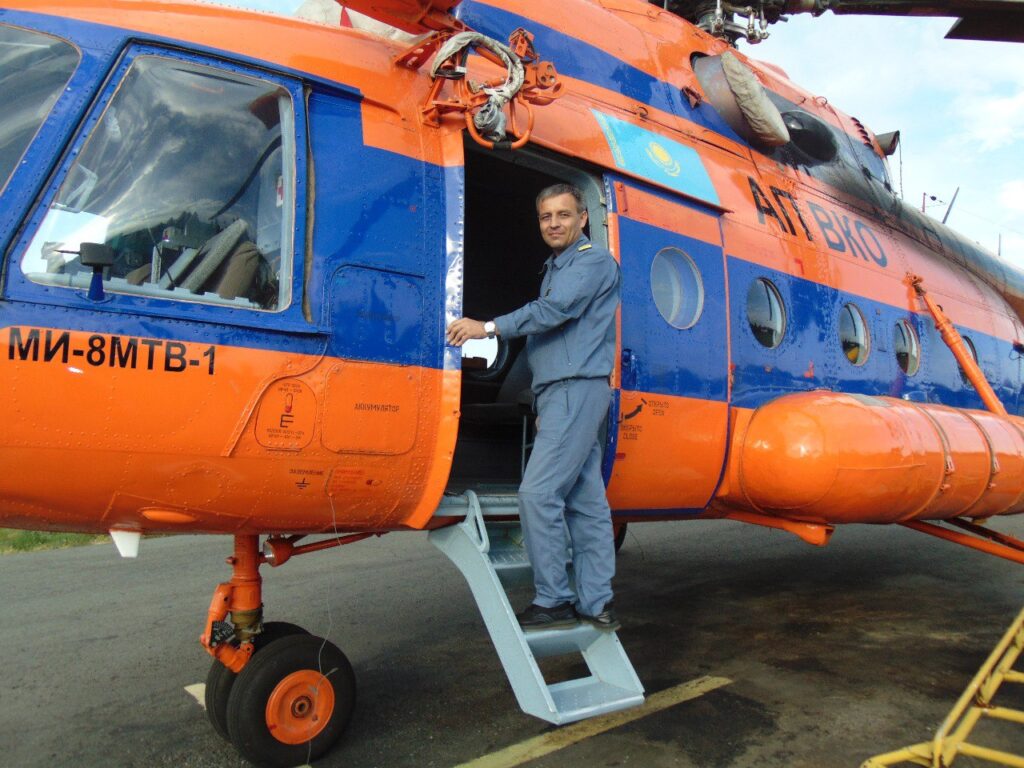
When there is no help left on the ground, they take to the skies: orange fuselages, the roar of propellers, and salvation descending from above. The Aviation Division of the East Kazakhstan Region - the 'Orange Angels' - is more than a state enterprise; it is a vital lifeline, operating when every minute counts. No Margin For Error Since its founding in 2003, the division has become an indispensable part of the region’s emergency response system. Its 114 full-time specialists conduct medical flights, firefighting operations, evacuations, and rescues. Yet staffing remains a challenge. "We are short 12-13 personnel. Ideally, we should have around 120," Kalikan Baigonusov, Director of the East Kazakhstan Aviation Division, told The Times of Central Asia. “Young people prefer big airlines, foreign skies, and big paychecks. Our salaries are decent, between $1,300 and $2,900, but the profession lacks visibility and appeal. It’s a calling, not just a job.” [caption id="attachment_35346" align="aligncenter" width="1280"] Image: TCA[/caption] Baigonusov hopes more young people will be drawn to aviation through education. His division is now organizing practical MI-2 helicopter training for students from the Civil Aviation Academy JSC. There is also close cooperation with the East Kazakhstan Multidisciplinary College, which, with support from the regional governor, launched new specialties in aviation engineering and mechanics on September 1, 2024. Therein, students undergo practical training with the air squadron, learning directly from experienced pilots and engineers. Still, Baigonusov believes Kazakhstan’s personnel training system needs urgent reform. "I’ve knocked on every door, the academy, the rector, the department head," he told TCA. "We need to train our people locally. Sending a student to Russia costs $47,000. That’s simply out of reach. We need to promote dual education here, so people can study and work at home.” Many of the division’s specialists are graduates of now-diminished Soviet-era aviation schools in Kachinsk, Omsk, Kyiv, and Riga. Each year, their ranks grow thinner. Engineering, Maintenance, and a Race Against Time Despite operating from aging facilities built in the 1970s and 1980s, the team is working to modernize and extend the lifespan of its equipment. The aircraft fleet, averaging 35 years in age, has undergone extensive inspections and upgrades. Standardization tests have been passed, and all certifications are in place. Thanks to the expertise of the engineering team, the division recently secured certification for maintaining YAK-40 and YAK-42 aircraft and Mi-8 and Mi-2 helicopters. [caption id="attachment_35348" align="aligncenter" width="1280"] Image: TCA[/caption] “Before, we relied on outside companies for repairs. Now we do everything ourselves,” says Baigonusov. “That saves time and money and makes us more self-reliant.” Deputy for the Engineering and Aviation Service (IAS) Lobanov leads a team dedicated to his work, although he, like many in the unit, is already over 55. Baigonusov is determined to attract the younger generation. “We need to show how important and beautiful this profession is. It's demanding, but it’s also deeply meaningful.” Rescuing the Stranded in Kalbatau Chief pilot Denis Grunsky recalled one of the most dramatic missions of his career to TCA....

Kazakhstan Develops Water-Efficient Rice Variety to Combat Climate and Irrigation Challenges

The Ibrai Zhakhayev Kazakh Scientific Research Institute of Rice Growing is trialling a new moisture-saving rice variety in the Kyzylorda region. The variety, known as “Syr Sulu,” is designed to mature more quickly and use significantly less water compared to traditional strains. Syr Sulu matures within 105-110 days and offers high yields, up to 80-85 centners per hectare with proper agricultural practices. By comparison, Russian rice varieties typically cultivated in the Kyzylorda region require 120-125 days to reach maturity, resulting in higher water consumption. "The water situation in the southern regions of Kazakhstan makes it necessary to find and develop new ways to save water. Given global climate change, such crop varieties could become a compelling alternative to existing water-intensive varieties. The results of this research will have a positive impact on the development of agriculture and reduce water consumption in rice fields," said a representative of the Kazakh Rice Institute. Moisture Retention Innovations In parallel, the institute is working with the Ministry of Water Resources and Irrigation to continue trials of the Hungarian product Water Retainer, a soil treatment designed to preserve moisture. In 2025, the product is being tested on irrigated land in the Almaty, Zhambyl, Kyzylorda, Karaganda, Akmola, and Zhetysu regions. "The first stage of testing, in which four research institutes participated, showed that the product reduces the growing season of rice and achieves significant water savings. Traditionally, rice is watered for 90 days, but with the use of the preparation, 51 days are sufficient," said Lazzat Dzhusipova, Director of the Ministry's Department of Scientific and Innovative Technologies. Broader Water Challenges As previously reported by The Times of Central Asia, the Eurasian Development Bank (EDB) released a comprehensive assessment of Central Asia’s water and energy challenges in April 2025. The study found that much of the region’s water infrastructure is outdated and inefficient, leading to the loss of 40-55% of available water. The EDB estimates that, without urgent modernization, Central Asia could face an annual water deficit of 5-12 cubic kilometers by 2028.