• KGS/USD = 0.01144 0%
  • KZT/USD = 0.00213 0%
  • TJS/USD = 0.10456 0.19%
  • UZS/USD = 0.00008 0%
  • TMT/USD = 0.28490 0%
  • KGS/USD = 0.01144 0%
  • KZT/USD = 0.00213 0%
  • TJS/USD = 0.10456 0.19%
  • UZS/USD = 0.00008 0%
  • TMT/USD = 0.28490 0%
  • KGS/USD = 0.01144 0%
  • KZT/USD = 0.00213 0%
  • TJS/USD = 0.10456 0.19%
  • UZS/USD = 0.00008 0%
  • TMT/USD = 0.28490 0%
  • KGS/USD = 0.01144 0%
  • KZT/USD = 0.00213 0%
  • TJS/USD = 0.10456 0.19%
  • UZS/USD = 0.00008 0%
  • TMT/USD = 0.28490 0%
  • KGS/USD = 0.01144 0%
  • KZT/USD = 0.00213 0%
  • TJS/USD = 0.10456 0.19%
  • UZS/USD = 0.00008 0%
  • TMT/USD = 0.28490 0%
  • KGS/USD = 0.01144 0%
  • KZT/USD = 0.00213 0%
  • TJS/USD = 0.10456 0.19%
  • UZS/USD = 0.00008 0%
  • TMT/USD = 0.28490 0%
  • KGS/USD = 0.01144 0%
  • KZT/USD = 0.00213 0%
  • TJS/USD = 0.10456 0.19%
  • UZS/USD = 0.00008 0%
  • TMT/USD = 0.28490 0%
  • KGS/USD = 0.01144 0%
  • KZT/USD = 0.00213 0%
  • TJS/USD = 0.10456 0.19%
  • UZS/USD = 0.00008 0%
  • TMT/USD = 0.28490 0%

Viewing results 355 - 360 of 3328

Critical Baikonur Launch Pad Hit by Damage After Soyuz MS-28 Liftoff

Russia’s space agency has confirmed that a launch pad at the Baikonur Cosmodrome in Kazakhstan was damaged during the liftoff of a Soyuz spacecraft that carried three crew to the International Space Station, raising questions about the near-term launch schedule at the site that Russia has relied on for more than six decades. Roscosmos reported that the Soyuz MS-28 mission lifted off from Baikonur on November 26 and reached orbit without problems. The spacecraft carried Russian cosmonauts Sergey Kud-Sverchkov and Sergey Mikayev, and NASA astronaut Christopher Williams. The crew docked with the station about three hours later. Roscosmos said in a statement on its official Telegram channel that the crew was healthy and the spacecraft worked as planned. Soon after the launch, engineers inspected Launch Pad 31/6, which served as the departure point for the flight. The agency said the inspection found damage to several structural elements on the pad and that repair work would start soon. Roscosmos said all required parts were on hand and the pad would be restored in the near future. Both The Moscow Times and Russian state media, including RIA Novosti, reported that the pad sustained damage but did not identify specific components. Roscosmos confirmed that “damage to several elements of the launch pad was detected.” Independent analysts have stated the damage might be more serious than Roscosmos has suggested, with Anatoly Zak, who publishes technical assessments of Russian space activity at RussiaSpaceWeb, reporting that a mobile service platform may have collapsed into the flame trench below the pad during or shortly after liftoff. Zak noted that the available launch pad for Russian crew missions might be unusable until engineers confirm the structure’s stability, and that it was unclear how soon crews or cargo could fly from Baikonur if the pad requires major work. Roscosmos has not confirmed a collapse of the platform, and it has not provided further details about the condition of the pad. The agency said the accident did not affect the MS-28 mission itself, which it described as nominal. But any impact on the pad is notable because Russia depends on Baikonur for its Soyuz crew launches. Russia leases the site from Kazakhstan through 2050 and continues to use its Soviet-era pads because Vostochny Cosmodrome in Russia’s Far East is not yet certified for crew flights. Russian outlets noted that future launches could face adjustments, but none reported a confirmed delay of a Progress mission. Roscosmos has neither confirmed the schedule nor said whether that mission will move to a later date. NASA has not issued a public statement about the status of joint operations after the incident. Russia and the United States continue to exchange seats on Soyuz and SpaceX vehicles under a 2022 agreement that allows both sides to maintain a sustained presence on the International Space Station. NASA has said the arrangement reduces risk because each side can reach the station even if one spacecraft type is grounded for technical reasons. The new damage at Baikonur highlights the...

Turkmenistan Included as Trump Tightens U.S. Immigration Ban After D.C. Shooting

President Donald Trump has announced a sweeping crackdown on immigration following a deadly shooting near the White House this week, placing new scrutiny on immigrants from certain countries – including Turkmenistan. Trump vowed to “permanently pause migration” from what he called “Third World” countries after two National Guard members were shot in Washington, D.C., one of them fatally. In response, U.S. immigration authorities are re-examining green cards and visa approvals for people from 19 countries deemed “countries of concern,” a list that features Turkmenistan alongside nations in Asia, Africa, and the Middle East. New Immigration Review Follows D.C. Attack The policy shift comes in the wake of an ambush-style attack on Wednesday in which an Afghan national allegedly opened fire on U.S. service members outside the White House. Army Specialist Sarah Beckstrom, 20, died from her injuries, and another Guardsman was critically wounded. Authorities arrested Rahmanullah Lakanwal, a 29-year-old Afghan man who arrived in the U.S. in 2021, as the suspect. Trump condemned the shooting as “an act of terror” and highlighted that the suspect entered under a Biden-era Afghan resettlement program. By Thursday, Trump directed U.S. Citizenship and Immigration Services (USCIS) to conduct a “full-scale, rigorous reexamination” of all current green card holders from every “country of concern.” USCIS Director Joseph Edlow said the review was ordered “at the direction of the President” and stressed that “American lives come first.” When pressed on which nations fall under the “countries of concern,” USCIS officials pointed to Trump’s June 4, 2025, presidential proclamation on foreign entry restrictions, which identified 19 countries with deficient security vetting or high visa overstay rates. It imposed a full travel ban on 12 nations and partial visa bans on 7 others. Turkmenistan’s Status in Trump’s Travel Ban Turkmenistan is one of seven countries under partial U.S. travel restrictions, meaning certain visa categories for Turkmen nationals have currently been suspended or tightened. According to the Trump administration, Turkmenistan was flagged due to security screening gaps and a high rate of U.S. visa overstays by its citizens. U.S. officials noted that about 15.35% of Turkmen visitors on tourist visas overstayed their permitted time in recent years. Turkmenistan has also been cited for limited cooperation on repatriating its citizens who are deported from the U.S. Under the June proclamation, Turkmen nationals were barred from obtaining immigrant visas or tourist and student visas for the U.S., though other travel may be allowed on a case-by-case basis. By invoking what he called a “permanent pause” on migration, Trump signaled that even more sweeping immigration restrictions could be ahead. He wrote on social media that anyone who is “not a net asset to the United States, or is incapable of loving our Country” will be removed. For Turkmenistan, inclusion in the U.S. ban list marks a rare spotlight on the country in American immigration policy. Turkmenistan, where emigration is tightly controlled, sees low numbers of its citizens entering the U.S. Department of Homeland Security data for Fiscal Year 2023 indicates that the...

Kyrgyzstan’s Renewable Pivot and the Strategic Weight of China’s Rising Role

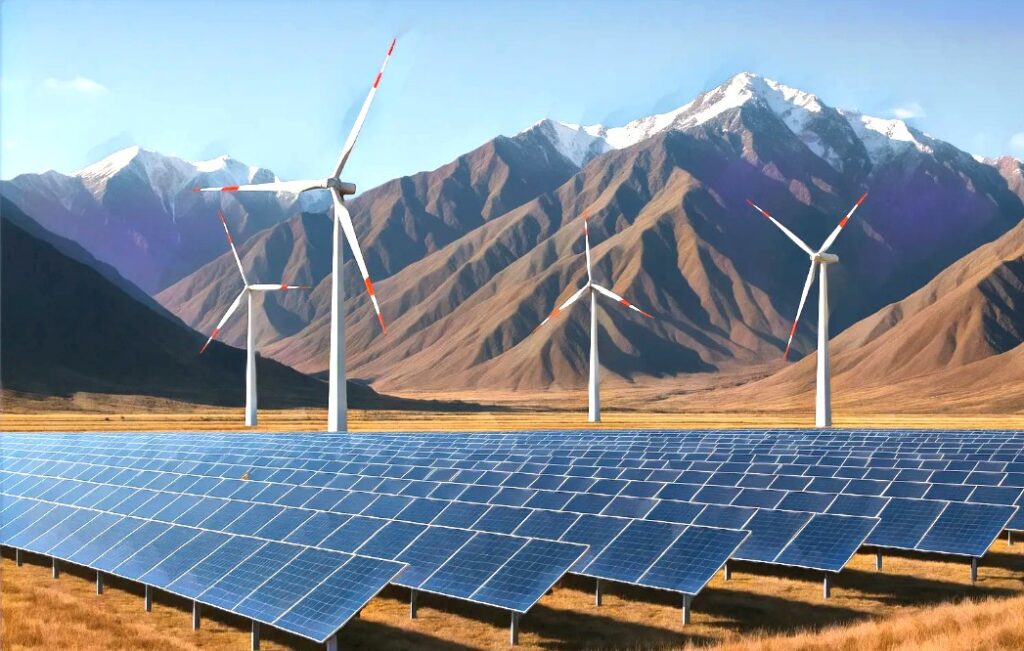
China’s energy engagement in Central Asia has undergone a quiet but decisive transformation since 2018. What was once a relationship built almost entirely on pipelines, hydrocarbons, and state-backed fossil fuel projects is now expanding into a much more diversified portfolio in which renewable energy plays an increasingly central role. Kazakhstan and Uzbekistan were the first to attract large-scale Chinese commitments in solar and wind power, yet Kyrgyzstan is quickly emerging as the newest frontier in this shift. Recent agreements demonstrate how Bishkek is rapidly positioning itself within China’s clean energy expansion. In 2022, Kyrgyzstan signed an agreement with Chinese investors to build a 1-gigawatt solar plant in Issyk-Kul. Furthermore, the government concluded another agreement with Shenzhen Energy Group for the construction of two additional power plants, one solar and one wind. The Energy Ministry has also reached an investment deal with States Technology Co. and San Energy Co. for a 250-megawatt solar facility in Batken. These projects indicate that Chinese capital is not only filling Kyrgyzstan’s immediate energy gaps, but is also beginning to reshape the country’s long-term energy structure. This push toward solar and wind arrives at a critical moment. Kyrgyzstan remains overwhelmingly dependent on hydropower, which generates more than 90% of the country’s electricity. Yet this climate-sensitive resource is now far less stable than in the past. Shifts in water levels driven by changing weather patterns have introduced new uncertainties into the country’s ability to meet domestic demand. At the same time, electricity consumption has surged at an unprecedented rate, rising by nearly one billion kilowatt hours in a single year due to newly launched industrial enterprises and rapid residential construction. The combination of climate volatility and soaring consumption has placed the energy system under severe strain. The government has declared a three-year energy emergency and introduced consumption restrictions designed to save approximately 40 kilowatt hours per month. Under these conditions, diversifying away from near-total reliance on hydropower is no longer optional but an urgent strategic necessity. Solar and wind investments offer a viable path forward. Expanding renewable capacity will give Kyrgyzstan a more predictable and resilient energy base, enabling the country to better manage seasonal shortages and climate-driven disruptions. Kyrgyzstan also imports all of its fossil fuels. As renewable capacity expands and the use of electric vehicles increases, the country could gradually reduce its dependence on oil imports from Russia, easing both financial pressures and geopolitical exposure. For this reason, cooperation with China represents more than a set of commercial transactions. It is evolving into a strategic pillar of Kyrgyzstan’s broader effort to strengthen energy security and modernize its power system. Chinese companies bring financing, technology, and implementation speed, all of which are essential for a country facing immediate and long-term energy risks. The benefits may extend beyond the domestic market. With sufficient renewable capacity, Kyrgyzstan could eventually re-enter regional electricity trade as an exporter. Some estimates suggest that cross-border energy sales could generate up to 220 million dollars annually in foreign currency earnings, providing a significant...

Electric Vehicles in Kazakhstan: Growth, Gaps, and the Road Ahead

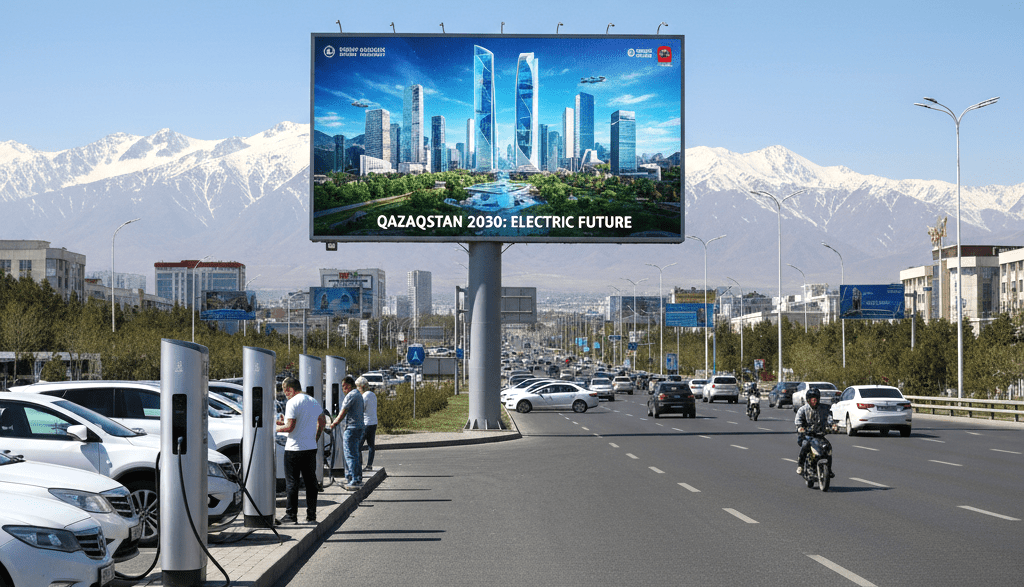
Despite growing interest in environmentally friendly transport, the share of electric vehicles (EVs) in Kazakhstan remains modest. This is due to their relatively late entry into the domestic market, persistent public skepticism, and an underdeveloped charging infrastructure. Nevertheless, electric mobility is already seen as a crucial component of Kazakhstan’s future transport strategy and its broader sustainable development agenda. These are among the conclusions of a new study analyzing the state of the EV fleet in Kazakhstan and proposing measures to develop urban electric transport infrastructure. According to official registration data, more than 19,000 electric cars and motorcycles were registered in Kazakhstan in the first half of 2025, a figure that reflects steadily rising interest in EV adoption. More EVs, Fewer Charging Stations If current trends continue, the EV fleet in Kazakhstan could increase more than tenfold by 2030, says Seydulla Abdullaev, Doctor of Technical Sciences and Head of the School of Transport Engineering and Logistics at the Satbayev Kazakh National Research Technical University. However, the pace of charging infrastructure development continues to lag. “Even with the current ratio of 25 electric vehicles per charging station, Kazakhstan will need between 4,000 and 8,000 charging points by 2030. This will require significant investment, an updated regulatory framework, and more active participation from the private sector,” Abdullaev told The Times of Central Asia. By comparison, in China, the global leader in EV production and charging infrastructure, one station serves an average of ten electric vehicles, a level considered high by industry standards. In Europe, EV charging stations are installed along highways at intervals of roughly 50 km. In contrast, only 23 such stations are currently operational on Kazakh highways. International best practices highlight the value of equipping residential complexes and parking lots with courtyard chargers, especially when backed by state subsidies. In Kazakhstan, a roadmap adopted in 2023 mandates that necessary EV infrastructure be established in all major cities by 2029. However, progress has been slow. In Almaty, which accounts for approximately 60% of the nation’s EV fleet, only 23 of the 40 planned charging stations were completed by 2024. “Our analysis shows that the key barriers to electric transport development include inadequate infrastructure, a limited service base, and underdeveloped technical documentation. Moving forward, progress will largely depend on political decisions, particularly in areas such as EV production subsidies, charging station expansion, and buyer incentives,” Abdullaev noted. Incentive Cuts Threaten Market Growth Kazakhstan’s EV market has increasingly aligned with global trends, particularly the dominance of Chinese manufacturers. Today, around 70% of EVs in the country are made in China, followed by about 20% from the U.S., and the rest from Germany, Belgium, Austria, and Japan. According to Natalya Tokmurzina-Kobernyak, Associate Professor at the School of Transport Engineering and Logistics at Satbayev KazNITU, this technological diversity demands a broad and well-supported service infrastructure. The global EV fleet, which stood at 58 million in 2020, had nearly quintupled by the end of 2024, according to the International Energy Agency. That figure is expected to reach...

Opinion: Abraham Accords Can Help Kazakhstan Reshape Its Energy Future

On 6 November 2025, after speaking with Kazakhstan’s President Kassym-Jomart Tokayev and Israel’s Prime Minister Benjamin Netanyahu, U.S. President Donald Trump announced that Kazakhstan would join the Abraham Accords. Astana and Jerusalem have maintained full diplomatic relations since 1992, but Kazakhstan’s entry pushes the Accords beyond the Middle East and North Africa and into the Eurasian heartland. This matters at a time when Washington wants to re-energize the initiative and deepen its C5+1 engagement with the region. Kazakhstan’s decision fits its multi-vector policy. The decision also builds on the country’s role as a key component of the Trans-Caspian International Transport Route (TITR, “Middle Corridor”), which links Chinese production to European markets. Cargo volumes reached about 4.5 million tons in 2024 and are expected to rise to around 5.2 million tons in 2025. A recent report by Boston Consulting Group expects rail freight through the Middle Corridor to quadruple by the decade’s end. The Accords do not change Kazakhstan’s formal status with Israel. The question is, rather, whether they unlock deeper economic cooperation. The Times of Central Asia has already reported on clear opportunities for cooperation in sectors such as water and agricultural efficiency, grid and industrial productivity, and cybersecurity and administrative modernization. In the energy sector, like the others, the Accords give Israeli companies a clearer political and legal framework for working with Kazakhstan’s energy and infrastructure sectors. Gulf Cooperation Council states, and the United Arab Emirates (UAE) in particular, could provide project finance as well. Hard Energy, Nuclear Fuel, and Israeli Technology Astana’s principal concern in the energy sector is how to raise net revenue: the goal here is to make the sector more resilient to external pressure without incurring prohibitive capital costs. Israeli firms can address that problem at an operational level. The PrismaFlow sensing system developed by Prisma Photonics is a proven technology that uses existing optical fiber as a sensing system. Thousands of kilometers of pipeline can be monitored in real time for leaks, third-party interference, and attempted theft, without having to install physical sensors along the route. KazTransOil and Prisma Photonics could develop a program through an Abraham Accords framework to overlay this technology on selected trunk network segments and on the systems that deliver crude to export pipelines. Energy-sector cybersecurity is another area where Israeli companies can help Kazakhstan’s hard-energy system. The Israeli firm Radiflow specializes in operational-technology (OT) cybersecurity for oil and gas installations, tailored to pipeline and production environments. Its systems provide continuous network visibility and better anomaly detection. Its risk-based threat management reduces both the likelihood and the cost of cyber incidents that might interrupt flows or force precautionary shutdowns. KazMunayGas, KazTransOil, and their joint ventures could implement a structured audit and remediation program with Radiflow as a strategic partner. The uranium sector presents another opportunity for Kazakhstan–Israel cooperation, potentially a more strategic one. OT security systems can provide monitoring and control layers for uranium mining, in-situ leaching fields, and logistics chains. Kazakhstan accounts for over 40% of the world's uranium...

How the Kyrgyz Republic’s High Technology Park is Quietly Building a Digital Powerhouse

In an exclusive two-part interview with The Times of Central Asia, Elena Nechaeva, Head of Communications at the High Technology Park of the Kyrgyz Republic (HTP), offers a rare and detailed look into one of Central Asia’s most underreported digital ecosystems. While much attention has been given to the tech potential of Uzbekistan and Kazakhstan, Kyrgyzstan is quietly and deliberately attempting to build a globally connected digital economy, and, in recent years, it has gone from strength to strength. With deepening links to Silicon Valley and a new generation of ambitious startups and entrepreneurs, the country’s tech talent is emerging as some of the most competitive in the region. In this special series, The Times of Central Asia reveals the start-ups, entrepreneurs, and trends shaping Kyrgyzstan’s regional innovation space and why international investors should start paying attention. TCA: Can you briefly describe the mission and strategic goals of the High Technology Park (HTP)? Elena Nechaeva: The High Technology Park of the Kyrgyz Republic is built on a simple belief: the internet is our ocean. For a landlocked country, digital technologies open limitless space, a borderless world where geography no longer defines opportunity. The High Technology Park was created to help Kyrgyz companies export their talent and products and integrate into the wider global technology economy. As a government-backed organization, our mission is to accelerate the country’s economic growth through IT and to create global opportunities for local talent whilst developing the Kyrgyz Republic as an emerging hub for innovation. In the long term, our strategy is focused on three clear priorities. Firstly, we want to reach $1 billion in annual revenue generated by HTP resident companies. We aim to scale Kyrgyz IT exports by supporting companies with a favorable tax regime. This means 0% VAT, 0% corporate income tax, 0% sales tax, 5% personal income tax, to help them grow internationally. Then, we want to enable the first unicorn startup founded in the Kyrgyz Republic. The High Technology Park supports startups through international programs, accelerators, and a number of global partnerships, allowing them to access networks in Silicon Valley, Europe, and Asia. We have also set an ambitious target to train and empower 50,000 software developers. Developing these skills is perhaps the most important thing that we do. We are working closely with universities, schools, bootcamps, and private EdTech companies to cultivate a new generation of engineers and digitally savvy professionals. [caption id="attachment_40039" align="aligncenter" width="1280"] Image courtesy of The High Technology Park, Kyrgyz Republic @ the 2025 Gitex Expo in Dubai[/caption] TCA: How has the High Technology Park evolved since its inception? What have been the most significant milestones to date? Nechaeva: Since its inception, the High Technology Park has evolved from a small initiative into a fast-growing IT hub. The Kyrgyz tech ecosystem began developing in 2008, originally with the founding of the Kyrgyz Association of Software and Service Developers - the first professional organization uniting the country’s tech companies. This laid the foundation for a specialized IT regime. The...