• KGS/USD = 0.01144 0%
  • KZT/USD = 0.00217 0%
  • TJS/USD = 0.10625 0%
  • UZS/USD = 0.00008 0%
  • TMT/USD = 0.28530 0%
  • KGS/USD = 0.01144 0%
  • KZT/USD = 0.00217 0%
  • TJS/USD = 0.10625 0%
  • UZS/USD = 0.00008 0%
  • TMT/USD = 0.28530 0%
  • KGS/USD = 0.01144 0%
  • KZT/USD = 0.00217 0%
  • TJS/USD = 0.10625 0%
  • UZS/USD = 0.00008 0%
  • TMT/USD = 0.28530 0%
  • KGS/USD = 0.01144 0%
  • KZT/USD = 0.00217 0%
  • TJS/USD = 0.10625 0%
  • UZS/USD = 0.00008 0%
  • TMT/USD = 0.28530 0%
  • KGS/USD = 0.01144 0%
  • KZT/USD = 0.00217 0%
  • TJS/USD = 0.10625 0%
  • UZS/USD = 0.00008 0%
  • TMT/USD = 0.28530 0%
  • KGS/USD = 0.01144 0%
  • KZT/USD = 0.00217 0%
  • TJS/USD = 0.10625 0%
  • UZS/USD = 0.00008 0%
  • TMT/USD = 0.28530 0%
  • KGS/USD = 0.01144 0%
  • KZT/USD = 0.00217 0%
  • TJS/USD = 0.10625 0%
  • UZS/USD = 0.00008 0%
  • TMT/USD = 0.28530 0%
  • KGS/USD = 0.01144 0%
  • KZT/USD = 0.00217 0%
  • TJS/USD = 0.10625 0%
  • UZS/USD = 0.00008 0%
  • TMT/USD = 0.28530 0%

Viewing results 307 - 312 of 2468

The Taliban’s Border Rhetoric: Pashtun Frontiers, Not Central Asian Borders

Two incidents in mid-October reignited debate over Afghanistan’s borders, particularly its long-disputed frontier with Pakistan. On October 18, Mohammad Nabi Omari, Afghanistan’s first deputy minister for interior affairs, suggested that Afghanistan’s “historical lands” now in Pakistan could one day return to Afghan control. The next day, Qatar’s Ministry of Foreign Affairs referred to “ending tensions on the Afghanistan–Pakistan border” in a ceasefire statement, prompting Taliban objections and a quick retraction. These remarks revived a longstanding Afghan grievance: the Durand Line, a frontier drawn in 1893 by the British between Afghanistan and British India. No Afghan government has ever recognized it as an international border, and the Taliban refers to it as an “imaginary line.” The Taliban’s language may alarm some observers who wonder whether such rhetoric could extend beyond Pakistan to Afghanistan’s northern borders with Central Asia. Those frontiers were defined in the 19th century by treaties between the Russian and British empires, with little Afghan involvement. Yet despite the heated language and recent armed clashes with Pakistan, the Taliban’s stance appears more ideological than expansionist. The Durand Agreement of 1893 established the boundary between Afghanistan and British India as a line separating their respective spheres of influence. When Pakistan gained independence in 1947, that line became an international border, recognized by all states except Afghanistan. The 2,600-kilometer frontier divided Pashtun and Baloch communities between two countries, leaving deep resentment that continues to shape tensions in the region. Pashtuns still move relatively freely across this rugged border, which has served as a haven for militants for decades. Afghanistan’s northern borders tell a slightly different story. They were drawn not by Afghan rulers but under the Anglo-Russian Agreement of 1873, which set the Amu Darya River as the boundary between the Russian and British spheres of influence. This arrangement confirmed Afghanistan’s authority over the lands south of the river, including Balkh, Kunduz, and Badakhshan, reinforcing both its territorial control and its legitimacy. In essence, the demarcation of Afghanistan’s northern boundary was a political gain. While the Durand Line came to represent partition and loss, the 1873 agreement brought Afghanistan new territory and legitimacy as a buffer state between the Russian and British empires. The north is largely inhabited by Uzbeks, Tajiks, and Turkmen, with few Pashtuns. This distinction helps explain why the Taliban’s references to “historic lands” focus on the Durand Line rather than Afghanistan’s borders with Central Asian states. Afghanistan’s acting defense minister, Mawlawi Mohammad Yaqoob Mujahid, the son of the Taliban’s late founder Mullah Mohammad Omar, recently reiterated that “[the Durand Line] has never been recognized as an official border, and no agreement has been made on this issue.… This is not a decision any government can make; it is a matter for the people.” Deputy Interior Minister Mohammad Nabi Omari’s call for the “return” of historic lands reflects the same ideological stance: a vision of Pashtun unity shaped by popular will rather than a call for military action or unilateral political moves. The Taliban, a Pashtun-led movement, uses...

Syrian Government Raid on Foreign Fighters Draws in Uzbek Militants

A Syrian government raid on a compound controlled by French foreign fighters in northern Syria threatened to evolve into a wider conflict after Uzbek Islamist militants arrived to reinforce the French group.  The fighting that started on Monday reflects the challenges that Syria’s transitional government faces as it tries to restore stability to the country after the 2024 ouster of former leader Bashar al-Assad and the end of more than a decade of civil war. Outbreaks of sectarian violence have disrupted progress. An additional problem is how to handle foreign fighters who originally arrived in Syria to fight al-Assad’s forces, but have turned down an invitation to join the new government’s military.  “The Syrian transitional government appears to be pursuing a low-level effort to target foreign fighters in Syria who have not integrated into the Ministry of Defense,” the Institute for the Study of War, a U.S.-based research group, said in a report on Wednesday.  The institute said that Syrian forces targeted a compound run by a group of French militants called Fiqrat al-Ghuraba as well as fighters from the Caucasus in Harem, a city in Idlib province near the border with Türkiye. Fighting broke out and a group of Uzbek foreign fighters deployed to the compound to reinforce the militants, according to the institute.  Syrian security forces “previously arrested two prominent Uzbek foreign fighters in August 2025, which has led to increased discontent among Central Asian foreign fighter groups,” it said.  Videos purportedly showing ethnic Uzbek fighters arriving in Harem are circulating on social media.  An Arabic-language news platform, nabd.com, reported that an Uzbek fighter in one video clip said: “We have gathered in Idlib to support our French brothers." The Syrian Observatory for Human Rights, a Britain-based group that tracks events in Syria, said security forces tried to storm the jihadi camp with “light and medium weapons” and that fighting “left several casualties among French migrants and security forces, amid confirmed arrests of French jihadists.” Syrian authorities said they took action this week after the militants in Idlib had kidnapped a girl and committed other “grave violations” against civilians, the state-run Syrian Arab News Agency reported.  Uzbek militants previously collaborated with Hayat Tahrir al-Sham, a group that led the rebel push to overthrow al-Assad. Hayat Tahrir al-Sham, or HTS, had al-Qaida roots but later split off and moved to project a more moderate image under leader Ahmed al-Sharaa, now Syria’s president. On Tuesday, Britain removed HTS from its list of terrorist organizations as it seeks to engage the new Syrian government. The United States took a similar step in July.  Two mainly ethnic Uzbek groups of foreign fighters in Syria, known by the acronyms KIB and KTJ, retain ties to al-Qaida and the Taliban in Afghanistan, according to an analysis by Kathleen Collins that was published last month by the Combating Terrorism Center at West Point, the U.S. military academy.  The two groups “constitute a resilient force of battle-hardened fighters, demonstrating remarkable staying power in Syria,” Collins wrote. 

Maria Timofeeva Switches Tennis Allegiance to Uzbekistan

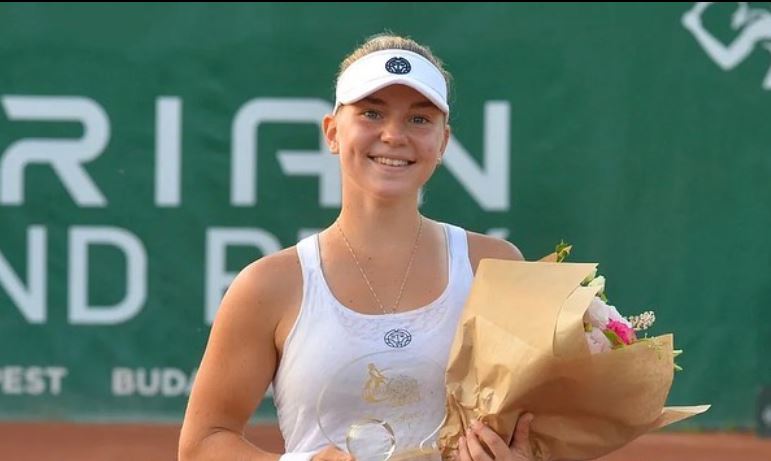
The Women’s Tennis Association (WTA) has officially listed 21-year-old Maria Timofeeva as representing Uzbekistan, marking a change in her sporting nationality. The update, first reported by Championat, now appears on the WTA’s official website, where the Uzbek flag is displayed next to her name. Born in Moscow, Timofeeva had not made any public statements about a possible change of federation. Speculation arose earlier this year after comments by Russian Tennis Federation President Shamil Tarpishchev, who said several Russian players were considering switching national representation because of ongoing restrictions on tennis events in Russia. “We have a difficult situation in Russian tennis: no domestic tournaments, no functioning league, and no funding for player development,” Tarpishchev told TASS. “Around a thousand of our players are competing abroad, and about 20 may soon start playing for other nations.” Timofeeva’s move appears to reflect this broader trend. Although she began her career in Russia, much of her training took place overseas, initially in Slovenia, and more recently in Germany. Her exposure to international academies and competition likely facilitated her transition to the Uzbek Tennis Federation. Currently ranked 146th in the world, Timofeeva reached a career-high of No. 93 in spring 2024. Her breakthrough performance came at the Australian Open, where she advanced to the fourth round after qualifying, defeating top-tier players including Caroline Wozniacki, Alizé Cornet, and Beatriz Haddad Maia. The move represents a significant gain for Uzbekistan’s national tennis program, which has been steadily raising its international profile. Timofeeva’s inclusion may enhance the visibility and competitiveness of Uzbek women’s tennis as the country continues to invest in sports infrastructure and athlete development. Neither Timofeeva nor the Uzbek Tennis Federation has issued an official statement on the change, but her WTA registration signals the start of a new chapter in her professional career.

Five Countries Complete Large-Scale ‘Birlik-2025’ Military Exercises in Uzbekistan

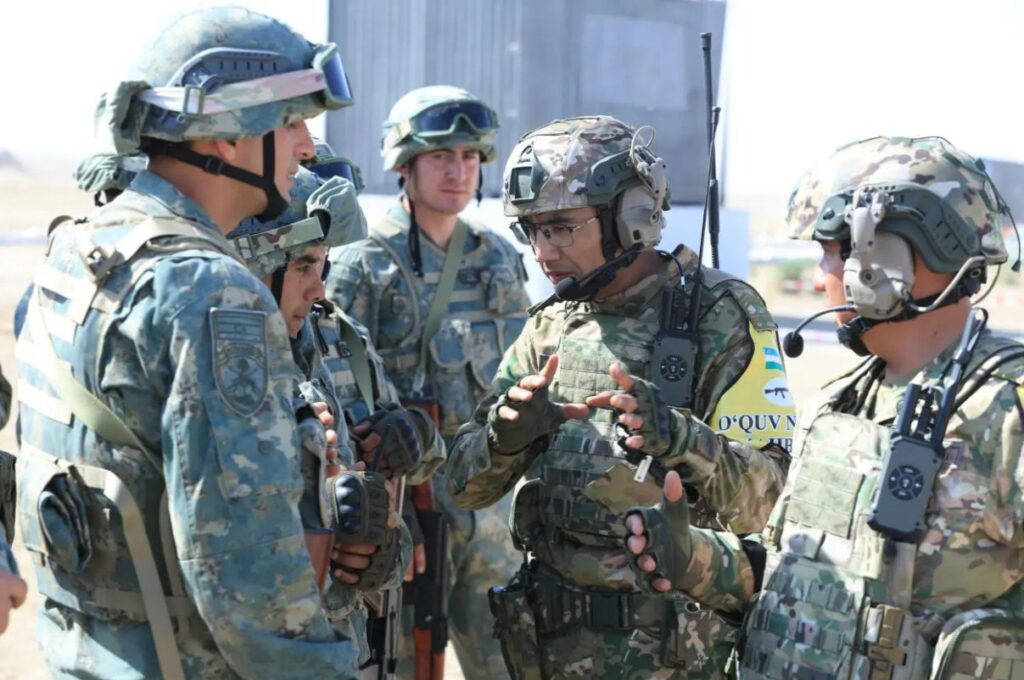
The multinational military exercises Birlik-2025 ("Unity-2025") have concluded at the Kattakurgan training ground in Uzbekistan’s Samarkand region. The joint maneuvers, which began on October 14, brought together armed forces from Uzbekistan, Kazakhstan, Kyrgyzstan, Tajikistan, and Azerbaijan. According to the Uzbek Ministry of Defense, the drills were among the largest in the history of regional military cooperation. The exercises focused on counterterrorism and defense operations, aiming to enhance interoperability, tactical coordination, and combat readiness among the participating countries. Scenarios included simulated urban warfare, reconnaissance, and joint air-ground operations. Commanders utilized computer modeling and simulation technologies to analyze battlefield decisions and identify optimal tactical responses. These digital tools played a key role in shaping the exercise outcomes and refining strategic planning. [caption id="attachment_37891" align="aligncenter" width="351"] @Ministry of Defense of Uzbekistan[/caption] Observers included the defense ministers of all participating states, along with military representatives from Turkmenistan, who attended in a monitoring capacity. The drills were conducted across more than 20 training grounds in multiple regions of Uzbekistan. In the initial phase, reconnaissance units deployed unmanned aerial vehicles to assess the territory of a hypothetical enemy. This was followed by a special operation to neutralize simulated illegal armed groups in an urban environment. Precision artillery and air strikes were executed by ground forces, while the air forces of Uzbekistan and Kazakhstan provided air cover and destroyed critical enemy positions. Combat helicopters and fighter jets demonstrated joint tactical coordination with land-based units. Troops also practiced offensive operations along the defensive line using a range of weapons and military equipment. The multi-stage training format included tasks of varying complexity, replicating conditions of high-intensity conflict. [caption id="attachment_37893" align="aligncenter" width="352"] @Ministry of Defense of Uzbekistan[/caption] According to the Uzbek Ministry of Defense, Birlik-2025 served as a valuable platform for exchanging experience in combating international terrorism, extremism, and armed insurgency. “Joint operations have made it possible to consolidate advanced methods of combat and improve interoperability between units from different countries,” the ministry stated. Following the conclusion of the active phase, participants visited mobile maintenance workshops, command posts, and exhibits showcasing modernized weaponry and defense technologies.

Magzhan Ilyasov Appointed Kazakhstan’s Ambassador to the United States

President Kassym-Jomart Tokayev has appointed Magzhan Ilyasov as Kazakhstan’s new Ambassador Extraordinary and Plenipotentiary to the United States. The appointment is part of a broader reshuffling of the country’s foreign policy leadership. The presidential decree announcing the appointment was published on the official Akorda website. Ilyasov succeeds Yerzhan Ashikbayev, who served in Washington from 2021 until his dismissal on September 26, 2025, shortly after Tokayev’s working visit to New York. Born in Almaty in 1974, Ilyasov graduated with honors from the Faculty of International Relations at the Kazakh State University of World Languages. He later earned a master’s degree from Harvard University’s Kennedy School of Government. Ilyasov began his diplomatic career in 1996 at the Ministry of Foreign Affairs, starting as a referent before serving as attaché and secretary in the Department of the United Nations and International Economic Organizations. By the late 1990s, he transitioned to the Presidential Administration, focusing on protocol and organizing international meetings. From 2005 to 2016, he held senior roles in the foreign policy division of the Presidential Administration, eventually becoming an advisor to the president. His diplomatic postings include: 2016-2020: Ambassador to the Netherlands and Permanent Representative to the Organisation for the Prohibition of Chemical Weapons; 2020-2022: Permanent Representative of Kazakhstan to the United Nations; and 2022-2025: Ambassador to the United Kingdom, with concurrent accreditation to Iceland and Ireland beginning in 2023 Ilyasov’s appointment comes amid a broader realignment of Kazakhstan’s foreign policy team. On the same day Ashikbayev was dismissed, several key changes were announced: Murat Nurtleu stepped down as Foreign Minister to become the president’s assistant for international investment and trade cooperation; Yermek Kosherbayev was appointed as the new Foreign Minister; and Yerzhan Kazykhan, formerly the president’s assistant for international affairs, was named Kazakhstan’s permanent representative to the United Nations and other international organizations in Geneva. Ilyasov’s extensive diplomatic experience and recent high-profile postings are seen as aligning with Kazakhstan’s strategic priorities in the United States, particularly amid growing engagement in investment, trade, and security dialogue.

Congressional Panel Urges Trump to Host C5+1 Summit This Year

A U.S. congressional foreign affairs panel is asking U.S. President Donald Trump to host a meeting in Washington, D.C. with leaders from Central Asia by the end of 2025.   The proposal was made in an October 20 letter to Trump by Bill Huizenga, a Michigan Republican who chairs the House’s South and Central Asia Subcommittee, and Sydney Kamlager-Dove of California, the senior Democrat on the subcommittee.  The two representatives said that such a summit would mark the 10th anniversary of the C5+1 diplomatic forum and highlight the importance of Central Asia following Trump’s meetings with Uzbek President Shavkat Mirziyoyev and Kazakh President Kassym-Jomart Tokayev on the sidelines of the U.N. General Assembly last month. Multi-billion-dollar business deals were announced in connection with those meetings.  Established in 2015, the C5+1 formula refers to the United States and the five Central Asian countries of Kazakhstan, Kyrgyzstan, Tajikistan, Turkmenistan, and Uzbekistan. “A Leaders’ Summit with meaningful outcomes will strengthen regional cooperation and maximize the diplomatic potential of the 10th anniversary, setting the tone for strengthened U.S. engagement in the region for the rest of your presidency,” the representatives said in the letter to Trump. They said a meeting would advance U.S. priorities in Central Asia, “including security cooperation, economic ties, soft power, and good governance,” they said.  The letter noted U.S. interests such as the development of critical minerals, including tungsten, antimony, lithium, and rare earth elements; the full repeal of the Jackson-Vanik amendment, a Cold War-era law that imposes some restrictions on trade with several countries in Central Asia; and counterterrorism efforts against the regional branch of the Islamic State group.  “We also hope to see new agreements with the Central Asian countries to bolster people-to-people ties and expand U.S. soft power, such as additional American Peace Corps volunteers and the expansion of educational and cultural exchange programs, while addressing the accreditation issue surrounding U.S.-sponsored journalists and other U.S.-funded news broadcasters.  The Trump administration, however, has taken steps to cut most U.S. foreign aid programs, dismantling the U.S. Agency for International Development. USAID had been active in Central Asia. The administration has also cut aid for U.S.-funded domestic and international broadcasters. Analyst Temur Umarov wrote in the Carnegie Politika publication that Central Asia has found it relatively easy to work with the Trump administration.  “Business interests can be used to attract Washington’s attention, and there is no longer any need for demonstrative distancing from Russia or commitment to democratic reforms,” Umarov said.  He said that Uzbekistan and Kazakhstan have hoped to hold C5+1 anniversary events in their capitals, with top leaders in attendance. If that happens, Trump would be the first sitting U.S. president to visit any of the five Central Asian countries.