• KGS/USD = 0.01144 0%
  • KZT/USD = 0.00211 0%
  • TJS/USD = 0.10526 0%
  • UZS/USD = 0.00008 0%
  • TMT/USD = 0.28530 0%
  • KGS/USD = 0.01144 0%
  • KZT/USD = 0.00211 0%
  • TJS/USD = 0.10526 0%
  • UZS/USD = 0.00008 0%
  • TMT/USD = 0.28530 0%
  • KGS/USD = 0.01144 0%
  • KZT/USD = 0.00211 0%
  • TJS/USD = 0.10526 0%
  • UZS/USD = 0.00008 0%
  • TMT/USD = 0.28530 0%
  • KGS/USD = 0.01144 0%
  • KZT/USD = 0.00211 0%
  • TJS/USD = 0.10526 0%
  • UZS/USD = 0.00008 0%
  • TMT/USD = 0.28530 0%
  • KGS/USD = 0.01144 0%
  • KZT/USD = 0.00211 0%
  • TJS/USD = 0.10526 0%
  • UZS/USD = 0.00008 0%
  • TMT/USD = 0.28530 0%
  • KGS/USD = 0.01144 0%
  • KZT/USD = 0.00211 0%
  • TJS/USD = 0.10526 0%
  • UZS/USD = 0.00008 0%
  • TMT/USD = 0.28530 0%
  • KGS/USD = 0.01144 0%
  • KZT/USD = 0.00211 0%
  • TJS/USD = 0.10526 0%
  • UZS/USD = 0.00008 0%
  • TMT/USD = 0.28530 0%
  • KGS/USD = 0.01144 0%
  • KZT/USD = 0.00211 0%
  • TJS/USD = 0.10526 0%
  • UZS/USD = 0.00008 0%
  • TMT/USD = 0.28530 0%

Viewing results 403 - 408 of 2395

How Could the Armenia-Azerbaijan Peace Accord Benefit Central Asia?

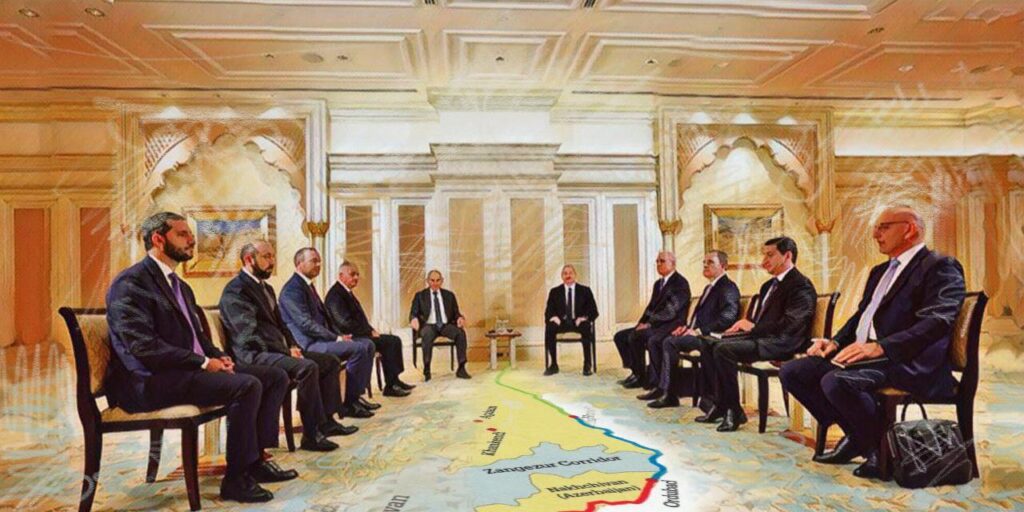
On August 8, Armenia and Azerbaijan signed a peace accord in Washington and committed to the construction of the Trump Route for Peace and Prosperity, a trade route that bisects Armenia, connecting the two parts of Azerbaijan. The deal may have far-reaching repercussions on the other side of the Caspian, potentially diversifying the Trans-Caspian Middle Corridor by allowing travel from Azerbaijan, through Armenia, and onwards to Turkey. The upbeat mood music may be premature, however. There remain numerous political hurdles to be jumped before any construction can commence, and the entry of the United States into a region where Russia, Iran, and Turkey all have interests could have unintended consequences. “It’s certainly an opportunity, but there are risks,” said Azerbaijani political analyst and non-resident fellow at the China-Global South Project, Yunis Sharifli. “The United States can be a stabilizing force, but it could go in the opposite direction. It can also create a spoiler.” The Problem Armenia and Azerbaijan have maintained ice-cold relations for almost their entire existence as independent states. For over three decades, they tussled over the status of Nagorno-Karabakh, a land which lies in the internationally recognized territory of Azerbaijan, but was, upon independence, populated mainly by Armenians. As well as costing thousands of lives and leading to hundreds of thousands of displaced persons, the enmity has also led to shuttered frontiers, which have choked trade across the South Caucasus. Armenia’s borders with both Azerbaijan and Turkey have been closed since 1993. While Armenia has been cut off from two of its four neighbors, Azerbaijan has also been severed in two, with the exclave of Nakhchivan, which borders Turkey, separated from the rest of the country by a sliver of Armenian territory, just 20 miles wide at its narrowest point. Conflicts in 2016, 2020, and 2023 saw Azerbaijan push Armenian troops from the region, with hundreds of thousands of Armenians fleeing Nagorno-Karabakh in fear of Azerbaijani reprisals. Since then, Baku has used its vast military superiority and geopolitical advantage to try to strongarm Armenia into accepting the construction of a corridor across its territory, threatening to use force on numerous occasions if Yerevan did not agree to its demands. The Solution Starting early this year, the United States began facilitating secretive negotiations between the pair, stepping into the vacuum left by Russia. The Kremlin has been sidelined from the process amid its deteriorating relations with both sides – many Armenians view Moscow as having betrayed them in the conflicts of 2020 and 2023, while Azeri-Russian relations have frayed significantly since the shooting down of Azerbaijan Airways Flight 8243 to Grozny earlier this year. The timing of the signing ceremony, on the anniversary of the Russian invasion of Georgia in 2008, was perhaps designed to reflect this shift in geopolitical alignment in the South Caucasus. Baku and Yerevan have signed up to a project which will see the construction of the corridor run by a U.S. private company, but under the laws of the Republic of Armenia. The...


Armenia’s PM to Visit Kazakhstan Amid Historic Peace Breakthrough and Economic Opportunities

Astana is preparing to host Armenian Prime Minister Nikol Pashinyan on an official visit scheduled for late 2025. On August 12, President Kassym-Jomart Tokayev had a call with Pashinyan, during which, according to an official statement, he praised the "outstanding qualities" of the Armenian Prime Minister, "as a politician with strong political will and a strategic vision of the national interests of his state." The forthcoming trip follows what U.S. Secretary of State Marco Rubio described as "the beginning of a peace deal" between Armenia and Azerbaijan, which was signed in Washington, D.C. on August 8, 2025, marking a pivotal moment in the South Caucasus after decades of conflict. At the White House, Pashinyan and Azerbaijani President Ilham Aliyev signed a framework pledging to respect each other’s territorial integrity, renounce the use of force, and dissolve the long-standing OSCE Minsk Group mediation format. The agreement also approved the creation of a major transit corridor — dubbed the Trump Route for International Peace and Prosperity (TRIPP) — linking Azerbaijan’s mainland to its exclave of Nakhchivan via Armenian territory. Kazakh President Kassym-Jomart Tokayev welcomed the accord as a “historic achievement” that not only ends a decades-long military standoff but also creates space for a deeper regional economic and diplomatic reset. In recent talks, Pashinyan briefed Tokayev on the details of the framework, the decision to dissolve the Minsk Group, and the TRIPP initiative. Both leaders emphasized the potential for new investment opportunities emerging from the stability the deal promises to bring and agreed to maintain an active political dialogue. For Kazakhstan, the visit reinforces its positioning as a neutral mediator between Eurasian powers, willing to offer diplomatic platforms for peace talks. In May 2024, Astana hosted ministerial-level Armenia–Azerbaijan negotiations in Almaty. With the TRIPP corridor set to enhance connectivity across the South Caucasus, Kazakhstan’s role in facilitating regional integration could expand beyond mediation into infrastructure, trade, and energy cooperation. Economically, the corridor offers Armenia new opportunities to become a transit hub between Central Asia and Europe, while Kazakhstan could benefit from more direct westward routes for its exports. Previous bilateral meetings have already laid the groundwork for business forums and joint initiatives in transport, technology, and investment, and the visit could provide the political momentum needed to bring these plans to fruition. Challenges remain, however. In Armenia, nationalist factions have criticized the peace deal, with border demarcation and the fallout from the Second Nagorno-Karabakh War remaining sensitive issues. Iran has also expressed opposition to the TRIPP corridor, citing concerns over shifting regional influence. Yet both Yerevan and Astana appear determined to use the current diplomatic window to solidify long-term cooperation. As the South Caucasus recalibrates, Pashinyan’s upcoming visit to Astana will test whether the political optimism generated in Washington can translate into tangible projects. For Kazakhstan, this presents an opportunity to deepen bilateral ties, demonstrate its growing influence as a stabilizing force, and secure a stake in the region’s new economic and geopolitical landscape.

Ending the War: Tokayev and Zelenskyy Talk Ahead of Trump-Putin Meeting in Alaska

“A bad peace is better than a good war.” That was the advice from Kazakh President Kassym-Jomart Tokayev to Ukrainian President Volodymyr Zelenskyy in a phone call on Sunday in which the two leaders discussed prospects for a resolution to the war between Russia and Ukraine.  Whether Zelenskyy agreed with Tokayev’s comment is open to question. In a readout of the conversation from the Ukrainian presidency, he used other adjectives to describe the kind of peace that Ukraine wants –“reliable” and “real.”  The talk happened ahead of a meeting in Alaska on Friday between U.S. President Donald Trump and Russian President Vladimir Putin that Ukraine fears could leave it left out of deliberations and provide momentum for an end to the conflict on Russia’s terms.  Tokayev told Zelenskyy that Kazakhstan has advocated for a solution that adheres to the United Nations Charter and respects “the inviolability of the borders of sovereign states, and the territorial integrity of sovereign states.” While that statement implies criticism of the current state of affairs, in which Russia occupies an estimated 20 percent of Ukrainian territory, Tokayev also appeared to suggest that Ukraine should be prepared to make difficult compromises over territory because its independence as a nation was on the line.    “In his view, given the current highly complex situation, it is essential to approach the resolution of the conflict with balance and reason, ensuring the preservation and protection of Ukraine’s statehood,” Kazakhstan’s presidential office said. “He stressed that all parties should be guided by the wisdom that ´a bad peace is better than a good war.´” Tokayev stirred some debate last year when he said that Russia was too strong to be defeated on the battlefield. Critics interpreted the remark as defeatism in the face of Russian aggression, while others thought it was a blunt assessment of the war. Kazakhstan and other Central Asian countries have tried to be neutral in the conflict, not endorsing the Russian invasion but maintaining traditional ties with Moscow. The Ukrainian presidency said Zelenskyy, in remarks to Tokayev, “noted that attempts to partition any independent state are extremely dangerous for every nation. History has repeatedly shown that if such injustice is allowed against one state, it does not end there.” While Zelenskyy has ruled out territorial concessions to Russia, a poll conducted by the Kyiv International Institute of Sociology in May and June explored the nuance of the topic in a population that is both defiant and weary after years of war. The results show that “the only option where there is at least room for discussion is de facto recognition of Russian control without de jure recognition,” according to the institute.   Zelenskyy invited Tokayev to visit Ukraine, according to the Ukrainian presidency. The Kazakh statement didn’t mention the invitation. 

South Caucasus Peace Push Faces Political and Regional Roadblocks

This past weekend, discussion of the “historic joint declaration for peace” was nearly impossible to avoid. Optimism ran high, with many expressing hope that peace and cooperation might finally take hold in the South Caucasus. But how realistic is that vision? What was signed in Washington on August 8, 2025, was not a binding treaty but a declaration of intent. That is a meaningful step, but for now it remains a symbolic document. Turning it into lasting peace will require a full treaty with specific commitments. One major hurdle is Armenia’s constitution, which still contains territorial claims to land recognized as part of Azerbaijan. Amending this will be politically difficult. The day after the signing, the opposition Armenian Revolutionary Federation (ARF) issued a sharply critical statement. It accused the declaration of harming Armenia’s sovereignty, legitimizing an Azerbaijani-favored corridor, and violating Armenia’s territory. The ARF demanded the withdrawal of Azerbaijani forces, the release of Artsakh’s political prisoners, and guarantees for the safe return of displaced Armenians. Of the 69 seats in Armenia’s parliament, 28 belong to the “Armenia” faction, 15 of them held by ARF members, giving the party significant influence over this debate. Azerbaijani President Ilham Aliyev has also said that the wording of Armenia’s constitution blocked the signing of a treaty in Washington. Alongside the declaration, the leaders of Armenia and Azerbaijan signed economic agreements with the United States to boost trade, transit, energy, infrastructure, and technology in the South Caucasus. Yet these too face obstacles. Iranian official Ali Akbar Velayati vowed to prevent the creation of an “American corridor” in the region and rejected reports of a US-Armenian lease deal for land along Iran’s border, warning it would become “a graveyard for the mercenaries of Donald Trump.” Proponents argue that if such a corridor opens, it could strengthen the Trans-Caspian International Transport Route. However, no study has yet confirmed whether the 43-kilometer stretch in question could handle a major traffic increase. After a weekend of high expectations, political realities have brought a more cautious mood. The week ahead promises further developments. President Trump has  announced a meeting with Russian President Vladimir Putin in Alaska. Some reports claim Putin has proposed a Ukraine ceasefire in exchange for significant territorial concessions and recognition of Russia’s claims. In response, European leaders issued a joint statement affirming Ukraine’s right to decide its own future, calling for robust security guarantees, and insisting that any peace process must begin with a ceasefire or reduced hostilities. Ukrainian President Zelensky reiterated that the constitution already answers the territorial question and that no land will be surrendered. Diplomatic exchanges have been intense. Kazakh President Kassym-Jomart Tokayev spoke with both Zelensky and Aliyev, urging a balanced approach and recalling the saying that “a bad peace is better than a good war.” Putin called the president of Tajikistan, and Zelensky spoke again with Aliyev. Behind the brief official readouts lies a broader search for ways forward. International politics is a delicate process, and disputes built over decades or centuries...

Kazakhstan Showcases Middle Power Role in Washington D.C.: Kazakh Ambassador Ashikbayev Spreads the Message

Like it or not, the world is moving away from unipolar dominance and entering an era of multipolarity where national interests increasingly counter the globalist ambitions of some major powers. In this evolving landscape, as the major powers adjust to new geopolitical realities, an increasing number of states are becoming more comfortable operating autonomously as sovereign nations. Against this backdrop, Kazakhstan is emerging as a middle power, conscious all the same of the risks associated with remaining neutral in the oft-times bitter rivalries between major powers. Over the past twenty years, Kazakhstan has consistently signaled that it will not be drawn into the strategic maneuverings of foreign powers, instead pursuing its own national interests in a measured fashion – rather like the other Central Asian states – so as not to undermine regional stability.  Accordingly, Astana offers good offices to foster dialogue and reconciliation among countries and blocs affected by conflict and/or heightened strategic competition. Murat Nurtleu, Kazakhstan’s Foreign Minister, underscores just that point: “In this era of geopolitical competition, Kazakhstan’s role as a bridge between East and West is more vital than ever.” These words not only highlight Kazakhstan’s confidence and expanding role as a rising middle power but aim to mitigate the potential consequences of great power overreach, whether in Central Asia or elsewhere. In a recent interview in Washington DC with this writer, Ambassador Yerzhan Ashikbayev of Kazakhstan to the United States elaborated: “Kazakhstan is a middle power, which means, broadly speaking, a country that holds an influential position in the international system, especially in Eurasia. Maintaining peaceful relations with our neighbors – major, middle, and minor powers – is a top priority for us. We work to shape outcomes beyond our own borders, keeping in mind our national interests, always fostering friendly and mutually beneficial ties – a modus vivendi – with our neighbors.” It is well-known that Astana’s global diplomatic strategy prioritizes fair trade and aims to strengthen inter-regional economic ties – especially in transport, logistics, finance, and communications. It views economic development – with an emphasis on building an economically stable middle class across ethnicities – as key to national unity and regional stability. It is less known that Kazakhstan, in its diplomatic pragmatism, winces at unequal power relations, preferring to focus on long-term equity outcomes over short-term efficiency in matters of economic development. Ambassador Ashikbayev emphasizes that “Kazakhstan’s foreign policy opens space where dialogue can flourish. Guided by pragmatism, we will concentrate on practical matters like communication, quality investment flows, fair commerce, energy, and critical minerals.” He insists that “for the international system to flourish, it should function well for all, promoting peace and the common good for the majority. That is what we export - peace.” U.S. Secretary of State Marcio Rubio also emphasizes the need to keep peace front and center: “President [Trump] wants to end wars.  He’s not a fan of wars.  He thinks wars are a waste of time and a waste of lives.  And we’re going to continue to do everything we can and engage...

Central Asia Sees Armenia-Azerbaijan Deal as a Step Forward

Central Asian countries have welcomed an agreement signed by Armenia and Azerbaijan at the White House, saying it is an important step toward peace in the South Caucasus and sets the stage for trade growth in the wider region. “We highly appreciate the efforts of all parties aimed at overcoming the long-standing conflict,” Uzbekistan’s Ministry of Foreign Affairs said on Saturday. “We are confident that the establishment of long-term peace and stability in the South Caucasus will pave the way for the launch of large transport and infrastructure projects for the benefit of all peoples of the vast region.” The leaders of Armenia and Azerbaijan signed the deal in a ceremony overseen by U.S. President Donald Trump on Friday, building on extensive dialogue between the two sides, though falling short of a comprehensive peace pact that would formally end decades of conflict. One of the terms of the Trump-backed deal is the opening of a South Caucasus trade corridor that would provide Azerbaijan – and Central Asian economies – with increased access to Turkey and Europe. Kazakhstan also praised the agreement and Trump’s role in making it happen, saying it “ended the long-standing military conflict between the two states and paved the way for establishing diplomatic relations and developing cooperation between them based on lasting peace,” presidential adviser Ruslan Zheldibay said on Telegram. President Kassym-Jomart Tokayev noted that Kazakhstan played a role in the rapprochement between Azerbaijan and Armenia because it hosted ministerial-level peace talks between the two sides in Almaty, according to Zheldibay. Tajikistan’s Ministry of Foreign Affairs said “the prompt legal consolidation” of the agreement signed in Washington will be a big step toward the full normalization of ties between the longtime adversaries and will contribute to regional stability and development. Kyrgyzstan has similarly expressed support for peace, offering earlier this year to host the signing of a peace agreement between Armenia and Azerbaijan. Turkmenistan, which pursues a stated policy of neutrality in foreign affairs, faces Azerbaijan across the Caspian Sea and is eager to develop trade routes.