• KGS/USD = 0.01144 0%
  • KZT/USD = 0.00205 0%
  • TJS/USD = 0.10782 0%
  • UZS/USD = 0.00008 0%
  • TMT/USD = 0.28490 0%
  • KGS/USD = 0.01144 0%
  • KZT/USD = 0.00205 0%
  • TJS/USD = 0.10782 0%
  • UZS/USD = 0.00008 0%
  • TMT/USD = 0.28490 0%
  • KGS/USD = 0.01144 0%
  • KZT/USD = 0.00205 0%
  • TJS/USD = 0.10782 0%
  • UZS/USD = 0.00008 0%
  • TMT/USD = 0.28490 0%
  • KGS/USD = 0.01144 0%
  • KZT/USD = 0.00205 0%
  • TJS/USD = 0.10782 0%
  • UZS/USD = 0.00008 0%
  • TMT/USD = 0.28490 0%
  • KGS/USD = 0.01144 0%
  • KZT/USD = 0.00205 0%
  • TJS/USD = 0.10782 0%
  • UZS/USD = 0.00008 0%
  • TMT/USD = 0.28490 0%
  • KGS/USD = 0.01144 0%
  • KZT/USD = 0.00205 0%
  • TJS/USD = 0.10782 0%
  • UZS/USD = 0.00008 0%
  • TMT/USD = 0.28490 0%
  • KGS/USD = 0.01144 0%
  • KZT/USD = 0.00205 0%
  • TJS/USD = 0.10782 0%
  • UZS/USD = 0.00008 0%
  • TMT/USD = 0.28490 0%
  • KGS/USD = 0.01144 0%
  • KZT/USD = 0.00205 0%
  • TJS/USD = 0.10782 0%
  • UZS/USD = 0.00008 0%
  • TMT/USD = 0.28490 0%

Viewing results 25 - 30 of 577

Forced Labor in Turkmenistan the Target of New EU-ILO Project

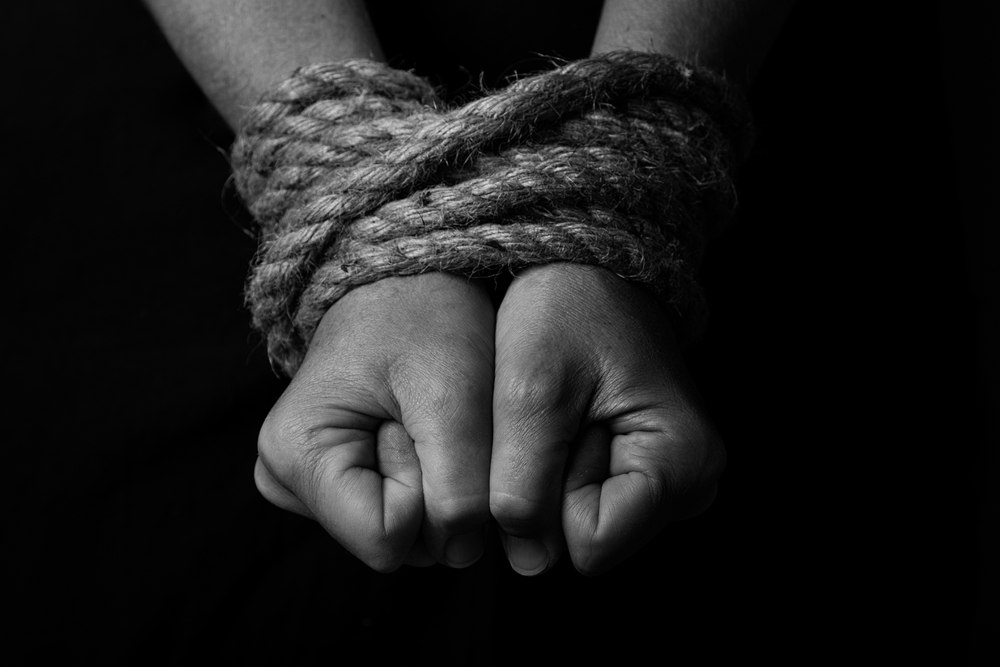
A new joint project is being launched by the International Labour Organization (ILO) and the European Union aimed at combating child and forced labor in Turkmenistan. Its focus is primarily on the country’s cotton sector, which has long faced criticism from human rights groups and international companies. The ILO announced the initiative on May 13. The program, titled Promoting Decent Work and Preventing Child and Forced Labour in Turkmenistan, is scheduled to run from 2026 to 2027 with the project’s budget estimated at approximately €2 million ($2.3 million). The initiative will focus on three main areas: updating labor legislation, implementing international labor standards, and strengthening institutional oversight mechanisms for the protection of workers’ rights. Organizers say the project’s ultimate goal is to prevent labor rights violations and create a more sustainable system for monitoring working conditions across the country. The initiative is directly linked to longstanding concerns over forced labor during Turkmenistan’s annual cotton harvest. Human rights organizations including turkmen.news, the Turkmen Initiative for Human Rights, Progres Foundation, and the Cotton Campaign previously released a joint report alleging that Turkmen authorities have only partially fulfilled commitments to reform the sector. According to the report, despite an official ban on child labor, minors continue to participate in cotton harvesting campaigns. Rights groups say some children assist relatives in meeting production quotas, while others work in the fields because of difficult economic conditions facing their families. The report also alleged that teachers, medical workers, utility employees, and other public-sector staff continue to be mobilized for cotton harvesting under state direction. The launch of the new project was discussed during a special event in Ashgabat attended by Turkmen Deputy Labor and Social Protection Minister Halbibi Tachjanova. “This project reflects Turkmenistan’s strong commitment to preventing child and forced labor, especially in the cotton sector, and to promoting decent working conditions,” Tachjanova said. European Union Ambassador to Turkmenistan Beata Pexa said the initiative should contribute to protecting labor rights and supporting sustainable economic development. However, it remains unclear whether the program will include mechanisms allowing workers subjected to forced labor to safely file complaints without fear of retaliation. The issue carries not only social but also economic significance for Turkmenistan. Cotton and textile products remain among the country’s key exports and an important source of foreign currency revenue. Both state authorities and private companies have been seeking to expand access to Western markets. In May, the textile company Batly Gadam from Balkanabat held talks with British retailer Primark and signed a memorandum of cooperation with Somerbond in London. Nevertheless, many international brands continue to avoid Turkmen textiles because of allegations involving forced labor practices. Against this backdrop, the new ILO-EU project is being viewed not only as an effort to prevent forced labor in Turkmenistan but also as a step toward rebuilding trust with international partners and global markets.

Woman From Uzbekistan Says Jeffrey Epstein Abused Her for Years

A woman from Uzbekistan has publicly accused the late financier and convicted sex offender Jeffrey Epstein of sexually abusing her over several years after she was recruited as a teenager with promises of a modeling career in the United States. According to the BBC, the woman, identified only as Roza, spoke publicly for the first time during a field hearing organized by Democratic members of the U.S. House Oversight Committee in West Palm Beach, Florida, a location lawmakers said was chosen because it was where Epstein’s crimes first became known. According to Roza’s testimony, she met French modeling agent Jean-Luc Brunel in 2008 at the age of 18. Brunel, who was later accused by multiple women of trafficking and exploitation and died in prison in 2022, allegedly promised her a modeling career. “Coming from a financially unstable background, I was a perfect target for coercion,” Roza told lawmakers during emotional testimony. She said Brunel helped bring her to New York in 2009 on a visa and later introduced her to Epstein in July of that year at his residence in West Palm Beach. At the time, Epstein was serving a controversial sentence related to his 2008 conviction for soliciting prostitution from a minor. Under an arrangement criticized for being unusually lenient, he was allowed to leave custody for work for up to 16 hours a day, six days a week. Roza testified that Epstein offered her work through his Florida Science Foundation but later abused her repeatedly over a period of several years. “One day his masseuse called me into his room where I was molested for the first time by Jeffrey,” she said. “For the following three years, I was subject to ongoing rape.” Her testimony formed part of a hearing focused on how Epstein and his associates allegedly avoided accountability for years and how victims were failed by institutions meant to protect them. Democratic Congressman Robert Garcia, who participated in the hearing, said the session aimed to maintain public attention on the Epstein case while congressional scrutiny continues over government handling of related records. Roza also said she was retraumatized after her name was accidentally disclosed in documents released by the U.S. Department of Justice. “Now reporters from across the globe contact me. I cannot live without looking over my shoulder,” she said. “I can only imagine the long-term impact this ‘mistake’ will have on my life.” Epstein died in a New York jail cell in August 2019 while awaiting trial on federal sex trafficking charges. The testimony adds another connection between Uzbekistan and the Epstein network. The Times of Central Asia previously reported that Epstein sought architectural materials from Uzbekistan, including traditional tiles, for a controversial building on his private Caribbean island that he reportedly described as resembling a mosque. It has also been reported that U.S. Senator Ron Wyden said women and girls targeted by Epstein came from Turkmenistan and other countries, and that flight logs showed Kazakh model Ruslana Korshunova traveled to Epstein’s Little Saint...

U.S. Scholar Wins Copyright Case in Uzbekistan Over Unauthorized Distribution of Bygone Days Translation

American translator and scholar Mark Reese has won a copyright infringement case in Uzbekistan after a court ruled that his translated work had been distributed without permission. According to Uzbekistan’s Ministry of Justice, the Uchtepa Interdistrict Court for Civil Cases in Tashkent ordered an employee of the Uzbekistan State World Languages University (UzSWLU) to pay 20.6 million Uzbekistani som (approximately $1,700) in compensation to Reese for violating his copyright. The ruling follows a lawsuit filed by Reese in April seeking damages caused by the unauthorized use of his intellectual property. The dispute centers on Reese’s English translation of O‘tkan Kunlar (Bygone Days), the landmark novel by renowned Uzbek writer Abdulla Qodiriy. Reese spent more than 15 years translating the work, producing the first English-language edition of a book widely considered a cornerstone of Uzbek literature. Earlier, Reese appealed to Uzbekistan’s Ministry of Justice after discovering that an electronic version of his translation was allegedly being distributed without authorization. Following an investigation, officials found evidence of copyright violations at the university. Administrative proceedings were launched against a responsible employee under Article 177¹ of Uzbekistan’s Administrative Responsibility Code. In a previous court decision, the employee was fined 2.06 million som (approximately $170), while the university was ordered to remove the electronic copy of the translated work from the Unilibrary.uz platform. Under Uzbek law, copyright holders may seek compensation ranging from 20 to 1,000 times the base calculation amount instead of claiming direct damages. The case has drawn attention because of Reese’s long-standing ties to Uzbekistan. The American scholar first arrived in the country as a Peace Corps volunteer in the 1990s and later devoted years to translating Uzbek literary works for international audiences. In 2019, Uzbekistan awarded Reese the Order of Friendship for his contributions to promoting Uzbek culture abroad. During later visits, he donated signed copies of Bygone Days to universities and state institutions. Speaking previously to The Times of Central Asia, Reese said recipients had been informed that the copies were not to be reproduced or redistributed. “All parties asked how they could support my work,” Reese added. “I presented a copy and explained that they could purchase more at a steep discount.”

Tajikistan Pension Payments Suspended For 14,000 People Over Biometric Identification Rules

Authorities in Tajikistan have temporarily suspended pension payments to more than 14,000 people who failed to complete mandatory biometric identification procedures, according to the country’s Agency for Social Insurance and Pensions. The agency said that 14,022 pensioners did not complete the required re-registration process, resulting in the temporary suspension of transfers to their bank cards. Officials did not specify exactly when the payments were blocked. The pension re-registration campaign began in Tajikistan in the second half of November 2025 and was scheduled to conclude by the end of March this year. To complete the process, pensioners are required to appear in person at agency offices with identification documents. Verification is conducted through a Face ID system using mobile phones, while personal data and photographs are stored in a digital database. A source within the pension agency said the suspended payments affect both pensioners residing in Tajikistan and citizens currently living abroad. Authorities say pension payments will be fully restored once individuals complete the identification process, with all unpaid amounts transferred retroactively from the date payments were suspended. However, the new system has already raised concerns among lawyers and some pensioners, particularly citizens residing outside Tajikistan. In its official response, the agency stressed that personal presence remains mandatory and that representatives acting under a power of attorney cannot complete biometric registration on behalf of pension recipients. Tajik lawyer Khurshed Kurbonshoev argued that the right to social security is guaranteed under the country’s constitution and that existing legislation permits pension payments to be received through authorized representatives. According to Kurbonshoev, the state has the right to introduce additional control mechanisms, including biometric identification, but such measures should not violate constitutional rights. “If citizens living abroad are not provided with a real opportunity to complete re-registration through remote submission of biometric information via consulates and representative offices or through other alternative methods, then suspension of payments, regardless of the existence of a power of attorney, could constitute a disproportionate restriction,” the lawyer said. Kurbonshoev added that in the absence of alternative identification mechanisms, affected citizens may attempt to challenge the suspension of payments through the courts or other state bodies. The re-registration campaign is being conducted under a government protocol adopted on October 31, 2025. According to the pension agency, as of May 1, 2026, a total of 830,907 people had completed the identification process. The average pension in Tajikistan currently stands at around $56 per month. The average labor pension amounts to approximately $71 while social pensions average around $39.

Uzbekistan National Deported From Russia Over Public Prayer

A court in St. Petersburg has fined a citizen of Uzbekistan and ordered his deportation from Russia after finding him guilty of illegal missionary activity for leading prayers in a public place, according to Russian judicial authorities. The case was announced by Darya Lebedeva, head of the joint press service of the courts of St. Petersburg, who said the Primorsky District Court found the man guilty of violating Russian legislation governing freedom of conscience, religion, and religious associations. According to the court statement, the incident took place on May 12 at approximately 7:45 p.m. near Savushkina Street in St. Petersburg. Police officers reportedly discovered the Uzbek citizen, identified by Russian authorities as Dadaboev, conducting a Muslim prayer ritual in a public area. Authorities alleged that he acted “as an imam” without official authorization to conduct religious ceremonies and had not coordinated the event with local executive or municipal authorities, as required under Russian law. Because he is a foreign citizen, the court classified the case under Part 5 of Article 5.26 of Russia’s administrative code, which concerns missionary activity carried out in violation of legal requirements. In court, the defendant reportedly acknowledged the facts outlined in the police protocol and admitted he had not known his actions could violate Russian law. “The objective side of the offense consists of publicly disseminating information about one’s religious beliefs among persons who are not participants in the given religious association, with the purpose of involving them in the religious association, carried out on the territory of the Russian Federation in violation of the requirements established by law,” the court said in its statement. The court imposed a fine of 30,000 rubles (approximately $400) and ordered his deportation from Russia. The incident comes amid increasing pressure on migrant communities in Russia following the country’s 2022 invasion of Ukraine. Migrants from Central Asia have reported more frequent police raids, document inspections, detentions, and deportation threats in recent years, while Russian authorities have tightened migration and residency regulations. The Times of Central Asia previously reported on several incidents involving Central Asian migrants in Russia, including footage that appeared to show a Tajik schoolgirl being beaten by Russian classmates while a teacher looked on, as well as an attack on a Kyrgyz woman in Moscow by a man shouting anti-migrant insults and calling migrants “terrorists.”

Uzbekistan Introduces Anti-Corruption Reviews for $50 Million Investment Projects

Uzbekistan has introduced mandatory anti-corruption reviews for major investment projects worth at least $50 million, as the government intensifies efforts to strengthen oversight of public spending and large-scale development initiatives. The new procedure was approved through an official instruction registered by the Ministry of Justice on May 8, according to the ministry’s Legal Information channel. Under the new rules, large investment projects involving at least $50 million in financing will be subject to anti-corruption examinations and assessments of their impact on market competition before they can move forward. The regulation applies to projects aimed at creating, expanding, or modernizing socially and economically significant infrastructure, services, and facilities. The reviews will be conducted by internal anti-corruption control units within state bodies and organizations. Officials said projects identified as carrying a high risk of corruption could receive a negative assessment regarding their feasibility and implementation. Authorities also stressed that projects will not be approved until all shortcomings identified during the examination process are fully addressed. The Times of Central Asia previously reported that Uzbekistan had opened criminal proceedings against senior officials in the Ministry of Internal Affairs following investigations into large-scale financial violations. At a government meeting on January 27, President Shavkat Mirziyoyev said investigators had uncovered 53 trillion Uzbekistani som (UZS), approximately $4.38 billion, in financial irregularities and misused funds nationwide. According to the president’s press secretary, 4.2 trillion som ($347.3 million) of the total was directly linked to corruption schemes.  Authorities reported that 1.3 trillion som ($107.5 million) had already been recovered, while 55 individuals were arrested across the country in connection with corruption-related cases.