Women from Central Asia are being recruited into Georgia’s surrogacy market through social media, adding a new labor channel to an industry already under pressure from foreign demand and inadequate supervision.
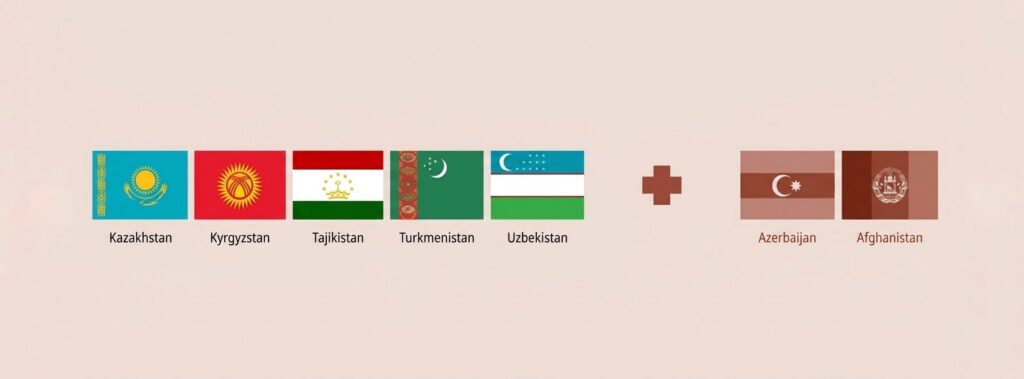
A University of Oxford study published in Mobilities identifies Kazakhstan, Kyrgyzstan, Uzbekistan and Tajikistan in that recruitment chain. The author, Dr. Polina Vlasenko of Oxford’s Centre on Migration, Policy and Society (COMPAS), carried out fieldwork in Kazakhstan and Georgia between 2023 and 2024, drawing on more than 100 interviews across the surrogacy and egg donation market.
Georgia has allowed surrogacy since 1997. Under Article 143 of the Law of Georgia on Health Care, in vitro fertilization (IVF) may involve a surrogate mother if a woman does not have a uterus and the couple gives written consent. If a child is born, the couple is recognized as the parents. The donor or surrogate mother has no right to be recognized as a parent.
That provision gives intended parents direct legal certainty in Georgia, unlike jurisdictions where legal parenthood may require a separate post-birth court process. For women recruited from Central Asia, the difference is in the hidden parts of the process. Opaque recruitment methods can lead into surveillance-style accommodation, while agents often mediate access to the clinic and to payments that may be delayed or disputed.
According to a 2020 statement by Georgia’s Ministry of Justice, 98% of people using surrogacy services in Georgia were foreign-citizen couples, while 100% of surrogate mothers were Georgian-citizen women. Before the war, Chinese nationals accounted for 14% of people pursuing surrogacy in Georgia, and Chinese social media later carried accounts of newborns on flights from Tbilisi to Urumqi.
Until Russia’s full-scale invasion of Ukraine in February 2022, Ukraine was considered Europe’s biggest surrogacy hub. By contrast, in December of that year, a Russian law barred foreign clients and stateless people from using the country’s surrogacy system, limiting access to Russian citizens. By 2022, Georgia was already gaining momentum as a reproductive tourism destination, but the war in Ukraine accelerated that rise. As demand grew, recruitment networks began reaching women in Central Asia through social media and private messaging channels.
For women recruited from Central Asia, the complexity lies in the online posts and private contacts that turn economic need into pregnancy abroad.
Russian-language advertising often uses “surmama,” a shorthand for surrogate mother that now sits inside the market’s online vocabulary. Public posts tied to Georgia programs refer to Tbilisi and Bishkek. Some use Kyrgyz-language wording and hashtags for Kyrgyzstan.
The communication network is plentiful in posts yet sparse in detail, as a stack of cash appears in one Instagram post while other accounts use the polished visual language common to fertility advertising online, where smiling young women and clean graphics make paid pregnancy look simple.
One Instagram account advertising surrogacy services in Georgia directs users to a WhatsApp number linked to a Kazakhstan-based contact. The account does not establish whether that person recruits women directly or represents a clinic. The WhatsApp profile image offers none of the visual cues of a medical office, showing instead a young woman taking a mirror selfie.
The screening language is ordinary for surrogacy. Basic medical filters sit beside cash imagery and private messaging, so a prospective surrogate can be inside a recruitment conversation before she knows who is actually behind the offer.
In Western markets, surrogacy is often described through the language of altruism. The Russian-language advertising aimed at women in Central Asia is closer to a labor offer, with pregnancy presented as paid work that can be arranged through a phone.
Oxford’s research describes agents and clinic coordinators as people with daily control over housing and clinic contact. Some are former surrogates, which can make recruitment feel less like a commercial approach and more like advice from someone who has already done it.
Money usually arrives in stages, with the largest payment held until after delivery. If the arranged housing during pregnancy is poor or rules are strict, leaving can mean losing the money that made the journey worthwhile. COMPAS said most surrogates in the study had to remain in Georgia during pregnancy, often in communal apartments provided through clinics.
In February 2025, Radio Free Europe/Radio Liberty’s Georgian Service reported that women from Kazakhstan in Tbilisi had faced late payments and loss of food allowances, with some relying on written promises that money would come after birth. In December 2025, Georgia’s Social Justice Center said women from Kazakhstan, Uzbekistan, Tajikistan and Ukraine had accused a Georgian clinic of withholding agreed payments and cutting off daily support. The organization also said some women described intimidation after speaking publicly, and that two surrogate mothers connected to the case received trafficking victim status in May 2025.
In a case reported in April, The Fuller Project described a woman from Kyrgyzstan who had been recruited through TikTok by Kinderly, a Georgia-based agency that later closed. After carrying twins in Tbilisi, she said she never received the final $20,000 payment she was owed.
There has been a sharp rise in registered surrogacy births in Georgia, while clinic leaders describe a market driven largely by foreign intended parents. Nino Museridze, founder of the Georgian-German Reproductive Center, told Business Media Georgia that about 400 children a year are born through surrogacy at her clinic, and that a standard program in Georgia costs $45,000 to $50,000, far below prices in the United States.
In June 2023, then Prime Minister Irakli Garibashvili said the government planned to restrict surrogacy to Georgian citizens, barring foreign patients from using surrogacy and in vitro fertilization services. The measure, previously expected to take effect on January 1, 2024, remains pending. Parliamentary records dated June 8 show that lawmakers extended the committee review period, with the timetable now running to February 5, 2027.