• KGS/USD = 0.01144 0%
  • KZT/USD = 0.00204 0%
  • TJS/USD = 0.10441 0%
  • UZS/USD = 0.00008 0%
  • TMT/USD = 0.28490 0%
  • KGS/USD = 0.01144 0%
  • KZT/USD = 0.00204 0%
  • TJS/USD = 0.10441 0%
  • UZS/USD = 0.00008 0%
  • TMT/USD = 0.28490 0%
  • KGS/USD = 0.01144 0%
  • KZT/USD = 0.00204 0%
  • TJS/USD = 0.10441 0%
  • UZS/USD = 0.00008 0%
  • TMT/USD = 0.28490 0%
  • KGS/USD = 0.01144 0%
  • KZT/USD = 0.00204 0%
  • TJS/USD = 0.10441 0%
  • UZS/USD = 0.00008 0%
  • TMT/USD = 0.28490 0%
  • KGS/USD = 0.01144 0%
  • KZT/USD = 0.00204 0%
  • TJS/USD = 0.10441 0%
  • UZS/USD = 0.00008 0%
  • TMT/USD = 0.28490 0%
  • KGS/USD = 0.01144 0%
  • KZT/USD = 0.00204 0%
  • TJS/USD = 0.10441 0%
  • UZS/USD = 0.00008 0%
  • TMT/USD = 0.28490 0%
  • KGS/USD = 0.01144 0%
  • KZT/USD = 0.00204 0%
  • TJS/USD = 0.10441 0%
  • UZS/USD = 0.00008 0%
  • TMT/USD = 0.28490 0%
  • KGS/USD = 0.01144 0%
  • KZT/USD = 0.00204 0%
  • TJS/USD = 0.10441 0%
  • UZS/USD = 0.00008 0%
  • TMT/USD = 0.28490 0%

Viewing results 85 - 90 of 1420

The Battle to Keep Kazakhstan Reading

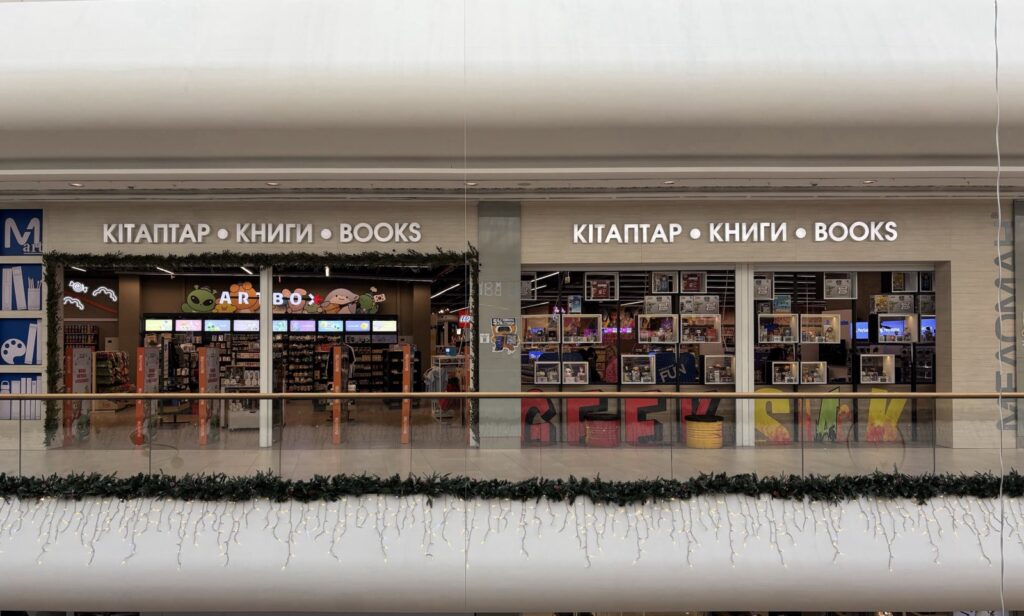
Mika’s Books and Pencils was a hole-in-the-wall bookstore in Almaty, but in December 2025, it was forced to vacate its former premises in the center of the city. “The rent was simply too high,” the store’s owner, Elmira Kireyeva, told The Times of Central Asia. Mika’s is not Kazakhstan’s only struggling bookseller. Kireyeva describes the situation for bookstores across the country as “extremely difficult,” even for the large chains. Physical bookstores are firstly threatened by the growth of e-commerce. In 2024, Kazakhstanis purchased over 2.3 million books on Wildberries, a Russian site similar to Amazon. This represented a 52% increase from 2023. But the economic situation is also having an effect. “Taxes have increased, including VAT on books. At the same time, people’s incomes are shrinking, so books are becoming a luxury,” Kireyeva said, noting that books are often printed abroad, which has seen them become a victim of the falling purchasing power of the national currency, the tenge. More worryingly for booksellers is that people are reading less than they once did. This is part of a global phenomenon, particularly among the young. A large share of undergraduate students in the United States claim to have never read a book. British historian Sir Niall Ferguson has recently argued that this decline is evident across the West, while the number of Russians who read at least once a week fell from 49% to 28% between 1994 and 2019. Many believe technology is to blame. “In the age of social media, human attention faces unprecedented competition,” Shyngys Muqan, founder of Mazmundama, a Kazakh-language publisher, told TCA. “Platforms built around short-form video are especially effective because they exploit a basic neurological tendency: the pursuit of dopamine with minimal cognitive effort. Compared to reading, scrolling requires little concentration, imagination, or sustained mental work, yet it delivers immediate emotional reward.” Kireyeva agrees that screens have certainly had an effect. “It’s not just phones; it’s also information overload. People can’t read long texts anymore – social media has trained us to read only short fragments,” she said. [caption id="attachment_42613" align="aligncenter" width="1600"] The classic literature section in Meloman, one of Kazakhstan's largest book chains; image: Joe Luc Barnes[/caption] Kazakhstan has been affected worse than most. According to CEOWorld’s Book Reading Index 2024, Kazakhstanis read less than almost every country in the world. Of the 102 countries surveyed, Kazakhstan ranked 95th, with the average Kazakhstani reading just 2.77 books a year. This was behind every other Central Asian country surveyed (Kyrgyzstan – 3.96; Turkmenistan – 3.18; Tajikistan – 4.01), and far behind Russia (11). The results led one local newspaper to quip that, at this rate, it would take the average Kazakhstani 2.5 years to read the entire Harry Potter series. There are various structural factors which make Kazakhstan a particularly barren zone for readers. The first is geography – people in rural areas are very poorly served, and library collections are small. While Almaty residents spend an average of 2,300 tenge ($4.50) per family per quarter...
Kazakhstan to Send More Athletes Than Expected to Winter Olympics

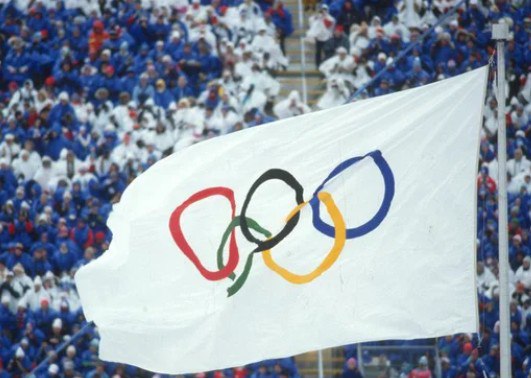
At least 36 Kazakh athletes have secured spots at the upcoming Winter Olympics in Italy this February, exceeding initial expectations. The number could still increase if the International Olympic Committee (IOC) allocates additional quota places. The XXV Winter Olympic Games will take place in Milan and Cortina d'Ampezzo from February 6 to 22. More than 3,500 athletes from 93 countries will compete for 116 sets of medals across 16 sports. Qualification for all disciplines concluded on January 20. Kazakhstan had originally aimed to secure 35 Olympic licenses for the Games. However, according to the Ministry of Tourism and Sports, the final count has reached 36. “The Kazakh national team will include 36 athletes at the Olympics,” the ministry’s press service stated. Half of these licenses are named, meaning they are tied to specific athletes. The remaining half are open slots, with final athlete selection to be determined by the coaching staff of the respective national teams. Kazakh athletes currently hold 18 named licenses across five sports. Named license holders include figure skaters Mikhail Shaydorov and Sofya Samodelkina (men’s and women’s singles), alpine skiers Rostislav Khokhlov and Alexandra Skorokhodova, and short track speed skaters Abzal Azhgaliyev, Denis Nikisha, Olga Tikhonova, and Yana Khan. Freestyle aerialists Dinmukhammed Raimkulov, Sherzod Khashirbaev, Roman Ivanov, Asan Asylkhan, and Ayana Zholdas have also secured confirmed slots. Kazakhstan’s speed skating team has been finalized and will feature Evgeny Koshkin, Kristina Silaeva, Elizaveta Golubeva, Nadezhda Morozova, and Arina Ilyashchenko. As for the remaining, non-named spots, Kazakh athletes will also compete in freestyle moguls (four athletes), biathlon (two men and two women), Nordic combined (one athlete), ski jumping (two athletes), and cross-country skiing (three men and four women). “These figures reflect the results of the licensing stages from the 2025-2026 season. Additional quotas may still be allocated by the IOC. Final information on Olympic licenses will be available at the end of January,” the sports ministry noted. As previously reported by The Times of Central Asia, Kazakhstani athletes achieved a strong showing at the 2025 Asian Winter Games, placing fourth overall in the medal standings among 34 participating countries.

EBRD to Allocate €10 Million to Tajikistan for Electric Public Transport

The European Bank for Reconstruction and Development (EBRD) is continuing to support the green transformation of Tajikistan’s transport sector. Its latest project focuses on the city of Bokhtar, the administrative center of Khatlon region, and will fund a large-scale upgrade of municipal public transport with electric buses. The total financing for the Bokhtar project amounts to €10 million, of which €6.4 million is provided as a loan and €3.6 million as an investment grant. Additionally, technical assistance valued at more than €600,000 will be allocated to support the implementation of the new electric transport system. The funds will enable the municipality to acquire 50 modern electric buses. These vehicles will be accessible to passengers with disabilities and will be supported by the necessary charging infrastructure to ensure full operational capacity. Beyond the procurement of buses, the project encompasses the full integration of electric transport into Bokhtar’s urban environment. According to the EBRD, the introduction of electric buses is expected to significantly reduce carbon dioxide emissions and improve air quality in the city. The project will also create new jobs and includes a training program for personnel responsible for operating and maintaining the new fleet. Bokhtar and the EBRD have been partners in public transport development since 2018. In an earlier phase of modernization, the city constructed a bus depot and acquired 41 low-floor buses. To date, the EBRD has invested over €1 billion in Tajikistan through 190 projects.

Guardiola Praises Uzbekistan’s “Top” Khusanov After Champions League Start

Manchester City head coach Pep Guardiola has praised Uzbek defender Abduqodir Khusanov for his standout performance and professionalism, before the club’s UEFA Champions League clash with Norway’s Bodo/Glimt. Guardiola’s remarks were shared by City Xtra on X following the pre-match press conference. “Just read the media, how they praised Khusanov. They’re right. He’s top,” Guardiola said. “We don’t have complaints. The last game he was exceptional and the previous one as well. We’re really pleased.” Manchester City lost 3-1 to Bodo/Glimt on January 20, in the seventh round of the Champions League. Khusanov started the match and played the full 90 minutes, anchoring City’s defense throughout. Guardiola commended Khusanov’s attitude during a period of limited playing time earlier in the season. “After Arsenal, a month without playing, and you cannot imagine how he behaved in training and in the locker room. That defines Khusanov,” he said. The manager attributed the defender’s discipline and adaptability to his formative years in Uzbekistan and his stint in France prior to joining the Premier League champions. “He listened, he learned, and of course his condition is exceptional,” Guardiola added. “Manchester City will have a central defender for many, many years, and at a top, top level.” According to statistics from SofaScore, Khusanov was a key figure in City’s build-up play, registering 110 touches and completing 94 of 96 passes, a 98% accuracy rate. SofaScore rated his overall performance at 6.3/10. Defensively, Khusanov made eight key actions, including three interceptions, three clearances, and five ball recoveries. He won both of his ground duels, though he was less successful in aerial challenges, losing all three attempts.

Disability Inclusion Is Emerging as Central Asia’s Next Social Frontier

More than 1.3 billion people worldwide live with some form of disability, yet disability remains one of the least visible dimensions of social and economic life. In Central Asia, that invisibility is especially pronounced. As governments focus on infrastructure, growth, and modernization, far less attention is paid to whether people with disabilities are becoming more present in schools, workplaces, and public life, or whether they remain largely confined to families and institutions beyond the reach of public discussion. Across the region, cities are expanding, labor mobility is increasing, and younger generations are more connected to global ideas through study and migration. These shifts are often treated as shorthand for progress. At the same time, people with disabilities consistently face lower educational attainment and weaker labor market outcomes, making inclusion a practical test of whether development reaches beyond headline indicators into everyday life. Disability policy across much of Central Asia has long centered on legal classification, benefit eligibility, and institutional care. Long-term institutionalization is associated with reduced autonomy and poorer social outcomes, yet institutions remain a common default, reinforcing the idea that disability is primarily an administrative or medical issue rather than a social one shaped by access and expectations. In practice, families remain the primary providers of care throughout the region. In Kyrgyzstan, around 200,000 people are officially registered as living with disabilities, and outside major cities, most daily support is provided by family members due to limited community-based services. In Turkmenistan, public disability data remain sparse, and undercounting is widely acknowledged, leaving extended families as the central source of long-term care. In Tajikistan, official estimates place the number of people living with disabilities between 150,000 and 200,000, with caregiving overwhelmingly home-based due to constrained public resources. Family-based care provides continuity and belonging, but it also carries an economic cost. Caregivers are more likely to reduce paid employment and experience long-term income loss, a burden that falls disproportionately on women and shapes household economic outcomes. This reliance on family support is often contrasted unfavorably with wealthier countries, but the comparison is more complicated. In the United States, more than one in four adults lives with a disability, and people with disabilities report significantly higher rates of loneliness and depression despite extensive legal protections and formal services. By contrast, strong family networks are associated with lower levels of severe social isolation, even in settings with fewer public resources. In recent years, small but notable shifts have begun to appear. Local organizations across the region are experimenting with community-based rehabilitation, inclusive education, and supported employment models that move beyond institutional care. These efforts remain fragmented and under-resourced, but they reflect a growing recognition that disability policy is about protection and participation. As Central Asian governments seek to retain talent, expand their labor force, and project social modernization, inclusion is increasingly intersecting with economic and demographic realities rather than remaining a niche social issue. Institutional care remains common across Central Asia, yet community-based rehabilitation is consistently linked to better social participation and quality...

A Breakout Year for Contemporary Art in Kazakhstan

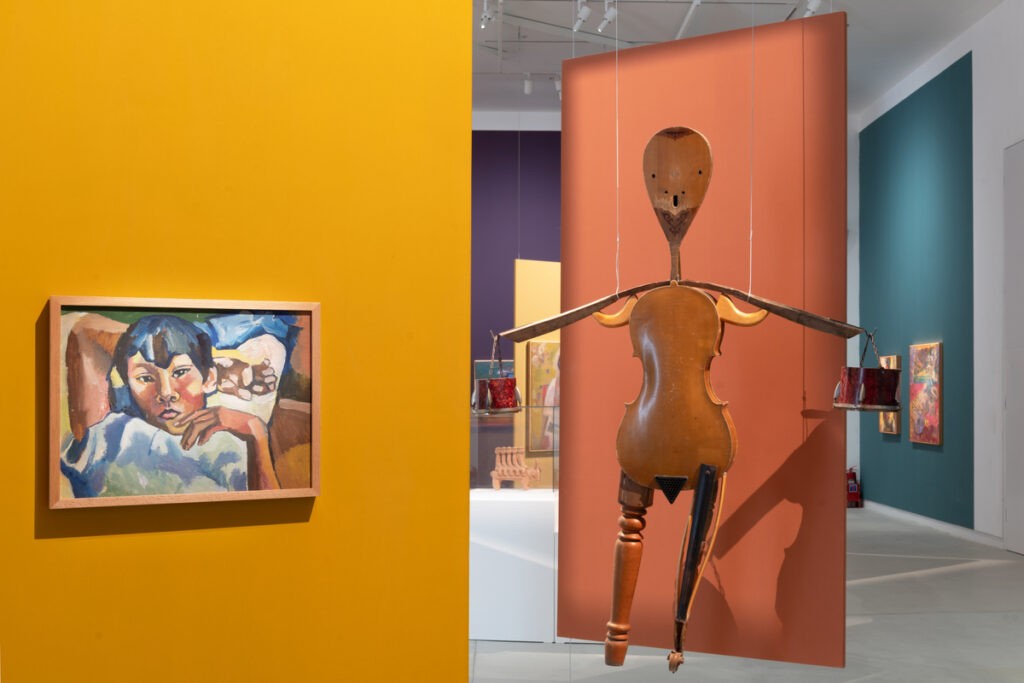
The year 2025 marked not only a busy period for contemporary art in Kazakhstan but also a decisive acceleration. Art moved beyond professional circles, claimed urban spaces, entered international agendas, and ceased to be a conversation “for insiders only.” The Kazakhstani art scene spoke with growing confidence both at home and abroad. New institutions, landmark exhibitions, festivals, and global collaborations signaled a pivotal shift: contemporary art has become a visible and integral component of the country’s cultural fabric. New Museums and Art Spaces in Kazakhstan Geographically, Almaty emerged as the epicenter of contemporary art activity in 2025. The city saw the opening of key institutions that became new focal points for artists, curators, and audiences. Opening of the Almaty Museum of Arts (ALMA) On September 12, 2025, the Almaty Museum of Arts (ALMA) opened its doors in Almaty, becoming one of the largest contemporary art museums in Central Asia. From the outset, ALMA signaled serious institutional ambitions, with a mission to support and study contemporary art processes and situate them within a global cultural context. The museum’s collection includes around 700 works, more than 70% of which are by notable Kazakhstani artists of the 20th century, such as Zhanatai Shardenov, Tokbolat Togyzbayev, Makym Kisameddinov, and Shaimardan Sariyev. Contemporary artists like Rustem Khalfin, Saule Suleimenova, and Said Atabekov are also prominently featured. Designed by the British architectural bureau Chapman Taylor, the 10,000-square-meter museum includes expansive exhibition halls (“The Great Steppe,” “Saryarka”), an Art Street atrium, storage and restoration facilities, and a creative workshop, setting a new standard for museum infrastructure in the region. [caption id="attachment_42431" align="aligncenter" width="1200"] Installation view of "I Understand Everything" – Almagul Menlibayeva (12 September 2025 - May 2026), Almaty Museum of Arts; image: Alexey Naroditsky[/caption] Tselinny Center of Contemporary Culture: Reclaiming a Building and Its Meaning Just days earlier, on September 5, 2025, the Tselinny Center of Contemporary Culture was inaugurated in Almaty. Housed in a restored 1964 Soviet-era cinema, the building underwent nearly seven years of renovation led by British architect Asif Khan. Notably, the facade’s unique sgraffito by artist Evgeny Sidorkin was preserved. The transformed space now features an exhibition hall, library, cafe, and workshop areas. Its opening was marked by the performance BARSAKELMES, with initial public access free of charge. Tselinny now operates three days a week and serves as a vital platform for exhibitions, education, and creative dialogue. [caption id="attachment_42433" align="aligncenter" width="2400"] The Tselinny Center of Contemporary Culture; image: SAPARLAS/Zhanarbek Amankulov[/caption] A. Kasteev State Museum of Arts: A New Status and Contemporary Focus Kazakhstan’s primary national art institution also redefined its role in 2025. Celebrating its 90th anniversary, the A. Kasteev State Museum of Arts was granted National Museum status. In conjunction with this milestone, a new gallery dedicated to contemporary Kazakhstani art from the independence period was unveiled. The exhibition Memory. Space. Progress brought together works from leading artists, charting the development of artistic practice from the 1990s to the present. Contributors included members of the Shymkent-based Red Tractor group, Almaty conceptualists,...