

• KGS/USD = 0.01144 0%
  • KZT/USD = 0.00212 0%
  • TJS/USD = 0.10456 0.19%
  • UZS/USD = 0.00008 0%
  • TMT/USD = 0.28490 0%
  • KGS/USD = 0.01144 0%
  • KZT/USD = 0.00212 0%
  • TJS/USD = 0.10456 0.19%
  • UZS/USD = 0.00008 0%
  • TMT/USD = 0.28490 0%
  • KGS/USD = 0.01144 0%
  • KZT/USD = 0.00212 0%
  • TJS/USD = 0.10456 0.19%
  • UZS/USD = 0.00008 0%
  • TMT/USD = 0.28490 0%
  • KGS/USD = 0.01144 0%
  • KZT/USD = 0.00212 0%
  • TJS/USD = 0.10456 0.19%
  • UZS/USD = 0.00008 0%
  • TMT/USD = 0.28490 0%
  • KGS/USD = 0.01144 0%
  • KZT/USD = 0.00212 0%
  • TJS/USD = 0.10456 0.19%
  • UZS/USD = 0.00008 0%
  • TMT/USD = 0.28490 0%
  • KGS/USD = 0.01144 0%
  • KZT/USD = 0.00212 0%
  • TJS/USD = 0.10456 0.19%
  • UZS/USD = 0.00008 0%
  • TMT/USD = 0.28490 0%
  • KGS/USD = 0.01144 0%
  • KZT/USD = 0.00212 0%
  • TJS/USD = 0.10456 0.19%
  • UZS/USD = 0.00008 0%
  • TMT/USD = 0.28490 0%
  • KGS/USD = 0.01144 0%
  • KZT/USD = 0.00212 0%
  • TJS/USD = 0.10456 0.19%
  • UZS/USD = 0.00008 0%
  • TMT/USD = 0.28490 0%

Viewing results 295 - 300 of 1546

Tajik Book on Cultural Ties Gains International Recognition, but Remains Overlooked at Home

Orientalist and art historian Munira Shahidi, daughter of the renowned Tajik composer Ziedullo Shahidi, has brought international attention to her book “Cultural Ties Between East and West in the 21st Century.”  The work explores cultural parallels and literary connections between civilizations, highlighting the Tajik people’s role as guardians of the intellectual legacy of great thinkers. While presented at events in Cambridge and Berlin, the book has yet to be showcased in Tajikistan. From Oslo to Amazon “I showed that in Tajikistan people speak the language of great classics such as Khayyam, Hafiz, Ferdowsi, and Mawlavi, who are also recognized in the Western world. This demonstrates a new dignity of the Tajik people to the world,” Shahidi explained. Publishing the book, however, was not straightforward. With no funding available, unexpected assistance came from two Iranian visitors to the Ziedullo Shahidi Museum of Music Culture, who offered to publish it free of charge. The book was released in Oslo at the end of 2024 in both Tajik and English. The publication soon entered Amazon’s global network and spread through major universities worldwide. Yet, this platform does not cover Tajikistan. Only ten copies of the book reached the country, purchased by the Tajik Embassy in Uzbekistan. European Presentations The book’s first public presentation was held in Baku at a conference supported by the Tajik Ministry of Culture. Shahidi was subsequently invited to the Azerbaijan Center for Cultural Studies. Later, during a four-month stay in Cambridge, England, she presented her work three times at university colleges. “Students realized that British Orientalists were among the first translators of Khayyam, Hafiz, Ferdowsi, and Mawlavi into English,” she noted. The book was also introduced in Berlin, Prague, London, and Samarkand. No official presentation has yet been organized in Tajikistan. An Undervalued Heritage Shahidi laments that classical Tajik and Persian literature is insufficiently studied in her homeland. “If their works were included in school and university programs, conversations would become more pleasant, and people’s behavior would improve. The philosophy of Mawlavi, for example, is a whole world of treasures,” she said. She also expressed concern over declining interest in reading, suggesting that television and radio could play a larger role in promoting literature and the arts through live programs and discussions on poets, philosophers, and composers. Another source of disappointment for Shahidi is the neglect of her father’s creative legacy. “The songs of my father, Ziedullo Shahidi, are no longer heard on radio or television. Yet songs like ‘Vatan, Vatan,’ ‘My Star,’ ‘Our Home,’ and ‘Your Village’ were once very popular,” she said. To address these challenges, the Ziedullo Shahidi International Foundation was established and now operates under the Public Council of the President of Tajikistan. According to Munira, the foundation regularly raises issues of art and international cooperation. “The art of the Tajik people is great, but the world does not know it. We need to establish more ties with Iran and Afghanistan and present our potential to the world,” she concluded.
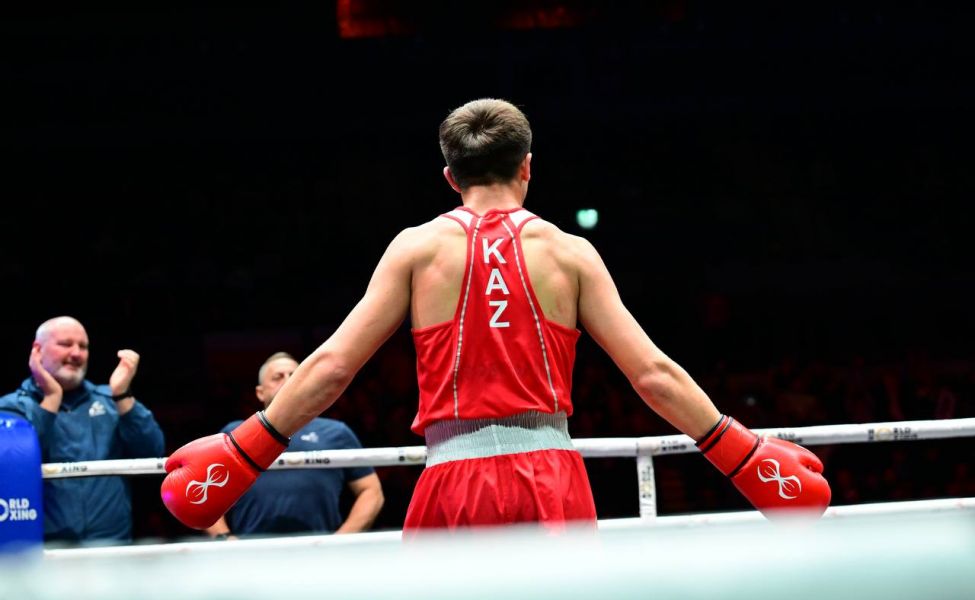
Kazakhstan Wins Team Gold at World Boxing Championships in Liverpool

Kazakhstan's national boxing team has clinched the team gold medal at the inaugural World Boxing Championships held in Liverpool, England, edging out Uzbekistan by securing more gold medals. A total of 554 athletes from 68 countries participated in the competition, including 20 boxers from Kazakhstan, 10 male and 10 female. On September 14, eight Kazakhstani and eight Uzbekistani boxers advanced to the finals. Heading into the decisive final bout, both Kazakhstan and Uzbekistan had secured six gold medals each. The tie-breaker unfolded in the super heavyweight category (over 90 kg), where Kazakhstan’s Aibek Oralbay faced Uzbekistan’s Jahongir Zokirov. Zokirov had the upper hand after the first round, but Oralbay mounted a comeback and ultimately won by a 3:2 split decision. With this victory, Kazakhstan topped the overall medal table with seven gold medals. Uzbekistan followed with six, while India claimed third place with two. President Kassym-Jomart Tokayev congratulated the national team, praising gold medalists Sanzhar Tashkenbay, Mahmud Sabyrkhan, Alua Balkibekova, Aida Abikeeva, Torehan Sabyrkhan, Natalia Bogdanova, and Aibek Oralbay, as well as silver medalist Nazym Kyzaibay and bronze winners Victoria Grafeeva and Eldana Talipova. He wished success to those still competing in Liverpool and emphasized that while Kazakhstan’s performance at the championships was a major success, intensive preparation must continue ahead of the upcoming Olympic Games in the United States. This tournament marked a significant milestone as the first world championship organized by World Boxing, a breakaway international federation established in 2023 in response to ongoing governance and financial issues within the International Boxing Association (IBA). Following the IBA’s failure to implement required reforms, the International Olympic Committee (IOC) revoked its accreditation, placing boxing's Olympic status in jeopardy. World Boxing, now recognized by the IOC as of spring 2025, brought together more than 100 national federations and was granted the authority to organize Olympic qualifying events. Liverpool thus became the historic venue for the first world championship under the new structure. Athletes from Brazil (4), India and Poland (3 each), Turkey, Australia, and England (2 each), as well as France, Mongolia, Spain, Japan, Bulgaria, the USA, Taiwan, and Ireland (1 each) also reached the finals. As previously reported by The Times of Central Asia, Olympic champion Lazizbek Mullojanov, who won gold at the 2024 Games, was not included in Uzbekistan’s lineup. Mullojanov was suspended in mid-2025 amid an ongoing anti-doping investigation.

Uzbekistan’s Garden Blossoms at the Osaka Expo

At Osaka Expo 2025, Uzbekistan is stepping onto the global stage with a pavilion that embodies the country’s theme: culture as the foundation of future societies. Created by the Uzbekistan Art and Culture Development Foundation (ACDF), the space celebrates heritage as both a legacy and a launchpad to connect communities, bridge generations, and spark global conversations. ACDF is no stranger to ambitious cultural projects. In Tashkent, it has staged the World Conference on Creative Economy, created the first Aral Culture Summit in Nukus, and is behind the renovation of the Centre for Contemporary Art. The Foundation is also working with star architect Tadao Ando on the design of a new National Museum and restoring the storied Palace of the Grand Duke of Romanov. Its research project, Tashkent Modernism XX/XXI, has already caught international attention with publications from Rizzoli New York and Lars Müller Publishers. [video width="1280" height="720" mp4="https://timesca.com/wp-content/uploads/2025/09/IMG_6020-online-video-cutter.com_.mp4"][/video] Recently, ACDF has been igniting fresh cultural currents. In Bukhara, the UNESCO-listed jewel of the Silk Road, the debut of the first-ever Biennial, Recipes for Broken Hearts, has transformed the ancient city into a vibrant stage for contemporary creativity. As we approached the pavilion, the queue was already packed and closed off to latecomers still straggling in. Before entry, a guide explained in Japanese the concepts in motion. Designed by internationally acclaimed ATELIER BRUCKNER, the installation unfolds under the theme Garden of Knowledge: A Laboratory for a Future Society, inspired by Uzbekistan’s fertile soil and fragrant gardens where wisdom and originality take root. Built with materials sourced in Japan, the structure features 10,000 hand-glazed bricks crafted by a master artisan from Uzbekistan. Its design has already earned international acclaim, winning the prestigious Red Dot: Best of the Best, and taking home gold at the German Design Award. Inspired by Khiva and the Khorezm region’s rich architectural and intellectual legacy, it’s a two-storey 750 square meter space that blends the ancient with forward-thinking design, mirroring the life cycle of a garden. Khiva, a UNESCO World Heritage city, has long been a crossroads of learning where scholars, artisans, and merchants exchanged ideas within its madrasahs and courtyards. It reimagines this heritage as a contemporary space for gathering and exchange. [caption id="attachment_36099" align="aligncenter" width="2560"] Exhibit: transport of the future; image: TCA, Stephen M. Bland[/caption] Brick and clay symbolize earth and ancestry, while cypress wood cultivated near Osaka underscores environmental responsibility. The triangular plot draws from the tumar, a traditional Central Asian amulet of protection, while a floor-level garden evokes Uzbekistan’s landscapes. Visitors follow a symbolic journey from planting seeds of knowledge to harvesting ideas, exploring zones aligned with UNESCO’s goals, including quality education, clean energy, resilient infrastructure, and innovation. [caption id="attachment_36097" align="aligncenter" width="2560"] Exhibit blending the ancient and the modern; image: TCA, Stephen M. Bland[/caption] The experience begins in the soil, a ground-floor gallery that highlights Uzbekistan’s shift toward a green economy through renewable energy, eco-friendly transport, and energy-efficient housing, along with landmark projects such as the revitalization of the Aral Sea Basin. From there,...

Kazakh Film Brings History and Culture to the 2nd Golden Panda Awards

Chengdu, famed for its pandas and fiery cuisine, takes the spotlight from September 12–13 as it hosts the 2nd Golden Panda Awards, drawing filmmakers and cinephiles from around the world to celebrate storytelling in all its forms. The Golden Panda Awards use China’s favorite furry ambassador as a symbol of friendship and cross-cultural connection. Around 65 works have been shortlisted, with 27 awards to be presented across four categories: Film, TV Series, Documentary, and Animation. Notably, 54.5% of the finalists are international productions, selected from 5,343 entries submitted from 126 countries and regions. One of the standout contenders this year is Qash (Run), nominated for Best Actor in a Leading Role, Best Actor in a Supporting Role, Best Cinematography, and Best Original Score. Starring Yerkebulan Daiyrov and Ondassyn Bessikbassov, the Kazakh film is set against the backdrop of the mass famine of 1931–1933, which wiped out nearly a third of the population. Directed by Aisultan Seitov, the film follows Isatai, a gravedigger tasked by his village head with delivering a message to the nearest city in hopes of saving the starving villagers. Crossing the vast steppe, Isatai faces harrowing trials, including surreal hallucinations driven by hunger and despair. Also known as Asharshylyk, the tragedy was the result of forced collectivization and sedentarization imposed by the Soviet regime. In his drive for rapid industrialization, Stalin ordered the transformation of Kazakhstan’s traditional nomadic, clan-based society into collective farms, where individuals were compelled to meet strict state quotas for meat and grain. The abrupt policy shift, coupled with reckless implementation, led many herders to slaughter their livestock either for immediate food or to sell in hopes of meeting grain requirements. Ultimately, this devastated the pastoral economy and fueled mass famine. [caption id="attachment_36103" align="aligncenter" width="1024"] Director Aisultan Seitov (center) meets fans of Qash in Shanghai, June 14, 2023; image: VCG[/caption] Qash marks the feature-film debut of director Aisultan Seitov, who first gained recognition as a music video producer. Inspired by the growing presence of culturally distinctive films on international screens, Seitov was drawn to make a full-length film. The narrative took shape after a close friend shared a childhood story of his grandfather fleeing his village with his older brother. In interviews, Seitov has said he hopes to showcase Kazakh culture to the world while crafting a story that resonates universally. That aligns neatly with the festival’s own motto: celebrate diversity, spark dialogue, and remind us that stories, whether about pandas, people, or epic journeys, are what bring civilizations together. Beyond celebrating award winners, the Golden Panda Awards serve as a dynamic hub for international film professionals to exchange ideas and explore potential collaborations. Judges, creators of nominated works, and influential directors, producers, actors, and experts from home and abroad come together for in-depth discussions on topics ranging from digital-intelligence empowerment to the art of light and shadow. Collaborative dialogues, exhibitions, and new project launches further expand opportunities for creative partnerships. This September, Sichuan Province transforms into a cinematic playground with events called “Let’s...

Astana to Host 2027 UEFA Under-19 Futsal European Championship

Astana has been selected to host the 2027 UEFA Under-19 Futsal European Championship, marking the first time Kazakhstan will stage a youth futsal tournament at this level. The decision was announced during a UEFA Executive Committee meeting in Tirana, Albania. According to the Kazakhstan Football Federation (KFF), the joint bid submitted by the KFF and the Kazakhstan Futsal Association received UEFA’s approval, granting Astana the right to organize the final tournament. The matches are tentatively scheduled to take place from September 26 to October 3, 2027, at the Zhekpe Zhek Sports Palace in the capital. Launched in 2019, the UEFA Under-19 Futsal Championship has been held every two years. The inaugural edition was held in Latvia's capital Riga, followed by tournaments in Spain (Jaén, 2022) and Croatia (2023). The 2025 edition is set to take place in Chișinău, Moldova, from September 28 to October 5. The final tournament features eight teams: the host nation and seven group winners from the qualification rounds. The lineup for Euro 2025 includes Moldova, Ukraine, Slovenia, Czechia, Turkey, Spain, Italy, and Portugal, the defending champions. Spain previously claimed back-to-back titles in 2019 and 2022. For Kazakhstan’s U-19 team, Euro 2027 will mark their debut in the finals, as host nations qualify automatically. While the youth squad has yet to make an international impact, the senior national futsal team has built a strong reputation. Kazakhstan secured bronze at Euro 2016 in Belgrade, reached the semifinals again in Slovenia in 2018, and advanced to the quarterfinals at Euro 2022 in the Netherlands. The senior team is currently competing for a spot in Euro 2026, which will be co-hosted by Latvia, Lithuania, and Slovenia. After missing direct qualification, Kazakhstan will face Italy in play-off matches on September 18 (away) and September 23 (home in Astana). Despite generational changes, naturalized Brazilian players such as Leo Higuita, Douglas Junior, and Edson continue to play key roles. Earlier this year, Kazakhstan introduced a legislative ban on the use of public funds to pay foreign athletes. Hosting Euro 2027 represents a significant milestone in Kazakhstan’s efforts to promote youth sports and strengthen its standing in European futsal. UEFA’s decision highlights the country’s growing role in international sport and provides a platform for the next generation of Kazakh futsal players to compete at the highest level.

“A Road Not for the Faint-Hearted”: How Austrian Prisoners of War Built a Tourist Path in East Kazakhstan

A winding mountain road in East Kazakhstan has become a point of fascination not only for tourists but also for historians, filmmakers, and researchers. Known variously as the Old Austrian Road, the Austrian Route, or Irek Zhol (“Winding Road”), this nearly 50-kilometer path connects the Katon-Karagai and Markakol districts, cutting through pristine wilderness in a national park and a state reserve. Today the path is being restored, but the road’s true value lies in a dramatic and little-known past that stretches back over a century. A New Chapter for an Old Road In July 2025, authorities announced the launch of extensive repair work on the Old Austrian Road. With a budget exceeding $1 million from the regional government, the project includes rebuilding a damaged bridge near Katon-Karagai, replacing culverts, reinforcing slopes, and rehabilitating impassable sections. The most challenging terrain lies near Lake Markakol, where the route crosses swampy stretches, sharp switchbacks, and granite outcroppings. Yet these obstacles have not deterred growing numbers of visitors, off-road enthusiasts, cyclists, hikers, and even horse riders, eager to explore the wild beauty of Eastern Kazakhstan. [caption id="attachment_35993" align="aligncenter" width="1280"] Image: TCA/Yulia Chernyavskaya[/caption] The Road’s Origins in War and Captivity Though few know it, this scenic mountain route has deep strategic and historical roots. Long before the 20th century, locals used it as a trail for horses and carts. But by the early 1900s, the Russian Empire decided to formalize the path, partly due to the road’s proximity to the Chinese border. Between 1914 and 1916, the road was reconstructed, largely by Austrian prisoners of war, mainly ethnic Czechs, Slovaks, Hungarians, and Galicians, captured during World War I. According to Vienna-based historian Lana Berndl, who has conducted extensive research on the topic, roughly 800 prisoners were transported from Austria via St. Petersburg and Omsk to the Irtysh River and then forced to march to the village of Altai (now Katon-Karagai). Around 600 reached their destination. Construction began simultaneously from Katon-Karagai and Alekseevka. Despite working only in the warmer months, the prisoners built a road whose difficulty rivals Alpine passes. During the harsh winters, many worked on local farms and integrated into village life. Some even married and remained in Kazakhstan permanently. [caption id="attachment_35994" align="aligncenter" width="1280"] Image: TCA/Yulia Chernyavskaya[/caption] Tragically, several were later repressed during Stalin’s purges. Among them was Ludwig Fritzen, a Hungarian prisoner who stayed, married a local woman, and was executed in 1937 after being accused of espionage. Remnants of this history remain: roughly 30 graves with Gothic-scripted crosses can still be found in old cemeteries throughout the region, silent testimonies to those who built the road under extreme duress. Film Rekindles Forgotten History In 2016, Austrian filmmaker Ruslana Berndl released a documentary titled The Austrian Road, which brought global attention to the forgotten story. She first learned about the road from a brief mention in a German travel guide that described it as “not for the faint-hearted” and built by Austrian POWs. Intrigued, Berndl, then a doctoral student at the University of...
