• KGS/USD = 0.01144 0%
  • KZT/USD = 0.00202 0%
  • TJS/USD = 0.10399 -0.29%
  • UZS/USD = 0.00008 0%
  • TMT/USD = 0.28490 0%
  • KGS/USD = 0.01144 0%
  • KZT/USD = 0.00202 0%
  • TJS/USD = 0.10399 -0.29%
  • UZS/USD = 0.00008 0%
  • TMT/USD = 0.28490 0%
  • KGS/USD = 0.01144 0%
  • KZT/USD = 0.00202 0%
  • TJS/USD = 0.10399 -0.29%
  • UZS/USD = 0.00008 0%
  • TMT/USD = 0.28490 0%
  • KGS/USD = 0.01144 0%
  • KZT/USD = 0.00202 0%
  • TJS/USD = 0.10399 -0.29%
  • UZS/USD = 0.00008 0%
  • TMT/USD = 0.28490 0%
  • KGS/USD = 0.01144 0%
  • KZT/USD = 0.00202 0%
  • TJS/USD = 0.10399 -0.29%
  • UZS/USD = 0.00008 0%
  • TMT/USD = 0.28490 0%
  • KGS/USD = 0.01144 0%
  • KZT/USD = 0.00202 0%
  • TJS/USD = 0.10399 -0.29%
  • UZS/USD = 0.00008 0%
  • TMT/USD = 0.28490 0%
  • KGS/USD = 0.01144 0%
  • KZT/USD = 0.00202 0%
  • TJS/USD = 0.10399 -0.29%
  • UZS/USD = 0.00008 0%
  • TMT/USD = 0.28490 0%
  • KGS/USD = 0.01144 0%
  • KZT/USD = 0.00202 0%
  • TJS/USD = 0.10399 -0.29%
  • UZS/USD = 0.00008 0%
  • TMT/USD = 0.28490 0%

Viewing results 439 - 444 of 1402

Central Asian Perspectives Take Center Stage in Milan

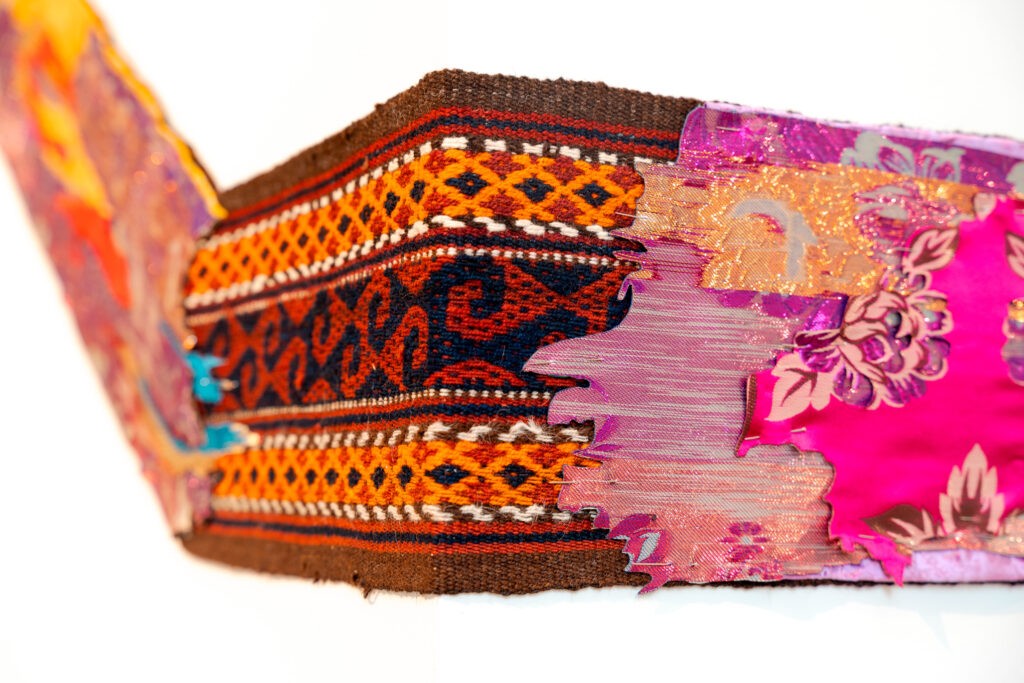
A pale Milanese dawn draped the city in shifting greys, as visitors crossed the threshold into the space of Fondazione Elpis, a foundation created to promote dialogue with emerging geographies and young artists. This time, it was Central Asian artists who were in the spotlight, claiming a shared history fractured by Soviet rule and global currents. The show YOU ARE HERE: Central Asia redraws a regional map, allowing artists to redraw the borders of their belonging beyond nation-states. At the same time, it invites each visitor to relate to the works by locating its place within these stitched, erased, and reconfigured narratives. Curators Dilda Ramazan and Aida Sulova orchestrated twenty-seven artists into a living constellation: from Munara Abdukakharova’s rolled patchwork, its golden hammer-and-sickle motifs softened by the hand-stitched curves of Kyrgyz kurak korpe, to Vyacheslav Akhunov’s furious erasures of scraped notes, the show reassembled in unexpected patterns stories of resilience, resistance, and reimagined belonging. YOU ARE HERE not only reframed Central Asia for a European audience but asserted that the region’s histories are neither static nor singular, they are stitched, erased, reconfigured, and claimed anew by the very people who live them. The Times of Central Asia spoke with Kazakh curator, Dilda Ramazan. [caption id="attachment_31541" align="aligncenter" width="2560"] "YOU ARE HERE. Central Asia", installation view, primo piano, Fondazione Elpis, Milano © Fabrizio Vatieri Studio[/caption] TCA: Can you tell us about the genesis of the show? The show emerged after the invitation of the Fondazione Elpis, whose founder, Marina Nissim, became interested in the region and its artists after seeing one of the Central Asian pavilions at the Venice Biennale. By presenting the complex Central Asian landscape to a European public who might not know it very well, we wanted to give artists the platform for free expression without framing the region from the stereotypical perspective, as is often the case in the Western context. We wanted the artists to reflect on the idea of space and belonging through the idea of locating oneself. TCA: Do you feel there is a growing awareness of Central Asia in Europe? Yes, I can feel and see it, but it is a natural process one should expect within the logic of globalization. The exhibition addressed the impact of Soviet and post-Soviet transitions on the cultural identities of Central Asian nations by showcasing artists of several generations. Some of them had a direct experience of living under the Soviet regime, so again the artists spoke for themselves and the region’s past through their works. [caption id="attachment_31542" align="aligncenter" width="2560"] Emil Tilekov, Traces and Shadows, 2024 © Fabrizio Vatieri Studio[/caption] TCA: How is the theme of migration explored in the exhibition, particularly concerning its economic and emotional implications for Central Asian communities? Migration was one of the key aspects evoked in the show because it is still an experience lived by the artists and/or their relatives and families. Two Kyrgyz artists, for example, raised this issue in their projects. This was the case in the video by Chingiz...

Kazakh Acrobats Enter Guinness World Records with Daring Feat

Batyr Zhanuzak and Marlen Maratov, acrobats from the Almaty Circus, have entered the Guinness World Records following a breathtaking performance at the international show Lo Show Dei Record in Milan. The duo stunned both the jury and audience when Zhanuzak climbed up and down a ladder twice, all while balancing Maratov in a one-arm handstand on his head. Their feat, completed in 36 seconds, was recognized as a world record in the category: “Fastest time climbing and descending two ladders with a person standing on their hands on the head.” “We already have four records with the team, though not all are officially recorded,” said 32-year-old Zhanuzak. “If someone breaks our record, we’re ready for a rematch. But for now, we’re aiming for new heights.” For 29-year-old Maratov, the accomplishment reflects years of preparation. “I spent four years training for this, to balance on one hand. But always with safety equipment,” he explained. “I think I’m the first to do it without any. It’s extremely dangerous.” He added that one previous attempt nearly ended in a fall, but Zhanuzak caught him at the last second. That moment became a turning point, a realization of their shared capabilities. Both performers are part of the internationally acclaimed “Serbat” circus troupe and have represented Kazakhstan in high-profile competitions worldwide. Their resume includes appearances in the finals of major talent shows in the United States, United Kingdom, and China. Their performances are widely praised for their originality, technical mastery, and artistic flair. Maksat Zhaikov, director of the Kazakh State Circus, called the achievement “not only a personal triumph but a contribution to the development of Kazakh circus art.” He added that the record reinforces Kazakhstan’s reputation on the global performing arts stage. Zhanuzak and Maratov are already planning their next challenge, incorporating a third ladder into their act. But their primary goal, they emphasize, is to show the world that Kazakh artists rank among the best.

The Story of World War Two Hero Tair Tastandiev

During World War II, the Soviet leadership established the “Order of Glory”, to honor soldiers for acts of personal bravery. Often referred to as the “Soldier’s Order,” it was awarded strictly for individual merit. According to its statute, the order was to be conferred progressively, beginning with the 3rd Class and culminating in the 1st Class. Those who received all three classes became Full Cavaliers of the Order of Glory and were granted the same rights as recipients of the title “Hero of the Soviet Union.” Yet during the war, for unclear reasons, there were curious cases in which the same soldier was awarded the Order of Glory 3rd Class multiple times, despite qualifying for higher classes. Such was the fate of Guard Sergeant Tair Burkutbaevich Tastandiev. [caption id="attachment_31491" align="aligncenter" width="288"] Tair Burkutbaevich Tastandiev (1924–1974), WWII veteran, Full Cavalier of the Order of Glory. Photo from the 1960s[/caption] Tastandiev was born on March 20, 1924, in the village of Kyzyl-Aryk, Zhambyl region, Kazakhstan. In August 1942, he was drafted into the Red Army and served as a heavy machine gunner in the 72nd Guards Rifle Regiment. On November 26, 1944, during a battle for a strategic position south of the Latvian village of Rudbārži, Tastandiev destroyed an enemy machine gun nest with grenades. He was the first to storm into the village, leading his fellow soldiers. Later, on January 29, 1945, during combat six kilometers northwest of Königsberg (now Kaliningrad), Tastandiev’s unit captured two enemy machine guns, eliminating their crews and enabling the company's advance. For his bravery in Latvia, he was awarded the Order of Glory 3rd Class on February 8, 1945. He would then be again awarded the Order of Glory 3rd Class on March 12, 1945, for his actions in Königsberg. On April 6, 1945, during a breakthrough of enemy defenses near the village of Metgethen, Tastandiev and his crew breached enemy barbed wire, paving the way for an infantry assault. On April 8, in the same area, he was concussed in combat but continued to fight with his gun crew. For this, he received the Order of Glory 3rd Class a third time, on April 11, 1945. After the war, Tastandiev was demobilized and returned to his native village of Kyzyl-Aryk, where he worked on a collective farm. Only a decade later, on August 19, 1955, a decree by the Presidium of the Supreme Soviet of the USSR corrected the awarding irregularity. Recognizing the administrative oversight, Soviet authorities conferred upon Tastandiev the 2nd and 1st Classes of the Order of Glory, thereby officially designating him a Full Cavalier.

Record-Breaking Carpet Unveiled at Tulip Festival in Kazakhstan

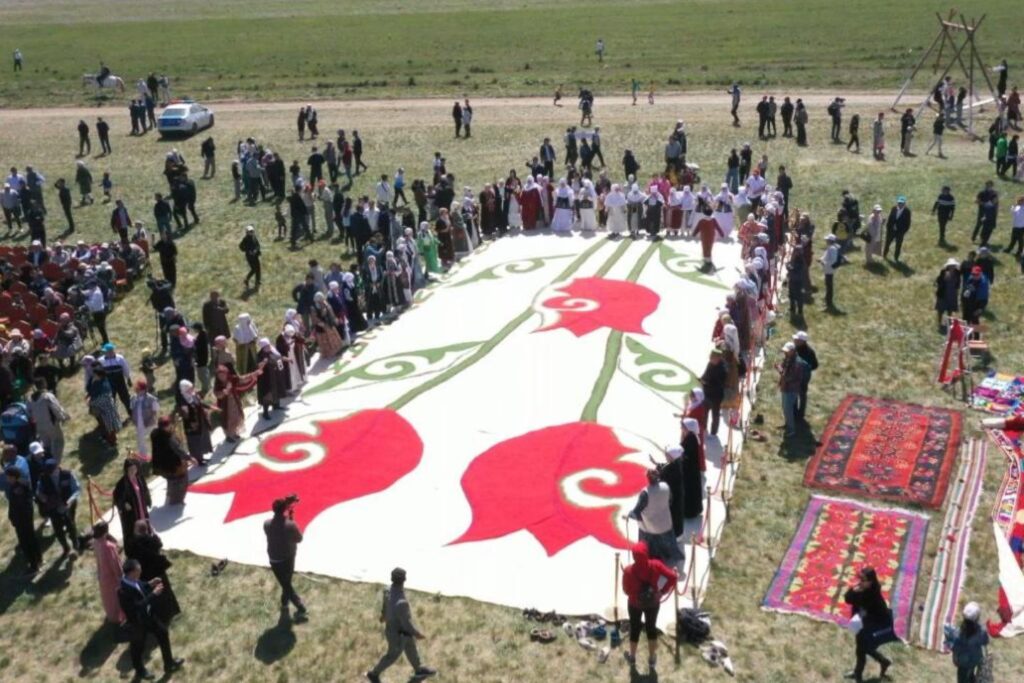
A massive felt carpet crafted by 100 master artisans has been officially recognized by the Kazakhstan Book of Records during the international “Qyzgaldaq Mura” (“Tulip Heritage”) festival in the Zhambyl region. Measuring 200 square meters, the carpet was created using the traditional wet felting technique and adorned with tulip motifs, symbolizing the region’s cultural identity. Renowned designer Aidarkhan Kaliev developed the carpet's ornamentation, celebrating both craftsmanship and the region’s natural heritage. The finished work will be installed under protective glass at Auliye-Ata Airport, where it is expected to become a regional cultural landmark. The festival attracted approximately 5,000 participants from Kazakhstan and abroad, including guests from Germany, Ukraine, Kyrgyzstan, the Netherlands, Russia, China, Turkey, and India. The event featured historical exhibitions, national games, artisan displays, and a vibrant concert program. The region’s tulip fields, home to 18 species, 10 of which are listed in the Red Book of endangered species, were a highlight for visitors. Despite its cultural success, the festival drew logistical criticism. Numerous attendees reported transportation difficulties, with some being dropped off 10 kilometers from the venue and forced to walk. Aspandiyar Seisebayev, head of the Zhambyl Region Department of Entrepreneurship and Tourism Development, attributed the issues to unexpectedly high turnout and challenging terrain in the mountainous area.

Soviet Space Probe to Fall to Earth 50 Years After Baikonur Launch

In 1972, the Soviet Union launched a Venus-bound lander probe called Cosmos 482 from the Baikonur Cosmodrome in Kazakhstan, which was then a Soviet republic. The probe, which never got out of Earth's orbit, is expected to re-enter Earth’s atmosphere in a week or so. “Because the probe was designed to withstand entry into the Venus atmosphere, it is possible the probe (or parts of it) will survive reentry at Earth and reach the surface,” U.S. space agency NASA said on Friday. “It is thought that a malfunction resulted in an engine burn which did not achieve sufficient velocity for the Venus transfer and left the payload in this elliptical Earth orbit. The lander probe orbit has been decaying over time and it is expected to reenter Earth's atmosphere around 10 May 2025,” NASA said. Right now, it’s hard to say where the lander will make its return. It’s possible that the spacecraft, or chunks of it, could survive reentry through the Earth’s atmosphere instead of burning up. After all, it has a titanium protective shell originally designed to get through the extreme atmosphere of Venus, which has the hottest surface of any planet in the solar system. Dr. Marco Langbroek, a scientist based in the Netherlands, said on the SatTrackCam Leiden (b)log that he doesn’t think the lander’s parachute deployment system will work during the “uncontrolled” reentry. “There are many uncertain factors in this though, including that this will be a long shallow reentry trajectory, and the age of the object,” Langbroek said. “The risks involved are not particularly high, but not zero: with a mass of just under 500 kg and 1-meter size, risks are similar to that of a meteorite impact.” Today, Russia operates the Baikonur Cosmodrome, which retains a popular allure for its role in early space exploration and is still a vital part of the Russian space program. On April 20, one NASA astronaut and two Russian cosmonauts made a parachute-supported landing on the steppes of Kazakhstan after a journey back to Earth from the International Space Station. The three men had launched from Baikonur and docked at the station on Sept. 11 last year, spending 220 days in space on that trip.

May Day in Central Asia: From Soviet Parades to a Celebration of Unity

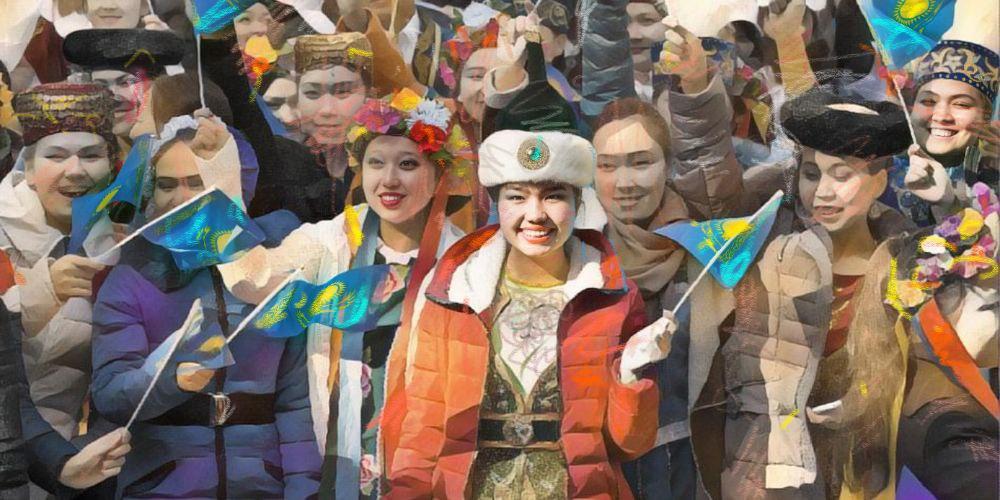
In Soviet times, May 1 and 2 were public holidays. May 1 was International Workers' Day, marked by large-scale parades celebrating the proletariat, while May 2 served as a day to recuperate before returning to work. Today, three of the five Central Asian republics have preserved the tradition of celebrating May Day, effectively marking the arrival of spring twice, once through Central Asian customs – Nauryz - and again through European ones. Workers of the world, unite! Coined by Karl Marx and Friedrich Engels in The Communist Manifesto, this famous communist slogan once appeared on the coats of arms of the Soviet Union and its republics. International Workers' Day became the living embodiment of this phrase. Celebrated on 1 May, May Day began as a European festival of spring but gained global significance through the labor movement. The Second International, formed at the 1889 International Workers Congress in Paris, called for an annual demonstration advocating an eight-hour workday. The date honors the U.S. general strike that started on 1 May 1886 and led to the tragic Haymarket massacre on 4 May. The date became a powerful symbol of working-class solidarity and a yearly tradition across large swathes of the globe. [caption id="attachment_31352" align="aligncenter" width="1174"] Soviet-era poster for International Workers' Day[/caption] Before the Bolsheviks came to power, political agitators in the Russian Empire used May 1 to call for change with slogans such as “Down with the Tsar” and “Give us freedom.” After the October Revolution, May 1 and 2 became official state holidays, with May Day becoming synonymous with International Workers' Day and mandatory parades. Unlike the more formal and solemn celebrations honoring the October Revolution, however, May Day events were often met with genuine enthusiasm. After the collapse The fall of the USSR brought about a widespread reevaluation of Soviet holidays. The celebration of the October Revolution on November 7 was widely discarded, but many post-Soviet republics retained May 1 as a public holiday, albeit with new interpretations and meanings. In Central Asia, Turkmenistan and Uzbekistan do not officially celebrate May 1. Turkmenistan has developed a distinct holiday calendar, while in Uzbekistan, May 1 is observed symbolically as the Day of Fountains. [caption id="attachment_31353" align="aligncenter" width="2560"] Day of Fountains, Tashkent; image: TCA, Stephen M. Bland[/caption] Though celebrations are more modest and it is no longer officially a day off, Tajikistan has retained the holiday’s Soviet-era name, International Workers’ Day. Some traditions, such as honoring outstanding workers, persist. Kyrgyzstan calls the holiday Labor Day, in line with its American equivalent. It is marked by festive events and activities organized by trade unions. Kazakhstan has taken a different approach, reimagining May Day as the Day of Unity of the People of Kazakhstan. The name reflects the country’s emphasis on stability and interethnic harmony, a model promoted by the Assembly of the People of Kazakhstan, an institution established on March 1, 1995, at the initiative of the country’s first president, Nursultan Nazarbayev. Since 2016, March 1 has also been celebrated as Thanksgiving...