• KGS/USD = 0.01144 0%
  • KZT/USD = 0.00211 0%
  • TJS/USD = 0.10515 0.48%
  • UZS/USD = 0.00008 0%
  • TMT/USD = 0.28530 0%
  • KGS/USD = 0.01144 0%
  • KZT/USD = 0.00211 0%
  • TJS/USD = 0.10515 0.48%
  • UZS/USD = 0.00008 0%
  • TMT/USD = 0.28530 0%
  • KGS/USD = 0.01144 0%
  • KZT/USD = 0.00211 0%
  • TJS/USD = 0.10515 0.48%
  • UZS/USD = 0.00008 0%
  • TMT/USD = 0.28530 0%
  • KGS/USD = 0.01144 0%
  • KZT/USD = 0.00211 0%
  • TJS/USD = 0.10515 0.48%
  • UZS/USD = 0.00008 0%
  • TMT/USD = 0.28530 0%
  • KGS/USD = 0.01144 0%
  • KZT/USD = 0.00211 0%
  • TJS/USD = 0.10515 0.48%
  • UZS/USD = 0.00008 0%
  • TMT/USD = 0.28530 0%
  • KGS/USD = 0.01144 0%
  • KZT/USD = 0.00211 0%
  • TJS/USD = 0.10515 0.48%
  • UZS/USD = 0.00008 0%
  • TMT/USD = 0.28530 0%
  • KGS/USD = 0.01144 0%
  • KZT/USD = 0.00211 0%
  • TJS/USD = 0.10515 0.48%
  • UZS/USD = 0.00008 0%
  • TMT/USD = 0.28530 0%
  • KGS/USD = 0.01144 0%
  • KZT/USD = 0.00211 0%
  • TJS/USD = 0.10515 0.48%
  • UZS/USD = 0.00008 0%
  • TMT/USD = 0.28530 0%

Viewing results 139 - 144 of 1304

Kyrgyzstan Launches Development of English Law-Based Dispute Resolution Center

The Kyrgyz Ministry of Justice and the British Embassy in Kyrgyzstan have signed a memorandum to establish an International Center for Dispute Resolution based on English law within the newly designated Special Financial Investment Territory “Tamchy.” The initiative follows legislation signed by President Sadyr Japarov establishing the Tamchy zone, a special legal and regulatory jurisdiction located in the Issyk-Kul region. The zone is designed to attract both domestic and foreign investment by offering tax incentives and a favorable business environment, particularly in sectors such as manufacturing, tourism, wellness, and transport infrastructure. A central component of the initiative is the creation of an international arbitration and dispute resolution center operating under English common law, a legal system based on judicial precedent and widely used in major financial hubs like London, Dubai, and Singapore. Under the memorandum, the British Embassy will support the Kyrgyz government by helping to engage a team of legal consultants to assist in implementing English law within the centre’s framework. The aim is to build a transparent, neutral, and internationally credible mechanism for resolving investment and commercial disputes in Kyrgyzstan. Government officials described the center as a strategic step toward building a modern, rule-based platform for impartial dispute resolution. By integrating English common law principles, Kyrgyzstan aims to enhance investor confidence, ensure legal predictability, and strengthen its position as a competitive and secure destination for international capital.
Kyrgyz Authorities to Confiscate Vehicles Damaging Mountain Ecosystems

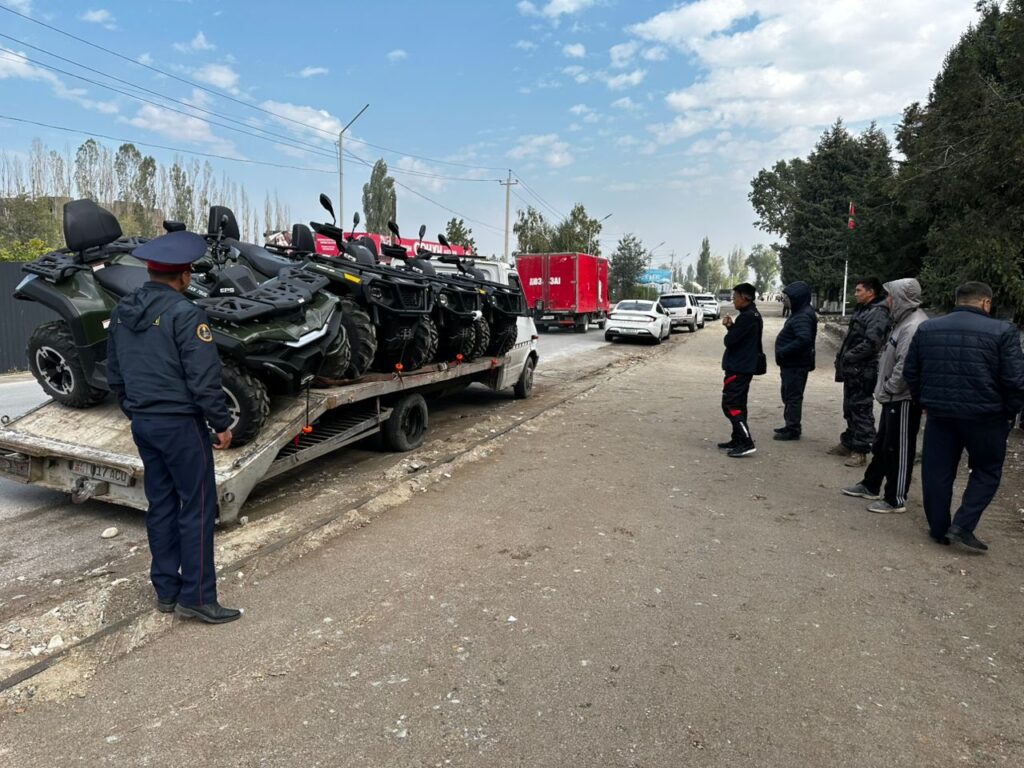
Kyrgyz President Sadyr Japarov has ordered law enforcement and environmental agencies to begin fining and in severe cases, confiscating vehicles used in a manner that damages mountain ecosystems, particularly in nature reserves and alpine pastures. In a social media post featuring a video of individuals riding quad bikes through mountainous terrain, reportedly within a protected area, Japarov called on the Ministries of Internal Affairs and Natural Resources to take immediate action. “Those driving gasoline-powered vehicles in mountain reserves and pastures should have them confiscated,” the president declared. Japarov said such incidents are occurring nationwide, with the reckless use of off-road vehicles and quad bikes leading to the destruction of fragile slopes and pastureland. “As seen in the video, quad bikes tear up slopes, burn grass, and destroy pastures. Most often these are our youth, but also adults and tourists. Despite existing roads, some choose to drive onto pastures, carving new tracks and damaging the natural landscape,” he said. He emphasized that this behavior degrades mountain ecosystems by trampling vegetation, damaging soil, and accelerating erosion. The president has directed the government to draft legislation authorizing the police and the Ministry of Nature to issue fines and seize vehicles used in ecologically harmful ways. “Where the road ends, continue on foot or horseback. Nature is our shared heritage, and we must preserve it for future generations,” he added. Japarov also called on local authorities to help identify violators and enforce ecological protection measures. Following the president’s directive, the Ministry of Natural Resources, Ecology and Technical Supervision, in coordination with local police, detained a group of individuals operating quad bikes in mountain areas. “They were informed about environmental safety rules, nature conservation, and relevant legislation,” the ministry said. The offenders were each fined 5,500 KGS (approximately $60).

Kazakhstan Moves to Legalize Private Detective Services

Kazakhstan’s Ministry of Internal Affairs has opened a public consultation on a draft law titled “On Private Detective Activity,” initiated by members of the Mazhilis, the lower house of parliament. The proposed legislation would introduce a licensing system for private detectives, aiming to formalize and regulate the profession. According to the ministry’s press office, the bill seeks to establish a legal framework for private investigation services and to expand citizens’ access to professional assistance in defending their rights and lawful interests. If adopted, the law would allow Kazakh citizens to obtain qualified help in gathering information for use in court, as well as in criminal and administrative proceedings. “The proposed legislation introduces mandatory licensing, which will eliminate cases where unqualified or irresponsible individuals conduct investigations,” the ministry stated. “Only licensed professionals will be permitted to provide such services.” The draft law also provides for strict state oversight of detective agencies, enabling citizens to file complaints with government bodies regarding a detective’s actions. Additionally, licensed private detectives would be required to carry professional liability insurance to compensate for any damages caused by unlawful conduct. “The bill aims to introduce clear professional standards, protect citizens’ interests, prevent unauthorized interference in private life, and build public trust in legal mechanisms for protecting rights,” the ministry added. Kazakhstan currently lacks a specific legal framework regulating private detective activity, despite multiple legislative efforts since 1995. The first such initiative dates back to 1995, but the proposed legislation was not approved by parliament. In 2013, the Ministry of Justice developed a revised version, which reached the Mazhilis in 2015 in a shortened form. That effort was later withdrawn by the government in 2017. The current draft, developed by parliamentarians in 2023, marks the most advanced attempt to date at legalizing private detective work in the country. While there is no formal ban on private investigation services in Kazakhstan, the sector currently operates in a legal gray zone. Experts estimate that around 20 business entities in Kazakhstan operate either wholly or partly as private detective agencies. However, the exact number of individuals working as private investigators remains unclear. Analysts believe the market includes a significant “shadow segment,” raising concerns about potential rights violations by unlicensed actors. As previously reported by The Times of Central Asia, Kazakhstan is undergoing a broader restructuring of its law enforcement system, including the recent transfer of anti-corruption functions to the National Security Committee. Experts argue that the creation of a transparent, state-regulated private investigation sector could become a vital component of this reform effort.

Kyrgyzstan Snap Election: Democracy on Edge or Politics as Usual?

On September 25, Kyrgyzstan’s parliament voted to dissolve itself, clearing the way for snap elections. As previously reported by The Times of Central Asia, deputies approved the dissolution by an 84–0 vote, with five abstentions and one absence. The election will now take place on November 30, under revised electoral rules. The new system divides the country into 30 constituencies, each of which elects three deputies, at least one of whom must be a woman. Lawmakers justified the move by pointing to the costs and logistical burdens of overlapping parliamentary and presidential campaigns, arguing that holding parliamentary elections a year early would streamline preparations and reduce the administrative strain. Critics, however, have suggested the real motivation is political, noting that pro-government blocs stand to benefit from locking in deputies under the new majoritarian system by mobilizing local administrative resources, especially after years of pressure on opposition groups and independent media. “Regarding the early elections, I fully support this decision,” Eldar Turatbek, founder of the Legalize political party, told The Times of Central Asia. “There is no point in waiting another year until the end of the 7th convocation’s term, especially when you consider that after the 2020 revolution, most deputies spent a year in temporary status anyway. In essence, they have already ‘worked off’ their five-year term.” Japarov’s Centralization of Power The dissolution also fits into a broader cycle of political reshuffles across the region. Both Kyrgyzstan and Kazakhstan have undergone rapid personnel and institutional changes in recent months, with Bishkek’s early vote reflecting President Sadyr Japarov’s emphasis on electoral timing, and, analysts argue, designs to cement his grip on power. The step arrives in a political environment that has grown markedly more centralized since Japarov’s rise during the turmoil of 2020. New restrictions on online media and internet traffic have narrowed the space for civil society, measures the government frames as necessary to restore order and promote national values. Rights advocates, however, warn of democratic backsliding in a country once seen as the most pluralistic in Central Asia. Opposition journalist Bolot Temirov offered a blunt assessment as to the reasons why the authorities are holding early parliamentary elections. “In recent years, the president’s entourage and the head of the State Committee for National Security have acquired money, and now want to show off their deputy badges,” he told TCA. “Kamchybek Tashiyev will try to get as many of his people into parliament as possible to strengthen his position in the confrontation with Sadyr Japarov and his team. Mandates have long since become a commodity, and parliamentary seats are for sale.” International IDEA has recorded a decline in civil liberties and checks on executive authority under the current administration, and Kyrgyzstan’s trajectory makes this moment especially significant. The country has experienced three revolutions since independence - in 2005, 2010, and 2020 - each triggered by discontent over corruption, contested elections, and concentrated presidential power. These upheavals reshaped institutions but also entrenched a cycle of volatility that continues to cast a...

Kazakhstan to Count Tourists Using Mobile Data

Kazakhstan’s Bureau of National Statistics will begin tracking tourist flows in the country’s resort areas using anonymized mobile data, the agency’s head Maksat Turlubaev announced at the Digital Bridge 2025 international forum. Turlubaev noted that recent amendments to the country’s laws “On State Statistics” and “On Communications” now provide a legal foundation for using anonymized mobile data for statistical purposes, aligning with international best practices. Among the key applications will be the generation of real-time information on domestic and international tourist flows. Currently, Kazakhstan’s tourism statistics are compiled through surveys of accommodation facilities and households, as well as data from the Border Service of the National Security Committee and the Ministry of Ecology. These traditional methods, however, face limitations, including incomplete coverage, high respondent burden, and delays in data collection. Following the implementation of the new legislation, a pilot project was launched this summer in partnership with Estonian firm Positium and with support from the World Bank. The initiative analyzed a 5% anonymized sample of data from mobile operator Kcell, covering the period from July 2023 to June 2024, to assess domestic tourist flows. The results far surpassed those of traditional survey methods. “Mobile data analysis showed that the number of domestic tourists reached 107.6 million, compared to 7.8 million in official statistics,” said Turlubaev. “In the Alakol resort area in southeastern Kazakhstan, mobile data recorded 658,200 visitors, 2.4 times higher than official figures. Mobile data allows us not only to count tourists, but to capture a comprehensive, objective picture of internal mobility and real travel patterns. It accounts for short-term and informal visitors not reflected in traditional methods, highlights seasonal trends, and shows the impact of holidays on tourism activity. This gives us a valuable tool for management, infrastructure planning, and evaluating the economic impact of tourism.” The methodology Kazakhstan plans to adopt aligns with recommendations from the UN World Tourism Organization (UNWTO) and the International Telecommunication Union (ITU). It offers enhanced accuracy, near real-time analytics, reduced respondent burden, and the capacity to model tourist and migration flows using artificial intelligence. “This marks a major step in building a modern, digital statistical agency,” Turlubaev added. As previously reported by The Times of Central Asia, Kazakhstan recorded a 62% rise in tourists from five Arab countries in 2024, reflecting broader efforts to diversify and modernize its tourism sector.

Survey Reveals What Kazakhstanis Think About the Army and Defense

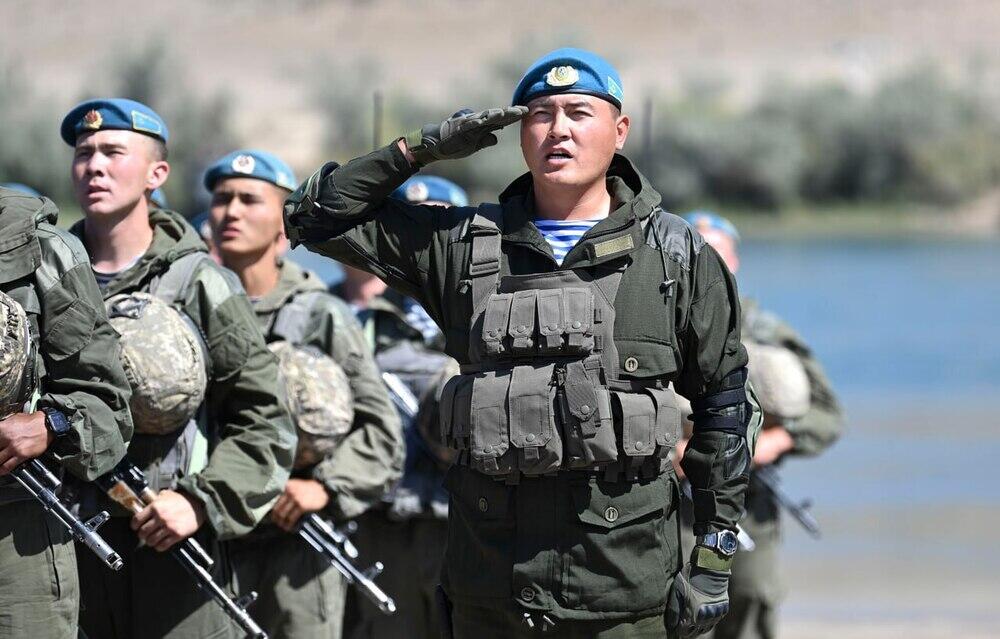
In September 2025, the research platform Demos.kz conducted a nationwide survey on public perceptions of Kazakhstan’s Armed Forces. When asked about the likelihood of Kazakhstan becoming involved in a military conflict over the next five years, 29.7% of respondents considered the risk very low, 28% rated it as average, 13.2% as rather low, 7.1% as very high, and 6.9% as rather high. Public confidence in the military's capabilities was divided. Some 31.9% of respondents believe the Kazakh army is strong enough to defend the country against external threats, while 35% said it will “more likely be able” to do so. Meanwhile, 15.8% said the army will “most likely not” be able to protect the country, and 10.4% expressed the view that “No, it won't be able to protect it at all”. On the issue of defense partnerships, 29.3% favored strengthening ties with Russia through the Collective Security Treaty Organization (CSTO). A further 27.5% supported closer cooperation with NATO members such as the United States or Turkey. Another 22.6% favored working with China via the Shanghai Cooperation Organization (SCO), 20% preferred collaboration with neighboring Central Asian countries, and 18.4% advocated for neutrality and minimizing military alliances. Opinion was also split on the preferred army recruitment model. A total of 36.6% supported transitioning to a fully professional, contract-based military. Another 36.5% favored returning to universal compulsory service, while 17.7% supported retaining the current mixed system. According to Kazakhstan’s 2025-2027 state budget, the country plans to allocate 2.7 trillion KZT ($5.2 billion) to defense and law enforcement in 2025. The Finance Ministry reported that military spending from January to July 2025 amounted to 544.4 billion KZT, down 8.8% from the same period in 2024. Last year, Kazakhstan’s defense budget totaled approximately 1.3 trillion KZT. Over the past three years, Kazakhstan has steadily increased defense spending. According to media reports, the defense budget stood at $1.2 billion in 2023 and $1.1 billion in 2022.