• KGS/USD = 0.01144 0%
  • KZT/USD = 0.00216 0%
  • TJS/USD = 0.10456 0%
  • UZS/USD = 0.00008 0%
  • TMT/USD = 0.28571 0%
  • KGS/USD = 0.01144 0%
  • KZT/USD = 0.00216 0%
  • TJS/USD = 0.10456 0%
  • UZS/USD = 0.00008 0%
  • TMT/USD = 0.28571 0%
  • KGS/USD = 0.01144 0%
  • KZT/USD = 0.00216 0%
  • TJS/USD = 0.10456 0%
  • UZS/USD = 0.00008 0%
  • TMT/USD = 0.28571 0%
  • KGS/USD = 0.01144 0%
  • KZT/USD = 0.00216 0%
  • TJS/USD = 0.10456 0%
  • UZS/USD = 0.00008 0%
  • TMT/USD = 0.28571 0%
  • KGS/USD = 0.01144 0%
  • KZT/USD = 0.00216 0%
  • TJS/USD = 0.10456 0%
  • UZS/USD = 0.00008 0%
  • TMT/USD = 0.28571 0%
  • KGS/USD = 0.01144 0%
  • KZT/USD = 0.00216 0%
  • TJS/USD = 0.10456 0%
  • UZS/USD = 0.00008 0%
  • TMT/USD = 0.28571 0%
  • KGS/USD = 0.01144 0%
  • KZT/USD = 0.00216 0%
  • TJS/USD = 0.10456 0%
  • UZS/USD = 0.00008 0%
  • TMT/USD = 0.28571 0%
  • KGS/USD = 0.01144 0%
  • KZT/USD = 0.00216 0%
  • TJS/USD = 0.10456 0%
  • UZS/USD = 0.00008 0%
  • TMT/USD = 0.28571 0%

Viewing results 103 - 108 of 266

How Kazakhstan and Uzbekistan Anchor a Strategic Middle-Power Hub in Central Asia

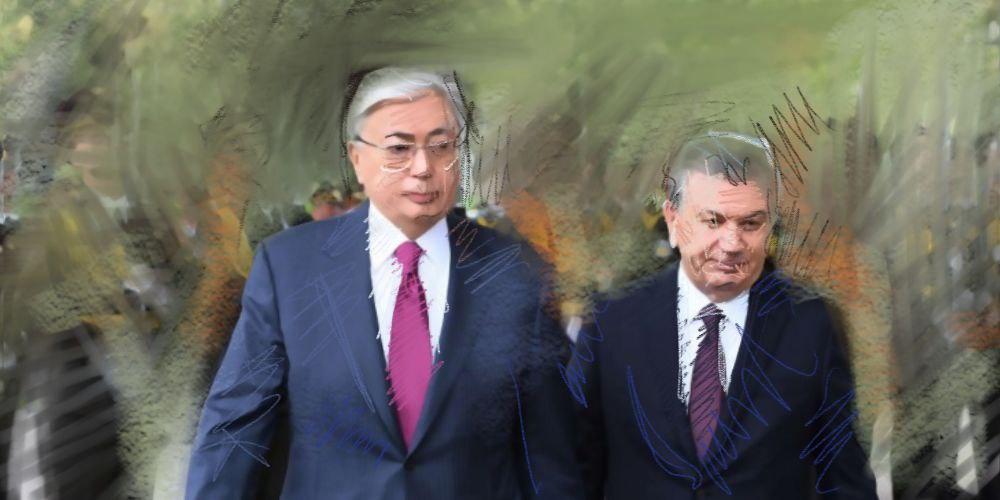
Kazakhstan and Uzbekistan are driving Central Asia’s global significance. Together, they are turning Central Asia into a strategic middle-power hub. The two countries increasingly act as central nodes in a region key to global supply chains and, inevitably, geopolitical competition. However, they are not merely reactive to changes around them, but are highly dynamic. What does it mean to say that the region is emerging as a strategic middle-power "hub"? The notion of a hub extends beyond the national profiles of the two principals, Kazakhstan and Uzbekistan, to include the aggregation of collective influence. Central Asia is recognized as a cohesive entity in global forums. Kazakhstan’s energy wealth combines with Uzbekistan’s demographic strength, creating an influential synergy beneficial to the entire region. The interplay between their respective strengths allows them to amplify Central Asia’s voice in international institutions and negotiations collectively. By integrating their regional strategies within global frameworks — such as the Organization of Turkic States (OTS), the Shanghai Cooperation Organization (SCO), and the Conference on Interaction and Confidence Building Measures in Asia (CICA) — Kazakhstan and Uzbekistan enhance the region’s geopolitical relevance. Kazakhstan, for example, has successfully advocated for the Trans-Caspian International Transport Route (TITR, also called the "Middle Corridor"). This transcontinental trade route is emerging as a lynchpin in Eurasian logistics, connecting China to Europe via the Caspian Sea. Uzbekistan, for its part, has emphasized the integration of transport and energy infrastructure. These initiatives align with the broader vision of a unified Central Asia. The leadership of Kazakhstan and Uzbekistan has reinforced the region's collective identity as the "C5" group, also including Kyrgyzstan, Tajikistan, and Turkmenistan. This regional bloc has become a diplomatic focal point for major powers like the United States, China, Germany, and Japan. All of them engage with Central Asia through structured consultations within the C5 framework. These meetings have given the region traction in international diplomacy. The elevation of the C5 group reflects the region's new prominence. The United States engages with the C5 on issues ranging from regional security to sustainable development, emphasizing its commitment to a secure and prosperous Central Asia. China’s cooperation under the C5+1 mechanism complements its transcontinental infrastructure initiatives. Germany focuses on sustainable energy and governance, while Japan prioritizes infrastructure and technology transfers. Kazakhstan and Uzbekistan together have over two-thirds of the region's gross domestic product and two-thirds of its population. Kazakhstan's vast natural resources undergird its economic influence, while its geographic expanse (as the ninth-largest country in the world) makes it central to major connectivity initiatives. Through President Kassym-Jomart Tokayev's nuanced foreign policy, Kazakhstan has adeptly balanced relationships with major powers, ensuring that it remains a key partner for Russia, China, and the European Union. Uzbekistan has surged to prominence through its ambitious domestic reforms and proactive engagement for regional cooperation under the leadership of President Shavkat Mirziyoyev, who has implemented market liberalization measures attracting foreign investment and reinvigorating its economy. As the most populous country in Central Asia, Uzbekistan is an indispensable actor in regional affairs....
Central Asia, a Possible Winner in Regional Reshuffle Over Syria

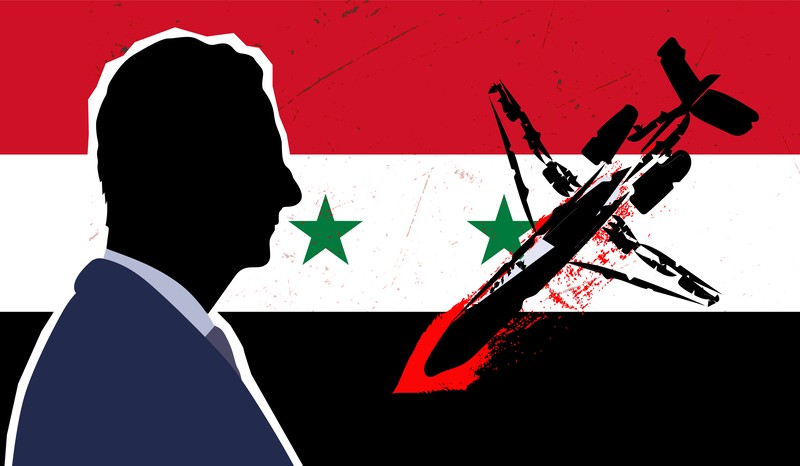
There has been talk about who’s up and who’s down since the Syrian rebel offensive that ousted President Bashar Assad this month. Central Asia might end up as a winner on the geopolitical scorecard, according to one theory.  For Syrians, the future depends on whether the country can stabilize under a new government or is headed for fresh conflict. But here’s the international fallout so far:  Russia, Iran and the Hezbollah group in Lebanon, key backers of Assad during years of civil war, lost power and influence in the region. Turkey, which supported some rebel groups, has more clout in Syria, where it opposes Syrian Kurdish forces. Israel has benefited because its enemy Hezbollah has lost a supply route through Syria from patron Iran, though it says it is striking Syrian military sites because threats remain.     There could be economic gains for Central Asia, far from the maneuvers on the ground in Syria. Some analysts believe an ascendant Turkey will call in some favors from Russia, which along with Iran is on the backfoot. One thing that Turkey and Central Asian trading partners really want is the opening of a land route, the so-called Zanzegur corridor, in the South Caucasus, and Russia can possibly help to make that happen.  The 43-kilometer corridor, which is expected to make land trade between East Asia and Europe more efficient, would connect Azerbaijan with its enclave of Nakhchivan, passing through Armenia before joining with Turkey and European markets beyond. The transport connection is supposed to open under a 2020 cease-fire agreement following Azerbaijan’s military success against Armenia, with Russia as a security guarantor. But Zanzegur remains contentious because of Armenian concerns over sovereignty and a final peace deal is yet to be signed.     Now, the theory goes, Turkish President Recep Tayyip Erdogan could push Russian President Vladimir Putin for an assist on Zanzegur in exchange for apparently helping Russia evacuate troops from Syria, and for possibly helping Moscow form a relationship with the new Syrian leadership.    “What will Turkey demand from Russia? Perhaps lighter terms for the supply of key energy supplies now at threat from US sanctions,” economist Timothy Ash wrote in an analysis. “Russian agreement also perhaps over Azeri and Turkish access to Nakhichevan [through] the Zangezur corridor and on to Central Asia? Putin now owes Erdogan. He will collect.” Ahmad Vakhshiteh, a senior lecturer at RUDN University in Moscow, made a similar argument, saying in an interview with German media outlet DW that Turkey could use Syria leverage to advance wider geopolitical goals such as the Zanzegur corridor.  Under the 2020 cease-fire deal, Russian border guards would control transport on the corridor, whose opening could also benefit Russia´s trade connections. But Russian influence has decreased as Armenia has all but withdrawn from a regional, Russian-led security pact and increasingly looks for Western partnerships. There has also been some discussion of bypassing Armenia and building an adjacent land corridor through Iranian territory, though Iran’s own trade and security interests are big factors.   ...

Turkmenistan’s Geopolitical Shift Toward the West

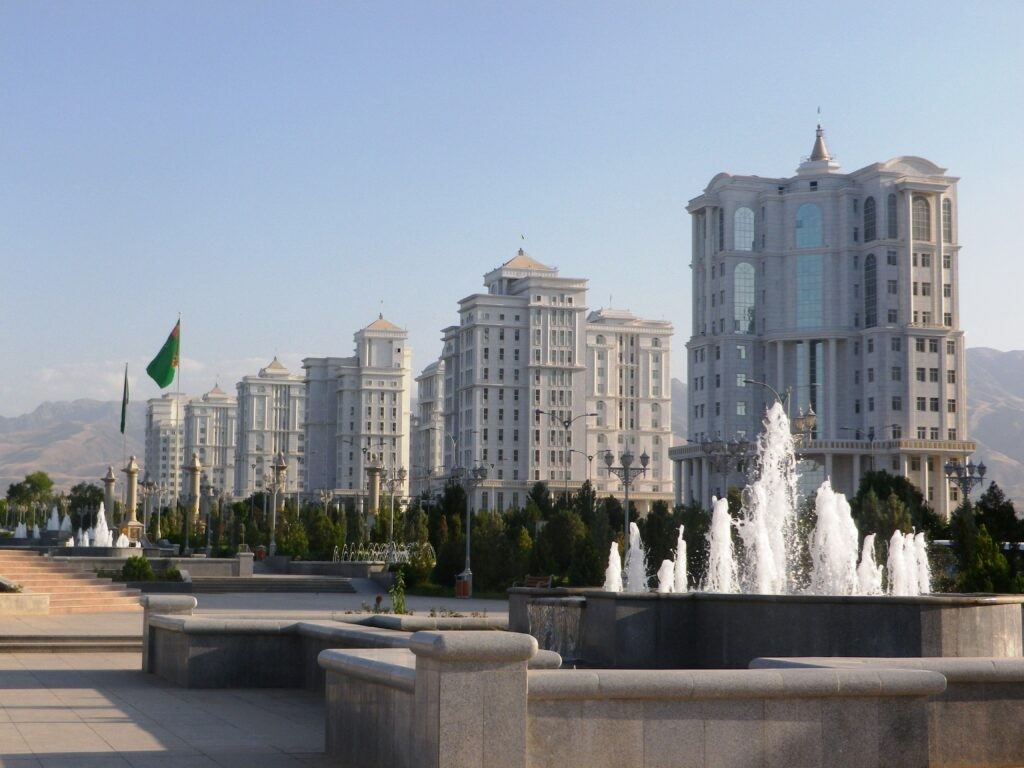
Turkmenistan, whose foreign policy since 1995 has been based on the principle of permanent neutrality, is reportedly seeking to establish closer ties with the West, primarily with the United States. The energy-rich nation has long expressed an intention to export natural gas to Europe, but its leadership’s recent moves suggest that Ashgabat might also aim to develop closer political and economic relations with Western countries. Over the past few months, Turkmen and American officials have held several very important meetings. Most recently, on November 25, Turkmenistan’s President Serdar Berdimuhamedov hosted Steve Daines, U.S. Senator from Montana and member of the U.S. Senate Committee on Energy and Natural Resources. The fact that the Turkmen leader told the American politician that Ashgabat is “implementing a strategy for diversifying energy export routes” clearly shows that Turkmenistan’s ambition to begin exporting natural gas to Europe was on the agenda. But energy was unlikely the only reason why Daines came to Ashgabat. He also met with the Turkmen Minister of Foreign Affairs Rashid Meredov, with whom he discussed “key aspects of partnership cooperation in political and diplomatic, trade and economic, cultural, humanitarian and other spheres.” According to reports, “the active dynamics of development of political ties at the highest state level was emphasized,” indicating that Turkmenistan has begun implementing its 2023 plan to strengthen ties with the United States.  Moreover, as a result of the U.S. Senator’s visit to Ashgabat, a meeting of the Turkmenistan-US Business Council is scheduled to take place later this month. One of the reasons why the Turkmen authorities seek deeper economic ties with Washington is because they hope that such an approach can help their country join the World Trade Organization (WTO).  On November 20-22, just days before Daines’ visit to Turkmenistan, the Ministry of Finance and Economy organized a training seminar as part of the country's preparation for joining the WTO.  Interestingly enough, the U.S. Agency for International Development (USAID) “made a significant contribution to the event's preparation”, while the U.S. Ambassador to Turkmenistan Elizabeth Rood attended the seminar.  The United States undoubtedly sees Turkmenistan as an important regional actor. In February, American companies including John Deere, Boeing, Exxon Mobil, and General Electric met with the Turkmen business delegation in Washington, discussing various forms of cooperation. Nine months later, on November 6, Rahimberdi Dzhepbarov, Chairman of the Board of the State Bank for Foreign Economic Activity of Turkmenistan, was on a working visit to Washington to discuss “issues of further strengthening economic and environmental cooperation with the United States.” The following day, according to the Turkmen Ministry of Foreign Affairs, the U.S. “highly praised Turkmenistan's achievements in fulfilling its international commitments on climate change.” But Washington did not always have such a positive view on Turkmenistan. In 2018, in an annual State Department report, Ashgabat was criticized for "alleged torture, arbitrary arrests and detentions, involuntary confinement, imprisonment of political prisoners, severe corruption, lack of free and fair elections, and restrictions on freedom of religion, assembly, and movement.” Also, in...

Trump’s Bid for Ukraine-Russia Peace: Could Kazakhstan Be the Key Mediator?

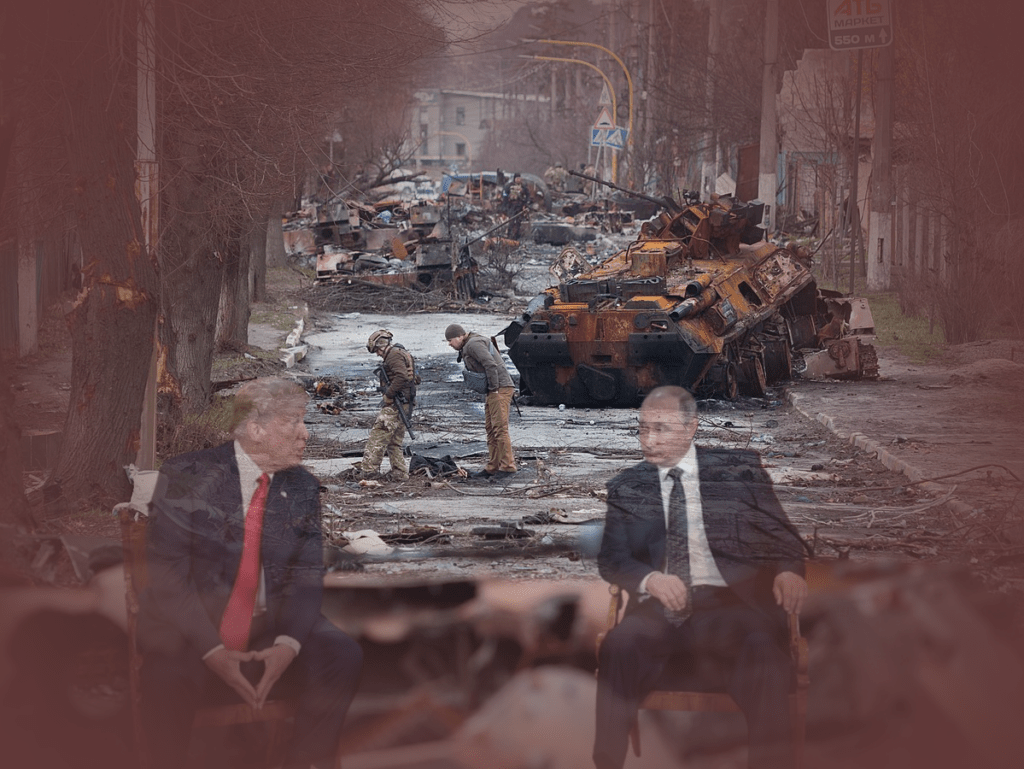
One of the anticipated top priorities of Donald Trump’s presidency is ending Russia's war in Ukraine while normalizing relations with Moscow. Writing on his Truth Social channel, Trump stated that, “Together, we will secure PEACE THROUGH STRENGTH, and Make America, and the World, SAFE AGAIN!” Trump’s nominee to serve as Special Envoy for Ukraine and Russia, 80-year-old former national security advisor, General Keith Kellogg, laid out his plan in writing for the America First policy institute, whilst focusing on characterizing the war “an avoidable crisis that, due to the Biden Administration’s incompetent policies [which] has entangled America in an endless war.” There are fears, however, that Kellogg’s proposal to reach a ceasefire by freezing the frontlines and forcing both sides the negotiating table will lead to a tumultuously violent period as Moscow seeks to swallow up territory. Meanwhile, NATO’s new secretary-general, Mark Rutte, has warned that compelling Ukraine into a “bad peace” would pose a “dire threat” to the U.S. itself. Whilst the framework for bringing a pause to hostilities is becoming clearer, it appears that Trump (or his representative) will need to meet with Vladimir Putin, and Kazakhstan has emerged as a potential venue for this high-stakes meeting. Kazakhstan's Role as Mediator Russian political analyst, Arkady Dubnov, has argued that Putin’s recent state visit to Astana may be an indication that Kazakhstan could play a pivotal role, and that given Putin’s limited travel options due to the International Criminal Court’s arrest warrant against him, Kazakhstan, with its reputation for diplomacy, would be a logical choice. “Putin is essentially restricted from visiting most of the Western Hemisphere,” Dubnov explained. “This leaves the Eurasian East, and among its cities, Astana stands out. Kazakhstan has hosted OSCE and CICA summits, mediated in the Syrian conflict, and facilitated peace talks over the future of the South Caucasus.” Dubnov sees Putin’s visit to Astana as indirectly tied to a possible meeting with Trump. “The Kremlin trusts Kazakhstan as an ally while respecting its constructive relations with the U.S. and the broader West,” he stated. Kazakhstan has long been recognized as a neutral ground where East and West can find commonality. The Astana process on Syria, initiated in 2017, helped prevent the escalation of hostilities for years, whilst Kazakhstan has mediated in other long-standing disputes, such as the conflict between Armenian and Azerbaijan. Given this history, it is conceivable that a reconciliation process between Russia and Ukraine could start in Astana. Neither the Minsk agreements of 2014, nor discussions in Istanbul in 2022 achieved lasting peace, but Kazakhstan’s diplomatic efforts could provide fresh impetus. Early Peace Efforts In March 2022, Kazakh President Kassym-Jomart Tokayev spoke with Ukrainian President Volodymyr Zelensky, emphasized the urgency of negotiations to bring a halt to hostilities, a stance that has since gained momentum as the war drags on. By 2024, the validity of Tokayev’s view — that negotiations are the only viable path to end the bloodshed — has become increasingly apparent. Kazakhstan’s diplomatic corps has actively pushed for peace....

Kazakhstan, with China’s Help, Plans to Export Green Energy to Europe

Although Kazakhstan is a major producer of all fossil fuels – coal, crude oil, and natural gas – it also has the capacity to secure its energy future by prioritizing renewable energy. Fully aware of that, the European Union – one of the former Soviet republic’s most significant trade partners – aims to strengthen its energy ties with Astana, hoping to begin importing not only “green electricity” from the Central Asian nation, but also green hydrogen. On November 25, at Nazarbayev University in Astana, the “Energy in Transition – Powering Tomorrow” traveling exhibition was held, and one of the major topics discussed by energy experts was green hydrogen – hydrogen produced using renewable energy sources such as solar and wind power. It is unlikely a pure coincidence that the German Federal Foreign Office initiated the event. Over the past few years, Germany has shown interest in the development of the Kazakh green hydrogen sector. The most prominent green hydrogen project in Kazakhstan is currently being developed by Hyrasia One, a subsidiary of the German-Swedish energy company, Svevind. In 2021, the company announced its plans for €50 billion ($55 billion) green hydrogen project in the Mangystau Region in western Kazakhstan. It is expected that Hyrasia One will begin the production of green hydrogen in 2030, and the power plant will reach full capacity by 2032. Meanwhile, the authorities in Astana will need to find a way to export this form of renewable energy to Europe, a major energy market for Kazakhstan. Although Astana and Brussels signed a strategic partnership on the production of green hydrogen in November 2022, several challenges remain in the implementation of the deal. Issues such as the high cost, water scarcity in the largest Central Asian state (with water being the key component of green hydrogen production), and a lack of transport infrastructure, are significant barriers to exporting hydrogen from Kazakhstan to Europe. Using Russian gas pipeline systems for transportation of the Kazakh green hydrogen to Europe is not an option given current geopolitical circumstances. To resolve this transportation issue, the Kazakh authorities and their European partners could build hydrogen pipelines across the Caspian Sea, the Caucasus and Turkey to reach southern European countries. The problem is that building such a pipeline infrastructure is very expensive, and it remains uncertain who would be willing to fund such a project. That, however, does not mean that Kazakhstan cannot become Europe’s major green hydrogen supplier. What Astana would have to do, according to experts, is to convert the green hydrogen into green ammonia and then export it to Europe via the Middle Corridor – running through Kazakhstan, the Caspian Sea, Azerbaijan, and Georgia. On the Black Sea coast, ammonia would be loaded onto ships and transported past the Bosphorus to EU members such as Greece, Romania, and Bulgaria. From there, it would be sent further north, where green hydrogen would eventually be extracted from the ammonia. This is a rather complex process, and it is unclear how feasible and...

The Geopolitical Battle for Control Over Transportation Routes in Central Asia

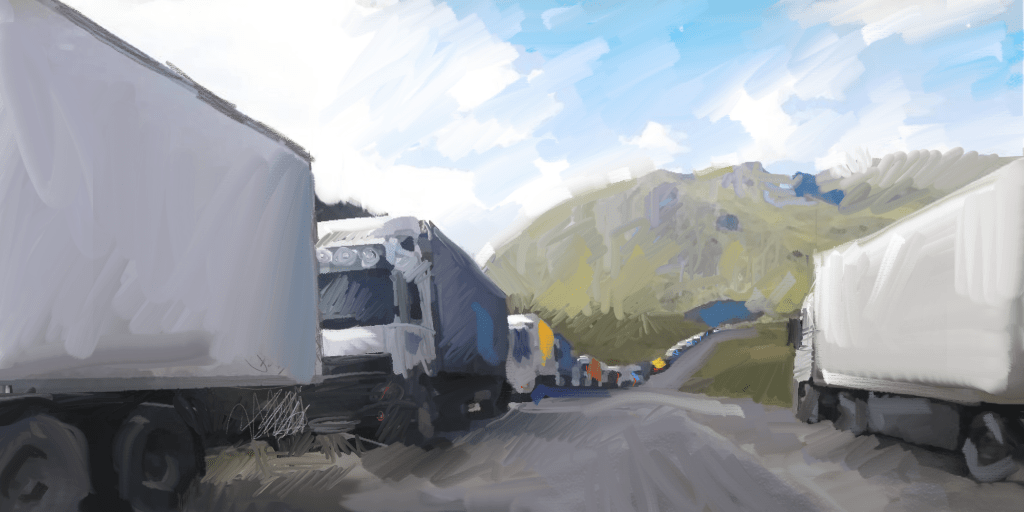
Russia and Kazakhstan may be nominal allies, but their geoeconomic interests are not always aligned. As Astana seeks to develop the Middle Corridor – a transportation link connecting China and Europe through Kazakhstan, the Caspian Sea, Azerbaijan, and Georgia, bypassing Russia – Moscow reportedly aims to build a trade and logistics route that would connect Russia and Kyrgyzstan, thereby circumventing Kazakhstan.  While various regional actors and international institutions actively invest in the Middle Corridor, also known as the Trans-Caspian International Transportation Route (TITR), a potential route linking Russia and Kyrgyzstan, through Uzbekistan and Turkmenistan, remains merely an idea. From the geopolitical perspective, the TITR is seen as an alternative to reach European and international markets and bypass Russia. But what is the primary goal of the Russia-Kyrgyzstan route? Although both Kyrgyzstan and Kazakhstan are members of the Russian-led Eurasian Economic Union, queues of trucks at the Kyrgyz-Kazakh state border seem to have become a norm. Bishkek accuses Kazakhstan of “artificially creating obstacles at the border to weaken competition from Kyrgyzstan”, while the Kazakh authorities claim that Kyrgyz truckers are “unwilling to comply with Astana’s requirements and submit fraudulent documents for cargo.” Since Kyrgyzstan’s main connection with Russia – the major market for its agricultural products – goes through Kazakhstan, it is Astana that has the upper hand over Bishkek. From a purely economic perspective, a new route, including sea transport across the Caspian Sea, would enable faster delivery of vegetables, fruits, as well as other goods from Kyrgyzstan to Russia. However, it remains highly uncertain if Uzbekistan and Turkmenistan, as transit countries, are genuinely interested in this project. “Both nations are far more interested in East-West trade, actual supply chain relocations into the region, and new gas contracts with the West,” Samuel Doveri Vesterbye, Managing Director of the European Neighborhood Council, told The Times of Central Asia. In his view, a Kyrgyzstan-Russia corridor would offer a limited amount of trade, due to the sanctions the West imposed on Moscow over its actions in Ukraine. But in spite of that, Kyrgyzstan, like all countries, tries to be part of any connectivity corridor. “There is a lot of ‘corridor competition’ at the moment. Most of it is bluff. It is important to look at which projects are being built and how much investments is going into them. The Russia-Kyrgyzstan corridor, at present, is more hot air than reality. There is no funding from the United States, the European Union, China or Turkey. Also, major players like the European Bank for Reconstruction and Development (EBRD) and the European Investment Bank (EIB) do not seem interested in funding the construction of this route. Therefore, its lifespan and potential look rather limited,” Vesterbye stressed. European institutions seem interested in further development of the Trans-Caspian International Transportation Route. From the European Union’s perspective, Russia’s invasion of Ukraine has increased the need to find alternative, reliable, safe and efficient trade routes between Europe and Asia. That is why Brussels is reportedly willing to invest €10 billion ($10.5...