• KGS/USD = 0.01144 0%
  • KZT/USD = 0.00212 0%
  • TJS/USD = 0.10761 -0.09%
  • UZS/USD = 0.00008 0%
  • TMT/USD = 0.28571 0%
  • KGS/USD = 0.01144 0%
  • KZT/USD = 0.00212 0%
  • TJS/USD = 0.10761 -0.09%
  • UZS/USD = 0.00008 0%
  • TMT/USD = 0.28571 0%
  • KGS/USD = 0.01144 0%
  • KZT/USD = 0.00212 0%
  • TJS/USD = 0.10761 -0.09%
  • UZS/USD = 0.00008 0%
  • TMT/USD = 0.28571 0%
  • KGS/USD = 0.01144 0%
  • KZT/USD = 0.00212 0%
  • TJS/USD = 0.10761 -0.09%
  • UZS/USD = 0.00008 0%
  • TMT/USD = 0.28571 0%
  • KGS/USD = 0.01144 0%
  • KZT/USD = 0.00212 0%
  • TJS/USD = 0.10761 -0.09%
  • UZS/USD = 0.00008 0%
  • TMT/USD = 0.28571 0%
  • KGS/USD = 0.01144 0%
  • KZT/USD = 0.00212 0%
  • TJS/USD = 0.10761 -0.09%
  • UZS/USD = 0.00008 0%
  • TMT/USD = 0.28571 0%
  • KGS/USD = 0.01144 0%
  • KZT/USD = 0.00212 0%
  • TJS/USD = 0.10761 -0.09%
  • UZS/USD = 0.00008 0%
  • TMT/USD = 0.28571 0%
  • KGS/USD = 0.01144 0%
  • KZT/USD = 0.00212 0%
  • TJS/USD = 0.10761 -0.09%
  • UZS/USD = 0.00008 0%
  • TMT/USD = 0.28571 0%

Viewing results 19 - 24 of 339

Opinion: Expect China to take its 2+2 diplomacy to Central Asia

China does not do military alliances. Its declared posture is one of non-interference in other nations’ internal affairs. Yet Beijing has long understood that commercial ties alone cannot anchor strategic relationships; only security partnerships can. China’s recent experiments with 2+2 security dialogues – bringing together foreign and defense ministers – signal that it is seeking to move beyond an economics-first approach. The most likely next candidates for this format are Kazakhstan, Kyrgyzstan and Tajikistan, all of which share borders with China. For Central Asian governments, a 2+2 with China may hold appeal, particularly as they seek to manage instability spilling over from Afghanistan at a time when Russia’s security role is being strained by its war in Ukraine. After years of hoping that engagement could stabilize Afghanistan, Central Asian states have largely shifted to a policy of containment – seeking to insulate themselves from cross-border militant threats, narcotics flows and refugee movements rather than attempting to reshape Afghanistan’s internal trajectory. For Beijing, the objective would be to consolidate partnerships across the Eurasian heartland – an outcome Washington would prefer to counter. China shares Central Asia’s risk-management approach toward Afghanistan. Like its neighbors, Beijing has little appetite for deep involvement inside the country itself, focusing instead on preventing instability from spilling northward toward Xinjiang or disrupting Belt and Road corridors that run through the region. A 2+2 format offers China a way to institutionalize security coordination without violating its long-standing aversion to formal alliances. Last week, Chinese Foreign Minister Wang Yi and Defense Minister Dong Jun traveled to Phnom Penh to hold China’s first-ever 2+2 dialogue with Cambodia. Wang told reporters that China is willing to develop the mechanism into a “strategic platform” for enhancing political and defense security cooperation. He described it as a key instrument for cementing mutual assistance and solidarity, and for advancing the construction of a China-Cambodia “community with a shared future.” Wang also said China was prepared to work with Cambodia to build an “Asian security model” based on shared security and on seeking common ground while reserving differences. China’s deepening security engagement with Cambodia comes as the Southeast Asian nation remains locked in a border dispute with Thailand. Although Wang’s itinerary took him next to Bangkok, Beijing chose to hold a 2+2 only with Cambodia – notably the non-U.S. ally in this pairing. China is new to the 2+2 format. Last April, Beijing hosted its first ever 2+2 with a foreign country – with Indonesia. The trajectory suggests further 2+2 engagements ahead, including Kazakhstan, Kyrgyzstan and Tajikistan – the three Central Asian states that border China. In several aspects, Central Asia may be a more conducive environment for this diplomacy than Southeast Asia: there are no maritime disputes, and the countries are not embedded in U.S. alliance structures. Instead, there is a convergence around defensive security priorities – particularly border control and crisis management linked to Afghanistan – making the 2+2 format a natural fit. China under President Xi Jinping has always had an eye...

Insider’s View: Tashkent’s Water Diplomacy – From National Reforms to Regional Synergy in Central Asia

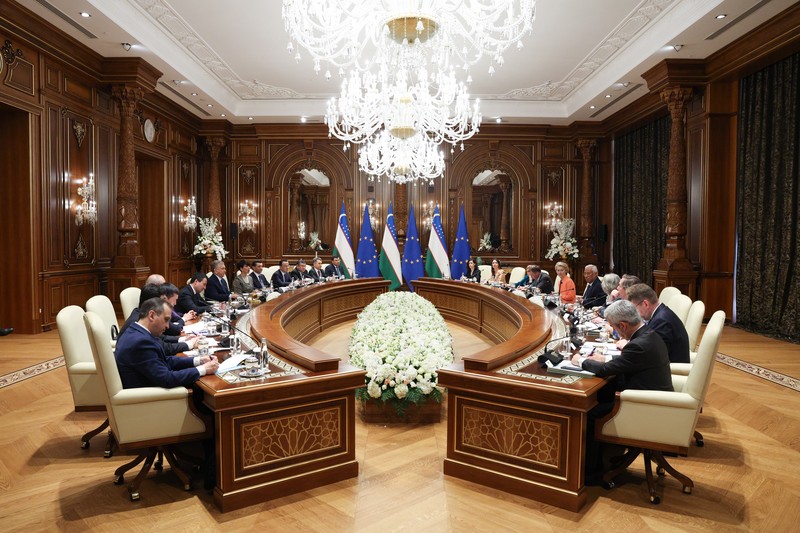
On April 22, a summit of the International Fund for Saving the Aral Sea (IFAS), one of the region's prominent organizations, takes place in Astana. The meeting of the Heads of the Founding States is especially significant because it marks the transition of the Fund's chairmanship to Uzbekistan for the 2027-2029 period. This will be our country's third mandate, following leadership terms in 1997-1999 and 2013-2016. Tashkent was at the forefront of the creation of IFAS. Yet returning to this leadership role after a decade comes in a fundamentally transformed regional landscape. Today, Uzbekistan brings not only substantial experience but also a broad portfolio of initiatives that have received international recognition. The Transformation of Uzbekistan's Water Sector for Sustainable Development Facing intensifying climate pressures alongside strong economic and demographic growth, Uzbekistan has made the restructuring of water resource management a core priority of state policy. The scale of the challenge is clear in the data. Over the last 15 years, per capita water availability in the republic has fallen by more than half, from 3,000 to 1,400 cubic meters per year. According to the Ministry of Water Resources, the annual volume of water resources has dropped to 51-53 billion cubic meters, a 21% decline from 1991 levels of 64 billion cubic meters. A major challenge remains the country's high dependence on external sources, as approximately 80% of surface water, or 41 billion cubic meters, originates outside the country. While the water shortage did not exceed 3 billion cubic meters prior to 2015, expert forecasts indicate that the deficit could reach 7 billion cubic meters by 2030 and 15 billion cubic meters by 2050. Recognizing the scale of these risks, Uzbekistan, under the leadership of Shavkat Mirziyoyev, is pursuing broad technological modernization of the water sector. In less than a decade, the area using water-saving technologies has grown from 28,000 hectares to more than 2.6 million hectares, now covering more than 60% of all irrigated land. At the same time, large-scale work continues across the country on canal concreting and the reconstruction of flume networks. By 2030, these systemic measures are projected to yield annual savings of up to 15 billion cubic meters of water. At the same time, the sector is undergoing digitalization. Currently, 11 information platforms are being deployed to manage the water cadastre, monitor pumping stations, and track land reclamation status. Over the past four years, the management of 100 major water facilities has been fully automated, the Smart Water system has been introduced at 13,000 water intake points, and more than 1,700 pumping stations have been equipped with real-time online monitoring devices. At the same time, the national economic model is also adapting. According to the Center for Economic Research and Reforms, the share of agriculture in GDP has declined from 32% in 2017 to 19% by 2024. Notably, against this backdrop, total agricultural production has increased by 17%. This divergence points to a transition toward more efficient resource use and higher productivity. Regional Synergy and Water...

Opinion – Kazakhstan’s New Constitution Sends a Key Signal for Global Partners

In a nationwide referendum on March 15, over 87% of voters approved a new constitution for Kazakhstan. It was a significant victory for President Tokayev and his administration, all the more so because voter turnout exceeded 73%. Kazakhstan’s new constitution is a key signal for global partners. It replaces the old bicameral system with a unicameral legislature, establishes the Halyk Kenesi (People’s Council), an advisory body intended to promote national dialogue, and creates a vice presidency to provide for clearer succession at the top of the state. The new constitution is the outcome of a strategy that has been building for some time. Now, backed by a clear majority, Kazakhstan’s leadership is seeking to strengthen governance by redistributing power, lessening political ambiguity, and grounding politics in shared values—however difficult that may be to accomplish. All of this is being pursued despite—and perhaps because of—the nation’s history of corruption and nepotism. Kazakhstan’s constitutional reforms were deliberate, structural measures designed to reorient the country’s governmental machinery toward what supporters describe as the common good. That, at least, is the stated intention, reflected in a slogan often used by backers of the new constitution: “A strong president, an influential parliament, and an accountable government.” Some outside observers have viewed the new constitution favorably, framing it as an effort to streamline governance and clarify institutional roles, while others have warned that the changes could impede sociopolitical progress and human rights by prioritizing stronger governance. Some also see the reforms as signaling a move toward more restrictive political practices. These alarmist interpretations are overstated. Astana’s constitutional reforms fit into an ongoing political effort, using the law to strengthen civic involvement and the well-being of the community as a whole, not just individual interests. The new constitution did not emerge ex nihilo for the purpose of freezing elite advantages at the expense of the people, as others in Kazakhstan and the broader region have done in the past. That interpretation of constitutional change in Central Asia overlooks the government’s broader reform agenda, whatever its perceived shortcomings. In his March 31 article, A New Constitution for a Just, Strong, and Prosperous Kazakhstan, President Tokayev framed Kazakhstan as a rules-oriented state, emphasizing rights, judicial independence, and impartial institutions—an approach that stands out regionally despite open questions about follow-through. Tokayev emphasized that “The new constitution is about people, not just better government.” The constitution’s largest section is dedicated to protecting freedoms and rights based on common sense and traditional values, including privacy, personal data, private property, and home inviolability. Judicial independence is reinforced to ensure that all citizens receive qualified, impartial defense – at least that’s the intent. Amendments require a public referendum, ensuring that fundamental choices remain popular. Religious liberty is guaranteed in a secular society. The constitution also presents Kazakhstan as a more attractive and predictable place to do business, for both domestic and foreign investors. The constitution, according to Tokayev, “sets clear rules for economic activity.” As such, the reforms create a political culture that aims...

Opinion: Supply Chains of Power: How Critical Minerals Are Shaping China–U.S. Competition in Central Asia

Central Asia is no longer a distant frontier for global geopolitics. It is developing into a central arena of competition for critical minerals, supply chains, and industrial power, where minerals are no longer simple commodities but have instead become key components of contemporary statecraft. In essence, this transformation highlights a recognition in Washington and other capitals that critical mineral supply chains are fundamental to next-generation energy systems, the development of artificial intelligence (AI), and strategic defense capabilities. Even as the global economy is multipolar, critical mineral supply chains remain highly concentrated and dominated by China. Control of rare earths is increasingly geopolitical, with clear economic, political, and security consequences. The significance of that imbalance is now shaping U.S. foreign policy, Central Asia’s development strategies, and the future of global economics. China’s Strategy: Control the Chain, Not Just the Mine Though many years in the making, China’s critical minerals strategy is still often misunderstood as focused primarily on resource access. However, Beijing’s efforts are far broader and more effective. Not only securing raw materials, the Chinese leadership has also worked to control the entire supply chain—from extraction to processing, refining, and manufacturing. China’s long-term focus and investments began in the 1980s with efforts that culminated in the Made in China 2025 plan for national and overseas manufacturing. In 2023 alone, Chinese firms invested more than $120 billion in overseas mining and processing, targeting key elements used in energy supply chains. Beijing also fed its industrial base by providing over $220 billion for the production of electric vehicles, batteries, and renewable infrastructure. As a result, China now controls approximately 60% of lithium processing, more than 70% of cobalt refining, and over 90% of battery material manufacturing. Strategically, China controls roughly 90% of global rare earth refining and associated technologies. Early investments in supplies enabled Beijing to subsequently concentrate funds into refining capacity to feed its industrial sector. This integrated approach has shifted the power dynamic for global supply chains tied to the critical minerals economy. As evidenced by Beijing’s near monopoly on processing, market control is not just associated with geological supplies but with processing capacity. China’s willingness to weaponize access not only to rare earths but also to processing technology demonstrates Beijing’s market muscle. This distinction is critical. Rare earth elements are not inherently scarce, but they are rarely found in concentrated deposits, making them difficult to extract and refine. Over decades, Beijing developed unique refining capabilities and subsidized an industrial base that disincentivized competition and encouraged processing to shift to China. The Vicious Circle Prohibitive investment costs, long development timelines, and market volatility have discouraged Western investment in alternative supply chains. Each stage (mining, processing, refining, manufacturing) is interdependent: miners won’t invest without buyers and offtake agreements, processors and refiners need secure financing and stable mineral supply, and manufacturers need steady inputs. Such interdependence creates an investment standoff and heightens perceptions of risk. By integrating all stages, Beijing exerts influence across global markets, from pricing to production. This has conditioned global markets...

Opinion: Trump Has Golden Opportunity to Launch C6+1 on Sidelines of UN

Representatives of the five Central Asian states — Kazakhstan, Uzbekistan, Kyrgyzstan, Tajikistan, and Turkmenistan — along with Azerbaijan, are expected in New York for the United Nations General Assembly in September. Historically, meetings between the Central Asian states and the United States – the C5+1 – have taken place on the sidelines of the United Nations. It is the most natural and logistically efficient venue for President Donald Trump to re-engage with the C5 partners he hosted at the White House last November. As of now, only foreign ministers are expected to attend the UNGA. But this could change if Trump extends an invitation to the leaders, according to a Central Asian diplomatic source. This time, however, he has the opportunity to add Azerbaijan, transforming the format into a C6+1. Baku has already been invited to participate as a full member in Central Asian gatherings, and Washington should build on that momentum. Azerbaijan is uniquely positioned: close to both Israel and Turkey – two of America’s most important regional partners – it sits astride one of the most important connectivity corridors linking Europe and Asia. Its inclusion would turn the C5+1 into a genuinely trans‑Caspian framework that reflects the emerging realities of Eurasian integration. The move would also link two major diplomatic achievements of Trump’s second term: the launch of the Trump Route for International Peace and Prosperity (TRIPP), a 43-km strategic transit corridor connecting mainland Azerbaijan to its Nakhchivan exclave through Armenia, and Trump’s elevation of the C5+1 to a White House-level summit. While TRIPP was discussed at the C5+1 meeting in November, bringing Azerbaijan into the next gathering would allow the administration to present itself as the architect of a new Eurasian trade and energy map. Strategically, a C6+1 format carries significant implications for great-power competition with China. This is because Central Asia is so crucial to Beijing’s grand strategy. In its recently adopted 15th five-year plan, neighborhood diplomacy is listed as the top priority — ahead of relations with major powers or developing countries. Beijing seeks to build a “community with a shared future” with 17 neighboring states, including all five in Central Asia, to “create a favorable external environment” for national rejuvenation, as Foreign Minister Wang Yi has stated. For China, Central Asia is a vital “hinterland” for energy and resource security, and a buffer against maritime disruptions. The United States does not need to dominate the Eurasian Heartland or force Central Asian states to choose between Washington and Beijing. It simply needs to ensure that any Chinese westward access runs through a vast landmass of countries that maintain constructive relations with the United States. A C6+1 format helps shape that environment without confrontation. A stable Middle Corridor – the energy and trade route running through Central Asia, across the Caspian Sea and through Azerbaijan to Turkey and the Mediterranean – also benefits America's energy-hungry allies in Asia, such as Japan and South Korea. Both increasingly look to Kazakhstan as an alternative oil supplier as they...

Opinion: Central Asia Through Western Eyes – Misconceptions Among Young People

Do you know where Kazakhstan is? Although the question is straightforward, it often causes hesitation on a university campus in Washington, D.C. Some students gesture uncertainly toward Eastern Europe. Others guess the Middle East. Some admit they have never heard of it, often with a nervous laugh. Central Asia remains one of the least understood parts of the world for many young people in the West. It is often defined more by pop culture, history, and imagination than by its diverse reality. “I honestly thought Kazakhstan was somewhere near Afghanistan,” said Michael, a student from Georgetown University. “I didn’t realize it was its own region.” Such knowledge gaps are not unusual. Central Asia is rarely mentioned in Western education systems or media coverage, despite its size, strategic significance, and rich cultural heritage. As a result, assumptions often take the place of understanding and tend to follow similar patterns, which over time may shape Western attitudes toward the region. A Region Reduced to Stereotypes When Western students are asked what comes to mind when they think about Central Asia, their responses often follow a familiar pattern: deserts, nomads, the Soviet Union, and sometimes confusion with other regions. Emily, a student from American University, remarked, “I picture a lot of sand and heat, and perhaps those who ride horses?” Although this image is partial, it is not entirely inaccurate, as the region’s customs and natural surroundings do contribute to its character. However, contemporary cities, academic institutions, businesses, and the region’s cultural diversity are largely absent from these perceptions. Perceptions have also been shaped by pop culture. For some, Kazakhstan is associated less with geography or history than with Borat, the fictional journalist from a Hollywood comedy. Despite being widely recognized as satire, the persona has nevertheless made a lasting impression on viewers unfamiliar with the region. As Sacha Baron Cohen explained, Kazakhstan was chosen precisely because it was largely unknown to Western audiences. According to his explanation, he selected the country because “no one had heard anything about it,” making it a blank canvas onto which Western attitudes about backwardness could be projected. None of the scenes depicting Borat’s “home village” were filmed in Kazakhstan; they were shot in rural Romania. The language Borat speaks is not Kazakh, and the customs he describes bear no relation to everyday life in Kazakhstan. Daniel, a student from George Mason University, asked, half-jokingly, “Is that where Borat is from?” These examples illustrate how humor and media can fill gaps in knowledge. When Kazakhstan first appeared in popular Western media, it was often portrayed through harsh stereotypes, introducing global audiences to a country still defining its image. Between Curiosity and Ignorance However, alongside these misconceptions, there is also genuine interest. “I had no idea it was so multicultural,” said Emma, a student from American University. “We never really learned about it.” This response points to a broader issue: Central Asia is often misunderstood not only because of misinformation, but because of its limited visibility in the...