• KZT/USD = 0.00215
  • TJS/USD = 0.10810
  • UZS/USD = 0.00009
  • TMT/USD = 0.29760
  • KZT/USD = 0.00215
  • TJS/USD = 0.10810
  • UZS/USD = 0.00009
  • TMT/USD = 0.29760
  • KZT/USD = 0.00215
  • TJS/USD = 0.10810
  • UZS/USD = 0.00009
  • TMT/USD = 0.29760
  • KZT/USD = 0.00215
  • TJS/USD = 0.10810
  • UZS/USD = 0.00009
  • TMT/USD = 0.29760
  • KZT/USD = 0.00215
  • TJS/USD = 0.10810
  • UZS/USD = 0.00009
  • TMT/USD = 0.29760
  • KZT/USD = 0.00215
  • TJS/USD = 0.10810
  • UZS/USD = 0.00009
  • TMT/USD = 0.29760
  • KZT/USD = 0.00215
  • TJS/USD = 0.10810
  • UZS/USD = 0.00009
  • TMT/USD = 0.29760
  • KZT/USD = 0.00215
  • TJS/USD = 0.10810
  • UZS/USD = 0.00009
  • TMT/USD = 0.29760
29 August 2026

Viewing results 31 - 36 of 250

Opinion: Beyond Ornaments – Rethinking Kazakhstan’s Architectural Identity

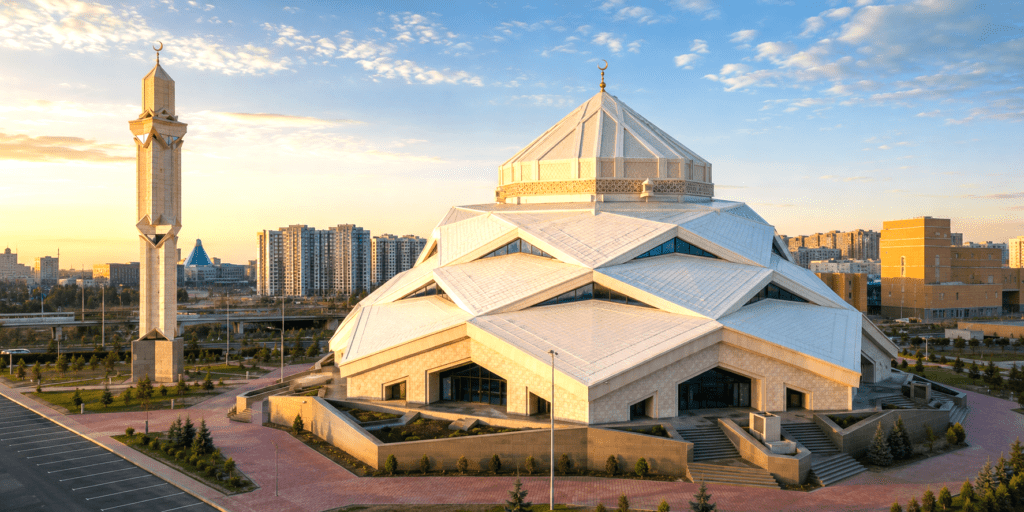
Walking into the Flower of God Mosque in Astana, I was struck not by its grand domes or elaborate decoration, but by the experience of the space itself. Light filtered through the structure in unexpected ways, the interior unfolded gradually, and the building created a sense of calm. It made me wonder: can architecture express cultural meaning without directly reproducing traditional architectural symbols? This question is becoming increasingly important for Kazakhstan. Over the past two decades, the country has transformed its urban landscape through ambitious construction projects. New airports, museums, universities, financial centers, and religious buildings have reshaped cities, particularly Astana. As Kazakhstan seeks to position itself as a modern state connecting Europe and Asia, architecture has become one of the most visible expressions of national identity. Yet a fundamental challenge remains unresolved: how can architecture be modern while also expressing what it means to be Kazakh? National ornaments appear on glass facades and stylized references to the yurt shape public buildings. While these references are familiar and visually recognizable, they do not necessarily create meaningful architecture. Cultural identity cannot simply be attached to a building like decoration. This approach reflects what architects often describe as direct design: the use of recognizable forms and symbols to communicate meaning. Domes, arches, ornaments, and historical references immediately signal cultural identity because they are easy to recognize. Such architecture can create a strong visual connection to heritage, but relying solely on symbolism risks becoming superficial. An alternative approach focuses not on reproducing historical forms but on interpreting the values behind them. Instead of asking how a building should look, architects ask how it should feel. Meaning emerges through light, space, movement, and human experience. Astana's architectural landscape offers several examples of how national identity has been translated into built form. The Baiterek Monument offers perhaps the clearest example of symbolic architecture in Kazakhstan. Drawing on the legend of the Tree of Life and the Samruk bird, it transforms a national myth into a physical structure that is immediately recognizable. Its meaning is communicated directly through form and narrative, making it one of the country's most powerful architectural symbols. [caption id="attachment_50124" align="aligncenter" width="2560"] Baiterek, Astana; image: TCA[/caption] Yet the monument also raises an important question. While visitors can easily recognize the symbolism, do they experience the myth itself? Does the ascent through the tower evoke the journey up the Tree of Life, or does the golden sphere create the sensation of entering the sacred egg of the Samruk bird? The symbolism is clearly represented, but the extent to which it is translated into a spatial experience remains open to interpretation. Khan Shatyr occupies a unique place in Kazakhstan's architectural landscape. Its tent-like form directly references the nomadic heritage of the steppe, making it one of the country's most recognizable cultural symbols. Yet the project also raises an important question: is reproducing a familiar image enough to convey a cultural experience? [caption id="attachment_50122" align="aligncenter" width="1280"] Khan Shatyr, Astana; image: Bgag[/caption] Despite its obvious reference to...

Opinion: Building Bridges Across Eurasia – Termez Dialogue 2026 Opens in Tashkent

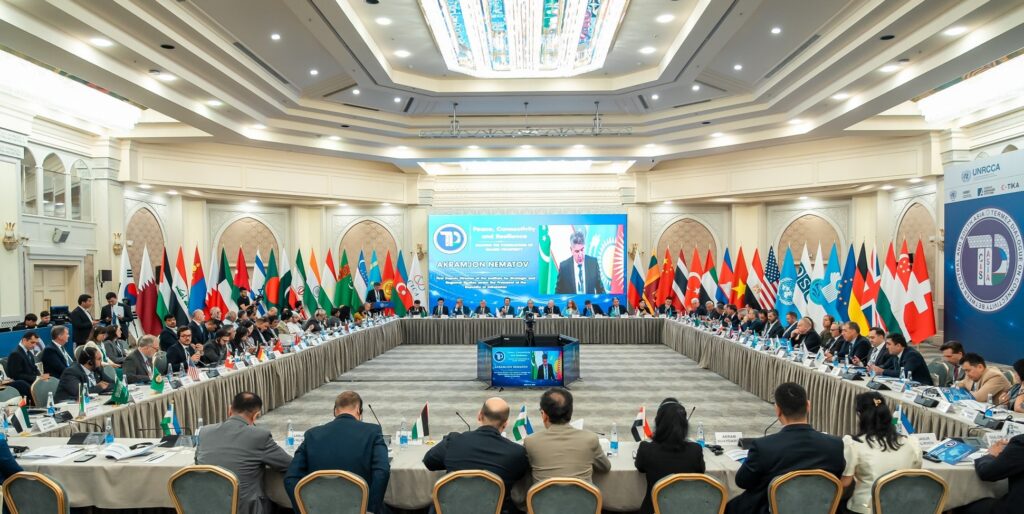
The second meeting of the Termez Dialogue on Connectivity between Central and South Asia opened on June 4 in Tashkent, Uzbekistan, bringing together senior representatives from Central Asia, South Asia, China, Russia, the Gulf Cooperation Council, Iran and Afghanistan for a high-level exchange on the future of regional connectivity and cooperation under the theme: “Peace, Connectivity, and Resilience: Shaping the Foundation for Shared Prosperity”. Eldor Aripov, director of the Institute for Strategic and Regional Studies under the President of Uzbekistan, opened the forum and highlighted its role in strengthening Central–South Asia connectivity. Under his leadership, it has become a respected venue for promoting regional cooperation and sustainable development. Aripov said Eurasia needs “not new dividing lines but spaces of trust, joint development, and open dialogue.” The agenda covered geopolitics, security, trade, investment, culture, climate resilience, and sustainable development. Aripov began by emphasizing the origins of the Termez Dialogue and its strategic purpose, which reflects Uzbekistan’s vision of fostering stronger ties between neighboring regions through cooperation and mutual benefit without sacrificing sovereign autonomy “The Dialogue’s essence lies in consistently building interstate relations on the principles of mutual benefit, good-neighborliness, and preventive diplomacy. What makes this platform unique is its inclusiveness — its ability to bring together not only government officials and diplomats, but also leading experts, scholars, business representatives, and civil society institutions.” This statement positioned the Termez Dialogue as a cornerstone of Uzbekistan’s vision for regional diplomacy. The idea was reinforced in 2022, when the UN General Assembly adopted resolution A/RES/76/295, “Strengthening Connectivity between Central and South Asia.” A recurring theme throughout Aripov’s remarks was inclusivity – understood in a non-ideological sense. He argued that lasting regional partnerships require participation from a diverse range of stakeholders. Reflecting on the platform’s progress, Aripov pointed to its rapid evolution into a recognized forum for regional engagement. He acknowledged the need to continue to build trust across sectors and borders. “In just one year, our platform has established itself as an effective venue for discussing transregional connectivity, developing practical initiatives, and strengthening trust among governments, experts, and international organizations,” Aripov said. This achievement demonstrates the Dialogue’s growing influence across Eurasia. The Chairman also made clear that the forum is entering a new phase. The focus, he said, must now shift from ideas to implementation. “Today’s meeting is intended to mark a qualitative transition — from conceptual discussions to practical implementation and the development of concrete mechanisms for transregional cooperation.” The statement reflects a commitment to delivering tangible outcomes and lasting partnerships. Aripov outlined that shared prosperity is one of the strongest foundations for regional stability: “When states are interconnected through shared economic interests and value chains, the risks of confrontation and instability naturally decrease.” This vision places trade, investment, and infrastructure cooperation at the heart of regional peacebuilding. “Alongside economics and climate issues,” Aripov argued, “culture remains an important pillar of our dialogue. Strong connectivity is not measured only in material terms. Very often, it is rooted in shared historical memory and common...

UNDP Opinion: Central Asia – Shared Wildlife, Shared Landscapes, Shared Responsibility

As global leaders gather for the Global Environment Facility (GEF) Assembly in Samarkand, Central Asia has an opportunity to send a clear message to the world: protecting biodiversity is not only about saving species — it is about securing water, livelihoods, resilience and long-term stability for millions of people across our region. From the glaciers of the Tien Shan and Pamir mountains to the deserts, steppes and river basins downstream, Central Asia’s ecosystems are deeply interconnected across borders. Rivers flow between countries. Wildlife migrates through shared landscapes. Mountain ecosystems regulate water systems that sustain agriculture, energy production and communities far beyond the highlands themselves. Among the most powerful symbols of this shared natural heritage is the snow leopard — the silent guardian of Central Asia’s mountains. The snow leopard represents far more than a rare and iconic species. Its survival reflects the health of entire ecosystems that millions of people depend upon every day. Healthy mountain landscapes help secure freshwater resources, reduce disaster risks, sustain pastures and agriculture, preserve biodiversity, and strengthen resilience to climate change across the region. But today, these ecosystems are under growing pressure. Climate change is accelerating glacier melting and intensifying water stress. Land degradation, unsustainable grazing, habitat fragmentation and biodiversity loss are placing increasing pressure on fragile mountain environments and rural livelihoods. Communities living closest to nature are often the first to feel the consequences — through declining water availability, degraded pastures, reduced agricultural productivity and increasing climate-related risks. These challenges do not stop at national borders. And neither can the solutions. Only a coordinated regional response can match the scale of the challenge. Protecting Central Asia’s mountain ecosystems requires countries to work together to conserve ecological corridors, strengthen transboundary protected areas, improve water and land governance, and invest in climate-resilient livelihoods for communities whose futures are closely tied to nature. There are already successful examples of regional agreements. For example, a highly successful transboundary nature conservation agreement in Central Asia protects the Ustyurt Plateau and the Turan Temperate Deserts. Spanning across Kazakhstan, Uzbekistan, and Turkmenistan, this initiative has successfully safeguarded vulnerable ecosystems and migratory species like the saiga antelope and snow leopard. [caption id="attachment_50004" align="aligncenter" width="1774"] Photo: Saiga calf. Kazakhstan/UNDP Kazakhstan[/caption] It is encouraging that transboundary cooperation has already taken shape across the region. Across Central Asia, governments, communities and development partners are already demonstrating that conservation and development can advance together. While each country's experience is unique, the lessons are remarkably similar: when communities benefit from healthy ecosystems, nature and people both thrive. In Kazakhstan, the snow leopard has become one of the clearest examples of how coordinated conservation efforts can help restore fragile ecosystems across borders. The species inhabits mountain systems that extend beyond national boundaries into China, Kyrgyzstan, Russia, and Uzbekistan, making its protection inseparable from regional cooperation. Over the past decade, habitat countries have strengthened efforts to protect the species through national conservation strategies, expanded protected areas, and improved ecosystem monitoring. Supported by cooperation between the Government, UNDP, the Global...

Opinion: Beyond Multivectorism – What Kyrgyzstan’s UN Security Council Win Really Shows

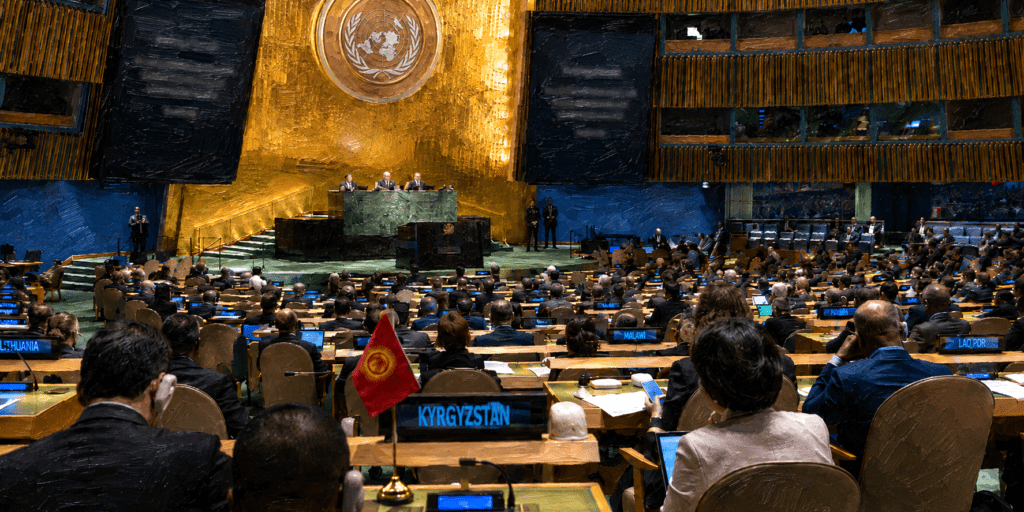
Kyrgyzstan's election to the United Nations Security Council for the 2027-2028 term is more than a diplomatic milestone. It is a case study in how a small state can create political weight without possessing a large economy, military power, or a dominant regional position. On June 3, Kyrgyzstan won its first-ever seat on the Security Council after a competitive four-round contest with the Philippines for the Asia-Pacific Group vacancy. Bishkek led from the first round, with 105 votes against Manila's 85, and increased its support through each subsequent ballot. It finished with 142 votes to 49. The result is significant because this was not an uncontested regional rotation. Kyrgyzstan had to assemble a qualified two-thirds majority across the wider UN General Assembly. That required more than support from its immediate neighbors. Bishkek had to build support across regions, institutions, and political blocs. The deeper lesson is that small-state agency should not be measured only by material resources. It should also be measured by the ability to assemble coalitions. A Campaign Larger Than Kyrgyzstan Kyrgyzstan's campaign was not presented simply as a request for national recognition. President Sadyr Japarov framed the bid as a question of representation. When Kyrgyzstan intensified its campaign in 2024, he drew attention to the number of UN member states that had never served on the Council and argued for broader representation, particularly for African countries. Bishkek also positioned itself as a voice for small, developing, landlocked, and mountainous states facing security, climate, and connectivity challenges. That framing gave the vote wider political weight. Kyrgyzstan could not outspend larger states; it could not offer a large domestic market or a major security umbrella. But it could translate its limitations into a broader political language: underrepresentation, sovereign equality, regional balance, and the need for smaller states to have a voice in global decision-making. The campaign also received visible regional backing. In December 2025, all five Central Asian presidents endorsed Kyrgyzstan's candidacy, presenting the bid as a regional effort rather than a purely national one. That was the first layer of the coalition. The second was broader. In May 2026, the African Group at the United Nations received a dedicated briefing on Bishkek’s candidacy from Edil Baisalov, Kyrgyzstan’s newly appointed ambassador to the United States and a special envoy of the president. This followed Kyrgyzstan's public support for wider African representation in the Security Council. Because the UN ballot was secret, it would be impossible to claim that African votes delivered Kyrgyzstan's victory. Nor would it be accurate to reduce the campaign to a simple exchange of support. But the African track was an observable part of a wider coalition strategy. Bishkek aligned its own candidacy with an issue that mattered to a much larger group of states: the imbalance of representation inside the Security Council. From Multivectorism to Coalition Brokerage Central Asian foreign policy is often described through the language of multivectorism. The term usually refers to balancing among Russia, China, the West, Turkiye, and other external powers...

Opinion: Eurasia’s New Corridors Are More Than a Transit Race

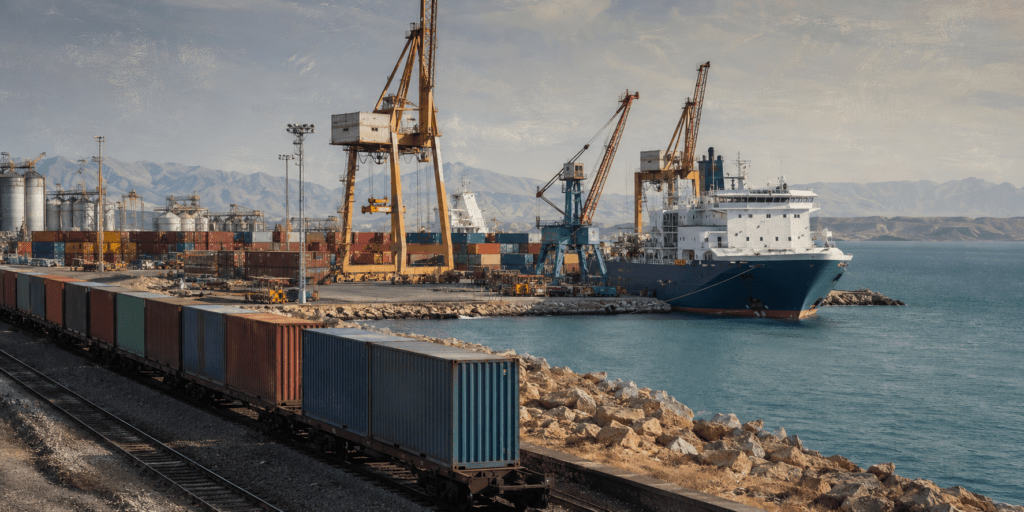
Across Eurasia, new transport corridors are usually described as instruments of rivalry: routes to bypass Russia, ports to outflank competitors, or rail links to shift influence between regions. The conflict around Iran, the rivalry between India and Pakistan, instability in the Afghanistan-Pakistan zone, crises in the Middle East, sanctions, competition over transport routes, and growing struggles for transit influence all reinforce the image of a continent divided by political contradictions. Increasingly, this is the lens through which Eurasia is viewed. The development of transport routes and connectivity is now often explained through the logic of rivalry. Some corridors are described as alternatives to others. Certain ports are positioned against competing ports. Routes are increasingly perceived as tools of competition, circumvention, or geopolitical influence. The continent can also be viewed differently. Alongside political crises, another reality is visible: the continent continues to connect itself through new routes and networks. Railways, ports, energy grids, dry ports, container corridors, digital cables, and trade chains are gradually linking spaces that only recently were seen as separate regions. In many ways, Eurasia has always been a space of movement, exchange, and connectivity. The Silk Road Was a Network, Not a Single Route A recent article by News Central Asia made a simple but important observation: the Silk Road functioned because it belonged to everyone. This idea contains one of the central lessons of Eurasian history. The Silk Road was never a single road. It was not one unified highway built according to a master plan or controlled by a single center. For centuries, the continent was connected by a vast network of caravan routes, maritime pathways, mountain passes, cities, and trade hubs through which goods, people, knowledge, and ideas circulated. Some routes gained importance while others temporarily declined. States, empires, and commercial centers changed. New pathways emerged. Yet the network itself endured. The strength of the Silk Road lay not in one route, but in the multiplicity of connections. When one corridor became unsafe, trade shifted elsewhere. When political conditions changed, commerce adapted to a new geography. The continental network remained flexible and multilayered. This offers an important lesson for today’s Eurasian space as well. Many modern transport corridors did not emerge from nothing. In many respects, they follow historical logic. Railways have replaced caravan paths, dry ports have succeeded old trade hubs, and container routes continue along directions in which goods moved for centuries. Corridors and the Logic of Rivalry Today, most transport and economic corridors are interpreted as competing projects. Nearly every new route is framed through confrontation, alternatives, or attempts to bypass another direction. The Middle Corridor is often described as an alternative to northern routes. The International North-South Transport Corridor is presented as a separate geo-economic axis. Trans-Afghan projects are portrayed as competitors to other links between Central and South Asia. Chabahar and Gwadar are depicted as rival ports. Even the South Caucasus transport hub is increasingly viewed through the prism of struggles over control of routes and flows. Yet historically,...

Opinion: Water Without a Guarantor – Central Asia’s Next Security Test

The Fourth High-Level International Conference on the International Decade for Action, “Water for Sustainable Development,“ taking place in Dushanbe on May 25-28, comes at a difficult moment. Central Asia's water problem is no longer only about environmental management; it is moving into the field of regional security. The conference agenda is familiar and necessary: climate, investment, innovation, transboundary cooperation, and the implementation of the Water Action Decade. The harder question is what happens outside the conference hall. Does Central Asia still have a credible way to stop water stress from becoming an interstate crisis? For decades, the region operated in a post-Soviet setting in which Moscow shaped many security calculations, even though it was never a formal water arbiter. That setting has weakened. Russia has not disappeared from Central Asia, and it still retains military, economic, and institutional leverage. But since 2022, its role as the assumed external stabilizer has become less convincing. The result is not a simple vacuum. It is a more awkward reality: a region with many outside actors, but no trusted water-security guarantor. The Old Backdrop Is Weakening Central Asia's water system was built around a Soviet-era division of functions. Upstream republics, Tajikistan and Kyrgyzstan, controlled the mountains, reservoirs, and hydropower potential. Downstream republics, Uzbekistan, Kazakhstan, and Turkmenistan, depended on seasonal water flows for agriculture, food security, and social stability. The Soviet system managed those tensions through central planning. After independence, cooperation became more fragile. Water, energy, borders, electricity, and agriculture were separated into national strategies. The rivers, however, remained transboundary. For many years, Russia remained the largest external power around which regional security calculations were organized. That did not make Moscow an effective water manager, but it helped shape the political environment. Today, that environment has changed. The CSTO did not prevent the Kyrgyz-Tajik border escalations of recent years. Kyrgyzstan and Tajikistan eventually reached a border agreement through direct negotiation rather than outside enforcement. That difference is not academic. Water disputes are rarely settled by conferences alone. They need trusted channels for mediation, compensation, and restraint when pressure builds. Central Asia has plenty of statements about cooperation. It has fewer tools for managing coercion when water becomes scarce. Three Pressure Points The region's water-security stress is already visible in three places. The first is Afghanistan's Qosh-Tepa Canal. The canal draws water from the Amu Darya, a river system critical for Uzbekistan and Turkmenistan. Because Afghanistan was not part of the old Soviet water-allocation arrangements, the Taliban government is creating a new upstream reality outside the inherited regional framework. Estimates of the canal's downstream impact vary widely. Some analyses suggest it could divert between 15 and 30% of the Amu Darya's flow, depending on the completion timeline, irrigation efficiency, and water-management practices. The Times of Central Asia previously reported that reduced Amu Darya flows could indirectly affect Kazakhstan if Uzbekistan compensates by drawing more heavily on the Syr Darya. Carnegie has described the Qosh-Tepa as a serious test for regional water cooperation. The second pressure point...