Over the past year, Georgia has shifted its focus towards Central Asia, establishing strategic partnerships with Kazakhstan and Uzbekistan. The country has long-term plans for the region in several development areas, including trade and transport logistics.
However, the current phase of Georgian–Central Asian relations is not solely based on economic pragmatism. It should also be viewed as a means of preserving sovereignty in the face of global challenges that are catalyzing the old-world order to collapse. In this context, strategic connectivity can be defined as a vital component of small states’ long-term stability and security, placing it on a par with defense capabilities.
By intensifying political and economic ties with Tbilisi, Tashkent is seeking to reinforce the Western orientation of its foreign policy. This is necessary to successfully balance between the major powers and minimize the risk of becoming overly dependent on neighboring Russia or China, for example. However, this move should not be perceived as a counter to the geopolitical ambitions of non-regional actors in Central Asia and the South Caucasus. It is devoid of political overtones and reflects the parties’ desire to strengthen their sovereignty based on shared economic interests and opportunities.
The Trans-Caspian International Transport Route (Middle Corridor) is the key driver in this dynamic, and its significance extends far beyond transport connectivity. It is a mutually beneficial initiative whose ultimate goal is to ensure regional stability and sustainable economic growth.
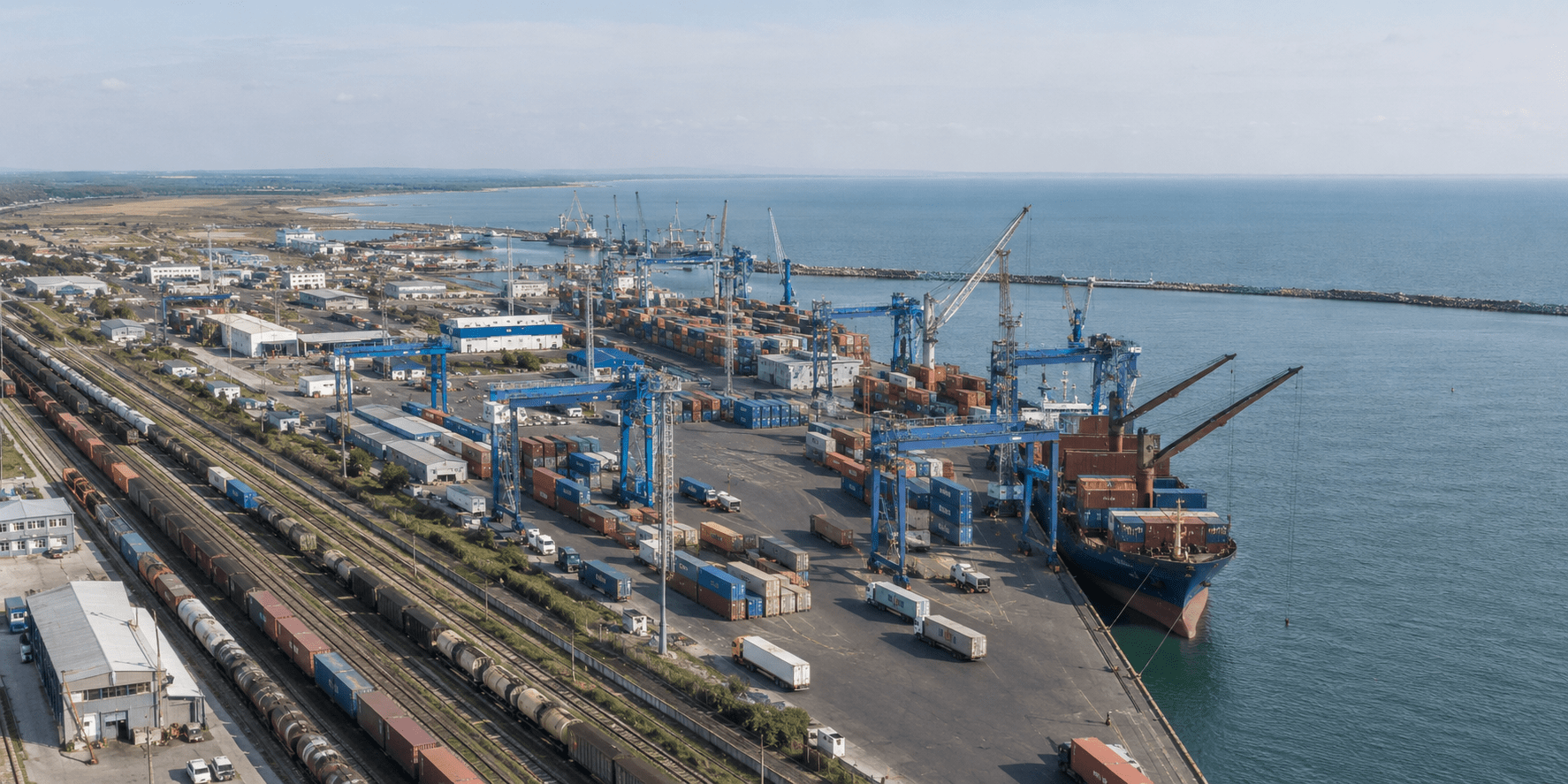
Thus, Uzbekistan gains an alternative route to the European Union market — the country’s third-largest trading partner — via the Georgian ports of Poti and Batumi on the Black Sea coast. Meanwhile, the Trans-Caspian route provides Georgia with access to the rapidly growing markets of East and South Asia via Uzbekistan and neighboring countries. The new transit corridor concepts promoted by Uzbekistan in the context of the expanding Central Asian partnership deserve special attention.
Tashkent and Tbilisi have enormous potential to develop transport cooperation by establishing intercontinental logistics chains: China–Kyrgyzstan–Uzbekistan–Turkmenistan–Azerbaijan–Georgia–Turkey/EU, and India–Pakistan–Afghanistan–Uzbekistan–Kazakhstan–Azerbaijan–Georgia–EU. Both projects involve connecting the China-Kyrgyzstan-Uzbekistan (CKU) railway and the Trans-Afghan Railway Corridor (the Kabul Corridor), which are an absolute priority for Uzbekistan, with the Middle Corridor. This will significantly increase the republic’s exports of transport services by attracting additional transit flows from the South Caucasus, Turkey and Europe, while also expanding the freight base for the aforementioned railway corridors.
The issue of jointly promoting new trade routes along the east-west and north-south axes (from Europe to China and India, respectively) through Uzbekistan requires ongoing expert discussion to amplify its relevance.
To fully realize its own transit potential, it is insufficient for Uzbekistan to focus solely on the infrastructure development of the Middle Corridor. This is because, even after the launch of the China–Kyrgyzstan–Uzbekistan railway, the country’s ability to attract additional transit cargo flows would remain very limited due to Kazakhstan’s dominance in rail transport between the EU, Central Asia, and China via the Caspian Sea.
For Uzbekistan, it is far more important to extend the Middle Corridor to China and India. This would ensure a flow of cargo in the opposite direction from the Caspian Sea to East and South Asia, using the capacity of the planned railways through Afghanistan (the Kabul Corridor) and Kyrgyzstan (CKU). This could stimulate Azerbaijan’s and Georgia’s trade relations with Asia’s largest economies, fueling their practical interest in the reliable and efficient freight transport routes being developed under Tashkent’s leadership.
The investment aspect of Uzbek-Georgian economic cooperation deserves special attention. In 2025, the volume of Uzbek cargo transported via the Middle Corridor surpassed 1 million tons. Tashkent plans to establish a logistics hub with an accompanying industrial zone at the Port of Poti. The creation of a merchant fleet on the Caspian Sea was also announced earlier. However, the economic feasibility of such capital-intensive projects is questionable.
Preliminary estimates by the World Bank suggest that the volume of cargo transported along the Middle Corridor will reach 11 million tons by 2030. Of that total, transit cargo will account for 4.4 million tons, including 1.3 million tons of cargo transported from Uzbekistan to Europe via the Caspian Sea. However, given the current situation in the Strait of Hormuz, these figures are likely to be slightly higher, but not high enough to guarantee a return on the capital expenditure that Uzbekistan will incur as an investor in the Middle Corridor’s infrastructure. This is because the intensive use of the route by logistics companies is still limited by multimodality, high transport costs, low levels of digitalization, and persistent non-tariff barriers.
There remains a need for operational compatibility between the transport and information systems of the countries located along the Middle Corridor, on which the success of its practical implementation largely depends. The competitiveness of an international transport project is determined more by the effectiveness of the management model than by the quality of the infrastructure. To ultimately achieve a unified, coordinated mechanism, it is necessary to harmonize technical and technological standards, as well as legal and administrative requirements, across all segments of the logistics chain. Combined with the implementation of digital solutions in the transport process, this paves the way for seamless logistics, enhancing the efficiency and reliability of the trade route.
In this regard, it is recommended to establish a joint electronic platform for organizing and coordinating freight transport on the basis of the CASCA+ (Central Asia – South Caucasus – Anatolia+) transport corridor, launched in 2019 by Uzbekistan, Kyrgyzstan, Turkmenistan, Azerbaijan, and Georgia, with Turkey joining in 2021.
The views expressed in this article are those of the author and do not necessarily reflect the official policy or position of the publication, its affiliates, or any other organizations mentioned.