When people think of Uzbekistan’s architectural heritage, the images are familiar: the turquoise domes of Samarkand, the madrasas of Bukhara, Khiva’s walled city, and the monuments of Shakhrisabz.
But Uzbekistan’s history did not stop with the Silk Road.
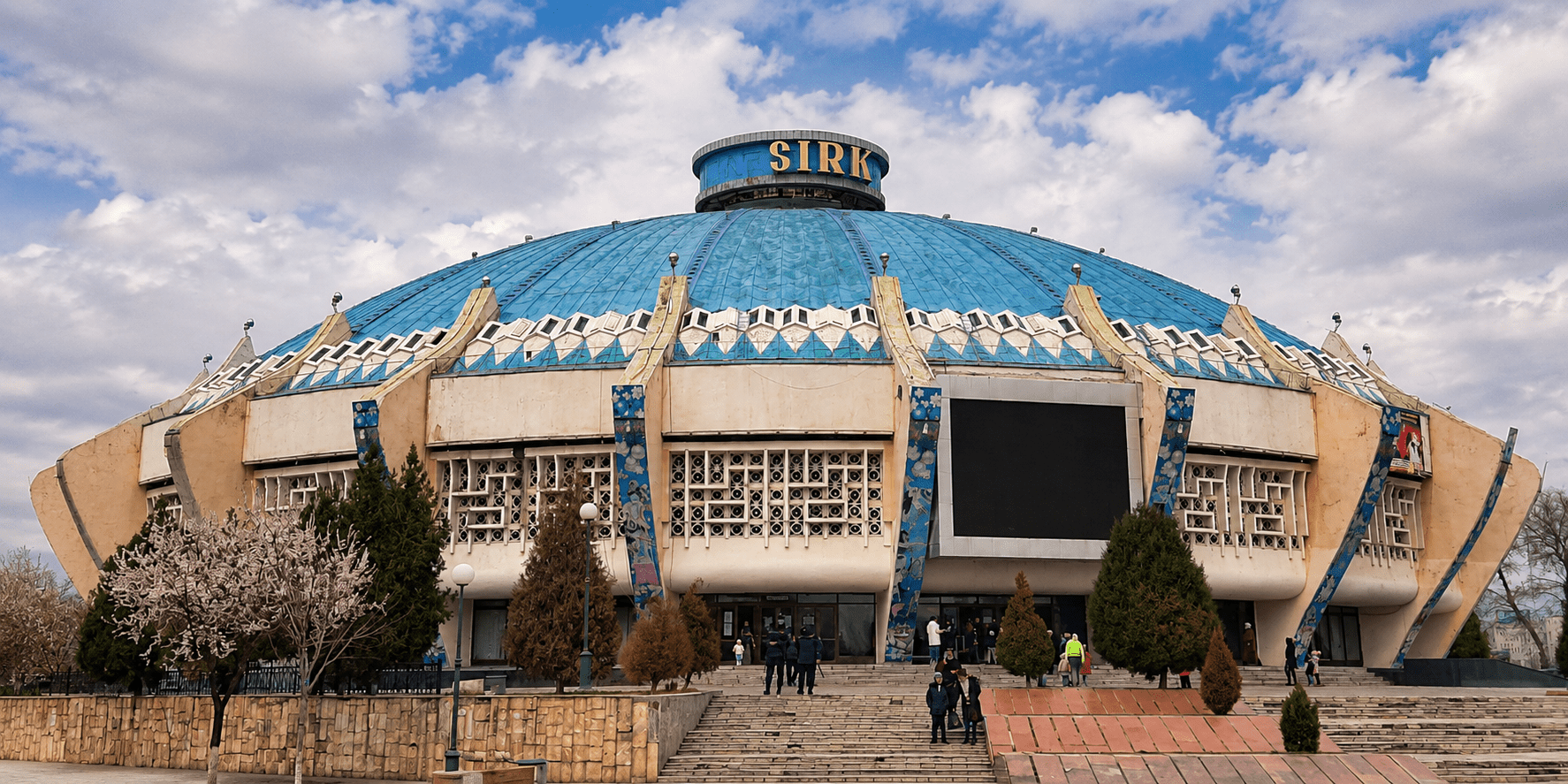
At its 48th session in July, UNESCO inscribed “Tashkent Modernist Architecture. Modernity and Tradition in Central Asia” on the World Heritage List. The new site brings together ten buildings and urban complexes constructed between the 1960s and the early 1990s, during the period in which Tashkent was dramatically rebuilt following the 1966 earthquake.
The inscription deserves to be celebrated. More importantly, it expands the definition of what Uzbek heritage can be.
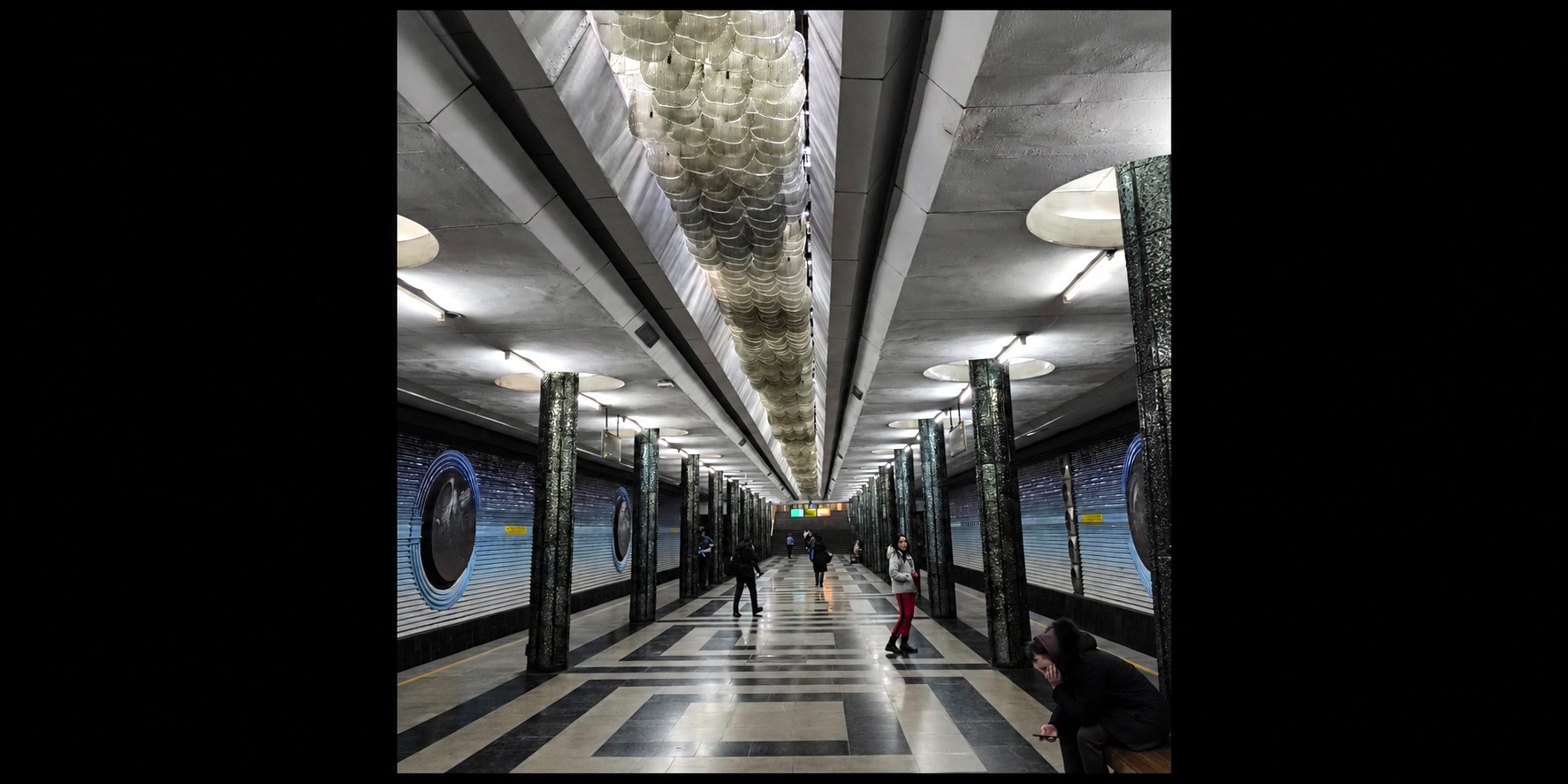
Kosmonavtlar Metro Station, Tashkent; photo: Mathieu Lemoine
These buildings do not belong to the world of caravanserais and Timurid courts. They represent another layer of the country’s history: the ambitious and highly creative transformation of Soviet-era Tashkent.
For decades, Central Asian heritage has often been viewed through a chronological hierarchy. The older a monument, the easier it is to recognize as heritage. Timurid architecture is obviously precious. A concrete building from the 1970s can appear more expendable.
Tashkent shows why that distinction is too simple.
UNESCO notes that the architecture developed after the earthquake combined industrialized construction and seismic engineering with local climatic, cultural and material conditions. The result was not simply Soviet modernism transplanted to Central Asia, but a distinct architectural language adapted to Tashkent.
This broader understanding of heritage comes at an important moment.
Uzbekistan is modernizing rapidly. Its cities are growing, tourism is expanding, infrastructure is improving and redevelopment is transforming urban space. Much of this change is necessary and welcome.
Historic neighborhoods cannot be expected to function as open-air museums. Residents need reliable drinking water, sewage systems, heating, electricity, internet access, waste collection, accessibility, safe streets and comfortable housing.
A leaking pipe is not “authenticity.”
The more difficult question is how modernization takes place.
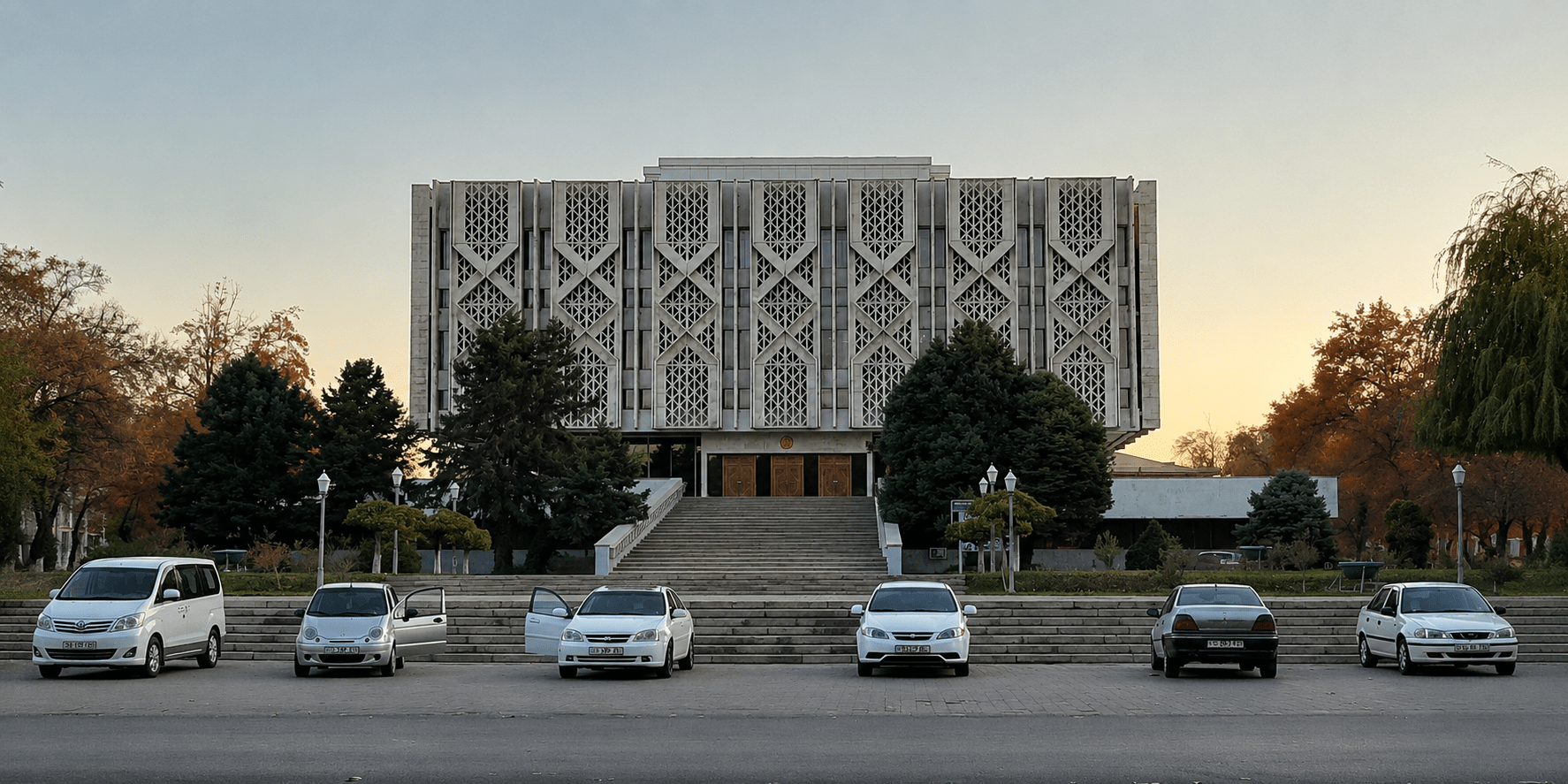
Tashkent Modernist State Museum of History; photo: Mathieu Lemoine
Uzbekistan has already experienced how delicate that balance can be. In Shakhrisabz, large-scale redevelopment substantially altered the historic urban fabric. The historic center was placed on UNESCO’s List of World Heritage in Danger in 2016 and remains there today.
The experience offers an important lesson: preserving monuments is not necessarily the same as preserving a city.
A city can retain its most famous madrasa, mosque or mausoleum while losing part of its heritage if the streets, neighborhoods, businesses and communities surrounding them disappear.
The pressure is not only architectural.
As tourism grows and historic centers become more desirable, economic incentives change. Houses can become hotels and restaurants. Businesses serving residents can give way to businesses serving visitors. Traditional workshops can struggle with higher costs. Redevelopment can create pressure on residents to relocate.
Bukhara illustrates why this is important.
Its identity rests not only on monumental architecture but on a living economy of craftsmanship. Gold embroidery, ceramics, jewelry, woodwork and other trades remain sources of employment as well as cultural identity.
If historic buildings survive while the craftspeople, workshops, neighborhood shops and families around them gradually disappear, something important has still been lost.
Heritage is architectural, but it is also social and economic.
This does not mean opposing investment or rising prosperity. Better housing, successful businesses and improved public infrastructure can benefit residents enormously. The challenge is ensuring that the value created by heritage does not become detached from the communities that have maintained it.
There is also a tourism argument for getting this balance right.
Visitors may arrive because of the Registan, Poi-Kalyan or Itchan Kala. But what often makes the journey memorable is everything between the monuments: residential lanes, a neighborhood bakery, an old courtyard, a working market, or craftspeople producing objects that have not been manufactured solely for tourists.
The appeal of these places lies partly in the fact that they remain cities rather than stage sets.
That authenticity has economic value.
If Uzbekistan wants visitors to stay longer, travel beyond a small number of landmarks and return, the texture of its cities matters alongside the monuments themselves.
Modern infrastructure and authentic urban life are therefore not opposing objectives. Water pipes can be replaced. Heating can be modernized. Streets can become safer and more accessible. Housing standards can improve. The difficult task is doing so without automatically replacing the urban fabric above them.
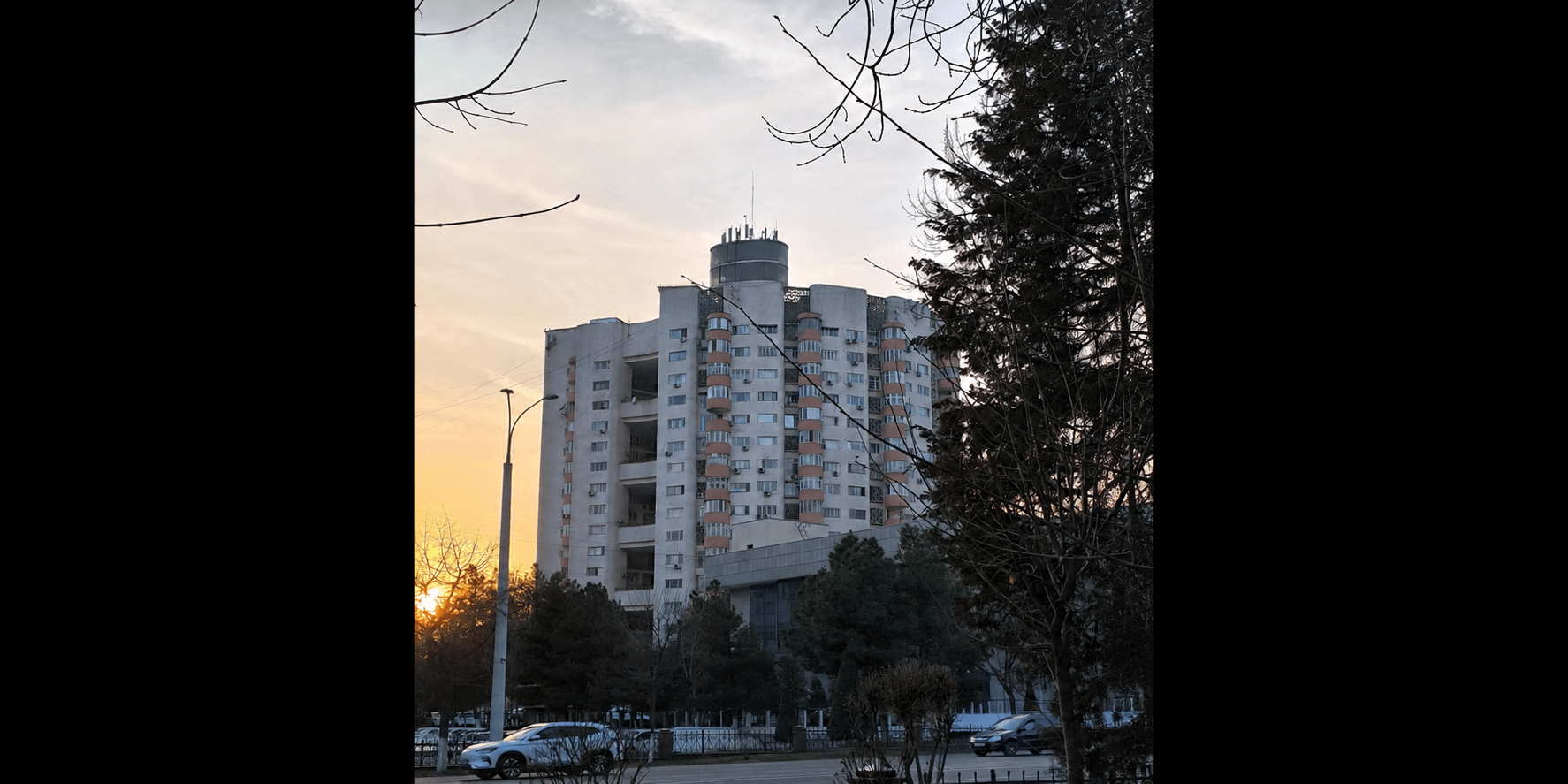
Zhemchug Pearl Residential Building, Tashkent; photo: Mathieu Lemoine
This principle is already reflected in UNESCO’s approach to Samarkand. Its heritage value includes not only the Registan and other monumental ensembles, but also traditional neighborhoods, courtyard houses and the city’s successive historical layers. UNESCO has also welcomed steps by Uzbekistan to improve planning, cancel some demolition and development projects, and integrate a Historic Urban Landscape approach into Samarkand’s master planning.
Tashkent’s new recognition raises a broader question as well: which periods of history belong in Uzbekistan’s national story?
Since independence, the country has understandably restored prominence to historical figures, monuments and traditions that reinforce an independent national identity.
But a confident national identity does not require cities to represent only one historical period.
Uzbekistan contains remarkable layers of history: ancient settlements, Islamic and Timurid architecture, Russian imperial influences, Soviet modernism and an increasingly recognizable architecture of independence.
They need not compete.
Preserving Soviet-era modernism does not require nostalgia for the political system that produced it. Buildings outlive regimes. Over time, they become part of the memories, identities and everyday experiences of the people who use them.
That is what makes the new UNESCO inscription especially encouraging. It suggests that heritage can be understood not as a search for one idealized historical moment, but as continuity.
Uzbekistan now has an opportunity to demonstrate that modernization does not require choosing between a usable city and a historic one, between national identity and historical complexity, or between better infrastructure for residents and authenticity for visitors.
The Silk Road made Uzbekistan famous.
But the centuries that followed are also part of its heritage.