• KGS/USD = 0.01144 0%
  • KZT/USD = 0.00211 0%
  • TJS/USD = 0.10526 0%
  • UZS/USD = 0.00008 0%
  • TMT/USD = 0.28530 0%
  • KGS/USD = 0.01144 0%
  • KZT/USD = 0.00211 0%
  • TJS/USD = 0.10526 0%
  • UZS/USD = 0.00008 0%
  • TMT/USD = 0.28530 0%
  • KGS/USD = 0.01144 0%
  • KZT/USD = 0.00211 0%
  • TJS/USD = 0.10526 0%
  • UZS/USD = 0.00008 0%
  • TMT/USD = 0.28530 0%
  • KGS/USD = 0.01144 0%
  • KZT/USD = 0.00211 0%
  • TJS/USD = 0.10526 0%
  • UZS/USD = 0.00008 0%
  • TMT/USD = 0.28530 0%
  • KGS/USD = 0.01144 0%
  • KZT/USD = 0.00211 0%
  • TJS/USD = 0.10526 0%
  • UZS/USD = 0.00008 0%
  • TMT/USD = 0.28530 0%
  • KGS/USD = 0.01144 0%
  • KZT/USD = 0.00211 0%
  • TJS/USD = 0.10526 0%
  • UZS/USD = 0.00008 0%
  • TMT/USD = 0.28530 0%
  • KGS/USD = 0.01144 0%
  • KZT/USD = 0.00211 0%
  • TJS/USD = 0.10526 0%
  • UZS/USD = 0.00008 0%
  • TMT/USD = 0.28530 0%
  • KGS/USD = 0.01144 0%
  • KZT/USD = 0.00211 0%
  • TJS/USD = 0.10526 0%
  • UZS/USD = 0.00008 0%
  • TMT/USD = 0.28530 0%

Viewing results 1057 - 1062 of 2395

Kyrgyz Prime Minister: Labor Migrants From EAEU Should Not Be Discriminated Against on Territory of the Union

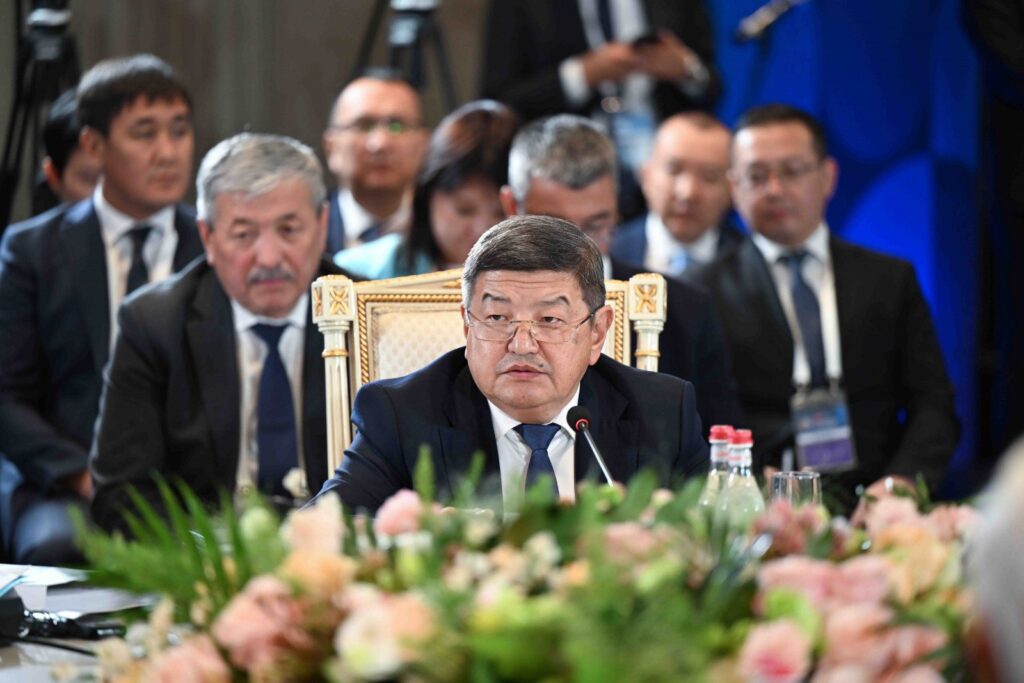
Speaking at a meeting of the Eurasian Intergovernmental Council in Yerevan, Kyrgyz Prime Minister Akylbek Japarov said that tightening migration laws should not apply to citizens from EAEU countries. According to Akylbek Japarov, increasing trade between EAEU countries and developing cooperative ties is the basis for sustainable economic growth. However, the main participants in any integration are people, so the attitude toward the citizens of the EAEU countries in any state of the Union should be the same. “Such a level of integration has been reached, when business and citizens of member states understand and deeply believe in the unity of the economic union (EAEU), and respectively require the same attitude to themselves being on the territory of any of the EAEU countries,” said the head of the Cabinet. Therefore, according to Japarov, the leadership of the EAEU countries should pay special attention when tightening migration legislation and adjust their attitudes toward migrants from union countries. Following the terrorist attack on the Crocus City Hall near Moscow, the Russian authorities significantly tightened migration legislation. Thousands of citizens, mainly from Tajikistan and Uzbekistan, were subjected to forced deportation. The restrictions also affected Kyrgyz citizens, although the country is a member of the EAEU. “We proceed from the fact that legislative initiatives should not contradict the norms of the EAEU treaty; that is, they should not apply to our working citizens and members of their families. Both in the documents initiated by state structures and in the public space, it is necessary to separate the rights of citizens of the EAEU countries from those of countries that are not part of it,” Japarov emphasized. According to official data, about half a million Kyrgyz citizens work in Russia. The unofficial figure may be two or three times higher.

Children’s Delphic Games Open in Kyrgyzstan

The First Open Children's Delphic Games for CIS countries has begun in Bishkek. The opening ceremony was held at the Toktogul Satylganov Kyrgyz National Philharmonic. The event strives to revive the ancient Greek traditions of the Delphic Games, which took place in the city of Delphi and were dedicated to art and culture. The competition program this year includes competitions for piano, violin, classical guitar, pop and solo singing, folk dance, and DJing. The festival features folk instruments, arts and crafts, and sign language songs. Asel Chynbaeva, Commissioner for Children's Rights, opened the Games by speaking about the importance of the Delphic Games as a platform for cultural exchange and showcasing talent among young people from Eurasian countries. This year special attention is being paid to the Paradelphi nomination, which includes the performance of works in sign language. This emphasizes the importance of inclusiveness and demonstrates how art can overcome barriers and unite people. The Games will run until October 5.

China Officially Joins the Middle Corridor

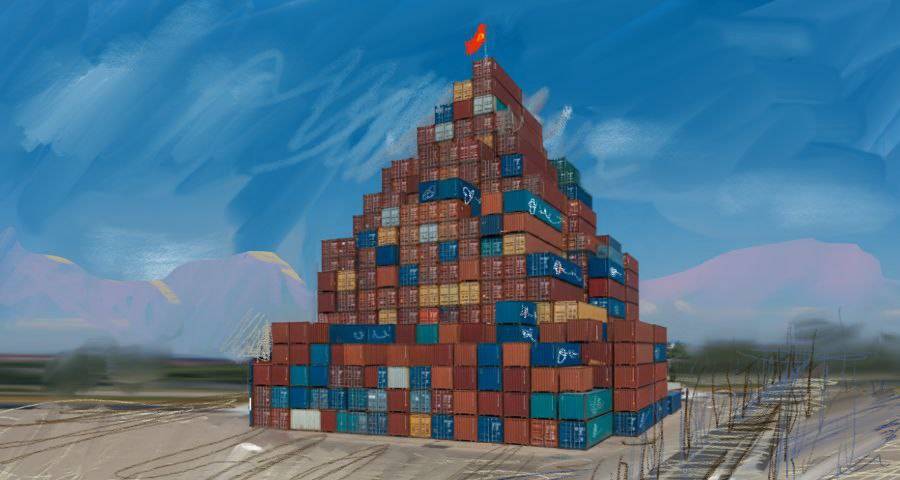
It was announced during the 8th International Silk Road Expo in Xi’an in September 2024 that China will formally join the Middle Corridor under the guise of participation by the China Railway Container Transport Corporation (CRTC). This move signals a growing reliance on Central Asia’s trade-route infrastructure potential. China's shift to overland routes is part of a broader strategy to diversify away from traditional maritime routes through chokepoints like the Strait of Malacca, which carry geopolitical risk. Kazakhstan's strategic geographic location naturally makes it indispensable to China’s trade, and infrastructure projects currently underway represent a key component of the Middle Corridor’s potential. In July 2024, Kazakh President Kassym-Jomart Tokayev ratified agreements with China aimed at further developing the Middle Corridor, enhancing both road and rail infrastructure. The country has already been upgrading its rail infrastructure, modernizing dry ports like Khorgos on the Chinese border, and expanding transit facilities at the Caspian Sea port of Aktau. The increased flow of goods through Kazakhstan is evident: over 212 container block trains have passed through the country by September 2024, with the number projected to exceed 300 by the year’s end. These build-outs, and particularly Kazakhstan’s modernization of its railways, go hand-in-hand with the recently finished improvements along the Baku-Tbilisi-Kars (BTK) line, which connects Azerbaijan to Turkey via Georgia. The expansion of the BTK line's capacity from 1 million to 5 million tons per year has now been completed. As a result of all these efforts, the travel time for goods from China to the Black Sea has been reduced to just 10–12 days, highlighting the efficiency of the corridor. Azerbaijan also plays a crucial role in this economic ecosystem. Baku’s port of Alat serves as a critical transit point for cargo crossing between Central Asia and the South Caucasus. Azerbaijan’s collaboration with Kazakhstan, Georgia, and Turkey has led to significant investments in expanding port facilities and upgrading railway systems beyond the crucial BTK link mentioned above. The result is a smoother, more reliable flow of goods from China to Europe. Azerbaijan is winning its bet to become a regional logistics hub. In addition, a Chinese consortium recently secured the contract for the construction of the Anaklia deep-sea port in Georgia, a strategically important site on the eastern edge of the Black Sea. The project was initially awarded to a Georgian-American consortium, but was cancelled in 2020 due to political and legal disputes. Following a new tender process this year, the Chinese consortium emerged as the sole bidder. If supporting infrastructure is adequately developed and the Black Sea’s cargo transit capacity can be significantly enhanced, then the Anaklia port could become a critical node in the Middle Corridor, enhancing its role in Eurasian trade and bolstering regional connectivity. China’s increased reliance on Central Asian, trans-Caspian, and South Caucasus routes is not just about efficiency. It is also a strategic diversification to mitigate the risks posed by geopolitical instability in other regions. Traditional sea routes through maritime choke-points as well as overland routes like...

Kazakhstan: Investigate Airstrike on UAE Residence in Sudan

Kazakhstan condemns a Sept. 29 airstrike on the Khartoum residence of the top diplomat of the United Arab Emirates in Sudan, the Kazakh Ministry of Foreign Affairs said on Tuesday. “We firmly believe that any kind of violence against diplomatic missions and their staff is absolutely unacceptable,” the ministry said in a statement. It said the airstrike violated the security of diplomatic missions as guaranteed under the Vienna Convention on Diplomatic Relations and appealed for an investigation to bring “all those involved to justice.” The United Arab Emirates said the airstrike was carried out by a Sudanese army aircraft and that it caused extensive damage to the building. The Sudanese Armed Forces, or SAF, denied responsibility. The SAF has previously accused the United Arab Emirates of supporting its enemy in Sudan’s civil war, a paramilitary group called the Rapid Support Forces.

Lukashenko Turns Up Charm After Kazakhstan Kerfuffle

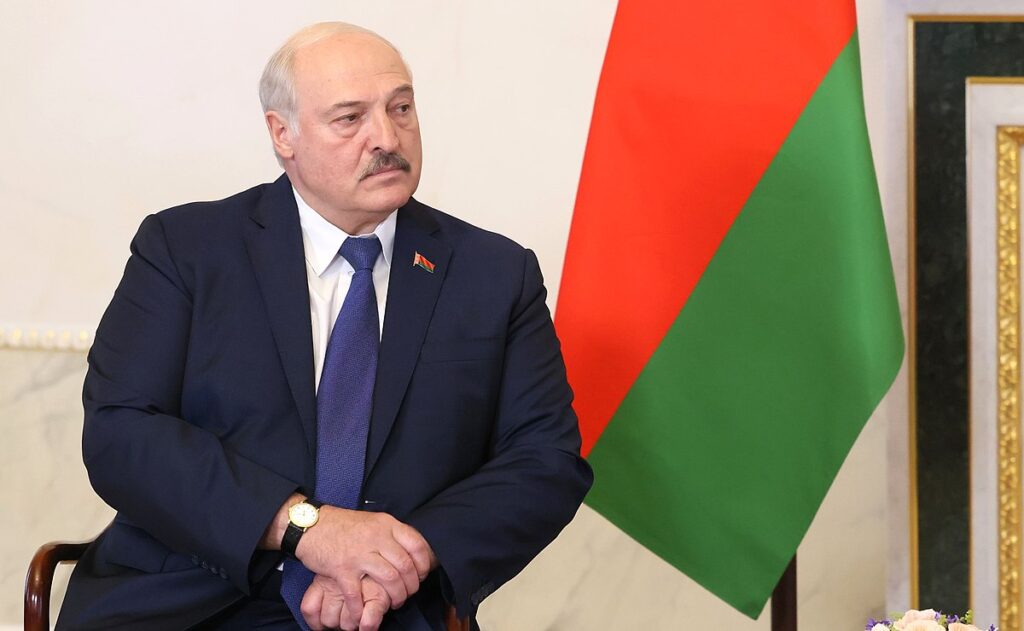
In August, Belarusian leader Aleksandr Lukashenko drew a Kazakh rebuke after he criticized Kazakhstan for what he described as its tepid support for Russia. Lukashenko was a model of diplomatic etiquette on Tuesday, effusively praising Kazakhstan as a close ally during a ceremony at which he received credentials of foreign ambassadors. “Today there are practically no areas where we do not have common interests. Annual $1 billion trade turnover and successful projects in industrial interaction testify to the high dynamics of bilateral cooperation,” the longtime Belarusian ruler said of Kazakhstan. Lukashenko´s comments were reported by Belarus Today, a state-run media group. The Belarusian president also thanked Kazakh President Kassym-Jomart Tokayev for supporting Belarus when it became a member of the Shanghai Cooperation Organization, a regional security group, earlier this year, according to Belarus Today. Kazakhstan was chair of the organization at the time. Things weren’t as convivial in August when Lukashenko, a backer of Russian President Vladimir Putin, suggested in an interview with Russian state television that Kazakhstan was exploiting Russia, now in a third year of war since its full-scale invasion of Ukraine in February 2022. “We are not starting to cheat like some post-Soviet states. They want to take something from Russia, but give nothing in return,” Lukashenko said at the time. The longtime leader of Belarus, who has crushed opposition over 30 years in power, referred to the dispatch of troops from regional countries to Kazakhstan in a show of support after protests and riots erupted there in January 2022, killing more than 200 people. Most of the troops were Russian; a small contingent came from Belarus. Kazakhstan’s Ministry of Foreign Affairs summoned the Belarusian ambassador after Lukashenko’s remarks and said, in an apparently oblique reference to the Ukraine war, that “all disagreements between states should be resolved by political and diplomatic means.” Kazakhstan’s new ambassador in Belarus is Yerlan Baizhanov, formerly the country’s top diplomat in Vietnam, Cambodia and Laos.

Tashkent Teacher at Center of Political Debate Arrested for Second Violent Outburst

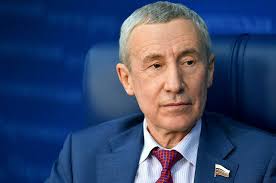
The Times of Central Asia previously reported that оn September 23, a teacher at a school in Tashkent’s Chilonzor district was filmed slapping a student when the child asked for the Russian language class to be taught in Russian. The Children’s Ombudsman of Uzbekistan, Surayyo Rahmonova, has begun an investigation into the incident. The spokesperson for Russia's Ministry of Foreign Affairs, Maria Zakharova, said that she was worried about the content of the video published online, and asked Uzbekistan to make a legal assessment of this incident. In response, Alisher Qodirov, the leader of Uzbekistan’s Milli Tiklanish (National Revival) party and deputy speaker of the lower house of parliament, urged Russia not to interfere in Uzbekistan's domestic affairs, commenting that “it would be better for [Russia] to deal with their own affairs [which are] full of problems than to deal with our internal issues." Russian Senator Andrei Klimov reponded to Qodirov’s statement, saying that “inter-ethnic relations are very delicate” between Uzbeks and Russians. He called the teacher’s actions “an offense, maybe more” and expressed bewilderment at Qodirov’s remarks. The teacher has since committed other offenses. On September 24, she went to her daughter’s school in another district of Tashkent, where she argued with the school administration and used physical force against the deputy director. When officers from the National Guard and the Interior Administration intervened to restore order, the teacher resisted their demands. She was later sentenced to seven days of administrative detention and fined.