• KGS/USD = 0.01144 0%
  • KZT/USD = 0.00213 0%
  • TJS/USD = 0.10605 0.57%
  • UZS/USD = 0.00008 0%
  • TMT/USD = 0.28530 0%
  • KGS/USD = 0.01144 0%
  • KZT/USD = 0.00213 0%
  • TJS/USD = 0.10605 0.57%
  • UZS/USD = 0.00008 0%
  • TMT/USD = 0.28530 0%
  • KGS/USD = 0.01144 0%
  • KZT/USD = 0.00213 0%
  • TJS/USD = 0.10605 0.57%
  • UZS/USD = 0.00008 0%
  • TMT/USD = 0.28530 0%
  • KGS/USD = 0.01144 0%
  • KZT/USD = 0.00213 0%
  • TJS/USD = 0.10605 0.57%
  • UZS/USD = 0.00008 0%
  • TMT/USD = 0.28530 0%
  • KGS/USD = 0.01144 0%
  • KZT/USD = 0.00213 0%
  • TJS/USD = 0.10605 0.57%
  • UZS/USD = 0.00008 0%
  • TMT/USD = 0.28530 0%
  • KGS/USD = 0.01144 0%
  • KZT/USD = 0.00213 0%
  • TJS/USD = 0.10605 0.57%
  • UZS/USD = 0.00008 0%
  • TMT/USD = 0.28530 0%
  • KGS/USD = 0.01144 0%
  • KZT/USD = 0.00213 0%
  • TJS/USD = 0.10605 0.57%
  • UZS/USD = 0.00008 0%
  • TMT/USD = 0.28530 0%
  • KGS/USD = 0.01144 0%
  • KZT/USD = 0.00213 0%
  • TJS/USD = 0.10605 0.57%
  • UZS/USD = 0.00008 0%
  • TMT/USD = 0.28530 0%

Viewing results 31 - 36 of 2424

Cargo Spacecraft Docks at Space Station After Baikonur Lift-Off

A Russian cosmonaut on the International Space Station conducted a manual docking of an arriving cargo spacecraft on Tuesday, two days after the craft lifted off from the Baikonur Cosmodrome in Kazakhstan. The docking would normally be an automatic process, but the Russian space agency Roscosmos had said that an antenna used in that process remained unfolded after the uncrewed Progress MS-33 cargo ship launched on a Soyuz-2.1a rocket on Sunday. Troubleshooting efforts during the journey to the space station, or ISS, failed to fix the problem. On board the space station, cosmonaut Sergey Kud-Sverchkov used a joystick during the manual docking. A live video feed on the NASA website showed that the procedure went smoothly as the cargo ship slowed down and approached its docking port on the Russian segment of the ISS. “Well done, congratulations on your successful work!” Roscosmos said on Telegram. A NASA commentator said the docking process occurred as the space station and cargo spacecraft flew about 400 kilometers over the border between Kazakhstan and Mongolia. The Progress MS-33 had launched from a key Baikonur launch pad that was repaired and used for the first time since it was damaged in a lift-off in November. It carried about 2.7 tons of food, fuel and other supplies to the International Space Station.

Central Asia’s Airspace Is Growing in Value as the Iran Conflict Reshapes Routes

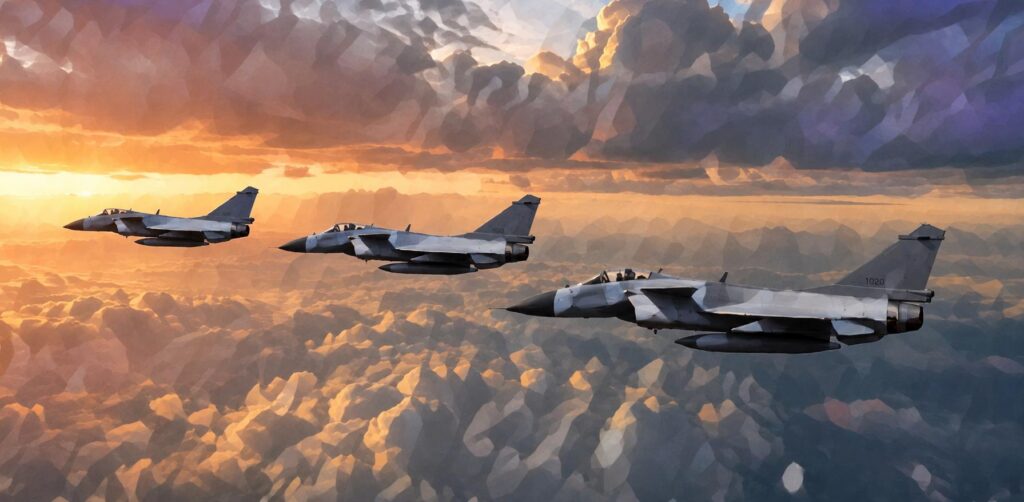
The war involving Iran has made Central Asia’s skies more important, but it has not made them a replacement for the Gulf. The change is narrower and more practical. As previously reported by The Times of Central Asia, the conflict has already reshaped Europe–Asia flight routes, with airlines forced to reroute around high-risk airspace. As EASA’s conflict-zone bulletin for Iran remains in force through March 31, and its broader Middle East and Persian Gulf bulletin advises operators to avoid a wide band of regional airspace, airlines flying between Europe and Asia now have fewer safe and efficient options than they did even a month ago. That matters for Central Asia because the region sits just north of the disrupted corridor. Iran’s airspace is considered high risk and is being widely avoided by airlines, while large parts of the central Middle East corridor are closed or heavily restricted. Safe Airspace’s March 21 summary states that the normal central route has been effectively shut for many operators, while Oman has become a heavily used southern bypass. That leaves a northern arc running through the Caucasus and Central Asia as one of the few workable alternatives for many carriers. The roots of this go back further than this month’s escalation. Since Russia’s full-scale invasion of Ukraine in 2022, many Western and Europe-bound operators have had to rethink routes that once crossed Russian airspace. In January 2025, Uzbekistan Airways began rerouting its Europe flights around Russia and Belarus. The airline said the Tashkent–Munich route grew from 4,849 kilometers to 5,156 kilometers, adding 30 to 40 minutes to each flight. The conflict has now squeezed traffic again, this time from the south. That double squeeze raises a harder question. Can Central Asia handle more strategic weight in the air, not just on a map but in daily operations? Kazakhstan is the strongest candidate. Kazaeronavigatsiya says Kazakhstan’s airspace handled 216,616 flights in the first half of 2025. Of those, 161,029 were flown by foreign airlines in transit or landing operations, while 55,587 were operated by Kazakh carriers. The same state operator lists 124 air traffic service routes with a combined length of 113,530 kilometers. These are substantial figures for a landlocked state positioning itself as a Eurasian transit hub. The country’s broader aviation system has also been expanding. The Civil Aviation Administration of Kazakhstan says airports served 31.8 million passengers in 2025, up from 29.7 million in 2024. Airlines carried 20.7 million passengers, and Kazakhstan’s compliance with international aviation safety standards reached 95.7%. The same report points to a three-year development plan, a new accident investigation center, and continued work on digital systems and urban air mobility rules. Still, higher value does not mean unlimited capacity. Central Asia is not one integrated aviation market. It is a set of separate national systems with uneven infrastructure, uneven investment, and different regulatory speeds. Kazakhstan has scale, but it is also expanding passenger traffic, cargo capacity, and international routes at the same time. More overflights can bring revenue, but...

Tokayev Proposes Turkestan as Venue for Middle East Peace Talks

Kazakhstan’s president, Kassym-Jomart Tokayev, has called for immediate negotiations to resolve the conflict in the Middle East and proposed the city of Turkestan as a venue for talks. Tokayev made the remarks during a visit to the Turkestan region, warning that escalating conflicts worldwide, including the conflict involving Iran, the United States, and Israel, are harming global stability and trade conditions for countries not directly involved in the hostilities. He said the situation in the Middle East has reached a critical stage and that further escalation by Iran, the United States, or Israel would benefit none of the parties. “First and foremost, I call for an end to armed attacks on civilian and economic targets. Then it is necessary to sit down at the negotiating table,” Tokayev said. The president said Kazakhstan is not seeking to mediate in the conflict but is prepared to offer its territory as a neutral platform for negotiations. “I believe such a dialogue could be organized in Turkestan. This would demonstrate the goodwill of the Kazakh people,” Tokayev added, noting that the final decision depends on the parties involved. The choice of Turkestan is both geographic and symbolic. The city is regarded as one of Central Asia’s spiritual centers and an important destination for pilgrims. It is home to the mausoleum of Khoja Ahmed Yasawi, a prominent Sufi poet and thinker. The structure, commissioned in the 14th century by Amir Timur, adds historical resonance to Tokayev’s proposal and is included on the UNESCO World Heritage List. Turkestan’s historical legacy and religious significance make it a potentially neutral and symbolically meaningful setting for peace talks. The proposal also reflects Kazakhstan’s long-standing effort to position itself as a neutral diplomatic platform. Astana has previously hosted international negotiations, including talks on Syria, and has sought to build a reputation as a venue for dialogue between competing powers. Offering Turkestan, rather than the capital, reinforces both the initiative's symbolic and political neutrality. Tokayev’s proposal comes amid continued escalation in hostilities involving Iran and a U.S.-Israel coalition, which intensified in late February following exchanges of missile strikes and air attacks. For Kazakhstan and other Central Asian states, the conflict carries direct implications. Iran’s status as a Caspian littoral country raises additional security concerns for Kazakhstan’s western regions in the event of further escalation. The Times of Central Asia previously reported on disruptions to regional supply chains and transport routes. Volatility in global oil prices and the risk of disruption across Caspian-linked trade routes add further pressure, underscoring how conflicts far beyond Central Asia’s borders can quickly translate into economic and security risks for the region.

War Reaches the Caspian: Central Asia Faces Growing Regional Risk

The United States and Israel's war with Iran began on February 28, 2026. The intensity of the conflict has fluctuated, but daily reports of missile strikes and explosions are increasingly resonating across Central Asia. Meanwhile, Russia’s latest war against Ukraine has continued for 1,466 days since it began on February 24, 2022. Late last year, Ukrainian drones reportedly struck a Russian oil platform at the Filanovsky field in the Caspian Sea, more than 700 kilometers from Ukraine’s nearest border. Ukraine also said the operation targeted the patrol ship Okhotnik, although the extent of the damage was not independently verified. The war in Ukraine has also created serious challenges for Kazakhstan’s oil exports via the Caspian Pipeline Consortium (CPC). Repeated attacks and disruptions have threatened export flows, increased logistical risks, and added pressure on Kazakhstan’s budget revenues. The war against Iran has now brought military action to the Caspian coast of Iran, raising concern for energy producers and transit routes across the wider region. On March 5, Azerbaijan’s Ministry of Foreign Affairs stated that drones launched from Iranian territory struck the Nakhchivan Autonomous Republic. According to the ministry, one drone hit the terminal building at Nakhchivan International Airport, while another crashed near a school in the village of Shekerabad. Azerbaijan demanded a thorough investigation. Iran later stated that it had promised to investigate the incident. Azerbaijan’s Prosecutor General’s Office subsequently opened a criminal case. As of now, tensions remain high, with both sides continuing to exchange accusations, and Azerbaijan maintaining heightened alert measures. More recently, the Israeli Defense Forces confirmed carrying out airstrikes in northern Iran, targeting naval vessels in the port city of Bandar-Anzali on the Caspian coast. The straight-line distance from Bandar-Anzali to Azerbaijan’s capital, Baku, is just over 300 kilometers, and approximately 420 kilometers to Turkmenbashi, a major international seaport and the center of Turkmenistan’s oil-refining industry. The resort zone of Avaza is also located there. By comparison, the distance from Israel to Bandar-Anzali exceeds 1,300 kilometers. These developments are contributing to rising economic uncertainty across Central Asia. The consequences extend beyond transportation and logistics disruptions, with broader implications for regional economies. The U.S. and Israel have not always appeared aligned on what would constitute victory, meaning the measure of success remains difficult to gauge. While the United States and Israel have repeatedly stated that significant damage has been inflicted on Iran’s military infrastructure (including destroying a substantial part of the Iranian navy), there is no publicly available, independently verified evidence confirming the extent of the damage to Iran’s leadership structure following the death of Ali Khamenei, Ali Larijani and other senior Iranian figures, or on Iran’s ability to mount an effective defence. Analysts have described Iran’s military resilience as decentralized, sometimes using the term "mosaic defense," meaning units can continue operating under standing orders even when senior leadership is hit. It is understood that, as part of this strategy, the Iranian military has spent decades refining its ability to operate as independent nodes, each equipped to conduct strikes under...

Xi Jinping and Berdymuhamedov Sr. Discuss Expansion of China-Turkmenistan Partnership

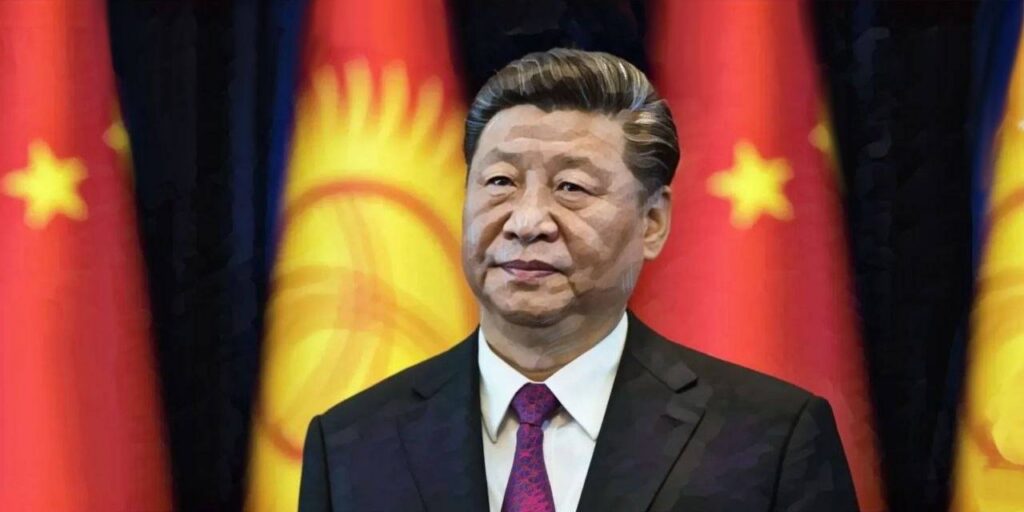
Chinese President Xi Jinping held talks with Gurbanguly Berdymuhamedov, Turkmenistan's former president and leader of its People's Council, during the latter’s official visit to China. The meeting took place on March 18 at the Diaoyutai State Guesthouse in Beijing, according to a statement from China’s Ministry of Foreign Affairs. Xi noted that China had recently completed its annual parliamentary meetings, commonly referred to as the “Two Sessions,” during which key socio-economic priorities were outlined. He said the country’s new development agenda would support modernization efforts and create additional opportunities for international cooperation. The Chinese president said that mutual political support remains central to the comprehensive strategic partnership between Beijing and Ashgabat. He reaffirmed China’s readiness to continue backing Turkmenistan on issues related to sovereignty, territorial integrity, and its internationally recognized policy of permanent neutrality. Xi and Berdymuhamedov discussed expanding cooperation in the energy sector, particularly natural gas supplies, as well as in trade, investment, transport connectivity, agriculture, artificial intelligence, the digital economy, and clean energy. Both leaders also highlighted the importance of aligning China’s Belt and Road Initiative with Turkmenistan’s plans to revitalize historic Silk Road trade routes. Humanitarian cooperation was another focus of the talks, including plans to develop educational and cultural exchanges and establish joint centers. The leaders also discussed coordination on regional security challenges, including efforts to counter terrorism, separatism, and extremism. Berdymuhamedov reaffirmed Turkmenistan’s commitment to the One China principle and expressed readiness to deepen bilateral cooperation in energy, infrastructure, and trade. He said closer ties with China were important for Turkmenistan’s long-term economic development and again noted Beijing’s support for the country’s neutrality policy. Chinese Foreign Minister Wang Yi also attended the meeting. As previously reported by The Times of Central Asia, the visit followed Berdymuhamedov’s trip to the United States in mid-February, the details of which were not fully disclosed. Shortly after his return, Turkmenistan’s President, Gurbanguly's son Serdar Berdymuhamedov, dismissed the country’s ambassador to the U.S. and its permanent representative to the United Nations. No official explanation was provided for the personnel changes.

Trump Invites Tokayev to Miami G20 Summit

U.S. President Donald Trump has invited Kazakhstan’s President Kassym-Jomart Tokayev to visit Miami for the G20 Summit later this year, according to an official statement released by Tokayev’s press secretary, Aibek Smadiyarov. The invitation was reportedly conveyed in a personal letter following the two leaders’ recent meeting in Washington in February, which took place during the inaugural session of the Board of Peace – a platform described by participants as combining diplomatic dialogue with business initiatives aimed at addressing global security and development challenges. According to Smadiyarov, Trump expressed appreciation for Tokayev’s participation in the Washington meeting, and said he would be pleased to welcome him again at the next session of the Board of Peace. Trump also indicated that he hopes Tokayev will attend the G20 Summit scheduled to be held in Miami later this year. The proposed visit reflects continued communication between the United States and Kazakhstan on multilateral initiatives. Tokayev has previously voiced support for the Board of Peace initiative, commenting that it could mobilize investment and diplomatic cooperation to address instability in parts of the Middle East. Kazakh officials have framed participation in such formats as consistent with the country’s long-standing multi-vector foreign policy, which seeks to balance the country's relations with major global powers while promoting regional stability and economic development. Kazakhstan has been seeking to expand economic ties with Western partners while maintaining its role as a key regional transit hub linking Europe and Asia. No official confirmation has yet been issued by the White House regarding the timing or format of the G20 Summit in Miami. Tokayev’s relationship with Trump has so far appeared practical rather than ideological. In 2020, Trump sent Tokayev a letter praising his reform agenda and expressing support for a stronger U.S.-Kazakhstan strategic partnership. Contacts intensified after Trump’s return to office: Tokayev visited Washington in November 2025, later held an extended phone call with Trump in December, and in January 2026 signed the charter of the Board of Peace. Kazakhstan has presented these relations as part of a broader push to turn political access into economic results. During the Washington visit, Tokayev's press service said companies from the two countries signed deals worth more than $17 billion, while Tokayev also highlighted sectors such as energy, critical minerals, transport, finance, education, and AI as areas for potential deeper cooperation. This approach fits Kazakhstan’s long-standing multi-vector foreign policy, a principle Tokayev has described as constructive, balanced, and designed to defend national interests while bringing practical benefits to the country. Kazakhstan tries to keep productive relations with all major centers of power, rather than tying itself too closely to any one of them. For Kazakhstan, that means preserving room for maneuver with neighbors such as Russia and China while also deepening ties with the United States, Europe, Turkey, the Gulf states, and other partners that can provide investment, technology, and market access. Kazakhstan places emphasis on transit routes, diplomacy, and middle-power initiatives. The policy is meant to protect sovereignty, reduce overdependence, and keep...