• KZT/USD = 0.00220
  • TJS/USD = 0.10830
  • UZS/USD = 0.00008
  • TMT/USD = 0.29760
  • KZT/USD = 0.00220
  • TJS/USD = 0.10830
  • UZS/USD = 0.00008
  • TMT/USD = 0.29760
  • KZT/USD = 0.00220
  • TJS/USD = 0.10830
  • UZS/USD = 0.00008
  • TMT/USD = 0.29760
  • KZT/USD = 0.00220
  • TJS/USD = 0.10830
  • UZS/USD = 0.00008
  • TMT/USD = 0.29760
  • KZT/USD = 0.00220
  • TJS/USD = 0.10830
  • UZS/USD = 0.00008
  • TMT/USD = 0.29760
  • KZT/USD = 0.00220
  • TJS/USD = 0.10830
  • UZS/USD = 0.00008
  • TMT/USD = 0.29760
  • KZT/USD = 0.00220
  • TJS/USD = 0.10830
  • UZS/USD = 0.00008
  • TMT/USD = 0.29760
  • KZT/USD = 0.00220
  • TJS/USD = 0.10830
  • UZS/USD = 0.00008
  • TMT/USD = 0.29760
12 October 2026

Viewing results 25 - 30 of 1933

Why Central Asia Is Diversifying Its Arms Suppliers

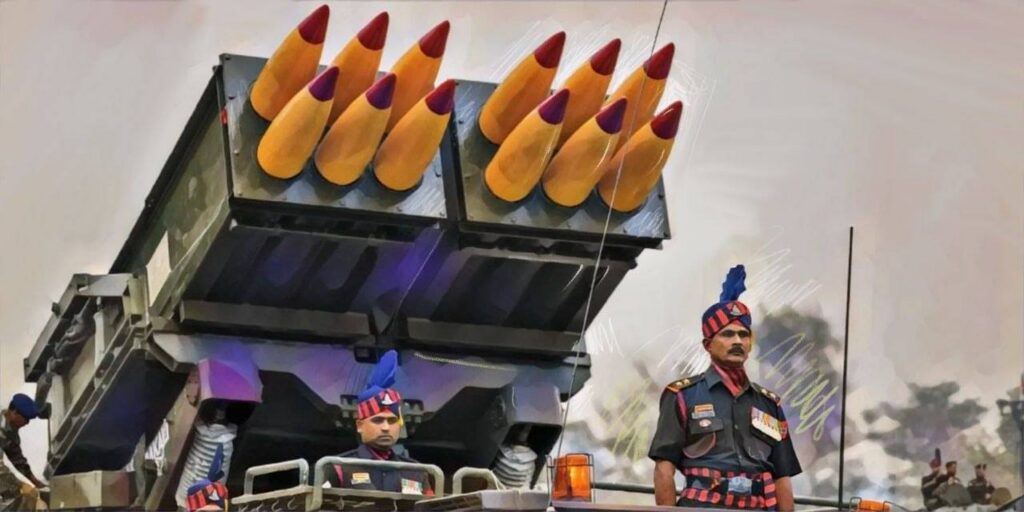
India could become another supplier of major weapons to Central Asia. Indian Masterminds reported in July that Samir V. Kamat, former chairman of India’s Defence Research and Development Organisation (DRDO), said India had exported Akash surface-to-air missile systems to Tajikistan and Turkmenistan. The reported deliveries remain unconfirmed by the recipient governments. Publicly available accounts give no contract values, quantities, or delivery schedules. DRDO says an initial Akash battery has been flagged off for export to friendly foreign countries, without naming the recipients. Akash is a mobile medium-range surface-to-air missile system designed to counter aircraft, helicopters, cruise missiles, and drones. If the reported deliveries are confirmed, they would mark the first publicly known Akash exports to Central Asia following India’s deal with Armenia. The region’s armed forces still rely heavily on Soviet- and Russian-designed equipment, but governments are increasingly buying newer systems from other suppliers. Russia retains a strong position where countries need to maintain Soviet- and Russian-designed equipment already in service. Other suppliers are winning orders for drones and aircraft, extending their role in the region’s defense procurement. The figures illustrate the persistence of Russian influence. According to the Stockholm International Peace Research Institute (SIPRI), Russia accounted for 83% of Kazakhstan’s imports of major arms in 2021–25. These figures measure transfers of major weapons, rather than the full range of military supplies and support. Russia’s exports of major arms, however, fell by 64% in 2021–25 compared with the previous five-year period. Nearly three-quarters of its exports went to India, China, and Belarus. SIPRI attributes much of the fall to reduced deliveries to Algeria, China, and Egypt. The most visible shift has occurred in Uzbekistan. In late August, official footage showed Chinese-built J-10CE fighter jets carrying Uzbek markings. At least six aircraft could be seen. For three decades, Soviet-designed MiG-29s and Su-27s formed the backbone of Uzbekistan’s fighter fleet. Operating the J-10CE requires different training and maintenance arrangements, alongside compatible weapons and ground equipment. The transition moves a key component of the Uzbek Air Force outside its traditional supply chain. On September 25, Brazil’s Embraer delivered the first C-390 Millennium military transport aircraft to the Uzbek Air Force. The handover ceremony took place at the company’s facility in Gavião Peixoto, making Uzbekistan the first C-390 operator in Central Asia. The late-2024 contract includes training to operate the aircraft and covers its upkeep with technical support and spare parts. The aircraft can carry payloads of up to 26 metric tons and can be configured for troop and cargo transport, aerial refueling, medical evacuation, and search-and-rescue missions. Kazakhstan’s military has put Turkish Aerospace Industries’ ANKA drone into service after military trials. In its review of 2024, Kazakhstan’s Defense Ministry reported discussions with Baykar, another Turkish drone maker, on a roadmap for local production of tactical drones and loitering munitions. The latter can remain airborne while searching for a target before striking it. The same review said the Turkish side had offered to provide Bayraktar Kalkan and Bayraktar Mini reconnaissance drones, along with the...
Kazakhstan Takes Part in Abraham Accords Meeting as Trump-Promised Signing Awaits

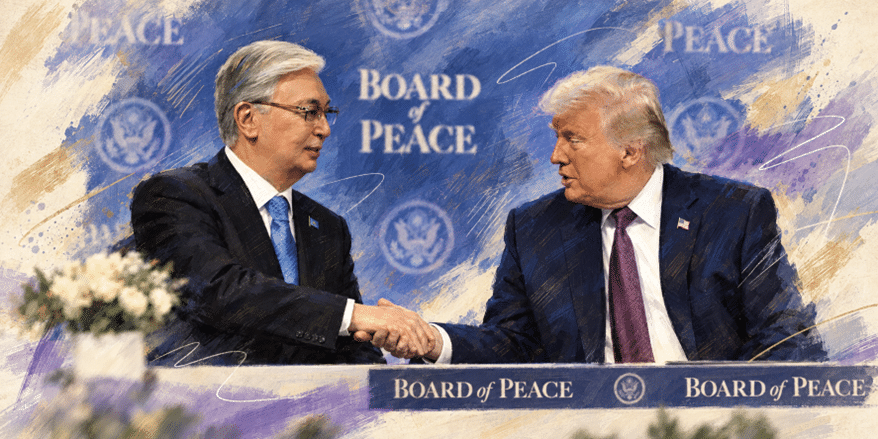
Kazakhstan took part for the first time in an official meeting of Abraham Accords countries on September 24 in New York, as Washington works to revive and expand the framework after nearly three years of disruption following the October 7, 2023 attacks on Israel. The meeting brought together officials from the United States, Israel, the United Arab Emirates, Bahrain and Morocco. It was the first official gathering of the group since October 2023 and was hosted by the N7 Foundation during the UN General Assembly. U.S. Under Secretary of State for Political Affairs Allison Hooker led the American delegation. Kazakhstan is the first Central Asian and first non-Arab Muslim-majority country to join the Abraham Accords, extending a framework originally built around normalization between Israel and Arab states into Central Asia. Erzhan Kazykhan, Special Representative of the President of Kazakhstan for Negotiations with the United States, told CBS News that “We see the Accords as a platform to reinforce political dialogue across the Middle East and neighboring regions,” adding that Kazakhstan sees opportunities to expand trade and investment, strengthen connectivity, promote technological cooperation and create tangible economic opportunities. Kazakhstan and Israel already have longstanding relations. The two countries established diplomatic relations on April 10, 1992 and have maintained embassies and bilateral cooperation for more than three decades. Economic cooperation has been part of the framework from the beginning. The original Israel-UAE Abraham Accords agreement identified energy, agriculture and food security, water, technology and investment among the areas for cooperation. N7 founder Jeffrey Talpins said the next stage should focus on strengthening existing relationships and finding practical areas where participating countries can work together. He said the Accords show what countries can achieve through shared interests and a common vision for a more integrated and prosperous region. During bilateral talks with Israel earlier this year, Kazakhstan and Israel discussed possible joint projects in high-tech agriculture, water resource management and digital technologies. Kazakhstan is also important to energy and critical-mineral supply chains. It is the world’s largest uranium producer and an increasingly important U.S. partner on critical minerals and secure supply chains. Within Central Asia, Kazakhstan accounts for 56.4% of the region’s combined GDP and 66.4% of its inward foreign direct investment stock. Kazakhstan is also a transport and logistics link between Central Asia, the South Caucasus and Europe, giving connectivity another practical role in its participation in the Accords. Signing Ceremony Still Pending Kazakhstan announced its accession after President Kassym-Jomart Tokayev met U.S. President Donald Trump at the White House in November 2025. Kazakhstan’s Foreign Ministry subsequently announced the country’s accession, describing the decision as consistent with its balanced and peaceful foreign policy and reiterating support for a two-state solution to the Israeli-Palestinian conflict. Trump highlighted Kazakhstan’s entry at a dinner with the five Central Asian presidents on November 6. He said Kazakhstan had “officially joined the Abraham Accords” and described it as “a tremendous country with a tremendous leader”. Trump also said a formal ceremony would follow. “We will soon announce...

How Kazakhstan Initiated C5+1

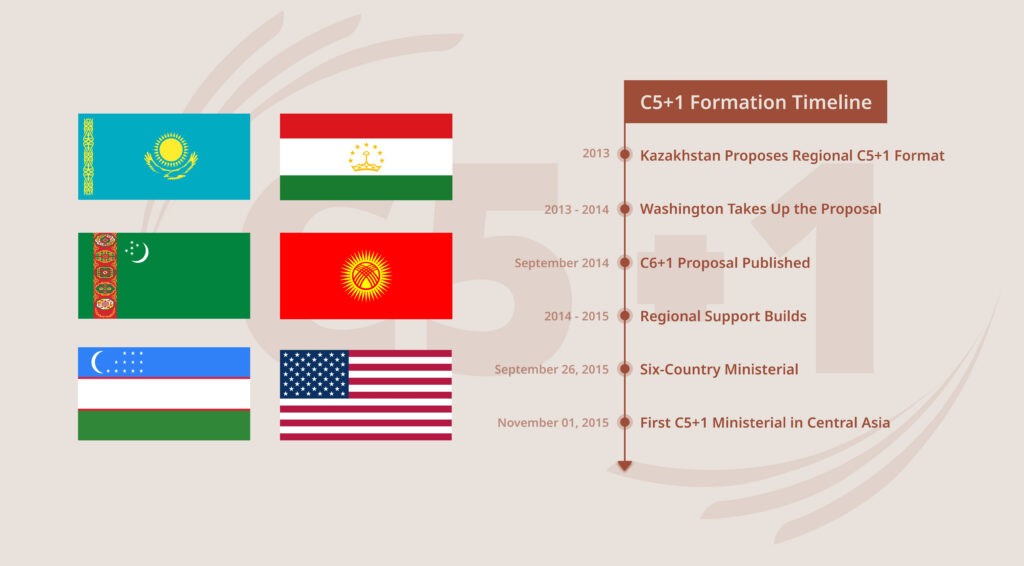
When U.S. Secretary of State Marco Rubio travels to Samarkand in mid-October, he is expected to meet the foreign ministers of all five Central Asian states under a diplomatic format known as C5+1. He will also be accompanied by representatives of more than 100 American companies, underscoring how far the platform has developed since its creation in 2015. C5+1 — Kazakhstan, Kyrgyzstan, Tajikistan, Turkmenistan and Uzbekistan, plus the United States — has become Washington’s principal diplomatic mechanism for engaging Central Asia as a region. It has expanded from meetings of foreign ministers to presidential summits and cooperation on trade, security, connectivity, energy and critical minerals. Less widely known is the role Kazakhstan played in getting it started. S. Frederick Starr, founding chairman of the Central Asia-Caucasus Institute and a longtime scholar of the region, has argued for years that the proposal that developed into C5+1 came from Kazakhstan rather than from inside the U.S. government. In a detailed account published on September 24, titled How C5+1 Came to Be, Starr identifies Kairat Umarov, then Kazakhstan’s ambassador in Washington, as the diplomat who set the process in motion. Starr writes that shortly after Umarov arrived in Washington, the two discussed the absence of a mechanism through which the United States could deal with Central Asia collectively rather than through five separate bilateral relationships. In 2013, after consulting Astana, Umarov approached Nisha Biswal with the idea of creating a regular consultative mechanism between Washington and the governments of Central Asia. According to Starr, Biswal supported the proposal and subsequently took it to Secretary of State John Kerry, who approved moving ahead with the concept. Afghanistan was initially considered for inclusion, which would have produced a C6+1 format. It was ultimately left outside the mechanism, resulting in the C5+1 grouping that exists today. In September 2014, three Kazakh and three American authors, including Starr, published Looking Forward: Kazakhstan and the United States. The study was prepared with support that included Kazakhstan’s embassy in Washington and called specifically for establishment of a “Central Asia Six Plus One” mechanism. The report argued that the United States lacked a regular platform for engaging Central Asia on a regional basis and proposed a U.S.-Central Asia/Afghanistan partnership. By then, the concept had moved beyond an informal diplomatic conversation. A jointly produced Kazakh-American policy paper was explicitly calling for Washington to establish essentially the same regional mechanism that emerged the following year. Starr says the proposal subsequently received support from Kazakh President Nursultan Nazarbayev and Uzbek President Islam Karimov. Karimov wanted the Central Asian meeting held in Samarkand, an arrangement to which Astana and Washington agreed. The five Central Asian foreign ministers and Kerry met in New York on September 26, 2015. They gathered again in Samarkand on November 1, where Kerry described the meeting as the first time the six countries had met as a group in that format. The resulting joint declaration committed them to regular meetings under the name C5+1. [caption id="attachment_57100" align="alignnone" width="1828"] Source: S....

Kazakhstan China Joint Investment Fund to Finance New Projects

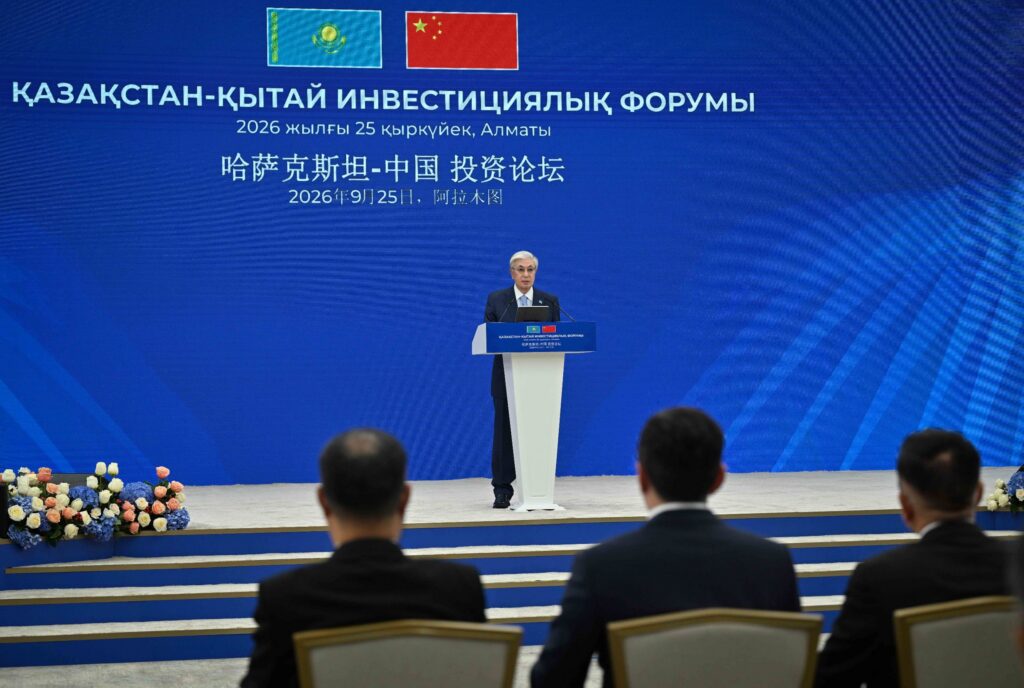
Kazakhstan and China are moving to establish a specialized investment fund to finance new projects in Kazakhstan. An agreement on the basic terms of the fund was signed by national investment promotion company Kazakh Invest and Silk Road Finance Corporation on September 25 at the Kazakhstan-China Investment Forum in Almaty. The fund is expected to operate through the Astana International Financial Centre. The forum brought together more than 600 representatives of businesses, government agencies, and development institutions. It began with a minute of silence in memory of 14 Kazakh servicemen who were killed the previous day during military exercises on the Caspian Sea. China is Kazakhstan’s largest trading partner. Chinese customs data cited by Kazakhstan’s Foreign Ministry put bilateral trade at $48.7 billion in 2025, although Kazakhstan’s own customs data recorded $34.1 billion. Kazakh Invest said Chinese direct investment in Kazakhstan reached a record $2.8 billion last year. The two countries have set a longer-term target of increasing bilateral trade to $100 billion. Government figures released for the forum put Kazakhstan’s industrial cooperation portfolio with China at 260 major projects worth more than $62 billion. Transport projects include the Mointy-Kyzylzhar and Bakhty-Ayagoz railway lines, which are nearing completion. Kazakhstan is also working with Minmetals Logistics on a logistics corridor incorporating autonomous transportation technologies and digital systems. Other projects presented around the forum include plans by China’s UBTECH to build its first humanoid robot manufacturing plant outside China in Almaty, and plans to localize the production of oncology drugs with BeOne and INKAR. Transport and logistics projects include the development of Kuryk Port and a smart logistics park in the Khorgos-Eastern Gate Special Economic Zone. The Times of Central Asia previously reported that Kazakhstan’s technology cooperation with Beijing is expanding alongside its participation in U.S.-backed initiatives involving AI and technology supply chains. Forum organizers said beforehand that around 45 commercial documents were expected to be exchanged. Ten agreements highlighted at the event covered projects including an electrolytic aluminum plant and associated wind power facility in Abai Region, wind farms with a combined capacity of 450 MW in Akmola Region, automobile manufacturing, urea fertilizer production, and preparations for a dim sum bond issue by the Almaty city administration on the Hong Kong Stock Exchange.

Rubio to Lead Major U.S. Business Delegation to Uzbekistan for C5+1 Talks

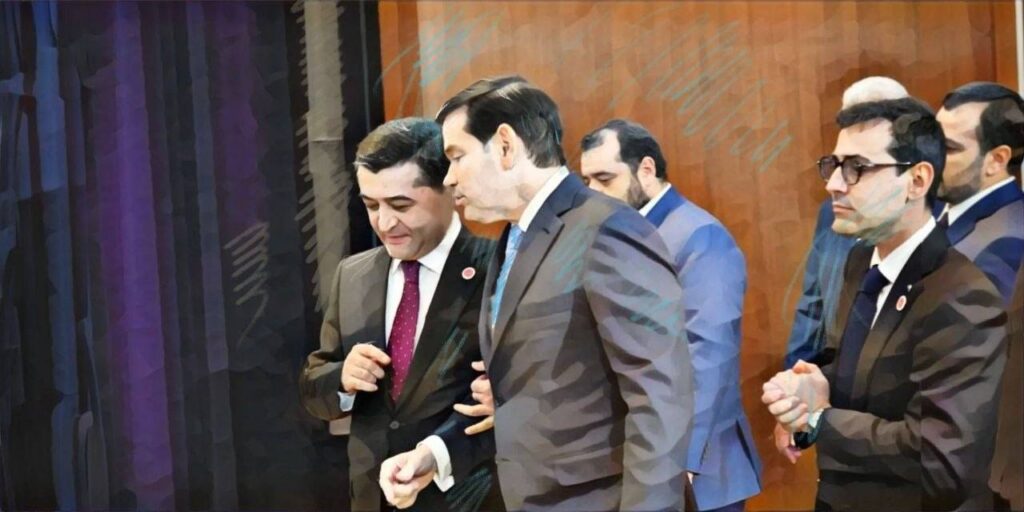
U.S. Secretary of State Marco Rubio will lead a delegation including executives from more than 100 American companies to Uzbekistan in October. The visit will bring a substantial business contingent to talks with Central Asia’s foreign ministers in Samarkand. Sergio Gor, the U.S. special envoy for South and Central Asia, announced the visit in a statement published by the U.S. Embassy in India. Gor said the talks would focus on “deepening regional economic connectivity, enhancing energy security,” alongside cooperation on shared regional priorities. The delegation is expected in mid-October, alongside a C5+1 ministerial meeting. The C5+1 format brings together the United States and Kazakhstan, Kyrgyzstan, Tajikistan, Turkmenistan, and Uzbekistan. Bringing executives from more than 100 companies gives Rubio’s visit a substantial commercial component. The delegation’s composition should indicate which sectors Washington is ready to back following last year’s C5+1 agreements. In November 2025, Rubio announced his intention to visit all five Central Asian countries in 2026. Speaking ahead of the Washington C5+1 summit, he suggested such a tour could take a week. The Samarkand announcement gives a destination and timeframe for his regional engagement, although it does not establish an itinerary covering all five states. President Donald Trump hosted the five Central Asian presidents in Washington on November 6, 2025. Commercial agreements featured prominently in the summit, reflecting a greater focus on investment within the C5+1 framework. The U.S. Commerce Department said the “Deal Zone” business event held alongside the November 2025 C5+1 summit featured more than $25 billion in announced commercial deals. Air Astana’s agreement covered up to 15 Boeing 787-9 aircraft, comprising five firm orders, five options, and five purchase rights. Tajikistan’s Somon Air announced plans to acquire up to four Dreamliners and ten 737 MAX jets. Uzbekistan Airways finalized an order for eight additional Boeing 787-9 aircraft during the summit. Boeing said the purchase brought the airline’s total order to 22 Dreamliners, converting options from an earlier agreement into firm orders. In mining, Cove Capital and Kazakhstan’s Tau-Ken Samruk agreed to develop the Severny Katpar and Verkhne Kairakty tungsten deposits. The projected $1.1 billion investment includes two processing plants and a metallurgical facility. Kazakhstan’s technology announcements included a memorandum for $2 billion in advanced AI-chip procurement, involving NVIDIA, Freedom Holding, and the country’s digital ministry. Critical minerals cooperation has also advanced since the Washington summit. During a February 4 visit to the U.S. capital, Uzbek Foreign Minister Bakhtiyor Saidov attended a ministerial meeting devoted to the sector and held talks with Rubio. Saidov and U.S. Deputy Secretary of State Christopher Landau signed a memorandum on mineral supplies, covering the mining and processing of critical minerals and rare earths. Uzbekistan’s Foreign Ministry said the country was seeking foreign technology and investment to develop the industry, with an emphasis on value-added production. For Tashkent, the unresolved question is how much mineral processing American investors will finance inside Uzbekistan. October’s talks could clarify whether February’s memorandum will lead to domestic processing facilities, allowing the country to retain more of the...

TRIPP Is a Logical Extension of the Middle Corridor

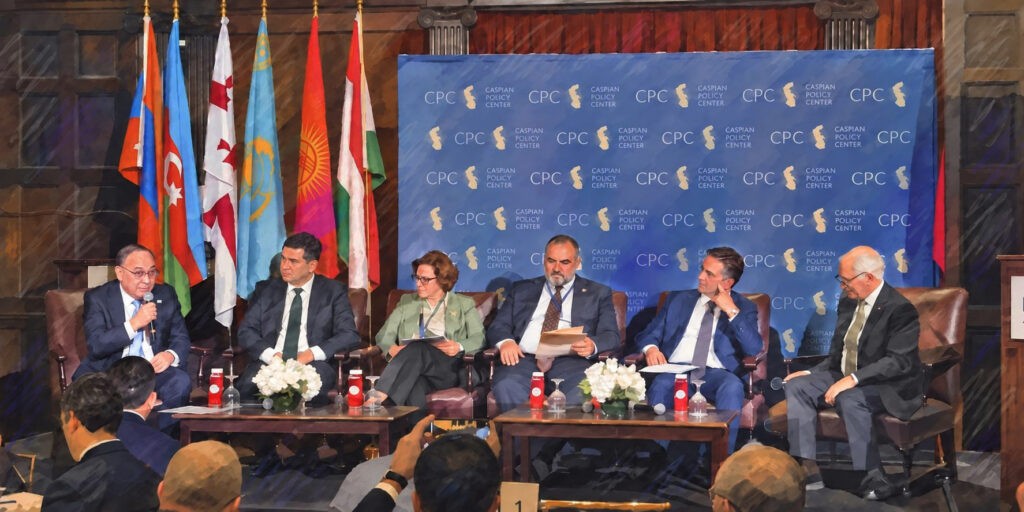
Kazakhstan views the Trump Route for International Peace and Prosperity, or TRIPP, as a natural extension of the Middle Corridor that could shorten transport routes to European markets by around 1,000 kilometers, a senior representative of President Kassym-Jomart Tokayev said in New York. Erzhan Kazykhan, Representative of the President of Kazakhstan for Negotiations with the United States, made the remarks at the 7th Caspian Business Forum, organized by the Caspian Policy Center in New York on September 22. “For Kazakhstan, it’s not simply a transport route. It’s a strategic investment into our future,” Kazykhan said of the Middle Corridor. “It is a platform for connectivity with the South Caucasus, Türkiye, and Europe.” “Kazakhstan sees TRIPP as a logical extension of the Middle Corridor,” he said, explaining that the route would shorten Kazakhstan’s access to European markets by hundreds of kilometers. TRIPP was announced at the White House summit between Armenia and Azerbaijan on August 8, 2025. The planned multimodal route would cross Armenian territory under Armenian sovereignty and jurisdiction, connecting mainland Azerbaijan with its Nakhchivan exclave and adding another link to the Trans-Caspian trade network. Kazakhstan Examines Role in TRIPP Kazykhan said Kazakhstan has sent a technical assessment team to examine what role the country could play and is considering participation in construction connected with TRIPP. He placed that interest alongside Kazakhstan’s own investment in transport. Over the past 15 years, he said, the country has invested about $35 billion in the sector and built more than 2,500 kilometers of new mainline railway. The government plans another 5,000 kilometers over the next four years. Kazykhan said the next challenge is making the infrastructure work as a single route, including smoother border crossings and enough long-term financing. Kyrgyzstan’s Minister of Economy and Commerce, Bakyt Sydykov, also argued against treating new routes as competing national projects. He said TRIPP, the Trans-Caspian route, the China-Kyrgyzstan-Uzbekistan Railway and other corridors should operate as parts of the same regional logistics system. “The Middle Corridor must become an economic corridor, not only a transit corridor,” Sydykov said. He argued that countries such as Kyrgyzstan should capture more value from the trade moving through the region, pointing to logistics centers, warehouses, processing facilities, digital customs systems and industrial development around the routes. Financing remains another issue. Sydykov said governments could not fund all of the required infrastructure themselves. Mark Cameron, U.S. Deputy Assistant Secretary of State for South and Central Asian Affairs, said the newly operational Trans-Caspian Enterprise Fund is designed to use U.S. government grant resources to establish the commercial viability of projects and help attract additional private investment. Connecting the Routes Türkiye’s Deputy Foreign Minister Berris Ekinci described TRIPP as complementary to the Middle Corridor rather than a rival route. “TRIPP shouldn’t be viewed as a separate or competing corridor,” she said. Ekinci said its importance would depend on how it connects with existing railway, road and port infrastructure. She described the Middle Corridor as the main east-west backbone, with TRIPP potentially filling a longstanding...