• KGS/USD = 0.01143 0%
  • KZT/USD = 0.00213 0%
  • TJS/USD = 0.10593 0.47%
  • UZS/USD = 0.00008 0%
  • TMT/USD = 0.28571 0%
  • KGS/USD = 0.01143 0%
  • KZT/USD = 0.00213 0%
  • TJS/USD = 0.10593 0.47%
  • UZS/USD = 0.00008 0%
  • TMT/USD = 0.28571 0%
  • KGS/USD = 0.01143 0%
  • KZT/USD = 0.00213 0%
  • TJS/USD = 0.10593 0.47%
  • UZS/USD = 0.00008 0%
  • TMT/USD = 0.28571 0%
  • KGS/USD = 0.01143 0%
  • KZT/USD = 0.00213 0%
  • TJS/USD = 0.10593 0.47%
  • UZS/USD = 0.00008 0%
  • TMT/USD = 0.28571 0%
  • KGS/USD = 0.01143 0%
  • KZT/USD = 0.00213 0%
  • TJS/USD = 0.10593 0.47%
  • UZS/USD = 0.00008 0%
  • TMT/USD = 0.28571 0%
  • KGS/USD = 0.01143 0%
  • KZT/USD = 0.00213 0%
  • TJS/USD = 0.10593 0.47%
  • UZS/USD = 0.00008 0%
  • TMT/USD = 0.28571 0%
  • KGS/USD = 0.01143 0%
  • KZT/USD = 0.00213 0%
  • TJS/USD = 0.10593 0.47%
  • UZS/USD = 0.00008 0%
  • TMT/USD = 0.28571 0%
  • KGS/USD = 0.01143 0%
  • KZT/USD = 0.00213 0%
  • TJS/USD = 0.10593 0.47%
  • UZS/USD = 0.00008 0%
  • TMT/USD = 0.28571 0%

Viewing results 19 - 24 of 735

Mirziyoyev: Violence Against Women and Children Will Not Be Tolerated in Uzbekistan

President Shavkat Mirziyoyev has announced tougher measures against violence toward women and children, and unveiled new economic and education programs aimed at expanding opportunities for women across Uzbekistan. Speaking on March 6 at a ceremony in Tashkent marking International Women’s Day, the president referred to a decree he signed on March 3 that strengthens the country’s response to domestic violence. According to remarks reported by Uzbek media and the presidential press service, the decree introduces a stricter system for addressing harassment and violence against women and minors. Mirziyoyev said Uzbekistan has adopted the creation of an uncompromising environment against violence as a strategic goal. “Anyone who raises a hand against women or children will either leave Uzbekistan or be forced to live according to the law,” he said during the event held at the Kuksaroy residence. Mirziyoyev also stated that the decree includes tougher penalties for certain crimes against minors. According to his remarks, in some cases crimes involving pedophilia will now carry life imprisonment. He noted that legal experts had raised objections during discussions but said he insisted on including the punishment in the decree. In addition to legal measures, Mirziyoyev outlined several initiatives focused on education, employment, and rehabilitation programs for women. According to statements made during the event, women serving sentences in correctional facilities will be given the opportunity to apply to universities and study remotely. Officials said many female inmates currently have only secondary education and lack professional skills, while some have expressed interest in pursuing higher education. To address this, the government plans to launch a program called “New Life,” which will provide vocational training for women in prisons. Participants will study for three to six months in professional training programs and receive certificates. Those who wish to enter universities will be able to take entrance exams inside correctional institutions. Women admitted to universities on a contract basis will be eligible for interest-free loans, repayable after completing their sentences and securing employment. The government also plans to expand economic support for women nationwide. According to Mirziyoyev's speech, 166,000 women will receive training in modern professions and entrepreneurship this year, while another 100,000 will study information technology skills. A separate initiative called “Daromadli Ayol” (“Profitable Woman”) will support home-based businesses. With the help of experienced entrepreneurs, the program aims to create employment for 50,000 women in areas such as handicrafts, poultry farming, beekeeping, and household agriculture. Officials also said that under the “Hamroh” program, around 1 trillion UZS (about $82,440,000) will be allocated to finance 3,000 business projects led by women. Overall, the government aims to help 1.5 million women generate income this year, including 400,000 who are expected to enter business activities. More than 25 trillion UZS (about $2,060,950,000) in financial resources will be directed toward these initiatives.

Uzbek FLEX Finalist Returns Home After Alleged Harassment by Host Father in Indiana

An Uzbek high school student selected for the prestigious FLEX exchange program has returned home after her family alleged she was subjected to sexual harassment by her host father in the United States. The claims were made public by her father, Dr. Aziz Boltayev, in a detailed Facebook post. Uzbek officials have confirmed that they requested explanations from program representatives, while the U.S. side has not issued a public statement. Dr. Boltayev’s daughter was one of nearly 60 finalists from Uzbekistan selected in 2025 for the Future Leaders Exchange Program (FLEX), had traveled to the United States to complete her final year of high school. The fully funded initiative, supported by the U.S. Department of State, enables students from participating countries to study at American high schools and live with volunteer host families for one academic year. According to Boltayev’s account, his daughter was placed in a small town in Indiana with a childless couple, both music teachers, who had previously hosted exchange students. Initial video calls reportedly reassured the family prior to her departure. “After graduating from medical school, I received a U.S. Department of State grant and spent time in the United States for professional development,” Boltayev wrote. “I returned to Uzbekistan with a deep sense of gratitude and a positive impression of American values. Naturally, when my eldest daughter won the FLEX grant in 2025, I was proud and supportive.” He said the situation changed approximately a month after her arrival. According to his post, the host father allegedly began making inappropriate remarks and advances when his wife was not present. “He told my daughter that it was ‘necessary to gain sexual experience’ before marriage,” Boltayev wrote. “To her credit, [his daughter] firmly resisted and immediately informed her assigned FLEX coordinator.” According to Boltayev, the local coordinator relocated his daughter shortly after the complaint was filed. However, he criticized the way communication with the family in Uzbekistan was handled. “The coordinator moved [his daughter] out of the house immediately, but in doing so, they completely bypassed us, her parents,” he wrote. Due to the time difference, he said he was informed the following day by the FLEX office in Tashkent. Boltayev further alleged that during this period his daughter’s phone was switched off and her parents’ messages went unanswered. He claimed that the coordinator had instructed her to turn off her phone for “security reasons,” which he described as isolating a minor from her parents. He also asserted that neither the temporary host family nor U.S.-based program representatives agreed to speak directly with him. According to Boltayev, his daughter was told that program officials were not obligated to provide information to her parents. Seeking reassurance, Boltayev contacted a friend, a faculty member at the University of Michigan, who lives several hours from his daughter’s location, and asked him to check on her in person. “Even then, FLEX representatives tried to block him, telling my daughter: ‘He needs our permission to see you, and for now, permission is...

Kazakhstan Suspends Extradition of Navalny Associate as Courts Weigh Asylum Claim

Kazakhstan has suspended the extradition of Yulia Yemelyanova, a former staff member of Alexei Navalny’s St. Petersburg office, to Russia. Yemelyanova was detained in Almaty in August 2025 after the Russian authorities requested her transfer. The Prosecutor General’s Office halted the extradition after her lawyers filed appeals linked to her asylum claim. Earlier this month, authorities approved Russia’s request despite her pending asylum application. Her lawyer subsequently stated that he would challenge that approval before the Supreme Court. Russian investigators have accused Yemelyanova of theft linked to a 2021 case. Her defense rejects the charge and argues that the prosecution is politically motivated. Yemelyanova’s case fits into a broader pattern of extradition proceedings involving Russian nationals who relocated to Kazakhstan after Russia launched its full-scale invasion of Ukraine in February 2022. In late September 2022, Kazakhstan’s Interior Ministry stated that nearly 100,000 Russians had entered the country following Moscow’s announcement of partial mobilization on September 21. “Most of them have to leave because of the hopeless situation. We have to take care of them and secure their safety,” Kazakh President Kassym-Jomart Tokayev said at the time. Many have remained. Kazakhstan’s Interior Ministry reported that more than 80,000 Russian citizens received work-related residence permits between January 2023 and September 2024. Opinion in Kazakhstan on Navalny spans a wide and often divergent spectrum. When news of his death in a Russian penal colony broke in February 2024, responses across Central Asia ranged from sympathy to indifference. In Kazakhstan, some civic activists expressed concern over political repression in Russia, while others recalled Navalny’s past nationalist rhetoric and critical comments about migration from Central Asia. Those divergent views form the domestic context for cases involving former members of Navalny’s political network. Extradition proceedings unfold within a society that interprets Russian opposition politics through its own historical experience and social priorities. The relocation wave reshaped rental markets in Almaty and Astana in late 2022, as IT firms, logistics companies, and service businesses absorbed skilled migrants. At the same time, authorities tightened migration rules and reduced the duration of visa-free stays, signaling that temporary entry did not guarantee long-term residence. In 2024 and 2025, Russian extradition requests began to draw greater public attention, with several defendants seeking asylum while contesting their transfer. One prominent case involved Mansur Movlayev, a Chechen activist critical of Ramzan Kadyrov. In January 2026, Kazakhstan approved Russia’s extradition request after denying him refugee status. The UN Human Rights Committee registered a complaint in Movlayev’s case and requested that Kazakhstan refrain from extraditing him while the review proceeded. Kazakhstan’s Supreme Court subsequently suspended the extradition decision pending review connected to his asylum appeal. Kazakhstan’s Criminal Procedure Code governs extradition decisions and provides appeal mechanisms, with the Law on Refugees establishing procedures for reviewing asylum claims and defining protections from removal. International law reinforces these safeguards; the principle of non-refoulement prohibits returning a person to a country where they face serious threats to their life or freedom. Kazakhstan’s extradition decisions are unfolding within a...

Delhi Police Arrest Man After Large Theft Targeting Uzbek Visitor

Police in New Delhi have arrested a man accused of using his two minor children to carry out thefts near the busy Jama Masjid market, following an investigation into the theft of over $6,500 from a citizen of Uzbekistan visiting India for his daughter’s medical treatment, The Times of India reported. According to police, the case began after the Uzbek national filed a complaint at the Jama Masjid police station on January 15. The victim told authorities he had traveled to India for his youngest daughter’s cancer surgery in Gurgaon and was carrying foreign currency in a sling bag while sightseeing and shopping with his family in the historic market area. He later discovered that the cash and his debit card had been stolen. Deputy Commissioner of Police (Central) Anant Mittal said investigators relied on technical surveillance, CCTV footage from cameras installed around the market, and field intelligence to identify two siblings, aged 15 and 13, from the town of New Seelampur as suspects. “Through sustained technical surveillance and analysis of CCTV footage, the movements of the juveniles were tracked and verified, revealing their involvement,” Mittal said. Police conducted raids in New Seelampur and detained the children along with their father. During questioning, the man allegedly admitted that he had previously used his children to commit thefts in order to avoid direct suspicion, later keeping the stolen items himself. Authorities said the suspect had previously been linked to a robbery case registered at the Pandav Nagar police station. The minors were also reportedly connected to earlier incidents, including motor vehicle theft cases investigated by Jama Masjid police. During the operation, officers recovered $6,500 in cash, the victim’s debit card, 4,700 Indian rupees (about $57), and a mobile phone worth 48,000 rupees (approximately $580), which police believe was purchased with stolen funds. The investigation is ongoing.

U.S. Sanctions Uzbek Citizen Over Alleged Cybercrime Links

The U.S. Department of the Treasury’s Office of Foreign Assets Control (OFAC) has imposed sanctions on an Uzbek citizen over alleged involvement in cybercrime activities linked to Russian actors, according to an official press release published on the agency’s website. OFAC reported that Azizjon Mamashoyev, a citizen of Uzbekistan born in 1987, was added to the sanctions list under regulations related to Russia-linked activities. U.S. authorities allege that he participated in cyber operations and maintained connections with individuals suspected of conducting malicious cyber activities. The announcement included identifying details, listing Mamashoyev’s date of birth as February 20, 1987, and confirming his Uzbek nationality. The designation was issued under the Ukraine-/Russia-Related Sanctions Regulations and forms part of measures targeting cyber-enabled threats. According to OFAC, Mamashoyev is linked to Sergey Zelenyuk, who has also been associated with cybercrime investigations. The sanctions were introduced pursuant to authorities under the Countering America’s Adversaries Through Sanctions Act (CAATSA) and a cyber-related sanctions program identified as CYBER4. The U.S. Treasury also designated Advance Security Solutions, a company reportedly connected to Mamashoyev. The firm, described as operating in computer programming, is registered in Dubai’s Jumeirah Living Marina Gate area and also lists operations in Tashkent. U.S. officials stated that the company was established in 2025 and may have engaged in activities posing secondary sanctions risks. Under OFAC sanctions, designated individuals and entities are generally subject to asset freezes within U.S. jurisdiction, and U.S. persons are typically prohibited from engaging in transactions with them.

Why Tajikistan’s Courts Rarely Hand Down Acquittals

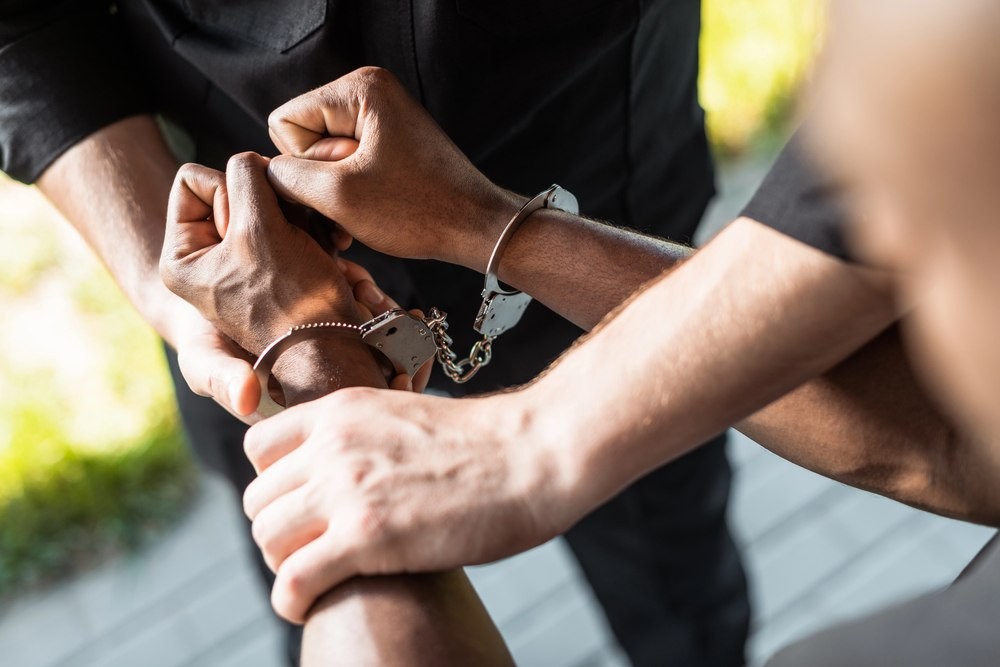
The issue of extremely rare acquittals in Tajikistan has once again become the focus of public debate following a statement by the chairman of the Supreme Court. The authorities explain these statistics by pointing to the high quality of investigative and judicial work, while lawyers cite systemic problems related to objectivity and respect for human rights. Supreme Court Chairman Rustam Mirzozoda said at a press conference that the absence of acquittals reflects compliance with the law and the professional performance of law enforcement agencies. According to him, each criminal case is examined in strict accordance with the requirements of the Criminal Procedure Code, and courts do not issue acquittals because the defendants’ actions are determined to constitute a crime. In 2025, city and district courts referred 16 criminal cases involving 21 individuals for further investigation, but all of the defendants were subsequently convicted. By comparison, in previous years acquittals were handed down, albeit extremely rarely: three cases in 2023, 11 in 2021, and two in 2020. Even then, they accounted for less than 1% of the total number of decisions. Part of the legal community views the absence of acquittals as an alarming signal. Lawyer Navruz Odinaev notes that in developed legal systems, acquittals are a normal part of the criminal process. In his view, the lack of acquittals requires serious analysis, as it affects the fundamental principles of justice, fairness, judicial independence, and the presumption of innocence. Lawyer Uguloy Bobova highlights another aspect, the potential reputational consequences for law enforcement agencies. An acquittal means that a person’s freedom was unlawfully restricted and therefore that investigative authorities made an error. In addition, an acquittal entails full rehabilitation and entitles the individual to compensation, creating additional legal and reputational risks for the state. Statistics show that the proportion of acquittals in Tajikistan has remained below 1% in recent years. In international practice, such a low figure is often regarded as an indicator of a possible bias toward conviction in criminal proceedings.