
• KZT/USD = 0.00223
  • TJS/USD = 0.10810
  • UZS/USD = 0.00009
  • TMT/USD = 0.29850
  • KZT/USD = 0.00223
  • TJS/USD = 0.10810
  • UZS/USD = 0.00009
  • TMT/USD = 0.29850
  • KZT/USD = 0.00223
  • TJS/USD = 0.10810
  • UZS/USD = 0.00009
  • TMT/USD = 0.29850
  • KZT/USD = 0.00223
  • TJS/USD = 0.10810
  • UZS/USD = 0.00009
  • TMT/USD = 0.29850
  • KZT/USD = 0.00223
  • TJS/USD = 0.10810
  • UZS/USD = 0.00009
  • TMT/USD = 0.29850
  • KZT/USD = 0.00223
  • TJS/USD = 0.10810
  • UZS/USD = 0.00009
  • TMT/USD = 0.29850
  • KZT/USD = 0.00223
  • TJS/USD = 0.10810
  • UZS/USD = 0.00009
  • TMT/USD = 0.29850
  • KZT/USD = 0.00223
  • TJS/USD = 0.10810
  • UZS/USD = 0.00009
  • TMT/USD = 0.29850
23 September 2026

Viewing results 49 - 54 of 616

Uzbekistan’s Consulate Urges Citizens to Follow U.S. Law After Cargo Theft Arrests

The Consulate General of Uzbekistan in New York has urged citizens of Uzbekistan in the United States to follow local laws after recent media reports linked several citizens of Uzbekistan and people of Uzbek origin to criminal investigations. In a statement posted on Telegram, the consulate said reports about alleged offenses involving citizens of Uzbekistan or people of Uzbek origin had appeared increasingly in the media and on social networks. The statement did not refer to a specific case, but it came shortly after U.S. authorities announced charges against an alleged multi-state cargo theft ring. The consulate called on citizens of Uzbekistan living, studying, working, or doing business in the U.S. to respect local laws, customs, and accepted standards of public behavior. “Any violation of the law carries personal responsibility,” the statement said, adding that unlawful actions by a small number of people can affect perceptions of the broader Uzbek community abroad. The consulate said most members of that community are law-abiding, work honestly, study, run businesses, and represent Uzbekistan with dignity. The diplomatic mission noted that the issue is particularly important during major international events and sports competitions, when public and media attention toward Uzbekistan and its citizens increases. The statement was issued as U.S. law enforcement agencies continued investigating a group accused of stealing nearly $5 million worth of commercial cargo. According to the Manhattan District Attorney’s Office, eight defendants were indicted in connection with a scheme that allegedly targeted shipments in Pennsylvania, Virginia, and New Jersey before the stolen goods were diverted to New York. Prosecutors allege the group operated between October 2025 and April 2026 and impersonated legitimate shipping carriers to obtain cargo from logistics sites. The stolen goods allegedly included lamb, cheese, beef, copper, and cigarettes. According to prosecutors, the defendants used fraudulently obtained shipment information from real carriers and brokers, leased trucks, and used false carrier identities to collect cargo. The stolen goods were then transported into and through New York City for sale on the black market. The Manhattan District Attorney’s Office said the alleged thefts included $165,000 worth of lamb, $432,000 worth of cheese, $295,000 worth of beef, more than $266,000 worth of copper, and more than $3.3 million worth of cigarettes. The New York Post reported that Murodullo “Murad” Khasanov, whom prosecutors identified as the alleged leader of the group, was arrested in New York and pleaded not guilty. The newspaper said prosecutors sought $1.5 million bail. Manhattan District Attorney Alvin Bragg said the alleged theft ring affected businesses and consumers and raised concerns about the use of online hacking in large-scale cargo theft. Prosecutors said the investigation remains ongoing. The consulate said it remains ready, within its authority, to provide citizens with consular and legal assistance. At the same time, it urged citizens to act responsibly and avoid behavior that could lead to legal consequences or harm the reputation of Uzbekistan and its citizens abroad. As previously reported by The Times of Central Asia, Uzbekistan has also sought to expand...
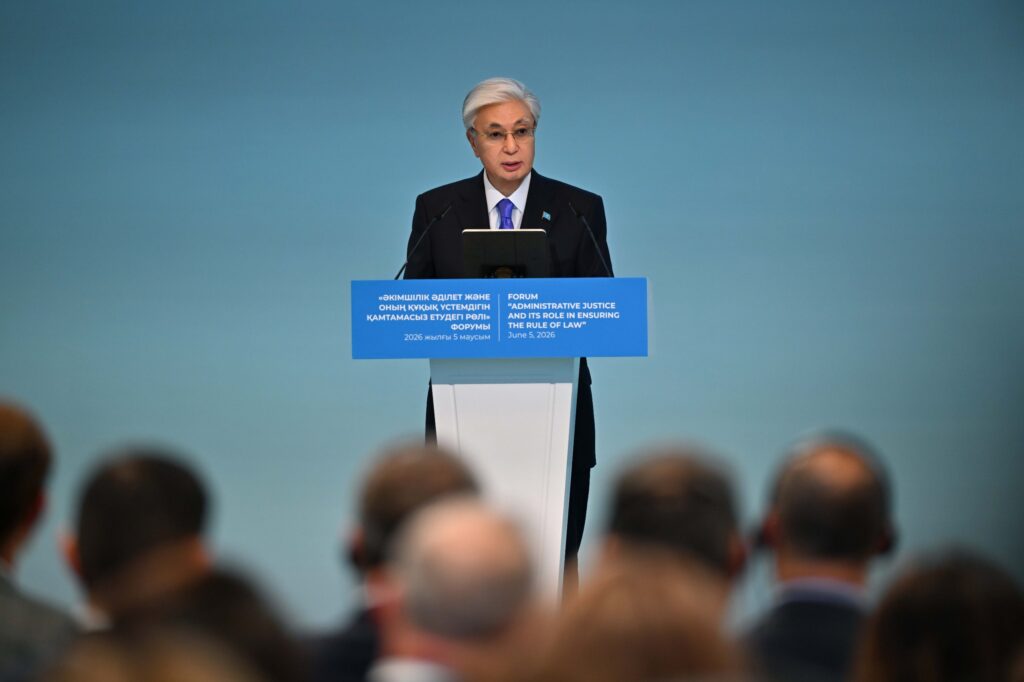

Kazakhstan Justice Reform Sees Citizens Winning More Cases Against State Bodies

In a boost for proponents of justice reform in Kazakhstan, citizens and businesses are now winning more than half of administrative court cases against government agencies. President Kassym-Jomart Tokayev said, citing what he described as the growing impact of the country’s administrative justice reforms. Speaking at an Astana forum entitled Administrative Justice and Its Role in Ensuring the Rule of Law, Tokayev said the introduction of administrative courts had significantly improved citizens’ ability to challenge government decisions and defend their rights. “It must be acknowledged that in the past it was far more difficult for citizens to challenge the actions of government agencies and protect their rights,” he said. “With the introduction of administrative justice, the situation has changed fundamentally.” In a separate statement, Supreme Court Chairman Aslambek Mergaliyev, noted that the share of cases won by citizens and businesses against state bodies has risen from 15% to nearly 60% over the past five years. “Behind these figures are removed administrative barriers and restored rights for individual citizens, entrepreneurs and investors,” Mergaliyev told participants at the forum. The president noted that under the current system, government bodies are legally required to demonstrate the legality of their decisions and actions, while courts place greater emphasis on evidence gathering and procedural fairness. Tokayev said those changes had helped challenge the longstanding perception that courts usually side with the authorities. “This is a concrete result of administrative justice reforms,” he said. According to Supreme Court Chairman Aslambek Mergaliyev, citizens’ success rate in administrative cases has risen from 15% to nearly 60% over the past five years. Tokayev said Kazakhstan’s next objective is to move beyond resolving disputes after they arise and instead focus on managing legal and administrative risks before conflicts reach the courts. As part of that effort, he highlighted the government’s use of the eOtinish digital platform, which allows citizens and legal entities to submit complaints, appeals, information requests and suggestions to state bodies electronically. According to the president, nearly 16 million submissions have been filed through the platform over the past five years. He said authorities must now ensure greater consistency in administrative decisions at both national and local levels to prevent recurring disputes over the same issues. Tokayev paid particular attention to investor-related disputes, noting that courts rule in favor of investors in up to 80% of such cases. “In meetings with domestic and foreign investors, I consistently stress that the government and business community must engage constructively, openly discuss problems and jointly seek solutions,” he said. At the same time, he added that any compromise reached between officials and investors must remain fully consistent with the law. The remarks come as Kazakhstan seeks to link legal reform more closely to its investment agenda. The government has set a target of attracting $62.7 billion in total investment in 2026, including $25.5 billion in foreign capital, while also transferring the investment ombudsman role to the Prosecutor General and creating a Committee for the Protection of Investors’ Rights. That said, the administrative...

Turkmen Rights Activist Diana Dadasheva Receives French Humanitarian Visa

Turkmen human rights activist Diana Dadasheva, founder of the civil rights platform Dayanch, has received a French humanitarian visa and relocated to Paris, a move that could allow her to seek political asylum. Dadasheva’s arrival in France follows years of activism focused on human rights issues in Turkmenistan and concerns among rights groups about her personal safety while she was living in Turkey. Although she had resided legally in Turkey for several years, activists feared she could face deportation to Turkmenistan. According to rights advocates, Dadasheva received repeated threats linked to her public activities. Her human rights work began after she personally experienced restrictions imposed by the Turkmen authorities. Dadasheva has said she was barred from leaving Turkmenistan for six years without explanation, an experience that later motivated her advocacy on behalf of migrant workers and women, as well as her engagement with international organizations. One issue she has frequently highlighted is the practice of travel bans imposed on Turkmen citizens, which rights groups have long criticized as arbitrary and lacking transparency. Concerns about Dadasheva’s safety were heightened by the experiences of other Turkmen opposition figures and activists living in Turkey. In 2023, Turkish authorities reportedly deported several Turkmen activists, including Farhad Meymankuliyev, Rovshen Klychev, and Serdar Durdylyev, according to rights advocates. Others, including Merdan Muhammedov, Alisher Sakhatov, and Abdulla Oruzov, were reportedly forcibly returned to Turkmenistan or faced a serious risk of deportation. Another prominent activist, Dursoltan Taganova, left Turkey after years of alleged harassment and detention and later received asylum in Canada. Dadasheva’s relocation to France was reportedly facilitated in part by the opposition movement Democratic Choice of Turkmenistan. Dadasheva has said she intends to continue her human rights work from France, including advocacy for the Turkmen community abroad.

Uzbekistan Withdraws Several Chinese-Made Toys Over Safety Concerns

Several Chinese-made children’s toys have been removed from sale in Uzbekistan after laboratory tests found that they failed to meet safety requirements, according to the Inspection for Control in the Field of Technical Regulation. The violations were discovered during a test purchase at a retail outlet in the city of Jizzakh. Specialists from the inspection agency’s regional branch, together with experts from the sanitary and epidemiological service, collected samples of several products, including an elastic spiral ball toy, a cat paw toy sold under the Pinch brand, and an Avengers Superhero toy. According to the inspection agency, laboratory testing revealed a number of safety issues. The toys reportedly emitted a strong odor, had protective coatings that were not resistant to moisture, contained small parts that were not securely attached, and showed insufficient resistance to mechanical stress. Tests also found formaldehyde levels exceeding established safety limits. Health experts warned that formaldehyde can irritate the respiratory system, eyes, and skin, and may trigger allergic reactions. Children are considered particularly vulnerable to such exposure. Inspectors also noted that detachable small parts could create choking hazards or cause injuries if swallowed. In addition to the physical safety concerns, authorities found that product labels lacked mandatory information in Uzbek. Officials said the identified violations did not comply with the country’s General Technical Regulation on the Safety of Children’s Toys. As a result, warning notices were issued to the businesses involved, and measures were taken to remove the products from store shelves and halt further sales. The case highlights the importance of toy safety standards, which are widely regulated around the world. International frameworks, including standards developed by the International Organization for Standardization and safety requirements used in the European Union, generally require toys to be free from hazardous levels of toxic substances, durable enough to withstand normal use, and designed to minimize risks such as choking, poisoning, or injury. This is not the first recent product safety case involving goods for children in Uzbekistan. In January, The Times of Central Asia reported on a Nestlé infant formula recall in Uzbekistan and Kazakhstan linked to a potential contamination risk.

Former Kazakh Nuclear Engineer Helps Federal Agents Bust $20 Million Fentanyl Operation

A routine vehicle delivery across the United States turned into a federal drug operation after a former Kazakh nuclear industry engineer spotted warning signs in the behavior of a customer. Serik Jaxybayev, who now works in logistics in the United States, was transporting a vehicle from Los Angeles to Minneapolis in March 2026 when the intended recipient gave him cause for alarm. According to Jaxybayev, the customer repeatedly demanded location updates, and then insisted on meeting in a parking lot rather than at the address provided for delivery. Instead of ignoring his suspicions, Jaxybayev contacted Trooper Cody Parr of the Kansas Highway Patrol and asked for the vehicle to be stopped and inspected as he passed through Kansas. That decision led to the discovery of a hidden cache of fentanyl with an estimated street value of about $20 million, according to a March 25 letter of appreciation sent to Jaxybayev by the Kansas Highway Patrol. The letter thanked him for his assistance and bravery, and said the operation had involved state and federal agents, including the FBI and the DEA. [video width="848" height="480" mp4="https://timesca.com/wp-content/uploads/2026/06/WhatsApp-Video-2026-06-02-at-19.12.02.mp4"][/video] From Nuclear Engineer to Long-Haul Driver Jaxybayev previously spent 21 years working for Kazatomprom, Kazakhstan’s national atomic company. He holds a degree from Tomsk Polytechnic University, one of Russia’s best-known engineering universities, and moved to the United States in July 2023. He later obtained approval under the U.S. EB-1 immigration category, which is used for people with extraordinary ability, outstanding professors or researchers, and certain multinational executives or managers. He received his green card in October 2024. While rebuilding his career in the U.S., Jaxybayev obtained a commercial driver’s license in the summer of 2024, and began working for Spark Prime Logistics. “I contribute to the U.S. economy,” Jaxybayev told The Times of Central Asia. “Last year, I paid around $13,000 in taxes. In the future, I want to return to working in the nuclear industry.” “My Suspicions Were Immediate” The delivery initially appeared routine. But Jaxybayev said the customer’s behavior changed as the truck approached its destination. The recipient was nervous, called repeatedly, and pressed for precise updates on the truck’s location. The request to meet away from the stated delivery address made him especially uneasy. “My suspicions were immediate,” Jaxybayev told TCA. He contacted Parr, an officer with the Kansas Highway Patrol, and asked whether law enforcement could inspect the vehicle. Parr agreed to meet him as he passed through Kansas. A Controlled Delivery When officers stopped and inspected the vehicle, they found fentanyl hidden inside it. Jaxybayev then continued the journey under instructions from law enforcement so that agents could move against the wider criminal organization. A letter of appreciation from the Kansas Highway Patrol praised Jaxybayev’s “fearlessness and courage in keeping America safe,” and stated that his actions “potentially saved hundreds of lives on the street, or thousands had the suspects chosen to use it for terrorism purposes. Your bravery in assisting State and Federal agents in taking down this criminal organization...

Kazakhstan Amnesty Bill Could Free 1,500 Inmates, Excludes Violent Offenders

Kazakhstan’s Mazhilis, the lower house of parliament, has approved in its first reading a draft amnesty law tied to the adoption of the country’s new Constitution. The measure could affect approximately 16,500 people, including around 1,500 inmates who could be released from prisons and other detention facilities. The initiative is notable for its scale and because it combines criminal and administrative amnesty measures for the first time in Kazakhstan’s history. According to lawmakers, the administrative component alone could affect around one million unpaid fines. The proposal has sparked public debate over whether individuals involved in high-profile criminal cases could benefit from the measure. Some lawmakers have also argued that journalists and bloggers convicted under controversial legislation should be included. Who Will Benefit? According to Snezhanna Imasheva, chair of the Mazhilis Committee on Legislation and Judicial and Legal Reform, individuals convicted of minor offenses and criminal misdemeanors would be eligible for full release from punishment. For offenses classified as medium severity, a different approach would apply. Individuals who caused no damage, or who have fully compensated victims, could qualify for complete release. Others could receive reductions in the remaining portions of their sentences. Among the most common offenses covered by the amnesty are theft, livestock theft, and embezzlement or misappropriation of entrusted property. Certain economic crimes may also qualify for partial sentence reductions. In some cases, individuals convicted of fraud could receive reduced sentences, provided the offenses do not involve corruption, particularly large-scale damages, or other exclusions specified in the legislation. Imasheva said that approximately one million unpaid administrative fines totaling nearly $33 million could be written off. The measure would apply to fines for offenses committed before midnight on March 17, 2026, shortly after Kazakhstan’s new Constitution was adopted in a nationwide referendum. Who Will Not Be Released? The draft law excludes crimes against life and health, corruption offenses, terrorism, and extremism. Those convicted of murder, assisting suicide, intentional infliction of serious, moderate, or minor bodily harm, assault, torture, stalking, HIV transmission, and sexual offenses will not be eligible for amnesty. Those convicted of murder, assisting suicide, intentional infliction of bodily harm, assault, torture, stalking, HIV transmission, and sexual offenses will not be eligible for amnesty. The measure also excludes recently criminalized offenses such as acting as a financial “dropper” in fraud schemes and bride kidnapping. High-Profile Convicts Remain Excluded Former minister of national economy Kuandyk Bishimbayev, who was convicted in May 2024 of murdering his common-law wife, Saltanat Nukenova, will neither be released nor receive a sentence reduction. His convictions for murder committed with extreme cruelty and torture fall among the offenses excluded from the amnesty. Another widely publicized defendant, Perizat Kairat, will also be ineligible. Kairat, the founder of the charity Biz Birgemiz Qazaqstan 2030, was convicted in a high-profile fraud case involving funds raised for flood victims and other charitable causes. Lawmakers said her conviction for large-scale fraud falls under offenses excluded from the amnesty. In July 2025, Kairat was sentenced to ten years in prison, while her...