• KGS/USD = 0.01143 0%
  • KZT/USD = 0.00216 0%
  • TJS/USD = 0.10684 -0.28%
  • UZS/USD = 0.00008 0%
  • TMT/USD = 0.28571 0%
  • KGS/USD = 0.01143 0%
  • KZT/USD = 0.00216 0%
  • TJS/USD = 0.10684 -0.28%
  • UZS/USD = 0.00008 0%
  • TMT/USD = 0.28571 0%
  • KGS/USD = 0.01143 0%
  • KZT/USD = 0.00216 0%
  • TJS/USD = 0.10684 -0.28%
  • UZS/USD = 0.00008 0%
  • TMT/USD = 0.28571 0%
  • KGS/USD = 0.01143 0%
  • KZT/USD = 0.00216 0%
  • TJS/USD = 0.10684 -0.28%
  • UZS/USD = 0.00008 0%
  • TMT/USD = 0.28571 0%
  • KGS/USD = 0.01143 0%
  • KZT/USD = 0.00216 0%
  • TJS/USD = 0.10684 -0.28%
  • UZS/USD = 0.00008 0%
  • TMT/USD = 0.28571 0%
  • KGS/USD = 0.01143 0%
  • KZT/USD = 0.00216 0%
  • TJS/USD = 0.10684 -0.28%
  • UZS/USD = 0.00008 0%
  • TMT/USD = 0.28571 0%
  • KGS/USD = 0.01143 0%
  • KZT/USD = 0.00216 0%
  • TJS/USD = 0.10684 -0.28%
  • UZS/USD = 0.00008 0%
  • TMT/USD = 0.28571 0%
  • KGS/USD = 0.01143 0%
  • KZT/USD = 0.00216 0%
  • TJS/USD = 0.10684 -0.28%
  • UZS/USD = 0.00008 0%
  • TMT/USD = 0.28571 0%

Viewing results 517 - 522 of 2098

Kazakhstan’s Crypto Aspirations Face a Power Problem

Kazakhstan’s First Deputy Minister of Digital Development, Innovation, and Aerospace Industry, Kanysh Tuleushin, believes that state-regulated cryptocurrency mining could generate substantial revenue and help modernize the country's energy infrastructure. Tuleushin argues that Kazakhstan has the potential to become Central Asia’s leading blockchain hub. However, this vision clashes with the country’s ongoing energy crisis, which continues to impact households and businesses. Optimistic Vision In an article published in the state newspaper Kazakhstanskaya Pravda, Tuleushin outlined how mining operations could contribute to the development of Kazakhstan’s power generation capabilities. He emphasized the use of associated petroleum gas (APG) to produce electricity for mining, which he claims would reduce carbon emissions and boost oil sector profits. “Miners can help modernize the power grid. In the U.S., they participate in grid balancing by consuming excess energy during low-demand periods. Kazakhstan already has a ‘70⁄30’ initiative, where foreign investors upgrade thermal power plants, allocating 70% of new capacity to the general grid and 30% to miners,” Tuleushin wrote. Tuleushin reported that cryptocurrency mining has brought 17.7 billion tenge to the national budget over the past three years. Meanwhile, trading volume on the Astana International Financial Center (AIFC) exchanges increased from $324.2 million in 2023 to $1.4 billion in 2024. From January 1, 2025, miners will be required to sell 75% of their assets through the AIFC. Despite a generally cautious regulatory stance, Kazakhstan permits digital asset trading within the AIFC. Digital assets are categorized as secured (linked to physical assets) or unsecured (such as Bitcoin and Ethereum). In 2023, digital asset transactions in Kazakhstan reached $4.1 billion, but 91.5% occurred in the “gray zone,” beyond state oversight. In 2024 alone, the Financial Monitoring Agency shut down 36 illegal crypto exchanges, froze $4.8 million in assets, and blocked over 3,500 illicit platforms. Tuleushin argues that fully legalizing and regulating these operations could add more than 190 billion tenge annually to the budget, enough to fund major public infrastructure such as schools and hospitals. He proposes extending crypto trading beyond the AIFC, authorizing crypto ATMs, and opening the market to major players, an approach akin to that of the UAE. Tuleushin also claimed that regions like Pavlodar and Karaganda have electricity surpluses and that Kazakhstan's cold climate further lowers operational costs for miners. Unchecked Consumption and Mounting Strain Despite the deputy minister's optimism, Kazakhstan’s Supreme Audit Chamber (SAC) has raised alarms over uncontrolled energy consumption by miners. According to a 2024 audit, miners consumed 901 million kWh worth 13 billion tenge, despite a national energy shortage, by bypassing RFZ LLP, the country’s sole energy purchaser. Former Prime Minister and current head of the Supreme Audit Chamber, Alikhan Smailov, warned, “Miners are consuming up to a billion kilowatt-hours. This is damaging our economy. How can we allow unchecked consumption amid such a crisis?” The audit revealed systemic issues, including deteriorating Soviet-era power plants (55% average wear), a 4,500-worker shortfall in the energy sector, and a lack of financial oversight by the Ministry of Energy. Looming Crisis In January...
Kazakhstan Expands Role as Key Transit Hub for Chinese Exports to Europe

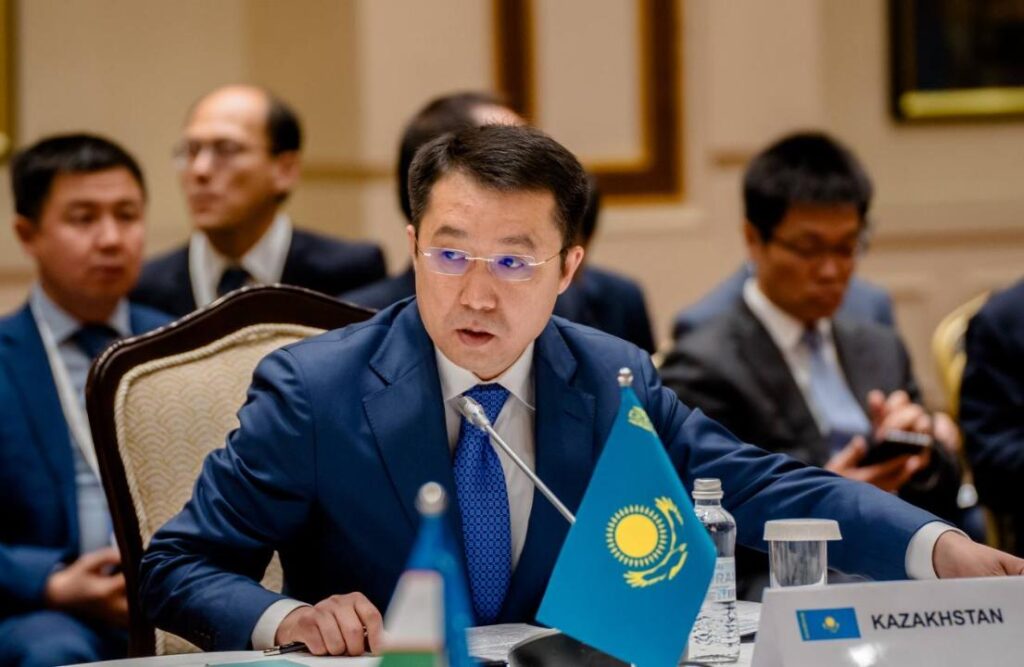
The inaugural Kazakhstan-China Transport Forum, held in Astana on May 15, unveiled a series of initiatives aimed at solidifying Kazakhstan’s position as a major transport and logistics hub for Chinese exports to Russia and Europe. At the forum, Kazakhstan’s Minister of Transport Marat Karabayev and China’s Minister of Transport Liu Wei discussed the development of a new multimodal transit corridor linking Russia, Kazakhstan, and China. The route will utilize the transboundary Irtysh River, as well as the Ili River, establishing a navigable link from the Kazakh city of Kunayev to Yining in China’s Xinjiang region. Key infrastructure plans include the construction of a new cross-border bridge at the Maykapshagay-Zimunay checkpoint to accommodate heavy trucks and the opening of a third international air corridor between the two countries. The ministers also discussed establishing two new road checkpoints to better connect East Kazakhstan and the Almaty regions with China. By the end of 2025, Kazakhstan aims to complete two major rail infrastructure projects: the second track on the Dostyk-Moiynty railway and a bypass line around Almaty station. These upgrades are expected to significantly boost freight capacity and cut cargo transit times between China and Europe via Kazakhstan. Additional developments include the launch of a direct passenger train between Almaty and Xi'an and an expansion of flight services between the two nations to 65 per week. Meanwhile, construction is underway on a new container hub at the Caspian Sea port of Aktau, a joint venture with a Chinese company. Scheduled for completion by year’s end, the facility will expand the port’s annual capacity from 140,000 to 240,000 TEUs. Kazakhstan’s Ministry of Transport reports that in the first quarter of 2025, road freight volumes between Kazakhstan and China surged by 82%, reaching 822,000 tons. Rail freight volumes grew by 13% over the first four months of the year, totaling 11.4 million tons. These developments highlight Kazakhstan’s growing strategic importance in transcontinental logistics, as China continues to diversify its export routes westward.

Kazakhstan to Expand Geological Exploration Area by One-Third by 2026

Kazakhstan plans to increase its geological exploration area by one-third by early 2026, according to Margulan Baibatyrov, Deputy Chairman of the Geology Committee under the Ministry of Industry and Construction. Baibatyrov made the announcement during an international mining congress. President Kassym-Jomart Tokayev previously highlighted this initiative at the October 2024 meeting of the Foreign Investors Council, noting that geological exploration currently covers approximately 1.6 million square kilometers. He instructed that this figure be expanded to 2.2 million square kilometers. “By 2026, we plan to increase the area of geological exploration by 680,000 square kilometers,” Baibatyrov confirmed. Investment and Resource Development Over the past five years, the mining industry in Kazakhstan has attracted around $1 billion in private investment. Of this, KZT 41 billion ($80.3 million) has come from major international companies specifically for geological exploration. Since 2018, Kazakhstan has issued 2,906 exploration licenses and 111 production licenses. The country's mineral resource base includes more than 980 solid mineral deposits. Exploration activities are ongoing at 12 sites, with notable recent discoveries such as the Kuyrektykol deposit, which contains approximately 800,000 tons of rare earth metals. Sector Challenges Despite these advancements, Baibatyrov noted several persistent challenges in the geological exploration sector, including: A shortage of qualified scientific personnel; Low levels of natural resource replenishment; Insufficient public funding for geological studies. Upcoming Auctions As previously reported by The Times of Central Asia, Kazakhstan plans to auction exploration and development rights for 50 gold and rare metal deposits in June 2025. This move aims to attract further investment and strengthen the country’s mineral resource base.

EBRD Downgrades Kazakhstan’s 2025 GDP Forecast

The European Bank for Reconstruction and Development (EBRD) has revised its 2025 GDP growth forecast for Kazakhstan downward, from 5.2% to 4.9%. The adjustment was published in the bank’s May regional economic outlook. According to the EBRD, the downward revision is largely due to Kazakhstan’s GDP growth in the first quarter being driven primarily by higher oil output at the Tengiz field. While this expansion has supported short-term growth, the bank questions the sustainability of oil production as a long-term driver, particularly under current OPEC+ production limits. Oil Output and Constraints Tengizchevroil (TCO), the operator of the country’s largest oil field, increased daily production at Tengiz to a record 870,000 barrels in January 2025, up 45% from the 2024 average. Output climbed further to 950,000 barrels in March, before dipping slightly to an average of 884,000 barrels per day in early April. Industry projections suggest production may eventually reach one million barrels per day. However, the EBRD cautions that such gains may be constrained by Kazakhstan’s obligations under the OPEC+ agreement. In addition to concerns about oil production, the bank notes the risk of declining demand for Kazakh oil and metals, key exports, especially from China, one of Kazakhstan’s main trading partners. Inflation and Domestic Demand Rising inflation presents another significant challenge. Consumer prices rose 8.9% in January, 9.4% in February, and hit 10% in March, the highest level since November 2023. In April, inflation climbed further to 10.7%, raising concerns about the erosion of domestic purchasing power. Broader Economic Indicators Despite the EBRD’s revised forecast, the Ministry of National Economy reported on May 12 that Kazakhstan’s GDP grew by 6% in the first four months of 2025. For the January-March period, growth was recorded at 5.8%, supported by a range of sectors: transport (22.4%), trade (7%), agriculture (3.9%), and communications (2.6%). Growth in the transport sector was driven by an increase in freight volumes via rail and pipeline, accounting for 20.5% and 19.6% of sectoral output, respectively. Wholesale trade expanded by 7.4%, and retail trade by 6.1%. Outlook As previously reported by The Times of Central Asia, several analysts view ongoing volatility in global markets as indicative of a looming “perfect storm” for Kazakhstan’s economy. This sentiment is echoed in the EBRD’s cautious outlook, highlighting a convergence of external and internal pressures on the country's economic stability.

The Abu Dhabi-Kazakhstan Connection

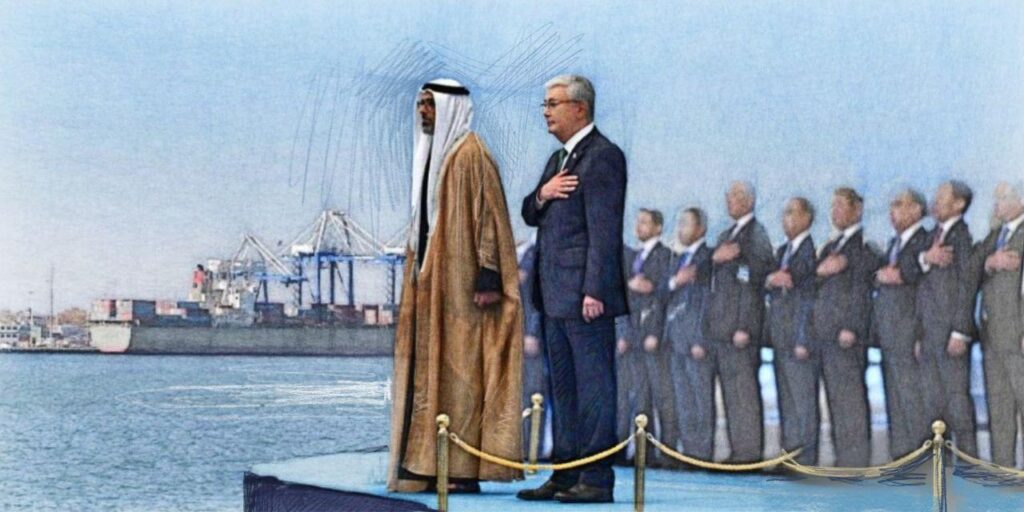
Crown Prince of Abu Dhabi Khaled bin Mohamed bin Zayed Al Nahyan led a delegation of officials and businessmen from the United Arab Emirates on a visit to Kazakhstan to attend the Kazakhstan-UAE Business Forum on May 12. During the visit, Kazakhstan and the UAE signed deals worth some $5 billion and not surprisingly, three of the nine agreements were with Abu Dhabi Ports Group. Building a new trade route to the south Abu Dhabi Ports Group (AD Ports Group) has been leading the way in connecting Kazakhstan to the Middle East, and in turn, the UAE company is looking to take advantage of Kazakhstan’s key position along the Middle Corridor trade route. In early August 2023, Davud Tafti, the head of AD Ports Group subsidiary Simatech Shipping & Forwarding, met with Kazakhstan’s Minister of Trade Serik Zhumangarin to discuss the shortest direct route for shipping “Kazakh export cargo the markets of the Persian Gulf, the Middle East, Pakistan, India and the coast of East Africa.” The route goes from Kazakhstan’s Caspian port of Kuryk to the Iranian Caspian port at Amirabad. From there goods are shipped to the Iranian Persian Gulf port at Bandar Abbas and loaded onto ships heading to UAE ports at Khalifa and Fujairah. The total time from Kuryk to Bandar Abbas is three days. By the time Tafti and Zhumangarin met, AD Ports Group had already purchased four ships with a capacity of 7.500 tons each for transportation of bulk, container, and general cargo along Caspian Sea routes. Tafti said there were plans to buy ten more similar vessels with Amirabad being used as their home port. Simatech Shipping & Forwarding also bought two barges, each capable of transporting 350 trucks, with plans to purchase 1,000 trucks for shipping goods between Amirabad and Bandar Abbas. AD Ports Group signed a strategic partnership agreement with state oil and gas company KazMunaiGas (KMG) in January 2023 aimed at developing Kazakhstan’s tanker fleet in the Caspian and Black seas. The parties formed a joint venture called Caspian Integrated Maritime Solutions (CIMS). CIMS announced in December 2023 that working with KMG subsidiary KazMorTransFlot, Kazakhstan’s national shipping company, it had acquired two oil tankers for use in the Caspian Sea. AD Ports Group reached an agreement in January 2024 to construct a facility on Kazakhstan’s Caspian coast for building and repairing ships. Work started in early 2025 on two container vessels, each with the capacity to carry more than 500 twenty-foot equivalent units (TEU) and built especially for use on the Caspian Sea. AD Ports Group also formed a joint venture with state railway company Kazakhstan Temir Zholy in December 2023 with the aim of improving logistics operations for transferring goods using rail and maritime routes. At the moment, the CIMS route is by far the fastest way for Kazakhstan to trade with the Middle East. In May 2025, Kazakhstan Temir Zholy sent the first shipment of wheat via Turkmenistan and Iran to Bandar Abbas, and from there by sea...

UAE Investor to Inject $1.1 Billion into Astana Aerotropolis Project

The Ministry of Transport of Kazakhstan has signed a long-term investment agreement with Terminals Astana Airport Limited, a subsidiary of UAE-based Terminals Holding, to transform Astana International Airport into a world-class Aerotropolis. The deal, valued at $1.1 billion, was formalized on May 12 during the official visit of Crown Prince Sheikh Khalid bin Mohammed bin Zayed Al Nahyan of Abu Dhabi to Kazakhstan. Strategic Infrastructure Development The agreement outlines a comprehensive development plan, including the construction of a second runway, a third passenger terminal, and a dedicated cargo terminal at Astana International Airport. According to the Ministry of Transport, the investor also aims to build a multifunctional Aerotropolis complex, encompassing an industrial and logistics zone, a business cluster, hotels, retail space, and logistics terminals. An Aerotropolis is a modern urban model that integrates aviation, logistics, and commercial infrastructure to create a self-sustaining hub catering to both passengers and businesses. The concept is designed to provide short-term accommodation and consumer services in proximity to the airport, effectively transforming it into a small city. Operational Modernization In addition to physical infrastructure, the project includes plans to modernize the airport's operational systems. Terminals Astana Airport Limited will upgrade the fleet of specialized airport equipment, introduce digital solutions and automation, and implement phased training and retraining programs for airport staff. Following the restoration of municipal control over the airport in January, Astana’s local authorities extended the trust management agreement, with Terminals Astana Airport Management continuing in its role as the airport operator. Both Terminals Astana Airport Limited and the current operator are subsidiaries of Terminals Holding. In 2024, Astana International Airport served 8.315 million passengers, an 11% increase from the previous year. Broader Investment Context As previously reported by The Times of Central Asia, Kazakhstan continues to attract foreign investment in its aviation infrastructure. Earlier this year, Vietnam’s Sovico Group, which owns Kazakh airline Qazaq Air, was offered the opportunity to manage an airport in the Kyzylorda region.