• KGS/USD = 0.01143 0%
  • KZT/USD = 0.00216 0%
  • TJS/USD = 0.10633 -0.28%
  • UZS/USD = 0.00008 0%
  • TMT/USD = 0.28571 0%
  • KGS/USD = 0.01143 0%
  • KZT/USD = 0.00216 0%
  • TJS/USD = 0.10633 -0.28%
  • UZS/USD = 0.00008 0%
  • TMT/USD = 0.28571 0%
  • KGS/USD = 0.01143 0%
  • KZT/USD = 0.00216 0%
  • TJS/USD = 0.10633 -0.28%
  • UZS/USD = 0.00008 0%
  • TMT/USD = 0.28571 0%
  • KGS/USD = 0.01143 0%
  • KZT/USD = 0.00216 0%
  • TJS/USD = 0.10633 -0.28%
  • UZS/USD = 0.00008 0%
  • TMT/USD = 0.28571 0%
  • KGS/USD = 0.01143 0%
  • KZT/USD = 0.00216 0%
  • TJS/USD = 0.10633 -0.28%
  • UZS/USD = 0.00008 0%
  • TMT/USD = 0.28571 0%
  • KGS/USD = 0.01143 0%
  • KZT/USD = 0.00216 0%
  • TJS/USD = 0.10633 -0.28%
  • UZS/USD = 0.00008 0%
  • TMT/USD = 0.28571 0%
  • KGS/USD = 0.01143 0%
  • KZT/USD = 0.00216 0%
  • TJS/USD = 0.10633 -0.28%
  • UZS/USD = 0.00008 0%
  • TMT/USD = 0.28571 0%
  • KGS/USD = 0.01143 0%
  • KZT/USD = 0.00216 0%
  • TJS/USD = 0.10633 -0.28%
  • UZS/USD = 0.00008 0%
  • TMT/USD = 0.28571 0%

Viewing results 871 - 876 of 2196

Wild Arman Sentenced: From Thief-In-Law to Coup Plotter

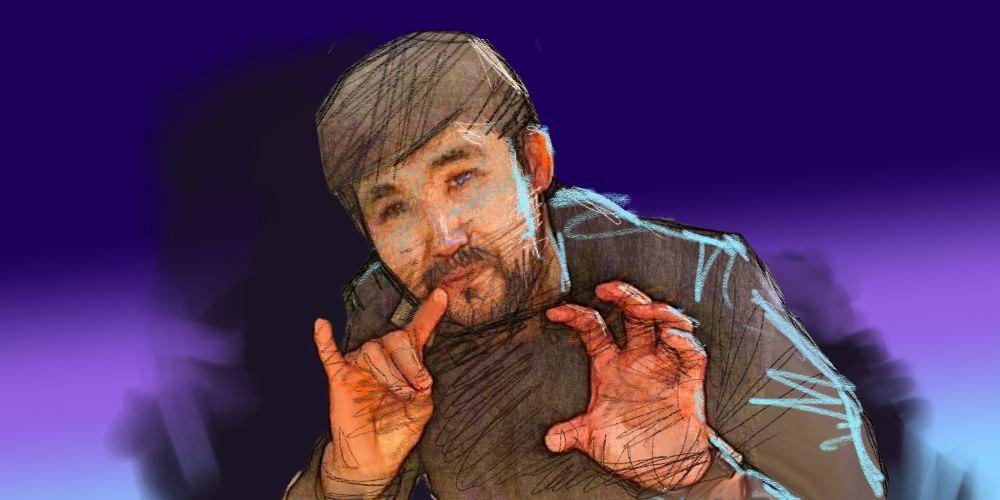
On January 27, another high-profile trial related to the January 2022 events concluded in Almaty. More than 40 individuals were in the dock, but the main figures in the proceedings were three individuals: former Almaty city council deputy and popular blogger Kairat Kudaibergen, former head of the Fifth Department of Kazakhstan’s National Security Committee Ruslan Iskakov, and crime boss Arman Jumageldiev, better known by his criminal nickname, 'Wild Arman.' Harsh Sentences Most of the defendants received short sentences and were released due to time already served. However, for the main figures in the case, the court handed down the following punishments: Kairat Kudaibergen, former deputy and entrepreneur, received eight years in prison. He was also banned from appearing on social media, organizing rallies, debates, and events, and publishing in the media. Ruslan Iskakov, the former head of the Fifth Department of the National Security Committee, was sentenced to 15 and a half years in prison. Arman Jumageldiev (Wild Arman) was sentenced to 20 years in prison. He was prohibited from participating in organizations, organizing events, and publishing in the media or on social networks. In addition to this trio, two other lengthy sentences were handed down: former financial police agent Talgat Makhatov received 15 years, whilst journalist Berdakh Berdymuratov was sentenced to seven years. During the trial, two of the four charges initially brought against Kairat Kudaibergen were dropped. Meanwhile, Arman Jumageldiev, who was originally charged under eleven articles of the Criminal Code of Kazakhstan, faced eight charges by the end of the trial. The 40-year-old crime boss, who along with his defense team has long denied his ties to organized crime, will be released close to the age of retirement should his sentence remain unchanged after his appeal. Under Surveillance Senior Prosecutor of the Almaty Regional Transport Prosecutor’s Office, Mukhit Rysbekov, provided detailed comments on the verdict for Wild Arman (Arman Jumageldiev), revealing the defense’s strategy during the trial. "The court deliberated on the case for about a year. During this time, Jumageldiev’s defenders tried to present him to the court and the public as a patriot, a national hero who helped and protected citizens during the tragic January events. Despite the active campaign organized by Jumageldiev and his defense to rehabilitate his image, we managed to prove the opposite. We proved that back in 2016, long before those events, Jumageldiev led a criminal organization, an armed gang, which included the same representatives of the criminal world,” said Rysbekov. Commenting on Jumageldiev’s sentencing, political analyst Daniyar Ashimbaev noted that the trial had addressed one of the key facets in a broader scheme. "It is clear that the National Security Committee (KNB) was ‘tracking’ this organized criminal group (OCG), which during the January events was supposed to take on the role of establishing 'public governance,' subduing looters, presenting 20 pre-captured individuals as instigators, and ultimately calling for power to be handed over to a 'people’s government' led by the coup organizers," Ashimbaev stated. "This was evident as early as the...
Kazakhstan and the UAE Are Building a Geoeconomic Powerhouse Spanning Asia and the Gulf

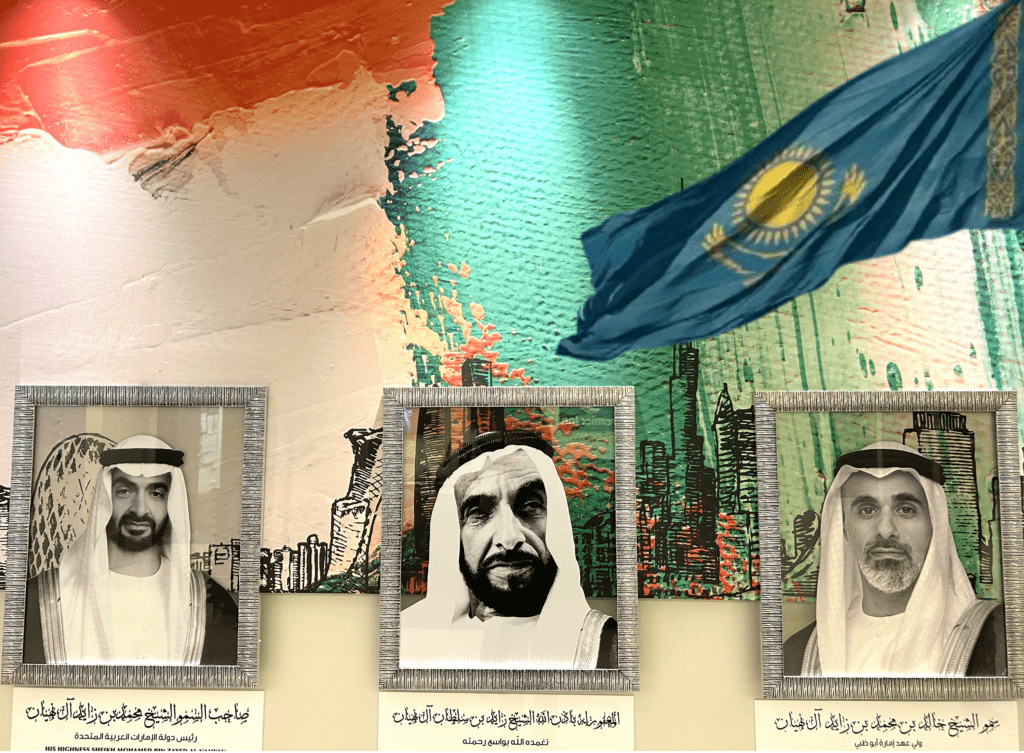
Kazakhstan President Kassym-Jomart Tokayev’s recent mid-January visit to the United Arab Emirates (UAE), to attend the Abu Dhabi Sustainability Week (ADSW) Summit, underscores the strategic importance both nations place on their bilateral ties. ADSW is a prominent global platform dedicated to accelerating sustainable development and promoting international cooperation on the global environmental agenda. The 2025 summit — with the theme, “Nexus of Next: Supercharging Sustainable Progress” — was designed specifically to explore advanced technologies such as artificial intelligence, renewable energy, and innovative sustainability solutions. As leader of the most dynamic of the Central Asian economies, President Tokayev’s presence signaled his country’s ambition to play a more prominent role in addressing environmental challenges at an international level. In his keynote speech, Tokayev addressed environmental issues that are particularly critical for Kazakhstan, including desertification, biodiversity loss, water scarcity, and food security. He emphasized his country’s multifaceted approach to these challenges, which includes digital technologies, large-scale infrastructure projects, and the development of nuclear energy as a low-carbon solution. Kazakhstan has recently launched initiatives, such as expanding solar and wind farms and implementing advanced irrigation systems to combat desertification. Tokayev also highlighted Kazakhstan’s commitment to meeting its renewable energy targets, aiming to generate 15% of its electricity from renewables by 2030, in partnership with global leaders in green technology. Overall, the ADSW Summit provided a platform for Kazakhstan to engage with international partners, share its vision for sustainable development, and explore collaborative opportunities to address global environmental challenges. Kazakhstan’s efforts include the development of the Mohammed bin Rashid Al Maktoum Solar Park, which will have a capacity of 5,000 megawatts (MW) by 2030, and participation in the Space-D programme, which enhances operational performance through nano-satellites. In particular, President Tokayev met with UAE President Sheikh Mohamed bin Zayed Al Nahyan to discuss bilateral relations. The two leaders agreed to focus on a specific economic agenda — focused on trade, investment, and sustainable development — to create positive bilateral trade dynamics. Their Joint Declaration on Strategic Investment Projects in these fields was also highlighted. Kazakhstan and the UAE have developed a dynamic and multifaceted partnership over the past three decades. Since establishing diplomatic relations in 1993, the UAE has become Kazakhstan’s leading strategic partner in the Arab world. Early cooperation focused on trade and investment but has since expanded to include sectors such as petrochemicals, energy, transport, logistics, agriculture, and aerospace. Key milestones include the establishment of direct flight routes between the two countries and the signing of long-term investment agreements in the mid-2000s. Tokayev noted that direct investment from the UAE into Kazakhstan more than doubled from 2023 to 2024, placing the country among the top ten largest foreign investors in Kazakhstan. A focal point of their discussion was the goal of increasing bilateral trade turnover to $1 billion. In this context, the Dubai International Chamber has established a representative office in Kazakhstan to boost trade and investment opportunities further still. For several years, the UAE has been expanding its cooperation with the Greater Caspian...

Kazakhstan Ships First Batch of Kashagan Oil to Baku

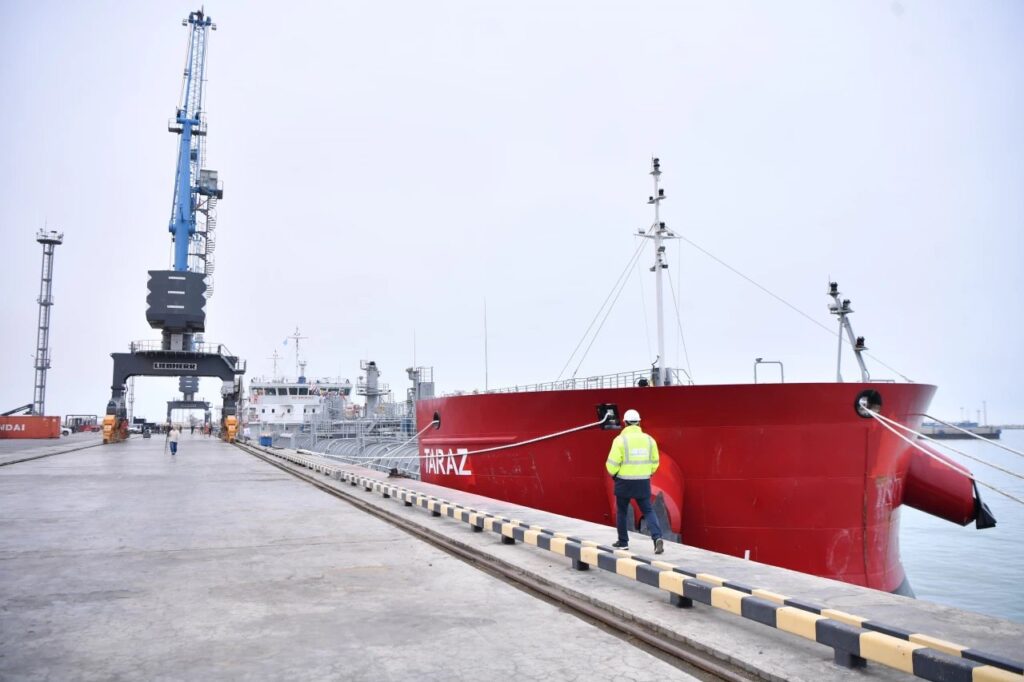
Kazakhstan has shipped its first batch of oil from the Kashagan field to the Azerbaijani port of Baku, marking a significant step in the country’s efforts to diversify its export routes. The shipment was confirmed by the national oil company KazMunayGas (KMG). The tanker Taraz, carrying Kashagan oil, departed from the port of Aktau and is en route to Azerbaijan. Upon arrival in Baku, the oil will be transported via the Baku-Tbilisi-Ceyhan (BTC) pipeline system to the Mediterranean Sea. The export operation is being carried out by KMG Kashagan B.V., a subsidiary of JSC NC KazMunayGas, which manages Kazakhstan’s share in the North Caspian Production Sharing Agreement (PSA). This initiative aligns with Kazakh President Kassym-Jomart Tokayev’s directive for KazMunayGas to develop alternative hydrocarbon export routes. The shipment also advances the development of the Trans-Caspian International Transportation Route, a vital corridor for Kazakhstan’s oil exports. In 2022, KazMunayGas and Azerbaijan’s state oil company SOCAR signed a general agreement to enable the transit of Kazakh oil. In March 2024, the two parties finalized plans for a phased increase in deliveries through Azerbaijan. Under the agreement, annual transit volumes are expected to reach 2.2 million tons. KMG Kashagan B.V., which holds a 16.88% stake in the North Caspian PSA, represents Kazakhstan’s interests in the North Caspian Project (NCP). The company is responsible for the exploration and production of hydrocarbons in the Caspian Sea, as well as the independent transportation and sale of its production share under the PSA’s terms. Energy analysts highlight that diversifying export routes will help Kazakhstan reduce its reliance on traditional oil supply corridors, thereby increasing flexibility and resilience in the face of global market volatility.

Amre Kashaubaev and the Mystery of an Old Photograph

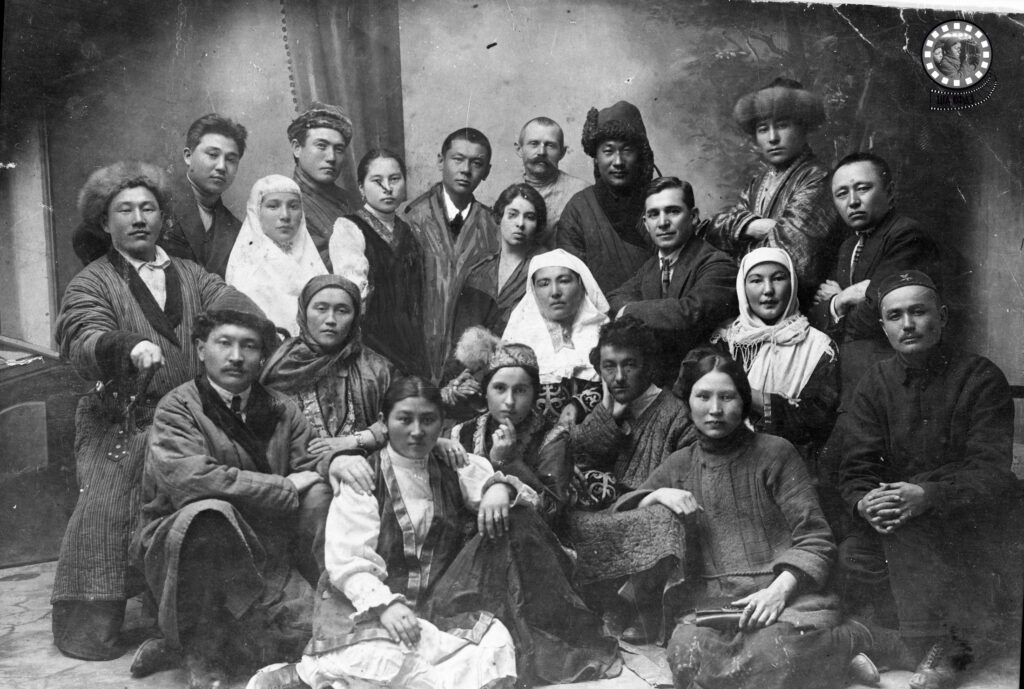
In Kazakhstan, the musical talent of Amre Kashaubaev is well known. Thanks to him, European audiences were introduced to the live melodies of Kazakh music when Kashaubaev performed Kazakh songs at the International Exhibition of Modern Decorative and Industrial Arts of 1925 in Paris. As previously reported by The Times of Central Asia, the first recordings of Kazakh music were made between 1903 and 1909 during the travels of the German explorer Richard Karutz in Turkestan. His book, Among the Kirghiz and Turkmens in Mangyshlak, published in 1911 in Russia, was edited by Vasily Radlov, a renowned ethnographer, archaeologist, and educator of German origin, who was also a pioneer in Turkology. However, it was only in 1925, thanks to Kashaubaev’s talent, that Europeans could hear Kazakh folk songs performed live. The fate of this man is very similar to the destinies of thousands of talented individuals in the early years of the Soviet Union, whose creative works could not fit into the "Procrustean bed" of communist ideology. [caption id="attachment_27972" align="aligncenter" width="1279"] Amre Kashaubaev and his wife Orazke, Kzyl-Orda, 1926.[/caption] Amre Kashaubaev was born in 1888 in the Abraly district of the Semipalatinsk region. His first professional attempt to become a singer was a public performance at a fair near the village of Koyandy, not far from the modern city of Petropavlovsk, at a festival of Kazakh oral art. Through his songs, Kashaubaev’s art became famous throughout Kazakhstan. Anatoly Lunacharsky, then the People’s Commissar for Education, personally invited him to participate in concerts at the International Exhibition in Paris. Kashaubaev also actively participated in the creation of the first Kazakh professional theater. In April 1927, he gave a concert in Moscow, followed by a performance in Frankfurt. He frequently performed on the radio, singing Kazakh folk songs and enchanting listeners with the beauty and depth of his voice. His theatrical performances also garnered great interest. Today, archival institutions and museums in Kazakhstan hold only a few photographs and documents depicting Kashaubaev. This is because many documents were destroyed by his colleagues and relatives due to his political persecution by the Bolsheviks. His trip to Paris proved to be fatal for the singer since it drew the attention of the Soviet state security agencies. During the Paris exhibition, the talented singer met Kazakh political dissident Mustafa Shokay, who in 1917 had been the Chairman of the Kokand Autonomy — a state entity that lasted for six months in the Turkestan region of the Russian Empire. Moreover, Shokay was an active member of the Alash Party, which the Soviets deemed bourgeois and whose members were subjected to repression. Although Kashaubaev was not imprisoned for his ties with political opponents of the Bolsheviks, he faced significant pressure from the authorities. On December 6, 1934, he was found dead on the streets of Alma-Ata. The cause of his death remains unknown. Within the archival fonds of The Central State Archive of Film, Photo Documents, and Sound Recordings of the Republic of Kazakhstan, we believe there...

Criminal Charges Against MEP Maria Arena Spark Renewed Debate on Central Asia Influence-for-Hire

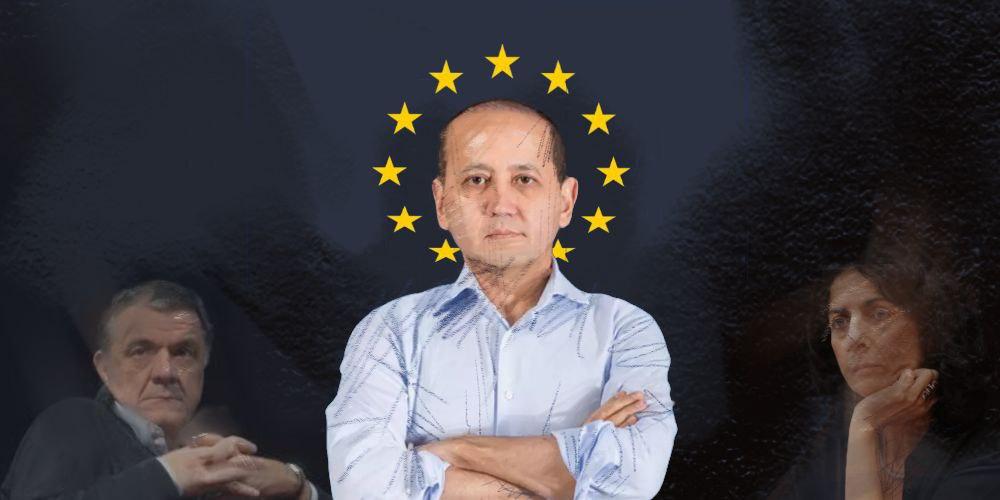
In the latest chapter of a slow-burning story, on January 18, 2025, Antonio Panzeri’s successor as head of the European Union’s Subcommittee on Human Rights (DROI), Maria Arena, was charged with participating in a criminal organization concerning the Qatargate scandal. As far back as December 2022, shocking revelations had exposed collaboration between Panzeri, EU officials, and certain NGOs. This alliance turned their human rights advocacy into a self-serving commercial enterprise, yielding them €2.6 million and their clients favorable motions and resolutions in the European Parliament. The roles of Arena and Panzeri in commercializing their office by curating human rights targets and taking protective measures for monetary exchange warrant closer scrutiny. After leaving DROI, Panzeri continued to operate behind the scenes, having “almost 400 telephone calls” in ten months with Arena. As reported by Politico, her ties to the NGOs Fight Impunity (FI) and No Peace Without Justice (NPWJ) raised concerns about transparency and influence within DROI, especially as key figures from these NGOs faced corruption and money laundering charges in the EU’s Qatargate scandal. Arena’s leadership has also been criticized for allowing unbalanced hearings that favored Qatar’s interests while sidelining its critics. The scope of corruption extends beyond Qatar, with both Morocco and Mauritania mentioned as attempting to influence European Parliament decisions through bribery. All three countries — Qatar, Morocco, and Mauritania — deny any involvement. Germane to Central Asia, Maria Arena reportedly penned a letter to the Ambassador of Kazakhstan in Brussels calling for the release from prison of Karim Massimov, the former head of Kazakh intelligence who was sentenced to long-term imprisonment in his homeland for high treason, attempted coup and abuse of power. Journalists’ investigations have documented Massimov’s alleged links to major corruption, and he was closely associated with the authoritative regime of former President Nazarbayev. Arena’s push coincides with social media postings on 8 November 2022 by FI and NPWJ calling for Massimov’s release. Francesco Giorgi, an ex-parliamentary staffer at Fight Impunity and Panzeri aide who admitted partial guilt in the Qatargate bribery scandal, retweeted the post. A broader investigation suggests further malfeasance similar to Qatargate, in which Panzeri, Arena, and other EU officials collaborated with Mukhtar Ablyazov, a known criminal with judgments against him exceeding $4.8 billion dollars in the U.S. and British courts. Ablyazov is facing potential deportation from France following his evasion of a 22-month UK prison sentence for contempt of court. Despite this high-profile conviction in the UK, under DROI’s leadership, a faction of European politicians, including prominent names from the S&D including Panzeri and Maria Arena, along with their legislative partner Renew Europe, continued to align themselves with Ablyazov. An analysis of Ablyazov's supporters in the European Parliament, PACE, and national legislatures reveals a discernible pattern. During his time in Strasbourg, Ablyazov met with Panzeri – a figure labeled by The Spectator as one of Ablyazov’s “most diligent lawyers and active supporters.” Alongside Ablyazov was his daughter, Madina, who is married to Ilyas Khrapunov - found by a federal judge in...

Art and Inspiration: Capturing the Essence of Almaty

With colorful illustrations of landmarks, natural monuments, and city-life moments, Aidana Niyazalieva’s postcards of Almaty stand out. TCA spoke with the artist to learn more about her inspiration, creative process, and challenges behind her postcards and the Almaty arts scene. TCA: What inspired you to start making postcards of Almaty? I've been drawing since I can remember; everything surrounding me – my room, the streets, and the buildings – inspires me. This led me to study architecture. However, after working as an architect, I realized that my passion for drawing was stronger. I decided to try it, eventually devoting myself to illustration and turning this hobby into a profession. I started with the city I grew up in, Almaty, and created a few postcards of the views I walked past the most. This became a way to combine everything I love - art, architecture, and my love for the city. TCA: How do you decide which landmarks, views, or themes to feature in your postcards? I choose places and themes close to me that evoke an emotional connection in people. Usually, the ideas come from my walks around the city. During my walks, I take many photos for possible drawings. Sometimes, a few buildings of the same type could grow into a series of illustrations, as in the “Houses“ postcard set that was united by the old houses of the Soviet period located in a Golden Square area. Also, I might get requests from people about places they would like to see, as happened with the Kazakhstan Hotel or Esentai River illustrations. TCA: What is your favorite spot in Almaty to capture in your art, and why? My favorite place in Almaty is the old city center. Its unique architecture, with characteristic features from different periods from neoclassical to modernist buildings, and its streets with cafes and terraces have always attracted my attention. Those buildings keep their history, whether these are old houses with sophisticated details or monumental facades of theaters and institutes. When I'm there, I always look closely at small elements like the carved balconies, window frames, mosaics, and patterns on the facades – I try to capture them in every illustration. TCA: Are there specific stories or personal memories behind some of your postcard designs? As a local, I have a personal connection to almost every location I illustrate. Capturing a place authentically requires more than just visual reference - it also needs an emotional connection. That’s why I barely draw locations I’ve never visited. Behind almost every illustration is a moment tied to the place. For example, the Kasteyev Museum holds a special place in my heart. My grandma used to take me there often when I was little, and it’s where I first took art lessons. So, I decided to create this illustration to capture the architecture of the museum and the memories connected to the place. TCA: Can you walk us through the creative process behind designing a postcard? Firstly, after the location is...