• KGS/USD = 0.01144 0%
  • KZT/USD = 0.00211 0%
  • TJS/USD = 0.10438 0%
  • UZS/USD = 0.00008 0%
  • TMT/USD = 0.28490 0%
  • KGS/USD = 0.01144 0%
  • KZT/USD = 0.00211 0%
  • TJS/USD = 0.10438 0%
  • UZS/USD = 0.00008 0%
  • TMT/USD = 0.28490 0%
  • KGS/USD = 0.01144 0%
  • KZT/USD = 0.00211 0%
  • TJS/USD = 0.10438 0%
  • UZS/USD = 0.00008 0%
  • TMT/USD = 0.28490 0%
  • KGS/USD = 0.01144 0%
  • KZT/USD = 0.00211 0%
  • TJS/USD = 0.10438 0%
  • UZS/USD = 0.00008 0%
  • TMT/USD = 0.28490 0%
  • KGS/USD = 0.01144 0%
  • KZT/USD = 0.00211 0%
  • TJS/USD = 0.10438 0%
  • UZS/USD = 0.00008 0%
  • TMT/USD = 0.28490 0%
  • KGS/USD = 0.01144 0%
  • KZT/USD = 0.00211 0%
  • TJS/USD = 0.10438 0%
  • UZS/USD = 0.00008 0%
  • TMT/USD = 0.28490 0%
  • KGS/USD = 0.01144 0%
  • KZT/USD = 0.00211 0%
  • TJS/USD = 0.10438 0%
  • UZS/USD = 0.00008 0%
  • TMT/USD = 0.28490 0%
  • KGS/USD = 0.01144 0%
  • KZT/USD = 0.00211 0%
  • TJS/USD = 0.10438 0%
  • UZS/USD = 0.00008 0%
  • TMT/USD = 0.28490 0%

Viewing results 145 - 150 of 1980

Security Risks Around Kazakhstan’s Oil Exports Ripple Through European Markets

Europe’s oil market is becoming increasingly exposed to disruption as security risks rise along export routes used by Kazakhstan, which the European Union has long viewed as a reliable alternative to Russian supply. The risks extend far beyond Ukraine itself. “Russia continues escalating its attacks and targeting civilians and civilian infrastructures,” an EU spokesperson told The Times of Central Asia. “Russia’s brutal and unacceptable attacks have left people without hot water, heating and electricity in the current weather conditions. Russia’s war of aggression has also severely impacted Black Sea maritime security, including through its use of shadow fleet vessels to circumvent international sanctions, and the persistent attacks on civilian and port infrastructure in Ukraine. On the other hand, Ukraine has accepted an unconditional ceasefire in March 2025. It shows that Russia does not want peace. The EU and the entire international community need to put pressure on Russia to stop its war. “Kazakhstan plays a crucial role for Europe’s energy security and has been for years a reliable partner in diversifying energy sources and ensuring a stable supply for European markets. More than 12% of all the oil imported by the EU comes from Kazakhstan, contributing to the diversification of energy sources and reducing dependency on a limited number of suppliers. The continuous and safe functioning of the supply chain is hence key also for Europe. “Maritime safety and security in the Black Sea is a fundamental component of the new EU strategic approach to the region, adopted in May 2025. The Black Sea is a critical connector between Europe, the Southern Caucasus, Central Asia and the Eastern Mediterranean. Ensuring maritime security and safety in this region is vital not only for the littoral States but also for broader European interests and for many partner countries, as it supports trade flows, sustainable supply chains and enhanced connectivity.” Kazakhstan produced roughly 1.8 million barrels per day in 2024 and exported the bulk of that volume. More than 80% of its crude exports move through the Caspian Pipeline Consortium, or CPC, which links oil fields in western Kazakhstan to Russia’s Black Sea port of Novorossiysk. From there, tankers ship the oil mainly to European refiners. Under normal conditions, the pipeline carries roughly 1.3 million barrels per day, making it one of the most important single supply routes for non-Russian crude entering Europe. Recent events have shown how sensitive European markets are to any disruption along that corridor. On January 14, Bloomberg reported that oil prices in Europe strengthened after shipments of CPC Blend fell short of expectations. Traders cited reduced availability of the light, low-sulfur crude, which is favored by European refiners, forcing buyers to seek alternative grades at higher prices. Despite the recent tightening, traders say the market has so far absorbed disruptions without severe shortages, reflecting high inventories and flexible refinery operations, though that buffer could narrow if attacks persist. That supply pressure followed a series of security incidents in the Black Sea, where commercial shipping and port infrastructure have...

Russia Says TV Host’s Remarks on Central Asia Do Not Reflect State Policy

Russia’s Foreign Ministry moved on January 16 to distance the Kremlin from comments by television host Vladimir Solovyov after his remarks about potential military action in Central Asia provoked backlash across the region. Foreign Ministry spokesperson Maria Zakharova stated that comments by television presenters do not represent the official position of the Russian government and that Russia’s foreign policy is articulated only through authorized state channels, with relations with Central Asian countries described as based on partnership and respect for sovereignty. The clarification followed criticism in Uzbekistan, Kyrgyzstan, and Kazakhstan after Solovyov suggested that Moscow could extend its “special military operation” framework beyond Ukraine and into Central Asia. In Kyrgyzstan, public calls emerged to restrict Solovyov’s entry into the country, while officials indicated that the government would respond differently if similar claims were made by Russian state officials rather than a media figure. In Kazakhstan, political commentators warned that rhetoric questioning sovereignty risked damaging relations with Russia, even in the absence of a formal diplomatic protest. Solovyov made the remarks during a January 10 broadcast of his program “Solovyov Live.” During the segment, he described Central Asia as part of Russia’s sphere of influence and argued that international law should not constrain Moscow’s actions in territories it considers strategically important. He drew parallels with Russia’s military campaign in Ukraine and implied that states within Russia’s perceived geopolitical space could be treated differently from countries outside it. The language resonated strongly in Uzbekistan, where academics, analysts, and commentators criticized the implication that sovereignty could be conditional. Public discussion focused on the suggestion that Central Asian states might face pressure based on historical ties rather than be treated as independent actors. Critics described the framing as inconsistent with the principles of statehood established after the collapse of the Soviet Union in 1991. An Uzbek academic later issued a rebuttal rejecting the idea that Central Asia could be treated as a single external “zone” governed by different rules. The response emphasized that regional states have distinct political systems, alliances, and security priorities, and that none had delegated authority over those choices to outside powers. The episode highlighted the influence of Russian political talk shows during wartime. Figures like Solovyov command large domestic audiences and operate in an environment where commentary often overlaps with geopolitical messaging. In Central Asia, such remarks attract close scrutiny regardless of whether they carry formal policy status, particularly when they echo language used by Russian officials in other conflicts. Economic and social ties heighten that sensitivity. Millions of Central Asian citizens work in Russia, and remittances remain a significant factor in several regional economies. Russia also plays a role in regional security arrangements and energy transit routes. Statements implying that sovereignty could be overridden therefore carry weight far beyond television studios. No Central Asian government has announced formal diplomatic measures in response to Solovyov’s remarks, and Moscow’s intervention appears to have contained the immediate fallout. The episode nonetheless shows how rhetoric shaped by the war in Ukraine readily carries...

Kazakhstan’s Yenlik Brings Her Sound to COLORS

Kazakhstani singer and songwriter Yenlik has made history by becoming the first artist from Kazakhstan to be featured on the international music platform COLORSxSTUDIOS. Founded in Berlin in 2016, COLORSxSTUDIOS, commonly known as COLORS, has grown from a small creative experiment into one of YouTube’s most influential music platforms. Recognized for its minimalist visual style, each performance is filmed against a single-color backdrop without set design or special effects, placing the focus squarely on the music, the voice, and the artist. The channel now counts more than 8.2 million subscribers and over 3.5 billion views, cementing its status as a global tastemaker in contemporary music. Over the years, COLORS has showcased a wide range of talent, from emerging artists to international stars such as Billie Eilish, Drake, Doja Cat, and Joji. The platform describes its mission as an effort to “connect people, countries, and cultures on a creative and emotional level,” framing its global, genre-spanning approach as a form of cultural exchange as much as a musical one. Yenlik’s Voice: Rooted in Culture, Reaching Beyond Borders Yenlik, born Enlik Kurarbek, is one of the most prominent figures in Kazakhstan’s emerging musical wave. Her sound blends alternative pop with modern R&B influences, creating a style that feels both personal and closely tied to her cultural identity. The Kazakh language plays a central role in her work, not as a folkloric reference but as a contemporary form of expression. Her music reflects a broader shift in which Kazakh is increasingly present in global pop contexts without being confined to traditional or ethnic frameworks. Yenlik’s authorial sound, shaped by contemporary production and subtle national influences, is paired with an emotionally restrained vocal delivery that has become her signature. Observers suggest it was this originality that drew the attention of the COLORS curators. Known for prioritizing authenticity over commercial success, the platform seeks artists with strong individuality and a distinctive voice, qualities that align closely with Yenlik’s creative vision. From Rejection to Recognition For Yenlik, the invitation from COLORS marked a long-awaited milestone. She had previously applied to the project without receiving a response, making the eventual outreach from the platform all the more meaningful. “When the invitation came, I was overjoyed and burst into tears,” she recalled. “This project always felt so distant. Two years ago, we submitted an application with no response. And now, COLORS reached out to us first.” The performance was filmed outside Kazakhstan and completed within a few hours. Yenlik was struck by the production’s simplicity, defined by an absence of elaborate sets and large crews, and by the quiet intimacy that has become a hallmark of COLORS. The team fostered a welcoming atmosphere, and she was even able to choose the episode’s background color, which she described as symbolizing “true gentle strength,” a visual reflection of the emotional tone of her performance. Rising Digital Momentum Yenlik’s digital presence has continued to grow steadily, with her music gaining traction among younger audiences on social media. Her songs often circulate...

Speed vs. Stability: How Kazakhstan Is Leading Eurasia’s Transit Race

China’s successful test of a maglev platform weighing about one ton, accelerating to 700 kilometers per hour in just two seconds, once again underscored Beijing’s technological ambitions in the transport sector. With more than 50,000 kilometers of high-speed rail connecting cities such as Beijing, Shanghai, Guangzhou, Shenzhen, and Chengdu, China is paving the way for the next generation of mobility. Yet beyond China's borders, speed alone is no longer the decisive factor. In Eurasia and particularly in Central Asia, stability, predictability, and reliability have become the primary metrics for transit success. Within this context, Kazakhstan is positioning itself as a central hub in Eurasia’s evolving logistics landscape. China’s High-Speed Model vs. Eurasia’s Freight Realities Inside China, Fuxing high-speed trains and maglev routes have transformed domestic connectivity, forming the backbone of national economic integration. However, exporting this model faces inherent limitations. High-speed passenger lines require dedicated tracks, strict safety protocols, and massive investment factors incompatible with most of Eurasia’s existing freight-centric rail infrastructure. As a result, the China-Central Asia-Europe corridor is focused on accelerated freight movement. The goal is not maximum speed, but consistent delivery times, reliable scheduling, and minimal disruption, elements vital to modern supply chains. Kazakhstan’s Strategic Role in Eurasian Land Transit Kazakhstan serves as a critical artery for China's westward land transit. Key corridors to the Eurasian Economic Union, Europe, and Central Asia, including the Middle Corridor, traverse Kazakh territory. In the first ten months of 2025, Kazakhstan's State Revenue Committee reported that more than 11 million tons of goods were transited from China through Kazakhstan, marking double-digit growth year-on-year. This success stems not only from increased volume but from qualitative improvements in transit management. Digitalization has been pivotal. An automated system for filing and issuing transit declarations has slashed processing times from several hours to just 30 minutes per container train, facilitating the clearance of millions of tons of cargo. For businesses, this translates into lower costs and more reliable delivery schedules -- an essential factor amid ongoing global economic uncertainty. These institutional upgrades are reinforced by infrastructure investment. According to Kazakhstan’s Ministry of Transport, cargo transportation volumes have reached record levels, with steady growth in transit flows. Projects like the Dostyk-Moyinty line and the Almaty bypass are specifically designed to expand transit capacity. Why High-Speed Passenger Rail Isn’t on the Agenda Given China’s high-speed rail successes, some may question why similar routes are not planned between China and Kazakhstan. However, in the near term, such initiatives remain economically and logistically unfeasible. Existing rail lines in the region prioritize freight and mixed-use traffic, falling short of the standards required for high-speed passenger transport. Building separate lines would demand significant capital and a stable passenger base, conditions that currently do not exist. Freight transit, aligned with the Belt and Road Initiative, remains the primary focus. Unlocking the Caspian Bottleneck Despite the growth in rail transit, the Caspian Sea route remains a capacity bottleneck. Plans to build a new seaport in the Karakiyansky district of Mangistau region, through a...

Kazakhstan Aims to Eliminate Energy Deficit and Begin Electricity Exports by 2027

Kazakhstan is on track to eliminate its domestic electricity deficit within the next year and transition from import reliance to surplus. According to projections by the Ministry of Energy, the country will fully meet internal demand by the end of the first quarter of 2027, and by 2029, it expects to maintain a stable surplus in both electricity and regulating capacity, laying the groundwork for future exports. Energy Minister Yerlan Akkenzhenov announced the plan during a meeting on the development of the electric power industry. At the close of 2025, Kazakhstan’s electricity generation totaled 123.1 billion kWh, while consumption reached 124.6 billion kWh, resulting in a deficit of over 1 billion kWh. However, this shortfall was less than half the 2 billion kWh gap recorded at the end of 2024, which was offset by imports from Russia, Uzbekistan, and Kyrgyzstan. Installed generation capacity increased over the year from 25.3 to 26.7 GW. While coal-fired power plants continue to dominate, accounting for 51.4% of output, the shares of gas (25.6%) and renewable energy (13.5%) are steadily growing. The Energy Ministry credits market liberalization for helping stabilize the power system. Over the past two years, nearly $1.8 billion in investment, mainly for capital repairs and modernization, has flowed into the sector. As a result, the number of technological violations has dropped by 27%, and nine combined heat and power (CHP) plants have exited the so-called “red zone.” Akkenzhenov noted that generating companies’ owners did not receive dividends, with all profits reinvested into asset renewal. This marks a strategic pivot from short-term profitability to long-term system reliability. Looking ahead to 2035, Kazakhstan plans to add over 26 GW in new generating capacity, including nuclear power. Simultaneously, the government is prioritizing upgrades to existing coal-fired plants using clean coal technologies. Key infrastructure projects include the 2,640 MW Ekibastuz GRES-3 station, a new 700 MW facility in Kurchatov, and CHP plants in Kokshetau, Semey, and Ust-Kamenogorsk. Contractors have been selected, and implementation is already underway. Despite this progress, systemic risks remain. Prime Minister Olzhas Bektenov has strongly criticized delays in the execution of energy projects. Nuclear power development has emerged as a distinct strategic priority. Kazakhstan plans to construct at least three nuclear power plants. Work on the first began last summer in partnership with Russia’s Rosatom, while two more are expected to be built with the involvement of the China National Nuclear Corporation (CNNC). President Kassym-Jomart Tokayev has described the development of nuclear energy as correcting a “historical absurdity.” Kazakhstan, one of the world’s leading uranium producers and exporters, has yet to use this resource to support its own energy needs.

Kazakhstan Debates Parliamentary Reform as Inflation Pressures Living Standards

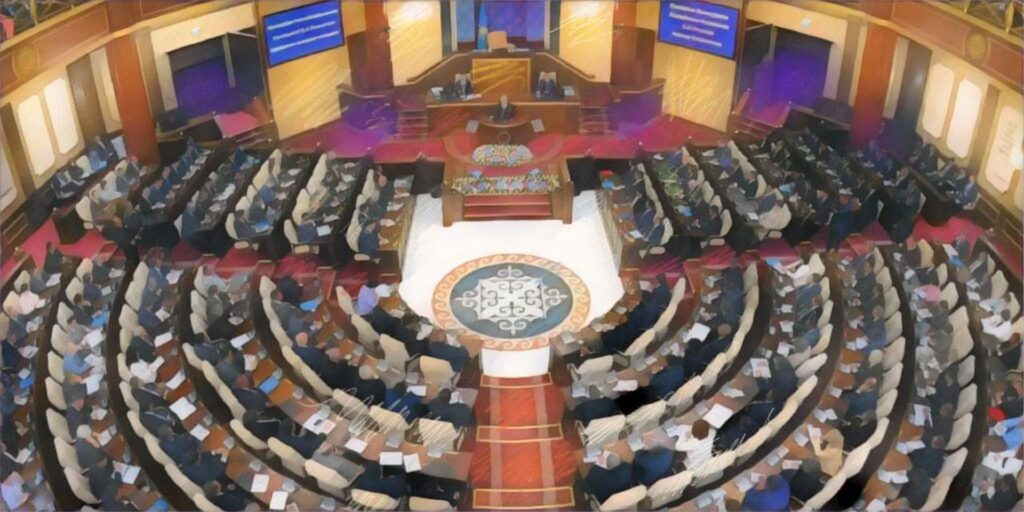
The Kazakh government is actively developing the framework for a future unicameral parliament, working to define its status, powers, and functions. Currently, Kazakhstan’s legislative branch consists of two chambers: the Senate and the Mazhilis.  The proposed transition to a unicameral system has been positioned by authorities as a step toward democratization. However, many citizens remain unclear about the details and implications of the reform, particularly as inflation and declining living standards dominate public concern. Uncertain Details of Reform In September 2025, President Kassym-Jomart Tokayev proposed holding a nationwide referendum on transitioning to a unicameral parliament in 2027. While some analysts have speculated about a faster timeline, no official acceleration beyond 2027 has been announced. "The establishment of a parliamentary republic is not under consideration. The foundational model of a 'Strong President, Influential Parliament, Accountable Government' remains unchanged," Tokayev previously stated. According to political analyst Gaziz Abishev, pivotal developments are expected on January 20, when the National Kurultai (Assembly) convenes. He believes this meeting will outline the contours of constitutional reform and potentially signal a date for the referendum. “If the decree on holding a referendum is signed during the Kurultai, the vote could be held on March 22 [2026],” Abishev stated. Under the current system, the Senate represents regions and appointive quotas, reviewing legislation passed by the Mazhilis and serving as a constitutional buffer. Any move to unicameralism would require redefining how regional interests are represented and how legislative oversight is maintained without an upper chamber. The National Kurultai serves as a platform for dialogue between the government and society, addressing national identity, economic development, social justice, and improving the quality of life. Historically, the Kurultai was a gathering of Turkic and Mongol tribes. Over 500 Public Proposals Submitted Public discussion around the proposed unicameral parliament has been active. Since the launch of a dedicated “Parliamentary Reform” section on the state portals e-Otinish and Egov, over 500 proposals have been submitted by citizens, experts, and public organizations. Despite this engagement, tangible benefits for ordinary citizens remain vague, aside from a potential reduction in government spending. Globally, more than half of national parliaments operate as unicameral systems. According to IPU Parline, 107 out of 188 legislatures follow this model, primarily in unitary states with smaller populations. Unicameral systems are often praised for faster legislative processes, lower administrative costs, and increased transparency. Kazakhstan previously had a unicameral legislature under the 1993 Constitution. Following the invalidation of the 1994 elections, the Supreme Council was dissolved. In 1995, the country transitioned to its current bicameral system. The Senate, as the upper house, plays a stabilizing and arbitration role. Analysts caution that without a second chamber, legislative processes may be vulnerable to hasty or populist decisions. Potential for Early Elections Abishev suggests that a referendum in March 2026 could prompt an early electoral cycle. "Under the current schedule, the next Mazhilis elections are set for January 2028. However, they could be moved up to summer 2026 if Parliament adopts a constitutional amendment package in April...