• KGS/USD = 0.01144 0%
  • KZT/USD = 0.00216 0%
  • TJS/USD = 0.10456 0%
  • UZS/USD = 0.00008 0%
  • TMT/USD = 0.28490 0%
  • KGS/USD = 0.01144 0%
  • KZT/USD = 0.00216 0%
  • TJS/USD = 0.10456 0%
  • UZS/USD = 0.00008 0%
  • TMT/USD = 0.28490 0%
  • KGS/USD = 0.01144 0%
  • KZT/USD = 0.00216 0%
  • TJS/USD = 0.10456 0%
  • UZS/USD = 0.00008 0%
  • TMT/USD = 0.28490 0%
  • KGS/USD = 0.01144 0%
  • KZT/USD = 0.00216 0%
  • TJS/USD = 0.10456 0%
  • UZS/USD = 0.00008 0%
  • TMT/USD = 0.28490 0%
  • KGS/USD = 0.01144 0%
  • KZT/USD = 0.00216 0%
  • TJS/USD = 0.10456 0%
  • UZS/USD = 0.00008 0%
  • TMT/USD = 0.28490 0%
  • KGS/USD = 0.01144 0%
  • KZT/USD = 0.00216 0%
  • TJS/USD = 0.10456 0%
  • UZS/USD = 0.00008 0%
  • TMT/USD = 0.28490 0%
  • KGS/USD = 0.01144 0%
  • KZT/USD = 0.00216 0%
  • TJS/USD = 0.10456 0%
  • UZS/USD = 0.00008 0%
  • TMT/USD = 0.28490 0%
  • KGS/USD = 0.01144 0%
  • KZT/USD = 0.00216 0%
  • TJS/USD = 0.10456 0%
  • UZS/USD = 0.00008 0%
  • TMT/USD = 0.28490 0%

Viewing results 151 - 156 of 2013

Tokayev Floats Vice President Post at National Kurultai as Kazakhstan Weighs Political Overhaul

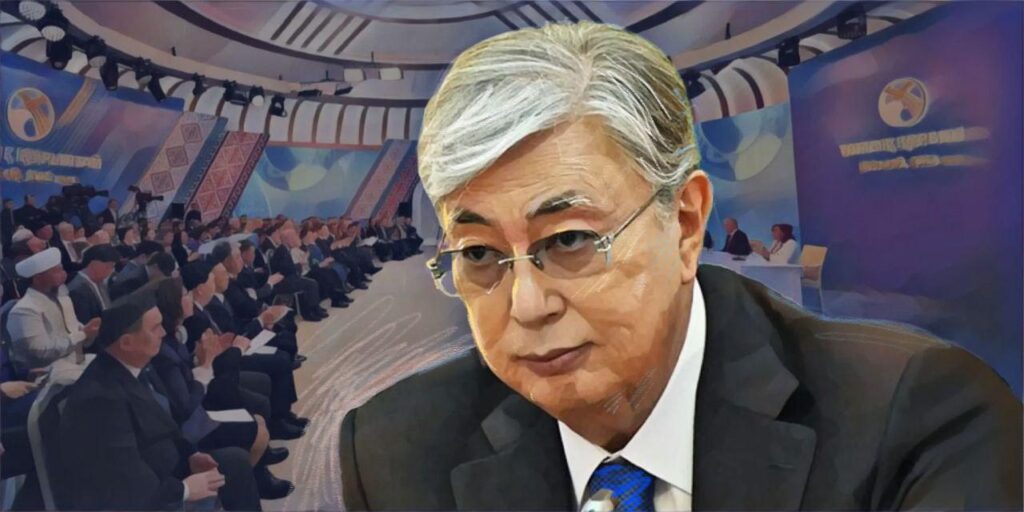
President Kassym-Jomart Tokayev used the fifth session of Kazakhstan’s National Kurultai on January 20 to propose creating a vice president’s post and embedding the new institution in the constitution, as part of a broader package of political reforms aimed at reshaping the country’s system of governance. Under the proposal, the vice president would be appointed by the president and confirmed by parliament by a simple majority vote. The president would define the vice president’s authority, which could include representing Kazakhstan at international forums and negotiations, representing the head of state in parliament, and engaging with domestic and international organizations in political, scientific, cultural, and educational fields. “The establishment of this position will stabilize the process of state governance, and will also bring final clarity regarding the hierarchy of power,” Tokayev said at the Kurultai. Kazakhstan does not currently have a vice president. Executive authority is vested in the presidency, while the government is led by a prime minister, with succession procedures defined by the constitution. Tokayev said the key provisions governing the new post, including its functions, should be enshrined directly in the constitution. The vice presidency was presented as part of a wider administrative restructuring. Tokayev said several administrative structures that support the current parliament would be abolished, along with the position of state counselor. He added that the functions, structure, and management system of the Presidential Administration would be reformed in line with practical needs. The Kurultai session in Kyzylorda took place as the administration advances a more far-reaching overhaul of the legislature. Tokayev has promoted a transition from Kazakhstan’s bicameral parliament, composed of the Senate and the Mazhilis, to a unicameral system, arguing that the change would simplify governance and shorten decision-making chains. [caption id="attachment_42476" align="aligncenter" width="1280"] President Tokayev at the National Kurultai; image: Akorda.kz[/caption] He outlined parameters for a future unicameral parliament, saying it could consist of around 145 deputies, be led by three vice-chairs, and operate with no more than eight standing committees. He also proposed renaming the legislature the “Kurultai,” saying the term reflects historical traditions of popular representation. The parliamentary reform agenda is being developed by a working group that began reviewing constitutional options in late 2025. The idea of moving to a unicameral system was first raised in Tokayev’s national address on September 8, 2025. On January 19, Tokayev held a meeting with the working group on parliamentary reform in Astana, where aides reported that the group had reviewed constitutional approaches to reshaping the legislature and discussed key approaches to constitutional reform based on proposals from citizens, experts, and civil organizations. Tokayev has tied the parliamentary overhaul to a nationwide vote. He reaffirmed that citizens would make the final decision through a referendum and said Kazakhstan is targeting 2027 for a public vote on abolishing the Senate and moving to a unicameral legislature. The latest reform proposals build on constitutional changes adopted after the unrest of January 2022. In June 2022, Kazakhstan held a nationwide referendum on proposed constitutional amendments, with more...

Kazakh Diplomacy: Why Tokayev Aligned Kazakhstan With the Abraham Accords

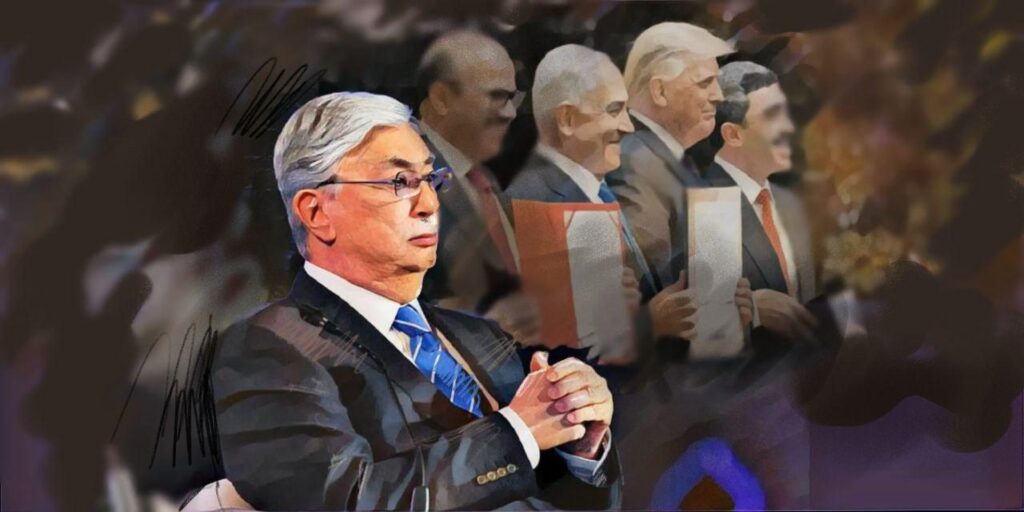
On November 6, 2025, President Kassym-Jomart Tokayev confirmed that Kazakhstan had formally acceded to the Abraham Accords, aligning the Central Asian state with the U.S.-brokered diplomatic framework. Launched during Trump’s first presidential term, the Abraham Accords seek to expand diplomatic normalization between Israel and Muslim-majority states. Initially signed in September 2020 by Israel and the United Arab Emirates, and separately by Israel and Bahrain, the Abraham Accords were later expanded to include Morocco and Sudan. Within the broader Abraham Accords framework, Washington continues to seek Saudi Arabia’s participation, a step viewed as diplomatically significant given the kingdom’s custodianship of two of Islam’s holiest sites. However, the process was derailed following the outbreak of the Gaza war in late 2023, triggered by a Hamas attack on Israel. Riyadh has since insisted that normalization can only proceed once there is meaningful progress toward establishing a Palestinian state. Kazakhstan, a secular state with a Muslim-majority population, has maintained diplomatic ties with Israel since April 1992. Embassies were opened in 1996, and bilateral relations have expanded steadily, including in trade, defense, and humanitarian fields. In 2016, Israeli Prime Minister Benjamin Netanyahu visited Kazakhstan, highlighting the strength of this relationship. These longstanding ties help explain why Kazakhstan’s accession did not mark a shift in its bilateral relationship with Israel. Because Kazakhstan established full diplomatic relations with Israel decades ago, several analysts have described the country’s accession to the Abraham Accords as largely symbolic. Uzbek political scientist Kamoliddin Rabbimov argues that the decision was a calculated gesture rather than a shift in Kazakhstan’s geopolitical orientation. “The question arises: is Kazakhstan really ready to weaken its relations with China, Turkey, and Russia in order to join the American-Israeli alliance? I don’t think so,” Rabbimov said. “President Tokayev most likely just formally supported Trump’s initiative by saying ‘yes’ without putting any real geopolitical meaning into it. Nevertheless, even such a ‘yes’ is capable of slightly upsetting the balance in Kazakhstan’s foreign policy.” Giorgio Cafiero, the CEO of Washington-based Gulf State Analytics, views the move as strategic positioning. “Given the Trump administration’s determination to expand the scope of the Abraham Accords, this move by Kazakhstan was a relatively easy way to win the White House’s favor.” German analysts at Kettner Edelmetalle emphasize Kazakhstan’s natural resource wealth as a key factor. “The country has significant deposits of minerals and rare earth elements, resources that are indispensable for modern technologies. By strengthening ties with Washington, Astana apparently hopes to attract more American investment in this strategically important sector.” Eldar Mamedov, non-resident fellow at the Queens Institute and a former senior advisor to the European Parliament, views the development through the lens of geopolitical balancing. “The Abraham Accords are merely a tool in Astana’s deliberate efforts to diversify its geopolitical dependence on Moscow and strengthen its strategic relations with the United States,” he writes. “Perceiving them as the beginning of a new, ideologically defined bloc misinterprets the fundamentally pragmatic and self-interested nature of Kazakhstan’s calculations.” Kazakhstan’s accession to the Abraham Accords reflects...

Epiphany in Central Asia: Orthodox Traditions and Regional Unity

On the night of January 18-19, Orthodox Christians across Central Asia gather at frozen rivers and lakes to celebrate the feast of Epiphany by plunging into icy waters, three times each, in line with tradition. Though rooted in the Christian faith, this ritual has evolved into a broader cultural event, drawing participation from people of many backgrounds. A Test of Faith and Endurance In Central Asia, Epiphany coincides with some of the coldest days of the year, often referred to as the "Epiphany frosts." Despite subzero temperatures, participation in ice bathing continues to grow. According to Orthodox tradition, Epiphany commemorates the baptism of Jesus in the River Jordan. While the climate in Israel was mild, believers in the region embrace the symbolic cleansing despite the extreme cold. The Orthodox Church does not consider ice bathing a requirement for the faithful. Instead, the central ritual of the holiday is the Great Blessing of Water, performed both on Epiphany and the evening before. Priests encourage believers to collect holy water from churches, sprinkle it throughout their homes, and drink it in small amounts on an empty stomach. Many believe this brings health and protection for the year ahead. Nevertheless, in the main Orthodox churches of Central Asia, fonts and pools are prepared for those who wish to immerse themselves. Designated ice holes are also opened in lakes and rivers for traditional bathing. Strict Safety Measures in Kazakhstan In Kazakhstan, authorities take extensive precautions to ensure public safety during Epiphany bathing. In Astana, the celebration began with a religious procession from the Constantine and Helen Cathedral to the embankment of the Ishim River, where the water was consecrated despite temperatures dipping to minus 30 degrees Celsius. Warm changing rooms were provided, and teams from the Ministry of Emergency Situations, along with paramedics and rescue personnel, were on hand throughout the night. In Almaty, where temperatures hovered around minus 15 degrees, Epiphany fonts were set up at 10 churches. Authorities reminded residents that swimming in non-designated natural bodies of water is prohibited due to the risk of slipping or falling through the ice. However, safety teams and patrols were stationed at approved bathing sites, including the Bolshaya Almatinka, Malaya Almatinka, Butakovka, Goryachiy Istochnik, and Gorenik rivers. Officials advised those with cardiovascular or endocrine conditions to avoid the ritual and warned against participating while intoxicated. A Cultural Tradition Embraced by Many Over time, Epiphany bathing in Central Asia has grown beyond a strictly religious practice. In Kazakhstan, many ethnic Kazakhs and other non-Christian residents eagerly take part, viewing the ritual as a source of health and vitality. It has become a powerful symbol of interethnic and interfaith unity in the region. While Muslim clerics typically do not encourage participation, they generally refrain from direct criticism, recognizing the tradition's broader cultural significance. Orthodox priests also emphasize that the ritual is more custom than doctrine, open to anyone. Some compare Epiphany bathing to the festive atmosphere of Kurban Ait, when Muslims share food in public spaces. Likewise,...

Central Asia Trade with China Tops Record $100 Billion in 2025

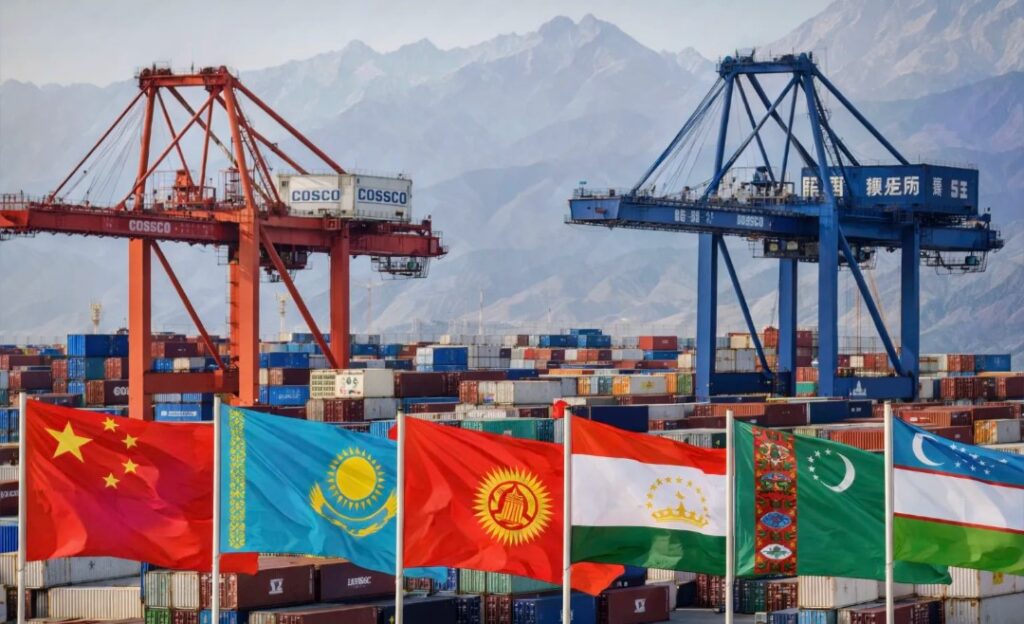
Trade between China and Central Asia increased to a record of more than $100 billion in 2025, despite challenges to global economic growth, the Chinese government said on Monday.  Citing data from China’s General Administration of Customs, Foreign Ministry spokesman Guo Jiakun said the trade structure with the Central Asian nations of Kazakhstan, Kyrgyzstan, Tajikistan, Turkmenistan and Uzbekistan had improved and that more high-end products were entering the Chinese market from the region.   “As global economic growth remains sluggish and the international trading system faces serious challenges, the economic and trade cooperation between China and Central Asian countries has withstood external headwinds, and the trade volume surpassed US$100 billion,” Guo said.  He attributed the increasing cooperation in part to a China-Central Asia summit in Astana, Kazakhstan last year that was attended by Chinese President Xi Jinping and the five Central Asian leaders.  China’s Belt and Road initiatives, which include the development of trade routes that pass through Central Asia and link up with Europe, are also making progress, according to the Chinese official.  Total trade between China and Central Asia was $106.3 billion in 2025, an increase of 12 percent over the previous year, China’s state-run Xinhua news agency reported. Chinese exports such as machinery, electronics and high-tech goods were $71.2 billion, an increase of 11 percent over the previous year. Imports from Central Asia amounted to $35.1 billion, a rise of 14 percent from 2024. China is involved in major projects in Central Asia, including the extraction of minerals used for “clean” technology, equipment manufacturing and the modernization of agriculture. China imports oil and natural gas as well as a growing number of other products from the region.  Russia was once the main trading partner of Central Asia after the fall of the Soviet Union, but China has the lead position now. The United States is also seeking to develop more trade with resource-rich Central Asia, which is diversifying its international partnerships.     

Tokayev Aligns Kazakhstan With Trump’s Board of Peace Initiative

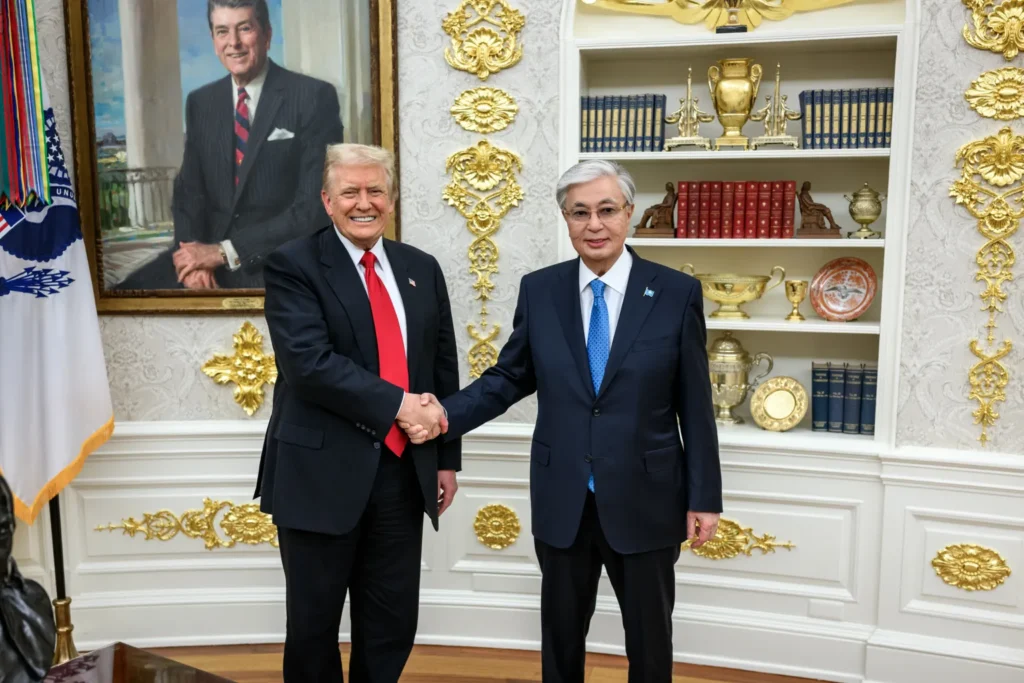
Kazakh President Kassym-Jomart Tokayev has agreed to join a new international body initiated by U.S. President Donald Trump that is intended to address post-war governance and reconstruction in Gaza, with the possibility of later expanding its remit to other global conflicts. Tokayev’s press secretary, Ruslan Zheldibay, said President Tokayev has accepted Trump’s invitation and sent a letter expressing his readiness to participate. The “Board of Peace” is a structure initiated by Trump as part of his broader Middle East agenda. Draft documents outline a body that would coordinate political oversight, reconstruction funding, and security arrangements in Gaza following the current conflict. They describe Trump as chair of the board on a permanent basis and outline different membership terms for participating states. Kazakhstan was invited as an early participant and is expected to be among the first countries to formally join. The decision aligns with Kazakhstan’s long-standing foreign policy approach, which emphasizes engagement with major powers and participation in multilateral diplomatic initiatives. Astana has previously hosted negotiations on regional security issues and has sought a visible role in international conflict mediation. The Board of Peace emerged from a U.S.-backed plan announced in late 2025 to stabilize Gaza following months of war. The plan was presented as a mechanism to oversee reconstruction and governance while preventing renewed conflict. Invitations to join the board were sent to roughly 60 countries, spanning Europe, Asia, the Middle East, and Africa. A draft charter reviewed by several governments sets out a tiered membership structure. Countries may serve on the board for an initial three-year term without a financial contribution. Longer participation is tied to a $1 billion payment to a central fund within the first year of the charter’s entry into force. The funding clause links longer participation to large upfront contributions, although U.S. officials have disputed that the payment would be mandatory in practice. The board’s initial focus is Gaza, but the charter allows for expansion to other conflicts if members agree. The documents describe responsibilities that include oversight of reconstruction projects, coordination with regional actors, and engagement with international financial institutions. The charter does not grant the board enforcement powers, leaving its authority dependent on political support from participating states. Kazakhstan’s participation follows earlier expressions of support for Trump’s Gaza initiative. In October 2025, Tokayev welcomed the U.S. peace plan as a potential step toward restoring stability and rebuilding trust among states involved in the conflict. The move places Kazakhstan alongside a diverse group of invited countries. Russia has confirmed receipt of an invitation for President Vladimir Putin to join the board, and Moscow has said it is examining the proposal and seeking clarification through diplomatic channels. Several other governments have acknowledged invitations, while responses have varied. Some countries have indicated interest in participation, while others have expressed reservations about the board’s structure and its relationship to existing international institutions. Concerns have focused on governance, accountability, and the potential overlap with United Nations-led mechanisms for peacekeeping and reconstruction. The United Nations remains central to...

Security Risks Around Kazakhstan’s Oil Exports Ripple Through European Markets

Europe’s oil market is becoming increasingly exposed to disruption as security risks rise along export routes used by Kazakhstan, which the European Union has long viewed as a reliable alternative to Russian supply. The risks extend far beyond Ukraine itself. “Russia continues escalating its attacks and targeting civilians and civilian infrastructures,” an EU spokesperson told The Times of Central Asia. “Russia’s brutal and unacceptable attacks have left people without hot water, heating and electricity in the current weather conditions. Russia’s war of aggression has also severely impacted Black Sea maritime security, including through its use of shadow fleet vessels to circumvent international sanctions, and the persistent attacks on civilian and port infrastructure in Ukraine. On the other hand, Ukraine has accepted an unconditional ceasefire in March 2025. It shows that Russia does not want peace. The EU and the entire international community need to put pressure on Russia to stop its war. “Kazakhstan plays a crucial role for Europe’s energy security and has been for years a reliable partner in diversifying energy sources and ensuring a stable supply for European markets. More than 12% of all the oil imported by the EU comes from Kazakhstan, contributing to the diversification of energy sources and reducing dependency on a limited number of suppliers. The continuous and safe functioning of the supply chain is hence key also for Europe. “Maritime safety and security in the Black Sea is a fundamental component of the new EU strategic approach to the region, adopted in May 2025. The Black Sea is a critical connector between Europe, the Southern Caucasus, Central Asia and the Eastern Mediterranean. Ensuring maritime security and safety in this region is vital not only for the littoral States but also for broader European interests and for many partner countries, as it supports trade flows, sustainable supply chains and enhanced connectivity.” Kazakhstan produced roughly 1.8 million barrels per day in 2024 and exported the bulk of that volume. More than 80% of its crude exports move through the Caspian Pipeline Consortium, or CPC, which links oil fields in western Kazakhstan to Russia’s Black Sea port of Novorossiysk. From there, tankers ship the oil mainly to European refiners. Under normal conditions, the pipeline carries roughly 1.3 million barrels per day, making it one of the most important single supply routes for non-Russian crude entering Europe. Recent events have shown how sensitive European markets are to any disruption along that corridor. On January 14, Bloomberg reported that oil prices in Europe strengthened after shipments of CPC Blend fell short of expectations. Traders cited reduced availability of the light, low-sulfur crude, which is favored by European refiners, forcing buyers to seek alternative grades at higher prices. Despite the recent tightening, traders say the market has so far absorbed disruptions without severe shortages, reflecting high inventories and flexible refinery operations, though that buffer could narrow if attacks persist. That supply pressure followed a series of security incidents in the Black Sea, where commercial shipping and port infrastructure have...