• KGS/USD = 0.01144 0%
  • KZT/USD = 0.00211 0%
  • TJS/USD = 0.10460 0.19%
  • UZS/USD = 0.00008 0%
  • TMT/USD = 0.28490 0%
  • KGS/USD = 0.01144 0%
  • KZT/USD = 0.00211 0%
  • TJS/USD = 0.10460 0.19%
  • UZS/USD = 0.00008 0%
  • TMT/USD = 0.28490 0%
  • KGS/USD = 0.01144 0%
  • KZT/USD = 0.00211 0%
  • TJS/USD = 0.10460 0.19%
  • UZS/USD = 0.00008 0%
  • TMT/USD = 0.28490 0%
  • KGS/USD = 0.01144 0%
  • KZT/USD = 0.00211 0%
  • TJS/USD = 0.10460 0.19%
  • UZS/USD = 0.00008 0%
  • TMT/USD = 0.28490 0%
  • KGS/USD = 0.01144 0%
  • KZT/USD = 0.00211 0%
  • TJS/USD = 0.10460 0.19%
  • UZS/USD = 0.00008 0%
  • TMT/USD = 0.28490 0%
  • KGS/USD = 0.01144 0%
  • KZT/USD = 0.00211 0%
  • TJS/USD = 0.10460 0.19%
  • UZS/USD = 0.00008 0%
  • TMT/USD = 0.28490 0%
  • KGS/USD = 0.01144 0%
  • KZT/USD = 0.00211 0%
  • TJS/USD = 0.10460 0.19%
  • UZS/USD = 0.00008 0%
  • TMT/USD = 0.28490 0%
  • KGS/USD = 0.01144 0%
  • KZT/USD = 0.00211 0%
  • TJS/USD = 0.10460 0.19%
  • UZS/USD = 0.00008 0%
  • TMT/USD = 0.28490 0%

Viewing results 445 - 450 of 1989

Central Asia Sees Armenia-Azerbaijan Deal as a Step Forward

Central Asian countries have welcomed an agreement signed by Armenia and Azerbaijan at the White House, saying it is an important step toward peace in the South Caucasus and sets the stage for trade growth in the wider region. “We highly appreciate the efforts of all parties aimed at overcoming the long-standing conflict,” Uzbekistan’s Ministry of Foreign Affairs said on Saturday. “We are confident that the establishment of long-term peace and stability in the South Caucasus will pave the way for the launch of large transport and infrastructure projects for the benefit of all peoples of the vast region.” The leaders of Armenia and Azerbaijan signed the deal in a ceremony overseen by U.S. President Donald Trump on Friday, building on extensive dialogue between the two sides, though falling short of a comprehensive peace pact that would formally end decades of conflict. One of the terms of the Trump-backed deal is the opening of a South Caucasus trade corridor that would provide Azerbaijan – and Central Asian economies – with increased access to Turkey and Europe. Kazakhstan also praised the agreement and Trump’s role in making it happen, saying it “ended the long-standing military conflict between the two states and paved the way for establishing diplomatic relations and developing cooperation between them based on lasting peace,” presidential adviser Ruslan Zheldibay said on Telegram. President Kassym-Jomart Tokayev noted that Kazakhstan played a role in the rapprochement between Azerbaijan and Armenia because it hosted ministerial-level peace talks between the two sides in Almaty, according to Zheldibay. Tajikistan’s Ministry of Foreign Affairs said “the prompt legal consolidation” of the agreement signed in Washington will be a big step toward the full normalization of ties between the longtime adversaries and will contribute to regional stability and development. Kyrgyzstan has similarly expressed support for peace, offering earlier this year to host the signing of a peace agreement between Armenia and Azerbaijan. Turkmenistan, which pursues a stated policy of neutrality in foreign affairs, faces Azerbaijan across the Caspian Sea and is eager to develop trade routes.

From Kyz Kuu to Niqabs: Why Kazakh Women Face a Crisis of Values

Before the 1917 revolution, Kazakh women enjoyed significant freedoms due to their nomadic lifestyle. Living in the remote steppe, women were responsible not only for managing livestock and households but also for defending their families and property, often with weapons in hand. The Soviet era formalized gender equality, enabling women to become leading producers, scientists, decorated soldiers, and politicians.  Today, however, these traditions face erosion from two opposing forces: rising consumerism and a growing Arab-influenced Islamization. According to Kazakh political scientist Zamir Karazhanov, women in Kazakhstan are struggling to find their place amid an expanding spiritual vacuum and polarized ideologies. A Reversal in Feminism A centuries-old game, Kyz Kuu (“Catch the Girl”), exemplifies the historical freedom of nomadic Kazakh women. The game, rooted in equestrian tradition, involved a female rider gaining a head start before being pursued by a young horseman. If he caught her and took her ribbon, he could propose marriage. If not, the woman would chase and whip the suitor with a kamcha (whip) in front of spectators, a demonstration of both female skill and independence. During the Soviet period, the roles of Aliya Moldovan and Manshuk Mametova both posthumously named Heroes of the Soviet Union in World War II, underscored female empowerment in Kazakhstan. In contrast, contemporary Kazakhstan is embroiled in a heated debate over the niqab, a face-covering garment not traditionally worn by Kazakhs. This shift has sparked national concern, culminating in the passage of a June 2025 law banning face coverings in public places. Declining Representation and Shifting Priorities Women’s representation in politics and governance has deteriorated, particularly in Kazakhstan’s southern and western regions. Despite officially favorable statistics, political scientist Zamira Karazhanova argues that the state practices only “artificial equality.” Party-imposed quotas for women and youth offer a superficial solution without addressing the systemic barriers to real empowerment. “To achieve gender equality, we must create genuine opportunities for women to participate in politics and civil service,” said Karazhanova. Karazhanov notes a broader cultural shift, with young women increasingly drawn to the lifestyle of tokal, unofficial second wives of wealthy men. These figures flaunt luxury and affluence on social media, eclipsing the appeal of education and career development. “The pursuit of wealthy husbands is becoming a kind of ideology,” Karazhanov said. “Many young women are growing up with no interest in professional growth. They have entirely different ideals.” The Rise of Foreign Influences “Islam in Kazakhstan is becoming Arabized,” Karazhanov stated. “This affects not only how women dress, but also how they are perceived and perceive themselves. Religion is becoming a key part of national identity, even if some believers visit the mosque on Fridays and bars on Saturdays.” Following the collapse of the USSR, Kazakhstan experienced a spiritual vacuum, filled rapidly by imported religious ideologies. Many religious leaders were educated in Arab countries or Afghanistan, bringing with them foreign dogmas that were alien to traditional Kazakh Islam. Karazhanov stressed that Arabization and radicalization are not confined to Kazakhstan, but also affect Russia, Turkey, and...

Kazakhstan Breaks Ground on First Nuclear Power Plant

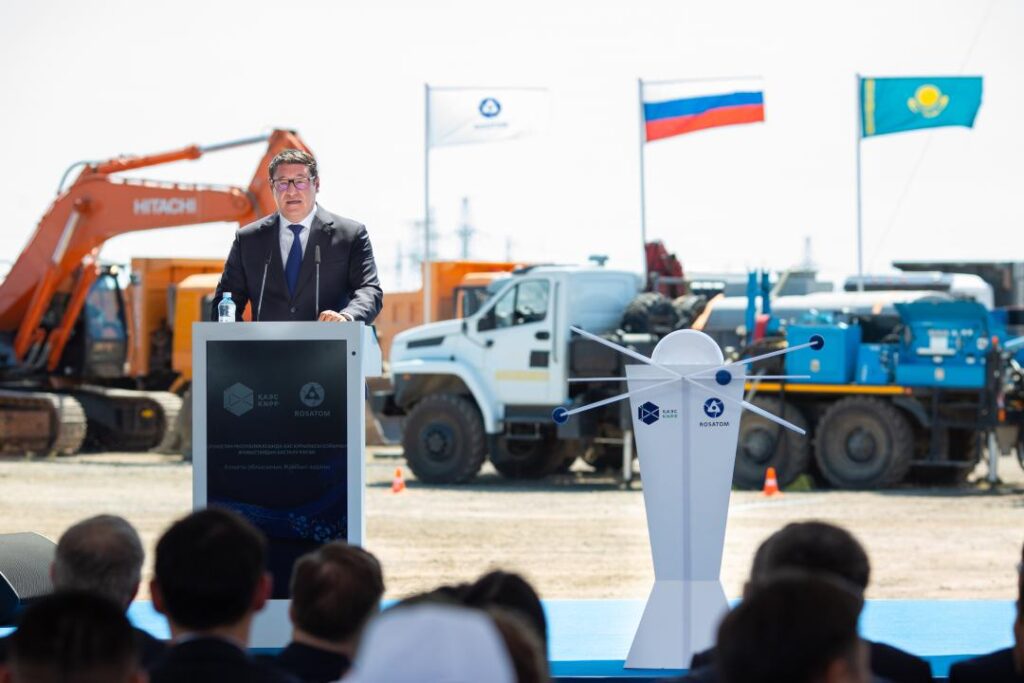
Kazakhstan has officially launched the construction of its first nuclear power plant, marking a significant milestone in the country’s long-term energy strategy. A groundbreaking ceremony was held on Friday in the Almaty region, in the south of the country. The project is being led by a consortium headed by Rosatom, Russia’s state nuclear energy corporation. The facility will be located near the village of Ulken on the shores of Lake Balkhash, approximately 400 kilometers from Almaty, Kazakhstan’s largest city. The plant will feature two reactors with a combined capacity of 2.4 gigawatts by 2035 and is expected to meet a substantial share of the country’s future electricity demand. According to Almasadam Satkaliyev, Chairman of the Atomic Energy Agency of the Republic of Kazakhstan, the total investment in the project is estimated at $14-15 billion. An additional $1 billion has been allocated for the development of social infrastructure in the surrounding region. “Today’s ceremony marks the start of engineering and survey work, a critical preparatory stage that will determine not only the final site and configuration of the plant, but also the safety, reliability, and economic efficiency of the entire project,” Satkaliyev said. Rosatom Director General Alexey Likhachev presented a model of the plant, which will be based on the design of Russia’s Novovoronezh Nuclear Power Plant and utilize Generation III+ reactor technology. This design is recognized for its improved fuel efficiency, advanced safety systems, and standardized construction process, which aims to reduce both construction and operational costs. Satkaliyev stressed that Kazakhstani enterprises and research institutions would play a central role in the project, with the aim of bolstering domestic industry, creating thousands of jobs, and advancing the country's nuclear science capabilities to international standards. According to the Agency’s press service, Satkaliyev recently met with Professor Jozef Konings, Dean of the Nazarbayev University Graduate School of Business, and Professor David Robinson of Duke University (USA) to discuss collaboration on nuclear workforce development. Discussions focused on potential joint academic programs, faculty exchanges, and international research partnerships. “Human capital development is a key pillar of the safe and sustainable introduction of nuclear technologies in Kazakhstan. I am confident that cooperation with leading academic institutions will contribute to forming a new generation of specialists capable of ensuring the safe and efficient operation of future nuclear power plants,” Satkaliyev stated. As previously reported by The Times of Central Asia, Kazakhstan plans to build at least three nuclear power plants. The second and third facilities are slated for development by the China National Nuclear Corporation (CNNC).

Shadows over the Trails: Mystical Legends of the Almaty Mountains

The mountains surrounding Almaty captivate not only with their natural beauty and fresh alpine air but also with the legends that echo along their winding trails. Travelers speak of a ghostly woman in white, a towering old man with a chessboard, and a mysterious "Japanese Road" haunted by the spirits of the past. The vistas are breathtaking, yet around every turn, a chilling tale may be waiting. Urban legends have become integral to the cultural fabric of the Almaty region, shaped by the imaginations of hikers and storytellers alike. But could there be a grain of truth behind these supernatural accounts? The Almarasanian Maiden Most Almaty residents are introduced to local folklore during childhood, particularly during overnight camps in the mountain foothills. Beneath the star-strewn sky and beside crackling campfires, counselors often begin the night's stories with: “Have you heard the tale of the Almarasanian Maiden?” The best-known legend describes a spectral woman dressed in white, appearing along treacherous mountain passes. But older residents tell a more detailed and tragic version. According to this tale, a woman once abandoned by her husband in the Zailiyskiy Alatau mountains was driven to madness. In her grief, she killed her two sons, hanging them from birch trees before taking her own life on a third. Struck by lightning but not destroyed, the three birches remain: two standing strong, the third broken but alive. Climbers later erected two crosses beneath them in remembrance. Since then, sightings of the woman in white have persisted. She is said to either warn travelers of danger or exact vengeance on those who betray loved ones. Though the story may sound fantastical, real-life tragedies have kept the legend alive. In May 2025, a rockfall in the Alma-Arasan Gorge killed a young woman and led to the trail’s temporary closure for reconstruction. In 2009, 11 people died in a horrific accident when a truck collided with a bus stop. While the official cause was listed as a heart attack suffered by the driver, witnesses reported that he remained conscious and tried to steer the vehicle moments before impact. His widow later stated that he had no history of heart problems. The Japanese Road After Japan’s defeat in Manchuria in 1945, many prisoners of war were sent to labor camps across the Soviet Union, including Kazakhstan. In Almaty, they constructed what is now known as the Japanese Road. Built under harsh conditions, the road was originally part of a water supply system connecting Big Almaty Lake to the city. Modern hikers report an eerie atmosphere. Some claim to see ghostly figures, presumed to be the spirits of those who died building the road. These apparitions are seen as ill omens, urging visitors to leave before nightfall. The White Old Man Among the most curious legends is that of a ghostly, two-meter-tall old man with a flowing beard, who carries a chessboard. He appears to hikers and shepherds, silently inviting them to play. Refusing is said to bring bad luck or worse....

“Where a Russian Soldier Treads, That’s Ours”: Kazakhstan in the Crosshairs of Putin’s Neo-Imperial Playbook

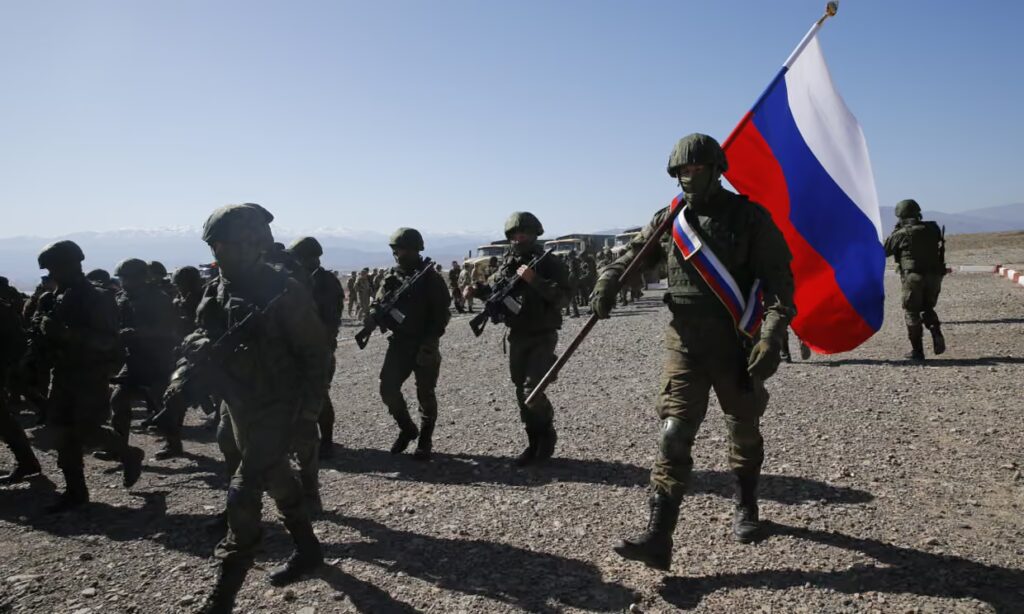
In June 2025, Russian President Vladimir Putin made a chilling declaration at the St. Petersburg Economic Forum: ‘There’s an old rule – wherever a Russian soldier sets foot, that’s ours.’ Far from a metaphor, this line encapsulated the Kremlin’s evolving foreign policy doctrine. It is a doctrine where military occupation becomes territorial acquisition, and where presence becomes ownership.  But this ideology did not appear overnight. It has been systematically constructed through years of rhetorical groundwork, beginning with Putin's 2014 remark at the Seliger Youth Forum: ‘Nursultan Nazarbayev created a state on territory where there had never been a state. The Kazakhs never had statehood.’ In 2021, speaking at a Moscow press conference, Putin went further, describing Kazakhstan as ‘a Russian-speaking country in the full sense of the word.’  These comments expose a geopolitical logic that fuses cultural affinity, historical denial, and military dominance. They form the pillars of what scholars like Marlene Laruelle and Timothy Snyder describe as Russia’s ‘narrative imperialism’: the use of historical revisionism and linguistic hegemony to delegitimize the sovereignty of neighboring states.  Nowhere is this doctrine more clearly manifest than in the cases of Ukraine and Kazakhstan. In Ukraine, the justification for annexing Crimea in 2014 and launching a full-scale invasion in 2022 relied heavily on the protection of Russian-speaking populations and claims of historical unity. In Kazakhstan, the groundwork is rhetorical – but eerily similar.  In 2014, Putin reversed Nikita Khrushchev’s legacy by annexing Crimea, which Khrushchev had transferred to the Ukrainian SSR in 1954. At the same time, Kremlin-aligned voices began revisiting Khrushchev’s failed plan to remove five northern regions of Kazakhstan to form Russian 'Virgin Lands'.  This was not a mere administrative reform: the plan involved transferring the fertile, Slavic-populated regions of Akmolinsk, Kostanay, Pavlodar, North Kazakhstan, and East Kazakhstan regions from the Kazakh SSR to the Russian SFSR. The objective was both economic and political -- to consolidate agricultural output under Moscow's direct jurisdiction and reduce the autonomy of the Kazakh republic by undermining its territorial coherence and ethnic composition. These areas were the backbone of Khrushchev’s Virgin Lands Campaign and held great strategic value. The proposal sparked resistance from within the Kazakh leadership, most notably from Premier Zhumabek Tashenov, who openly opposed the Kremlin's intentions. As a result of his opposition, he was dismissed from his position, but he succeeded in preserving Kazakh territorial integrity.  These northern regions, like Crimea, are demographically significant: they are home to a large ethnic Russian population, many of whom speak only Russian, consume Russian media, and express nostalgia for Soviet-era unity. Cities like Petropavlovsk, where Russians still outnumber Kazakhs, mirror the pre-2014 situation in Donetsk and Luhansk.  In 2023, a group calling itself the ‘People’s Council of Workers’ in Petropavlovsk released a video declaring independence based on the 1937 Constitution of the Kazakh SSR. Prosecuted for inciting separatism, they nonetheless reflected growing latent support for Russian intervention.  Even earlier, in 2014, Russian ultra-nationalist Eduard Limonov made headlines by urging Russia to annex Northern Kazakhstan during...

Opinion: Why Russia May Stop Oil Supplies via the CPC

The global confrontation between the West and East could, quite literally, devastate the economies of Central Asian countries in the near future. Some experts argue that the position Kazakhstan and its regional neighbors now occupy, four years into the war between Russia and Ukraine, has spiraled beyond anyone’s control. The disruption began with Ukrainian drone strikes on Russian infrastructure used by the Caspian Pipeline Consortium (CPC), which indirectly impacted oil flows from Kazakhstan to Europe. On August 2, several media outlets, citing sources within the Ukrainian military, reported an attack on the Central Asia-Center (SAC) gas pipeline running through Kazakhstan. The attack allegedly caused an indefinite halt in gas deliveries that Russia had been sending in reverse flow to Uzbekistan. Kazakhstan also uses this gas domestically. Shortly after, the energy ministries of both Uzbekistan and Kazakhstan denied reports of any damage to the pipeline. Nonetheless, Ukraine’s classification of the SAC pipeline as a legitimate target remains on record. Notably, although Kazakhstan’s Foreign Ministry has issued a formal protest to Kyiv over the CPC attacks, it has yet to reveal any official response from the Ukrainian side. Kazakhstan thus finds itself in an extremely vulnerable position: its national budget is heavily dependent on oil exports, while its southern infrastructure increasingly relies on imported gas. For example, the planned conversion of Almaty’s TPP-2 to gas is unfeasible without stable fuel supplies. In other words, Kazakhstan has become fully dependent on developments in the Russian-Ukrainian war. Compounding the geopolitical tension, U.S. President Donald Trump has pursued an aggressive and often unpredictable foreign policy approach. He has threatened sanctions against Russia’s economic partners if they continue buying oil from President Vladimir Putin. This pressure is primarily directed at China and India, both of which have already signaled they do not intend to comply with Trump’s ultimatum. In response, Russia may adopt symmetrical countermeasures targeting American companies, specifically, by halting oil flows via the CPC. That’s the view of JPMorgan analysts, who suggest that such a move could drive global oil prices up to $80 per barrel. This would benefit Russia but would deal a serious blow to Kazakhstan, which relies on CPC to export up to a million barrels of oil per day. Unfortunately, Kazakhstan lacks viable alternatives. The Baku-Tbilisi-Ceyhan (BTC) pipeline, often cited as a backup route, depends heavily on Caspian Sea shipping, which is increasingly hindered by shallow waters. Heavier oil barges dispatched from Aktau to Baku risk running aground. As a result, Kazakhstan's oil volume transported via BTC is expected to increase by only 300,000 tons this year, from 1.4 to 1.7 million tons. It's worth noting that CPC exports oil produced by American firms Exxon and Chevron, the British company Shell, Italy's ENI, and France’s TotalEnergies. These are the very firms Russia could target in retaliation. As Trump’s statements deepen the appearance of a Russia-versus-West conflict, energy infrastructure could increasingly become a battlefield. Hints of Moscow’s readiness to act have already emerged. In mid-July, President Putin signed a decree mandating...