• KGS/USD = 0.01144 0%
  • KZT/USD = 0.00210 0%
  • TJS/USD = 0.10438 0%
  • UZS/USD = 0.00008 0%
  • TMT/USD = 0.28490 0%
  • KGS/USD = 0.01144 0%
  • KZT/USD = 0.00210 0%
  • TJS/USD = 0.10438 0%
  • UZS/USD = 0.00008 0%
  • TMT/USD = 0.28490 0%
  • KGS/USD = 0.01144 0%
  • KZT/USD = 0.00210 0%
  • TJS/USD = 0.10438 0%
  • UZS/USD = 0.00008 0%
  • TMT/USD = 0.28490 0%
  • KGS/USD = 0.01144 0%
  • KZT/USD = 0.00210 0%
  • TJS/USD = 0.10438 0%
  • UZS/USD = 0.00008 0%
  • TMT/USD = 0.28490 0%
  • KGS/USD = 0.01144 0%
  • KZT/USD = 0.00210 0%
  • TJS/USD = 0.10438 0%
  • UZS/USD = 0.00008 0%
  • TMT/USD = 0.28490 0%
  • KGS/USD = 0.01144 0%
  • KZT/USD = 0.00210 0%
  • TJS/USD = 0.10438 0%
  • UZS/USD = 0.00008 0%
  • TMT/USD = 0.28490 0%
  • KGS/USD = 0.01144 0%
  • KZT/USD = 0.00210 0%
  • TJS/USD = 0.10438 0%
  • UZS/USD = 0.00008 0%
  • TMT/USD = 0.28490 0%
  • KGS/USD = 0.01144 0%
  • KZT/USD = 0.00210 0%
  • TJS/USD = 0.10438 0%
  • UZS/USD = 0.00008 0%
  • TMT/USD = 0.28490 0%

Viewing results 439 - 444 of 1980

Ending the War: Tokayev and Zelenskyy Talk Ahead of Trump-Putin Meeting in Alaska

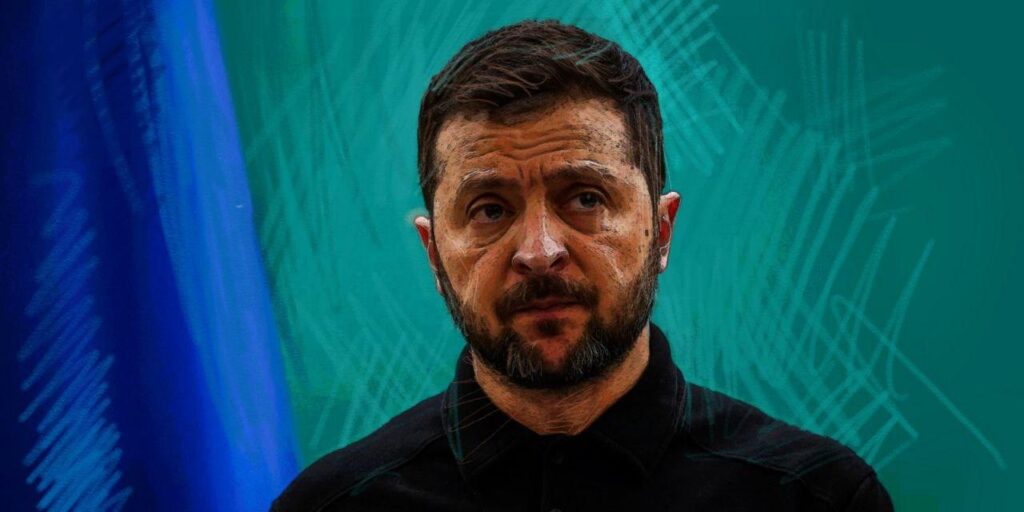
“A bad peace is better than a good war.” That was the advice from Kazakh President Kassym-Jomart Tokayev to Ukrainian President Volodymyr Zelenskyy in a phone call on Sunday in which the two leaders discussed prospects for a resolution to the war between Russia and Ukraine.  Whether Zelenskyy agreed with Tokayev’s comment is open to question. In a readout of the conversation from the Ukrainian presidency, he used other adjectives to describe the kind of peace that Ukraine wants –“reliable” and “real.”  The talk happened ahead of a meeting in Alaska on Friday between U.S. President Donald Trump and Russian President Vladimir Putin that Ukraine fears could leave it left out of deliberations and provide momentum for an end to the conflict on Russia’s terms.  Tokayev told Zelenskyy that Kazakhstan has advocated for a solution that adheres to the United Nations Charter and respects “the inviolability of the borders of sovereign states, and the territorial integrity of sovereign states.” While that statement implies criticism of the current state of affairs, in which Russia occupies an estimated 20 percent of Ukrainian territory, Tokayev also appeared to suggest that Ukraine should be prepared to make difficult compromises over territory because its independence as a nation was on the line.    “In his view, given the current highly complex situation, it is essential to approach the resolution of the conflict with balance and reason, ensuring the preservation and protection of Ukraine’s statehood,” Kazakhstan’s presidential office said. “He stressed that all parties should be guided by the wisdom that ´a bad peace is better than a good war.´” Tokayev stirred some debate last year when he said that Russia was too strong to be defeated on the battlefield. Critics interpreted the remark as defeatism in the face of Russian aggression, while others thought it was a blunt assessment of the war. Kazakhstan and other Central Asian countries have tried to be neutral in the conflict, not endorsing the Russian invasion but maintaining traditional ties with Moscow. The Ukrainian presidency said Zelenskyy, in remarks to Tokayev, “noted that attempts to partition any independent state are extremely dangerous for every nation. History has repeatedly shown that if such injustice is allowed against one state, it does not end there.” While Zelenskyy has ruled out territorial concessions to Russia, a poll conducted by the Kyiv International Institute of Sociology in May and June explored the nuance of the topic in a population that is both defiant and weary after years of war. The results show that “the only option where there is at least room for discussion is de facto recognition of Russian control without de jure recognition,” according to the institute.   Zelenskyy invited Tokayev to visit Ukraine, according to the Ukrainian presidency. The Kazakh statement didn’t mention the invitation. 

Kazakhstan Showcases Middle Power Role in Washington D.C.: Kazakh Ambassador Ashikbayev Spreads the Message

Like it or not, the world is moving away from unipolar dominance and entering an era of multipolarity where national interests increasingly counter the globalist ambitions of some major powers. In this evolving landscape, as the major powers adjust to new geopolitical realities, an increasing number of states are becoming more comfortable operating autonomously as sovereign nations. Against this backdrop, Kazakhstan is emerging as a middle power, conscious all the same of the risks associated with remaining neutral in the oft-times bitter rivalries between major powers. Over the past twenty years, Kazakhstan has consistently signaled that it will not be drawn into the strategic maneuverings of foreign powers, instead pursuing its own national interests in a measured fashion – rather like the other Central Asian states – so as not to undermine regional stability.  Accordingly, Astana offers good offices to foster dialogue and reconciliation among countries and blocs affected by conflict and/or heightened strategic competition. Murat Nurtleu, Kazakhstan’s Foreign Minister, underscores just that point: “In this era of geopolitical competition, Kazakhstan’s role as a bridge between East and West is more vital than ever.” These words not only highlight Kazakhstan’s confidence and expanding role as a rising middle power but aim to mitigate the potential consequences of great power overreach, whether in Central Asia or elsewhere. In a recent interview in Washington DC with this writer, Ambassador Yerzhan Ashikbayev of Kazakhstan to the United States elaborated: “Kazakhstan is a middle power, which means, broadly speaking, a country that holds an influential position in the international system, especially in Eurasia. Maintaining peaceful relations with our neighbors – major, middle, and minor powers – is a top priority for us. We work to shape outcomes beyond our own borders, keeping in mind our national interests, always fostering friendly and mutually beneficial ties – a modus vivendi – with our neighbors.” It is well-known that Astana’s global diplomatic strategy prioritizes fair trade and aims to strengthen inter-regional economic ties – especially in transport, logistics, finance, and communications. It views economic development – with an emphasis on building an economically stable middle class across ethnicities – as key to national unity and regional stability. It is less known that Kazakhstan, in its diplomatic pragmatism, winces at unequal power relations, preferring to focus on long-term equity outcomes over short-term efficiency in matters of economic development. Ambassador Ashikbayev emphasizes that “Kazakhstan’s foreign policy opens space where dialogue can flourish. Guided by pragmatism, we will concentrate on practical matters like communication, quality investment flows, fair commerce, energy, and critical minerals.” He insists that “for the international system to flourish, it should function well for all, promoting peace and the common good for the majority. That is what we export - peace.” U.S. Secretary of State Marcio Rubio also emphasizes the need to keep peace front and center: “President [Trump] wants to end wars.  He’s not a fan of wars.  He thinks wars are a waste of time and a waste of lives.  And we’re going to continue to do everything we can and engage...

Honoring Abai Qunanbaiuly: Kazakhstan’s Enlightened Voice, Now Celebrated Worldwide

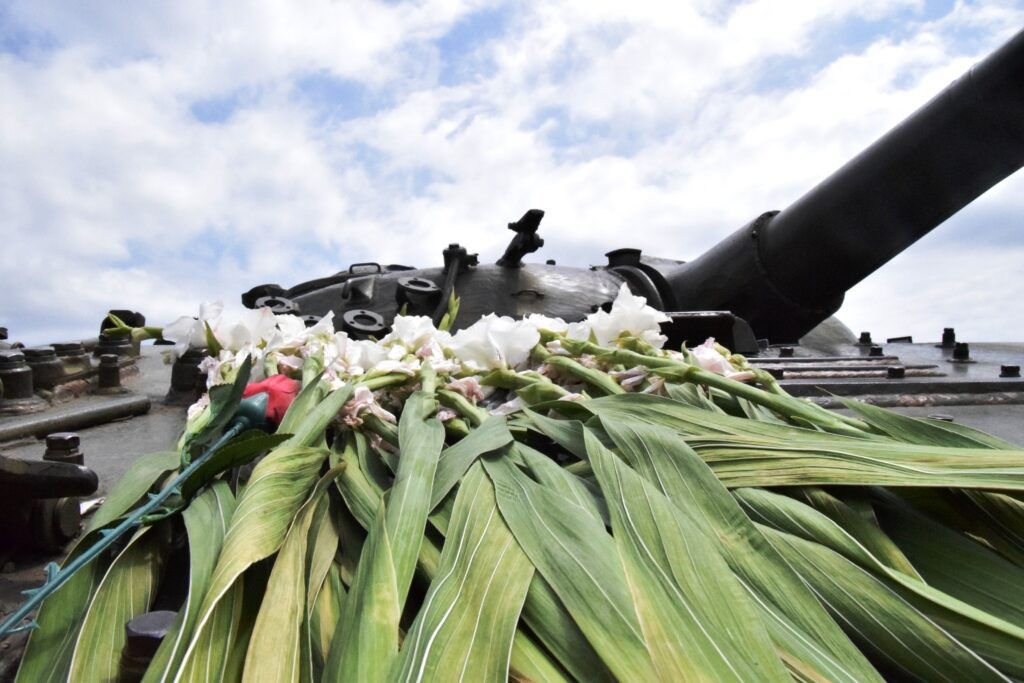
Today, August 10, Kazakhstan observes Abai Day, honoring the birth of Abai Qunanbaiuly (1845–1904)—a towering poet, philosopher, composer, and reformist who laid the foundations of written Kazakh literature. Since 2020, this date has been officially enshrined in the national calendar, reflecting Abai's inestimable role in shaping the Kazakh cultural and moral consciousness. Across the country, poetry readings, concerts, and flower-laying ceremonies are held to mark the anniversary of the man whose influence still guides Kazakh identity. Abai’s literary oeuvre—spanning some 170 original poems and 56 translations—brought new poetic meters, rhyme schemes, and philosophical depth to Kazakh verse. His celebrated Words of Edification (Kara sozder) remains a timeless guide on education, morality, and personal integrity, inspiring generations with its call for intellectual growth and ethical living. He did not merely write; he transformed the role of literature in Kazakh society, blending folk traditions with universal humanist ideals. A pivotal moment in his international recognition came in 1885, when American journalist George Kennan visited Semey (then Semipalatinsk). Struck by the city’s public library and by Abai’s active presence among its patrons, Kennan recorded his impressions in Siberia and the Exile System—one of the earliest Western literary references to the Kazakh thinker. This encounter symbolized the beginning of Abai’s journey beyond Kazakhstan’s borders, his name finding a place in the literary consciousness of the wider world. Abai’s creative spirit extended beyond the written word into music. In 1970, Wesleyan University Press in Connecticut published Music of Central Asia, which devoted a chapter to his musical influence. The book featured a verse of his that celebrates the enduring power of song: “Song opens the doors of the world to you, Song opens the death to you. Listen, Kazakh, grasp its wisdom. Song accompanies you your whole life.” These lines capture his belief that art—whether sung or spoken—has the power to illuminate the human spirit and guide a person through life’s trials and triumphs. What makes Abai truly global is not just his artistic genius, but his vision. As one scholar aptly put it, “We participate in global intellectual culture through Abai. He is the moral compass of our people”. His works urge individuals toward self-awareness, ethical living, and cultural openness—values that resonate far beyond Kazakhstan’s borders. On this day, the 180th anniversary of his birth, the words and music of Abai Qunanbaiuly continue to inspire not just a nation, but a world in search of wisdom, integrity, and the beauty of truth.

Central Asia Sees Armenia-Azerbaijan Deal as a Step Forward

Central Asian countries have welcomed an agreement signed by Armenia and Azerbaijan at the White House, saying it is an important step toward peace in the South Caucasus and sets the stage for trade growth in the wider region. “We highly appreciate the efforts of all parties aimed at overcoming the long-standing conflict,” Uzbekistan’s Ministry of Foreign Affairs said on Saturday. “We are confident that the establishment of long-term peace and stability in the South Caucasus will pave the way for the launch of large transport and infrastructure projects for the benefit of all peoples of the vast region.” The leaders of Armenia and Azerbaijan signed the deal in a ceremony overseen by U.S. President Donald Trump on Friday, building on extensive dialogue between the two sides, though falling short of a comprehensive peace pact that would formally end decades of conflict. One of the terms of the Trump-backed deal is the opening of a South Caucasus trade corridor that would provide Azerbaijan – and Central Asian economies – with increased access to Turkey and Europe. Kazakhstan also praised the agreement and Trump’s role in making it happen, saying it “ended the long-standing military conflict between the two states and paved the way for establishing diplomatic relations and developing cooperation between them based on lasting peace,” presidential adviser Ruslan Zheldibay said on Telegram. President Kassym-Jomart Tokayev noted that Kazakhstan played a role in the rapprochement between Azerbaijan and Armenia because it hosted ministerial-level peace talks between the two sides in Almaty, according to Zheldibay. Tajikistan’s Ministry of Foreign Affairs said “the prompt legal consolidation” of the agreement signed in Washington will be a big step toward the full normalization of ties between the longtime adversaries and will contribute to regional stability and development. Kyrgyzstan has similarly expressed support for peace, offering earlier this year to host the signing of a peace agreement between Armenia and Azerbaijan. Turkmenistan, which pursues a stated policy of neutrality in foreign affairs, faces Azerbaijan across the Caspian Sea and is eager to develop trade routes.

From Kyz Kuu to Niqabs: Why Kazakh Women Face a Crisis of Values

Before the 1917 revolution, Kazakh women enjoyed significant freedoms due to their nomadic lifestyle. Living in the remote steppe, women were responsible not only for managing livestock and households but also for defending their families and property, often with weapons in hand. The Soviet era formalized gender equality, enabling women to become leading producers, scientists, decorated soldiers, and politicians.  Today, however, these traditions face erosion from two opposing forces: rising consumerism and a growing Arab-influenced Islamization. According to Kazakh political scientist Zamir Karazhanov, women in Kazakhstan are struggling to find their place amid an expanding spiritual vacuum and polarized ideologies. A Reversal in Feminism A centuries-old game, Kyz Kuu (“Catch the Girl”), exemplifies the historical freedom of nomadic Kazakh women. The game, rooted in equestrian tradition, involved a female rider gaining a head start before being pursued by a young horseman. If he caught her and took her ribbon, he could propose marriage. If not, the woman would chase and whip the suitor with a kamcha (whip) in front of spectators, a demonstration of both female skill and independence. During the Soviet period, the roles of Aliya Moldovan and Manshuk Mametova both posthumously named Heroes of the Soviet Union in World War II, underscored female empowerment in Kazakhstan. In contrast, contemporary Kazakhstan is embroiled in a heated debate over the niqab, a face-covering garment not traditionally worn by Kazakhs. This shift has sparked national concern, culminating in the passage of a June 2025 law banning face coverings in public places. Declining Representation and Shifting Priorities Women’s representation in politics and governance has deteriorated, particularly in Kazakhstan’s southern and western regions. Despite officially favorable statistics, political scientist Zamira Karazhanova argues that the state practices only “artificial equality.” Party-imposed quotas for women and youth offer a superficial solution without addressing the systemic barriers to real empowerment. “To achieve gender equality, we must create genuine opportunities for women to participate in politics and civil service,” said Karazhanova. Karazhanov notes a broader cultural shift, with young women increasingly drawn to the lifestyle of tokal, unofficial second wives of wealthy men. These figures flaunt luxury and affluence on social media, eclipsing the appeal of education and career development. “The pursuit of wealthy husbands is becoming a kind of ideology,” Karazhanov said. “Many young women are growing up with no interest in professional growth. They have entirely different ideals.” The Rise of Foreign Influences “Islam in Kazakhstan is becoming Arabized,” Karazhanov stated. “This affects not only how women dress, but also how they are perceived and perceive themselves. Religion is becoming a key part of national identity, even if some believers visit the mosque on Fridays and bars on Saturdays.” Following the collapse of the USSR, Kazakhstan experienced a spiritual vacuum, filled rapidly by imported religious ideologies. Many religious leaders were educated in Arab countries or Afghanistan, bringing with them foreign dogmas that were alien to traditional Kazakh Islam. Karazhanov stressed that Arabization and radicalization are not confined to Kazakhstan, but also affect Russia, Turkey, and...

Kazakhstan Breaks Ground on First Nuclear Power Plant

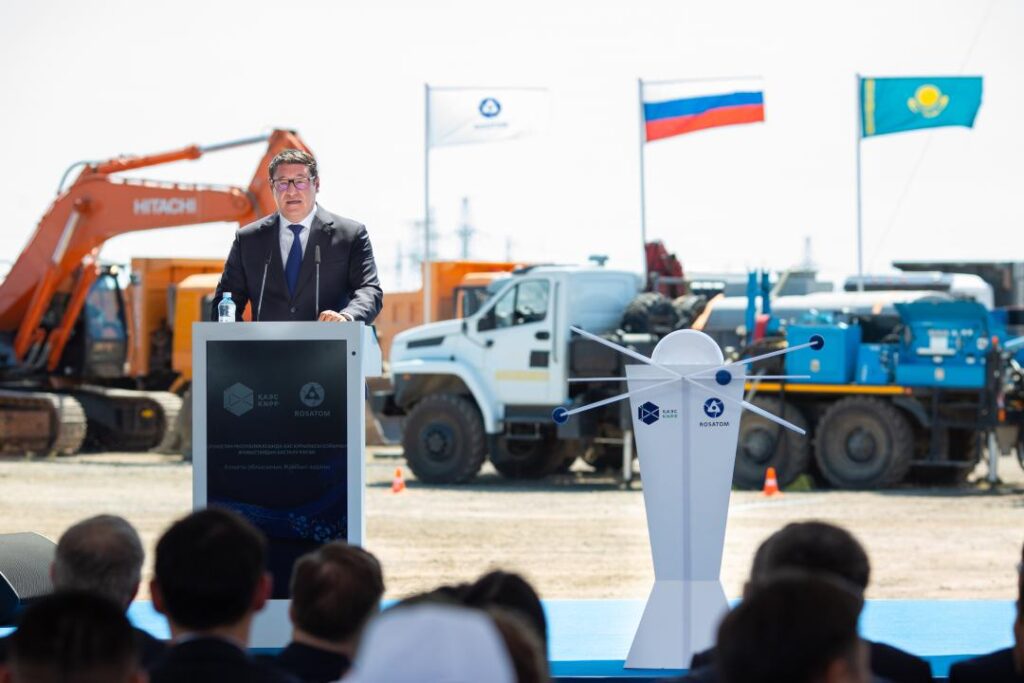
Kazakhstan has officially launched the construction of its first nuclear power plant, marking a significant milestone in the country’s long-term energy strategy. A groundbreaking ceremony was held on Friday in the Almaty region, in the south of the country. The project is being led by a consortium headed by Rosatom, Russia’s state nuclear energy corporation. The facility will be located near the village of Ulken on the shores of Lake Balkhash, approximately 400 kilometers from Almaty, Kazakhstan’s largest city. The plant will feature two reactors with a combined capacity of 2.4 gigawatts by 2035 and is expected to meet a substantial share of the country’s future electricity demand. According to Almasadam Satkaliyev, Chairman of the Atomic Energy Agency of the Republic of Kazakhstan, the total investment in the project is estimated at $14-15 billion. An additional $1 billion has been allocated for the development of social infrastructure in the surrounding region. “Today’s ceremony marks the start of engineering and survey work, a critical preparatory stage that will determine not only the final site and configuration of the plant, but also the safety, reliability, and economic efficiency of the entire project,” Satkaliyev said. Rosatom Director General Alexey Likhachev presented a model of the plant, which will be based on the design of Russia’s Novovoronezh Nuclear Power Plant and utilize Generation III+ reactor technology. This design is recognized for its improved fuel efficiency, advanced safety systems, and standardized construction process, which aims to reduce both construction and operational costs. Satkaliyev stressed that Kazakhstani enterprises and research institutions would play a central role in the project, with the aim of bolstering domestic industry, creating thousands of jobs, and advancing the country's nuclear science capabilities to international standards. According to the Agency’s press service, Satkaliyev recently met with Professor Jozef Konings, Dean of the Nazarbayev University Graduate School of Business, and Professor David Robinson of Duke University (USA) to discuss collaboration on nuclear workforce development. Discussions focused on potential joint academic programs, faculty exchanges, and international research partnerships. “Human capital development is a key pillar of the safe and sustainable introduction of nuclear technologies in Kazakhstan. I am confident that cooperation with leading academic institutions will contribute to forming a new generation of specialists capable of ensuring the safe and efficient operation of future nuclear power plants,” Satkaliyev stated. As previously reported by The Times of Central Asia, Kazakhstan plans to build at least three nuclear power plants. The second and third facilities are slated for development by the China National Nuclear Corporation (CNNC).