• KZT/USD = 0.00217
  • TJS/USD = 0.10810
  • UZS/USD = 0.00009
  • TMT/USD = 0.29760
  • KZT/USD = 0.00217
  • TJS/USD = 0.10810
  • UZS/USD = 0.00009
  • TMT/USD = 0.29760
  • KZT/USD = 0.00217
  • TJS/USD = 0.10810
  • UZS/USD = 0.00009
  • TMT/USD = 0.29760
  • KZT/USD = 0.00217
  • TJS/USD = 0.10810
  • UZS/USD = 0.00009
  • TMT/USD = 0.29760
  • KZT/USD = 0.00217
  • TJS/USD = 0.10810
  • UZS/USD = 0.00009
  • TMT/USD = 0.29760
  • KZT/USD = 0.00217
  • TJS/USD = 0.10810
  • UZS/USD = 0.00009
  • TMT/USD = 0.29760
  • KZT/USD = 0.00217
  • TJS/USD = 0.10810
  • UZS/USD = 0.00009
  • TMT/USD = 0.29760
  • KZT/USD = 0.00217
  • TJS/USD = 0.10810
  • UZS/USD = 0.00009
  • TMT/USD = 0.29760
27 August 2026

Viewing results 43 - 48 of 1486

Kazakhstan Proposes Rules for Paid Electronic Entry Permits

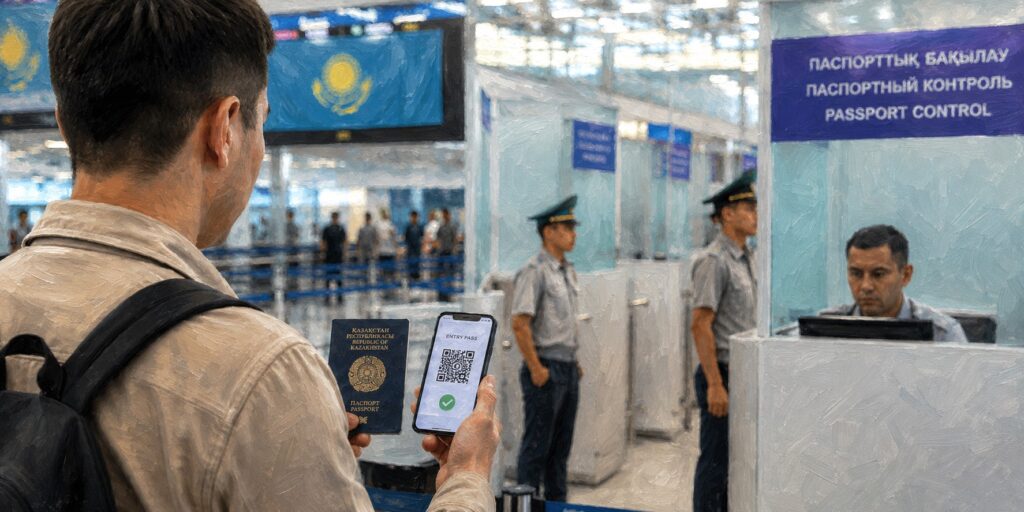
Kazakhstan's Interior Ministry has opened public consultation on rules for a paid electronic entry permit for foreign visitors. The ministry has proposed a phased rollout between August and December 2026, but the published summary leaves several basic questions unanswered. The proposal was posted on July 31, and remains open for comments until August 17. It would amend Kazakhstan's 2012 rules governing the entry, stay, and departure of foreign nationals. The ministry says the system will provide "transparency, speed, and completeness [in] recording the cross-border movements of foreign nationals.” However, the consultation page does not display the proposed amendments, an explanatory note, or a comparative table. Rather, it shows an information summary and one attachment labeled as a Russian-language table, leading one public commenter, Andrei Sukhanov, to ask: "Where is the draft itself? Or is only its title being discussed?" That omission makes it impossible to establish several important terms from the consultation. The page does not state the fee, the nationalities covered, the grounds for refusal, the appeal process, or the date when permits would become mandatory. It also fails to explain whether visa holders would need a further separate authorization. The legal basis for introducing paid electronic entry permits already exists: President Kassym-Jomart Tokayev signed Law No. 326-VIII on June 24. The law was first published on June 25, and most of its provisions take effect on August 25. The law defines an electronic entry permit as a digital document granting a foreign citizen or stateless person the right to enter Kazakhstan or transit its territory. The Interior Ministry will issue, refuse, or cancel permits in coordination with the National Security Committee. Foreign citizens and stateless persons entering Kazakhstan will undergo identification and authentication, including the processing of personal and biometric data for a digital immigration profile. The government will set the fee and payment procedure. The law directs half of the revenue toward migration and border-control technology, while the other half will support domestic and inbound tourism. The Interior Ministry's summary says differentiated charges would fund technical maintenance, digital infrastructure upgrades, and personal-data protection. It gives no amounts or categories, meaning travelers cannot assess the cost. Kazakhstan is already testing the permit through the QazETA platform. During the pilot, the Electronic Travel Authorization is recommended rather than compulsory for citizens of visa-exempt countries. Applicants are asked to submit requests through the mobile app at least 72 hours before travel, and an authorization remains valid for 180 days. An ETA does not extend the permitted length of stay or guarantee admission, with border officials retaining the final decision. The current pilot exempts holders of diplomatic and service passports, members of official delegations, and accredited diplomats. The government has not announced when the pilot will end or published the list of countries that will face a mandatory requirement. A local report in July said Kyrgyzstan had sought clarification on whether the system would cover citizens of Eurasian Economic Union states. Kazakhstan has not published a decision on that point. The...

Kazakhstan Kurultai Election: Can a Third Party Break Through?

With only weeks remaining before Kazakhstan elects its new 145-member Kurultai on August 23, three national surveys point to a commanding victory for Adilet and place Auyl in second. The less certain question is whether Ak Zhol, Respublica, or another smaller party can clear the 5% electoral threshold and join them in the new legislature. Seven political parties have been registered to contest the vote. All 145 seats will be allocated through nationwide party lists, so small changes around the threshold could have a large effect on the composition of Kazakhstan's first Kurultai. The election is the first under Kazakhstan's new constitutional framework, which replaced the former bicameral parliament with a single-chamber Kurultai. The constitutional reform represents the most significant redesign of the country's political institutions in decades and places greater weight on political parties in the legislative process. The available polls differ in timing, method, sample size, and the proportion of undecided voters. Their exact figures are therefore not directly comparable. However, they agree on the broad shape of the race: Adilet leads by a wide margin, Auyl holds second place, and several parties remain close to or below the threshold. The latest Institute of Eurasian Integration survey was conducted through face-to-face interviews with 4,000 respondents in all 17 regions, as well as Astana, Almaty, and Shymkent, from July 16 to 26. Its stated margin of error was no more than 1.54%. That poll put Adilet on 65.1% and Auyl on 5.9%. Ak Zhol stood at 4.7%, marginally ahead of Respublica on 4.6%. The Nationwide Social Democratic Party, or NSDP, received 4.2%, the People's Party of Kazakhstan 4.1%, and the Baytaq Green Party 0.5%. An earlier DATAmetrics poll, commissioned by the Kazakhstan Institute for Strategic Studies, interviewed 8,000 people face-to-face from June 13 to July 2. It gave Adilet 54.2%, Auyl 7.3%, Ak Zhol 4.6%, and Respublica 3.4%. One in five respondents had not chosen a party. A telephone survey by the Kazakhstan Institute of Public Development covered 1,200 respondents from July 8 to 20. It put Adilet on 64.8%, Auyl on 5.4%, Respublica on 4.8%, and Ak Zhol on 4.7%, with 10.9% undecided. Taken together, the surveys do not identify a clear third-place party. They do show that Ak Zhol and Respublica are the most consistent contenders for an additional place in the Kurultai. The latest Institute of Eurasian Integration poll also places the NSDP and the People's Party within striking distance, although the other surveys put both further behind. Adilet's lead is unsurprising. Although the Adilet Party was officially registered only this year, it is not starting from scratch. Amanat, formerly known as Nur Otan, merged into Adilet in June, transferring the organization and political network that dominated Kazakhstan throughout most of former President Nursultan Nazarbayev's rule. The merger also placed the former ruling party inside a new organization led by allies of President Kassym-Jomart Tokayev. It completed a change of political branding while preserving a strong pro-presidential electoral machine. The sharper contest is therefore not for...

Kazakhstan OPEC+ Oil Production Target Rises After Output Agreement

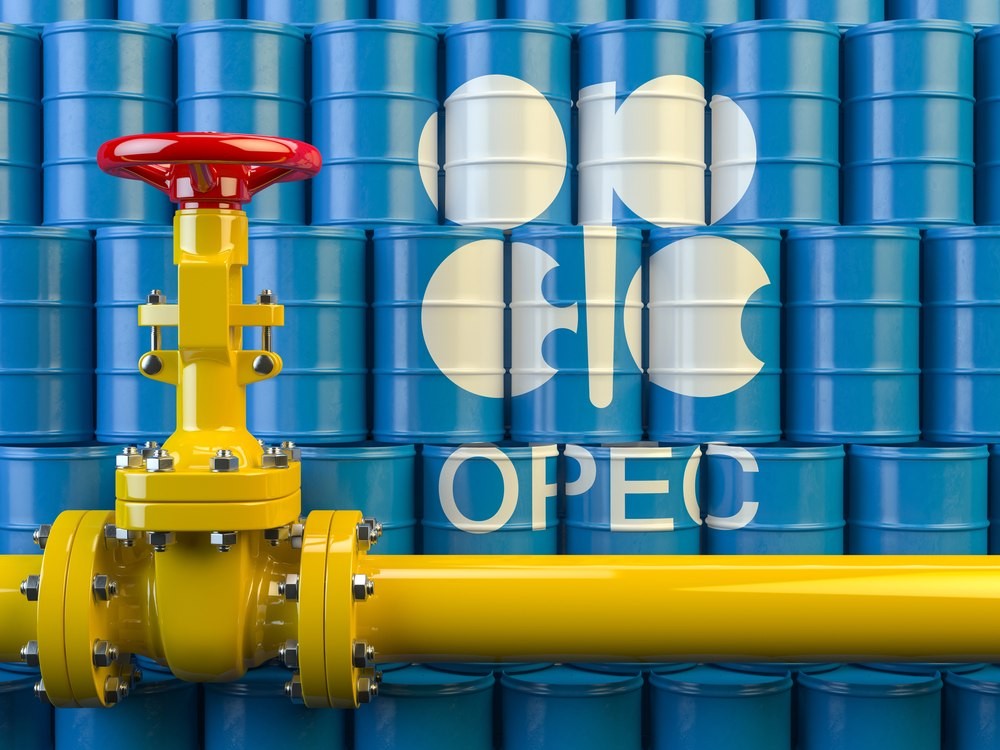
Kazakhstan's OPEC+ crude oil production target will rise by 10,000 barrels per day in September to 1.628 million barrels per day after seven producers agreed to increase their combined target by 188,000 barrels per day. The decision completes the gradual restoration of 1.65 million barrels per day of production withheld under voluntary cuts announced in April 2023. Following a virtual meeting on August 2, Saudi Arabia, Russia, Iraq, Kuwait, Kazakhstan, Algeria, and Oman agreed to the latest adjustment. The United Arab Emirates was part of the original group implementing the voluntary cuts but left OPEC and OPEC+ on May 1, reducing the group making the monthly decisions from eight countries to seven. OPEC's rounded country allocations raise the targets of Saudi Arabia and Russia by 62,000 barrels per day each, Iraq by 26,000, Kuwait by 16,000, Kazakhstan by 10,000, Algeria by 6,000, and Oman by 5,000 barrels per day. OPEC+ said the adjustment would allow participating countries to accelerate compensation for previous overproduction. It does not cancel Kazakhstan's obligation to offset all excess volumes produced since January 2024 by producing below its applicable targets in future months. Kazakhstan has faced sustained pressure within OPEC+ after repeatedly producing above its agreed limits. The expansion of the Tengiz oilfield has pushed national output to record levels, while Astana has repeatedly said it intends to meet its compensation commitments. Reuters reported that successive OPEC+ increases this year have remained largely on paper because export disruptions have constrained supply from the Gulf, Russia, and Kazakhstan. Sources had indicated that the group could pause further increases in the fourth quarter, although the August 2 statement made no commitment on production policy for the final three months of 2026. Recent disruptions at the Caspian Pipeline Consortium provide an immediate limit on what Kazakhstan's higher target may mean. The Times of Central Asia reported on August 3 that tankers were loading and Kazakhstan had restored crude intake after attacks near CPC's Black Sea terminal, but the available statements did not establish a full return to planned export volumes. CPC handles more than 80% of Kazakhstan's crude exports, so renewed loading restrictions could again force producers to cut output regardless of the higher quota. OPEC+ is also reviewing members' production capacity before setting the baselines that will apply in 2027. The seven producers will meet again on September 6 to assess market conditions and decide whether to make further changes.

Kazakhstan Releases First Tiger into Wild in More Than 70 Years

Kazakhstan has released a tiger into the wild for the first time in more than 70 years, beginning the practical phase of a long-running program to restore the predator to the Ili River delta. The female Amur tiger, Umit, was released at the Ile-Balkhash State Nature Reserve on July 31, the Ecology Ministry announced on August 3. “Today we witnessed a truly historic event,” Ecology Minister Yerlan Nysanbayev said. He described the release as the result of more than a decade of work by Kazakhstan, Russian specialists, scientists, and international conservation partners. Before the release, Umit underwent veterinary examinations and assessments of her health, hunting ability, behavior, and response to people. Officials fitted her with a GPS/GSM satellite collar. Reserve staff are now tracking her around the clock through satellite data and camera traps. The adult male tiger, also named Amur, remains under observation and must complete further behavioral assessments before any release. Two cubs, Turan and Ussuri, will remain in prepared enclosures until they are at least 18 months old. Officials will assess each animal separately. The four wild-caught tigers arrived from Russia’s Khabarovsk region in May. They joined Bogdana and Kuma, two captive Amur tigers transferred from the Netherlands in September 2024 for breeding. The Dutch pair will remain in an enclosure, while suitable offspring may later be prepared for release. Tigers once occupied reed beds and floodplain forests along the Ili and Syr Darya rivers. Hunting, habitat loss, and the collapse of wild prey populations drove the Turan, or Caspian, tiger from Kazakhstan. The last recorded animal in the country was killed in 1948. Kazakhstan is using Amur tigers because genetic research found a very close relationship between the surviving Russian Far East population and the extinct Caspian population. The study found that their main mitochondrial DNA types differed by only one nucleotide. Kazakhstan announced plans to restore tigers in 2010 and created the Ile-Balkhash reserve in 2018. The protected area covers the Ili delta and the southern shore of Lake Balkhash, one of the former strongholds of the Turan tiger. Preparations have included restoring floodplain habitat and rebuilding the prey base. Authorities released 205 Bukhara deer into the reserve between 2018 and 2024 and relocated more than 100 kulans. Roe deer and wild boar populations have also increased. A July review by Kazakh and Russian specialists examined the release preparations and issued technical recommendations. The NBSAP Accelerator Partnership said that, “Success will be measured not simply by releasing individual animals, but by establishing a secure, self-sustaining tiger population.” The program also includes measures to reduce conflict with nearby communities. Residents will receive individual alerts if a tracked tiger comes within five kilometers of a home or settlement. The reserve has established teams to deter, tranquilize, or capture an animal if necessary. A public hotline has operated since May 2025. A compensation herd has been created to reimburse owners if a tiger kills livestock. These measures are designed to prevent the animals from associating settlements with food...

Chevron Says CPC Is Loading Tankers as Kazakhstan Restores Oil Intake

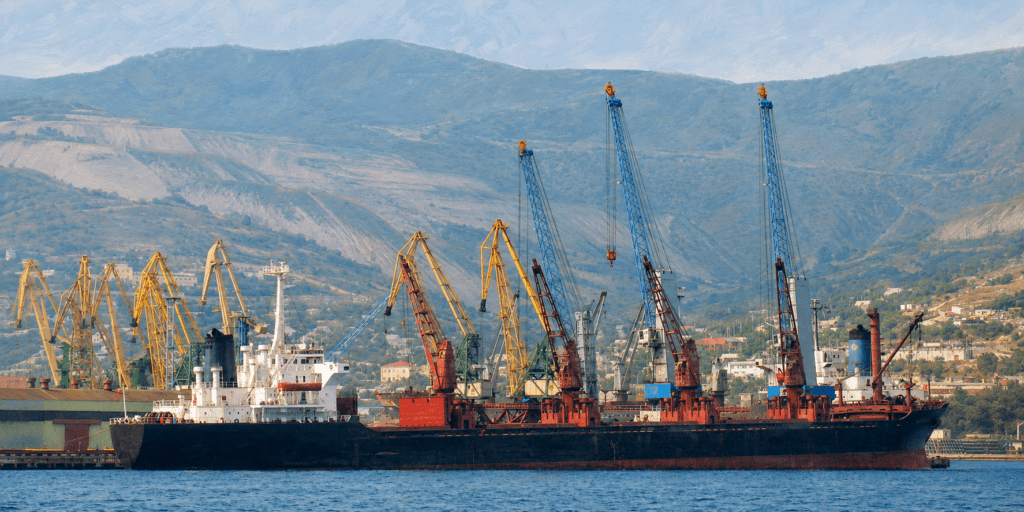
Chevron CEO Mike Wirth said that oil was flowing through the CPC pipeline and tankers were being loaded on July 31, one day after two vessels were attacked near its Black Sea terminal. Kazakhstan’s Energy Ministry said intake reached 100,000 metric tons a day from August 1 and rejected reports of a complete shutdown. “The pipeline is flowing. We’ve been loading ships this week,” Wirth said during Chevron’s second-quarter earnings call. He said two of CPC’s three single-point moorings were in service. The third was undergoing refurbishment and was expected to return during the third quarter. The ministry said CPC temporarily suspended pipeline system operations on July 31 but continued receiving crude and filling storage tanks. A complete shutdown “is not being considered,” it said. Further increases would depend on tankers arriving for loading near Novorossiysk. The two statements indicate that loadings restarted quickly after the July 30 attacks, but do not establish a full return to planned export volumes. CPC can receive crude while storage space remains available, but if tanker loadings fall behind, storage fills and producers must cut output as they did in late July. On August 2, OPEC+ raised Kazakhstan’s September target by 10,000 barrels per day to 1.628 million barrels. The increase formed part of a combined 188,000-barrel-per-day rise for Kazakhstan and six other producers. The group said countries that had exceeded their quotas since January 2024 would make up for the excess by producing less in future months. A separate OPEC+ monitoring committee, which includes Kazakhstan, stressed the “critical importance” of safeguarding international maritime routes and expressed concern about attacks on energy infrastructure. Its statement did not name CPC or the Black Sea incidents. For Kazakhstan, the higher quota may have little immediate effect if export flows remain constrained. Reuters has reported that OPEC+ may pause further increases after September while it reviews production capacity for quota baselines which will apply in 2027. The immediate risk is a repeat of late July, when disrupted loadings filled storage and forced sharp production cuts at Tengiz and other major fields. CPC loadings had resumed on July 27 after a week-long suspension. Three days later, two more tankers were attacked near the terminal. NISSOS SIFNOS was struck while loading Tengizchevroil crude at the SPM-3 offshore mooring, while MARATHI was hit while waiting for a berth about six nautical miles offshore. Both fires were extinguished, and no injuries to the crews or pollution were reported. Neither CPC nor Kazakhstan publicly identified an attacker. Ukraine’s drone forces later said they had struck four Russian tankers in the Black and Azov seas, but did not name the vessels or locations. The earlier stoppage had already demonstrated how swiftly export disruption can reach Kazakhstan’s oilfields. National oil and gas condensate production fell to about one million barrels per day on July 26, less than half the June average of 2.16 million barrels per day. CPC runs for about 1,510 kilometers from western Kazakhstan through Russia to the Black Sea. It handles...

Europe Must Defend the Distinction It Has Made Between Kazakhstani and Russian Oil

In the early hours of July 30, drones struck two tankers at the marine terminal of the Caspian Pipeline Consortium (CPC) near Novorossiysk: the Nissos Sifnos while it was loading Tengizchevroil crude at Single Point Mooring 3, and the Marathi as it approached the terminal. Loading was temporarily suspended, although the pipeline remained operational. Neither vessel sank; no casualties or oil spill were reported. Earlier attacks in July had already interrupted CPC loading operations and prompted a formal protest from Kazakhstan. Astana said that an agreed mechanism for exchanging information about civilian vessels entering the Black Sea to load CPC oil had been disregarded. The recurrence was more important than the damage: it could alter commercial expectations and behavior. The pipeline is not the relevant analytical unit; the export chain is. It can remain operational even when the maritime egress of its oil to world markets has ceased to function. Once loading stops and terminal storage fills, CPC must restrict intake from Kazakhstan, transmitting the interruption backward through the system until producers reduce output. After two tankers bound for the CPC terminal were struck in January, Black Sea war-risk premiums rose from 0.6–0.8% to 1% of vessel value, while insurers shortened their review of terms from every 48 hours to every 24 hours. By July, vessels were avoiding the terminal on safety grounds even though no structural damage to it had been reported. Commercial use of CPC was thus impaired despite the integrity of its infrastructure. The concentration of Kazakhstan’s exports magnifies the effect. CPC carries approximately four-fifths of its oil exports, including production from Tengiz, Kashagan, and Karachaganak. The July interruption exposed the consequence: full terminal storage obliged CPC to halt intake, while the Kazakhstani government confirmed that producers had reduced output because of export constraints. The vulnerability reaches backward from maritime egress into production. Crude from Kazakhstan occupies a material place in the EU’s non-Russian import structure, giving Europe a direct interest in the matter. Kazakhstan supplied 11.5% of EU petroleum-oil imports in 2024 and 9.6% in the first quarter of 2026, ranking among the Union’s three largest suppliers in both periods. The EU’s sanctions architecture already recognizes that Kazakhstani oil passing through Russian territory does not thereby become Russian oil. Commission guidance treats CPC crude as originating in Kazakhstan when supported by certificates of origin or other documentation, notwithstanding unavoidable admixture with Russian oil. EU legislation also provides targeted derogations permitting goods, technology, and services required for the operation and maintenance of CPC infrastructure. The differentiated treatment is narrow: it attaches to the origin and documentation of the cargo, not indiscriminately to every vessel, facility, or transaction associated with CPC. Cargo, route, terminal, and vessel remain legally separable. The distinction became especially salient when the sanctioned Nelsa, which had carried Russian Urals crude, was attacked at the same terminal after vessels loading Kazakhstani crude had been struck. Europe nevertheless lacks a CPC-specific public-policy position on repeated disruption of the export chain carrying exempted crude, even though its...