

• KGS/USD = 0.01144 0%
  • KZT/USD = 0.00212 0%
  • TJS/USD = 0.10456 0.19%
  • UZS/USD = 0.00008 0%
  • TMT/USD = 0.28490 0%
  • KGS/USD = 0.01144 0%
  • KZT/USD = 0.00212 0%
  • TJS/USD = 0.10456 0.19%
  • UZS/USD = 0.00008 0%
  • TMT/USD = 0.28490 0%
  • KGS/USD = 0.01144 0%
  • KZT/USD = 0.00212 0%
  • TJS/USD = 0.10456 0.19%
  • UZS/USD = 0.00008 0%
  • TMT/USD = 0.28490 0%
  • KGS/USD = 0.01144 0%
  • KZT/USD = 0.00212 0%
  • TJS/USD = 0.10456 0.19%
  • UZS/USD = 0.00008 0%
  • TMT/USD = 0.28490 0%
  • KGS/USD = 0.01144 0%
  • KZT/USD = 0.00212 0%
  • TJS/USD = 0.10456 0.19%
  • UZS/USD = 0.00008 0%
  • TMT/USD = 0.28490 0%
  • KGS/USD = 0.01144 0%
  • KZT/USD = 0.00212 0%
  • TJS/USD = 0.10456 0.19%
  • UZS/USD = 0.00008 0%
  • TMT/USD = 0.28490 0%
  • KGS/USD = 0.01144 0%
  • KZT/USD = 0.00212 0%
  • TJS/USD = 0.10456 0.19%
  • UZS/USD = 0.00008 0%
  • TMT/USD = 0.28490 0%
  • KGS/USD = 0.01144 0%
  • KZT/USD = 0.00212 0%
  • TJS/USD = 0.10456 0.19%
  • UZS/USD = 0.00008 0%
  • TMT/USD = 0.28490 0%

Viewing results 487 - 492 of 2007

Central Asia Charts New Course as Russian Aviation Falters

Sanctions against Russia may intensify if U.S. President Donald Trump escalates pressure on the Kremlin and Vladimir Putin. But even without additional measures, several sectors of Russia’s economy are already buckling under strain. Among the most vulnerable is civil aviation, now grappling with “fleet cannibalization”, a practice born of scarcity and isolation. In this context, alarmist claims from Russian aviation analysts that Central Asian airlines might soon replace Russian carriers not only on international routes but potentially within Russia itself are being reassessed. So, what is actually happening and why? Squeezing Russia Out One of the most overlooked aviation developments of 2024 was the announcement at the Central Asian Aviation Summit in Astana that regional countries were forming their own civil aviation regulatory body. As Amir Akhmetov, senior advisor to the director of the Aviation Administration of Kazakhstan, put it: “In the changing geopolitical environment of the republics of Central Asia and the South Caucasus, together with like-minded countries, they are creating their own regional civil aviation organization, the Eurasian Civil Aviation Conference (EACAC).” This initiative, first proposed by Astana in 2023, includes Kazakhstan, Kyrgyzstan, Uzbekistan, Tajikistan, and Turkmenistan, as well as Armenia, Azerbaijan, Georgia, Moldova, and Mongolia. Although initially scheduled for 2025, the first EACAC meeting took place in Almaty in November 2024. Russian observers have taken note. The publication Versiya, which had predicted Russia’s marginalization in the Central Asian aviation market as early as 2016, commented on the development in stark terms: “It is hard not to notice that this is truly a momentous event in the field of civil aviation regulation within the EAEU member states, aimed precisely at pushing Russia out of the process… which, after the formation of the announced structure, will de facto exist and be managed under direct Anglo-American influence.” However alarmist the tone, the underlying concern is not unfounded. Russia’s aviation sector is increasingly isolated and dependent. By December 2024, it was confirmed that a new aircraft maintenance hub would be built in Aktau, one of Kazakhstan’s four major aviation centers. The project, spearheaded by Turkish Technic, YDA, and ASFAT, will serve civil and military aircraft from Kazakhstan, Russia, Uzbekistan, Turkmenistan, Kyrgyzstan, and Tajikistan. According to then-Minister of Transport Marat Karabayev, “The center will serve 411 civil aircraft... As a result of the project, the airport’s cargo handling capacity will increase to 200,000 tons per year, with an annual turnover of 520 billion tenge ($996.7 million).” Aviation in Central Asia: A Regional Snapshot In Kazakhstan, liberalization and competition have allowed the civil aviation sector to flourish. National carrier Air Astana operates hubs in Almaty and Astana and is widely considered among the best airlines in the post-Soviet space. Its low-cost subsidiary, FlyArystan, has grown rapidly, fueled by a strong Airbus fleet, now over 60 aircraft, with new A320 and A321 deliveries annually. Private airline SCAT flies across the former USSR and Asia, while Qazaq Air, now rebranded as Vietjet Qazaqstan, entered into a strategic partnership in 2025 with Vietnam’s Sovico Group, owner...
Kazakhstan in Afghanistan: From Rhetoric to Infrastructure

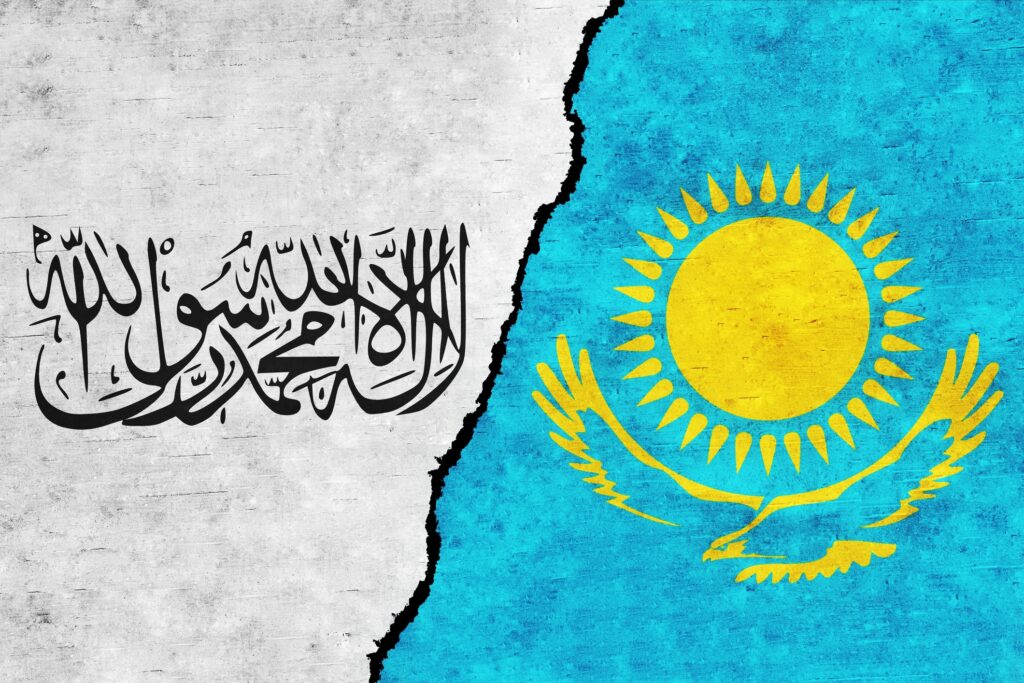
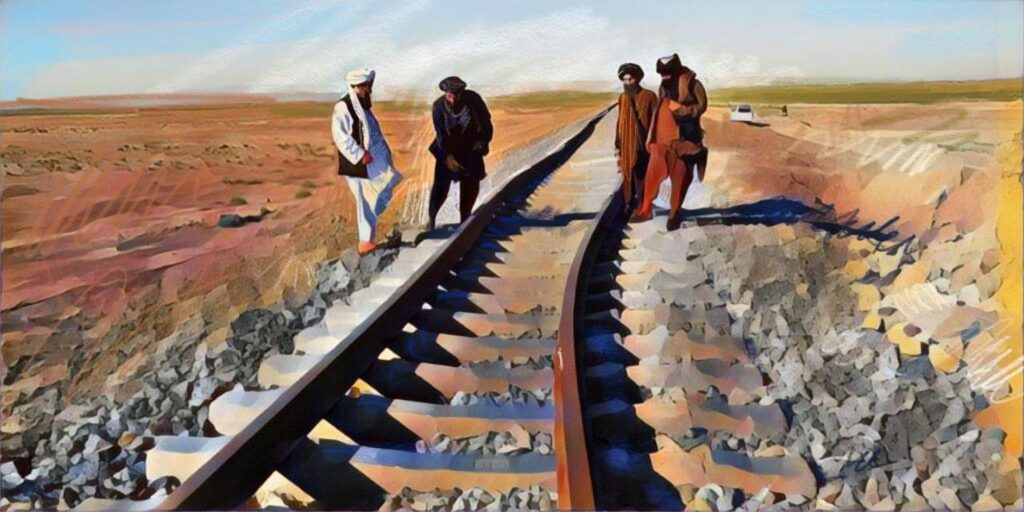
The visit of Kazakhstan's Foreign Minister Murat Nurtleu to Kabul (July 10–11) was a turning point not only for bilateral relations but also for the entire regional logistics agenda. While Astana's previous statements about its readiness to participate in the Trans-Afghan Corridor were viewed by many with skepticism as a demonstration of goodwill without practical substance, these doubts have now been dispelled. Kazakhstan has not only reaffirmed its commitment to the project but also reinforced it with concrete commitments. An interdepartmental memorandum on the implementation of the Torgundi-Herat railway line has been signed, and Astana has confirmed its readiness to invest up to $500 million in the Trans-Afghan railway project. This is an important step in the formation of future transport corridors within the Central Asia to South Asia (CA2SA) initiative. Practical matters such as tariff policy, border crossing procedures, logistics, and digitalization were also discussed. The visit also carried diplomatic weight. Kazakhstan is demonstrating its willingness to engage pragmatically with Afghanistan’s de facto authorities. This is not a step towards recognizing the Taliban regime, but an effort to involve Kabul in economic processes without altering Kazakhstan’s legal or political stance. Attempts to link this visit to Russia's recognition of the Taliban appear superficial. Such trips are not planned spontaneously — in diplomatic practice, visits at this level are prepared for weeks, if not months. The very structure of the negotiations made it clear what the priorities were: infrastructure, transport security, and economic cooperation, not political recognition. Given Kazakhstan’s balanced foreign policy, formal de jure recognition of the Taliban regime is unlikely in the foreseeable future. The current status quo — practical cooperation without political legitimization — is acceptable to all parties, regional states, and Afghanistan alike. At most, we may see an elevation of diplomatic representation. Currently, both countries are represented by temporary chargés d'affaires. After the visit, extraordinary and plenipotentiary ambassadors may be appointed. However, even this would not mean recognition. Diplomatic missions are a means of communication, not a political endorsement. Kazakhstan’s position continues to be guided by that of the United Nations. Until the Credentials Committee changes its position on the Afghan side's participation in the General Assembly, Astana will not force events. From 2021 to 2024, the committee rejected the Taliban's applications for accreditation, which de facto means a refusal of international recognition at the global level. Although these decisions are not legally binding, they serve as the main political guideline for states that adhere to a collective approach. In matters of recognition, it is essential not to get ahead of geopolitical realities. It is important that Kazakhstan's actions are not isolated: they are in line with other countries in the region, especially those bordering Afghanistan. Whereas previously the policy of Central Asian countries towards their southern neighbor was determined by security issues, the focus is now shifting to trade, logistics, and infrastructure development. Across all regional capitals, there is growing recognition that supporting Afghanistan is not a formality, but a rational strategic choice. After...

Steel Diplomacy: Central Asia’s Southern Push via Afghanistan

The United States and its allies may be uneasy about the Taliban’s return to power, given their extremist history, continued repression, and the collapse of decades-long Western efforts in Afghanistan. Nevertheless, the Taliban is strengthening ties with the Global South—particularly Central Asia—in search of investment for railway infrastructure. For landlocked Central Asian nations, Afghanistan is a key transit point on the shortest route to the Arabian Sea, offering an alternative to routes through Russia, China, or westward via the Caspian. The war-torn country – located at the crossroads of Central and South Asia – serves as a land bridge between the former Soviet republics and the major markets of the region, including India and Pakistan. This strategic position is why regional actors are eager to invest in the construction of the railway network in Afghanistan, fully aware that the new route would help them achieve at least some of their geopolitical and geoeconomics interest. Kazakhstani Foreign Minister Murat Nurtleu’s recent visit to Kabul was, according to reports, primarily focused on Afghan railway infrastructure. The largest Central Asian nation economy is reportedly ready to invest $500 million in the construction of the 115km (71 miles) railway from Towrgondi on Afghanistan’s border with Turkmenistan to the city of Herat. As Taliban railway officials told The Times of Central Asia, the Afghan and Kazakh delegations, who signed a memorandum of understanding on the project, are expected to finalize new agreements and contracts in the coming months. A detailed construction study is expected to be completed by winter, and Afghan authorities anticipate that construction will begin by the end of the year.  Meanwhile, Kabul hopes to reach similar deals with neighboring Uzbekistan and Turkmenistan, as well as with Russia and Pakistan. According to Taliban railway experts, these four nations – along with Kazakhstan – are expected to play a major role in the development of the 700-kilometer (approximately 435-mile) railway network in Afghanistan. The Taliban political officials, on the other hand, see the project as an opportunity for Afghanistan to increase its geopolitical importance. “It will help us reduce economic dependence and isolation, allowing Afghanistan to integrate more actively into the regional economy,” Muhammad Rehman, the Taliban-appointed Chargé d’Affaires of the Islamic Emirate of Afghanistan to Kazakhstan, told The Times of Central Asia, From his perspective, nations investing in Afghan railway infrastructure will become advocates for Afghanistan’s stability. Projects like the construction of the railway, in his view, can transform Afghanistan into a transit hub for regional countries through railway corridors. “Through the railway, Afghanistan can also import goods at a significantly lower cost, making essential commodities more affordable for its people,” Rahman stressed. More importantly, the railway opens a route for Central Asian natural resources to reach global markets via the ocean and further enhances the viability of the westward-flowing Middle Corridor. In short, the Afghan rail projects are important for connecting Eurasia. It is, therefore, no coincidence that Kazakhstan – being the richest country in terms of mineral wealth in Central Asia...

Trump’s 100% Tariffs May Target Kazakhstan and Kyrgyzstan

U.S. President Donald Trump has signaled a new wave of sanctions against Russia, including the potential imposition of 100% tariffs on its trading partners, which could affect Kazakhstan, Kyrgyzstan, and other former Soviet states. Who Could Be Affected? On July 15, President Trump announced an escalation in U.S. arms deliveries to Ukraine and warned of intensified sanctions against Russia. If no progress is made in resolving the conflict within 50 days, the U.S. will implement additional measures, including secondary tariffs of up to 100% on countries trading with Russia. Experts warn that Kazakhstan, Kyrgyzstan, and Azerbaijan may be particularly vulnerable. Although not among Russia’s largest trading partners, these countries maintain extensive commercial ties with Moscow. According to the Centre for Research on Energy and Clean Air (CREA), China, India, and Turkey accounted for 74 percent of Russia's fossil fuel revenue in 2024. Oil exports totaled €104 billion, petroleum products €75 billion, gas €40 billion, and coal €23 billion. Despite multiple sanctions packages, the European Union continues to import Russian energy. In 2024, the EU spent €21.9 billion on Russian oil and gas, just 1% less than in 2023. Over the same period, EU financial assistance to Ukraine amounted to €18.7 billion, according to the Kiel Institute for the World Economy. Yet Trump may spare Russia’s largest trading partners. In recent months, he has taken steps to impose severe tariffs on the European Union and China, only to reverse course under pressure from business groups and concerns about global trade disruptions. Nevertheless, Kazakhstan received formal notification from the U.S. on July 7 that a 25% tariff on its goods will take effect from August 1, 2025. This raises the possibility that smaller economies in Russia’s orbit may become targets of U.S. economic retaliation. Already in the Crosshairs Kazakh analyst Olzhas Baidildinov noted that trade between Kazakhstan and Russia totaled $27.8 billion in 2024, with $18.2 billion in exports from Russia and $9.5 billion from Kazakhstan. "Such figures certainly cannot escape the attention of OFAC,” Baidildinov wrote, referring to the U.S. Treasury’s Office of Foreign Assets Control. “European sanctions apply only within Europe. However, Kazakhstan continues to import Russian oil, gas, and petroleum products. Secondary sanctions, as I’ve previously warned, are merely a matter of minor adjustments to existing measures,” he added. Trump’s administration may also be overlooking Kazakhstan’s unique geographic and economic ties to Russia. The two countries share the world’s longest continuous land border, over 7,500 kilometers, and are closely connected through pipelines, energy infrastructure, and raw materials trade. Azerbaijan and Kyrgyzstan Also Vulnerable Azerbaijan’s trade with Russia reached approximately $4.8 billion in 2024, an increase of 10.1 percent. Russia ranks as Azerbaijan’s third-largest trading partner, after Italy and Turkey. Exports to Russia totaled $1.178 billion, accounting for 4.4 percent of Azerbaijan’s total exports. Notably, Russia is the largest buyer of Azerbaijan’s non-oil products, with a 34.6 percent share. Imports from Russia include foodstuffs, machinery, and metals, while Azerbaijan supplies gas, textiles, and agricultural goods. Kyrgyzstan is also at risk....

New Russian Border Rules Cause ‘Probka’ for Kazakhs at the Border

Russia’s introduction of a trial of new entry procedures for foreign citizens, including Kazakhs, on June 30, 2025, has led to massive traffic jams at border crossings, despite official claims that registration through the ruID app is voluntary. In practice, drivers without a required QR code have been turned back at the border, stranding cargo and sparking frustration on both sides. Bureaucracy Meets Gridlock Under the updated rules, citizens from visa-free countries, including Kazakhstan, must present a QR code generated no later than 72 hours before arriving at the border. Officially described as voluntary, the requirement has effectively become mandatory. At the Zhaisan border crossing in Kazakhstan’s Aktobe region, dozens of heavy trucks have lined up, with queues reportedly stretching 10 kilometers. Aslan Arzymbekov, head of the regional emergency response department, attributed the delays directly to the new QR code requirement. Many drivers had not registered in advance and were left waiting for hours or even days. Local emergency services and military personnel have been providing food, water, and medical assistance to stranded drivers, who have been sleeping in their vehicles amid poor sanitary conditions. “I’ve been standing here since yesterday. My electronic queue is about to expire,” said truck driver Mikhail Khegai. “Reservations Are Expiring. There Is No Passage.” Drivers say they had secured a place in the electronic queue but were unable to reach the checkpoint in time. As a result, trucks carrying time-sensitive or perishable goods are missing delivery deadlines, causing financial losses and fraying business relationships. “It’s a terrible mess. We've been stuck here for seven kilometers. There's nothing to eat. Everyone is waiting,” said carrier Farkhatbek Tursynaliev. According to Kazakhstan’s Ministry of Internal Affairs, congestion has also been reported at the Zhana Zhol checkpoint in North Kazakhstan and the Bokei Khan crossing in Atyrau region. While local police are attempting to manage traffic and assist drivers, the core issues remain unresolved. Officials Offer Conflicting Explanations Kazakhstan’s State Revenue Department in Aktobe region cited roadworks on the Samara-Shymkent highway, ongoing since May 13, as a contributing factor. Temporary traffic lights and barriers have reduced throughput, with completion expected in early July. Entrepreneurs, however, have lodged nearly 200 complaints in the first three days of the new rules, according to the National Chamber of Entrepreneurs “Atameken.” Ruslan Kuishinov, the chamber’s deputy director for legal affairs, called for a more transparent and organized system. “We would like to have a visual storage display so drivers can see their status and proceed calmly,” he said. The Russian Embassy in Kazakhstan has rejected claims that QR codes are mandatory, attributing the delays to seasonal increases in border traffic. “No additional requirements, including QR codes, are being imposed on citizens,” the embassy stated via its official Telegram channel. Nevertheless, drivers and border officials on the ground continue to assert that without a QR code, entry is denied, regardless of what official statements claim. While framed as a voluntary digital upgrade, the ruID system has effectively created a bottleneck for both people...

Tennis Revolution in Kazakhstan: How Systemic Investment Is Creating Champions

Over the past decade, Kazakhstan has evolved from a promising tennis nation into a formidable contender on the global stage. Elena Rybakina’s Wimbledon triumph, Alexander Bublik’s steady rise, and a new wave of top-ranked juniors are no coincidence; they are the product of a long-term, meticulously executed strategy. In an interview with The Times of Central Asia, Yuriy Polskiy, President of the Asian Tennis Federation and Vice President of the Kazakhstan Tennis Federation (KTF), explains how strategic investment, public-private partnerships, and a grassroots approach have fundamentally reshaped the country's tennis landscape. TCA: Kazakhstani tennis players have recently made headlines at top international tournaments. How would you assess Kazakhstan’s current standing on the global tennis map? Are the successes of Elena Rybakina and Alexander Bublik, as well as the emergence of top juniors, the result of systemic work or just coincidence? Polskiy: Luck plays a role in any athlete’s career, but it's fleeting. Kazakhstan’s results, among both professionals and juniors, are consistent, which points to a system that delivers. Over the past decade, we’ve seen numerous players ranked in the world’s top 30: Shvedova, Voskoboeva, Kukushkin, Golubev, Korolev, Nedovyesov, and more recently, Diyas, Putintseva, Danilina, Bublik, and, of course, Rybakina. Together, they’ve secured four Grand Slam titles, reached multiple singles and doubles finals, and won WTA 1000, 500, and ATP/WTA 250 tournaments. Among the juniors, talents like Dastanbek Tashbulatov, Amir Omarkhanov, and Sonya Zhienbayeva have ranked in the ITF Top 5 and Top 20. Our Under-14 and Under-18 national teams have reached the world’s top four and consistently defeated traditional powerhouses such as Australia, France, Italy, and Argentina. These results underscore the strength of Kazakhstan’s national coaching program and the Federation’s long-term vision. In 2024, Kazakhstan had six players in the ITF junior Top 100, including three in the Top 50. Seven more under-14s were ranked in the Tennis Europe Top 100, more than Italy, currently the leader in that category. Notably, all 13 of these top-ranked juniors were born and raised in Kazakhstan, highlighting the success of a nationwide, structured development model that blends public support with private initiative. TCA: What is the Federation’s strategic outlook for the next five to ten years? How extensive is the infrastructure, and are there plans to expand into smaller cities? Polskiy: Since 2007, when businessman and philanthropist Bulat Utemuratov became the KTF president, Kazakhstan has built 38 major tennis centers, each with at least six courts, totaling 364 hard and clay courts nationwide. Over the past 17 years, more than $150 million has been invested in infrastructure. Hundreds of coaches have been trained, particularly for early childhood programs. The number of certified ITF coaches has nearly doubled in five years, now surpassing 400. Infrastructure growth has significantly reduced training costs: hourly court rental has dropped from $50 in 2007 to just $10 today. Facilities now exist in 16 of the 18 regional capitals and smaller cities like Lisakovsk. Major complexes in Astana, Almaty, Shymkent, Karaganda, Aktobe, and Ust-Kamenogorsk each include six indoor and...
