• KGS/USD = 0.01144 0%
  • KZT/USD = 0.00212 0%
  • TJS/USD = 0.10454 -0.1%
  • UZS/USD = 0.00008 0%
  • TMT/USD = 0.28571 0.28%
  • KGS/USD = 0.01144 0%
  • KZT/USD = 0.00212 0%
  • TJS/USD = 0.10454 -0.1%
  • UZS/USD = 0.00008 0%
  • TMT/USD = 0.28571 0.28%
  • KGS/USD = 0.01144 0%
  • KZT/USD = 0.00212 0%
  • TJS/USD = 0.10454 -0.1%
  • UZS/USD = 0.00008 0%
  • TMT/USD = 0.28571 0.28%
  • KGS/USD = 0.01144 0%
  • KZT/USD = 0.00212 0%
  • TJS/USD = 0.10454 -0.1%
  • UZS/USD = 0.00008 0%
  • TMT/USD = 0.28571 0.28%
  • KGS/USD = 0.01144 0%
  • KZT/USD = 0.00212 0%
  • TJS/USD = 0.10454 -0.1%
  • UZS/USD = 0.00008 0%
  • TMT/USD = 0.28571 0.28%
  • KGS/USD = 0.01144 0%
  • KZT/USD = 0.00212 0%
  • TJS/USD = 0.10454 -0.1%
  • UZS/USD = 0.00008 0%
  • TMT/USD = 0.28571 0.28%
  • KGS/USD = 0.01144 0%
  • KZT/USD = 0.00212 0%
  • TJS/USD = 0.10454 -0.1%
  • UZS/USD = 0.00008 0%
  • TMT/USD = 0.28571 0.28%
  • KGS/USD = 0.01144 0%
  • KZT/USD = 0.00212 0%
  • TJS/USD = 0.10454 -0.1%
  • UZS/USD = 0.00008 0%
  • TMT/USD = 0.28571 0.28%

Viewing results 493 - 498 of 1989

Kazakhstan Launches Central Asia’s Most Powerful Supercomputer

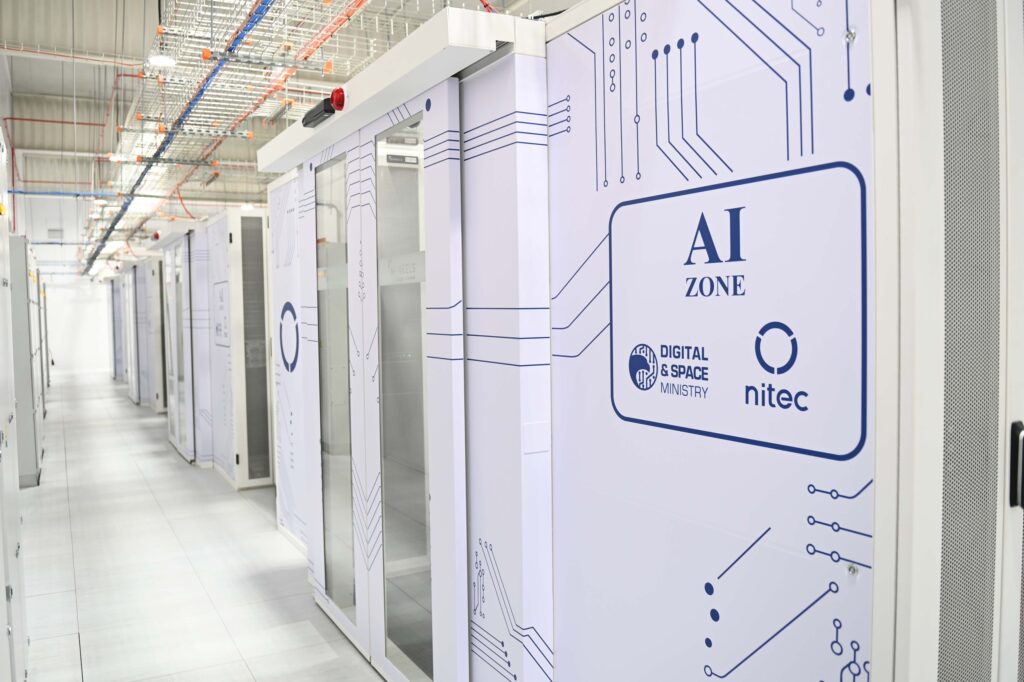
Kazakhstan has officially launched the most powerful supercomputer in Central Asia, marking a significant milestone in its push for digital sovereignty. President Kassym-Jomart Tokayev attended the inauguration ceremony at the new data center operated by the Ministry of Digital Development, Innovation, and Aerospace Industry. According to the presidential press service, the computing cluster, built on NVIDIA H200 graphics processors, can deliver up to 2 exaflops (two quintillion operations per second) of performance, making it the region’s most advanced high-performance computing system. Tokayev emphasized that the launch will catalyze digital transformation across key sectors of the Kazakh economy. The system will be accessible to startups working in neural networks, universities, research institutions, and both public and private sector enterprises. “Having our own high-performance infrastructure will accelerate the adoption of artificial intelligence, reduce dependence on foreign IT resources, and ensure the country’s technological sovereignty,” said Zhaslan Madiev, Minister of Digital Development. Boosting Domestic Capabilities Madiev noted that many Kazakh companies, including fintech firms and startups, currently rely on foreign cloud providers such as Amazon and Google for computing resources. This dependence leads to capital outflows and heightens risks related to data security. He added that local engineers have received specialized training, and full operational control of the supercomputer will be transitioned to Kazakhstani specialists over the next five years. During his visit to the National Computer Center, Tokayev was introduced to a range of domestic digital initiatives in fields such as healthcare, education, governance, and urban infrastructure. These include: SmartCity Astana: A project aimed at creating a digital twin of the capital, incorporating over 100,000 AI-enabled surveillance cameras for real-time threat detection and public safety monitoring. AlemLLM: A large language model customized for local linguistic and cultural contexts. AI Kitap: An adaptive learning platform that offers personalized digital education based on student levels and preferences. Baspana Hub: A digital ecosystem for real estate, integrating government services, property evaluations, a marketplace, and renovation support. Tokayev also viewed presentations from emerging Kazakhstani tech startups. Among them was Surfaice.pro, a construction technology firm founded by Kazakhstani entrepreneurs in Silicon Valley. The company operates in five U.S. states and has raised $1.5 million in funding from Big Sky Capital and Shadow Ventures. A Strategic Investment in Digital Sovereignty As previously reported by The Times of Central Asia, the launch of the supercomputer aligns with Kazakhstan’s broader ambition to become a regional technology hub. It was developed under a strategic partnership between the Ministry of Digital Development and UAE-based Presight AI Ltd. With its enhanced digital infrastructure and growing ecosystem of AI innovation, Kazakhstan is positioning itself at the forefront of high-performance computing and artificial intelligence in Central Asia.

Tackling Corruption in Kazakhstan: The Latest Trends

As previously reported by The Times of Central Asia, anti-corruption efforts are a cornerstone of President Kassym-Jomart Tokayev’s agenda. Court-ordered funds confiscated from corrupt officials have been used to finance public infrastructure: over the past three years, 150 billion tenge have been allocated to build 89 schools. On June 30, Tokayev signed a decree dissolving the country’s standalone Anti-Corruption Agency and transferring its functions to the National Security Committee (NSC), in what officials described as a move to modernize and streamline public administration. A recent analysis by Ranking.kz sheds light on the latest trends, identifying the institutions most often entangled in scandals and criminal investigations. Corruption Reaches Across All Levels Between January and May 2025, the Kazakh authorities charged 640 individuals with corruption-related offenses, representing a 3% decrease compared to the same period in 2024. However, the number of identified offenders rose to 464, up 4.3% from 445 last year. During the same period, 405 individuals were referred to the courts, an increase of 9.2% year-on-year. The largest number of defendants were employees of Akimats and their subordinate departments, totaling 66 individuals, though this figure is one-third lower than in 2024. In addition, 49 police officers, 16 employees from the Ministry of Finance, 11 from the Ministry of Agriculture, and 7 from the Criminal Executive Committee under the Ministry of Internal Affairs were brought to court. Notably, three regional akims were among those referred to court this year, compared to just one in the same period last year. One judge was also prosecuted. In total, 57 individuals from 12 different ministries faced judicial proceedings, up slightly from 54 last year. However, the data does not encompass all divisions; for instance, the figures for the Ministry of Internal Affairs include only selected departments. Bribery Remains the Most Common Offense Bribery continues to be the most prevalent form of corruption, with 167 recorded cases in the first five months of 2025, a 27.5% increase from the previous year. Internal affairs personnel were the most frequently detained for bribery (22 cases), followed by local government officials (13 cases) and employees of the Ministry of Finance (9 cases). In terms of the number of individuals involved, bribery accounted for 99 people. Corruption-related fraud followed, with 71 cases documented, rounding out the top three categories of offenses. Kazakhstan in Global Perspective Kazakhstan ranked 88th out of 180 countries in the 2024 Corruption Perceptions Index published by Transparency International, scoring 40 out of 100. This position is shared with North Macedonia, Suriname, and Vietnam. The index, based on assessments from organizations such as the World Bank and the World Economic Forum, ranks countries from 0 (most corrupt) to 100 (least corrupt). According to the same report, 17% of Kazakhstani citizens who accessed public services in the previous year admitted to paying bribes. By way of comparison, in Denmark and Finland, the top-ranked countries, only 1% of citizens reported such experiences. Within the Commonwealth of Independent States (CIS), Kazakhstan ranks third, behind Armenia (63rd) and Moldova (77th)....

Kazakhstan Sets Sights on Becoming Central Asia’s Blockchain Hub

Kazakhstan is accelerating its efforts to become a regional leader in blockchain and cryptocurrency. Among its latest initiatives is a proposal by the National Bank of Kazakhstan (NBK) to establish a state crypto reserve. National Strategy and Regulatory Evolution The NBK recently endorsed the idea of forming a national reserve of crypto assets. This was confirmed in an official response from NBK Chairman Timur Suleimenov to a parliamentary inquiry. The proposal includes creating the reserve through a subsidiary of the NBK focused on alternative investments. Mirroring practices in countries such as the United States, the reserve could be composed of confiscated crypto assets and cryptocurrencies mined with state involvement. Legislative amendments to support this move are expected. In January, President Kassym-Jomart Tokayev underscored the urgency of developing Kazakhstan’s crypto infrastructure, citing a global shift toward digital assets. Tokayev emphasized the need for a comprehensive national strategy to meet emerging challenges. Currently, legal cryptocurrency transactions in Kazakhstan can only occur via exchanges operating under the Astana International Financial Center (AIFC). Registered participants include major platforms such as Binance and Bybit. Expanding Infrastructure and Innovation The government is also considering the creation of crypto banks, which would regulate the digital asset market, facilitate storage and transactions, and boost the financial ecosystem. These institutions are seen as critical to fostering IT sector growth and blockchain compliance jobs. There are also plans to establish a licensed national cryptocurrency exchange that would operate nationwide beyond the AIFC. In May, Kazakhstan announced the launch of a special CryptoCity zone to pilot cryptocurrency-based payments for goods and services. The following month, five banks, Halyk Bank, Forte, Freedom, RBK, and Altyn, joined a NBK pilot program to introduce crypto cards. These cards, linked to wallets on AIFC-registered exchanges, allow for the real-time conversion of crypto into tenge for payments and cash withdrawals, including at physical retail terminals. Mining: Prospects and Pressure Kazakhstan has had a complex relationship with cryptocurrency mining. Between mid-2021 and early 2022, the country ranked third globally in Bitcoin mining, driven by low energy costs and an influx of miners from China. At its peak in January 2022, Kazakhstan accounted for 13.22% of global mining power. However, the surge in mining led to severe energy shortages. While enthusiasm for mining has returned, President Tokayev called in March 2025 for renewed investment in digital mining infrastructure. First Deputy Minister of Digital Development Kanysh Tuleushin has championed state-regulated mining as a potential revenue source and a catalyst for modernizing the energy grid. He pointed to models such as the U.S., where miners help balance grid loads, and to Kazakhstan’s “70/30” initiative, which allocates 30% of newly modernized thermal power plant capacity to miners and 70% to the national grid. Tuleushin also emphasized the potential for repurposing associated petroleum gas to generate mining power, thereby reducing emissions and monetizing a previously wasted resource. He argued that legalizing crypto activity nationwide could transform Kazakhstan into Central Asia’s crypto leader, on par with emerging markets in Uzbekistan and Kyrgyzstan. Energy...

Trump Confirms New U.S. Tariffs on Kazakhstan Starting August 1

Starting August 1, 2025, the United States will impose a 25 percent customs duty on exports from Kazakhstan. The decision was announced by U.S. Secretary of Commerce Wilbur Ross and later confirmed in an official letter from President Donald Trump to Kazakh President Kassym-Jomart Tokayev. The move has prompted mixed reactions, although analysts say the actual economic impact is likely to be limited. Tariffs and Diplomacy In a letter published on Truth Social, President Trump stated that the United States was “forced to correct years of distortions caused by Kazakhstan’s tariff and non-tariff policies.” He added that the 25 percent tariff remains “significantly less than what is needed” to address the ongoing trade imbalance between the two countries. Commerce Secretary Wilbur Ross clarified that the tariffs were originally scheduled to take effect on July 9 but have been postponed to August 1. Official notifications are already being sent to affected countries, with Kazakhstan’s notice  scheduled for delivery on July 7 at 12 p.m. Eastern Time. President Trump also outlined a possible exemption: Kazakhstani companies that relocate production to the United States would not be subject to the new tariffs. Impact on Kazakhstan Earlier this year, Washington announced a 27% tariff on Kazakhstani goods, which was quickly suspended for 90 days pending negotiations. The revised 25% duty now stands as the highest imposed on any Central Asian country. Despite this, Kazakh political analyst Gaziz Abishev points out that the overwhelming majority of Kazakhstan’s exports to the U.S., including oil, uranium, ferroalloys, and silver, are excluded from the new measures. “These commodities represent more than 95% of total shipments and are included in the list of exemptions,” he said. As a result, the tariffs are unlikely to significantly impact trade volumes or foreign investment. Economist Eldar Shamsutdinov added that similar letters were sent to other nations, including Vietnam (40%), Malaysia (25%), Myanmar (40%), and South Africa (30%), framing the move as a continuation of existing trade policy rather than a new set of sanctions. Geopolitical Context The tariffs are part of a sweeping review of trade agreements under Trump’s administration. In April 2025, tariffs were applied to goods from 185 countries, and formal notices began rolling out in July. The administration has prioritized correcting what it deems “unfair trade imbalances.” In 2024, Kazakhstan exported $2.3 billion worth of goods to the U.S., while U.S. exports to Kazakhstan totaled $1.1 billion. Trump has cited this trade deficit as justification for the increased duties. Countries receiving similar letters include Japan, South Korea, Laos, Serbia, Tunisia, Bangladesh, and Indonesia, with tariffs reaching as high as 40%, underscoring the strategic and systematic nature of the U.S. policy shift. Kazakhstan’s Response Kazakhstan’s Ministry of Trade and Integration has announced plans to issue an official response but ruled out reciprocal measures. “In connection with the introduction of a 25% duty on goods from Kazakhstan by the U.S., the Ministry of Trade and Integration is preparing an official response. There is no question of retaliatory measures,” the ministry stated....

Urban Expansion in Astana: Strengths and Strains

July 6 marked Capital Day in Kazakhstan, a national holiday celebrating the country's capital. To mark the occasion, Energyprom.kz released an in-depth analysis of Astana’s socio-economic standing, painting a mixed picture of rapid growth and persistent strain. Competition with Almaty and Global Standing In the 2025 Global City Ranking by Oxford Economics, Astana ranks 276th out of 1,000 cities worldwide. Almaty ranks slightly higher at 258th. While Astana outperforms Almaty in terms of ecological conditions and economic momentum, it lags behind in human capital and quality of life. Both cities are considered national leaders, yet remain far behind the world's top urban centers. According to the National Statistics Bureau, Almaty contributes 21.8% of Kazakhstan’s GDP (29.2 trillion KZT or approximately 56.2 billion USD), while Astana accounts for 11.5% (15.5 trillion KZT or around 29.8 billion USD). In terms of GDP per capita, Astana ranks fourth in the country, behind Atyrau, Ulytau, and Almaty. Its economy is heavily concentrated in services, which make up nearly 80% of its gross regional product. A Magnet for Opportunity and Strain Astana continues to attract internal migrants, particularly from rural regions, largely due to its relatively high wages. The average monthly salary in the capital is 538,000 KZT (around 1,035 USD). Higher salaries are found in resource-rich regions such as Atyrau (633,300 KZT) and Mangistau (580,900 KZT). In Astana, the highest-earning sectors include finance and insurance (1.2 million KZT or 2,310 USD), mining (981,300 KZT or 1,890 USD), and IT (824,600 KZT or 1,587 USD). However, this economic pull has placed growing pressure on the city’s infrastructure. Astana faces ongoing issues related to water supply, sewage systems, disorganized construction, and environmental management. These problems have been highlighted by both President Kassym-Jomart Tokayev and the public. The High Cost of Living Astana leads the country in housing prices. In 2023, the average cost of a new apartment reached 595,500 KZT per square meter (approximately 1,146 USD). In the secondary market, the average price rose to 649,800 KZT (around 1,250 USD). A typical 50-square-meter two-bedroom apartment costs nearly 29.8 million KZT (about 57,370 USD). For a resident earning the city’s average wage, saving for such a home without loans would take 55 months, or over four and a half years. In comparison, it would take just 2.5 years in Atyrau. Rental prices are also high. The average monthly rent for a 50 square meter apartment in Astana was 248,000 KZT in 2023 (around 477 USD), consuming over 46% of the average monthly wage. Only Almaty and Shymkent have higher rent-to-income ratios at 54.4% and 60.3% respectively. Food costs place additional strain on household budgets. Food accounts for 52% of the average consumer budget in Astana, equivalent to 181,600 KZT (around 349 USD) per person per quarter. Prices for 14 of 19 socially significant food items, including chicken, milk, butter, and vegetables, exceed national averages. Food inflation in the capital remains among the highest in the country. A Capital at a Crossroads Astana remains the political and administrative...

What Does the Arrest of a Former Top Anti-Corruption Official Signal for Kazakhstan?

On Friday, July 4, Kazakhstani media erupted with news of the arrest of Talgat Tatubayev, former head of the National Anti-Corruption Bureau, predecessor to the current Anti-Corruption Agency. Yet the significance of Tatubayev’s arrest may extend far beyond his own record. Many believe the case is the opening move in a broader probe that could ensnare Kairat Kozhamzharov, a former senator and top security official under Kazakhstan’s first president. Tatubayev’s arrest was amplified by a post from Aset Mataev, head of the KazTAG news agency and the son of Seytkazy Mataev, the current chairman of the Union of Journalists of Kazakhstan. Both father and son were previously prosecuted during Kozhamzharov’s tenure, a period marked by high-profile anti-corruption investigations, including the conviction of former economy minister Kuandyk Bishimbayev. While Kozhamzharov’s leadership was once praised for exposing major corruption cases, many in Kazakhstan’s media remained skeptical. The elder Mataev's case in particular shook the journalistic community, which saw his prosecution as politically motivated. It is widely believed that the Mataevs were targeted after refusing to sell KazTAG to allies of then-Mazhilis Speaker Nurlan Nigmatulin. “In 2016, I had two encounters with Deputy Head of the Financial Police, Talgat Tatubayev,” Aset Mataev wrote on his Telegram channel. “He offered us a deal under Article 65 of the Criminal Code, exemption from liability in exchange for a guilty plea. Others close to Nigmatulin, Yeseyev, Baybek, Zhumagaliyev, and Mailybayev took that route. We refused”. At the time, the Union of Journalists was gaining influence in the blogosphere amid growing distrust in traditional media. According to Aset Mataev, this created an opportunity for authorities to undermine the Mataevs’ reputation and isolate them professionally. Tatubayev’s damaging interview, published on Ratel.kz, appeared to many as a tool in this campaign. “He tried to intimidate us, saying, ‘We have orders, and we’ll crush you anyway,’” Mataev wrote. After Seytkazy’s arrest, Tatubayev allegedly contacted Aset from his father’s phone, urging him to stop speaking to the press. “He promised the case would be dropped. Of course, he lied. We were tortured until the verdict was handed down, while he gave interviews claiming my father admitted guilt.” Unlike Ratel.kz, which was seen as aligned with certain state actors, other outlets mentioned by Mataev allegedly served figures like Bulat Utemuratov, long considered the financial backer of former President Nursultan Nazarbayev, and Karim Massimov, who moved from prime minister to head of the National Security Committee in 2016. The Mataev prosecution sparked widespread condemnation among journalists, who viewed it as a watershed moment in Kazakhstan’s clampdown on press freedom. To this day, the Mataev case is widely believed to have been orchestrated by Nigmatulin and his political allies. Now, with Tatubayev under arrest once more, this time for alleged torture in the notorious Khorgos customs embezzlement case, some observers see the return of unfinished business from the “Old Kazakhstan.” Khorgos, a major border post linking Kazakhstan and China, was the center of large-scale corruption investigations under Kozhamzharov’s leadership. The General Prosecutor’s Office confirmed...