• KGS/USD = 0.01144 0%
  • KZT/USD = 0.00216 0%
  • TJS/USD = 0.10456 0%
  • UZS/USD = 0.00008 0%
  • TMT/USD = 0.28490 0%
  • KGS/USD = 0.01144 0%
  • KZT/USD = 0.00216 0%
  • TJS/USD = 0.10456 0%
  • UZS/USD = 0.00008 0%
  • TMT/USD = 0.28490 0%
  • KGS/USD = 0.01144 0%
  • KZT/USD = 0.00216 0%
  • TJS/USD = 0.10456 0%
  • UZS/USD = 0.00008 0%
  • TMT/USD = 0.28490 0%
  • KGS/USD = 0.01144 0%
  • KZT/USD = 0.00216 0%
  • TJS/USD = 0.10456 0%
  • UZS/USD = 0.00008 0%
  • TMT/USD = 0.28490 0%
  • KGS/USD = 0.01144 0%
  • KZT/USD = 0.00216 0%
  • TJS/USD = 0.10456 0%
  • UZS/USD = 0.00008 0%
  • TMT/USD = 0.28490 0%
  • KGS/USD = 0.01144 0%
  • KZT/USD = 0.00216 0%
  • TJS/USD = 0.10456 0%
  • UZS/USD = 0.00008 0%
  • TMT/USD = 0.28490 0%
  • KGS/USD = 0.01144 0%
  • KZT/USD = 0.00216 0%
  • TJS/USD = 0.10456 0%
  • UZS/USD = 0.00008 0%
  • TMT/USD = 0.28490 0%
  • KGS/USD = 0.01144 0%
  • KZT/USD = 0.00216 0%
  • TJS/USD = 0.10456 0%
  • UZS/USD = 0.00008 0%
  • TMT/USD = 0.28490 0%

Viewing results 481 - 486 of 2013

The Caspian Sea Hits Historic Low

The Caspian Sea has dropped to its lowest recorded level, now sitting at less than 29 meters below sea level. The northern basin, bordering Russia and Kazakhstan, is shrinking particularly rapidly. As the water recedes, the exposed seabed is threatening key marine ecosystems. Experts warn the decline is already causing serious disruption to biodiversity in the region. Declining Volga Flow and Climate Change The downward trend in sea levels began in the 1990s and has accelerated since 2020, with a nearly 80-centimeter drop in the past four years. The primary factor is a decrease in the annual flow of the Volga River, which supplies approximately 80% of the Caspian's inflow and contributes 64% to the lake's total water balance. In recent years, the Volga’s annual discharge has ranged between 210 and 232 cubic kilometers, well below the historical average of around 250 cubic kilometers. At the same time, rising air temperatures are increasing evaporation rates, further depleting water levels. Scientists link these changes to global climate change and the ongoing rise in greenhouse gas emissions. Ecological and Economic Impact Human activity is compounding the problem. Significant water extraction from rivers for agriculture, industry, and municipal use is reducing the volume of water reaching the sea. Russia’s Ministry of Natural Resources is currently developing a comprehensive program to adapt to these shifting environmental conditions. The initiative aims to enhance forecasting, mitigate the consequences of shallowing, and adjust economic activities to reflect the new hydrological realities. Experts suggest that only a sustained annual inflow of around 270 cubic kilometers, comparable to levels recorded in the 1970s and 1990s, can halt the lake's ongoing decline. Changing Coastlines and Public Concern A recent video by Kazakh filmmaker Adai Myrzatay has stirred widespread attention on social media. The footage juxtaposes images of the Caspian coastline in 2013 and 2025. Twelve years ago, the pier was surrounded by open water and untouched shoreline. Today, the water has receded dramatically. Bushes now encircle the pier, and high-rise buildings stand where the shoreline once lay. The video has been viewed over 1.5 million times. The falling water level is leading to the loss of biological diversity and shrinking spawning grounds for species such as the Caspian seal and sturgeon. The shallowing is also disrupting shipping and fishing operations and raising the risk of international disputes over increasingly scarce water resources. A Shared Challenge for Five Nations The Caspian Sea, the world’s largest enclosed inland body of water, receives inflow from more than 130 rivers, including the Volga, Ural, Terek, Sulak, and Samur. Its coastline is shared by five countries: Russia, Kazakhstan, Turkmenistan, Azerbaijan, and Iran. While the Volga's inflow increased slightly to 232 cubic kilometers in 2024, it remains insufficient to reverse or even stabilize the sea’s decline. Experts agree that regional cooperation and a coordinated, long-term strategy for water resource management are essential to confronting this environmental crisis.


Halyk Bank Buys 49% Stake in Uzbekistan’s Click in Landmark Fintech Deal

Almaty - Kazakhstan’s Halyk Bank has announced it will acquire a 49% stake in Uzbek digital payments company Click for $176.4 million, marking one of the largest cross-border banking investments in Central Asia to date. The deal values Click at approximately $360 million, highlighting the growing importance of digital finance in the region’s rapidly evolving financial landscape. With over 20 million customers, Click is one of Uzbekistan’s most widely used payment providers. As part of the agreement, Click will also take a 49% stake in Tenge Bank, Halyk’s Uzbek subsidiary, for $60.76 million. The reciprocal structure of the deal is designed to foster tighter operational integration and shared technological infrastructure between the two institutions – a significant step toward regional financial harmonization. “This is a historic moment for Click. Partnering with Halyk Bank and expanding our capabilities through Tenge Bank represents a major step forward in delivering world-class digital financial services to millions of users,” said Ulugbek Rustamov, CEO of Click. “At the same time, the structure of the deal ensures Click retains its independence, continues to shape its strategic vision, and remains a proud national brand.” Strategic Push Toward Integration The announcement comes as both Kazakhstan and Uzbekistan continue efforts to modernize their financial systems and ease cross-border payments. Regional trade between the two nations has grown steadily in recent years, with bilateral trade turnover reaching $4.22 billion in 2024, up from $2.9 billion in 2020. Halyk Bank, already Kazakhstan’s dominant financial institution with a 29% market share and more than 10.9 million active retail clients, views the investment as a strategic step towards capturing Uzbekistan’s booming digital economy. Click, meanwhile, gains regulatory grounding via Tenge Bank and access to Halyk’s technology and ability to raise capital from its public listing on the London Stock Exchange. Uzbekistan, whose GDP grew by 7.2% in the first half of 2025, continues to open its financial sector to foreign capital – a key pillar of President Shavkat Mirziyoyev’s economic reform program. Competing Power Structures? This fintech alliance also throws an intriguing light on Central Asia’s most influential business families. Halyk Bank is majority-owned by Timur Kulibayev and his wife Dinara, the daughter of former Kazakh president Nursultan Nazarbayev, widely viewed as Kazakhstan’s most powerful couple. Their expanding presence in Uzbekistan via Click and Tenge Bank may once have had the potential to ruffle feathers amongst Uzbekistan’s elite. The fact that the deal has been allowed to proceed this far is in itself an acknowledgement of the shared interests of regional powerbrokers. A Shift in Regional Strategy The deal represents a strategic reversal for Halyk Bank. In recent years, the bank has divested from its Kyrgyz and Tajik operations, selling 100% of its Kyrgyz subsidiary to oligarch Aidan Karibzhanov in 2024 and liquidating its Tajik entity in 2022. The Click acquisition signals a renewed focus on Uzbekistan, with the potential to make the country Halyk’s primary external growth market. This renewed push comes as Halyk cements its dominance in Kazakhstan, where it controls...

Embezzlement Scandal at Kazakh Charity Fund Implicates Influential Officials

A high-profile scandal is unfolding in Kazakhstan involving the alleged embezzlement of billions of tenge from the Biz Birgemiz Qazaqstan (“We Are Together”) charity fund. Testimony from the fund’s embattled director, Perizat Kairat, alongside ongoing press investigations, has implicated several prominent officials. The Rise and Fall of Perizat Kairat Charitable giving in Kazakhstan remains underdeveloped, with many humanitarian organizations struggling to secure adequate funding. The Biz Birgemiz Qazaqstan fund, however, stood out. Backed by donations from large banks, business leaders, and individuals, it quickly amassed substantial sums. Established in June 2021, the fund came under scrutiny after Kairat’s arrest in November 2024. She was initially charged with embezzling more than KZT 1.5 billion ($2.8 million) raised during the spring 2024 floods, the worst to hit Kazakhstan in 80 years, affecting twelve regions and leaving thousands homeless. Subsequent investigations raised the alleged embezzled amount to KZT 2.9 billion ($5.4 million). The authorities claim Kairat and her mother, Gaini Alashbaeva, used the funds to purchase luxury real estate, vehicles, designer goods, and pay for lavish travel. Funds collected for humanitarian aid to Gaza residents were also reportedly misappropriated. Additional allegations include collecting over KZT 105 million ($200,000) for festivals such as Central Asia Fest and Almaty Uni, which were never held, and for a rehabilitation center, which was never built. Support for the fund was boosted by advertising through Kazakhstan’s largest financial platform, Kaspi.kz, which promoted it within its mobile app. During court proceedings, Kaspi.kz confirmed transferring KZT 620 million ($1.2 million) to the fund. Another major contributor, Jusan Bank (now Alatau City Bank), reportedly also donated KZT 300 million ($560,000). Misplaced Trust Public trust in the fund was bolstered by the widespread belief that it was affiliated with the state. For instance, an elderly woman from Pavlodar testified that she donated KZT 1 million, believing it was a government initiative. Parents from Nazarbayev Intellectual Schools (NIS) who transferred KZT 901,000 are now demanding its return to assist a seriously ill teacher. Witnesses claim Kairat collected cash through intermediaries using large market-style bags. Political Connections and Allegations Perizat Kairat’s defense has drawn high-level political figures into the spotlight. On July 14, she requested the court summon Bauyrzhan Baybek, former mayor of Almaty and ex-first deputy chairman of the ruling Amanat Party (formerly Nur Otan), for questioning. Kairat alleges that the fund was “created under the leadership of Baybek,” claiming all its founders, except herself, were current or former party employees. Amanat, Kazakhstan’s dominant political party, has publicly denied any connection to Kairat or the foundation. Though President Kassym-Jomart Tokayev resigned from the party leadership in April 2022, Amanat remains politically influential and retains close ties to many government officials. Kazakh outlet Orda.kz examined Kairat’s social media to explore potential links between the fund and state institutions. It found the foundation's founders had associations with the BizBirgemiz volunteer movement, launched during the COVID-19 pandemic under a state initiative of the same name. Just a month after its registration, the foundation hosted a charity...

Kazakhstan’s Surge in Metallurgical Output Raises Alarm in Russia

Kazakhstan is poised to double its copper ore production to 300 million tons by 2030, with the Aidarly, Koksay, and Benkala deposits leading the expansion. This ambitious plan was announced by Deputy Minister of Industry and Construction Olzhas Saparbekov during a recent government meeting. A Strategic Shift Toward Processing Alongside copper, Kazakhstan plans to expand iron ore production by 40%, aiming for 52 million tons. This increase will be driven by enterprise modernization and new projects producing hot-briquetted iron. In 2024, metallurgical ore production grew by 7.8%, while total metal output rose by 6.9%. Authorities are shifting focus from raw extraction to deep processing and the development of medium- and high-tech industries. By 2025, copper processing is expected to double, aluminum processing will increase by 50%, lead processing will more than double, and zinc output will rise by 11%. According to Saparbekov, these efforts will allow Kazakhstan to “utilize domestic production capacities and expand the output of finished products,” including wire rod, cable and wire products, batteries, window profiles, fittings, and bimetallic radiators. New projects also aim to produce brass components and industrial batteries. Economic Impact and Investment Plans The mining and metallurgical sector currently contributes 8% to Kazakhstan’s GDP, generating over $26.4 billion annually. The industry employs approximately 224,000 people. In 2024 alone, more than $3.2 billion was invested in metallurgy, while labor productivity increased by 9.4%, reaching $102,000 per worker. In 2025, Kazakhstan plans to implement 190 industrial projects worth a combined $3 billion. Of these, 28 projects in the mining and metallurgical sector, valued at $837 million, are expected to create 6,500 new jobs. Priority initiatives include the production of seamless pipes and aluminum radiators in Karaganda, aluminum profiles in the Turkestan Region, ferroalloys in Pavlodar, and cathode copper in the Zhambyl Region. Rising Tensions with Russia However, Kazakhstan’s rapid metallurgical growth is stirring concern in neighboring Russia. In the first half of 2025, domestic steel demand in Russia fell by 14-15%, with the machine-building and energy sectors seeing a sharper decline of 25%. Severstal CEO Alexander Shevelev told Kommersant that increasing supplies from Kazakhstan, alongside imports from China, are straining Russia’s market and may force plant closures. He identified particularly intense competition in Siberia and the Russian Far East. Severstal has warned that, without protective measures under the Eurasian Economic Union (EAEU), pressure from Kazakh imports could spread to other Russian regions. In response, Russia is considering launching an anti-dumping investigation into Kazakh steel imports. Such a move could significantly impact Kazakh exporters, who are looking to increase shipments amid weak domestic demand in neighboring markets. According to the World Steel Association, Russia’s steel production declined by 5.2% between January and May 2025. The drop is attributed to low global prices, high interest rates, rising production costs, and sluggish industrial activity.

More Lennon, Less Lenin: Clerics to Huddle in Kazakhstan to Give Peace a Chance

In a world wracked by war, mistrust, and political gridlock, spiritual leaders from across the globe will gather on September 17–18, 2025, in Astana for the Eighth Congress of Leaders of World and Traditional Religions. The event aims to rekindle the hope of peace, not through the exercise of geopolitical power alone, but by revisiting transcendent truths and moral values. Convened under the patronage of President Kassym-Jomart Tokayev, the Congress is more than a ceremonial dialogue among clerics. Organizers and participants describe it as an urgent appeal to depoliticize religion, recalibrate diplomacy, and — channeling John Lennon — "give peace a chance." As the principal architect of the Congress, Kazakhstan President Kassym-Jomart Tokayev is expected to deliver a speech this September that is as optimistic as his keynote at the opening ceremony of the seventh Congress in 2023, despite deepening diplomatic challenges. Two years ago, he said, “Unfortunately, tension, mutual distrust, and even hostility are returning to international relations. What can we rely on to counter today’s challenges? History provides only one answer: goodwill, dialogue, and cooperation. There are no other guarantees of success. Threats, sanctions, and the use of force do not solve problems… We must turn to humanistic ideals, the main custodians of which are, of course, traditional religions.” This year’s gathering will once again feature a mosaic of spiritual leaders — from representatives of the Vatican and al-Azhar to leaders of Judaism, Buddhism, Hinduism, and Orthodox Christianity. While their theological traditions may differ, their shared focus will be on promoting compassion, truth, and mutual respect in a fractured world. “The world is spiraling into confrontation because it has lost the language of empathy and the grammar of reason,” Kazakhstan's former Ambassador to India and Senior Advisor at the International Centre for Interfaith and Interreligious Dialogue, Bulat Sarsenbayev, told The Times of Central Asia in an interview. “The Congress in Astana is not about theology alone — it is about restoring sanity in geopolitics.” A Platform for Peace According to Maulen Ashimbayev, Speaker of the Kazakh Senate and Chief of the Secretariat of the Congress, the event can serve to help heal an increasingly fractured global landscape. Visiting China in January, Ashimbayev stated that, "The world faces today a rather complicated geopolitical situation. New challenges and problems arise. In these conditions, the collective and united efforts of religious, political, and public leaders to promote a culture of peace and dialogue are gaining importance. The VIII Congress of Leaders of World and Traditional Religions will be dedicated to this very goal.” From Ceremony to Substance This year, the Congress is set to explicitly condemn religious extremism and the weaponization of faith, distinguishing between politicized religion and authentic spiritual leadership. Rather than allowing the precept that “might is right” and faith to be hijacked by ideologues, the forum will call for religion to be a bridge-builder, not a wedge, and for diplomats to engage in genuine dialogue in a spirit of compromise, not one-sided diktat. Past participants have included Pope...

Despite Kazakh-led Inquiry, Azerbaijan to Take Plane Crash Case to International Courts

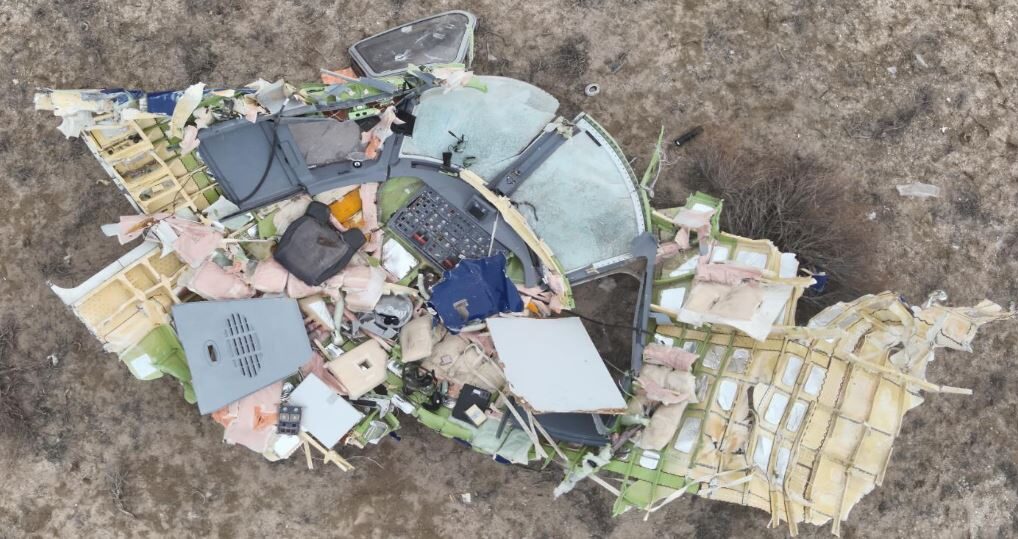
After months of collaborating with an investigation led by Kazakhstan, Azerbaijan now also plans to seek redress in international courts over the Dec. 25, 2024, crash of an Azerbaijan Airlines plane that it says was hit by Russian ground fire before diverting to the western Kazakh city of Aktau. Azerbaijan’s turn to international institutions reflects frustration with what it views as Russian intransigence in the investigation of what happened to Flight 8243, as well as the sensitivities for Kazakhstan as it leads a probe that could implicate Russia, its powerful neighbor and key trading partner. In a sense, Kazakhstan is caught in the middle, unable so far to satisfy Azerbaijan’s push for accountability for the crash and apparently unable to get full cooperation from Russia in the investigation. Unlike Azerbaijan, Kazakhstan has refrained from criticism of Russia, even though six Kazakhstanis were among those who died in the plane crash, and Kazakh emergency crews went into potential danger after rushing to pull survivors from the wreckage. Kazakhstan’s low-key approach is possibly an outcome of its efforts to appear impartial during the inquiry as well as its policy of maintaining smooth diplomatic ties, despite any disagreements or tension with major regional players, including Russia and China. Flush with military victories over Armenia and buoyed by close ties with allies such as Türkiye, Azerbaijan feels less constrained to nurture its traditional relationship with Moscow, its ruler during Soviet and Russian colonial times. On Saturday, President Ilham Aliyev of Azerbaijan referred to years of international investigations and inquiries that found Russia-backed separatist rebels had shot down Malaysia Airlines Flight 17 over eastern Ukraine in 2014, and that Russia bore responsibility – a conclusion rejected by Moscow. Aliyev said Azerbaijan was prepared to wait just as long to clear up the case of the Azerbaijan Airlines crash, in which 38 of 67 people on board died. “We will not forget,” Aliyev said, according to Minval Politika, an Azerbaijani news outlet. “We are currently preparing, and we have already informed the Russian side that we are preparing a dossier for submission to international courts on this matter. We understand that this may take time. In the case of the Malaysia Airlines Boeing, it took more than ten years. We are ready to wait ten years, but justice must prevail.” The remarks by Azerbaijan’s leader at a media forum in the Azerbaijani city of Shusha show that ties between the two nations face protracted tension as long as the dispute persists, though there are other sources of friction between them, including detentions of each other’s citizens. Russian President Vladimir Putin has apologized for the crash without taking responsibility or providing details about what happened at a time when, according to Russia, the area around Grozny was under attack from Ukrainian drones. Azerbaijan also wants those responsible to be punished, compensation to be paid to families of the victims, and Azerbaijan Airlines to be compensated for the loss of the Embraer 190 plane that crashed. The aircraft...