• KGS/USD = 0.01144 0%
  • KZT/USD = 0.00209 0%
  • TJS/USD = 0.10523 0%
  • UZS/USD = 0.00008 0%
  • TMT/USD = 0.28530 -0.14%
  • KGS/USD = 0.01144 0%
  • KZT/USD = 0.00209 0%
  • TJS/USD = 0.10523 0%
  • UZS/USD = 0.00008 0%
  • TMT/USD = 0.28530 -0.14%
  • KGS/USD = 0.01144 0%
  • KZT/USD = 0.00209 0%
  • TJS/USD = 0.10523 0%
  • UZS/USD = 0.00008 0%
  • TMT/USD = 0.28530 -0.14%
  • KGS/USD = 0.01144 0%
  • KZT/USD = 0.00209 0%
  • TJS/USD = 0.10523 0%
  • UZS/USD = 0.00008 0%
  • TMT/USD = 0.28530 -0.14%
  • KGS/USD = 0.01144 0%
  • KZT/USD = 0.00209 0%
  • TJS/USD = 0.10523 0%
  • UZS/USD = 0.00008 0%
  • TMT/USD = 0.28530 -0.14%
  • KGS/USD = 0.01144 0%
  • KZT/USD = 0.00209 0%
  • TJS/USD = 0.10523 0%
  • UZS/USD = 0.00008 0%
  • TMT/USD = 0.28530 -0.14%
  • KGS/USD = 0.01144 0%
  • KZT/USD = 0.00209 0%
  • TJS/USD = 0.10523 0%
  • UZS/USD = 0.00008 0%
  • TMT/USD = 0.28530 -0.14%
  • KGS/USD = 0.01144 0%
  • KZT/USD = 0.00209 0%
  • TJS/USD = 0.10523 0%
  • UZS/USD = 0.00008 0%
  • TMT/USD = 0.28530 -0.14%

Viewing results 73 - 78 of 1474

Digital Inequality in Central Asia: Who Is Winning the AI Race in Finance?

AI in Central Asia’s financial sector is no longer a fashionable add-on. It has become a dividing line between leaders and laggards. A comprehensive report by the National Bank of Kazakhstan and the Fintech AI Center highlights a stark reality: while some institutions are building sovereign data centers, others are still attempting to automate basic document management processes. Kazakhstan is setting the pace. In his introduction to the report, Timur Suleimenov, Governor of the National Bank of Kazakhstan, echoes President Tokayev’s digital modernization agenda, writing: “Artificial intelligence is rapidly becoming a new paradigm for the development of the national economy… Our country faces the task of not only avoiding being left on the periphery of the global technological trend, but also of using its potential to accelerate economic modernization.” The regional AI race in finance is effectively underway, and the findings reveal deep digital inequality. The Balance of Power: Leaders and Followers A review of AI implementation across the region shows a pronounced technological divide. Kazakhstan remains the undisputed leader. Its banking sector has moved beyond experimental pilot projects. According to the report, AI is most actively deployed in the development of new products (14% of financial institutions) and marketing (13%), where neural networks enable hyper-personalized offerings. A further 10% of institutions use AI in operational activities and compliance. Elsewhere in Central Asia, governments are developing ambitious strategies, but implementation in the financial sector remains limited. Kyrgyzstan plans to launch a National AI Platform under its Digital Transformation Concept for 2024-2028. However, most of the country’s banks remain at the pilot or early implementation stage. Current AI applications focus primarily on decision-making optimization and advertising materials rather than complex financial operations. Tajikistan has positioned itself prominently at the policy level. It adopted an AI Development Strategy through 2040, the region’s first long-term framework, and initiated a United Nations General Assembly resolution on AI for Central Asia in July 2025. Yet in practice, the country’s financial market is dominated by microfinance organizations (MFOs), which are cautious in adopting advanced technologies. Their AI use is largely confined to risk management and documentation, while automation, software development, and data processing lag behind. Only 7% of institutions apply AI in financial consulting and customer support. Uzbekistan has taken a different route, prioritizing international and regional partnerships. In October 2024, the government approved its AI Development Strategy through 2030. Rather than building infrastructure independently, Tashkent is partnering with global technology providers. The state is working with Huawei to develop physical AI infrastructure and deploy ready-made industry solutions. At the same time, Uzbekistan is strengthening its academic capacity, including investments in high-performance computing for Inha University in Tashkent. Regional integration is also central to its strategy: IT Park Uzbekistan has signed a memorandum with Kazakhstan’s Astana Hub to integrate startup ecosystems. This combination, collaboration with global vendors, academic investment, and regional partnerships, is enabling Uzbekistan to narrow its technological gap more quickly. People Instead of Servers Digital inequality is most evident in spending priorities. Investment structures...

Kazakhstan to Enhance Middle Corridor Rail Connectivity with World Bank Support

The Board of Executive Directors of the World Bank has approved an $846 million guarantee from the International Bank for Reconstruction and Development (IBRD) to mobilize $1.41 billion in long-term private financing for a major railway project along Kazakhstan’s section of the Trans-Caspian International Transport Route (TITR), also known as the Middle Corridor. The project is further backed by a $564 million co-guarantee from the Asian Infrastructure Investment Bank (AIIB). The initiative is designed to improve the efficiency and resilience of Kazakhstan’s rail network while strengthening the financial sustainability and commercial viability of Kazakhstan Temir Zholy (KTZ), the national railway operator. A central component of the project is the construction of a new 322.3-kilometer greenfield railway line between Mointy and Kyzylzhar. The link is expected to eliminate a significant detour, shorten the route by 149 kilometers, reduce congestion on heavily used sections, and enable double-stack container operations. The new line will be equipped with modern signaling and telecommunications systems and designed to allow for future expansion and electrification. According to project documentation, the upgrade is expected to contribute to tripling freight volumes and halving end-to-end transit times along the Middle Corridor by 2030. By shifting cargo from road to rail, it is also projected to reduce transport-related emissions, supporting Kazakhstan’s climate commitments and broader sustainable development objectives. Official data indicate that freight volumes transported through Kazakhstan along the TITR increased by 36% in 2025. In addition to infrastructure investment, the project includes technical assistance and institutional strengthening for KTZ. This includes support for tariff reform, exploration of alternative financing mechanisms, improvements in financial and environmental management, and preparation for a potential future initial public offering (IPO). “Beyond enabling critical infrastructure investments, this project supports important reforms that will strengthen Kazakhstan Temir Zholy’s financial sustainability and long-term competitiveness,” said Andrei Mikhnev, World Bank Country Manager for Kazakhstan and Turkmenistan. By combining phased infrastructure investments, institutional reforms, and private capital mobilization, the initiative aims to develop a modern rail system capable of delivering long-term economic and environmental benefits for Kazakhstan and the wider Eurasian region.

An Early European View of Nomadic Central Asia

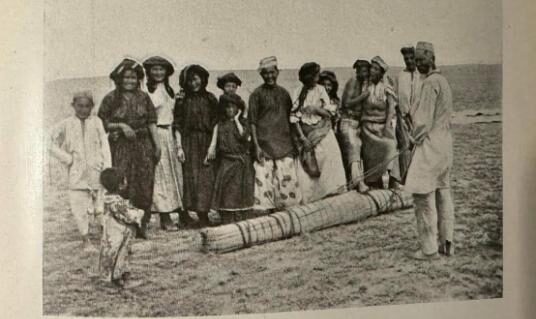
During a period when Central Asia remained largely unknown to European audiences, Among Kirghiz and Turkimans offered Western readers a rare first-hand account of the vast steppe and desert regions. The book was written in the late nineteenth century by Richard Karutz, a German traveler whose work belongs to the broader tradition of European exploratory travel literature. I first encountered this book while studying in the United States and later incorporated it into my research. A copy preserved in the library of the Catholic University of America in Washington, D.C., was published in Leipzig in 1911. Since then, it has been regarded as one of the more noteworthy works in early European writing on Central Asia. Who Was Richard Karutz? Richard Karutz was a late nineteenth-century German traveler and writer who journeyed through parts of the Russian Empire’s Central Asian territories. Though not widely known today compared to some British or Russian explorers, Karutz represents a generation of European intellectuals fascinated by the perceived “frontier zones” of empire, regions seen as remote, exotic, and culturally distinct. [caption id="attachment_44400" align="aligncenter" width="312"] Richard Karutz[/caption] He was neither a colonial administrator nor a military officer; rather, he traveled as an independent observer. His writings reflect the curiosity of an educated European shaped by the intellectual currents of his era, including Orientalism and the growing interest in ethnography. Like many travelers of his time, Karutz sought to document ways of life he believed were on the verge of transformation under imperial modernization. Across the Steppe and Desert In Among Kirghiz and Turkimans, Karutz traveled among communities then commonly referred to in Russian and European sources as “Kirghiz”, a historical term often applied to Kazakhs, as well as Turkmen tribes. His route took him across vast grasslands, caravan routes, and oasis settlements shaped by pastoral migration, tribal organization, and Islamic traditions. Rather than producing an official report or military survey, Karutz wrote in a personal and descriptive style typical of travel literature. His narrative often reads as impressionistic reflection rather than systematic analysis. He documents everyday life, including nomadic encampments and felt yurts, equestrian culture and elaborate codes of hospitality, tribal leadership and clan loyalty, as well as desert trade routes and caravan movement. Mangyshlak, a peninsula on the eastern coast of the Caspian Sea in present-day Kazakhstan, features prominently in his descriptions. Significant mineral deposits were later discovered there, leading to its designation as a “peninsula of treasures.” Mangyshlak is characterized by stark desert landscapes and was once described as a barren land consisting largely of sand and stone. In the Middle Ages, it served as a gateway for trade between East and West. The region also played a role in the early history of Turkmen communities. Karutz’s writing attempts to capture both the hardship and the quiet grandeur of steppe existence. Depicting Nomadic Society A central strength of the book lies in its attention to social organization. Karutz was particularly struck by the mobility of Kazakh life, seasonal migrations, a livestock-based economy, and...

Turkic States Set to Expand Mutual Trade and Strengthen Economic Integration

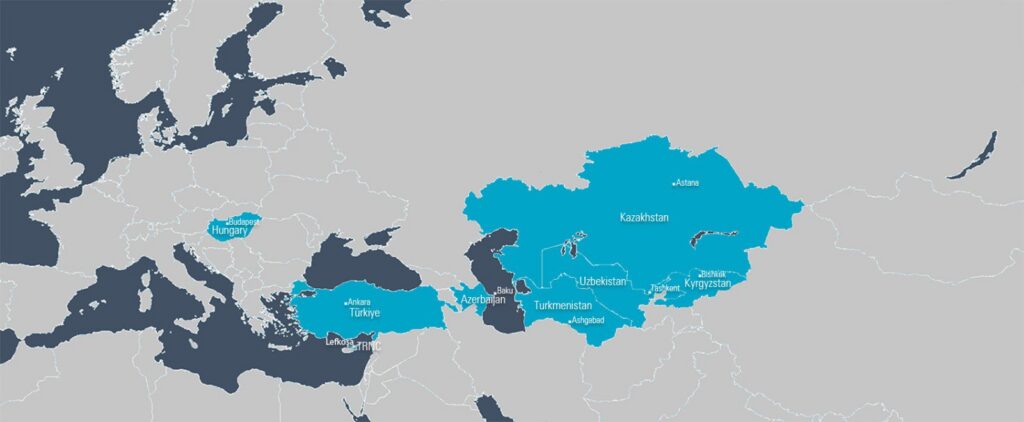
The 14th meeting of ministers responsible for economy and trade of the Organization of Turkic States (OTS) was held on February 20 in Turkistan, Kazakhstan. The gathering brought together ministerial delegations from member states to advance economic cooperation, deepen trade ties, and promote sustainable and inclusive growth across the Turkic region. Founded in 2009 to foster comprehensive cooperation among Turkic-speaking nations, the OTS includes Azerbaijan, Kazakhstan, Kyrgyzstan, Turkey, and Uzbekistan as full members. Turkmenistan, Hungary, and Northern Cyprus participate as observers. According to the OTS Secretariat, the Turkic region recorded an average economic growth rate of 6.86% in 2025, more than double the global average. Despite this performance, OTS Secretary General Kubanychbek Omuraliev called for intensified efforts to expand intra-regional trade. Omuraliev highlighted ongoing negotiations on the Agreement on Services and Investment Facilitation, describing it as a decisive step toward deeper economic integration. He also pointed to strengthened institutional mechanisms, including the Council of Central (National) Banks of the OTS, the Turkic Green Finance Council, enhanced cooperation among Financial Intelligence Units and Competition Authorities, and closer coordination between the Turkic Investment Fund and the Union of Turkic Chambers of Commerce and Industry (TCCI). Delegations discussed practical measures to increase intra-OTS trade, improve the investment climate, and enhance regional connectivity. Participants emphasized the need for coordinated policies to reduce trade barriers, support small and medium-sized enterprises, and facilitate cross-border commerce. Kazakhstan’s Deputy Minister of National Economy, Asan Darbayev, underscored the symbolism of holding the meeting in Turkistan, a historic spiritual center of the Turkic world and a key node of the ancient Silk Road. He noted that the OTS is steadily evolving from a dialogue platform into a mechanism for practical cooperation, building new value chains and expanding trade links. In 2025, mutual trade among OTS member states exceeded $11.9 billion. Kazakhstan’s largest trade volumes were with Turkey ($4.9 billion), Uzbekistan ($4.3 billion), Kyrgyzstan (nearly $2 billion), and Azerbaijan ($425 million). Investment ties are also strengthening. Between 2005 and 2025, foreign direct investment from OTS countries into Kazakhstan surpassed $6.3 billion. Over the same period, Kazakh investments in OTS economies reached $5 billion, including more than $1.3 billion in 2025 alone. The meeting concluded with the signing of a Memorandum of Understanding on Partnership in Trade and the adoption of a Roadmap for Cooperation in Economy, Trade, Investment, and Finance. As previously reported by The Times of Central Asia, in December 2025 the Board of Governors of the Turkic Investment Fund announced that the fund would begin operations in the first quarter of 2026. Headquartered in Istanbul, the Turkic Investment Fund is the first joint financial institution established by OTS member states. Its mandate is to promote economic cooperation, boost intra-regional trade, and finance major joint initiatives aimed at strengthening long-term regional integration.

From Denis Ten to Mikhail Shaidorov: Kazakhstan’s Thorny Path to a Gold Medal at the Winter Olympics

The 2026 Winter Olympic Games in Milan, Italy have officially come to a close. At the end of the competition, the Kazakh team won one gold medal and placed 19th in the overall medal standings. This is the country’s best result since 1994, when the team finished 12th at the Lillehammer Olympics, with skier Vladimir Smirnov winning gold. This time, Kazakhstan’s only medal was secured by figure skater Mikhail Shaidorov, who became the first Olympic champion in the history of Kazakh figure skating. It is not the country’s first Olympic medal in the sport, however: in 2014 figure skater Denis Ten won bronze. On February 14, Shaydorov paid tribute to Denis Ten, Kazakhstan's bronze medalist at the 2014 Olympics. “I think Denis Ten influenced not only me but also figure skating in Kazakhstan as a whole. He opened the door for many skaters, including me. And that is incredibly important. I hope that the medal I won today will open new doors for the younger generation, the children of Kazakhstan, who will know that there are no limits,” he said.  Denis Ten, who tragically died at the hands of petty thieves in the center of Almaty, did much to popularize figure skating in Kazakhstan. He dreamed of opening his own school and founding an ice show for this purpose. Shaidorov is one of dozens of boys and girls inspired by the achievements of the Almaty native, who learned to skate at the Ramstor shopping center. The future champion took his first steps on the same rink. As residents often say, Almaty is a big village where everyone knows one another. In fact, there is limited accessible ice in Almaty, which is why Shaidorov was forced to train in the Russian city of Sochi, as Denis Ten had previously trained in Moscow. One of the defining stories behind the young skater’s journey is connected to his training. His father, Stanislav Shaidorov, a former professional figure skater and multiple national champion, helped him pursue his ambitions, including selling a car to invest in his son’s training. Stanislav is acquainted with Russian coach and Olympic champion Alexei Urmanov. In 2017, Urmanov held training camps in Yoshkar-Ola, Russia, where young Mikhail Shaidorov performed his first double axel. “Six months later, we returned to Urmanov. He assessed Misha's progress. Over the course of a year, we learned all the triple jumps, but we had to constantly change rinks. We called every day to arrange a time, which was not always convenient for us. Finally, in the fall of 2018, we were faced with a choice: continue renting ice in Almaty at our own expense or move to Russia to train properly. I called Alexei Evgenievich. He said, ‘Okay, come on over.’ That same day, I sold my car, and the next day we bought tickets and flew to Sochi, where Urmanov works,” recalled Stanislav Shaidorov.  Mikhail, who was 14 at the time, later said in an interview that he had asked his father to leave...

KazChessLab Opens in Kazakhstan Amid Plans to Teach Chess in Schools

The KazChessLab innovation laboratory has been officially inaugurated at the Kazakh National Women's Pedagogical University (QyzPU) in Almaty. The project is supported by the Ministry of Science and Higher Education and is a partnership between QyzPU and the Kazakhstan Chess Federation. KazChessLab is a modern educational platform designed to prepare chess teachers for secondary schools. The program is intended for students majoring in pedagogy and is offered as a minor. Upon completion of the course, graduates will receive certificates confirming their eligibility to teach chess in Kazakh schools. At the opening ceremony on February 20, Minister of Science and Higher Education Sayasat Nurbek highlighted the importance of developing chess in Kazakhstan. “In 2023, on the instructions of President Kassym-Jomart Tokayev, a strategic chess development plan was approved. Every child should be introduced to chess and master the game from an early school age. Today, Kazakhstan demonstrates high achievements in chess, and qualified teachers are essential for further development,” the minister said. “The opening of KazChessLab at our university is an important step aimed at updating educational content and enhancing the professional potential of future teachers,” said Beibitkul Karimova, Chair of the Board and Rector of QyzPU. “Chess is not just a game, but a tool for developing strategic thinking, responsibility, and perseverance. Training teachers capable of teaching this subject at a professional level is one of the pressing challenges of our time.” Timur Turlov, President of the Kazakhstan Chess Federation, described the opening of the laboratory as a milestone. “Kazakhstani chess has been consistently moving toward this goal for several years. These young specialists will not only teach children the rules of the game but also contribute to their intellectual development. I am confident that the synergy of modern infrastructure, a strong teaching school, and government support will take chess and chess education in Kazakhstan to a whole new level,” he said.