• KGS/USD = 0.01144 0%
  • KZT/USD = 0.00214 0%
  • TJS/USD = 0.10508 0.48%
  • UZS/USD = 0.00008 0%
  • TMT/USD = 0.28490 -0.28%
  • KGS/USD = 0.01144 0%
  • KZT/USD = 0.00214 0%
  • TJS/USD = 0.10508 0.48%
  • UZS/USD = 0.00008 0%
  • TMT/USD = 0.28490 -0.28%
  • KGS/USD = 0.01144 0%
  • KZT/USD = 0.00214 0%
  • TJS/USD = 0.10508 0.48%
  • UZS/USD = 0.00008 0%
  • TMT/USD = 0.28490 -0.28%
  • KGS/USD = 0.01144 0%
  • KZT/USD = 0.00214 0%
  • TJS/USD = 0.10508 0.48%
  • UZS/USD = 0.00008 0%
  • TMT/USD = 0.28490 -0.28%
  • KGS/USD = 0.01144 0%
  • KZT/USD = 0.00214 0%
  • TJS/USD = 0.10508 0.48%
  • UZS/USD = 0.00008 0%
  • TMT/USD = 0.28490 -0.28%
  • KGS/USD = 0.01144 0%
  • KZT/USD = 0.00214 0%
  • TJS/USD = 0.10508 0.48%
  • UZS/USD = 0.00008 0%
  • TMT/USD = 0.28490 -0.28%
  • KGS/USD = 0.01144 0%
  • KZT/USD = 0.00214 0%
  • TJS/USD = 0.10508 0.48%
  • UZS/USD = 0.00008 0%
  • TMT/USD = 0.28490 -0.28%
  • KGS/USD = 0.01144 0%
  • KZT/USD = 0.00214 0%
  • TJS/USD = 0.10508 0.48%
  • UZS/USD = 0.00008 0%
  • TMT/USD = 0.28490 -0.28%

Viewing results 385 - 390 of 1474

Kazakh AI Firm Partners with UK Driving Authority to Modernize Testing

Kazakh IT firm TrustExam.ai, operating under the brand Oqylyq.kz, has signed a strategic agreement with the UK’s Driving Instructors Association (DIA), the largest professional body in the UK’s driver training sector. The partnership aims to modernize the country’s certification and examination systems, making them more transparent, efficient, and technology-driven. From London Tech Week to Strategic Deal The agreement traces back to June 2025, when TrustExam.ai, with the support of the Embassy of Kazakhstan in London and Astana Hub, participated in London Tech Week, the UK’s flagship technology event, which annually attracts more than 45,000 attendees from 90 countries. At the Kazakhstan national stand, the company showcased its AI-powered solutions and held negotiations with leaders in the British AI and fintech sectors. This ultimately led to cooperation with the DIA, opening access to one of Europe’s largest certification markets. Transforming UK Driver Testing The partnership will facilitate the digital transformation of theoretical exams for UK drivers and motorcyclists. TrustExam.ai’s technology promises to deliver: Enhanced fairness and objectivity in testing Accelerated examination timelines Flexible scheduling and expanded exam center capacity without compromising quality “DIA already sets a high standard for the reliability of practical exams and the quality of instructor training. Our new partnership with TrustExam.ai will allow us to deliver even more robust, efficient, and user-friendly solutions for candidate assessment,” said Carly Brookfield, CEO of the DIA. For candidates, the changes will reduce waiting times and speed up access to licenses. For government agencies and driving schools, the system offers cost savings and greater transparency in the certification process. A Kazakh Platform with Global Reach TrustExam.ai already operates at scale, serving over 2 million users annually. A member of Stanford University’s StartX startup accelerator, the platform is used globally by universities, government institutions, and examination centers to maintain academic integrity and certification reliability. The DIA represents thousands of UK driving instructors, and its subdivision, Diamond Advanced Motorists, holds international recognition in the field of advanced driver training. Kazakhstan’s Expanding AI Ecosystem Kazakhstan continues to advance domestic AI initiatives. At Al-Farabi Kazakh National University, researchers have developed “Zhurek AI,” a platform for the early diagnosis of cardiovascular disease. Using neural networks and SVM algorithms, it analyzes medical data to support clinical decision-making. Meanwhile, at Sarsen Amanzholov East Kazakhstan University, AI systems integrated with drones and multispectral imaging are being used to evaluate soil and crop conditions. These “field health maps” help optimize resources, minimize harvest losses, and reduce investment risks in agriculture. From education to healthcare and agriculture, Kazakhstan’s AI innovations are gaining global traction. The partnership between TrustExam.ai and the DIA underscores how technologies developed in Astana and Almaty are making their mark on the international stage.
Kazakhstan Reclaims Role as Kyrgyzstan’s Main Wheat Supplier

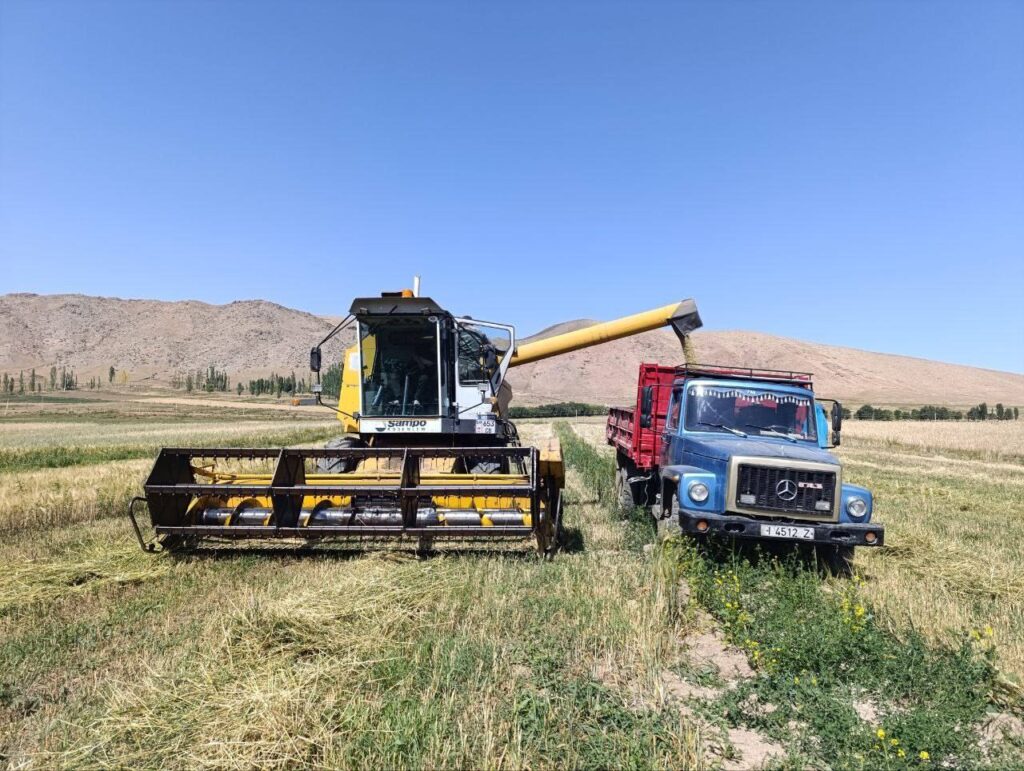
Bishkek has sharply increased wheat imports from Kazakhstan, reversing a three-year reliance on Russian supplies. According to the National Statistics Committee, Kyrgyzstan imported 132,000 tons of wheat from Kazakhstan during the first seven months of 2025, an eightfold increase from previous years, when Kazakh wheat had nearly vanished from the local market. The Ministry of Agriculture reported that 90% of Kyrgyzstan’s wheat crop had been harvested by the end of August, yielding 550,000 tons of grain. However, with national consumption exceeding 1.1 million tons of flour annually, domestic production remains insufficient. In 2022, Kyrgyz importers pivoted toward Russian suppliers, citing lower costs. Imports from Kazakhstan fell from 82,500 tons to just 3,500 tons, while purchases from Russia soared to nearly 240,000 tons. By 2025, the trend had reversed. Kazakhstan now accounts for 72.5% of Kyrgyz wheat imports. In monetary terms, imports surged even more dramatically, rising 8.8 times. Between January and August, Kyrgyzstan spent $27.2 million on Kazakh wheat at an average price of $206 per ton. The rest came from Russian suppliers. The shift has been driven largely by pricing. Russian wheat, which cost just over $160 per ton in 2023, rose to $203 in 2024 and is now priced around $220 per ton. In contrast, Kazakhstan’s record 2024 harvest, 26.5 million tons overall, including 18 million tons of wheat, enabled it to offer more competitive rates, despite traditionally being more expensive than Russian grain. Sources in the Kyrgyz Association of Millers told TCA that the strengthening of the ruble, recovering from years of sanctions-induced weakness, has pushed Russian wheat prices higher. As the ruble appreciates, Russian grain becomes less affordable for importers. The resurgence of Kazakh wheat underscores Kyrgyzstan’s ongoing reliance on imports to meet domestic food demand. While the national harvest is nearing completion, local output still covers only about half of annual consumption. For Bishkek, the return to Kazakh suppliers is not merely economic, it’s also a matter of food security, amid rising global market volatility and Russia’s continued exposure to external shocks.

Asia’s Top Three Towns for Air Quality All in Kazakhstan, Finds New Study

A new study into global air quality by the independent website HouseFresh has found that Kazakhstan is home to some of the world’s cleanest towns. The report also notes that one Kazakh city is also among the most polluted.  Using data from IQAir’s 2024 research, HouseFresh examined the average PM2.5 level – the number of small particles in the air – for over 8,800 towns with a population over 10,000. It found that the world’s most polluted town is Byrnihat in India, with a PM2.5 level of 128.2 particles per cubic meter (µg/m³). The cleanest air globally is in the Kazakh town of Shu. Shu, a rail freight hub in the country’s southeastern Zhambyl region, close to the border with Kyrgyzstan, had an average PM2 level of 1.5 µg/m³ in 2024.  Kazakhstan is in fact home to the three cleanest towns in Asia, with the next places after Shu being Zhezkazgan in the central Ulytau region (2.3 µg/m³), and the southwestern town of Beyneu, outside Mangystau (3.4 µg/m³).  Kazakhstan’s government has pledged that the country will become ‘climate neutral’ by 2060. It is aiming for its towns to follow the lead of cities such as New York and Beijing, which have more than halved their air pollution with measures such as cleaner public transport, modernized heating systems, and emissions regulation. However, Kazakhstan generally ranks highly in lists of the most polluted countries, due to its large-scale and outdated industrial infrastructure. Dust in the south of the country can also affect air quality. Due to this, the much larger central city of Karaganda, a center for Kazakhstan’s coal mining industry, remains one of the world’s most polluted cities. With average PM2.5 levels of 104.8 µg/m³ in 2024, the impact on the health of its half a million residents is equivalent to them smoking over 1,700 cigarettes per year.

Kazakhstan to Invest $24 Billion in Energy Modernization

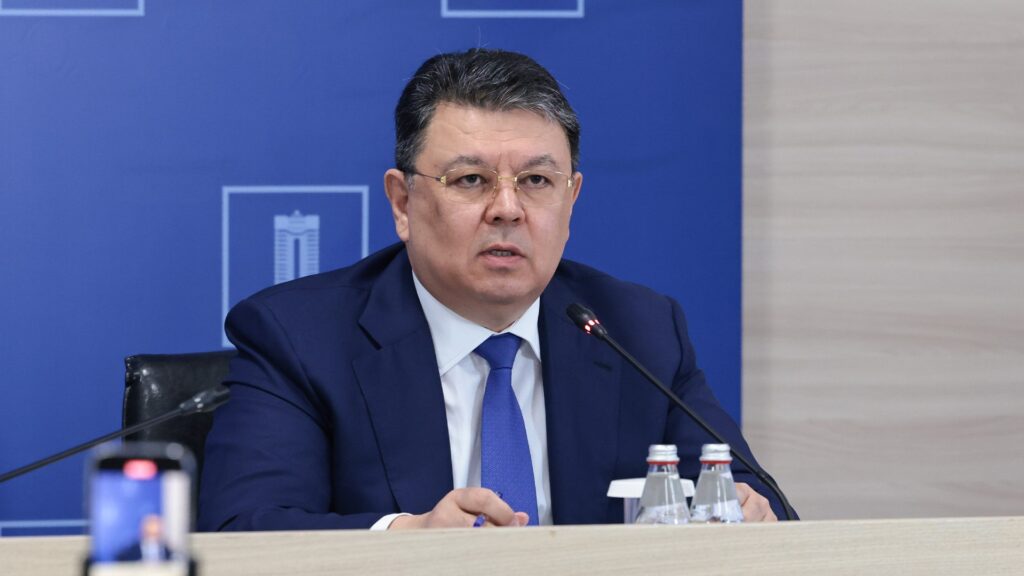
Kazakhstan has launched a National Project to modernize its energy and utility sectors for the period 2025-2029, with planned investments of 13 trillion tenge (over $24 billion). The initiative aims to upgrade existing infrastructure and construct new power generation, transmission, and water supply systems. Deputy Prime Minister Kanat Bozumbayev announced the preliminary cost estimate during the “National Project for the Modernization of the Energy and Utility Sectors: Opportunities for Kazakh Business” conference. According to Bozumbayev, the funds will support the repair and construction of 86,000 kilometers of utility networks and add 7.3 GW in new generation capacity. “Today, we have established the necessary regulatory framework to ensure long-term and affordable financing from financial institutions. We have now moved to the practical stage of the National Project. This year, pilot investments of around 144 billion tenge ($266 million) have been raised for 48 natural monopoly entities,” Bozumbayev stated. Financing will be sourced both domestically and internationally. The Kazakhstan Housing Company has already purchased bonds worth 22.5 billion tenge ($41 million) from local administrations in the Karaganda, Pavlodar, West Kazakhstan, and North Kazakhstan regions. The Development Bank of Kazakhstan is also finalizing assessments for selected projects. International partners are also involved. The European Bank for Reconstruction and Development is financing the construction of wastewater treatment facilities in the Aktobe region. Chinese companies are under consideration as potential partners for upgrading and building new coal-fired power plants. “There are certain restrictions on state-backed export financing from this country, but private companies have financial capabilities and experience operating in multiple countries,” Bozumbayev noted. Authorities expect to finalize financing sources for 2026 by year-end, while procurement and design procedures are scheduled to begin. “Funding will be provided through the state budget and market instruments. The National Project will also apply new procurement mechanisms aligned with international practices, including EPC contracts and consortium-based construction,” Bozumbayev added. Vice Minister of National Economy Assan Darbayev emphasized that reducing the wear and tear on heating, electricity, water supply, and wastewater networks to below 50% will require investments of 6.8 trillion tenge ($12.5 billion). The program includes 15 new generation projects worth 4.4 trillion tenge ($8 billion), along with 14 modernization projects for existing facilities valued at 1.8 trillion tenge ($3.3 billion). These measures are expected to reduce overall depreciation by 15%. As previously reported by The Times of Central Asia, Kazakhstan has faced worsening electricity shortages in recent years. In 2024, the shortfall between supply and demand reached 2.4 billion kWh, up from 2.2 billion kWh in 2023.

Opinion: Almaty as a Model for the Future: Central Asia’s Role in the Global Agenda

Almaty is gradually becoming a hub for resolving issues of not only regional but also global significance. The recent opening of the UN Regional Center for Sustainable Development Goals (SDGs) for Central Asia and Afghanistan here was an event no less significant than the 80th anniversary session of the General Assembly in New York. This is no coincidence: the global agenda at the UN today is increasingly focused on the regional level. Central Asia is not a periphery, but a kind of “model for the future,” where climate, water resources, and security challenges are intertwined. For example, the Tian Shan glaciers have shrunk by more than 25% over the past decade and continue to melt faster than predicted, directly threatening the Amu Darya and Syr Darya rivers. These rivers are increasingly failing to reach the Aral Sea, and its dried-up bed is turning into a giant source of dust and salt. Air pollution levels in the region's cities, as measured by PM2.5, exceed World Health Organization guidelines by an average of 4–6 times. Extreme heat and drought are leading to the loss of agricultural land and the degradation of ecosystems, which affects not only regional but also global food security. Central Asia has already become a unique “testing ground for the future.” The region is testing mechanisms for cross-border cooperation. The CASA-1000 energy project connects Kyrgyzstan and Tajikistan with Afghanistan and Pakistan, creating a “green energy corridor.” Meanwhile, Afghanistan’s Qosh Tepa Canal is altering the balance of water usage on the Amu Darya, forcing neighboring countries to seek new models of agreement. The question is whether these nations can develop a system of joint water and energy management. The outcome will shape not only regional but also global processes. At the same time, the United Nations itself is grappling with a deficit of trust and effectiveness. The Security Council is paralyzed, while General Assembly resolutions often carry only advisory weight. In the face of nuclear risks, environmental upheavals, and the threat of epidemics, the global community is stalling. Even large-scale initiatives such as the Glasgow Financial Alliance for Net Zero (GFANZ) remain largely declarative rather than actually limiting “dirty” investments. Therefore, reform proposals are becoming increasingly vocal, in particular, to strengthen regional UN divisions that are capable of responding more quickly to crises and ensuring practical cooperation between countries. Another way to overcome the trust deficit could be to involve independent expert councils – scientists, NGOs, think tanks – more widely in the decision-making process, which would reduce the influence of political gridlock at the global level. Overall, Almaty can be seen as a model of a “UN in miniature” – a regional center capable of promptly addressing issues that may seem “too small” for New York, yet are critically important for the countries of the region. For instance, the SDG Center could initiate the creation of a regional water monitoring system with unified measurement standards and transparent data sharing. Such decentralization could form the basis for future UN reform....

Kazakh Wheat Flour Enters U.S. Market

Kazakhstan has reached a new milestone in diversifying its agricultural exports with the inaugural shipment of wheat flour to the United States. A 50-ton batch recently arrived in New York, marking the beginning of what could become a regular supply channel. Marketed under the Eurasian Legacy brand, the flour is now available on Amazon and Walmart. It retails for $14.50 per 1.36 kg package on Amazon and is advertised as non-GMO and glyphosate-free. Each package bears the label “Product of Kazakhstan,” highlighting the country’s positioning as a producer of environmentally friendly, high-quality food products. According to the QazTrade Center for Trade Policy Development, monthly exports could exceed 100 tons in the near future. In addition to e-commerce platforms, discussions are underway with American restaurants, coffee shops, and major retail chains about incorporating Kazakh flour into their supply chains. In July, QazTrade opened a representative office in the United States to boost the visibility of Kazakhstani food products. “We are not limited to flour. We have already presented buckwheat, granola, talkan, chocolate, and cocoa in the United States, and partners in New York, Chicago, and Washington have tested their quality. A business mission of Kazakh producers to these cities is the next logical step. This is not only an opportunity to strengthen ties with partners but also to enter the HoReCa segment, where natural and authentic products are in demand,” said Aitmukhammed Aldazharov, CEO of QazTrade. The move into the U.S. market follows Kazakhstan’s growing grain and flour exports to Europe. For the first time, Kazakh wheat has been shipped to Belgium, Estonia, Italy, Norway, Poland, Portugal, and the United Kingdom. Despite this growing diversification, Kazakhstan’s primary grain buyers remain Uzbekistan, Tajikistan, Afghanistan, Kyrgyzstan, Iran, and Azerbaijan.