• KGS/USD = 0.01144 0%
  • KZT/USD = 0.00198 -0%
  • TJS/USD = 0.10904 0%
  • UZS/USD = 0.00008 0%
  • TMT/USD = 0.28490 0%
  • KGS/USD = 0.01144 0%
  • KZT/USD = 0.00198 -0%
  • TJS/USD = 0.10904 0%
  • UZS/USD = 0.00008 0%
  • TMT/USD = 0.28490 0%
  • KGS/USD = 0.01144 0%
  • KZT/USD = 0.00198 -0%
  • TJS/USD = 0.10904 0%
  • UZS/USD = 0.00008 0%
  • TMT/USD = 0.28490 0%
  • KGS/USD = 0.01144 0%
  • KZT/USD = 0.00198 -0%
  • TJS/USD = 0.10904 0%
  • UZS/USD = 0.00008 0%
  • TMT/USD = 0.28490 0%
  • KGS/USD = 0.01144 0%
  • KZT/USD = 0.00198 -0%
  • TJS/USD = 0.10904 0%
  • UZS/USD = 0.00008 0%
  • TMT/USD = 0.28490 0%
  • KGS/USD = 0.01144 0%
  • KZT/USD = 0.00198 -0%
  • TJS/USD = 0.10904 0%
  • UZS/USD = 0.00008 0%
  • TMT/USD = 0.28490 0%
  • KGS/USD = 0.01144 0%
  • KZT/USD = 0.00198 -0%
  • TJS/USD = 0.10904 0%
  • UZS/USD = 0.00008 0%
  • TMT/USD = 0.28490 0%
  • KGS/USD = 0.01144 0%
  • KZT/USD = 0.00198 -0%
  • TJS/USD = 0.10904 0%
  • UZS/USD = 0.00008 0%
  • TMT/USD = 0.28490 0%
08 December 2025

Viewing results 409 - 414 of 778

Kazakhstan Offers Low-Interest Loans for Agro-Industrial Sector

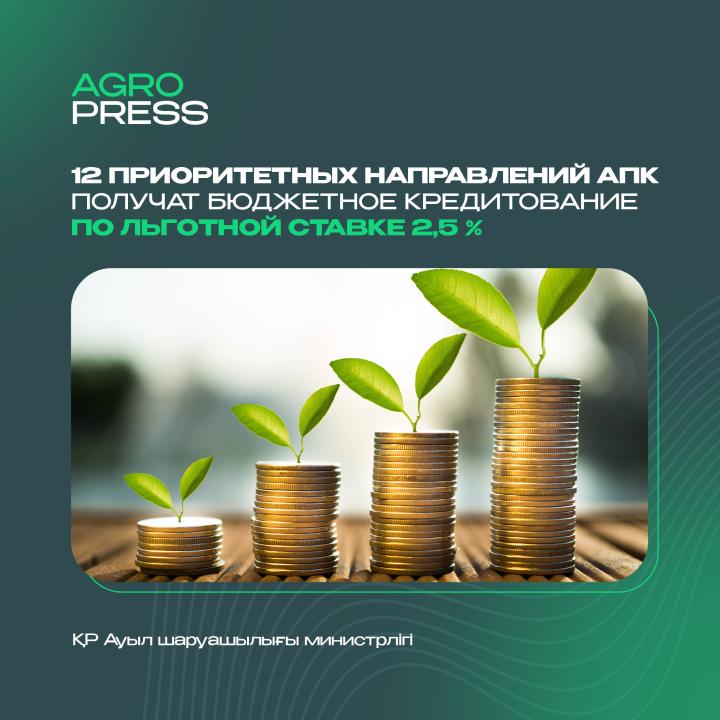
Kazakhstan’s Ministry of Agriculture has announced changes to rules concerning loans to agro-industrial projects. The new rules aim to both stimulate the development of Kazakhstan’s agro-industrial sector and create new or expand existing production facilities. Entrepreneurs will now be able to implement their projects using state loan funds at a preferential rate of 2.5% for up to 10 years. The maximum loan is 5 billion tenge. Loans will be prioritized for projects in twelve key areas including the creation of dairy farms, poultry farms for meat production, meat livestock enterprises, vegetable storage facilities, irrigated agriculture using modern water-saving technologies, industrial greenhouse complexes, fruit storage facilities, fish farming, fish processing enterprises, breeding reproducers in poultry farming, deep processing and storage of agricultural products, and production of packaging materials.    

Two City Railway Stations Renovated in Kazakhstan

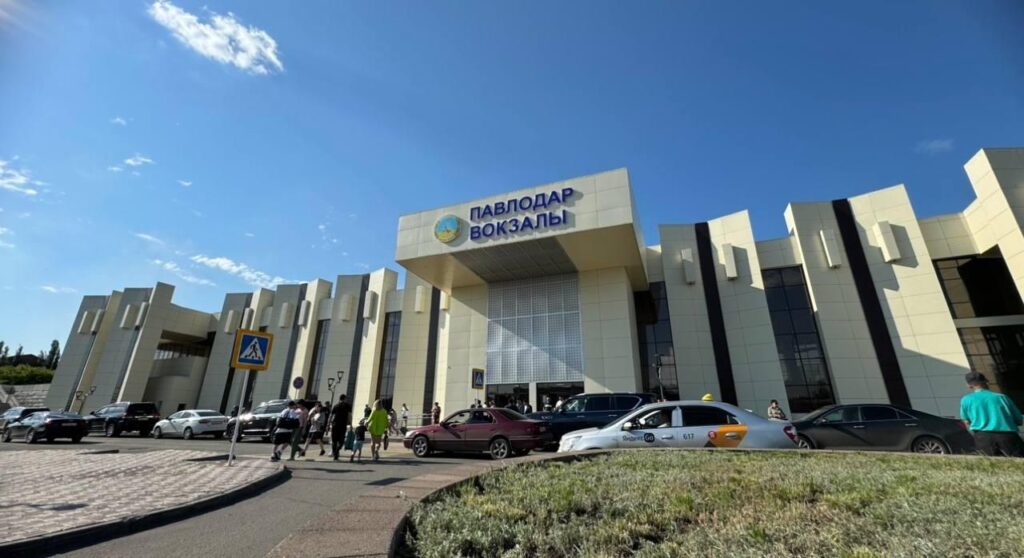
Kazakhstan’s Ministry of Transport has announced the completion of major renovation of railway stations in the southern city of Shymkent and the northern city of Pavlodar. Built in the 1960s, Shymkent railway station, used daily by several thousand passengers , had been in need of attention for some 20 years. Following major reconstruction, the building has been furnished with a new and attractive façade, an additional entrance from the city side and another exit from the platform. The number of ticket offices has increased from six to eight and coupled with extensions to the overall area, the station now has the capacity to serve 6 thousand passengers a day. Renovation of Pavlodar’s forty-year-old station, last repaired in 2004-05, was also completed this year. Lighting, ventilation, water supply and heating systems have been replaced, and both the ticket offices and old stained-glass windows, refurbished. New facilities include a storage room and pharmacy as well as elevators and lifts to aid access for travellers with mobility issues. In addition to a communal waiting room, the station boasts a separate room for women as well as a children’s play area. In Kazakhstan, a country the size of Western Europe, railways remain an important and relatively cheap mode of transport for both locals and tourists alike.    

Success of Kazakhstan’s JobEscape Start-up

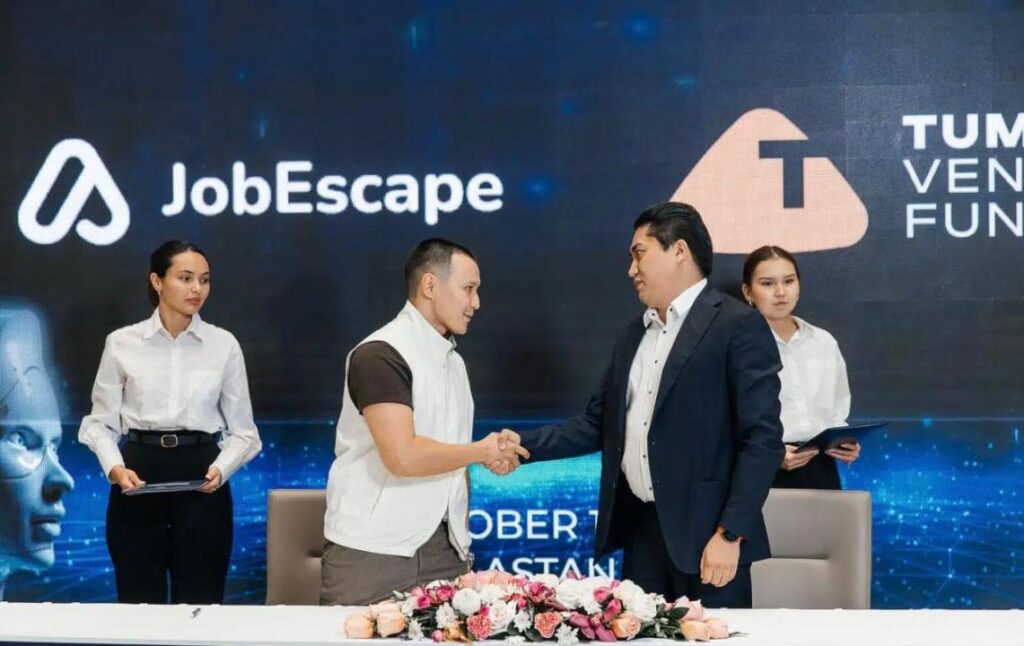
Kazakhstan’s largest venture fund, Tumar Venture LP, whose key investors are the World Bank and the Kazakh Ministry of Digital Development, Innovation and Aerospace Industry, has invested a further 250 thousand US dollars in the Kazakh start-up JobEscape. As announced by the Ministry of Digital Development on 17 June, the total investment in the project now stands at 450 thousand US dollars. JobEscape is a platform that facilitates the acquisition of new skills required to start a freelancing career, through the provision of solutions unique to freelancers and career changers, access to training and a wide range of AI tools. A global project, JobEscape has users from the USA, Canada, Australia, and European countries. Regarding funding, Aslan Sultanov, CEO of Tumar VF, stated: “We invested in JobEscape in the last round and have seen the project grow from literally $10,000 in monthly revenue to almost $1 million in annual revenue. Seeing this dynamic rise, we are confident that the start-up has the potential to grow into a billion-dollar company with roots in Kazakhstan. We are pleased to support the team in creating such a global initiative.” Similarly encouraged by the platform’s development, Miras Sovetov, CEO and co-founder of JobEscape, said: “At the moment, the company’s annual revenue is already close to $1 million. The goal is to grow to US$6 million in 2025. The product is now being widely used in Western markets due to the rapid development of products in the field of AI. Investments in this round will help the company increase its customer base and increase the number of AI tools on the platform. Investors from the UAE and Azerbaijan are already entering the project, which confirms its competitiveness in the global market. The next step will be raising money from American funds for further growth and potential exit (sale of the start-up).”    

Kazakhstan Set to Develop Halal Market

From 4 to 12 June, over 100 certification and accreditation specialists from Kazakhstan attended a training seminar on Halal standards in Astana. Over the duration of the course, participants received training on Halal requirements and OIC/SMIIC international standards set by international experts in Halal accreditation and certification. In her address, Zhanna Esenbekova, Chairperson of the Technical Regulation and Metrology Committee of the Ministry of Trade and Integration of Kazakhstan, emphasized the importance of national legislation adapted to ISO SMIIC standards for Kazakhstan’s economy as well as the need for trained specialists to promote and monitor compliance with Islamic requirements and standards. “Halal standards are receiving increasing attention worldwide and the areas of Halal standardization are expanding. Not so long ago, Halal concerned only a few types of everyday products, but today Halal has expanded its boundaries to areas such as transport and logistics, finance and credit, tourism and hospitality, clothing and footwear production, restaurant business and many others,” reported Esenbekova. One of the seminar’s lecturers, international expert Emre Kırıcıoğlu, added: “Today, the Halal market has over 1.8 billion consumers worldwide and a turnover of 2 to 5 trillion dollars, with regard to Halal financing. Kazakhstan has a reputation for self-sufficiency in food supply. Local meat, grain and vegetables are fine in quality and grown under favourable conditions. Given the profile of a large sector of the population, your country is well positioned to compete in international markets in products acceptable by Islam.”  

PepsiCo to Build Snack Production Plant in Kazakhstan

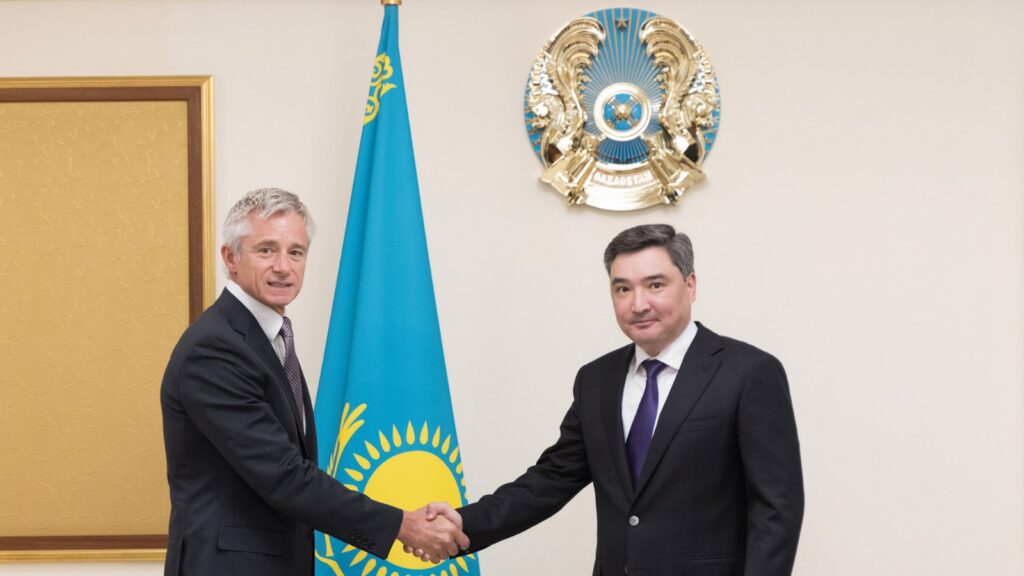
PepsiCo has announced plans to build a full-scale new plant to produce salty snacks, including Lays crisps, in Kazakhstan’s Almaty region. Implementation of the project was discussed at a meeting between Kazakhstan Prime Minister Olzhas Bektenov and David Manzini, President of PepsiCo in Central Asia, Russia, Belarus, and Caucasus. According to the Kazakh prime minister’s press service, the project has already received $160 million in foreign investment. The plant, anticipated as the largest of its kind in Central Asia, is scheduled to open in 2026. Its original capacity of up to 16,000 tons of finished products per year, will increase to 21,000 tons from 2027, for distribution to both the Central Asian market and abroad. Up to a thousand people will be employed during the plant’s construction, with 350 skilled jobs created when it opens. David Manzini stated PepsiCo’s intention to use locally sourced raw materials. The conclusion of contracts with Kazakh farmers on the delivery of test batches of potatoes is ongoing but all going to plan, the company will purchase up to 50-66 thousand tons of potatoes in 2026-2030, and increase the volume in later years. Prime Minister Bektenov emphasized the importance of the project for the development of agriculture, increasing Kazakh farmers’ income and strengthening the economy. He mentioned that besides its positive impact the food industry and agribusiness, the plant will have a multiplier effect on related industries including transport, logistics, packaging, and processing of agricultural products.  

Kazakhstan President Pinpoints Flaws in Tourism Development

On June 13, Kazakhstan President Kassym-Jomart Tokayev chaired a government meeting on the development of the country’s tourism industry. He opened by noting that despite its favorable geographical location, the diversity of its nature, and its rich historical and cultural heritage, Kazakhstan’s wide-spanning tourism potential remains largely unexploited. “Tourism as an important sector of the economy is not yet effective, which is a big omission of the government. Over the past four years, the share of tourism in the economic structure has decreased from 3.7% to 3.2%, almost threefold lower than the world average. According to this indicator, Kazakhstan falls below neighboring countries with similar climates and culture. It is obvious that a qualitative breakthrough in the development of the tourism industry requires urgent systemic measures,” said the president. Tokayev then outlined areas in need of urgent improvement, beginning with problems posed by the country’s weak transport infrastructure for domestic tourism: “The quality of railway transportation in the country is beyond criticism. Most of the rail carriages are worn out, and some do not even have air conditioning. The government needs to renew the fleet of rail carriages in the next five years. In addition, it is important to improve railway stations. Their appearance and infrastructure must meet international standards. In summer, the flow of railway passengers increases sharply. It is therefore necessary to increase the number of trains with comfortable carriages to the most popular destinations. The quality of our roads also leaves much to be desired, making it very difficult to reach remote recreation areas by car. There are practically no fully serviceable highways. The reconstruction of the Astana-Almaty highway, connecting the south and center of Kazakhstan, has been ongoing since 2021. There are many similar unfinished roads across the country and it is imperative that the government completes these road projects this year.” The President emphasized that the poor logistics connectivity of holiday destinations affects not only domestic tourism, but also the influx of guests from abroad. “Almost 90% of foreign tourists come to Kazakhstan from neighboring CIS [former Soviet] countries. There are still few tourists from non-CIS countries. International studies show that over 70% of travelers prefer to visit vacation destinations within a 4-hour flight, making Kazakhstan  very attractive to tourists from China, India, East Asia, and the Middle East. It is also necessary to consider, specific issues related to the national mentality of foreign tourists, their interests, and requests. Within 5 years we can double and even triple the number of foreign tourists but to do so, we need to develop air transport, firstly by expanding the presence of low-cost airlines on popular air routes. Their current share in passenger air transportation in Kazakhstan is only 21%.” The head of state criticized the Government's plans to simultaneously develop 20 tourist zones across the country, claiming the approach ineffective regarding the dispersion of the state's limited resources. Instead, he recommended that efforts focused on the development of the most promising locations, in the shortest possible time,...