• KZT/USD = 0.00221
  • TJS/USD = 0.10850
  • UZS/USD = 0.00008
  • TMT/USD = 0.29760
  • KZT/USD = 0.00221
  • TJS/USD = 0.10850
  • UZS/USD = 0.00008
  • TMT/USD = 0.29760
  • KZT/USD = 0.00221
  • TJS/USD = 0.10850
  • UZS/USD = 0.00008
  • TMT/USD = 0.29760
  • KZT/USD = 0.00221
  • TJS/USD = 0.10850
  • UZS/USD = 0.00008
  • TMT/USD = 0.29760
  • KZT/USD = 0.00221
  • TJS/USD = 0.10850
  • UZS/USD = 0.00008
  • TMT/USD = 0.29760
  • KZT/USD = 0.00221
  • TJS/USD = 0.10850
  • UZS/USD = 0.00008
  • TMT/USD = 0.29760
  • KZT/USD = 0.00221
  • TJS/USD = 0.10850
  • UZS/USD = 0.00008
  • TMT/USD = 0.29760
  • KZT/USD = 0.00221
  • TJS/USD = 0.10850
  • UZS/USD = 0.00008
  • TMT/USD = 0.29760
23 October 2026

Viewing results 49 - 54 of 1189

Kazakhstan Laos Seek to Link Transport Corridors Through China

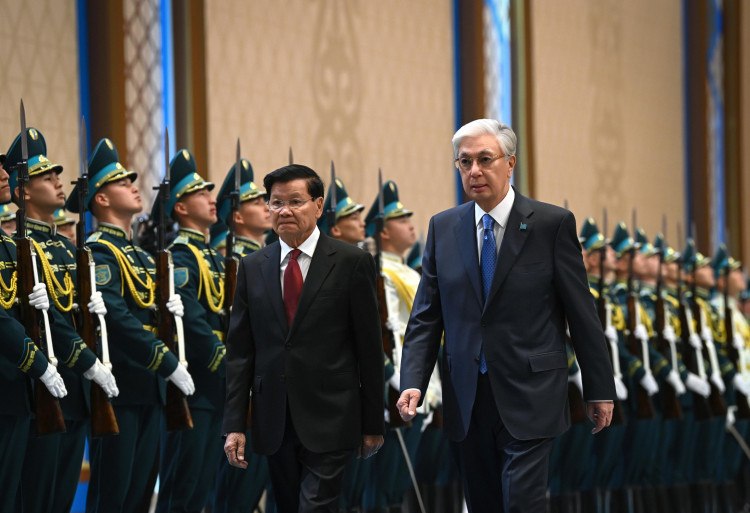
Kazakhstan wants to connect its rail and logistics network with the China-Laos Railway, opening a possible route for Lao goods to Central Asia and Europe and for Kazakh exports into Southeast Asia. Much of the infrastructure already exists: both countries’ networks connect through China. What is missing are the agreements needed to make regular freight traffic between them practical. The idea was one of the main topics during Lao President Thongloun Sisoulith’s first official visit to Kazakhstan on September 3. During talks with President Kassym-Jomart Tokayev, trade, transport and logistics were high on the agenda. Tokayev specifically offered Lao freight carriers access to Kazakhstan’s logistics hub in Xi’an. From there, cargo can move through Kazakhstan to the Caspian Sea and then onward toward Europe. Astana sees the China-Laos Railway as a potential gateway to Southeast Asian markets. Opened in December 2021, the 414-kilometer section inside Laos connects the capital Vientiane with Boten on the Chinese border, linking the Lao network onward to Kunming through China’s rail system. It has become a central element of Laos’ strategy to transform itself from a landlocked country into a regional land-linked transport hub. Before the railway opened, the World Bank estimated that, with better logistics and simpler border procedures, it could substantially reduce transport costs and integrate Laos more closely into regional production and supply chains. The route is already being used for freight between China and Southeast Asian countries, including Thailand, Vietnam, Malaysia, and Singapore. Kazakhstan is looking at this infrastructure as a possible southern extension of its own overland trade routes. Between the two countries lies China’s vast railway system, meaning much of the physical infrastructure needed for such a connection already exists. There is, however, no regular Kazakhstan-Laos freight corridor yet. Regular freight services would require agreements covering transit, tariffs, and customs procedures. The route’s commercial viability would depend on transport costs and delivery times, as well as the ability to generate sufficient cargo volumes. The first potential goods have already been identified. Laos is interested in Kazakh grain, oilseeds, animal feed, and meat products. Coffee and rubber are among the possible Lao exports to Kazakhstan. The search for new trade routes is linked to Astana’s broader plans to expand the geography of its exports. Kazakhstan aims to increase non-commodity exports to $52 billion by 2030. Kazakhstan’s interest in Laos is largely explained by the country’s changing position on Asia’s transport map. The railway connection to China has given Laos direct access to the Chinese network and brought it closer to major regional markets. Kazakhstan’s infrastructure could extend that chain westward through Central Asia and across the Caspian toward Europe.
SCO Summit Delivers Institutional Reform but Leaves Development Bank Unsettled

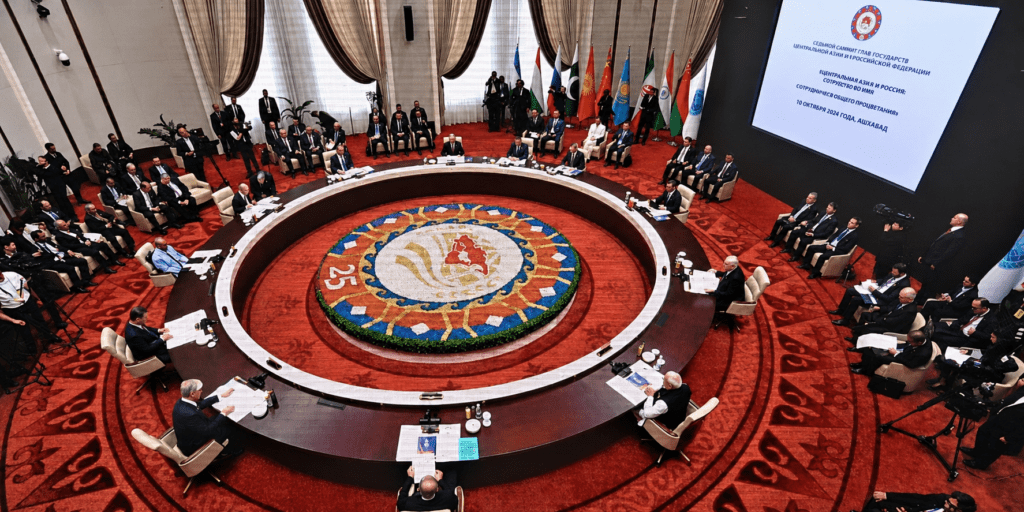
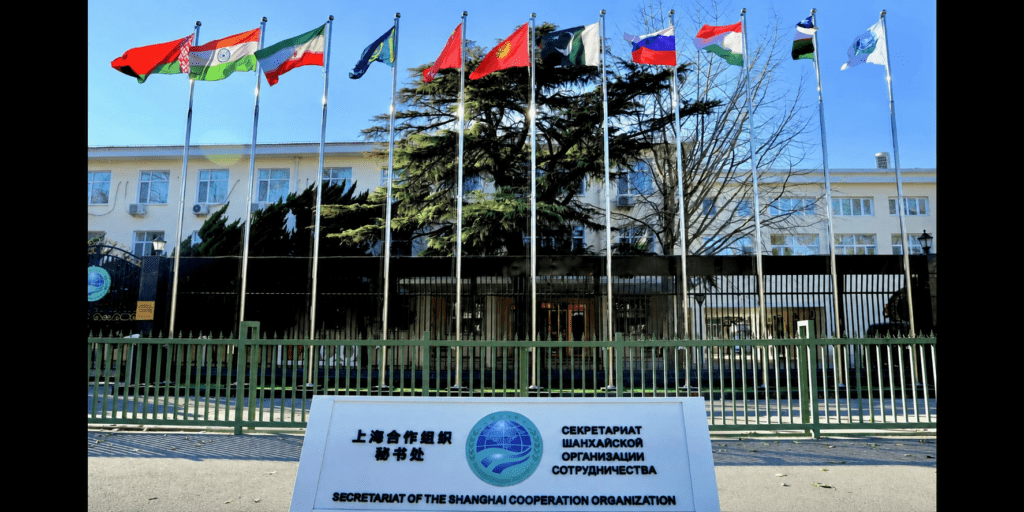
Leaders of the Shanghai Cooperation Organization adopted amendments to the bloc's Charter and approved regulations for two security bodies in Bishkek on September 1, but stopped short of launching the proposed SCO Development Bank. The official outcome list contains 28 documents. They include the Bishkek Declaration marking the SCO's 25th anniversary, a statement on assistance to countries affected by emergencies, and measures covering transport, digital policy, energy, and climate cooperation. For Kyrgyzstan, which used its fourth chairmanship to press for new financial and emergency response mechanisms, the results were mixed. The emergency statement gave political backing to a Kyrgyz initiative, while the bank remained under negotiation. Kazakhstan then made a competing offer to host its headquarters. An institutional package The member states signed a protocol amending the 2002 SCO Charter and approved regulations for the Universal Center for Countering Security Challenges and Threats. They also approved rules for the executive committee of the SCO Anti-Drug Center. The package included programs against drug addiction and synthetic narcotics through 2030, as well as amendments to the 2010 agreement on cooperation against crime. The decisions continue an institutional reorganization begun at the 2025 Tianjin summit. That meeting approved agreements establishing the Anti-Drug Center in Dushanbe and a Universal Center based on the SCO's existing regional counterterrorism structure in Tashkent. President Sadyr Japarov said the organization should remain free of bloc politics and confrontation. He called for the rapid launch of the Universal Center and said Bishkek had prepared the conditions for an SCO center against transnational organized crime. Opening the meeting, he said the anniversary should become the start of a new phase for the organization. Bank progress, but no launch The Bishkek Declaration records progress toward creating an SCO Development Bank among interested member states during Kyrgyzstan's chairmanship, though the wording is qualified. The summit did not produce a founding agreement, capital commitment, or a launch date. Japarov urged members to reach a practical decision on the bank and invited them to use Kyrgyzstan's Tamchy Special Financial Investment Territory for joint projects. Kyrgyzstan had already proposed Bishkek as the bank's headquarters. However, Kazakh President Kassym-Jomart Tokayev used his summit address to make a rival offer. Kazakhstan supports directing the proposed bank's resources toward infrastructure, technology, and industry, he said. "If there is consensus among the member states, Kazakhstan could host this institution, its headquarters," Tokayev said in the official transcript. The two bids underline how much remains unresolved. Members reached political consensus to establish the bank in Tianjin last year, but its membership, governance, capital, and location are still being negotiated. Kyrgyz emergency initiative advances The heads of state adopted a separate statement on assistance to countries affected by emergencies. Kyrgyzstan had spent its chairmanship promoting an SCO assistance mechanism and, in May, sought support for a special account to finance emergency aid after major natural disasters. The statement's adoption is a clear political success for Bishkek. Its published title does not establish whether members accepted the proposed special account or how...

Kyrgyzstan Hosts SCO Summit as Bloc Marks 25 Years

Leaders of the Shanghai Cooperation Organization's ten member states are due in Bishkek on September 1 for the final summit of Kyrgyzstan's 2025-2026 chairmanship. The meeting is expected to produce a Bishkek Declaration marking the SCO's 25th anniversary, alongside thematic statements and other decisions. For Kyrgyzstan, the gathering is more than a turn in the organization's rotating chairmanship. As many as 21 heads of state are expected in the country during the week, according to presidential spokesman Askat Alagozov. The summit coincides with Kyrgyzstan's Independence Day and the August 31 opening of the World Nomad Games. The member-state session will bring together Belarus, China, India, Iran, Kazakhstan, Pakistan, Russia, Tajikistan, and Uzbekistan, with President Sadyr Japarov as host. Chinese President Xi Jinping will also make a state visit, giving the summit a substantial bilateral program alongside the formal meetings. Kyrgyzstan's Diplomatic Week The summit comes less than three months after Kyrgyzstan was elected to the UN Security Council for 2027-2028, its first term on the body. Hosting the SCO gives Japarov an opportunity to reinforce that diplomatic profile before the Security Council term begins in January. The SCO's foreign ministers reiterated in July that Central Asia is the organization's core and backed a larger role for it in the region's security and economic development. Their statement also praised Kyrgyzstan's chairmanship and confirmed that the Council of Heads of State and SCO Plus meetings would take place in Bishkek on August 31 and September 1. What Cholpon Ata Already Settled At their July 24 meeting in Cholpon Ata, SCO foreign ministers approved the draft declaration and accompanying documents as a basis for the summit. The language is therefore largely negotiated before the leaders arrive, although the final package can still change. The ministerial statement gives a clearer indication of the political agenda, supporting a multipolar world order and rejecting unilateral sanctions. It also calls for more intra-SCO trade. Terrorism, separatism, extremism, drug trafficking, and transnational organized crime remain its stated security priorities. The statement says the SCO is entering a period of institutional reform, including changes to its legal framework and cooperation procedures. A Development Bank Still Taking Shape Economic cooperation will occupy a significant part of the summit. In Tianjin last year, interested member states reached political consensus to establish an SCO Development Bank. The institution is not yet operational. At the fourth consultation meeting in Shenzhen in June, delegates discussed its key elements and the next stage of negotiations. A timetable or capital commitments announced in Bishkek would move the proposal beyond its current design stage. The bank could eventually provide another source of finance for infrastructure, but its structure and membership remain unsettled. Currency diversification will also remain part of the discussion. The 2024 Astana Declaration called for gradual growth in the use of national currencies for settlements among interested members. Sanctions on Russia and Iran have increased the political importance of that effort, although the SCO has not created a common payment system. SCO Plus, but Not...

At Least One Kazakh Tourist Unaccounted For in Nepal Floods

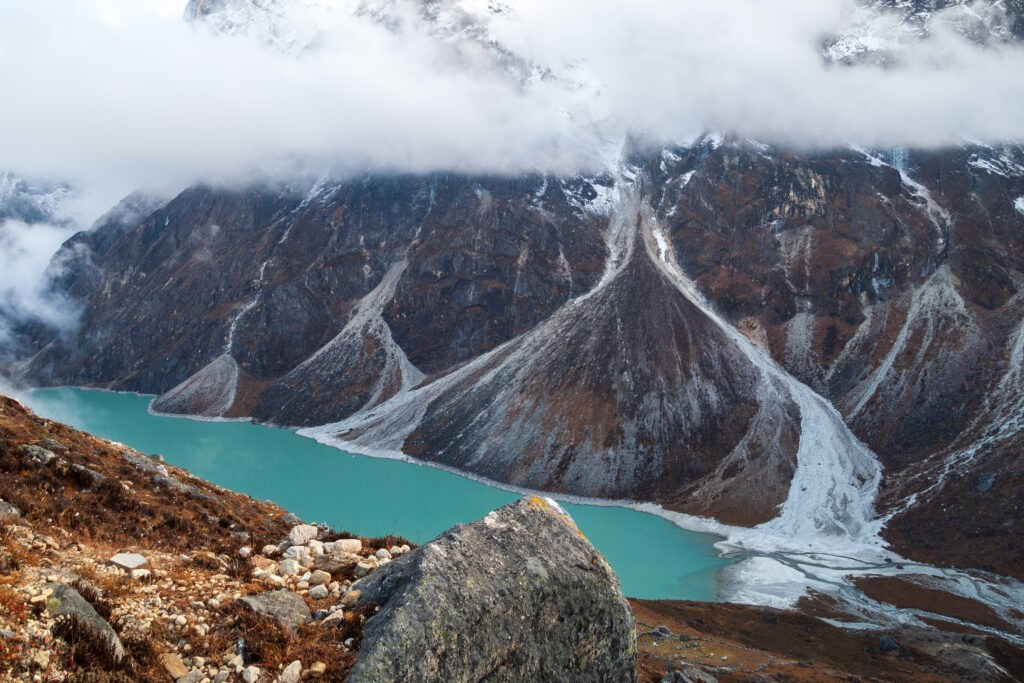
Kazakh officials are working to locate at least one Kazakh tourist who is unaccounted for following flash floods and mudslides in Nepal that killed hundreds of people and caused widespread destruction. A Kazakh woman was part of a tourist group in the area affected by the disaster near the border between Nepal and China’s Tibet region, the Kazakhstani state news agency Qazinform reported on Thursday. The agency and several other media outlets in Kazakhstan quoted Zhanbolat Usenov, spokesman for the Ministry of Foreign Affairs, as saying the tourist had crossed into China with the group and her whereabouts were unknown. Kazakhstan´s diplomats were working with local officials in a search for the Kazakh tourist, according to the media reports. Some later reports said a second Kazakh woman was unaccounted for in the area of the floods. On Wednesday, the Kazakhstani government had said no Kazakh citizens were reported among the dead and missing. The governments of other Central Asian countries are also monitoring the disaster aftermath. Citing Nepali police, The Kathmandu Post reported on Thursday afternoon that the death toll from the floods had risen to 359. That number is expected to rise. More than 800 people, many of them foreign tourists, are unaccounted for, according to authorities.

Xi Jinping Heads to Bishkek as Kyrgyzstan Prepares to Host 21 Heads of State

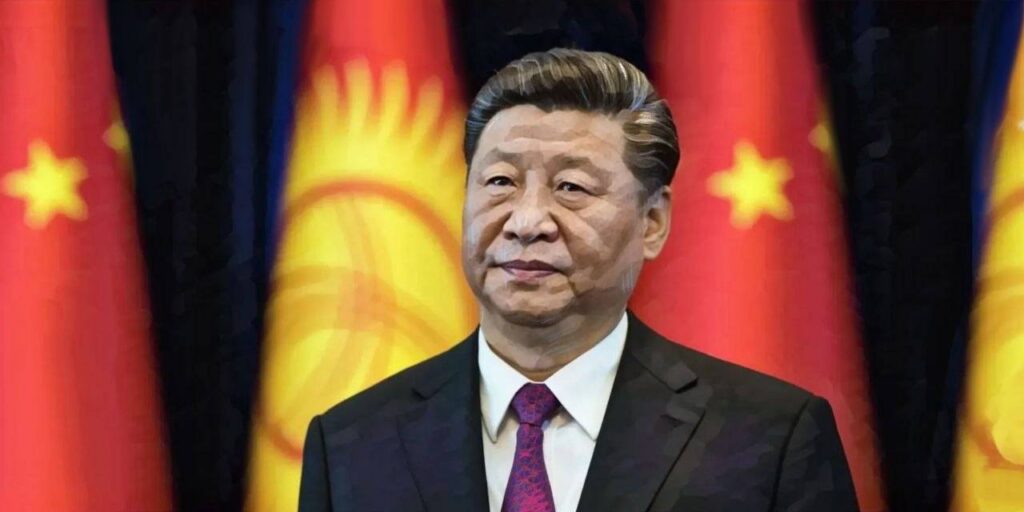
Chinese President Xi Jinping will attend the Shanghai Cooperation Organization summit in Bishkek and make a state visit to Kyrgyzstan, Beijing has confirmed. The trip, which also includes a state visit to Egypt, will run from August 30 to September 3. The formal meeting of the SCO Council of Heads of State is scheduled for September 1. As many as 21 heads of state are expected in Kyrgyzstan during the week, according to presidential spokesman Askat Alagozov. Xi had long been expected to be among the leaders traveling to the Kyrgyz capital, but the formal confirmation turns attention from the guest list to the business that may be conducted around the main session. For Kyrgyzstan, the most consequential part of the visit may come in Xi's talks with President Sadyr Japarov rather than in the summit hall. The Times of Central Asia will be reporting from Bishkek as the delegations arrive, and from the opening ceremony of the World Nomad Games on August 31. Several visiting heads of state are expected to attend the ceremony, which will bring summit diplomacy and Kyrgyzstan’s biggest cultural showcase together on the eve of the SCO meeting. Kazakhstan’s President Kassym-Jomart Tokayev has already confirmed that he will be there. The spectacle will be considerable, but the substance is likely to emerge in the bilateral meetings, signed agreements, and final documents released around the September 1 summit. The State Visit and the Railway The state visit format gives Xi and Japarov a bilateral program alongside the summit. The most prominent economic issue is likely to be the China-Kyrgyzstan-Uzbekistan railway, a project discussed for decades that is now under construction across some of Kyrgyzstan's most difficult terrain. The Kyrgyz authorities put the railway’s construction cost at about $4.7 billion. China holds 51% of China-Kyrgyzstan-Uzbekistan Railway Company LLC, while Kyrgyzstan and Uzbekistan each hold 24.5%. Roughly half of the cost is being financed through a 35-year Chinese loan to the company. The summit could bring clearer evidence of how quickly construction is progressing. Any new financing, contracts, or cross-border arrangements would be more significant than another general statement of political support. The railway also places Kyrgyzstan inside a larger shift in regional trade. Commerce between China and the five Central Asian states passed $100 billion in 2025. Bishkek wants a larger share of that traffic and more of the value created along transit routes. Xi's visit offers Japarov an opportunity to press the case for logistics hubs, local employment and supporting roads rather than transit alone. The Documents Behind the Ceremony The SCO's national coordinators have been finalizing the outcome documents in the weeks leading up to the summit. Under Kyrgyzstan’s chairmanship, the SCO has emphasized regional stability and economic cooperation, alongside digital transformation, cyber threats, environmental policy, and cultural exchange. SCO decisions require consensus, which tends to soften disagreements in final communiqués. Any agreements that specify funding, deadlines, or responsibility would give the Bishkek package more weight. Bilateral Meetings Around the Summit The summit will bring...

Bipartisan U.S. Congressional Visit Highlights Expanding Partnership with Kazakhstan

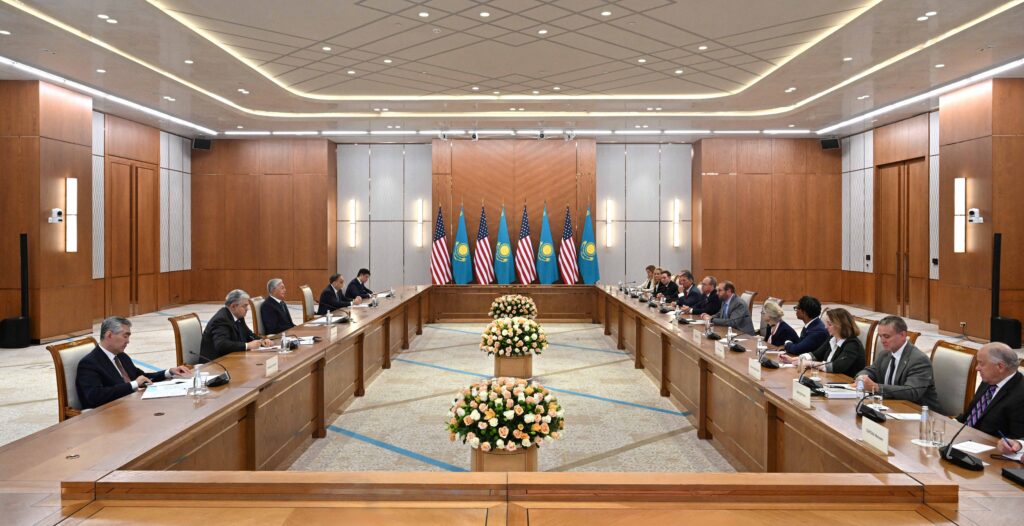
A bipartisan six-member delegation from the U.S. House of Representatives met with President Kassym-Jomart Tokayev in Astana on August 25, two days after Kazakhstan elected the first members of its new unicameral Kurultai. Tokayev called the timing symbolic and proposed closer dialogue between Congress and the new legislature. The delegation was led by House Ways and Means Committee Chairman Jason Smith and included Greg Murphy, Carol Miller, Ronny Jackson, Wesley Bell, and Ed Case. Smith said President Donald Trump had called him at 2 a.m., several hours before the meeting. Trump sent his regards, expressed appreciation for his relationship with Tokayev, and said he looked forward to the Kazakh president’s visit to Miami for the G20 summit. Smith said one purpose of the visit was to explore opportunities to expand economic ties and pursue a substantive bilateral dialogue. The visit reinforced Congress’s role in a relationship that has recently gained momentum at the presidential level. It also showed the breadth of the emerging agenda, from trade and investment to energy security, strategic supply chains, nonproliferation, and regional stability. A Delegation With Trade and Security Reach The delegation’s committee assignments closely matched that agenda. Smith, Murphy, and Miller serve on the Ways and Means Committee, which oversees trade and tariff legislation. Jackson serves on the Armed Services, Foreign Affairs, Intelligence, and Agriculture committees. Bell serves on the Armed Services, Foreign Affairs, and Oversight and Government Reform committees. Case sits on the Appropriations Committee and its Defense and Homeland Security subcommittees. That mix places delegation members on committees with jurisdiction over many of the issues now shaping the bilateral relationship. Congress can advance cooperation through trade legislation, appropriations, oversight, and support for American companies entering or expanding in Kazakhstan. Smith’s committee has jurisdiction over H.R. 1024, the bipartisan U.S.-Kazakhstan Trade Modernization Act, which would authorize the president to end the application of the Cold War-era Jackson-Vanik restrictions and extend permanent normal trade relations to Kazakhstan. Miller was among the bill’s original co-sponsors, although the issue was not mentioned in the public account of the meeting. Bipartisan congressional engagement could help translate recent presidential momentum into more durable institutional ties. Kazakhstan Has Made the U.S. Relationship a Priority From the Kazakh side, Tokayev has treated closer ties with Washington as a presidential priority. During his November 2025 visit to Washington, the two leaders welcomed commercial agreements worth more than $17 billion. Trump reaffirmed the U.S. commitment to the Enhanced Strategic Partnership, while the two presidents identified new areas for cooperation. The August 25 meeting also highlighted Kazakhstan’s support for the Abraham Accords and the Board of Peace, as well as the countries’ longstanding work on nuclear security and nonproliferation. Trade, investment, advanced technology, science, education, and culture were also discussed. Tokayev’s proposal for closer dialogue between Congress and the Kurultai would strengthen the parliamentary channel alongside the relationship’s presidential and executive-level diplomacy. In January, Tokayev appointed veteran diplomat Erzhan Kazykhan as his representative for negotiations with the United States on priority bilateral issues....