• KGS/USD = 0.01144 0%
  • KZT/USD = 0.00215 0%
  • TJS/USD = 0.10680 0.19%
  • UZS/USD = 0.00008 0%
  • TMT/USD = 0.28530 0%
  • KGS/USD = 0.01144 0%
  • KZT/USD = 0.00215 0%
  • TJS/USD = 0.10680 0.19%
  • UZS/USD = 0.00008 0%
  • TMT/USD = 0.28530 0%
  • KGS/USD = 0.01144 0%
  • KZT/USD = 0.00215 0%
  • TJS/USD = 0.10680 0.19%
  • UZS/USD = 0.00008 0%
  • TMT/USD = 0.28530 0%
  • KGS/USD = 0.01144 0%
  • KZT/USD = 0.00215 0%
  • TJS/USD = 0.10680 0.19%
  • UZS/USD = 0.00008 0%
  • TMT/USD = 0.28530 0%
  • KGS/USD = 0.01144 0%
  • KZT/USD = 0.00215 0%
  • TJS/USD = 0.10680 0.19%
  • UZS/USD = 0.00008 0%
  • TMT/USD = 0.28530 0%
  • KGS/USD = 0.01144 0%
  • KZT/USD = 0.00215 0%
  • TJS/USD = 0.10680 0.19%
  • UZS/USD = 0.00008 0%
  • TMT/USD = 0.28530 0%
  • KGS/USD = 0.01144 0%
  • KZT/USD = 0.00215 0%
  • TJS/USD = 0.10680 0.19%
  • UZS/USD = 0.00008 0%
  • TMT/USD = 0.28530 0%
  • KGS/USD = 0.01144 0%
  • KZT/USD = 0.00215 0%
  • TJS/USD = 0.10680 0.19%
  • UZS/USD = 0.00008 0%
  • TMT/USD = 0.28530 0%

Viewing results 115 - 120 of 304

Kazakhstan’s Path to Judicial Reform and Transparency

Kazakhstan is implementing reforms to enhance judicial independence, modernize its institutions, and address contemporary challenges according to Aslambek Mergaliev, Chairman of the Supreme Court of Kazakhstan, who detailed these initiatives aimed at strengthening the rule of law and increasing transparency in the judicial system. Strengthening Judicial Independence Central to these reforms is ensuring judges’ independence by depoliticizing their roles and holding them accountable only to the law. Judges are prohibited from affiliating with political parties, and personnel matters have been fully transferred to the Supreme Judicial Council. Key advancements include transparent selection procedures for judges and the introduction of new professional standards. A pivotal guarantee of independence is the new funding model, which allocates at least 6.5% of the state apparatus budget to the judiciary, reducing financial dependence on other government branches. Judges’ professional performance is now evaluated by their peers, supported by the "Electronic File of a Judge," an automated service designed to minimize bias. Additionally, the authority to approve special operational and investigative measures against judges has been transferred to the Prosecutor General. Introduction of Administrative Justice Kazakhstan established an administrative justice system in 2021, primarily aimed at protecting citizens' rights and improving public administration. This system has significantly increased the number of cases involving housing, tax, and land disputes, reflecting growing public trust in the judiciary. The percentage of court decisions in favor of citizens has risen from 15% to over 60%. Jury trials have also expanded, with the number of cases tried by jury more than doubling in recent years. Digital Transformation of the Judiciary Kazakhstan is leveraging digital technology to modernize its judicial processes, earning the country 4th place among 47 nations in reviews conducted by the European Commission for the Efficiency of Justice (CEPEJ) on the judicial systems of Council of Europe member states. Tools such as Digital Analytics of Judicial Practice and a robotic assistant help reduce judges’ workloads, predict case outcomes, and optimize adjudication. Additionally, the Supreme Court has initiated the broader use of electronic surveillance as an alternative to detention, favoring house arrest with electronic bracelets. International Recognition At the IX Congress of Judges in October 2024, President Kassym-Jomart Tokayev engaged with representatives from CEPEJ and the International Association for Court Administration (IACA) to discuss the progress of judicial reforms. Special emphasis was placed on expanding cooperation in human rights protection. The Union of Judges of Kazakhstan has established partnerships with organizations such as UNDP, OSCE, the Council of Europe, USAID, and the International Bar Association, among others. Future Steps Looking ahead to 2025, Kazakhstan plans to establish three courts of cassation and introduce a “continuous cassation” system. The Supreme Court will prioritize ensuring uniformity in judicial practice, with cases reviewed only at the initiative of the highest judicial authority.

AI Facial Recognition System Being Tested in Two Cities in Kazakhstan

Kazakhstan has launched a national video monitoring system powered by artificial intelligence technologies. The project, developed by the Ministry of Internal Affairs, the National Security Committee, and the Ministry of Digital Development, Innovation, and Aerospace Industry, aims to enhance surveillance capabilities across key locations in the country. The system is designed to recognize faces, detect abandoned objects, capture offenses, and identify vehicles by make, model, and color. Critical sites such as railway stations, airports, hotels, streets, intersections, and shopping malls are priority areas for implementation. During the World Nomad Games in Astana, the technology was reportedly instrumental in locating lost children and missing persons. Authorities also noted that the system helped detain 46 wanted individuals in Astana and 30 in Almaty. Proponents argue that these technologies could contribute to improving public safety and reducing crime. Kazakhstan’s initiative follows a broader global trend of integrating AI into “smart city” systems, similar to developments in China, Russia, and some European countries. Officials say the system will be expanded with additional cameras nationwide to increase monitoring coverage. To date, more than 1.3 million video cameras have been installed in Kazakhstan, with 310,000 of them connected to operational control centers and police duty stations. Advocates of the system highlight its potential to deter crime and bolster public security, although concerns about privacy and misuse of surveillance technology have been raised internationally. Worldwide, AI video surveillance systems are being adopted to improve law enforcement and public safety. In China, they are used for facial recognition to track criminals and prevent offenses. Russia has integrated AI into its video systems to detect potential threats, while in the UK, intelligent cameras are used for crowd management and event security. While supporters emphasize the benefits of such systems in enabling faster responses to incidents and reducing crime, the deployment of AI in surveillance has sparked ongoing debates over privacy, civil liberties, and the potential for misuse.

Out With the Old and in With the New: From Politicians to Felons: Part Two

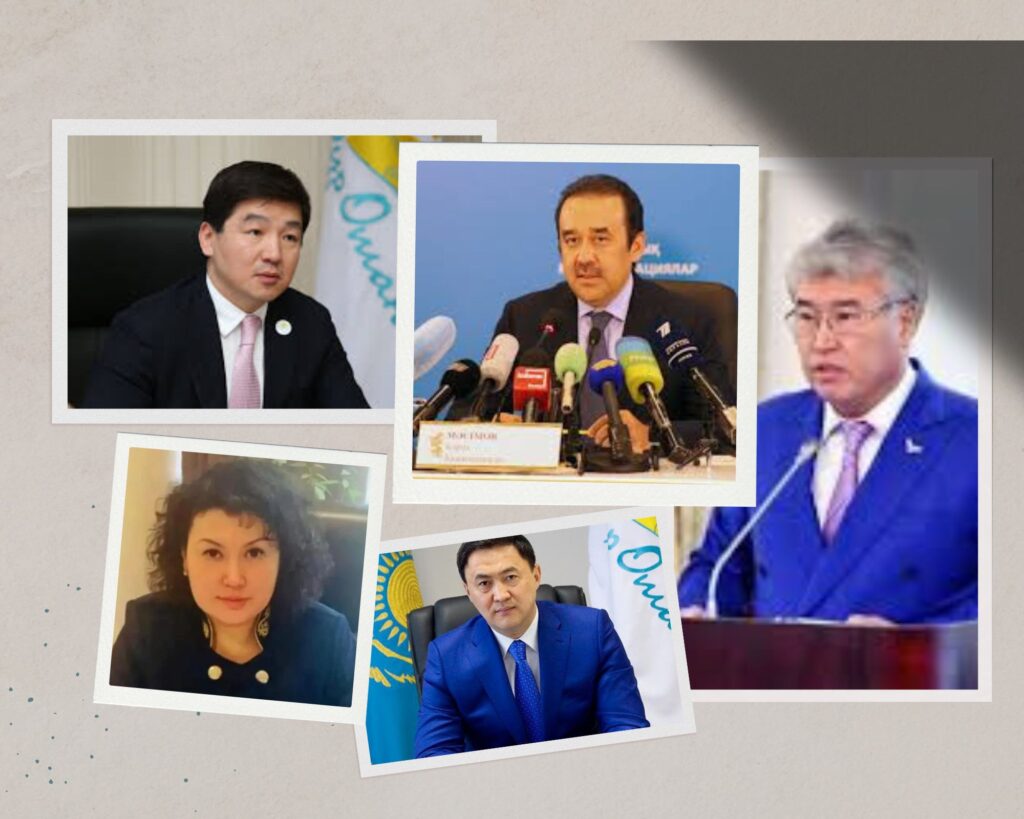
The end of the first president of Kazakhstan, Nursultan Nazarbayev’s era coincided with a wave of mass protests across the country. The widely-accepted cause was the death of five children in a fire in a dilapidated annex to a private house, the like of which there are many in the suburbs of Astana. This tragedy occurred on the night of February 4, 2019, when the girls, with ages ranging from a baby to twelve years old, were left home alone. The event sparked furious complaints from mothers of children across the country, and on March 19 of the same year, Nazarbayev resigned, handing power to the next in the constitutional hierarchy, Kassym-Jomart Tokayev, the speaker of the Senate (Kazakhstan's upper house of parliament). High-profile cases of the transition period From that moment until the events of January 2022, the country went through a transitional period, which is often spoken of as having been a time of dual power. By analogy with the “Kremlin Towers” (a popular theory about clans in Vladimir Putin's Russia being engaged in an irreconcilable struggle for resources and influence), the new president's entourage began to be called “Akorda” - after the head of state's residence in Astana. Supporters of Nazarbayev and the idea of his return to the presidency, meanwhile, were known as the “Library” – a reference to the Library of the First President. It was believed that the officials Tokayev inherited from his predecessor were more likely to run reports to the Library than to the Akorda. This division serves to explain how the new president was bound in his ability to implement changes. Tokayev initially announced a course of political, economic and social reforms, but only the latter were implemented, while the rest were sabotaged. Even support from the general public, which Tokayev managed to garner in the National Council of Public Trust, did not help matters.Even under such constraints, however, it was possible to begin a purge of the establishment. For example, in 2020, the country was shaken by the first high-profile criminal case under Tokayev, when Bulat Bakauov, akim of the Pavlodar region and a bellwether of high-profile scandals under Nazarbayev, was accused of abusing his authority and arrested. However, the influence of Nazarbayev's entourage remained strong, so the sentence handed down to the former Akim turned out to be a meagre restriction of freedom for 3.5 years. The court obliged Bakauov to refrain from leaving his residence and regularly report to the probation service. In addition, Bakauov was obliged to engage in a hundred hours of public labor, ordered to return $10,000, and banned from holding public office. In the same year, there was a glimmer of hope that the former Akim of Almaty, Bauyrzhan Baibek - who was elevated to the height of political power by his father's childhood friendship with Nursultan Nazarbayev – would be held to account. Urban legends still circulate about the illegal earnings of Baibek and his team from the reconstruction of the center of...

In the Wake of Bishimbayev: From Politicians to Felons – Part One

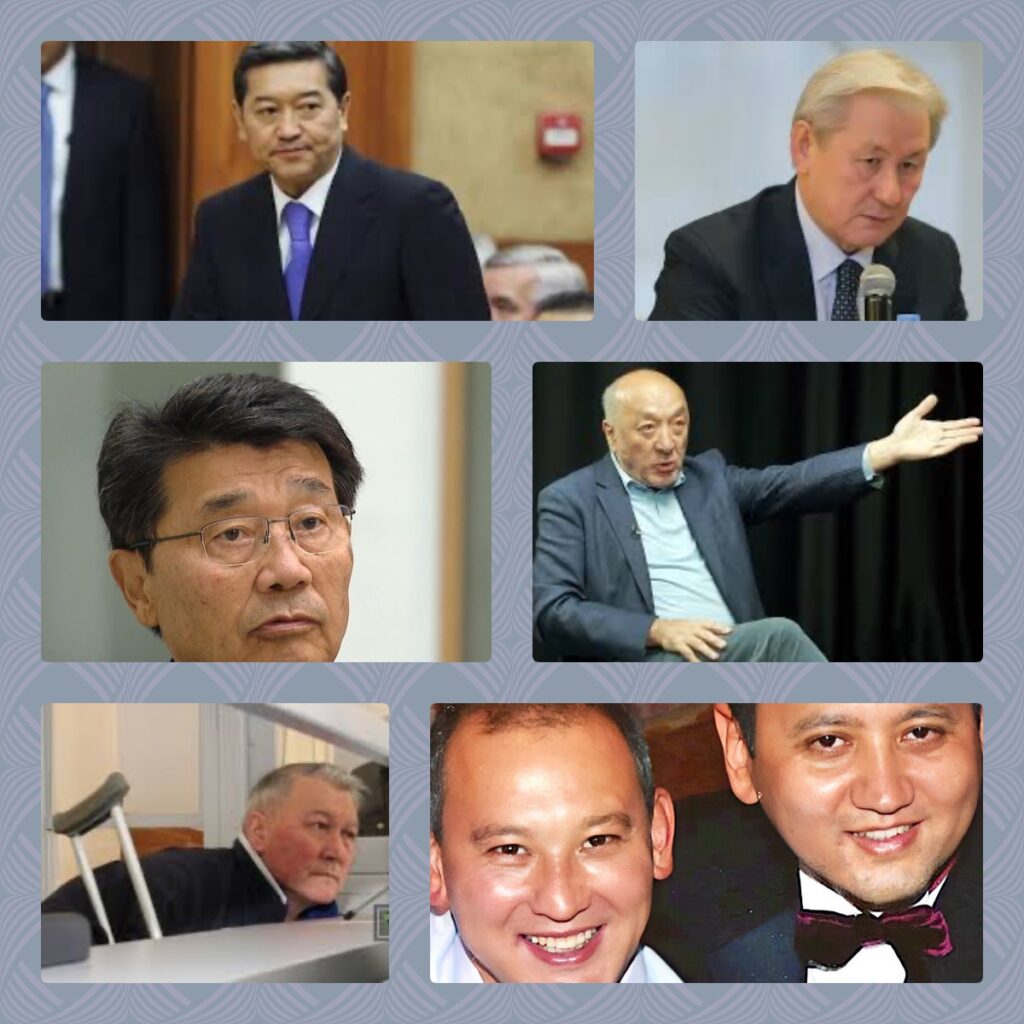
Eight days ago, a scandal shook Kazakhstani society: Kuandyk Bishimbayev allegedly escaped from the penal colony where he was serving his sentence. Bishimbayev is a former high-ranking official of the government of Nursultan Nazarbayev's era, who was sentenced to 24 years in prison for the brutal murder of his wife. The Interior Ministry's Criminal Correctional System Committee immediately denied this information and said that a criminal case had been opened over the dissemination of this misinformation. This is not the first time Bishimbayev has become a resident of a penal colony. In 2017, as the Minister of National Economy of Kazakhstan, he was arrested on suspicion of large-scale bribery and embezzlement. In 2018, he was sentenced to a ten-year term with the confiscation of property and deprivation of the right to hold public office for the rest of his life. However, he was released on parole in 2019. Kazakhstan has been shaken by Bishimbayev's new crime. The trial, which was broadcast live online for the first time in the country's history, was watched by millions of citizens, not only within the Republic, but also abroad in other post-Soviet countries, and even in the West. However, this is not the first and, in all likelihood, not the last sensational case in which a former high-ranking official becomes a defendant. The long list of convicted ministers and akims can be divided chronologically into three parts: the Nazarbayev era, the transition period, and the so-called “New Kazakhstan,” which started after the January Events - the failed coup in 2022. This article discusses the most notorious court cases from each of these periods. Akezhan Kazhegeldin Former Prime Minister Akezhan Kazhegeldin was a politician known not only in Kazakhstan, but also in the West. He led the Government of Kazakhstan from 1994 to 1997. After falling into disfavor, in 1998 he attempted to challenge Nazarbayev in the upcoming presidential election. Kazhegeldin was not allowed to participate and had to leave Kazakhstan under the pretense of receiving medical treatment in Switzerland for unspecified health problems. In 1999, Kazhegeldin was put on an international wanted list, and in 2001 he was found guilty in absentia by the Supreme Court of Kazakhstan of abuse of power and authority, extortion and repeated bribes of millions of dollars, illegal acquisitions, the storage and transfer of weapons and ammunition, and tax evasion. Kazhegeldin was sentenced to ten years in prison, but has not returned to the country since. He continued to influence Kazakhstan's domestic politics from abroad until 2001 through the Republican People's Party of Kazakhstan, which he organized for this purpose. It was alleged that Kazhegeldin received kickbacks from a contract awarded to Tractebel in 1996 to run Almaty's electric company and power grid. A year later, the Belgian company also won a concession to manage gas pipelines in the south and west of Kazakhstan. In the U.S., meanwhile, the DOJ investigated claims Kazhegeldin received illegal payments of $6 million as part of a bribery scandal known as ‘Kazakhgate’. This...

Kazakhstan Charity Head Investigated for Embezzling Flood Relief Donations

Kazakhstan is investigating Perizat Kairat, founder of the Biz Birgemiz Qazaqstan charity fund and a prominent volunteer activist, for allegedly embezzling over 1.5 billion KZT (approximately $3.1 million) intended for victims of spring floods. According to the Financial Monitoring Agency, a significant portion of the funds raised was reportedly used to purchase luxury items and real estate. Investigators allege that Kairat acquired several high-end vehicles, including a Mercedes-Benz S450, Lexus LX-600, and Haval, as well as luxury properties in Astana’s elite residential complexes, such as “Akbulak Riviera,” “Highvill Ishim Gold,” and “Kөk Zhailau,” along with a cottage in “Vela Village.” The total value of these purchases is estimated at 600 million KZT ($1.2 million). The agency further claims that the charity’s funds financed frequent trips to Dubai, Doha, London, and Istanbul, where Kairat reportedly stayed in five-star hotels. During these trips, she is accused of purchasing expensive accessories from luxury brands, dining at elite restaurants, and organizing lavish boat trips. Relatives and associates of Kairat are also implicated, accused of cashing out the charity’s funds for a fee of 8%. These alleged actions have reportedly eroded public trust in charitable and volunteer organizations, raising concerns about their transparency and integrity. Kairat has been detained pending further investigation. The Biz Birgemiz Qazaqstan charity fund, established in 2021, began as a nationwide volunteer movement with 15,000 members. The fund organized aid collections for flood victims in the West Kazakhstan, Aktobe, Kostanay, Abay, Akmola, and Ulytau regions. Donations from individuals and major companies were channeled through banking applications to support the fund’s efforts. Kairat, who also runs a family business exporting meat to Arab countries and owns a chain of flower shops, claimed in a social media post that she headed the foundation without financial compensation. She is also a member of the Public Council of the Agency for Strategic Planning and Reforms. Kairat’s detention comes as Kazakhstan's Ministry of Culture and Information works on proposed legislative changes to regulate charitable activities. These amendments aim to grant state bodies greater control over fundraising efforts. However, experts warn that such measures could significantly hinder charity work in the country. For example, proposed restrictions on independent fundraising have sparked concerns among activists and organizations, with critics arguing that these changes may stifle grassroots initiatives and reduce public participation in charitable causes.

#ForSaltanat: The Quest for Justice in Domestic Violence Cases in Kazakhstan

In the spring of 2024, the televised murder trial of Kuandyk Bishimbayev, Kazakhstan’s former Minister of the National Economy, captivated viewers across the country. Bishimbayev was found guilty of the brutal murder of his wife, Saltanat Nukenova, in a restaurant in Astana, and sentenced to 24 years in prison. Comparisons to the O.J. Simpson trial of 1995 were inevitable. Both trials involved a prominent figure — in this case, a politician previously pardoned by President Nursultan Nazarbayev after serving time for corruption — a victim who had endured domestic abuse, and a massive viewership. Bishimbayev's trial underscored public fascination with the case, driven not only by its reality TV appeal but by a growing awareness of deeply ingrained gender inequities, particularly regarding the societal expectations placed on Kazakh women within marriage. The trial’s timing occurred shortly before — and perhaps by no coincidence — new legislation was signed by President Kassym-Jomart Tokayev on April 15, 2024, amending laws to protect the rights and safety of women and children. However, critics noted an omission: a clear, targeted focus on preventing domestic violence. Two Kazakh women, who shared their stories with The Times of Central Asia, revealed the extent to which domestic violence remains embedded in Kazakh society. Rayana, from Astana, and Aliya, a Kazakh student in New York City, have never met, yet their stories echo shared challenges and hopes for change in their home country. Rayana, a beauty industry professional in her mid-twenties, reflected on her brief and tumultuous marriage, which began when she was 23. “I loved my husband, but felt it was too early to marry. We married just four months after meeting, and within a month of living together, I wanted a divorce. He was unfaithful and violent.” When Rayana sought help from her mother-in-law, she was told that her mother-in-law had also been a victim of domestic violence and that she, too, must learn to endure it. “It is worth mentioning that in Kazakhstan the north is very different from the south,” Rayana added. “I'm a northerner, he's a southerner. I had never experienced abuse before, and then for the first time, I felt a panic attack, which I still live with. In the south, people adhere more to traditions and have a negative attitude towards divorce and washing their dirty linen in public. Women keep silent about domestic violence. I can’t say anything about his family’s attitude. I still don’t fully understand.” Having grown up around domestic violence, she believes that one in two families is affected by it. After separating, Rayana’s family offered her support, while her in-laws disapproved, even throwing out her belongings. Rayana’s life since then, however, has vastly improved. “I have been working in the beauty industry for a long time. In our field, at least, climbing the career ladder is not difficult. My first supervisor helped me a lot. He spoke fondly of his wife and cared about his female employees. This gives us faith that there are good men...